
Why University Accreditation May Be Overrated
November 11, 2025 2025-11-11 7:50
University accreditation originated with the idea of quality assurance in higher education, to ensure institutions met basic standards in teaching, governance, and student outcomes. However, several studies, reports, and analysis by experts in the field highlight significant shortcomings.
Accreditation has increasingly become a bureaucratic exercise emphasizing procedural compliance over measurable results. Reports from organizations such as the Foundation for Research on Equal Opportunity (FREOPP, 2024) and the Center for American Progress (CAP, 2018) reveal that even accredited universities often exhibit poor graduation rates, negative return on investment (ROI), and weak job placement outcomes.
For instance, the FREOPP study found that every major accreditor oversees hundreds of programs where graduates earn less than the cost of their degrees. Yet, fewer than one percent of institutions lose accreditation for poor performance. This discrepancy suggests that accreditation functions less as a genuine indicator of quality and more as a bureaucratic gatekeeper granting access to billions in federal aid, perpetuating a cycle where underperforming colleges continue to thrive despite dismal outcomes for students.
Issue of Compliance Over Quality
Critics argue that the accreditation process fosters what scholars describe as a “compliance culture,” prioritizing paperwork, peer reviews, and self-assessments over data-driven accountability. Instead of rewarding innovation or punishing mediocrity, accreditors focus on whether institutions complete the right forms or conduct the right internal reviews—activities that often have little bearing on student learning or success.
The MDPI Literature Review (2023) highlights how this system encourages “gaming” behaviors, where institutions manipulate metrics or selectively report outcomes to appear compliant. Cases like the University of Phoenix, which maintains accreditation despite a 14% graduation rate and numerous lawsuits over deceptive practices, expose this disconnect between status and substance.
Similarly, public institutions like Southern University at New Orleans and Brevard College retain accreditation even with six-year graduation rates below 25% and negative ROI programs. These examples illustrate a troubling truth: accreditation frequently signals survival, not excellence, and its standards are often too low to protect students from subpar educational value.
Ultimately, the overrated nature of accreditation stems from its failure to adapt to modern educational demands and outcomes-based accountability. While it grants institutions legitimacy and access to federal funding, it does little to guarantee that students receive a worthwhile education or meaningful career preparation.
Time to Rethink Accreditation
We are now living in a digital age, so it’s time to rethink accreditation and focus more on purpose-based learning because education is shifting from degree-centric validation to skills-based hiring, alternative credentials, and non-traditional online learning models.
Proposals for reform—from mandatory outcome benchmarks to risk-based accreditation models—seek to realign the system with genuine indicators of success, such as graduation rates, job placement, and equity outcomes. Yet, entrenched interests and systemic inertia make significant change difficult.
As higher education faces growing scrutiny over its cost, debt burdens, and return on investment, the assumption that accreditation equates to quality becomes increasingly untenable. For students and policymakers alike, the message is clear – accreditation, once a mark of trust, now serves more as a bureaucratic relic than a reliable signal of educational excellence. Until it evolves into a truly outcomes-focused mechanism, university accreditation will remain an overrated and insufficient measure of institutional quality.
Accreditation Myths in Education
One of the biggest challenges to innovation in higher education is the belief that accreditation guarantees quality. The reality is more nuanced. The perception that “non-accredited university” is usually associated with diploma mills or fraudulent institutions – is a result of decades of messaging equating accredited vs non-accredited universities as “legitimate vs illegitimate.” It’s time that this myth needs to be busted.
The first myth is associated with the fact that accreditation guarantees superior education. However, the truth is, it has nothing to do with the education or skills in the offering. The measurement of accreditation is based on specific standards and procedures an educational institution follows.
The second myth is about what employers prefer. Gone are the days when employers used to filter applicants by the degree obtained from a prestigious institution. At present, employers are trying to cut-down on the training cost of their new hires by analyzing the candidates as per the skills required for the real job.
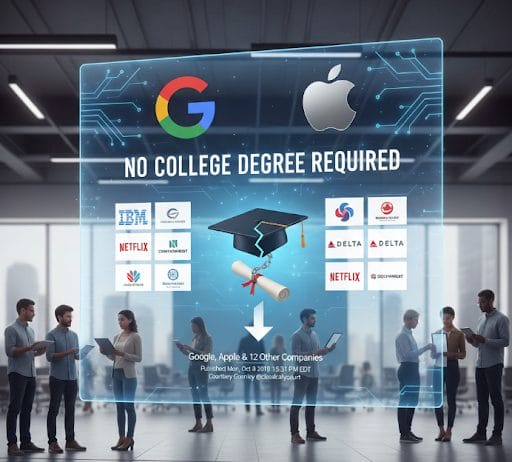
Especially in technical or creative roles the focus is on skills-based hiring over degrees. According to secondary research, firms like Google, Apple, and IBM are hiring as per the candidate’s capability even if that means accepting someone without traditional college credentials.
The third myth is that non-accredited universities don’t stand a chance with their traditional counterparts. In fact, non-traditional learning institutions offer practical and industry-based learning programs. Coding bootcamps, access to online resources, and specialized training platforms can make graduates workforce-ready in months.
Ready to rethink your education? Explore universities beyond accreditation today.
Understanding Education Quality Without Accreditation
Now, let’s address the elephant in the room – if not accreditation, then how to analyze the quality of universities? The answer lies in outcomes, not labels.
Agility and Innovation
Accredited institutions often take years to update their programs due to bureaucracy. It requires a series of approvals before making any change in the curriculum. Moreover, every student is forced to follow a similar structure even if it reduces the objective of the person pursuing the degree in the first place. Universities like Atlantic International University (AIU) with open learning and academic freedom can quickly adapt curricula to match industry demands and allow student participation. That is not typically possible at accredited programs that follow standardized or pre-approved programs. Moreover, with curriculum builder tool, AIU offers each student academic freedom to structure their course as per their individual requirement.
Project-Based and Competency-Based Learning
Skill and competency-based learning hold more value in the real world. So, the focus should be more on niche skills and their practical application over theory-based learning – which often are outdated and hold no requirement in the job market. Hence, graduates with portfolios, projects, and case studies can showcase skills that employers can easily evaluate. In short, the quality of education can be measured by the skills mastered, by becoming job-ready, and with career advancement. These are important factors that accreditation does not always guarantee.
Why Online Learning Is Different — And Why Freedom Matters More Than Accreditation
Modern online education is far more than just a digital version of traditional learning – it’s a complete reimagining of what education can be. The most visionary online institutions are discarding rigid curricula and uniform standards, instead championing academic freedom, accelerated mastery, and AI-powered personalization. This shift empowers students to forge a truly purpose-driven path to knowledge.
Academic Freedom and Personalized Learning
Unlike traditional institutions that follow uniform accreditation frameworks, some online universities embrace academic freedom – empowering students to explore knowledge beyond prescribed boundaries. This freedom allows learners to integrate their passions, professional experience, and personal goals into their coursework, creating a more authentic and transformative educational journey.
Rather than conforming to pre-approved syllabi, students engage in purpose-based learning, where every course, project, or study module connects to their larger life mission or professional aspiration. This fosters deeper motivation and intellectual curiosity, producing graduates who are not just informed, but inspired.
Accelerated and A.I.-Guided Learning
Modern online learning environments leverage technology to provide accelerated learning opportunities. AI-guided programs assess individual progress, learning preferences, and mastery of content to adjust pacing and recommend personalized resources.
This means that students who grasp concepts quickly can move ahead without waiting for semester schedules, while those who need additional reinforcement receive customized support. It’s an adaptive, student-centered model that values outcomes over timelines, allowing learners to achieve mastery efficiently.
Recognition of the Student’s Unique Past, Present, and Future
Another powerful advantage of non-traditional online programs is their recognition of each student’s unique background. Rather than starting from zero, learners receive credit and acknowledgment for prior knowledge, professional experience, and even personal achievements.
By honoring the student’s past, present, and future, these programs create a holistic educational framework where learning is cumulative and personalized—reflecting the learner’s real-world identity, not just their academic record.
Real-World Studies and Purpose-Based Impact
In contrast to theoretical, standardized instruction, real-world studies anchor education in practical application. Students tackle actual community problems, organizational challenges, or global issues—turning coursework into laboratories for innovation.
This kind of experiential learning transforms education into an instrument for sustainable change. The solutions students create often extend beyond the classroom, impacting families, communities, and organizations. It’s a model of education where learning drives transformation, not just certification.
The True Measure of Learning: Innovation and Impact
When students have the freedom to learn on their own terms—guided by purpose, informed by experience, and supported by intelligent systems—they develop the capacity to innovate. In such an open educational environment, accreditation becomes far less significant than the impact a learner can make.
These are the programs that nurture leaders, creators, and changemakers—individuals who apply what they learn to build sustainable solutions that improve lives. Ultimately, this is the heart of education’s true purpose: to inspire growth, innovation, and social transformation, not merely to validate conformity through accreditation.
AIU is Redefining Education Beyond Accreditation
AIU offers to all its students a transformative model – an approach that transcends bureaucratic limits to cultivate personal evolution, social responsibility, and global impact. Rather than imposing identical programs on diverse learners, AIU empowers students to co-create their own educational journeys, transforming higher education from a system of control into a process of self-discovery and purposeful contribution.
1. Quantum Education: Beyond Accreditation
While accredited institutions are bound by uniform curricula, standardized assessments, and procedural benchmarks, AIU embraces the principle of evolution over bureaucracy. The university rejects the “one-size-fits-all” academic mold, recognizing that true learning is not a checklist but a living process. Each student’s education evolves in harmony with their individual goals, passions, and circumstances, creating an experience that is as unique as the person pursuing it. This philosophy shifts the emphasis from external validation to internal growth, positioning AIU as a pioneer in personalized, student-centered education.
2. Breaking the Paradigm
Accreditation, by design, enforces conformity – students move through the same courses, at the same pace, toward the same institutional standards. AIU breaks this paradigm by betting on personalization and flexibility. Every learner designs their own path, selecting subjects, methodologies, and research areas that align with their life mission. This freedom fosters deeper engagement, innovation, and authenticity, allowing education to adapt to the learner rather than forcing the learner to adapt to the system. In doing so, AIU cultivates independent thinkers prepared to shape, not follow, the world’s evolving needs.
3. Connection with Human Rights and UN 2030
At the heart of AIU’s mission lies a profound commitment to Human Rights and the United Nations’ 2030 Agenda for Sustainable Development. The institution believes education is a human right and a vehicle for empowerment. Every program encourages students to link their academic work to one or more of the 17 Sustainable Development Goals (SDGs) – from eradicating poverty and achieving gender equality to promoting sustainable communities and climate action. This integration transforms learning into a catalyst for global progress, ensuring each student’s growth contributes directly to humanity’s shared future.
4. Transformative Impact
AIU views education not merely as knowledge acquisition but as a transformative force for personal and societal betterment. Through its learner-driven model, each student becomes an agent of change, empowered to address challenges like poverty, insecurity, and forced migration within their own context. By applying their learning to real-world problems, AIU graduates bridge theory and action – turning personal education into collective empowerment. This approach redefines success, emphasizing the tangible social and environmental contributions that stem from individualized learning.
5. The True Value
For AIU, true accreditation is not a seal granted by external agencies—it is the living proof of a student’s evolution and the impact they create in the world. The university measures achievement not by bureaucratic standards but by how its graduates embody knowledge, creativity, and compassion in service of humanity and the planet. This perspective elevates education from institutional validation to a lifelong mission of growth and contribution. In AIU’s Quantum Education model, the greatest credential a student can earn is not a certificate, but the power to transform lives – including their own.
Don’t chase labels—focus on skills that employers really want.

Non-Accredited Degrees and the Job Market
A common concern among students is can you succeed with a non-accredited degree or whether non-accredited degrees hold value in the job market. The truth is, with the rise of skill-based hiring, job marketing is evolving. Employers now prioritize skills and experience over formal degrees which can save them the cost of training new hires. According to secondary research, 94% companies believe that skill-based hires outperform those hired on the basis of degrees, certifications or years of experience alone. This changes everything – how the employers decide on the employee pool and also, how the job seekers do the right thing at the right time to get into a niche profile. Also, employers now accept alternate credentials such as – open online courses, bootcamp participation certificates, digital badges, and also micro-credentials that certify expertise.
Now, according to Forbes, the broader trend in the job market suggests a shift toward recognition of skills and experience – reiterating the fact that there is nothing wrong with dreaming big. It is in fact the courage of individuals that help them choose their own unique paths towards success – thus breaking the paradigm. So, every achievement – launching of startups, building portfolios, or gaining employment at reputable firms are success stories worth celebrating.
Again, more than validation, accreditation is also about bureaucracy and cost – adding financial burden to the learners. By moving beyond the clutches of accreditation, the non-accredited universities can experiment with innovative learning models, competency-based education, personalized learning paths, and subscription-style tuition.
The Future of Universities
The next decade of higher education will look radically different – universities without accreditation. Usage of technology in education is enabling these universities to reshape curriculum based on innovation, job market, and economic necessities while reducing the challenges related to geographical boundaries, time, and finances.
According to the 2024 Work Trend Index Annual Report from Microsoft and LinkedIn, learning AI is important to stay competitive. With remote work trending, flexible learning options with strategic implementation of AI is the right choice. Universities without accreditation have already evolved. Hence, they are offering accessible, affordable, and relevant degree courses while the traditional counterpart is stuck over bureaucratic approval.
The question is not whether accreditation matters for universities – but whether clinging to it is holding education back and delaying progress. The future of learning will be defined not by institutional labels, but by what students can do once they graduate.
Co-authored by Ricardo Gonzalez and Kathakali Basu
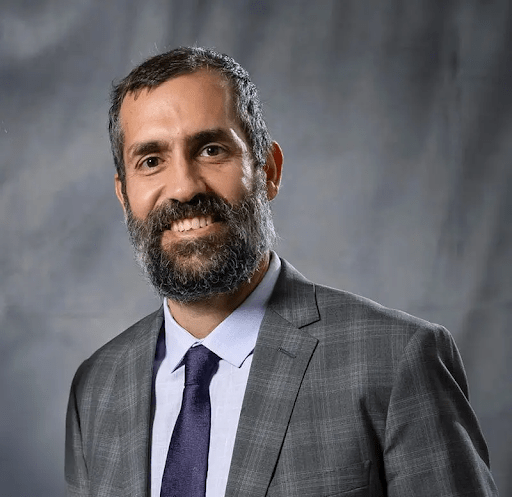
Ricardo Gonzalez –Chief Operations Officer of AIU
With a dynamic fusion of expertise in economics, IT, and marketing, Ricardo Gonzalez stands as a pivotal figure in the success story of AIU. As Vice President, he seamlessly integrates diverse perspectives into every strategic decision, fueling innovation and growth.
Ricardo’s multifaceted role extends beyond traditional boundaries. Not only does he adeptly manage AIU’s e-platform and spearhead web hosting initiatives, but he also embodies AIU’s ethos by nurturing a vibrant community of students and staff.
Driven by boundless enthusiasm and a commitment to excellence, Ricardo Gonzalez exemplifies the spirit of AIU, where dedication meets visionary leadership. His unwavering support and proactive approach make him an indispensable asset in shaping AIU’s future as a trailblazer in education and technological advancement.

Kathakali Basu is a dynamic Content Strategist and Brand Communication expert at Atlantic International University, with a knack for transforming ideas into compelling narratives. With a Masters in Sociology and certification in Content Marketing, Kathakali expertly crafts strategies that elevate brands and captivate audiences. Her extensive experience in content writing and strategy has helped numerous businesses articulate their vision and connect meaningfully with their target market. Passionate about blending creativity with data-driven insights, Kathakali thrives on creating impactful content for the last 16+ years that not only resonates but drives results.
An animal lover and believer in inclusivity, she actively participates in animal rescues and rehoming. When she’s not working, you’ll find her exploring nature or indulging in reading, baking, and her love for storytelling.