
Why Is Language Important? A Guide to the Power of the Spoken Word
June 13, 2025 2025-10-24 6:50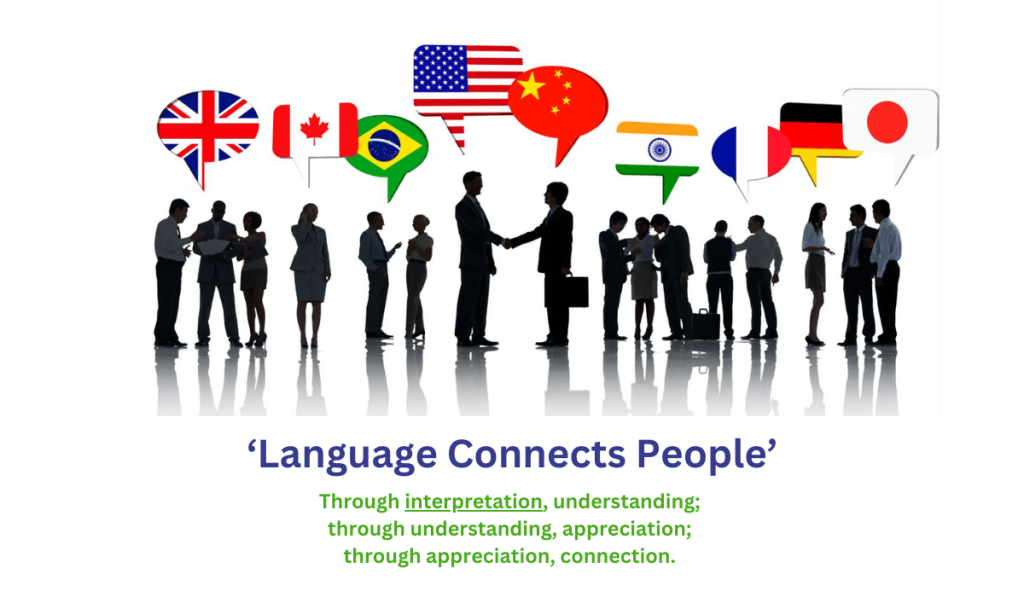
In This Article:
- Language: The Building Block of Human Civilization
- Language and the Brain: Cognitive Benefits
- Professional Development through Multilingualism
- Cultural Literacy and Empathy: Experiencing the World through a New Lens
- The AIU Language Center: Supporting Multilingual Citizens of the World
- Why Language Matters: A Pathway to Lifelong Learners and Cultural Experiences
- It is Never Too Late to Learn a Language
- A Final Note: The Gift of Language
Ethnologue reports, as of 2023, that there are over 7,100 living languages in the world, each one representing a different perspective on the world and cultural identity (Ethnologue, 2023). With all this diversity, it shows the power of languages to carry heritage and connect people.
Language is one of the most powerful tools humanity has ever created; an invisible thread that stitches the human experience together. Language is one of the longest, oldest tools of humanity and its use is fundamental to every human society. The spoken word has taken on numerous forms, from cave drawings, to vocalizations, to modern social media. Language is still the backbone of every civilization, the stitching of culture, a bridge connecting all people across generations, geographies, and ideologies.

Language is a medium through which we express our thoughts, feelings, intentions, and identities. Language is a channel to transmit knowledge, record history, preserve cultural legacies, and plan for the future. Language operates through vocal sounds to engage in conversation, pictographs inscribed on a scroll, gestures made with our hands, and machine code typed into a message across the globe. It is the process where we create the meaning of reality and share it with others.
The ability to converse through complex linguistic systems is one of the characteristics that sets us apart from other species. It has advanced the progress of science, philosophy, literature, politics, and art, with language we form governments, negotiate treaties, write constitutions, and tell or even savor tall tales that last for centuries. Language does not convey reality as much as it creates it.
Today language takes the form of a method that significantly connects many people, across many boundaries. It enables cross-border cooperation, inter-cultural dialogue, and arguably the foundations of global economic development. As borders become more porous and the digital space connects billions of people, the ability to learn and use multiple languages is becoming more than beneficial, it is becoming essential.
This article will cover the multi-dimensional power of language – cognitive, cultural, and the utility in career advancement. It will also cover how institutions like Atlantic International University (AIU) facilitate for students empowering them to utilize this power of language. With AIU’s Language Center, AIU’s students understand the importance of language and have the opportunity to not only just learn a new language but to become global citizens who can communicate meaningfully, collaborate, and lead in a world where thinking and communicating multilingual is the new standard.
Language: The Building Block of Human Civilization
Language means more than just communication – it is cognition, memory, identity, and history. From the earliest cave drawings to digital communications, language shaped how we think, how we relate, and how we, as a species, evolve.
UNESCO claims there are 7,000 languages currently spoken in the world, with each one being a unique way of understanding and passing down knowledge about the world around us (UNESCO Atlas of the World’s Languages in Danger). Each language and dialect have innate value to preserve indigenous knowledge, spirituality, and even knowledge around the environment.
The capacity to articulate abstract ideas from spoken word meaning while understanding the importance of language has facilitated the development of science, law, art, and technology. As psychologist Steven Pinker explains in The Language Instinct, “Language is the jewel in the crown of cognition.”
Language and the Brain: Cognitive Benefits
Learning a language and understanding the impact of language is more than just acquiring another set of vocabulary—learning another language rewires the brain. There is an abundance of evidence in the literature supporting bilingual and multilingual people as experiencing cognitive benefits that can be measured in numerous ways.
- For Example, the University of Zurich published a study in 2020 that showed that bilingual people have increased density of gray matter in the region of their geometry that is involved in language processing and executive function (source).
- Also, bilingual people seem to have better, and more controlled attention, demonstrated task-switching, and are better able to work in working memory, which has been found corroborated by the National Institutes of Health (NIH).
- Additionally, a Canadian study published in Neurology claims that learning another language can delay the onset of Alzheimer’s for up to 4.5 years (source).
The power of language lies in the flexibility that it provides to young learners; adults can access forms of neuroplasticity through learning new languages as well, making lifelong learning not just possible, but also impactful.
Professional Development through Multilingualism
Languages can boost careers. In a time of globalization, many employers search for people who have cultural flexibility and knowledge of multiple languages.

- According to a New American Economy report, the number of job postings asking for bilingual workers more than doubled in the United States between 2010 (240,000) and 2015 (630,000). (source).
- As noted in an article in The Economist,”fluency in a second language under the right circumstances can increase salaries somewhere between 10% and 15% in general, over time.” (source).
- An important study published by the European Commission Report of Languages for Jobs found that 44% of employers said that skills in foreign languages were important in hiring decisions. English, French and German were cited as the most valuable languages.
If professionals are proficient in the language of the job market, they are able to navigate their careers internationally, build trust with multicultural teams, and can become sensitive and precise leaders of global work.
Cultural Literacy and Empathy: Experiencing the World through a New Lens
Every language carries its own idioms, sayings and concepts. Learning a new language is not only about creating meaning by translating the words; It also exposes learners to new ways of seeing things.
For example:
- Japanese has the word, “komorebi” which means the sunlight that filters through tree leaves, providing an entire meaning to a complex natural phenomenon.
- Spanish has the word “sobremesa” meaning the time spent talking with friends after the meal. This word gives meaning to the values of social engagement and bonding with each other.
By reflecting on perspectives, learners open themselves to deeper and more complex empathy to appreciate others and their needs, become flexible in their social interactions, and develop cross-cultural awareness.This is critical in an ever more interconnected world where cultural misunderstandings can escalate to become global problems.
The AIU Language Center: Supporting Multilingual Citizens of the World
Open New Doors with the Language Center at AIU
At Atlantic International University, we recognize that language is not only a skill but a means to create a global impact and the role of language in communication is substantial. For all of these reasons, our Language Center is a major feature of our virtual campus. AIU students can practice and improve their reading, speaking, writing, and comprehension in many languages including:
- Spanish
- French
- German
- Italian
- Chinese
- And so many more.
Learning for Busy Adults
Knowing well that AIU students are often busy adult professionals, The Language Center is a completely flexible, and self-paced way for students to learn languages and boost their verbal communication. Through the use of cutting edge technologies, tapping into Rosetta Stone’s proven methodologies, and using the bi-lateral method of learning and communication, users have a completely personal learning experience that is suited to their individual learning style; auditory, visual, or kinesthetic.
Using a mix of interactive modules, speech-recognition software, and gamified activities, students can build their language proficiency at their own pace, wherever they may be in the world.
Career Preparedness in a Global Marketplace
AIU’s mission focused education is highly consistent with the benefits of multilingualism. With a second or third language, our graduates can:
- Increase job opportunities locally and globally.
- Enhance relationships with international clients, partners, and communities.
Act as cultural bridges within multinational organizations.Our students consistently mention in class that their capacity to communicate in different languages has influenced how they interact during interviews, promotions, and business ventures.
Why Language Matters: A Pathway to Lifelong Learners and Cultural Experiences
Acquiring a new language also ignites a passion for lifelong adventure. Students who begin their journey of human communication in our Language Center will inevitably:
- Travel with more confidence.
- Engage in international research.
- Build international collaborations.
- Fully understand foreign policies, media, and literature.
As a multicultural university with students and faculty from over 180 countries, AIU believes language is the glue that holds our global learning community together; so language and identity go hand in hand. We do not simply teach languages, we celebrate them!
It is Never Too Late to Learn a Language
Learning a new language offers significant value to anyone regardless of life experiences or milestones. The role of language and society is interconnected. At AIU, we believe knowledge is not enough to make our students global leaders – they also need to be able to speak fluently and adjust to a new culture that extends beyond the knowledge they acquire in class. Hence, we offer comprehensive degrees on linguistics to our students like B.A. in Linguistics, M.A., Linguistics, PhD in Linguistics so that they can make a remarkable change in the world with the best of language and literary skills.
Are you ready to learn a new language?
Visit the Language Center by accessing it from your AIU student portal and select the language that most excites you. If you need more help you are always welcome to reach out to Admissions or the Academic Team.
A Final Note: The Gift of Language
Language is not just a vehicle to get by; language is a vehicle to get ahead and connect, define and uplift. If communication is a currency, being able to communicate in multiple languages is a major investment in your future.

At AIU, we are proud to fuel the superpower called language in our students through innovative, accessible, and personalized learning experiences. Language will open doors to career advancement, world exploration, or pure intellectual curiosity.
Take the first step toward a multilingual, empowered future.
Join AIU today, and let language be your passport to a world of opportunity.
Apply Now or contact our Admissions Office to see how AIU’s flexible and globally focused programs can help you unlock your full potential.
FAQs
Q. How does language influence communication?
Communication entails many factors including language, which shapes how we communicate our thoughts, feelings, or intentions. With language comes meaning, more or less clarity, the ability to state an idea, ability to understand others so that they understand us, and ultimately the shared experience of language–which in direct regard provides word choice, tone, cultural context, and in direct regard impacts how a message is transmitted, received, and interpreted–and consequently how it is experienced in relation to context, intent, and relation with the social world.
Language is possibly the most powerful means of communication, given it allows us to communicate complex ideas, emotions, and experiences and do so across contexts, in culturally relative and socially engaging ways. Language fundamentally allows us to connect, socialise, permit cultural histories to be maintained and transferred, facilitate knowledge transfer, and build communities, and at the same time work toward understanding and connection across people and societies with far greater differences than similarities within our own world.
Q. Why is spoken language powerful?
As language directly works to form the shape of culture and society, it is itself intended co-constructs in people’s minds as a series of transmitted values, belief systems, and practices that enable people to inherit and transfer generations of shared narratives and examples of acceptable behaviors. In this way, the shared or collectively agreed upon “truth” serves to influence how individuals think, relate, and engage/disengage with others, how they see (or do not see) the world around them, the common understanding of their group membership or socially constructed identity (e.g.. race, class, family, nationalism, etc.), which as language can also be seen as part and parcel of social cohesion, and also works as collective memory.
Q. How does language shape culture and society?
The significance of language is apparent in education and learning where language is central and core to teaching, learning, and communicating ideas. It is through language information that is passed on. For students to “own” any concept or meaning fully, and engage with their own critical thinking they must be able to express themselves clearly via language in disciplines and subjects, and command the conceptual framework and content elements they are learning about.
Q. Why is language important in education?
Language plays an essential part in education because it is the language that we use to learn, teach, and communicate. Language enables children to make meaning from ideas and engage in critical thinking, as well as communicate ideas within each subject and possible connections across subjects and disciplines.
Author Bio

Ananya Biswas, Senior Content Strategist at Atlantic International University, blends creativity with strategy to craft compelling narratives. With 9+ years of expertise in content strategizing, creation and marketing, she champions in meeting high quality content standards and empowers global audiences through impactful storytelling and brand engagement.