
What Is Project Management and What Are the Types?
August 22, 2025 2025-08-22 9:49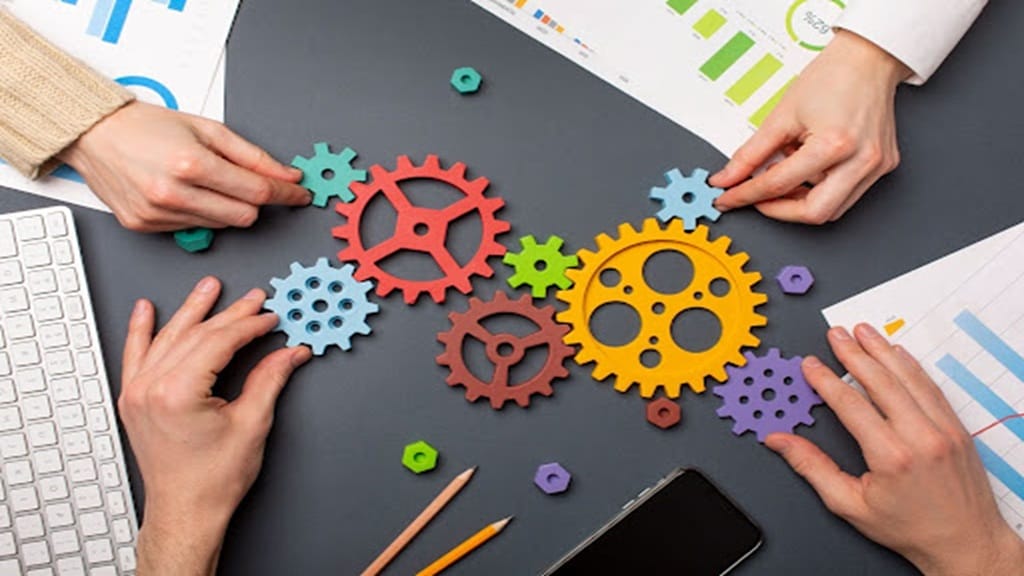
In This Article:
Today, in every industry—in the launch of a tech product or public health campaign, in building infrastructure or executing a new financial system—there is one person working behind the scenes: the project manager. Project management provides the framework vice to take ideas and make them a reality. While creating a project, project management represents the area between vision and doing, getting things done efficiently, on time, and on budget.
Finally, in an era of rapid innovation and globalization, project management has become a multi-disciplinary area with numerous platforms and methodologies. The recent statistics say that this genre will see a growth of 10.67% CAGR with a net worth of $ 10 billion by 2026! So, it is important for all professionals, entrepreneurs, and students to appreciate what project management is, and the different types of project management that exist.
What Is Project Management?
A project manager’s job is the management of resources to achieve definite objectives. To fulfil that role, project managers use the discipline of project management to combine various processes in a specific way to accomplish something unique. Although routine operations take place over time, they are nonetheless ongoing and therefore, repetitive. Examples of an operation include the production of a good or delivery of a service. This entails that a project is temporary and consists of a defined beginning and end, and its proposed result is unique: a product, a service, or an outcome.
Key Characteristics of a Project:
- Definable Objectives: A project will have an objective, or deliverables, that must be completed.
- Temporary: A project will have a definite start and end point.
- Unique deliverable: A project will create a deliverable that is either new, or significantly improved.
- Constraints: There will always be three constraints – time, cost, and quality. All three constraints are interdependent and must be managed in unison.
Example:
Developing a mobile application to monitor diabetic patients remotely is a project. This project runs through the phases of planning, implementation, testing, and completion and then goes live. At this point, however, the project ends and maintenance, updates, and regular operations begin—no longer a project.
Why Is Project Management Important?
Project management is more than just coordinating tasks. Project management is a strategic competency that organizations can use to tie project outcomes to business objectives and compete in the marketplace better.
Backed by extensive studies, effective project management has numerous benefits!
- Strategic Alignment: Effective project management aligns campaigns and projects with business goals.
- Streamlined Processes: Effective project management delivers efficiency by streamlining processes.
- Risk Management: Effective project management informs potential risk factors early on, avoiding major costs later.
- Budget Management: Effective project management allows for accountability and avoids unnecessary costs and pitfalls.
- Teamwork: Effective project management provides clear team roles, communication, accountability, and direction.
An important statistic to note from the PMI Pulse of the Profession Report is organizations that do not prioritize project management and don’t see it as a strategic tool, experience 67% more project failures than organizations that do.
The Five Stages of the Project Management Lifecycle
The Project Management Institute (PMI) identifies five fundamental groups of processes that are applicable across all industries:
1. Initiation
This stage identifies what the project is at a high level. This can include a feasibility study or determining the feasibility of the goals, timeline, and budget. Also, this is the stage where the Stakeholders are identified and the project charter is formally created to authorize the project.
Example: The beginning steps of a company who is considering developing a solar-powered drip irrigation system includes researching to determine the feasibility of the system, interviewing stakeholders, and assessing feasibility.
2. Planning
An essential phase of planning from start to finish is when you create explicit road mapping, budgeting, timing, and communication planning in addition to anticipating risks and identifying ways to mitigate them.
Deliverables include:
- Work Breakdown Structure (WBS)
- Gantt charts
- Resource allocation
- Cost Estimate
Example: In planning a public health campaign, the planning stage would have timelines for outreach, training, acquisition of vaccines, and defining which communities we must prioritize.
3. Executing
The project team is executing the project and it is one of the most crucial project management methods. They are creating deliverables, diligently tracking metrics, monitoring performance, and ensuring quality. Execution and monitoring often coexist here.
Key Activities include:
- Team meetings and communications
- Acquisition of products
- Tracking progress
- Clients updates
Example: A construction company pouring concrete, getting plumbing in, and maintaining in-service status for workers during the execution of a hospital project.
4. Monitoring and Controlling
Dovetailing with execution, monitoring only after you have established a baseline from your plan is a crucial and ongoing process. Monitor will track your performance. The following section will be based on Key Performance Indicators (KPIs), as a tool, and Earned Value Management (EVM) will be used.
For example: A marketing agency benchmarks analytics for their digital campaign, and based on the analysis, the agency would make modifications to the content and use different delivery channels.
5. Closure
A project will close with a project deliverable being delivered, approvals documented, and finalized documentation. The teams will review overall performance and lessons learned, and celebrate the project outcome.
For example: A company starts a new ERP system, they conduct a post-implementation review, and they hand off to IT Support as ongoing maintenance.
Types of Project Management Methodologies
Different projects follow different management strategies. Here are the most common methodologies that fall into project types.
-
Waterfall Project Management
It is a linear model where the process moves down, like a waterfall (aka waterfall approach); Each phase is completed before beginning the next phase, in order.
Best Fit: construction, engineering etc – as the requirements are fixed, and changes cannot emerge.
Advantages:
- Simple to manage
- Easy to monitor
- Fully documented processes
Disadvantages:
During implementation, inflexible to changes
For example: It is cost prohibitive to change anything when building and doing a bridge design.
-
Agile Project Management
Agile project management is one of the best project management types that is nothing but an iterative approach to project management, and can change and adapt to situations which were unforeseen and encourages the participation of the customer. An Agile approach separates project activities into parts (or sprints) and collaboratively each role on the team assists moving the project along.
Best Fit: software, product development, start-ups/entrepreneurial.
Advantages:
- Easy to make changes when you are involved in an Agile project approach
- Encourages customer involvement
Disadvantages:
Stakeholder involvement for each sprints is necessary
For example: An application development team, adds new feature changes, and solicits feedback and suggestions from their customers for continued improvement. Every two-weeks, they test the application activity by releasing new features and incorporating customer feedback.
-
Scrum Framework
Scrum is an agile methodology type/framework. There are several roles within scrum and every team member has authority to join in the team process. Scrum recognizes that project work can be accomplished using small groups or teams, where the teams self-organize and meet regularly to review their process through a review period. Depending on the size of the team, both sides of the project can continue and reassess priorities based on what data or information the team has received, which recent event the review period may be.
Best Fit: creative, technical project work with changing objectives or requirements.
Key Roles in Scrum:
- Product Owner
- Scrum Master
- Development Team
For example: An interactive game development project completes their modules every sprint or iteration, and continues to improve the design based on user feedback to improve the interactive elements of the game.
-
Lean Project Management
Lean focus on waste and value. Waste is an activity that detracts and eliminates value added to the team. Lean relies on continuous improvement, respecting people and processes, and smoothing out the process.
Best Fit: manufacturing, health care, services.
Lean Performance Improvement Principles:
- Identify value
- Identify waste
- Continuous improvement (kaizen)
For example: A hospital examined their patient admissions check-in process in order to; eliminate patient wait time, reduce paperwork, and implement a better and good process.
-
Kanban
Kanban is a visual task board (physical or digital) where team members can instantly see progress. It limits Work In Progress (WIP) to improve flow and minimize stress.
Best For: Service desks, content creation, maintenance
Use Case: A customer support team adopts Kanban to address incoming questions or issues while prioritizing the urgent and maintaining visibility of incoming work.
-
PRINCE2 (Projects in Controlled Environments)
A structured and process-driven methodology that is also government backed in the UK. PRINCE2 establishes clear stages, roles, and risk management procedures.
Use When: large public projects, infrastructure
Example: A National government relies on PRINCE2 to monitor a national program for railway modernization.
What Makes Atlantic International University (AIU)’s Project Management Education Unique?
Atlantic International University (AIU), in all levels of project management education at the Bachelor’s, Master’s and Doctorate, offers a learning experience that is unique for project managers. What distinguishes AIU is personalized education, academic freedom, and global accessibility with its use of online education.
- Flexible Academic Curriculum
We believe at AIU that no two programs should be alike. Choose from 8,244 academic components including:
- Specialized mini-courses
- Assignments and problem-based learning
- Trials and real-world case studies
- 750+ live classes and webinars
Which means, students working toward a doctorate in project management could choose to focus on sustainability, technology, crisis response, or any domain-specific area of application relevant to their career.
- Andragogy and Academic Freedom
AIU practices andragogy, or the art and science of adult learning, instead of pedagogy.
Andragogy places focus on: Encouraging student autonomy Building on the student’s professional background Highlighting critical thinking and application to practice.
AIU believes that students are co-creators of their educational process instead of consumers of content.
- Flexible Remote Learning
AIU hosts a 100% online format that allows students to study from anywhere in the World.
Students can:
- Access the material 24/7
- Engage with peers and advisors
- Study at their own pace
Regardless if you are a working parent, a full-time worker, or living in a remote location, AIU makes it easy to continue education as a basic human right that is flexible and equitable.
- Flexible Distance Learning
AIU’s 100% online system provides learning opportunities from anywhere in the world. Students can:
- Get materials anytime, 24/7
- Interact with their instructors and fellow students
- Learn. At their own interests and pacing.
More class options mean more opportunity – Whether you are a working parent, full or part-time professional or living remotely, AIU’s system makes learning a human right and keeps it open and flexible.
- Internationalization and Purpose-Based Learning
AIU promotes Purpose-Based Learning in its curriculum to encourage the intentional alignment of students’ studies with a wider purpose—whether it is to develop entrepreneurship, innovation, sustainability, or social change. AIU provides students with a global educational network of peers and faculty to ensure they are involved in a learning experience that is stress-free and includes diverse global perspectives and best practices in project management.
Job Possibilities in Project Management
Once you’ve earned a degree in project management, you can get your foot in the door with countless opportunities. Some of the job titles you can expect to land are:
- Project Manager
- Program Director
- Portfolio Manager
- Risk Manager
- Agile Coach
- Scrum Master
- Industries Hiring Project Managers:
- Information and Software Development
- Construction and Real Estate
- Renewable Energy
- Pharmaceuticals and Medical
- Logistics and Transportation
- Financial Services
Salary Info:
According to the PMI Salary Survey, project managers with certification have an average salary bonus of 23% over project managers without certification. Median annual salaries are often in the $85,000–$120,000 range in other parts of the world based on the region and experience.
Conclusion: A Future Built on Projects
Project Management is the glue that binds ideas, the journey from conception to realisation. Demands for skilled project professionals are now seen in all parts of the globe. The need to understand methodologies and develop qualifications is paramount.
Embed this video here – https://www.youtube.com/watch?v=Slq9TVGdvpo
AIU offers an education model that is human, adaptable, and bespoke. At AIU, we prepare you to lead and innovate project environments globally, wherever you are in your personal project management journey, assessing and starting out, or ready to take an advanced placement in your specialisation, AIU has the resources, flexibility of study options, and a global context to foster your success.
Are you prepared to lead in project management?
Enter a program that values your experience, vision, and path! Check out AIU’s flexible Bachelor’s, Master’s, or Doctorate degree in Project Management and shape your future, your way.
Visit https://www.aiu.edu to start!
Author Bio

Kathakali Basu is a dynamic Content Strategist and Brand Communication expert at Atlantic International University, with a knack for transforming ideas into compelling narratives. With a Masters in Sociology and certification in Content Marketing, Kathakali expertly crafts strategies that elevate brands and captivate audiences. Her extensive experience in content writing and strategy has helped numerous businesses articulate their vision and connect meaningfully with their target market. Passionate about blending creativity with data-driven insights, Kathakali thrives on creating impactful content for the last 16+ years that not only resonates but drives results.
An animal lover and believer in inclusivity, she actively participates in animal rescues and rehoming. When she’s not strategizing, you’ll find her exploring the latest trends in digital marketing or indulging in reading and her love for storytelling.