In recent years, artificial intelligence (AI) has moved from being a futuristic concept to an everyday reality, influencing nearly every aspect of human life. One of the most transformative areas experiencing this technological shift is education. The rise of AI-powered tools, intelligent tutoring systems, and adaptive learning platforms has sparked both excitement and concern about the future of learning. The question is no longer if AI belongs in the classroom, but rather how deeply it should integrate into the educational experience.
From Chalkboards to Chatbots: A New Era in Learning
Education has evolved dramatically—from chalkboards and paper textbooks to digital classrooms and cloud-based platforms. AI represents the next major leap. Unlike traditional technology, which simply digitizes existing materials, AI personalizes and transforms how students learn and teachers teach.
AI can analyze how a student interacts with content, track progress, and tailor lessons to meet individual needs. For instance, adaptive learning systems like AI tutors can adjust the difficulty of exercises, provide instant feedback, and even recommend additional resources when a student struggles with a concept. This customized approach helps create a more inclusive and efficient learning environment, ensuring that no student is left behind.
Empowering Teachers, Not Replacing Them
A common misconception is that AI will replace educators. However, the true power of AI lies in its ability to augment human teaching, not eliminate it. Teachers can use AI tools to automate administrative tasks—such as grading, attendance tracking, and scheduling—giving them more time to focus on creative, high-value instruction.
Furthermore, AI-driven data analytics can help teachers identify learning gaps, predict student performance, and intervene early when additional support is needed. By providing real-time insights, AI enables educators to make data-informed decisions that enhance teaching quality and student outcomes.
Creating a Personalized Learning Experience
Every student learns differently—some visually, others through practice or discussion. Traditional education systems often struggle to meet these varied needs. AI changes this by creating personalized learning pathways. Through intelligent algorithms, AI can adapt content delivery to match a student’s learning style, pace, and strengths.
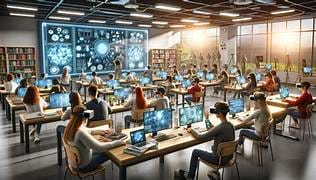
Imagine a classroom where an AI assistant continuously monitors student engagement and adjusts lessons dynamically. A student who learns faster in mathematics can move ahead, while another who needs more time with grammar receives additional exercises and explanations. This flexibility fosters confidence, reduces frustration, and promotes deeper understanding.
Challenges and Ethical Considerations
Despite its many benefits, integrating AI into education is not without challenges. Concerns around data privacy, algorithmic bias, and overdependence on technology must be addressed. Schools and developers need to ensure that student data is protected and that AI systems are transparent and fair.
Another issue is the potential widening of the digital divide. Wealthier schools often have greater access to advanced technology, while underfunded institutions struggle to implement even basic tools. Without equitable access, AI in education could inadvertently reinforce existing inequalities instead of reducing them.
Lastly, there’s the human element. While AI can simulate teaching, it cannot replicate the empathy, emotional intelligence, and inspiration that human educators bring. Striking the right balance between automation and human connection remains crucial.
The Future of AI in Education
The future classroom may look very different from today’s, blending human creativity with machine intelligence. Students could interact with virtual mentors, use AI to explore real-world problems, and collaborate globally through intelligent platforms. Meanwhile, teachers will take on roles as facilitators and mentors, guiding students through an increasingly personalized and dynamic learning landscape.
AI has the potential to democratize education, making quality learning accessible to students worldwide. From rural communities to urban centers, technology can bridge gaps in resources and expertise—if implemented ethically and inclusively.
Conclusion
The tech-takeover of education is not about replacing teachers or transforming students into robots. It’s about harnessing the power of AI to make learning more effective, equitable, and engaging. The classroom of the future is one where technology supports curiosity, enhances creativity, and empowers both learners and educators to reach new heights.
For a deeper look at how AI is reshaping education, watch the full video here: https://youtu.be/Nihjh2D_fu4
By Daniela Febres