Artificial intelligence (AI) is rapidly becoming one of the most influential technologies in modern healthcare. With its ability to analyze complex data, learn from patterns, and assist in decision-making, AI is reshaping how patients are diagnosed, treated, and monitored. What once sounded like science fiction is now a growing reality across hospitals, clinics, and research labs worldwide.
This article explores the key applications, benefits, challenges, and future direction of AI in healthcare.
1. AI in Diagnosis: Faster, More Accurate Detection
AI systems—especially machine learning and deep learning models—are showing exceptional promise in diagnosing diseases earlier and more accurately than traditional methods.
Key diagnostic applications:
-
Medical imaging analysis: AI can detect abnormalities in X-rays, MRIs, and CT scans with high accuracy, assisting radiologists in catching conditions such as cancer, fractures, tumors, and neurological disorders.
-
Pathology: AI helps analyze tissue samples and identify disease markers at a microscopic level.
-
Predictive diagnosis: Machine learning models can analyze health trends to predict potential conditions before symptoms fully appear.
These advancements not only speed up diagnosis but also reduce human error, increasing the chances of successful treatment.
2. AI-Driven Treatment Plans and Personalization
AI is enabling more personalized medicine by taking into account an individual’s genetics, lifestyle, medical history, and response to previous treatments.
Examples of personalized care:
-
Algorithms that suggest tailored cancer therapies based on tumor genetics.
-
AI systems that adjust insulin dosages for people with diabetes in real time.
-
Predictive models that determine which medications may work best for a specific patient.
This shift from one-size-fits-all medicine to precision healthcare marks a major improvement in patient outcomes.
3. Robotics and Automation in Healthcare
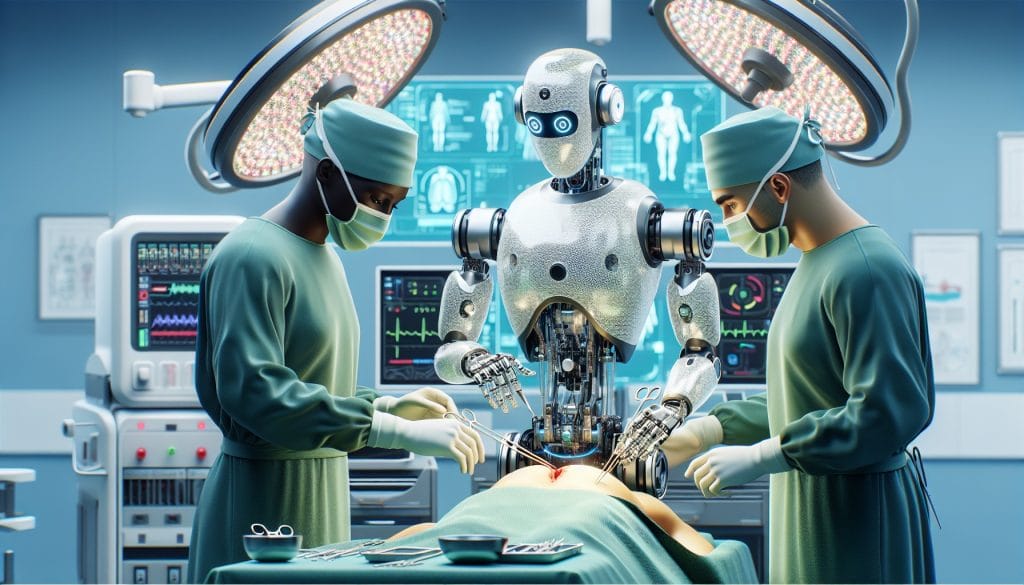
AI-powered robots are increasingly used in surgeries, rehabilitation, and logistics.
Common uses of robotics:
-
Surgical robots: Assist surgeons with high-precision operations and minimally invasive procedures.
-
Rehabilitation robots: Help patients recover mobility after injuries or strokes.
-
Hospital automation: Robots deliver medications, transport samples, and support staff with routine tasks.
These technologies reduce workload, improve accuracy, and free healthcare workers to focus on direct patient care.
4. AI in Patient Monitoring and Wearable Technology
Wearable devices equipped with AI can continuously track vital signs such as heart rate, oxygen levels, blood pressure, and sleep patterns.
Benefits of AI-powered monitoring:
-
Early detection of health deterioration.
-
Continuous monitoring for chronic conditions like heart disease or COPD.
-
Alerts sent directly to medical teams or caregivers during emergencies.
-
Greater patient independence and at-home healthcare options.
This technology brings healthcare beyond hospital walls, creating a bridge between patients and providers.
5. Administrative Efficiency and Cost Reduction
A significant portion of healthcare resources is absorbed by administrative tasks. AI helps reduce this burden by automating:
-
Scheduling and appointment management
-
Medical billing and coding
-
Electronic health record (EHR) documentation
-
Insurance claims processing
By cutting down on paperwork and manual tasks, AI allows healthcare professionals to dedicate more time to patient care.
6. Ethical Challenges and Limitations
Despite the benefits, AI in healthcare raises important concerns:
-
Data privacy: AI requires large amounts of sensitive patient data, increasing the need for strong security measures.
-
Bias: AI models trained on unbalanced datasets may produce unequal treatment or misdiagnoses.
-
Lack of transparency: Some AI systems function as “black boxes,” making it difficult to understand how decisions are made.
-
Dependence on technology: Overreliance on AI could reduce human oversight if not managed properly.
Addressing these challenges is essential to ensure safe, fair, and trustworthy AI use.
7. The Future of AI in Healthcare
The future of healthcare will likely feature deeper integration with AI through:
-
Predictive population health monitoring
-
AI-driven drug discovery
-
Virtual health assistants and chatbots
-
Fully automated medical imaging workflows
-
Advanced home healthcare systems
As technology advances, AI has the potential to make healthcare more efficient, accessible, and personalized than ever before.
Conclusion
AI is revolutionizing healthcare by enhancing diagnosis, improving treatment precision, supporting patient monitoring, and increasing efficiency. While challenges remain, the potential benefits are transformative. With careful regulation, ethical considerations, and continued innovation, AI will play a vital role in shaping the future of global health.