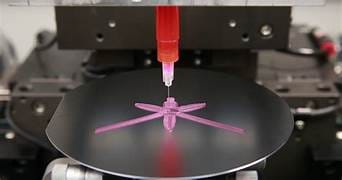
In recent years, innovation in manufacturing and material science has accelerated dramatically. One of the most exciting breakthroughs is 4D printing, an evolution of 3D printing that introduces time as a fourth dimension. With this technology, materials are not only created in complex shapes but can also transform, adapt, or respond to environmental stimuli such as temperature, humidity, or light. This is the foundation of what we now call programmable or adaptive materials.
What is 4D Printing?
Unlike traditional 3D printing, which produces static objects, 4D printing allows for the creation of structures that change shape or behavior over time. These transformations happen thanks to the use of smart materials that are programmed to respond in specific ways to physical stimuli.
For example, an object made from heat-sensitive material might bend, stretch, or unfold when exposed to a certain temperature—all without motors, batteries, or external controllers.
What Are Programmable Materials?
Programmable materials are designed to modify their structure, function, or shape in response to their environment. These materials essentially have built-in instructions, allowing them to “remember” specific forms or “act” autonomously.
Some of the most common programmable materials include:
-
Shape-memory polymers
-
Hydrogels that respond to moisture
-
Thermoactive and piezoelectric materials
-
Multilayer composites with differentiated behaviors
Current and Future Applications
Though still in development, 4D printing has immense potential in many industries:
-
Medicine: Implants that adapt to the patient’s body, stents that expand with body heat, or dynamic artificial tissues.
-
Aerospace and Robotics: Components that shift form to meet changing flight conditions or absorb impact without mechanical intervention.
-
Architecture and Design: Buildings with responsive structures—facades that open or close based on sunlight, or walls that self-regulate temperature.
-
Fashion and Smart Wearables: Clothing that adjusts to body shape or helps regulate body temperature depending on the environment.
A Future Shaped by Smart Materials
4D printing and adaptive materials are unlocking a new era of intelligent, sustainable design. They’re taking us beyond static structures into a world where materials interact with their environment and evolve over time.
These advances will not only transform industries but also the way we think about design, functionality, and our relationship with technology.