Sometimes the most effective tips in farming don’t come from a lab – they come from the kitchen.
Let’s take the example of white vinegar which is commonly used in every household for salad dressings, pickles, or that bottle tucked beneath the kitchen sink for cleaning purposes. But its efficiency doesn’t end with adding some taste to the food. It has great usage in farming. From weed control to soil adjustments – this humble household liquid has varied utility. Although always looked at as a low-impact agricultural tool, its story is far more fascinating than you might expect.
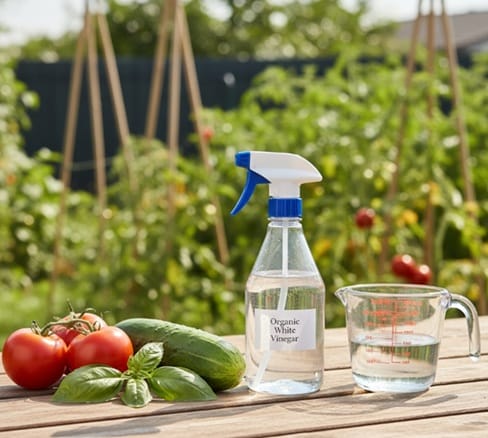
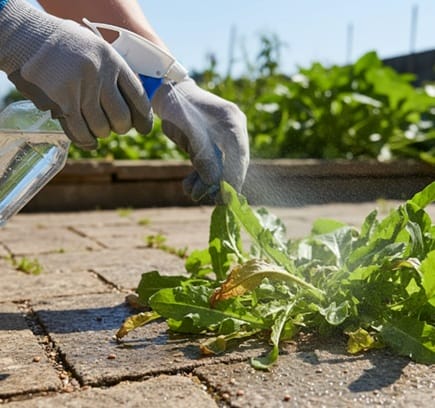
White vinegar may not have the heroic ring of “biopesticide” or “soil optimizer,” but that’s exactly what it can be. It is an active component which is pure acetic acid and possesses potent herbicidal properties. According to secondary research, household white vinegar usually contains 5% acetic acid which when sprayed directly on plant foliage, especially young, tender weeds – it disrupts cell membranes and dries the plant out within hours. Hence, this can be an excellent alternative to synthetic chemicals and investment on complicated machinery or labor. Just a simple spray bottle and a common household ingredient that’s been in kitchens for centuries.
In an era where environmental regulations are tightening and consumer demand for low-residue produce is rising – vinegar offers a refreshing middle ground that is effective, yet safe enough to pour into your pasta sauce.
Since solutions never come without challenges of their own. So, before vinegar is regarded as a definitive solution for weed control – its limitations must be clearly understood. Vinegar functions as a non-selective agent that can damage virtually any foliage it contacts. This means that it can damage both weeds and desirable crops. Its effectiveness is greatest on small, annual weeds – however, it is considerably less effective on deep-rooted perennial species that often regenerates because vinegar rarely destroys the root system.
Despite these limitations – vinegar offers notable advantages for small-scale farms, home gardens, orchards, and organic operations. It ensures the following:
- Rapid, visible results
- Minimal persistence in soil
- Low toxicity and no required protective gear beyond eye protection
It’s not a silver bullet, but in the right context, it’s incredibly handy.
A Soil Ally in Disguise
Beyond its role in weed control – vinegar serves several unconventional purposes in soil management. Sandy or alkaline soils, for example, may benefit from occasional, small-scale applications of vinegar to temporarily lower the pH levels and improve nutrient availability. Although it is not suited for long-term soil amendment since it is too mild for sustained impact however, it can provide a short-term adjustment when required.
Vinegar is also employed in routine maintenance of farming and its equipment. It is observed that farmers frequently use it to dissolve mineral deposits within irrigation lines and to sanitize tools without resorting to harsh chemical treatments. The same properties that make vinegar effective as a household cleaner also contribute to maintaining the efficiency of farm equipment.
Pest Control: More Than Just a Smell Test
Again, vinegar’s strong odor has traditionally been used as a home remedy to remove pests. In fact, agricultural practitioners have adapted these methods on a broader scale. Certain farmers utilize vinegar-based formulas to get rid of ants, fruit flies, and even rabbits. Others incorporate it into traps designed to attract pests such as – gnats. It is also used as an ingredient in fermented baits for fruit production.
Although vinegar is not universally effective as a repellent – it frequently enhances integrated pest management (IPM) strategies. According to NC State Extension, with the rise of organic farming, the usage of white vinegar solutions is increasing.
One of the most compelling reasons for the increasing use of vinegar in agriculture is its sustainability. It is produced through fermentation which is a process with deep historical roots. In fact, vinegar aligns well with the principles of regenerative agriculture. In comparison with synthetic herbicides – it has a lower carbon footprint and does not leave harmful residues on crops or in the surrounding ecosystems.
Farmers exploring the use of vinegar do not aim to replace modern science but rather to complement existing techniques with solutions that promote gentler, more resilient, and environmentally responsive agricultural practices.
A Future with More (Not Less) Simplicity
The future of farming does not solely depend on the development of stronger chemicals or complex technologies. At times, progress also involves revisiting simple and effective tools. Although white vinegar is unlikely to replace herbicides or fertilizers on large-scale commercial farmlands, it is steadily establishing a place where practicality and sustainability intersect.
Thus, the next time one encounters an ordinary bottle of white vinegar – it is worth remembering that somewhere, a farmer may be using the same substance to manage weeds, adjust soil conditions, reduce pests, or maintain the functionality of their equipment. White vinegar’s simplicity, long history, and versatility continue to influence modern agricultural practices in subtle yet meaningful ways.