Tracing Ancient Genes: Choanoflagellates to Mice
A significant study has filled a one billion year evolutionary gap by demonstrating that genes from a single-celled organism — even pre-dating the animal kingdom — can be leveraged to reprogram stem cells and lead to the creation of a live mouse. This discovery results from the efforts of scientists at Queen Mary University of London and The University of Hong Kong, and pushes the boundaries of stem cell biology and evolutionary genetics.
For decades researchers have reasoned that pluripotent genes — the fundamental abilities of stem cells to become any type of cell in the body — must have arisen after multicellular animals developed on the planet. This study demonstrates that some molecular aspects of pluripotency must have existed in some form in our single-celled ancestors and overturns an original assumption. The scientists successfully engaged a Sox gene from choanoflagellates, which are single celled organisms, to produce a stem cell, which eventually contributed to the birth of a live chimeric mouse.
Beyond a curiosity from a scientific perspective, this research presents profound implications for understanding the deep evolutionary history of the genetic constructs we are using today, as well as future directions in regenerative medicine, synthetic biology, and our understanding of the evolution of multicellular life from single celled organisms.
Understanding Choanoflagellates: Living Fossils in the Tree of Life
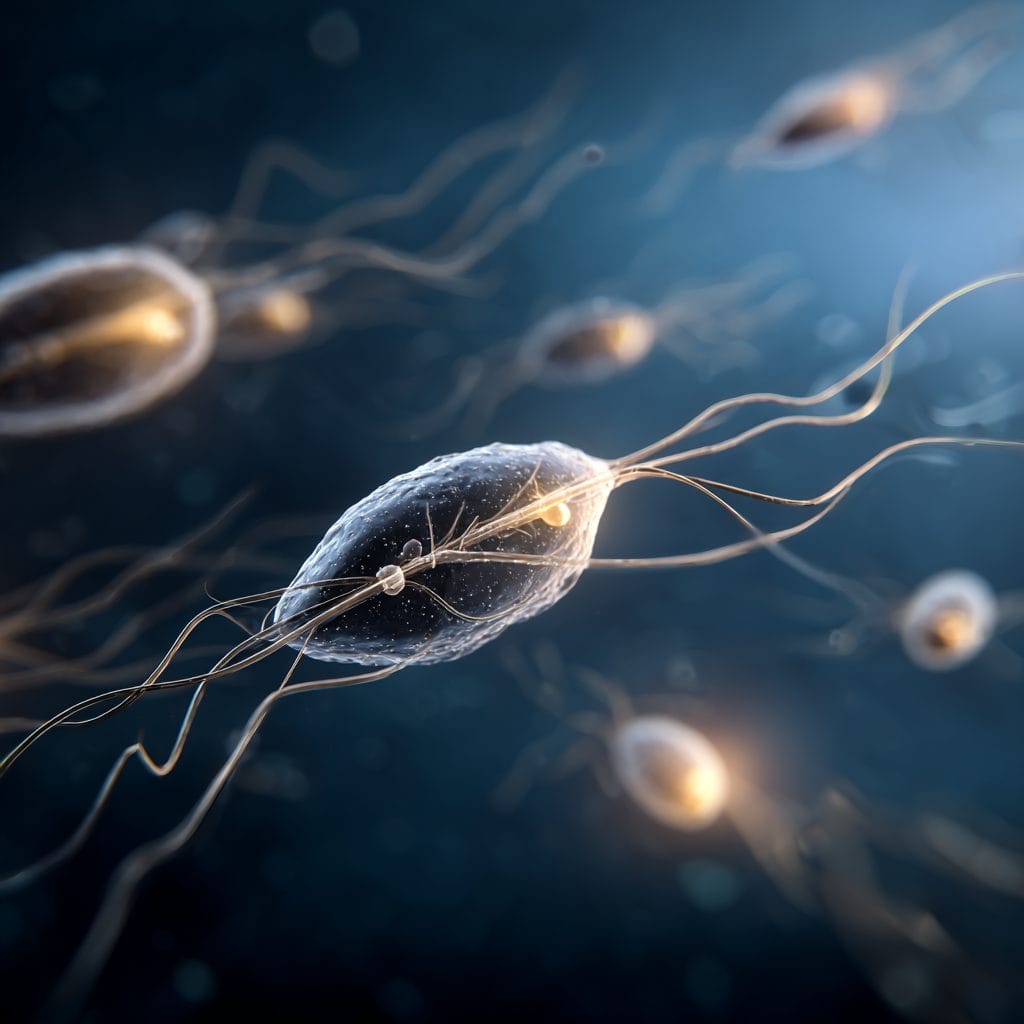
At first glance, choanoflagellates may appear fairly nondescript – single-celled organisms, many of which can be found in aquatic environments, that are generally observed as utilizing a flagellum, sometimes encircled by a collar of microvilli, to feed. However, they occupy a privileged position in the evolutionary tree – they are the closest living relatives of our own animal lineage (metazoans). As such, they will provide insight into our own ancient biological history.
Researchers have been studying choanoflagellates in the context of understanding the origins of multicellular organisms for a while now. Their much simpler genome compared to animals contains lots of homologs of the relevant genes necessary for key animal cellular functions such as adhesion, development and cell to cell communication. The existence of both Sox and POU genes are included in this genomic landscape, which is interesting as many believe these two families of transcription factors only arose and evolved in multicellular organisms.
Indeed, in animals, these types of genes regulate many factors related to important developmental programs such as stem cell maintenance and differentiation. For instance, in mammals, Sox2 and Oct4 ( a member of the POU family of transcription factors) are part of the “Yamanaka factors” that are leveraged to reprogram adult cells into induced pluripotent stem cells (IPSCs). The finding that choanoflagellates possess primitive versions of Sox and POU transcription factors means their ancestors must have had some type of non-specific transcriptional regulatory roles that were more general than in animals like regulating cellular responses to environmental signals or regulating cellular behaviors.
By tracing these genes back to single celled organisms, scientists are uncovering evolutionary continuity in many facets of life (notably genes) and how ancient molecular tools were used and adapted, to perform increasing complexity of tasks — from maintaining basic cellular function to building tissues, organs and entire organisms.
Ancient Genetic Tools: Sox and POU Genes Before Animals
In 2012, Dr. Shinya Yamanaka was awarded the Nobel Prize for demonstrating that a combination of four genes, including Sox2 and Oct4, can turn adult cells into pluripotent stem cells – a breakthrough that radically transformed both regenerative medicine and developmental biology.
But, what if some of these reprogramming factors are not as contemporary or as animal-specific as we think?
That’s precisely what Dr. Alex de Mendoza and colleagues explored. Their study examined the Sox gene family, specifically the one involved in the choanoflagellates. The Sox family of transcription factors have HMG domains which allow these proteins to bind DNA uniquely, and therefore regulate the expression of genes.
The scientists cloned the choanoflagellates version of the Sox gene and implemented it into mouse cells by deleting the native Sox2 gene in mouse cells. Surprisingly, the foreign gene was able to reprogram the mouse cells into a pluripotent state — a process typically dependent on a complex orchestration of animal-specific gene expression.
This experiment demonstrated not only the biochemical compatibility of the choanoflagellate Sox gene with mouse cellular machinery but also that the evolutionary foundation for reprogramming cells existed in our unicellular ancestors.
The results suggest that Sox and POU genes were probably used for general transcriptional regulation in early eukaryotic cells, and later they were also used for developmental roles of multicellular animals. The reuse of pre-existing tools — what scientists refer to as “molecular tinkering” — is characteristic of evolutionary processes.
Creating Life from Ancient Blueprints: Reprogramming and Rebirth
Once the researchers had successfully reprogrammed the mouse cells with choanoflagellate Sox genes, they performed a further experiment: they injected those reprogrammed cells back into a developing mouse embryo. They then checked if they worked in vivo.
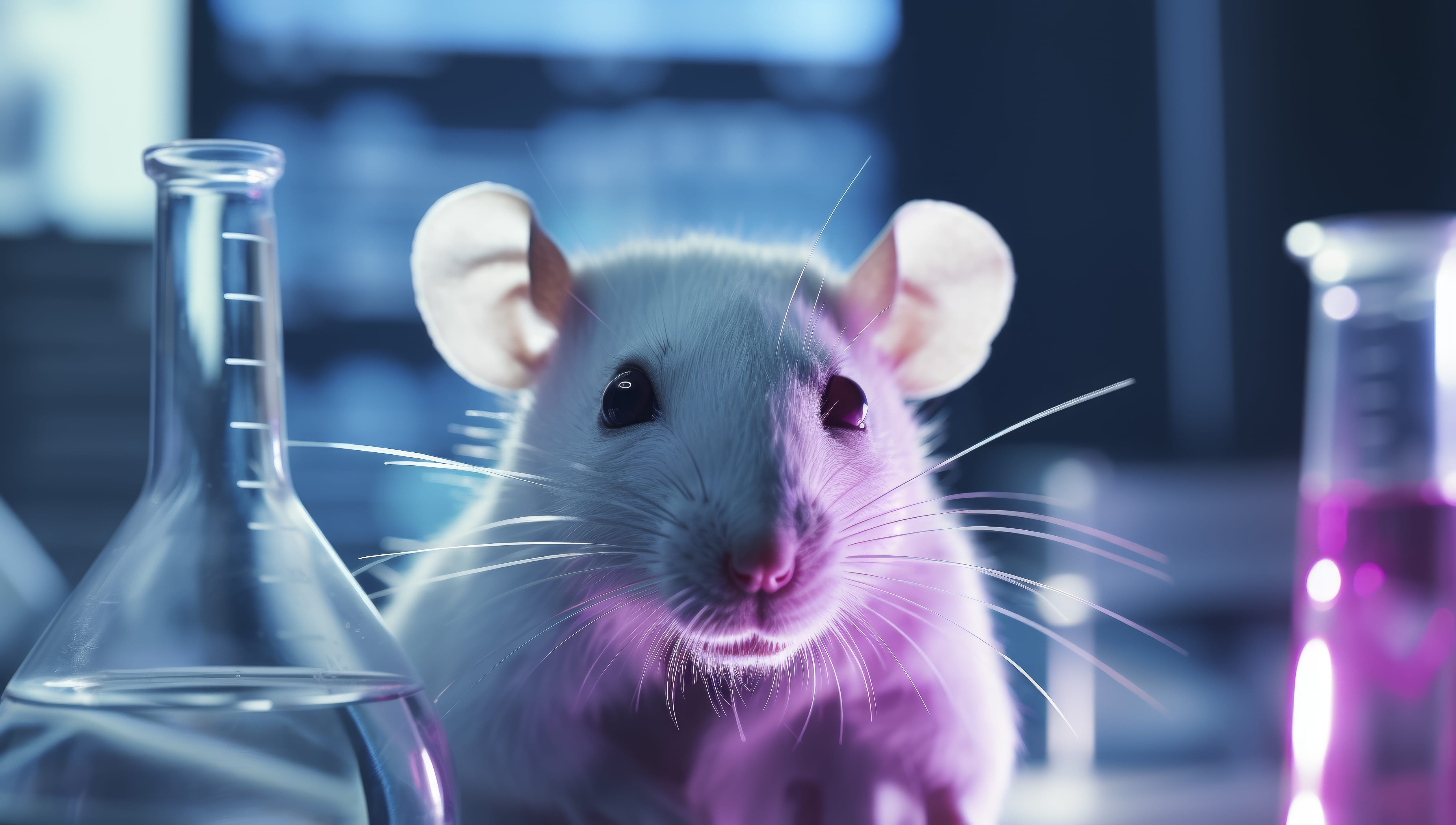
We were ecstatic to find a healthy, living, chimeric mouse — made from cells from both the donor host embryo and the injected stem cells. The most recognizable evidence? Black patches of fur and dark eyes; the obvious physical evidence of the engineered stem cells.
More importantly, this nonsensical observation demonstrated the primary point of this study — that the ancient genetic instructions of a unicellular organism could function in the complex biological apparatus of a modern day mammal. Somehow, it was as though we excavated a valuable, biological artifact — entombed through evolutionary time — that was still capable of life-building.
This study has almost unimaginable implications. It establishes not only a remarkable proof-of-concept, but opens a paving stone of direction in the study of stem-cell therapies by using simpler or different genetic agents to more efficiently, safely, or ethically reprogram cells.
Evolutionary Considerations: Rethinking stem cells.
It has been broadly assumed that stem cells are a modern construct of nature — a set of tools evolved by complex organisms, to repair or develop, or grow. However, this finding likely encourages scientific disciplines to take stock of a deeper evolutionary history.
Choanoflagellates do not have “stem cells”. They are unicellular and reproduce by fission. However, they have the molecular components that animals have for building and regulating stem cells. But, why?
Dr. de Mendoza proposes a somewhat compelling explanation — what we refer to as “stem cells” were mainly formerly general cellular utilisers: e.g. regulating stress responses, cell shape contextualisation, or regulating a metabolic cycle. Over evolutionary time, as multicellular organisms evolved, these generalist genetic instruments and capacities were “recycled” for new utilizations, including to build stem cells or regulate embryonic development.
This mechanistic idea of “recycling” or re-using and re-purposing the existing components, is a common feature of evolutionary processes. It is more efficient for evolutionary processes to manipulate an existing gene rather than to evolve a gene de novo. The fact that Sox and POU genes have evolved is a direct biological process that demonstrates how nature builds increased complexity: by manipulating existing components into new combinations.
This notion that defining multicellularity did not need new modern genetic instruments but rather new utilizations for primitive instruments, is also a significant feature for science to contemplate.
Applications in Regenerative Medicine: Future Opportunities
This finding will not only further the field of evolutionary biology, but will also extend into biotechnology and regenerative medicine.
One of the largest hurdles to overcome in stem cell therapy is finding a safe and effective way to reprogram adult cells into a pluripotent state, and without negative side effects, such as tumor formation. The fact the choanoflagellate genes are able to complete this in mouse cells opens up some exciting possibilities.
Could we eliminate risk in human therapies by non-animal pluripotency gene versions that are more simple? Can they perhaps be engineered to avoid some of the immune – or even epigenetic – non-specificity many current techniques have to contend with?
Moreover, if we could understand how these genes arose to regulate cell behavior, we may be able to better control stem cell differentiation. We may even be able to engineer our own gene circuits for synthetic biology applications – where cells have specified programming to do work like repair tissues or deliver drugs.
Additionally, since they involve cellular identity and differentiation, this may allow for new biomarkers for diseases related to this issue, including cancers – where developmental genes tend to be mis-expressed.
In short, ancient genes may potentially become the platform for future medicine.
Conclusion: A Discovery that Connects Deep Time to Future Medicine
This is groundbreaking work to be certain: the first time in history that scientists have taken molecular tools from a single-celled organism from nearly a billion years ago and used it to create life in a modern mammal.
By putting choanoflagellate Sox genes into mouse cells, researchers not only redefined what we thought we knew about the evolution of gene expression, but also opened new doors into the origin of stem cell biology.
What started as a question about evolutionary history ended with the birth of a mouse – a part mammal and part microbial past.
Engage with a globally connected community of learners, innovators, and thinkers that are changing the world in meaningful ways across disciplines. Create your own learning pathway and readily select from more than 8,244 distinct learning components, because education is never one-size-fits-all at AIU, it’s a never-ending journey of evolution.
Did you know that you can push the boundaries of knowledge beyond science and health?
Where will you take your education with AIU?
Reminder to our Dear Students,
Please ensure you are logged in as a student on the AIU platform and logged into the AIU Online
Library before accessing course links. This step is crucial for uninterrupted access to your learning
resources.