
- RESEARCHDistance Learning at AIU is enhanced by vast academic resources and innovative technologies build into the Virtual Campus: Hundreds of self-paced courses with video lectures and step by step lessons, thousands of optional assignments, 140,000 e-books, the Social Media & Networking platform allowing collaboration/chat/communications between students, and MYAIU develop students holistically in 11 areas beyond just academics.
- PROGRAMS OFFERED
- Areas of Study
- Courses and Curriculum
- Open Courses
- Register for a Program
- Associate Program
- Associate in Addiction Counseling
- Associate in Agriculture Food And Resources
- Associate in Anti Terrorism Security
- Associate in Behavior Analysis In Special Education
- Associate in Bioethics
- Associate in Climatology
- Associate in Cultural Theological Communication
- Associate in Culinary Arts
- Associate in Ecotechnology
- View all Associates Programs
- Bachelor Program
- Bachelors in Community Development
- Bachelors in Environmental Science
- Bachelor in Education (B.Ed, BS)
- Bachelors in Economics
- Bachelors in Entrepreneurship
- Bachelors in Financial Administration
- Bachelors in Human Resource Management
- Bachelors in Linguistics
- Bachelors in Nutritional Science
- Bachelors in Occupational Health and Safety
- Bachelors in Psychology
- View all Bachelor Programs
- Doctorate Program
- Doctor | of Biology (PhD)
- Doctorate in Business Administration (DBA, PhD)
- Doctor of Economics (PhD)
- Doctor of Electrical Engineering (D.Sc, PhD)
- Doctor of Finance (PhD)
- Doctorate in International Relations
- Doctorate in Information Technology (D.Sc)
- Doctor of Legal Studies (PhD)
- Doctor of Project Management (PhD)
- Doctor of Sociology (PhD, D.Sc)
- Doctorate in Sustainable Natural Resources Management
- View all Doctorate Programs
- Master Program
- Postdoctoral Program
- Postdoctoral in Animal Science
- Postdoctoral in Anti Terrorism Security
- Postdoctoral in Behavior Analysis In Special Education
- Postdoctoral in Bioethics
- Postdoctoral in Blockchain Technology and Digital Currency
- Postdoctoral in Business Management
- Postdoctoral in Cloud Computing
- Postdoctoral in Computer Engineering
- View all Postdoctoral Programs
AIU offers a wide range of majors in areas including the Arts, Business, Science, Technology, Social, and Human studies. More than 120 degrees and programs are available for adult learners at the associate’s, bachelor’s, master’s, doctoral and postdoctoral level. - VIRTUAL CAMPUS
Distance Learning at AIU is enhanced by vast academic resources and innovative technologies build into the Virtual Campus: Hundreds of self-paced courses with video lectures and step by step lessons, thousands of optional assignments, 140,000 e-books, the Social Media & Networking platform allowing collaboration/chat/communications between students, and MYAIU develop students holistically in 11 areas beyond just academics.
- ALUMNI
The world is YOUR campus!”, that is the message of AIU’s month magazine Campus Mundi. Hear the voices and see the faces that make up AIU. Campus Mundi brings the world of AIU to you every months with inspirational stories, news and achievements by AIU members from around the world (students and staff are located in over 200 countries).

The Incredible Journey of Jake and Zane Robertson

What types of psychological and emotional challenges do you imagine Jake and Zane Robertson faced leaving their homeland at just 17 years of age and how may that have impacted their development as athletes and people?
How does the distinct setting and culture of Iten, Kenya produce elite distance runners and why was this such a transformative experience for the Robertson twins?
In what ways was the pursuit of the Robertson twins’ journey an illustration of sacrifice, overcoming adversity, and engaging in self-belief in relation to a long-term vision or pursuit of athletic excellence?
Now it’s your time to reflect and create. Use the story of Jake and Zane Robertson as your starting point and engage in an in-depth response to the story using the themes of courage, sacrifice, cultural immersion, and achievement. Think about how their journey from New Zealand to Iten illustrates how environment, mindset and willpower drive someone’s journey. Write a complex essay not only about what they journeyed through, but also about why their experience matters- and that taking the bold plunge forward into the unknown can serve as a lesson for anyone in pursuit of greatness in their own personal lives.
(Login to your student section to access the AIU Additional Resources Library.)
The Incredible Journey of Jake and Zane Robertson: from New Zealand to the Mecca of Running, Iten, Kenya
At an age when most teenagers are still becoming who they are – trying to figure out school or who to hang with or the early stages of adulthood uncertainty – Jake and Zane Robertson were making choices that would change the course of their lives entirely. While their friends and classmates were deciding what university courses to take and what job they would have on the weekend, the Robertson twins were gambling everything on a crazy, audacious dream that even seasoned athletes would recoil at, to become elite distance runners. Robertson’s journey was going to require them to put their bodies through extreme pain and suffering to combine it with an uncommon mixture of courage, commitment and a self-belief that comes from somewhere beyond rationality.
What makes their story remarkable is not merely the ambition of their goal, but the reckless audacity of the choice they made to chase it. At just 17 and armed with little more than natural talent, unwavering and sometimes obsessive determination, and the oblivion of youth, Jake and Zane boarded a plane and left all that they knew—suburban Hamilton, friends, family, cultural comfort, etc., and traveled 14,000 kilometers to somewhere most New Zealanders had only heard of when watching the Olympics: Iten, Kenya.
It is not somewhere you think of sending your teenagers in search of adventure. It is a simple highland town with simple homes, red dirt roads and thin mountain air. It is nothing like the life that Jake and Zane had grown accustomed to, but in the world of athletics, Iten is sacred (for long-distance runners). It is known throughout the world as “The Home of Champions,” and the place where some of the greatest distance runners in history came from or trained. The Robertson’s understood something that few people in the world of athletics understood; if they wanted to be like their fellow East African competitors, they were going to need to start living like them, stealing their training environments, training where they trained, running in thin air, and adopting a serious lifestyle.
To observers, their choice seemed foolish—almost irresponsible, reckless; perhaps it was simply a case of teenage youth gone too far. But, for Jake and Zane, it was not crazy at all, it was clarity and acknowledgment that greatness will rarely manifest from positions of comfort. So, with no major sponsors, no elite coaches in waiting, knowing they may not even be good enough to be successful, they journeyed to Iten with one simple, strong belief, that so many of the best runners in the world were training there, and that is where they needed to be. Their future depended on it. Their dream demanded it. And they were willing to give it all to pursue it.

Seventeen and Not Afraid of the Unknown: A Desire to Experience More than What They Knew
Despite being very talented, Jake and Zane Robertson could only imagine what they might accomplish in an elite training environment. They were athletes who couldn’t help but think that they were missing something essential to their development as athletes: there was a wide gap between their talent level and that of East African athletes who had been, and continued to be, highly successful in the global competitions competitions and top events, some of which they had hoped to compete in.
Deciding to Change All that
Rather than just accepting their position, the Robertson twins made the decision to change all of that.
The twins packed up and sold everything they could, saved any penny they could, and bought one-way flights to Kenya. There was no sponsorship funding their endeavor; they would not workout with an elite coach; they wouldn’t have family around. They had never visited Africa and knew next to nothing about Kenyan culture outside of its rich history of being an elite running nation.
Others from home worried about their safety; friends thought they were out of their minds. But, they were not searching for validation; they were searching for possibilities.
The Trials of Early Experiences
Arriving in Iten was nothing like the Robertsons had envisioned when they were waiting for sleep to come during their planning sessions back home in New Zealand. They had imagined a utopia of training, in which world champions would clamor to coach them, they could run a structured program that guided their development and, simply because of their dedication, each opportunity would open a door. But what they arrived at was completely different, to the extent that it was jolting and almost earth shattering.
At their new home, they had a small, bare room with a concrete floor, skinny mattresses, and no creature comforts to cushion the blow. Mornings didn’t start with hot showers and meals on the table but instead with a cold shock of water that brought them awake faster than the cold chill in the air, and their breakfasts of porridge served at the real home stay made the old life seem like a fantasy. The electricity was unreliable, there were few amenities, and there were almost no comforts. It didn’t take long for the Robertson twins to learn that circuits of life in Iten required a certain kind of resilience that couldn’t be taught—it had to be lived.
The world they stepped into, however, was also new, fairly everything was foreign. The language barrier impeded even the simplest conversations, turning simple efforts into minor battles uniquely limited opportunities for social ease. In the market to buy juice, chicken and bread, and bread at the store, people spoke Swahili or dialect and the twins forced themselves to digest simple words and sentences to find their way around. Social norms, humor, customs, and expectations were different. Two teenagers from a small hometown who had never traveled far from home found the cultural adaptation especially broad.
Money presented an additional pressure on life as they had a modest amount, their careful calculus stretched, praying it would last long enough for their training to take shape. Each purchase was considered. Each meal was budgeted. There was no fall back situation, no interval income, and no certainty that their heads wouldn’t be tapped long before the athletic potential was met. The existential burden was always there, just above the athlete’s head, not only did it mean waste—but failure also meant hauling the family into a debt.
Then there was elevation, the unseen force working tirelessly against them. Training at 2,400 meters was infinitely tougher than anything they envisioned. The once easy run now left them breathless but fit because their legs were on fire; their lungs were yelling, and it took longer to recover than any time prior. The casual jog was now a battle and it was not uncommon for the local young athletes’ training sessions to be all but impossible to finish. They were among runners bred at elevation, with bodies accustomed to the thin air. The twins felt they were beginning at ground zero.
And yet, despite the discomfort, fallout, and total feeling of being out of their depth, Jake and Zane clung to at least one single establishment conviction that if they persisted long enough, suffered long enough, and adapted wholly enough, a real breakthrough was to be gained from their suffering. There were no assurances—no one directly promising them success, and no path was paved for them. All they had was a belief that they were going to be muck-worthy and instead be able to adapt to tougher training conditions and stick it out under the toughest disease-inducing athletic training conditions would get them there.
In the end, however, these early struggles did more than test their limits; they were the crucible of their transforming trial in the first place. Or, the complete leap of faith at such a young and fortunate time in their lives became the beginning of their metamorphosis. It was never ease or convenience that was producing their strength, but grace, and directly life-stemming endurance under challenging circumstances that they purposely entered into, all the while acknowledging that greatness is rooted in sacrifice long before reward or success is to take on form.

Iten: Why the World's Best Runners Go There
Known as “The Home of Champions,” Iten isn’t globally recognized because of its size—it’s known for producing and housing countless legends. Iten has one of the most unique performance laboratories on Earth.
- High Altitude: Nature’s Best Training Tool
Iten sits at nearly 2,400 meters (over 8,000 feet) above sea level with the oxygen-thin air making the body produce more red blood cells and learn greater aerobic efficiency. This adaptation helps provide the physiological advantage for athletes racing at lower altitudes.
But altitude is not magic alone – it is the combination of altitude and living there on a daily basis.
In Iten:
- Kids grow up running to school
- Adults walk or run for long distances every day
- The natural terrain and lifestyle, at an early age, develops endurance
The Robertson twins were suddenly living in an environment where world-class aerobic capacity was literally incorporated into their daily lives.
- Never-ending Red Dirt Roads: A Runners Paradise.
Iten’s beautiful red trails stretch endlessly over ridges, valleys, and through forests. Natural surfaces have many pros:
- Less impact on your joints than running on asphalt
- Different elevations that provide strength and aerobic power
- Soft, grippy footing which is perfect for long runs and tempo running
With so many options of trails, one run can offer hills, flats, and technical stretches. For the twins, these roads became their classroom and their testing ground.
- A Concentration of Champions
There are few places anywhere in the world where a runner can casually share a training path with Olympians and world champions. Iten is one of those places.
To train in Iten is to be in the company of:
- Eliud Kipchoge – the philosopher-king of the marathon
- Mo Farah – Olympic legend
- David Rudisha – the elegant destroyer of the 800m
- Mary Keitany – one of the greatest female marathoners in history
For Jake and Zane, the life and discipline, humility, and the ritual of these athletes was not a lesson from any coach, other than from the coach in Iten. In Iten, success is not rare—it is normal.
- Community, Companionship, and Running Culture
Running is more than a sport in Iten. It is a cultural experience.
- Every morning, groups of runners show up to train. These training sessions can be anything, from a light jog to an absolutely brutal fartlek session.
- Food is simple and Monday through Friday, it is the same: ugali (maize porridge), chapati, rice, beans, and sukuma wiki.
- Preceding running and discipline cannot be negotiated; minor bad habits are not readily visible to good athletes outside of maybe drinking or sleeping late.
The Robertson twins embraced the whole experience. It took them less than a week to learn some Swahili, and quickly they were eating (almost) the same foods and folding into the pattern that makes up Kenyan training life. Having put in a good amount of suffering, they began to earn the respect of their fellow athletes—not because they were a couple of foreigners chasing a great story—but simply because they were willing to suffer just as much as anyone else on the trails.
Adjusting to an unfamiliar landscape: Development Through Struggle
In the twins’ early years, things did not go smoothly:
- They struggled to hang with the field in group runs
- They struggled against fighting fatigue and burnout against the altitude
- Years passed where their bodies struggled to adapt through conditioning
Of course, there was so little money that some days they rationed food
- But through hardship they were made.
- Training like they belonged
They tried to take on a Kenyan approach:
- easy days were very easy
- hard days were very hard
- long runs that took them from the Rift valley to remote farming towns
- discipline was paramount when it came to rest and recovery
The time they committed to improving felt like it was wasted, and then one day they looked around and they weren’t just guests anymore hanging out in Kenya’s elite training structure.
Why Their Journey Still Resonates
People in the global running community are obsessed with Jake and Zane not just because they became successful runners, but because they redefined the limits of what a young dreamer can aspire to pursue.
Their story is compelling; it is their work;
- It is a testament to fearlessness.
- It is a celebration of believing in oneself in a world without affirmation.
- It is a testament to going deep into an exalted environment.
- It is a demonstration that often greatness comes without compromise.
- They went to Iten as aspirational teenagers.
They came out weathered professionals who have been forged by one of the most difficult running cultures in the world.
The Legacy of Iten: A Worldwide Destination for Future Champions
Iten’s growth shows no signs of slowing. Athletes from Europe, Asia, North America, South America, and Oceania, visit to experience the same thin air and run the same roads as the athletes they respect and look up to.
Coaches, physiologists and sport scientists study:
- The advantages of altitude
- The modesty of living
- The culture of success
But through all this global recognition, Iten is unchanged. The roads are impassable, houses are still basic and, the culture of discipline, community and consistency is still the basis of training.
Conclusion: The Courage to Pursue a Dream to the Edge of the World
Jake and Zane Robertson’s choice to leave their lives in New Zealand as mere 17 year-old’s and settle in the hard hills of Iten, Kenya remains one of the bravest and most inspiring stories in the history of modern running. But Robertson’s journey is not just about two young runners pursuing a faster time; it is about the courageous act of recalibrating your life’s trajectory, the willingness to abandon the comfort of the familiar, and the understanding that greatness often exists far away from the center of our tidy world.
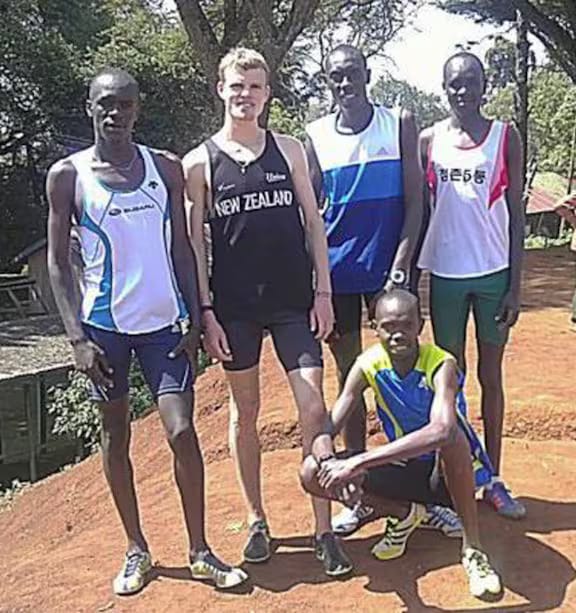
Robertson’s discovery speaks to the gravitational pull that Iten now represents as a destination of endurance excellence. The twins soon came to realize that what made this high-altitude town unique was not only the air was extremely thin and the reddish trails were primarily unpaved, but rather, the culture, the discipline, the humility, and the shared experience of being better every single day. In Iten, champions are not necessarily honored for their “talent,” rather they are recognized for their effort and commitment to the process.
Through their experience, Jake and Zane demonstrated one clear message: world-class success starts long before race day. World-class success starts with a decision – a moment in time where a dream is made into a commitment. Their choice to become extremely uncomfortable in exchange for some comfort, extremely uncertain for some predictability, and a very difficult way over an easier way was a choice they made. They embraced a world that would demand more from them than what they’d known, trusting that the struggle would be the preparation for who they want to be as an athlete.
And eventually, the Robertson twins did not just train in Iten; they very quickly became a part of the story. Their story illustrates that acts of bravery can yield extraordinary outcomes, and that the pursuit of excellence is largely a practice of bravery, sacrifice and belief.
If you feel you are prepared to take your own next step – in sport, in academics, in development of yourself, or in pursuit of global exploration that has yet to be determined – AIU are here to help guide you.
Join AIU now and begin writing your story with the same courage and clarity that drove the Robertson twins, and countless others in this town known as Iten, to the edge of the world.
- Masters in Adult Education
- Perpetual Evolution
- Integral Culture
- Growth & Inspiration – AIU Blog
- AIU Success Stories
- Join AIU Now
References
Reminder to our Dear Students,
Please ensure you are logged in as a student on the AIU platform and logged into the AIU Online
Library before accessing course links. This step is crucial for uninterrupted access to your learning
resources.
AIU Success Stories


Contact Us Today!
Begin Your Journey!
AIU’s Summer of Innovation and Growth gives you the ability to earn up to $5000 in tuition credit by completing free lessons and courses.
Whether you’re looking to acquire new skills, advance your career, or simply explore new interests, AIU is your gateway to a world of opportunities. With free access to 3400 lessons and hundreds of courses the ability to earn credits and earn certificates there’s no better time to start learning.
Join us today as a Guest Student and take the first step towards a brighter, more empowered future.
Explore. Learn. Achieve.