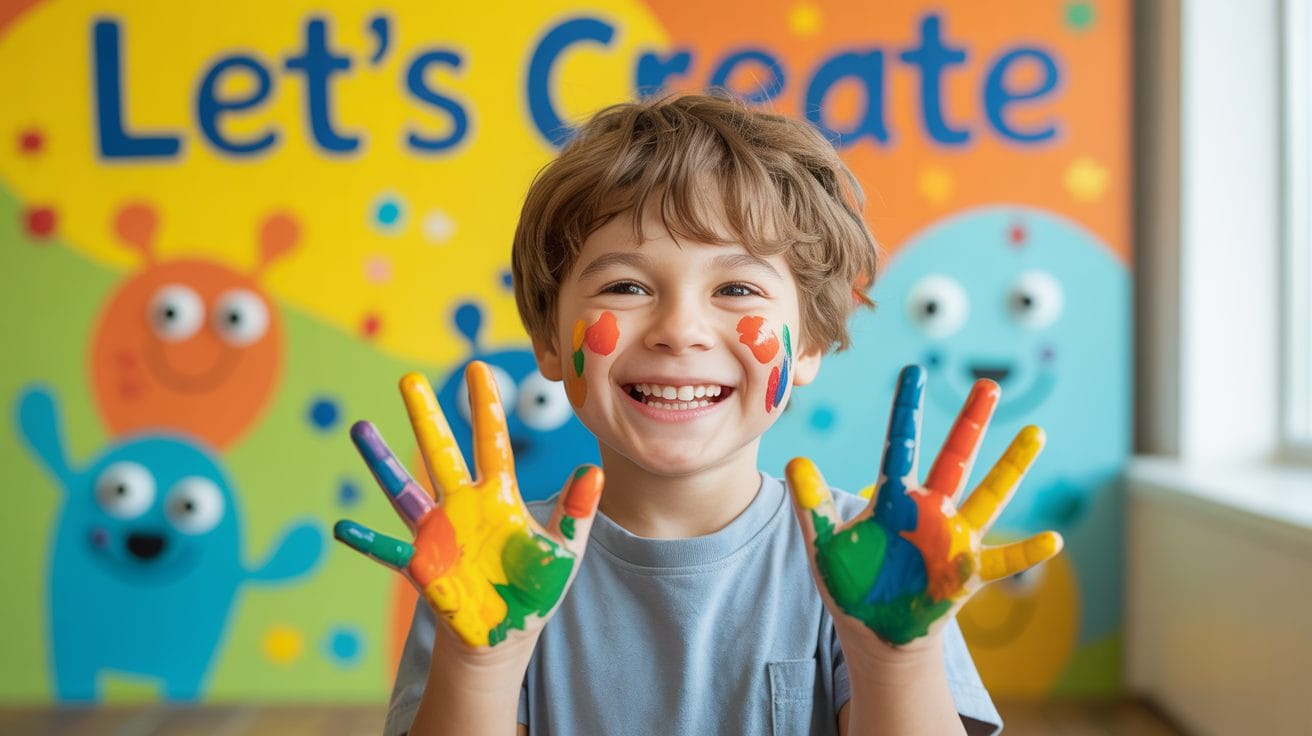
For a child’s mind, every step is experimental. That bottle of shampoo spilled on the floor may seem annoying, but it is an exploration with textures, and their reaction is important. The same thing happens when they hide an object, and it disappears; they are testing how to control their environment and seeing how the adults around them react.
Psychologist Jean Piaget explains in his theory of cognitive development that in their early years, infants tend to learn through direct manipulation and, of course, play. Those things that can easily drive us crazy are the little ones’ personal laboratory, where they really build their intelligence.
Piaget asserts that everything is governed by a system of “assimilation and accommodation.” Assimilation is when children incorporate new experiences into those they already know. For example, they know water, but they want to know more, so they empty it out and learn that when they do so, it spreads. Accommodation, on the other hand, is when they modify what they already know to adapt it to something new. Continuing with the example of water, it is when they see that it is not a toy and therefore must be treated differently.
For a child’s mind, every step is experimental. That bottle of shampoo spilled on the floor may seem annoying, but it is an exploration with textures, and their reaction is important. The same thing happens when they hide an object, and it disappears; they are testing how to control their environment and seeing how the adults around them react.
Psychologist Jean Piaget explains in his theory of cognitive development that in their early years, infants tend to learn through direct manipulation and, of course, play. Those things that can easily drive us crazy are the little ones’ personal laboratory, where they really build their intelligence.
Piaget asserts that everything is governed by a system of “assimilation and accommodation.” Assimilation is when children incorporate new experiences into those they already know. For example, they know water, but they want to know more, so they empty it out and learn that when they do so, it spreads. Accommodation, on the other hand, is when they modify what they already know to adapt it to something new. Continuing with the example of water, it is when they see that it is not a toy and therefore must be treated differently.
Each step of these little disasters is also a learning experience for parents. If they react by shouting or getting angry, children learn through fear. On the other hand, if they respond differently, with patience and guidance, children will learn that mistakes are a natural part of life. This type of action shapes their emotional security.
A small example of this in everyday life is the popular memes on multiple social networks of children creating art on walls or cutting their hair. These are things that, behind the collective laughter they may generate, cause a “negative” learning experience that becomes silent but is still present. Parents who know how to accompany their children with love and, above all, humor, help them learn tolerance, resilience, and creativity.
Several great artists, inventors, and scientists claim that their characteristic curiosity was fortunately formed thanks to the freedom to explore during their childhood. People like Thomas Edison, as a child, used to experiment at home, which on more than one occasion ended in chaos. Despite this, his parents did a great job of supporting his curiosity instead of repressing it.
This is a constant; we will always have children who continue to create their own universe, whether it be something as simple as boxes, dismantled toys, or walls turned into a huge canvas. The important thing is to remember that every mischievous act is a spark of creativity, and if it is well-guided, it can lead to innovative skills for life that they will have as adults.
Transformation of those pranks with the advent of the digital age
Nowadays, they are not limited to physical factors or tangible toys. Many parents share stories of babies who are able to unlock phones, send nonsensical messages, or even make online purchases. Although this may seem like a problem, these types of situations highlight how quickly children adapt to technology.
Instead of banning things they are used to without any reason, parents have the opportunity to teach them digital responsibility from the moment they come into contact with technology. This transforms what appears to be a “technological whim” into something they can use to learn self-control and boundaries.
Shared learning in the face of frustration as a task for parents
It is natural for children to get into mischief because that is how children behave. The key in this case is how adults interpret and respond to it. Every day, moments of mischief can be transformed into either a teaching opportunity or a conflict. The ideal way to deal with these mischievous acts is with humor, because sharing laughter at a joke or funny occurrence creates a bond that strengthens the emotional connection.
Patience plays an important role when correcting something that has happened. You should act calmly, explaining what is good and what is bad, so that it is understood and not taken as punishment. You can also turn mischief into creative games or learning opportunities. Disasters can become tests for parents, applying emotional intelligence and setting an example, which is the best way to teach.
Companies that innovate like Google and the “20% Rule”
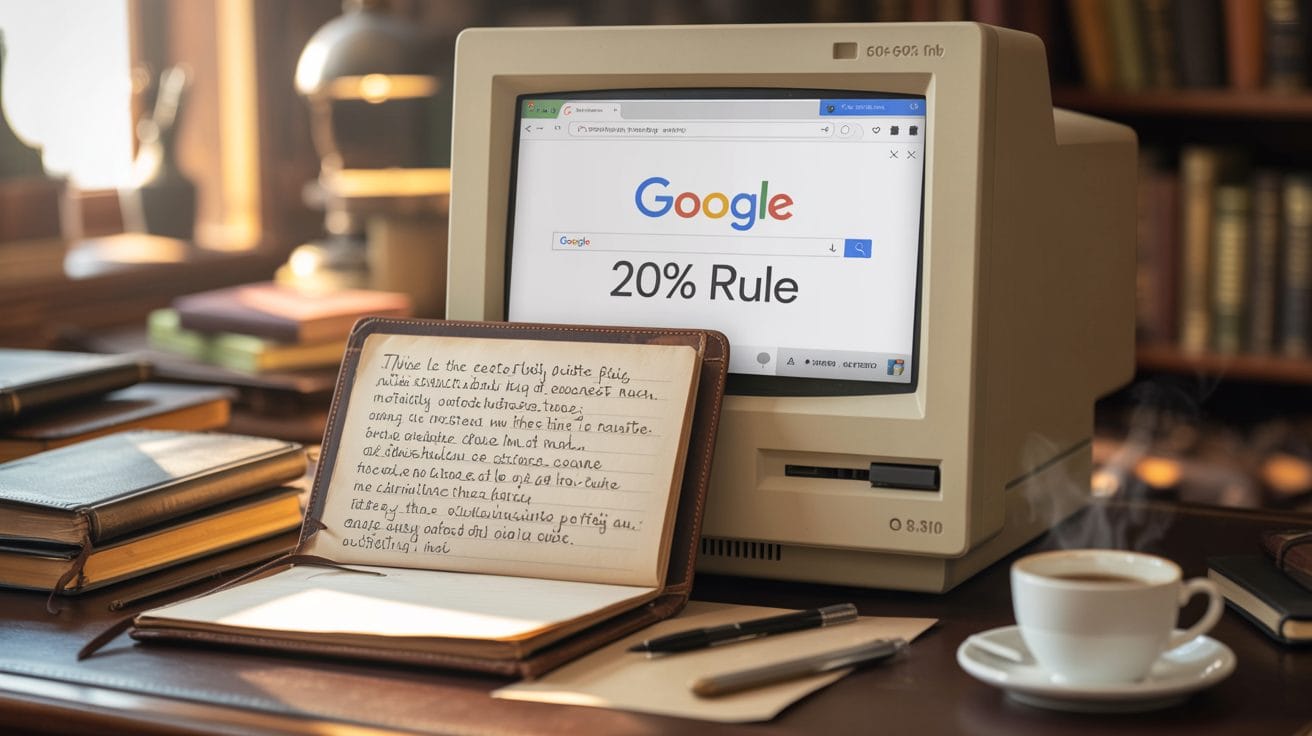
A company as large as Google is focusing on implementing an internal policy that will allow its employees to invest some of their time in starting or completing personal projects, up to 20% of their working hours, whether these projects are related to their duties within the company. It is in this small space for playing, experimenting, and exploring without fear of making mistakes that such well-known and now iconic products have been created, such as:
- Gmail
- Google Maps
- AdSense
This is a practice that perfectly exemplifies the importance of encouraging creativity, even when it seems “unproductive” in the short term. In essence, this represents a more mature form of what we call creative mischief in children, an unrestricted exploration to discover other possibilities.
This is a practice that perfectly exemplifies the importance of encouraging creativity, even when it seems “unproductive” in the short term. In essence, this represents a more mature form of what we call creative mischief in children, an unrestricted exploration to discover other possibilities.
Let children explore, and you will prepare them for the future!
Although it can sometimes be tiring, and they can create chaos around them, these are unique opportunities as a family to enjoy not only the growth of the children, but also the family itself. All of this reminds us how important it is to have this space for exploration, trial and error, and unfiltered creativity in childhood. Through these tremendous adventures, these little ones build not only their knowledge of the world but also their confidence, emotional security, and ability to adapt.
If we change our perspective to start seeing all these antics with different eyes than we are used to, we can realize that for every laugh and every little mess to clean up, there are traces of a future adult who is resilient, creative, and capable of being happy.
And to you, the student, this article is nothing more than a reflection to help you not only deal with children, but also to dare to explore and reconnect with that inner child who explores and learns, who is curious and always seeking more.
So, if you are interested in this topic and want to continue discovering more relevant and up-to-date information in areas such as child psychology, education, neuroscience, and human development, at AIU we have personalized, and flexible programs aimed at people like you, who are looking for guidance to continue on their path to excellence with innovative techniques and tools.