NASA's $3 Million 'Luna Recycle' Challenge: Solving Waste on the Moon
A Giant Step for Waste?
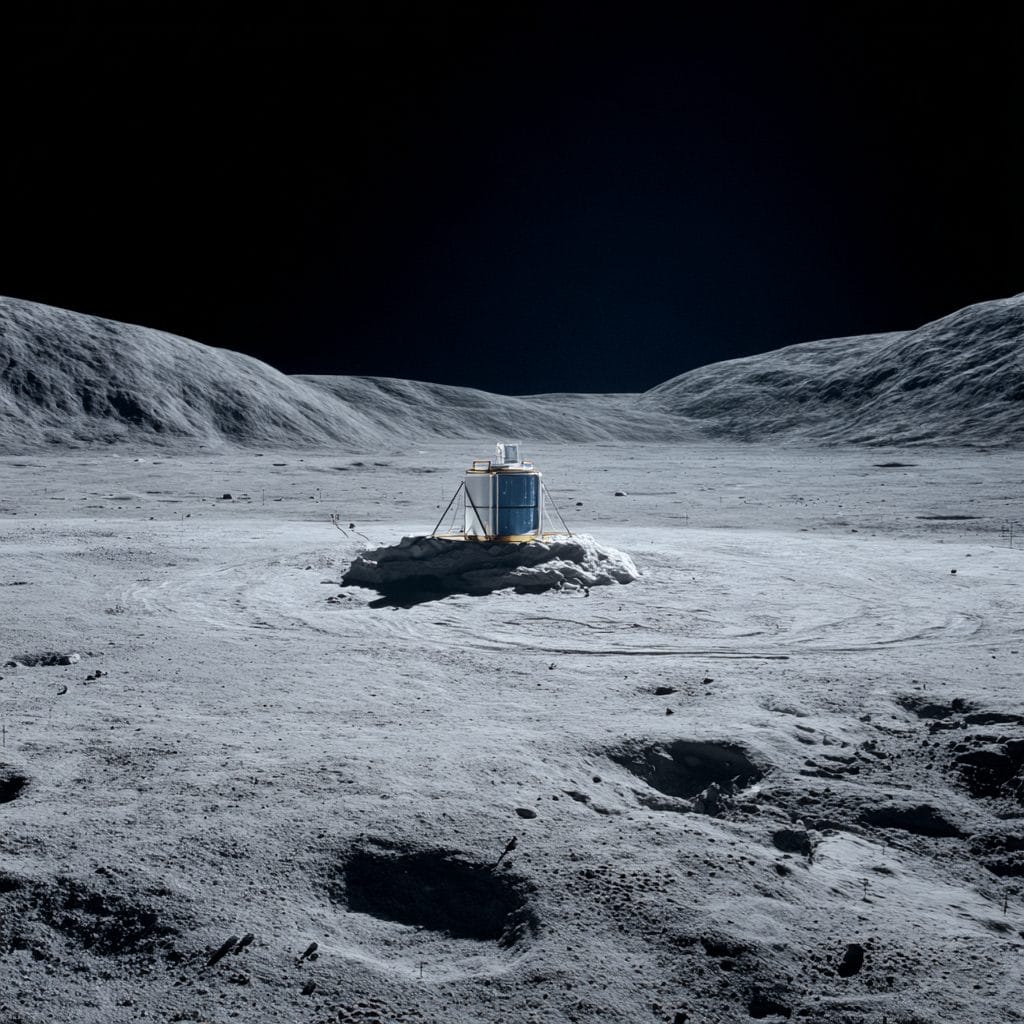
In an unprecedented and radical initiative to provide future space exploration with a different path forward, NASA has announced a challenge to solve a real issue on a very real planet with a $3 million prize. For this space challenge, the problem NASA wants to solve is littering the surface of the Moon. NASA has launched the ‘Luna Recycle’ challenge inviting scientists, engineers, and even regular people to come up with a safe, efficient, and original approach to waste management systems for the lunar surface.
What is the purpose? Because if we truly want to inhabit the Moon—and take the giant leap toward Mars—why would we carry forward the trash problem on Earth?
Why We Need a Recycling Program on the Moon
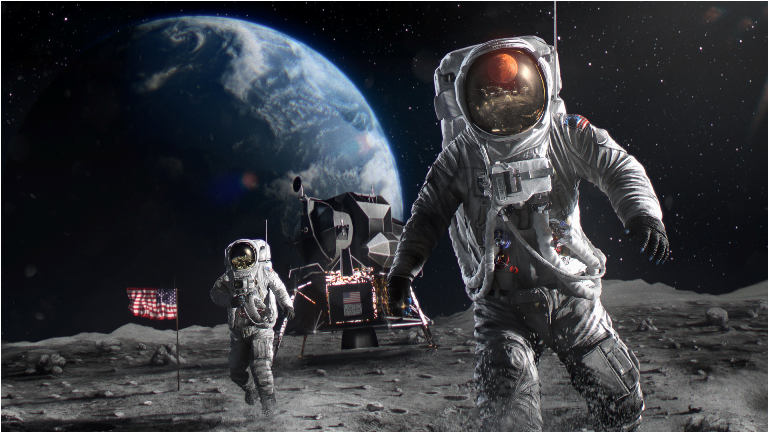
At first glance, it seems odd—why put a recycling program in place for a lifeless, uninhabited rock in space? But NASA has planned for more than just a single, temporary engagement with the lunar surface: the Artemis Program intends for humanity to return to the Moon to stay, not just to plant a flag.
We can anticipate that astronauts will be living and working on the Moon for a long time—a considerable amount of waste will be generated, both organic (food wrapping, wet clothing, medical disposables) and inorganic (scientific equipment, space suits, other supplies)—all will be discarded somehow. With limited options on how waste will be addressed (landfilling, incineration, recycling), future astronauts will be left with substantial waste from packaging, bags, clothing, equipment, and biomedical waste. This waste can:
- Interfere with operations and scientific instrument performance
- Contaminate zones reserved for future exploration
- Crowd living stations and surfaces of the Moon (safety unnest not logical)
- Logistically limit long term sustainment of a mission or program
On Earth, we place waste in the garbage then bury or burn it, or we recycle waste. In space (on the Moon), we do not have that same luxury. That is why NASA is encouraging everyone to think differently about how to tackle this now monumental problem in one of the most inhospitable environments we know of.
Inside the Luna Recycle Challenge
The Luna Recycle challenge is not a moonshot idea; rather, it is a global challenge to innovators dealing with these problems. NASA has a total prize pool of $3 million (waiting to be deployed) and a strong incentive to solve these dilemmas around waste recycling on the moon. Participants are being asked to design a new waste management system that would function in and on lunar conditions as follows:
- To manage inorganic waste: plastics, metals, synthetic fabrics, packaging material, and lab equipment;
- To process used clothing, and personal protective equipment;
- To process waste without degrading the fragile lunar environment;
- To return the recycled materials to Earth or repurpose the materials for use on the Moon;
- To keep the system safe, efficient, compact, and not interfere with other mission aspects.
This not only isn’t a clean-up crew, but it is an engineering feat in rehabilitation, facilitating innovation at the crossroads of environmental sciences, space technology, and sustainable design.
Why Now? The Urgency of Innovation
There has never been a more opportune time to usher in this innovation. The Artemis Program is forcefully underway and humans are set to return to the Moon for the first time in 50 Atomic Program about 50 years.
What is Artemis?
NASA’s Artemis Programfill program is its largest spaceflight program since Apollo. Here’s a quick summary:
- Artemis I: Ran successfully, and The uncrewed mission – of distantgelea tested, designed and demonstrated collaboration of the various systems necessary to conduct human space exploration.
- Artemis II: This mission will represent an important milestone into human space flight and be an uncrewed mission-it will have a crew that will demonstrate both life-support and navigation systems during the flight testing previous onboard systems during the Artemis I mission.
- Artemis III: The Apollo missions were historic space missions. The Artemis III mission will be historic (ignoring the socio-political dimension). Artemis III mission will be the first women and/or first African descent astronaut that may walk on the Moon.
NASA isn’t just stopping at moon missions. The ultimate goal? Permanent lunar bases, continual exploration, and missions to Mars. For all of that, we need to solve logistical challenges like waste management early, and solve them correctly.
Who can compete?
No need to worry about being an elite scientist– this open competition will bring everyone out from experienced aerospace engineers to imaginative students, tinkers, sustainability champions, and innovation labs around the world.
The emphasis will be on the fact that there are great ideas everywhere. What we need is a solution that works. What we mean by “works” is one that is safe, sustainable, and scalable.
You will need to:
- Understand the conditions of a lunar environment (low gravity, no atmosphere, exposure to radiation).
- Design a waste management process that can operate in that environment.
- Provide proof of concept, proof of design, and feasibility in an earthly scenario.
And the beauty of the challenge? You won’t even need to send it to space yourself: you just need to prove it can work and NASA will take care of the rest.
The Moon to Earth: A Dual Benefit
Among the many exciting aspects of the Luna Recycle challenge are the possible planet-based possibilities. What if we took the same systems of recycling waste in space and adapted them for:
– remote military bases or research bases;
– disaster zones and emergency camps;
– isolated communities with no formal waste systems;
– even urban environments are being put under more and more pressure from landfills and plastic pollution.
By creating sustainable systems for the Moon, we could create more intelligent systems for Earth. This is a true example of how Space related ingenuity could stimulate change on a global scale.
Conclusion: Your Idea Might Change the Future of Space
The Moon is no longer a dream – it is now our next home in space. But just like any home, we want it to be clean, safe, and livable. The Luna Recycle challenge is your time to be part of something amazing – help us build the future of space where exploration will be sustainable, responsible, and revolutionary.
So regardless if you are a garage tinkerer, Ph.D. candidate, or a visionary team, NASA wants your thinking in this area. You could win $3 million, make your mark on history, and make a difference – on the Moon and back on Earth.
Do You Accept the Challenge?
You can visit NASA’s official Luna Recycle Challenge page for guidance, submission requirements, and dates.
The Moon is waiting. Your idea could be the next big idea.
Turn Innovation into Impact – Start your Journey with AIU
Have you ever wanted to tackle global challenges, like NASA’s Luna Recycle mission? At Atlantic International University (AIU), we inspire innovators, scientists, change-makers, and anyone with a vision through an innovative educational model based on academic freedom, andragogy and purpose learning. Whether you are focused on sustainability, space flight, scientific discovery and innovation, AIU empowers you to design your own program, leverage state-of-the-art resources, and be the leader and scholar to address the world’s most pressing problems.
Reminder to our Dear Students,
Please ensure you are logged in as a student on the AIU platform and logged into the AIU Online
Library before accessing course links. This step is crucial for uninterrupted access to your learning
resources.