Micro-Nuclear Power: The Future of Remote, Resilient, and Sustainable Energy?
In the midst of climate volatility, grid instability, and an escalating global energy demand, a new class of technology is quietly gaining momentum: micro-nuclear reactors. These compact, next-generation power sources promise to revolutionize how we generate, distribute, and secure energy—especially in remote regions, emergency scenarios, and decentralized microgrids.
What Is Micro-Nuclear Power?
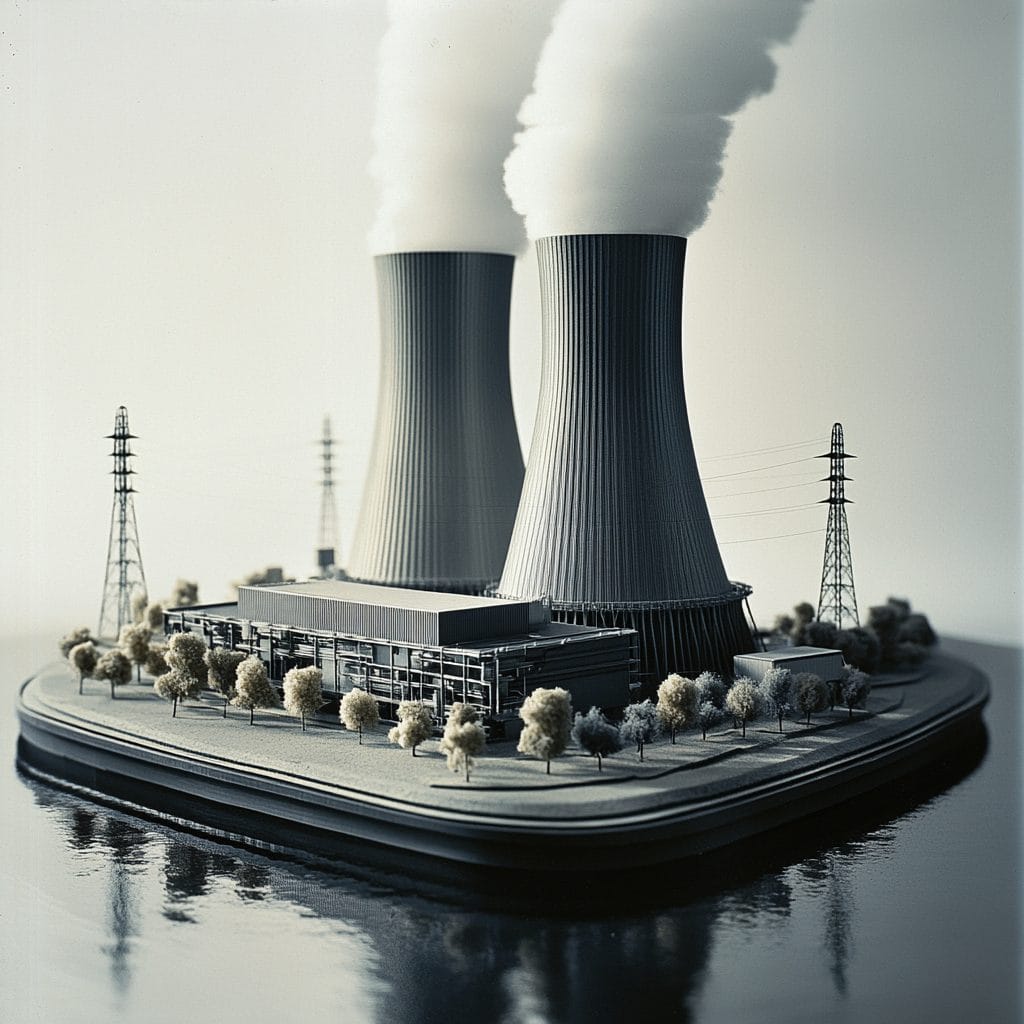
Micro-nuclear reactors commonly known as Micro Modular Reactors (MMRs) or Small Modular Reactors (SMRs) are small-scale nuclear power systems that are designed to operate independently or in collaboration with the existing grids. They produce between 1 to 50 megawatts of electricity which is sufficient to power thousands of homes or run an industrial facility effectively. However, the following factors make them unique.
- It’s modular design which is built in factories then shipped via truck or rail and finally assembled on-site.
- The passive safety systems are designed to shut down safely without any human intervention or external power.
- Some units can operate for up to 10 years without refueling.
- Unlike solar or wind, micro-nuclear requires far less land thus reducing the operational footprint.
Advanced fuel types such as – high-assay low-enriched uranium (HALEU) can enhance both energy density and safety. And with zero requirement for continuous refueling or large-scale cooling systems, these reactors are adaptable for use in extreme environments.
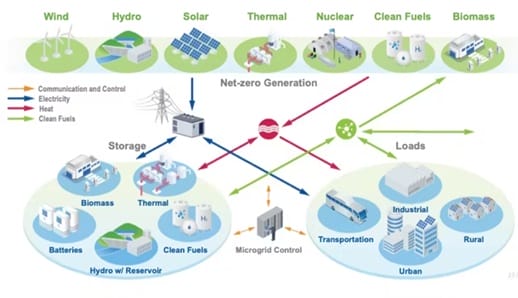
Net-zero microgrid program
Source: Microgrid Knowledge
Where Do Micro-Nuclear Reactors Fit?
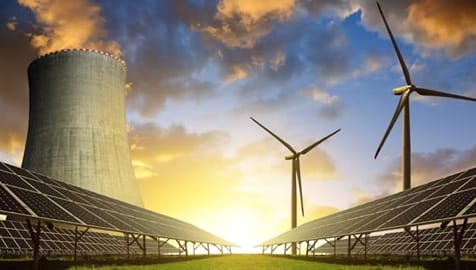
Micro-nuclear is not a silver bullet. It is, however, a strategic complement to renewables, especially in places where solar, wind, or conventional power simply can’t reach or stay stable.
- Remote Communities and Islands
From northern Canada to Pacific archipelagos, Remote communities depend on diesel generators imported at exorbitant costs. This is true from Northern Canada to the Pacific Archipelagos. Micro-nuclear offers a cleaner, more stable alternative that can power communities for years without interruption. Consider a mining town in the Arctic that currently imports diesel across frozen terrain. A 10 MW micro-reactor could meet the town’s entire energy needs without emissions or supply chain risk.
- Military and Emergency Response
Energy is empowering for military operations; hence, its sustainability is critical. The U.S. Department of Defense understands this requirement and hence is working on micro-reactors (e.g., Project Pele). This way they can deploy it to forward bases. Again, micro-nuclear units can be used for disaster recovery. This is a great initiative because it can empower the hospitals, emergency shelters, or water treatment plants after hurricanes, wildfires, or earthquakes.
- Microgrids and Urban Resilience
Micro-nuclear could power urban microgrids that provide resilient backup power during blackouts or cyberattacks. These units could be integrated with solar and battery storage, forming hybrid grids that are more stable, secure, and carbon-free.
- High-Demand Industrial Sites
Energy-intensive operations—like data centers, hydrogen electrolysis plants, or remote oil & gas fields—need consistent power. Micro-nuclear provides baseload energy without intermittency, a key limitation of wind and solar.
Sustainability, Emissions, and Waste: The Bigger Picture
At first glance, nuclear and sustainability may seem like strange bedfellows. But when it comes to carbon emissions, nuclear (including micro-reactors) is among the cleanest energy sources available.
- Zero operational emissions
- High energy density (much more power per square meter than renewables)
- Minimal fuel use compared to fossil sources
But what about waste?
Modern micro-reactors are designed to minimize waste production and, in some cases, reuse spent fuel from older plants. Technologies like molten salt reactors and fast neutron designs are under development to “burn” existing waste more efficiently.
Long-term storage is still a challenge—but the volume of waste is dramatically smaller than fossil fuel byproducts. With strong regulation and modern containment methods, waste management is far more feasible than often portrayed.
The Economic Equation
Critics often cite the high upfront costs of nuclear energy. While it’s true that per-unit costs can be substantial, the levelized cost of electricity (LCOE) for micro-reactors is projected to be competitive with diesel and coal, especially in remote or off-grid locations.
Here’s why:
- No fuel logistics (unlike diesel)
- Low maintenance and staffing needs
- Years of uninterrupted operation
- Modular scalability
Early adopters—such as mining companies and military agencies—are willing to pay a premium for energy security. As manufacturing scales, costs are expected to drop sharply.
Barriers to Widespread Adoption
Despite the promise, several hurdles remain:
- Regulatory Complexity: Many nuclear regulations were designed for large-scale plants, not compact, mobile systems. Adapting these frameworks takes time.
- Public Perception: Associations with Chernobyl or Fukushima still haunt nuclear energy. Communicating the fundamental safety differences of micro-reactors is critical.
- Supply Chain Bottlenecks: Components like HALEU fuel are rare and not easily available.
- Geopolitical Risks: Proliferation and security concerns should be properly managed with robust oversight and international cooperation.
1.5MW Oklo Aurora powerhouse
Source: Gensler
A Tipping Point for the Technology?
Mico-nuclear is becoming popular with growing interest from governments, tech companies, and utilities. According to secondary research, dozens of startups like – Oklo, NuScale, Ultra Safe Nuclear, and X-Energy are working towards bringing reactors to the market within next few years. Countries such as – Canada, the UK, and the U.S. are streamlining regulations and offering funding to accelerate projects related to it. Meanwhile, extreme weather events, grid instability, and the clean energy transition are creating a perfect storm of demand for resilient power.
Final Thoughts: Is Micro-Nuclear the Future?
Not alone – but absolutely part of it.
As we slowly move towards – a clean, decentralized, and equitable energy future, micro-nuclear can serve as a critical pillar alongside solar, wind, hydro, and battery storage. With its – unmatched reliability, compactness, and longevity especially in places where other options fall short. The future of power is not just big and centralized—it’s also small, smart, and modular. And micro-nuclear might just be the quiet revolution we’ve been waiting for.
If this article triggers curiosity in understanding if this is the micro-nuclear breakthrough that everyone is waiting for or it is another futuristic concept that will struggle to reach mass deployment? Then, AIU offers a list of Mini courses, Blogs, News articles and many more on related topics that one can access such as:
Innovation at home: Smart heating for a sustainable future with HubControls
Revolutionary Titanium Metamaterials: A Breakthrough in Engineering and Biomedical Applications
Regulatory and Policy Frameworks for Microgrids and Storage
Pioneering the Future: Sustainable Energy Solutions for a Greener Tomorrow
Microgrids, biting the old system
Your opportunity with Microgrids – AIU course
AIU also offers a comprehensive array of recorded live classes spanning various subjects. If any topic piques your interest, you can explore related live classes. Furthermore, our expansive online library houses a wealth of knowledge, comprising thousands of e-books, thereby serving as a valuable supplementary resource.
Optimization of Renewable Energy Integration: Effective Approaches for Enhancing by Robenson Jean
Nanotechnology for Advanced Energy Storage Devices by Ikramul H
Wind Energy by Robenson Jean
Smart Microgrids: New Advances, Challenges, and Opportunities in the Actual Power Systems
Microgrids for Rural Areas: Research and Case Studies
Microgrid Design and Operation: Toward Smart Energy in Cities
Clean Energy Microgrids
Model Predictive Control for Microgrids: From Power Electronic Converters to Energy Management
Variability, Scalability and Stability of Microgrids
Coordination of Distributed Energy Resources in Microgrids: Optimisation, Control, and Hardware-in-the-loop Validation
Hybrid-Renewable Energy Systems in Microgrids: Integration, Developments and Control
Reference
Full article: Prospects for Nuclear Microreactors: A Review of the Technology, Economics, and Regulatory Considerations
Could micro-nuclear reactors power microgrids in emerging markets? – Energy for Growth Hub
Micro-Nuclear: A Solution for Microgrid, Emergency and Remote Power, and Sustainability? – Industrial Innovation
Small Modular Reactors: Is Micro-Nuclear an option for Net-Zero Microgrids? | EnergyTech
Micronuclear reactors offer a viable, clean energy alternative | Buildings
Interest in Small Nuclear Reactors Is Increasing. What’s Their Role in Microgrids? | Microgrid Knowledge
Reminder to our Dear Students,
Please ensure you are logged in as a student on the AIU platform and logged into the AIU Online
Library before accessing course links. This step is crucial for uninterrupted access to your learning
resources.