
- RESEARCHDistance Learning at AIU is enhanced by vast academic resources and innovative technologies build into the Virtual Campus: Hundreds of self-paced courses with video lectures and step by step lessons, thousands of optional assignments, 140,000 e-books, the Social Media & Networking platform allowing collaboration/chat/communications between students, and MYAIU develop students holistically in 11 areas beyond just academics.
- PROGRAMS OFFERED
- Areas of Study
- Courses and Curriculum
- Open Courses
- Register for a Program
- Associate Program
- Associate in Addiction Counseling
- Associate in Agriculture Food And Resources
- Associate in Anti Terrorism Security
- Associate in Behavior Analysis In Special Education
- Associate in Bioethics
- Associate in Climatology
- Associate in Cultural Theological Communication
- Associate in Culinary Arts
- Associate in Ecotechnology
- View all Associates Programs
- Bachelor Program
- Bachelors in Community Development
- Bachelors in Environmental Science
- Bachelor in Education (B.Ed, BS)
- Bachelors in Economics
- Bachelors in Entrepreneurship
- Bachelors in Financial Administration
- Bachelors in Human Resource Management
- Bachelors in Linguistics
- Bachelors in Nutritional Science
- Bachelors in Occupational Health and Safety
- Bachelors in Psychology
- View all Bachelor Programs
- Doctorate Program
- Doctor | of Biology (PhD)
- Doctorate in Business Administration (DBA, PhD)
- Doctor of Economics (PhD)
- Doctor of Electrical Engineering (D.Sc, PhD)
- Doctor of Finance (PhD)
- Doctorate in International Relations
- Doctorate in Information Technology (D.Sc)
- Doctor of Legal Studies (PhD)
- Doctor of Project Management (PhD)
- Doctor of Sociology (PhD, D.Sc)
- Doctorate in Sustainable Natural Resources Management
- View all Doctorate Programs
- Master Program
- Postdoctoral Program
- Postdoctoral in Animal Science
- Postdoctoral in Anti Terrorism Security
- Postdoctoral in Behavior Analysis In Special Education
- Postdoctoral in Bioethics
- Postdoctoral in Blockchain Technology and Digital Currency
- Postdoctoral in Business Management
- Postdoctoral in Cloud Computing
- Postdoctoral in Computer Engineering
- View all Postdoctoral Programs
AIU offers a wide range of majors in areas including the Arts, Business, Science, Technology, Social, and Human studies. More than 120 degrees and programs are available for adult learners at the associate’s, bachelor’s, master’s, doctoral and postdoctoral level. - VIRTUAL CAMPUS
Distance Learning at AIU is enhanced by vast academic resources and innovative technologies build into the Virtual Campus: Hundreds of self-paced courses with video lectures and step by step lessons, thousands of optional assignments, 140,000 e-books, the Social Media & Networking platform allowing collaboration/chat/communications between students, and MYAIU develop students holistically in 11 areas beyond just academics.
- ALUMNI
The world is YOUR campus!”, that is the message of AIU’s month magazine Campus Mundi. Hear the voices and see the faces that make up AIU. Campus Mundi brings the world of AIU to you every months with inspirational stories, news and achievements by AIU members from around the world (students and staff are located in over 200 countries).

Mapping the Human Brain: A 1mm³ Scan Took 1.4 Petabytes and Redefined AI and Neuroscience

If the project of mapping a single cubic millimeter of brain tissue produced 1.4 petabytes of data, do you believe mapping the entire human brain is a possible scientific goal? Or is it better to investigate how the brain works with more constrained modeling parameters? Why?
How can artificial intelligence both expedite and obstruct our understanding of human consciousness and cognition? Do you think artificial intelligence will ever truly “understand” the brain it is mapping?
The article claims that scientific inquiry has value as much in how the inquiry is conducted as in what the acceptable conclusions are. How does this format your, your own learning and discovery process at AIU?
Using the concepts we have reviewed in the article, “Online vs Traditional Degrees: What is Better?”, write a detailed paper analyzing the salient differences between online learning and traditional education. You will examine the benefits and downsides of each learning, share your thoughts and experience about online learning, and also review how institutions like Atlantic International University (AIU) are redefining education by flexibility, innovation, and lifelong learning. Include authentic examples or research studies to defend your position and finish with your description of the future of higher education.
(Login to your student section to access the AIU Additional Resources Library.)
Mapping the Human Brain: A 1mm³ Scan Took 1.4 Petabytes and Redefined AI and Neuroscience
Think about what it would be like to capture the intricate web of human thought — every single neuron, every connection, every spark of activity that makes consciousness possible — in a digital format – that is what a team of researchers from Harvard University and Google AI scientists set out to do when they mapped just 1 mm³ of brain tissue.
It may seem small – a grain of sand size – but this small little area generated an unprecedented 1.4 petabyte of data. This equates to 14,000 ultra-high definition 4K films, or over 1,000 years of music played without interruption or repeat.
But this was more than just an accomplishment of imaging and storage; it was a breathtaking accomplishment of science that changed the standard of the new field of connectomics, which deals with mapping neural connections. Utilizing the fusion of electron microscopy, machine learning, and AI processing, scientists uncovered an immensely complex microscopic landscape – they revealed neural behavior, and formations never seen before, and anomalies not previously documented.
And even with all this understanding, as incredible of an accomplishment it was, it still has the somewhat sobering realization that even with all this advanced technology, we are still no closer to understanding how the human brain works.
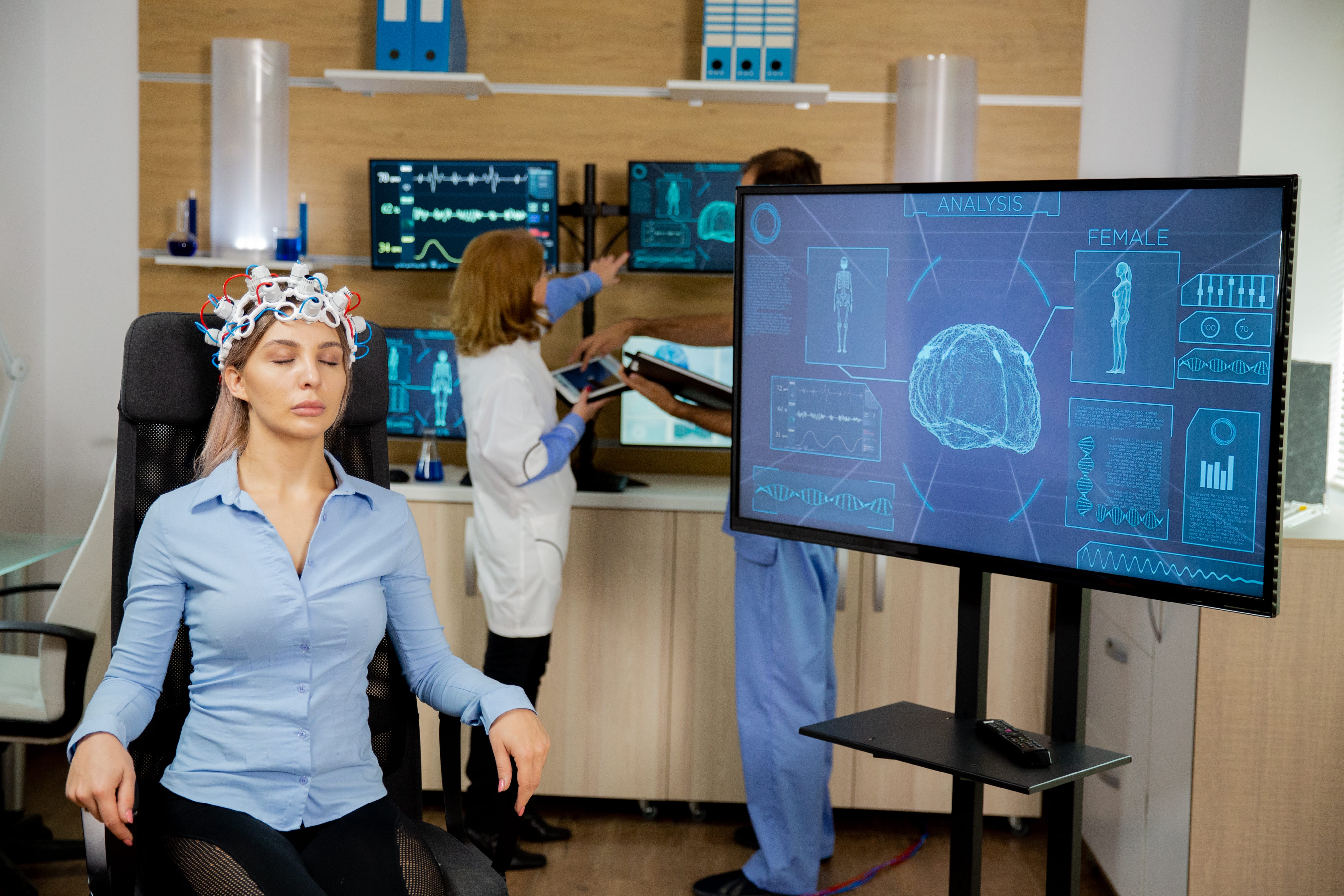
The Experiment: Investigating a Cubic Millimeter of Brain
The human brain has at least 86 billion neurons and 100 trillion synapses, which could make it the most complicated structure in the universe. For many generations, neuroscientists have dreamed of capturing any meaningful aspect of that architecture. The collaboration of Harvard and Google has taken the boldest step to have achieved that dream- at least for a very small part of it.
To begin, the researchers identified a simple cubic millimeter sample of human cortex tissue. Although this was a very small amount of tissue, it was hugely significant, as that cubic millimeter contained tens of thousands of neurons and hundreds of millions of neuron connections. They then proceeded to cut that small sample of tissue into 5,000 slices of ultra-thin “wafers.” Each wafer would each contain a thickness of a fraction of a millimeter or so thin, a human hair would be like steel cable.
Next, scientists collected some of the most advanced electron microscopes images, each capturing super high resolution images of each wafer. Each image captured a two-dimensional cross-section of tissue, and the researchers, finally, would need to perfectly stitch together thousands of images of overlapping sections of tissue to rebuild the fully 3D structure of the tissue.
That is where Google’s AI imaging technology came in. The number of images to be processed far exceeded the capacity of conventional means to move and process a set of images, let alone to ever break them down. The researchers had generated millions of images of tissue, and would eventually visualize a few microns of neural tissue in each. Google taught the ‘machine learning’ systems to detect neurons, monitor axons and dendrites, and even separate individual cells unassisted, and which is possibly the only way any of this would progress in anything less than decades of human work.
So they did it. They successfully rebuilt and digitally generated a reproduced example of a fully interactive, 3-D structure of that cubic millimeter – a truly living brain map of the structure never ever constructed before, and you might finally be experiencing part of the dream.
What They Found: The Brain's Hidden Arrangement
When they were finally finished processing the data, they literally shocked the world of science. For the tiny slab of brain, they found around 50,000 neurons, and nearly 150 million synapses, creating a huge density of networks. The map actually showed every single neuron, every associated axon (the fibers that transmit electric signals), and every dendrite (the branches that receive the signals). However, at this point they did not just confirm current structures, and they made at least a few discoveries that everyone thought could not be.
Mirror-like clusters of neurons – a number of groups of brain cells appeared as a symmetrical, mirrored arrangement in a way that people did not understand existed.
A unique neuron connected to over 5,000 rimmed, suggesting hyperactive or their own connections.
Axons wrapped into ball-like structures, which researchers called “yarn balls” because they were so strange they its very difficult to fathom what could even create that level of folded, and not specifically various states of cognition distraction bringing a rational to naming – they still do not have any sort of explanation for yarn balls or if they have any value.
All of these traditional and long established principles that neurons that how they were structured and organized and how they functioned, thought no or minimal evidence became regarded to the structure, and there is more- and more than many of us expected.
As Dr. Jeff Lichtman, Professor of Molecular and Cellular Biology at Harvard and lead investigator of the project, told The Guardian: We found many things in this dataset that are not in the textbooks. We don’t understand those things, but I can tell you they suggest there’s an abyss between what we already know and what we need to know. In effect, the map shows that the real structure of the human brain is not only more complicated than we thought, it is different.
The Scale Problem: Petabytes to Zettabytes The most amazing thing about this research is that it is not so much what was found, but rather how much data was required in order to get there. To image a single cubic millimeter of brain tissue took 1.4 petabytes (1.4 million gigabytes) of storage. Just to put that into perspective: That will fill up more than 14,000 4K movies. It is equivalent to storing over three million hours of HD video. Or about 300 million pictures taken on a modern smartphone. Now consider: the human brain is about one million times larger than a single cubic millimeter. Which means that it would take approximately 1.6 zettabytes of data to scan the entire human brain (from the same resolution and technique). For scale: 1 zettabyte = 1 billion terabytes. As of 2023, 1.6 zettabytes is double the amount of data ever stored on the entire internet.
At an estimated price of about $0.03 per gigabyte (GB) for consumer hard drives and an estimated cost of $50 billion just for hard drives – not for servers, power, cooling, and infrastructure – that is an extraordinary amount of data to store.
Physically, this footprint would require a server farm of over 140 acres – or over 100 football fields – just to house the hard drives. This would compare to or exceed any of the largest data centers in the world as exemplified by Google, Amazon, or Microsoft.
And even supposing you could find a way to store the data, the processing and analysis of 1.6 zettabytes would be another challenge altogether. Processing this data would take decades with even the fastest supercomputer in the world.
The scope of the scale makes creating a complete brain map technologically and economically impossible – at least for now in college textbooks. I will not speculate about these things, but I will say that they do, at least, suggest that there is a big difference between what we already know, and what we need to know.
In short, the map confirmed that the human brain has a true wiring diagram that was not only more complicated than we realized, but was distinct.
The Scale Challenge: Petabytes to Zettabytes
The most amazing part of this research is not only what they found–but also how much data was required to find it.
To image a single cubic millimeter of brain tissue required 1.4 petabytes (1.4 million gigabytes) of storage. Just to give you a sense of scale:
That is equivalent to over 14,000 4K movies or three million hours of HD video storage.approximately 300 million photos taken on a contemporary smartphone.
Now, after considering that, understand that a human brain is about one million times larger than just that single cubic millimeter sample. Therefore, a full-brain scan at the same resolution and mechanisms would derive about 1.6 zettabytes of information. In terms of reference: 1 zettabyte = 1 billion terabytes.
1.6 zettabytes is more than double the data that has been stored on the entirety of the internet as of 2023.
Storing that data on consumer hard drives at approximately $0.03 per GB would cost you nearly $50 billion not including servers, power, cooling or infrastructure.
Physically, the data would need a server farm greater than 140 acres in area, larger than 100 football fields just for storage. It would be equal to or larger than the world’s largest data centers belonging to Google, Amazon, and Microsoft. Then managing and visualizing 1.6 zettabytes would be something else entirely, even with the best supercomputers, you could be into decades worth of processing the information data. The massive scale alone makes a full brain map economically and technologically impractical…at least for now. As Dr. Jeff Lichtman, the lead investigator of the study project from the Department of Molecular and Cellular Biology at Harvard, said to The Guardian: “We found many things in this dataset that aren’t in the textbooks.”While we are uncertain about all these details, I can say that they are indicative of a gap between what we know already and what we must investigate.”
Essentially, the map demonstrated that the actual architecture of the human brain is different – not just more complex than what we supposed.
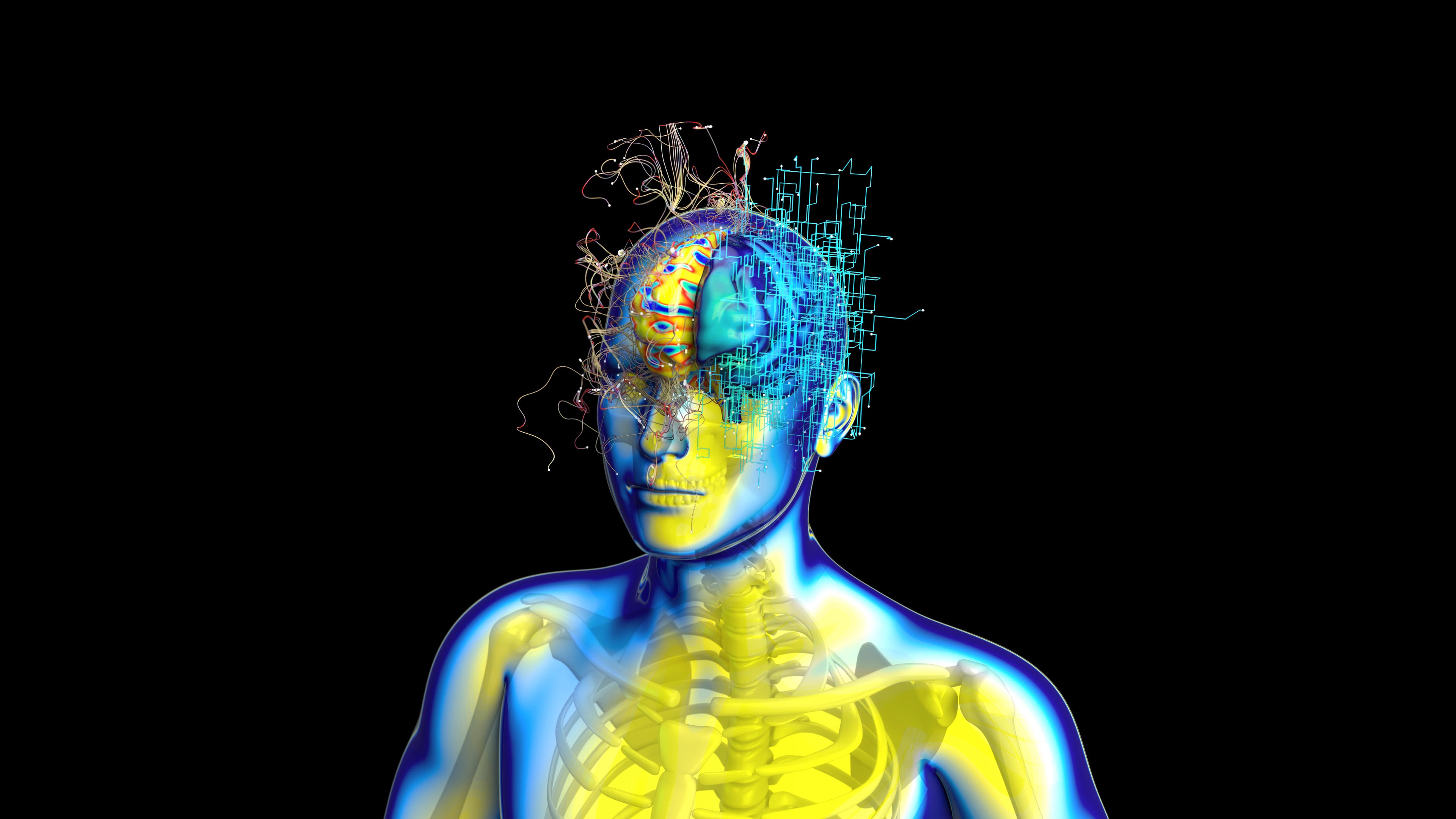
The Scale Problem: From Petabytes to Zettabytes
The most unbelievable aspect of this study was not only what was discovered but how much data it took to do it.
To image a cubic millimeter of brain tissue required a staggering 1.4 petabytes (1.4 million GB) of data storage. In other words:
This is enough to fill over 14,000 4K movies.
This is the equivalent of storing three million hours of HD video or around 300 million pictures taken with an everyday smartphone.
Now remember – the human brain is nearly one million times bigger than this single cubic millimeter sample, so a scan of the whole brain would yield approximately 1.6 zettabytes of data assuming similar resolutions were used and techniques used the same.
For context:
- 1 zettabyte is equal to 1 billion terabytes.
- 1.6 zettabytes is more than double the amount of data ever stored on the entire internet in 2023.
If you had to store the amount of data on consumer hard drives based on a value of about 3 cent per GB, it would cost about $50 billion, not including servers, power, cooling or infrastructure.
Physically, this data would take a server farm the size of over 140 acres to store the data, over 100 football fields. It would be one of the world’s largest data centers similar to those already with Google, Amazon, Microsoft, etc.
Plus, even if you did find a way to store the data, managing and analyzing 1.6 zettabytes would be a second monumental challenge. Even the fastest supercomputer in the world would take some time, decades, to process the data.
This primitive scale makes a full map of the human brain impossible both from a technological and economic scale for now.
AI: The Under-appreciated Hero of Connectomics
Beneath the headlines and statistics exists the hero of this scientific accomplishment: artificial intelligence.
The volume of data that can be produced by electron microscopy is unimaginable. Each image can consist of billions of pixels — millions of images are required to trace even a small snippet of brain tissue. Manually tracing every neuron, synapse and pathway in that data set would take many, many lifetimes of scientists working around the clock.
And this is where Google’s AI imaging systems come into play. Utilizing deep learning models trained on known neural structures, the AI could automatically:
– Identification and labeling of neurons, axons, and synapse location.
– Coherently stitch together overlapping image sections into a 3D volume.
– Trace neural pathways across thousands of slices with a level of accuracy and precision that is quite remarkable.
– Identify morphological variations in cells that the human eye may miss.
This level of automation didn’t just quicken the pace of the work but enabled it to happen at all.
The AI systems also seemed to ‘learn’ from their mistakes. When a researcher was fixing the algorithm (for example a neuron they had traced incorrectly) this feedback would increase the algorithm’s knowledge. Then for many, many like cases, the algorithm applied that knowledge to help with similar cases. This human-AI collaboration/feedback loop, is one of the most exciting models for the future of neuroscience.
Even with all of this effort, the barrier remains. AI can map a brain, but AI cannot interpret it; understanding the how and why the neurons connect the way they do, why those connectors create thought and why certain structures exist will have to remain a task for us human minds- for now.The Broader Context: Mapping the Entire Brain Might Be Pointless (at this point) The notion of mapping the entire human brain completely has captivated scientists for decades. The lure is undeniable—if we could know the precise wiring of all of the neurons and synapses, we could, in principle, map consciousness, intelligence, emotion, and memory. As the Harvard–Google project demonstrated, however, to map is not to understand.
Even if we had a perfectly detailed neuronal map, we would still not be able to make any interpretation about what those connections mean. The 1mm³ sample alone yielded far more questions than conclusions—how are some neurons organized in symmetrical structures? Why do some axons coil? What selects the specific cells that carry connections and why?
Taking this all to the size of the entire brain would not only amplify data, but also mystery. Scientists are left with 1.6 zettabytes of data, and an infinite number of questions.
Nonetheless, the project message is far from pointless. It is a great launching point for the next new thing for neurodegenerative disease research (Alzheimer’s, Parkinson’s, etc.), artificial neural networks that were influenced by biological neural networks, thought to digital transmissions through brain-computer interface (BCIs), cognitive models for AI that will mimic human reasoning, and more.
In summary, while you and I may not map the entire brain in our lifetime, and even these early stages drive the overall future of both neuroscience and artificial intelligence.
The Future of Brain Research: From Neuralink to Neuro-AI
In conjunction with projects such as Harvard–Google’s, clinical neurotechnology aims toward real-world applicability. Elon Musk’s Neuralink has begun to implant human subject brain-computer interface chips designed to restore motor function in paralyzed individuals and eventually allow for direct brain-to-digital interface communication.
Meanwhile, Google, OpenAI, and DeepMind are investigating how knowledge of biological brains can lead to new artificial intelligence architectures. The goal here is not to just imitate intelligence, but to also mimic the adaptive efficiency of the human brain, which can do tasks for which supercomputers are singularly ineffective while consuming, on average, only about 20 watts of power.
The fusion of neuroscience and AI, sometimes referred to as neuro-AI, may one day allow us to engineer machines that think more like humans — thus, maybe allowing us to also learn something about ourselves.
AI: The Under-appreciated Hero of Connectomics
Beneath the headlines and statistics exists the hero of this scientific accomplishment: artificial intelligence.
The volume of data that can be produced by electron microscopy is unimaginable. Each image can consist of billions of pixels — millions of images are required to trace even a small snippet of brain tissue. Manually tracing every neuron, synapse and pathway in that data set would take many, many lifetimes of scientists working around the clock.
And this is where Google’s AI imaging systems come into play. Utilizing deep learning models trained on known neural structures, the AI could automatically:
– Identification and labeling of neurons, axons, and synapse location.
– Coherently stitch together overlapping image sections into a 3D volume.
– Trace neural pathways across thousands of slices with a level of accuracy and precision that is quite remarkable.
– Identify morphological variations in cells that the human eye may miss.
This level of automation didn’t just quicken the pace of the work but enabled it to happen at all.
The AI systems also seemed to ‘learn’ from their mistakes. When a researcher was fixing the algorithm (for example a neuron they had traced incorrectly) this feedback would increase the algorithm’s knowledge. Then for many, many like cases, the algorithm applied that knowledge to help with similar cases. This human-AI collaboration/feedback loop, is one of the most exciting models for the future of neuroscience.
Even with all of this effort, the barrier remains. AI can map a brain, but AI cannot interpret it; understanding the how and why the neurons connect the way they do, why those connectors create thought and why certain structures exist will have to remain a task for us human minds- for now.The Broader Context: Mapping the Entire Brain Might Be Pointless (at this point) The notion of mapping the entire human brain completely has captivated scientists for decades. The lure is undeniable—if we could know the precise wiring of all of the neurons and synapses, we could, in principle, map consciousness, intelligence, emotion, and memory. As the Harvard–Google project demonstrated, however, to map is not to understand.
Even if we had a perfectly detailed neuronal map, we would still not be able to make any interpretation about what those connections mean. The 1mm³ sample alone yielded far more questions than conclusions—how are some neurons organized in symmetrical structures? Why do some axons coil? What selects the specific cells that carry connections and why?
Taking this all to the size of the entire brain would not only amplify data, but also mystery. Scientists are left with 1.6 zettabytes of data, and an infinite number of questions.
Nonetheless, the project message is far from pointless. It is a great launching point for the next new thing for neurodegenerative disease research (Alzheimer’s, Parkinson’s, etc.), artificial neural networks that were influenced by biological neural networks, thought to digital transmissions through brain-computer interface (BCIs), cognitive models for AI that will mimic human reasoning, and more.
In summary, while you and I may not map the entire brain in our lifetime, and even these early stages drive the overall future of both neuroscience and artificial intelligence.
The Future of Brain Research: From Neuralink to Neuro-AI
In conjunction with projects such as Harvard–Google’s, clinical neurotechnology aims toward real-world applicability. Elon Musk’s Neuralink has begun to implant human subject brain-computer interface chips designed to restore motor function in paralyzed individuals and eventually allow for direct brain-to-digital interface communication.
Meanwhile, Google, OpenAI, and DeepMind are investigating how knowledge of biological brains can lead to new artificial intelligence architectures. The goal here is not to just imitate intelligence, but to also mimic the adaptive efficiency of the human brain, which can do tasks for which supercomputers are singularly ineffective while consuming, on average, only about 20 watts of power.
The fusion of neuroscience and AI, sometimes referred to as neuro-AI, may one day allow us to engineer machines that think more like humans — thus, maybe allowing us to also learn something about ourselves.
Conclusion: The Infinite Brain
The brain mapping project, conducted by Harvard and Google, represents one of the most remarkable scientific efforts of our time, pushing the edges of scientific understanding and technological capacity. From cutting up one infinitesimal slice of brain tissue (5,000 slices), to processing a petabyte of data – this undertaking not only exposes the complexity of the brain, but the sheer magnitude of our ignorance.
Mapping even one cubic millimeter of brain tissue required some of the world’s brightest scientists, and the application of Google’s enormously powerful artificial intelligence (AI) imaging systems,yet it was only one-millionth of the human brain. Applying this to the mapping of the whole brain, we are talking about billions of dollars, acres of data centers, and computing power that is infinitely unimaginable. But really, I suppose we must ask ourselves, is this the point.
Because somewhere in this whole endeavor, there is something more than data, and more than brains, something more than an assignment of: time; is beauty.
And somehow, that may be the real wonder about all of this. It́s all good, even if humantiy does not fully innovate how to map out the entire human brain – it is irrelevant. The real question is based in: journey – the journey of inquiry, the journey of imploring, discovering, and learning. That is where we find real beauty. In the process, innovation, and wonder of human inquiry, artificial intelligence, scientific discovery, and exiting the very essence of humanity to push boundaries, the question of meaning, creativity and consciousness – the borders of science itself.
Not material progress or economic growth in this world of knowledge and exploration; but at the root of these dreams or inquiries lies education. Education for all, and what happened, is to give each of us the possibility to experience our own meaning and understanding, potentiality; and what we manage to believe is possible. And it itself, makes meaning of humanity and provides a way to remember our world and the journey beautifully – education.
At Atlantic International University (AIU) we believe in the same principles. Through personalized learning, learning through AI-education, and andragogy-based programs for self-directed exploration, AIU encourages learners around the world to push their limits beyond their own understanding – as did the Harvard-Google project for neuroscience.
If you would like to begin your own explorations and innovations – to question, to create and to contribute to (as I believe all scholarly work does) – the future of human knowledge … Join AIU today and join us in a global community building the science of tomorrow.
Begin your journey at www.aiu.edu
- Role of Google’s AI Scientists
- Master of Artificial Intelligence
- 3D Printing in Construction Industry
- Advancement in Neuroscience
- History and Evolution
- Bachelors in AI
- Scientific Innovation
- Join AIU
References
Reminder to our Dear Students,
Please ensure you are logged in as a student on the AIU platform and logged into the AIU Online
Library before accessing course links. This step is crucial for uninterrupted access to your learning
resources.
AIU Success Stories


Contact Us Today!
Begin Your Journey!
AIU’s Summer of Innovation and Growth gives you the ability to earn up to $5000 in tuition credit by completing free lessons and courses.
Whether you’re looking to acquire new skills, advance your career, or simply explore new interests, AIU is your gateway to a world of opportunities. With free access to 3400 lessons and hundreds of courses the ability to earn credits and earn certificates there’s no better time to start learning.
Join us today as a Guest Student and take the first step towards a brighter, more empowered future.
Explore. Learn. Achieve.