For over a decade now the phrase – “cheap Chinese labor” has been a pervasive mantra in global economics. This umbrella term often covers everything from low-cost consumer goods to the decline of the manufacturing sector in western nations. This simple and generic concept has shaped trade policies, influenced corporate strategies, and even fueled political rhetoric. But like many widely accepted notions – the idea of perpetually “cheap Chinese labor” is a misconception – a relic of a bygone era that fails to capture the dynamic and evolving reality of China’s workforce.
The question here is how it all began! It emerged in the late 20th century as China opened its economy to the world – offering a vast pool of workers willing to accept wages significantly lower than those in developed countries. This era saw an unprecedented boom in manufacturing. As foreign companies flocked to China to take advantage of these cost efficiencies the country transformed into the “world’s factory.” However, things started changing in the early 21st century and has largely unraveled in recent years.
Rising Wages and Living Standards
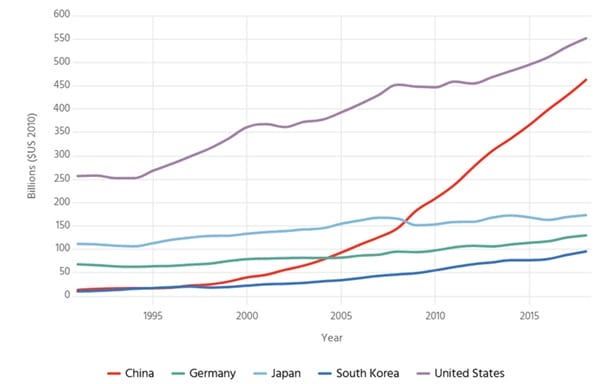
According to secondary research, China’s economic growth has been nothing short of spectacular – lifting hundreds of millions out of poverty and creating a burgeoning middle class. This prosperity has naturally led to a significant increase in wages. Minimum wages have steadily climbed while the average factory wages have risen dramatically, doubling annually in certain regions. Workers are no longer content with the subsistence wages of the past due to the exposure of the competitive labor market. With better compensation, benefits are now required to attract and retain talent.
The “one-child policy” – has a lasting effect. China is now facing a rapidly aging population and a shrinking working-age demographic. This demographic shift led to reduced number of young people entering the workforce. As a result, this created a tighter labor market. As the supply of available labor decreases, its “price” – wages – naturally increases. This is a fundamental economic principle at play.
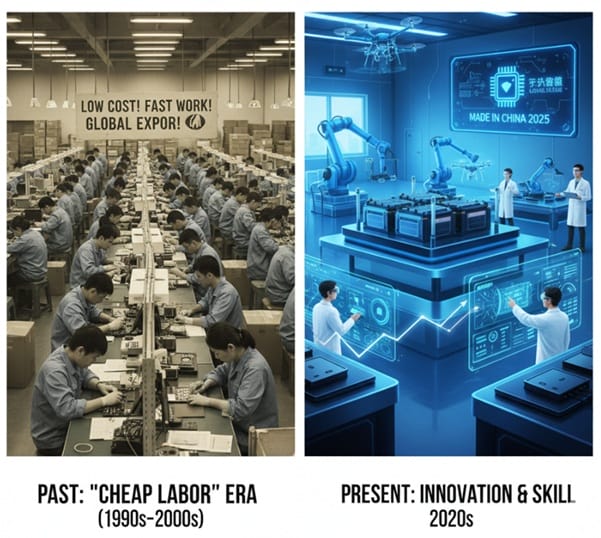
Recognizing the rising cost of labor and aiming to move up the value chain – China started investing in automation and industrial upgrading. Factories are now increasingly deploying – robots, AI, and advanced manufacturing technologies. This is transformative since it reduced dependence on manual labor. This shift is more than about cost-cutting – it’s about improving efficiency, quality, and moving towards more sophisticated, high-tech production environments. The image of endless rows of manual laborers is being replaced by highly automated production lines.
Chinese workers today are more aware of their rights and are more willing to demand better working conditions, higher wages, and improved benefits. Labor disputes, while still managed by the state are not uncommon. In fact, companies are increasingly recognizing the need to invest in their human capital. This means – offering better training, safer environments, and more comprehensive social security.
The Rise of a Domestic Consumer Market
China is no longer solely an export-oriented economy. Its massive domestic market is a significant driver of growth. This means that Chinese companies are increasingly focused on producing goods for their own citizens. This is a win-win situation where the Chinese economy is getting the boost while the demand for quality products is increasing. This further incentivizes moving beyond low-cost, low-quality production.
While “cheap Chinese labor” in the traditional sense is largely a myth, China’s manufacturing sector remains incredibly competitive. Now this competitiveness stems from several factors. Primarily, sophisticated supply chains have played an important role. According to secondary research – decades of manufacturing have created incredibly efficient and integrated supply chains within China – making it easier and faster to produce goods. Secondly, a focus on education and technical training has produced a highly skilled workforce – capable of handling complex manufacturing processes.
Again, China boasts world-class infrastructure including – ports, roads, and logistics networks. This enhanced the efficiency of the production and distribution process. Also, the presence of specialized industrial clusters empowered the economies of scale and expertise in specific sectors.
Implications for the Global Economy
However, it cannot be denied that the reduction of cheap Chinese labor has significant implications. Companies are considering relying on other lower-wage countries like – Vietnam, Mexico, or India to mitigate rising costs and supply chain risks in China. Moreover, China now is focusing on becoming a “world leader in innovation by investing on – high-tech industries, R&D, and advanced manufacturing.
Ultimately, it is the rising production costs in China that led to higher prices for consumers globally – impacting inflation and purchasing power. Hence, the notion of “cheap Chinese labor” is an outdated paradigm. While China’s rise was undeniably built on this foundation – its economic evolution, demographic shifts, and strategic investments in automation have fundamentally altered its labor landscape and made it more complex, dynamic, and evolving.
Reminder to our Dear Students,
Please ensure you are logged in as a student on the AIU platform and logged into the AIU Online
Library before accessing course links. This step is crucial for uninterrupted access to your learning
resources.