The prevailing narrative in biology places genes at the center: DNA codes for RNA, proteins, and ultimately physical form. But an expanding body of evidence shows that bioelectrical signals, in the form of membrane potentials and ionic currents, constitute a separate, autonomous layer of control—guiding cell behavior, regeneration, morphology, and even tumor suppression—sometimes independent of specific genes.
Animals like planaria and frogs use bioelectric gradients to control regeneration. Classic experiments by Robert Becker showed that electric potentials change dramatically at injury sites, with salamanders regenerating limbs when voltage shifts from +20 mV after amputation to about –30 mV over two weeks; frogs, which don’t regenerate, revert voltage to a neutral state instead.
According to secondary research, in a landmark example, scientists at Tufts and the Forsyth Institute genetically expressed a yeast proton pump in frog tadpoles—artificially shifting pH and membrane voltage—and successfully triggered tail regrowth at developmental stages when regeneration normally would not occur. This illustrates how modulating bioelectric state overrides genetic constraints on regenerative capacity.
A review published in Frontiers in Cell and Developmental Biology highlights that transmembrane potential (V_mem)—regulated by ion channels and pumps—is crucial during development for cell death, proliferation, migration, and differentiation across species from flies to humans.
Mathematical modeling and experimental data from zebrafish show that bioelectric prepatterns in tissues can direct gene expression domains responsible for facial features and fin size, even when underlying genetics are identical in adjacent cells. In other words, neighboring cells with the same DNA but different V_mem produce different outcomes, phenomenon genetics alone cannot explain.
Bioelectric Codes Inform Tumor Control and Organ Size
Recent studies emphasize that bioelectrical signaling acts as an epigenetic, non-genetic layer controlling anatomy and physiology. A paper in Nature Physics argued that bioelectric gradients serve as system-level patterning instructions that are irreducible to biochemical reactions or gene expression alone.
Moreover, according to secondary research, study showcases that remote tissues’ bioelectric state can suppress oncogene-driven tumors, even when the cancer-causing gene remains active locally—a surprising finding that suggests cells communicate via long-range voltage networks to maintain tissue integrity.
Why This Matters: The Science Behind the Shift
Cells maintain a resting potential via ion channels and gap junctions that couple cells electrically. For example, Na⁺/K⁺ pumps, calcium channels. Changes in these potentials can trigger calcium oscillations and signal cascades independent of gene expression changes.
Voltage-sensitive proteins, ion channels, and transporters can affect transcription factors like BMP and Notch by modulating Ca²⁺ flux or changing transporter patterns of molecules like serotonin and butyrate—again connecting bioelectricity to gene networks, but not requiring gene mutations themselves.
Case Studies & Data Summary
| Model System |
Intervention |
Outcome |
Insight |
| Frog tadpoles |
Yeast proton pump to depolarize/regenerate tail |
Tail regrowth in non-regenerative stage |
Bioelectric shift overrides genetic timing |
| Planaria |
External electric fields applied |
Polarity reversal, double-headed worms |
Electric cues specify body plan regardless of gene identity |
| Remote tumor suppression |
Alter tissue bioelectric state elsewhere |
Inhibition of tumor growth even with active oncogene |
Non-local bioelectric regulation can counteract genetic drivers |
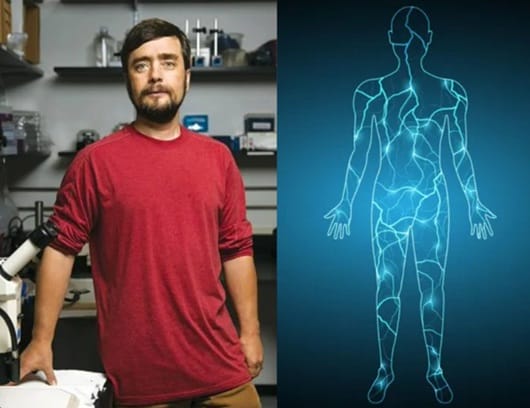
According to secondary research, Michael Levin’s lab is pioneering this field, envisioning a future where one can “speak” to a body’s shape by editing its bioelectric patterns rather than its genes. Their goal: an anatomical compiler, where desired structures are drawn, and underlying bioelectric signals are programmed to produce them—potentially enabling limb regeneration, correction of birth defects, or suppression of tumors, all without genomic editing.
This field is accelerating rapidly, with AI and optogenetic tools recently proposed to control bioelectric signaling in real time using reinforcement learning—marking the next frontier of synthetic morphogenesis.
Final Thoughts
Bioelectricity constitutes an instructive and systemic layer of biological control that operates with genetic regulation. From governing the shape of organs to guiding regeneration and suppressing tumors, electrical signaling guides cells where genetics only set the stage.
As research tools advance, our ability to decode and reprogram this bioelectric code may revolutionize medicine and developmental biology. Biology with electricity is not just a supporting actor—it’s rapidly becoming the conductor.
If this article triggers curiosity, then explore how bioelectric patterns can be mapped, manipulated, and even programmed to control regeneration, suppress cancer, and reshape living tissues—potentially redefining the future of medicine and synthetic biology. AIU offers a list of Mini courses, Blogs, News articles and many more on related topics that one can access such as: