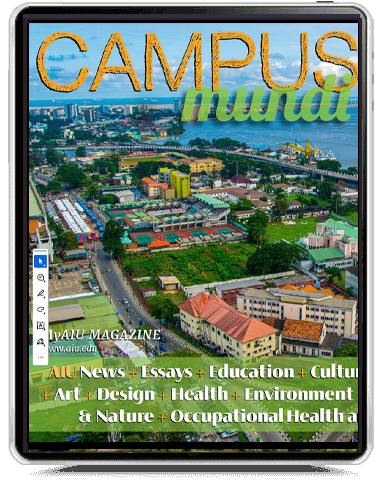

September 2025 Edition!
AIU News + Essays + Education + Culture + Science + Technology + Art + Design + Health + Environment + Human Rights + Animals & Nature + Occupational Health and Safety + About AIU
Other Editions

AIU News + Essays + Education + Culture + Science + Technology + Art + Design + Health + Environment + Human Rights + Animals & Nature + Occupational Health and Safety + About AIU
 JUNE 30 2025.
We proudly
announce that
Dr. Kanbiro
Orkaido
Deyganto, a
distinguished
Ph.D. graduate in Business
Administration with a specialization
in Project Management
and Sustainable Development,
has been appointed as an Editorial
Board Member for two
globally recognized international
journals:
JUNE 30 2025.
We proudly
announce that
Dr. Kanbiro
Orkaido
Deyganto, a
distinguished
Ph.D. graduate in Business
Administration with a specialization
in Project Management
and Sustainable Development,
has been appointed as an Editorial
Board Member for two
globally recognized international
journals: JULY 11 2025. In
a momentous
recognition of
his unwavering
commitment
to educational
excellence and impactful
contributions to the field, Dr.
Sivarajasingam Mahendran has
been conferred the esteemed
title of Honorary Professor
by the American University
of Business and Social Sciences
(AUBSS) in collaboration with
the International Association for
Quality Assurance in Pre-Tertiary
& Higher Education (QAHE).
JULY 11 2025. In
a momentous
recognition of
his unwavering
commitment
to educational
excellence and impactful
contributions to the field, Dr.
Sivarajasingam Mahendran has
been conferred the esteemed
title of Honorary Professor
by the American University
of Business and Social Sciences
(AUBSS) in collaboration with
the International Association for
Quality Assurance in Pre-Tertiary
& Higher Education (QAHE).  AUGUST, 2025.
This graduate student
completed the majority of
the requirements to obtain
honors, which included
a 4.0 GPA, published works,
recommendation from his
advisors, patent a product, etc.
Congratulations!
AUGUST, 2025.
This graduate student
completed the majority of
the requirements to obtain
honors, which included
a 4.0 GPA, published works,
recommendation from his
advisors, patent a product, etc.
Congratulations! Dr. Yousif Amin Al Ameen,
was honored and congratulated
[August 1] by Minister of Labor
in Bahrain, His Eminence
Ibrahim Bin Hassan, upon
receiving his PhD in Project
Management from Atlanti International University.
Dr. Amin presented his
dissertation titled Investigating
the Effectiveness of Blended
Learning for Project Management
Certifications: A Case
Study in Bahrain. The Minister
praised the work’s contribution
to scientific research and
its potential to enhance the
training and development of
engineers in the field of project
management. Visit:
Dr. Yousif Amin Al Ameen,
was honored and congratulated
[August 1] by Minister of Labor
in Bahrain, His Eminence
Ibrahim Bin Hassan, upon
receiving his PhD in Project
Management from Atlanti International University.
Dr. Amin presented his
dissertation titled Investigating
the Effectiveness of Blended
Learning for Project Management
Certifications: A Case
Study in Bahrain. The Minister
praised the work’s contribution
to scientific research and
its potential to enhance the
training and development of
engineers in the field of project
management. Visit:
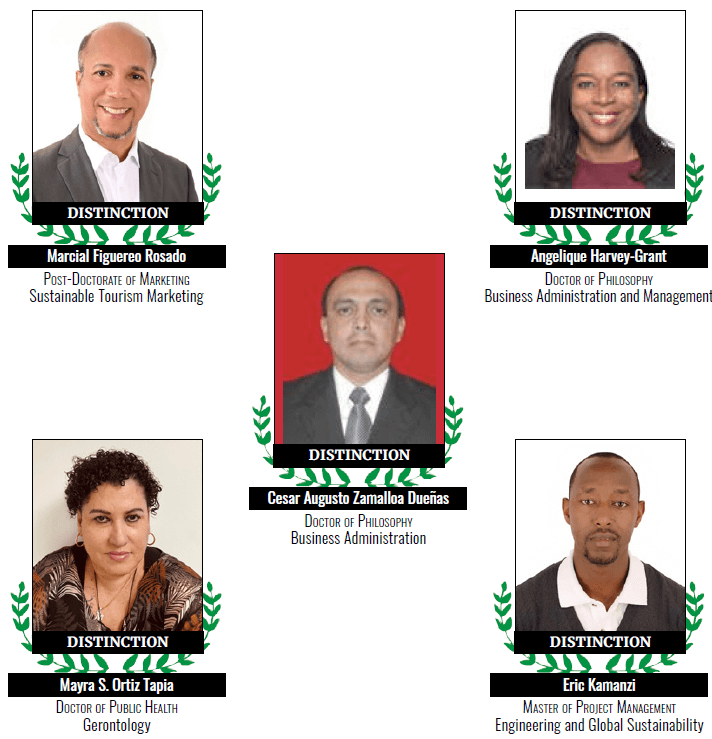 AUGUST, 2025. These graduate students completed their program with a high cumulative grade
point average, which reflects the quality of performance within their respective major.
Congratulations!
AUGUST, 2025. These graduate students completed their program with a high cumulative grade
point average, which reflects the quality of performance within their respective major.
Congratulations! Call for Papers
This Conference will be hosted
15–17 July 2026 by University
of Galway, Galway, Ireland.
Call for Papers
This Conference will be hosted
15–17 July 2026 by University
of Galway, Galway, Ireland.
| Jeulinda Mendes Culenda Cipriano Certificate of Marketing Marketing Angola |
Julio César Bianchi Doctor of Science Industrial Design Argentina |
Carlos Manuel Richter Birbuet Bachelor of Computer Science Information Systems Bolivia |
Bakhola Motswagole Master of Psychology Clinical Psychology Botswana |
Goitsemodimo Rakaru Doctor of Philosop hy Project Management for Development Botswana |
Pedro H. Carvalho Pereira Peixoto Bachelor of Theology Theology Brazil |
| Jack Fernandes dos Santos Netto Post-Doctorate of Science International Relations and Diplomacy Brazil |
Guei Ounleu Gerard Master of International Relations International Relations Canada |
Domonique Chantilope-Watler Master of Education Teaching History, Geography and Religious Ed. Cayman Islands |
Angelina Vachia Jamba Master of Science Molecular Biology Congo |
Thumba Poy Paul-Junior Bachelor of Business Administration Marketing Congo |
Marcial Figuereo Rosado Post-Doctorate of Marketing Sustainable Tourism Marketing Dominican Republic |
| Marcos Antonio Garcia Ovaéz Bachelor of Civil Engineering Pavement Engineering Dominican Republic |
Luis Alfredo Simbaña Vinueza Bachelor of Science Mechanical Engineering Ecuador |
Pedro Emilio Romero Guzmán Master of Science Education El Salvador |
David Dumisani Sibandze Doctor of Business Administration Business Administration Eswatini |
Thandolwenkosi Amelia Shongwe Doctor of Management Human Resources Management Eswatini |
Omar Barrow Master of Science Human Res. Mgmt. and Health Care Services Gambia |
| Ismaila S Ceesay Master of Management Human Resource Management Gambia |
Thomas Tetteh Kwadwo Agbasi Doctor of Business Administration International Finance and Accounting Ghana |
Solomon Nartey Ablampah Doctor of Philosop hy Theology Ghana |
Timothy Ayitey Aryee Bachelor of Science Electrical Engineering Ghana |
Olivia Mawutor Klogo Doctor of Human Resource Management Human Resource Management Ghana |
Mirable Jethro Quist Post-Doctorate of Science Civil Engineering Ghana |
| María Isabel Maegli Novella Master of Arts Art Guatemala |
Hadabel Rodas Gómez Bachelor of Business Administration Economics Hondura |
Ramiro Adalid Chacon Calderon Bachelor of Agronomy Engineering Biofertilizer Formulation Honduras |
Santanu Mishra Master of Science Chemical Engineering India |
Navid Shahbazi Panah Doctor of Philosop hy Information Technology Iran |
Chief Iyase Osegha Onodiana Bachelor of Science Healthcare Administration Italy |
| Angelique Harvey-Grant Doctor of Philosop hy Business Administration and Management Jamaica |
Simone Sasha–Kay Kelly Doctor of Philosop hy Human Resources Management Jamai |
Sholastica Jelagat Murgor Bachelor of Psychology Counselling Psychology Kenya |
Alfred Panji Kasimba Mwandira Master of Science Psychology Malawi |
Soumbounou Aminata Doctor of Business Administration Finance and Management Mali |
Marisol Robles Vazquez Doctor of Human Resources Human Resources Mexico |
| Yeri Julissa Kontorovsky Aguilar Doctor of Business Administration Business Management Nicaragua |
Bisirodipe Fadhilat Olayeni Bachelor of Science Entrepreneurship Nigeria |
Majidadi Suleiman Muhammed Master of Management Sustainable Urban Planning Nigeria |
Susan Nwakaego Chisom Doctor of Management Leadership and Change Management Niger |
Raphael Ugbodu Doctor of Science Information Technology and Management Nigeria |
Ebiakpor Bainkpo Agbedi Doctor of Science Public Health and Epidemiology Nigeria |
| Oregbesan Olalekan Solomon Doctor of Philosop hy Project Mgmt. and Artificial Intelligence Niger |
Paul Ogoun Doctor of Philosop hy Transportation and Logistics Nigeria |
Cesar Augusto Zamalloa Dueñas Doctor of Philosop hy Business Administration |
Mayra S. Ortiz Tapia Doctor of Public Health Gerontology Puerto Rico |
Angie Du Toit Bachelor of Education Education Saudi Arab ia |
Abdulaziz Mubarak ALDossary Bachelor of Human Resources Human Resources Saudi Arab ia |
| Genevieve Pantin Doctor of Science Psychology Spa in |
Jackline Raphael Mashauri Doctor of Philosop hy Project Management Tanzania |
Anita Aguillera Doctor of Business Administration Business Management Trinidad |
Million Kifle Gebrewold Bachelor of Science Accounting Uganda |
Jorge Alex Deutsch De Barros Doctor of Philosop hy Education Urug |
Christie Stanica Extra Bachelor of Science Architecture USA |
| Alberto Y. Manso Saavedra Bachelor of Science Civil Engineering USA |
Sandra Garcia-Fierro Doctor of Business Administration Business Management USA |
Mutoni Danny Mwiseneza Bachelor of Science Accounting and Finance USA |
Abdul Fatah M.Mazen Zakour Bachelor of Business Management Business Management USA |
Marco Antonio, Falcon Davila Doctor of Healthcare Administration Health Services Administration USA |
Elelis Federico Peña Doctor of International Relations Business Economics USA |
| Jean Leonard Onana Effala Doctor of Science Civil Engineering USA |
Eric Kamanzi Master of Project Management Engineering and Global Sustainability USA |
Fredy Chanda Ng'uni Doctor of Public Health Public Health Zambia |
Moses Moyo Bachelor of Business Administration Business Management Zambia |
Sydney Ben Langeveldt Doctor of Education Educational Psychology Zimbab we |
 Angelina Jamba
 Angelique Harvey-Grant
 David Dumisani Sibandze
 Genesis Kelly Prince Udebhulu
We live in a world where
we’re left wondering,
“Where is this madness going?”
Everything is always uncertain,
and we ask ourselves:
What are governments doing?
With everything that happens,
we ask ourselves: Is this what
they were elected for?
The social order implies
and indicates:
1. Opportunity to study
2. Opportunity for health
3. Opportunity for housing
4. Opportunity for decent work
5. Respect for Human Rights
Given the above, it seems
that what we lack the most
is a Social Order that allows
for life with the satisfaction
it demands.
Yes, we have had crucial
changes in the social order,
such as those that led to the
two Great Wars, the World
Wars, but nowadays the great
contradiction is the tremendous
development of science
and its use, as in the case
of Artificial Intelligence, to
alienate people toward objectives
that generate a society
of uncertainty and a lack of
Human Rights.
Yes, the two Great Wars
lasted a long time, but we saw
a world consistent with what
was happening; now governments
talk about a lot of
money for their operations, but
the people don’t see the results
of what they say will be done.
We hear many leaders speak
far removed from scientific
truth, and we ask ourselves:
where will we end up?
These people must be sent
back to the universities.
Russell said: “Modern
communities are more closely
linked now than in times
past, both in their political
and economic structures, and
if we want them to succeed,
there must be a corresponding
increase in the sense of citizenship in men and women”.
(Russell, 2004. Education
and the Social Order, p. 13). https://
www.edhasa.es/view/pdf/1630
The sense of citizenship: we
belong to this planet Earth,
and we must all fight for its
existence, for which we must
and must work together for the
good of all.
That is what we are not
doing; each one is only looking
after their own interests.
Interests are so strong that,
for the moment, this is the
direction indicated by those
who currently study what is
happening in our world.
“Today, the spotlight of
the social sciences is on the
major players in the technoinformation
economy, such as
Amazon, Google, Facebook,
Huawei, etc., as well as the
most powerful governments
on the planet, primarily the
United States and China.
Observing the movements of
these actors, what can be affirmed,
with absolute certainty
and without any margin of error,
is that they possess, comparatively,
a greater capacity
to influence the direction of
processes of social change, as
well as a greater capacity to
regulate the different social spheres of global society”.
(Torres, 2023. Social Change:
Theory, History, and Politics, p. 81).
https://biblioteca-repositorio.clacso.
edu.ar/bitstream/CLACSO/248861/1/
Torres-El-cambio-social.pdf
This is what we are experiencing
right now but given the
shortcomings and the absence
of Human Rights, this framework
will not continue for
long because its results don’t
generate the life that all human
beings require.
Throughout History, human
beings have experienced difficult
times, but they always end
with solutions that allow us to
be better off than our previous
existence.
The experiences of the two
Great Wars prompted the creation
of organizations whose
purpose was the life of human
beings and the planet. We are
talking about the United Nations (UN). Others were created
for financial support, food,
and health.
What has happened to these
organizations today?
The owners of the money
have taken over everything
and claim that these organizations
are useless and break any
agreement that may be reached
because some countries, which
are the rich ones, have a voice
and veto, and they veto what
isn’t in their interest.
Nowadays, it is a constant
struggle to be able to do
anything good. An example is
wars, without any declaration,
but with the devastating effects
that we are all witnessing.
The UN proposes change: “The challenges we face can
only be met through greater
international cooperation. The
2024 Future Summit provides an
opportunity to agree on multilateral
solutions for a better
tomorrow, strengthening global
governance for the benefit
of present and future generations
(General Assembly resolution
76/307)”. UN . Our Common Agenda
Policy Brief 11. UN 2.0. A futureoriented
culture and cutting-edge
competencies to increase the impact of
the United Nations system. UN , SEP -
TEMBE R 2023 https://www.un.org/
two-zero/sites/default/files/2023-09/
UN-2.0_Policy-Brief_EN.pdf
The UN recognizes all the
existing problems and proposes
reforms to meet the needs of the social order in
which we live. Its proposal
translates into:
1. Acquire specialized
knowledge
2. Increase our capacity
to innovate
3. Develop digital expertise
4. Instill strategic foresight
5. Cultivate behavioral sciences
This is why the UN states:
“United Nations entities fit for
the future and capable of facing
the complex challenges of
the 21st century.” UN . Our Common
Agenda Policy Brief 11. UN 2.0. A
future-oriented culture and cuttingedge
competencies to increase the impact
of the United Nations system. UN ,
SEPTEMBE R 2023 https://www.un.org/ two-zero/sites/default/files/2023-09/
UN-2.0_Policy-Brief_ES.pdf
We all know the messiness
of life, but those who benefit
naturally want the state they
have created to continue.
In its work, the UN brought
together its members and
proposed the Summit of the
Future. In its analysis of the
Summit of the Future, the UN
notes one of its points:
“2. We are currently witnessing
a profound global
transformation. We are facing
growing catastrophic and
existential risks, many of them
caused by our own decisions.
Human beings are enduring
terrible suffering. If we don’t
right the course, we risk being
doomed to a dysfunctional
future in which crises will be
constant”. UN . United Nations
2024 - Summit of the Future. https://
www.un.org/es/summit-of-the-future
The work will have to be
hard and persistent because
those who are benefiting from
the existing social disorder
don’t want to lose the benefits
they are reaping.
In the world we live in, there
must be space for every human
being to develop the potential
with which they were born.
There must be space for everyone,
regardless of skin color
or country.
You are studying, you are
pursuing a degree at Atlantic
International University. AIUStudy
so you can
contribute to the social
change that is needed.
Study so you know that
there must be space for
your personal growth.
Study to contribute
to the social change
your country needs.
Study so you can
contribute to social
change the world needs.
BIBLIOGRAPHY. Fazio. H. (2023) ¿Orden mundial u orden social global?
Apuntes para una discusión. Ciencia Política. DOI https://doi.org/10.15446/
cp.v18n36.104530 | Russell. B. (2004). Bertrand Russell, La Educación y
El Orden Social. Barcelona. España. https://www.edhasa.es/view/pdf/1630 |
Torres. E. (2023). El cambio social Teoría, historia y política. Buenos Aires.
CLACSO https://biblioteca-repositorio.clacso.edu.ar/bitstream/CLACSO/248861/1/
Torres-El-cambio-social.pdf | ONU. 2023. Informe de políticas de Nuestra
Agenda Común 11. ONU 2.0. Una cultura orientada al futuro y competencias
de vanguardia para aumentar el impacto del sistema de las Naciones Unidas.
Septiembre de 2023. https://www.un.org/two-zero/sites/default/files/2023-09/
UN-2.0_Policy-Brief_ES.pdf | ONU. Naciones Unidas 2024- Cumbre del Futuro.
https://www.un.org/es/summit-of-the-future

ABSTRACT:
This research examines the
concept of orality as an instrument
for effectively communicating
the gospel to the
illiterate population. Considering
that 14% of the world
population is unable to read or
write traditional transmission
of information through spoken
word, written forms of communication
may not be accessible
or effective in conveying the
gospel. Orality, which involves
the storytelling, and other
non-written forms, has been
acknowledged as a powerful
tool for reaching and engaging
with illiterate audiences.
The study explores the
historical and cultural significance
of orality in church context
and its potential impact
on spreading the good news of
Jesus Christ to those who are
unable to read. By making use
of oral traditions, storytelling,
music, drama, and other forms
of verbal communication,
churches can effectively communicate
the teachings of the
gospel in a way that resonates
with illiterate individuals.
Through a review of existing
literature, case studies, and
interviews with church leaders
and practitioners, this research
aims to provide insights into
the effectiveness of orality
as a communication tool in
missions. The findings of this
study can inform strategies
and best practices for utilizing
orality to convey the gospel
to the illiterate population,
ultimately contributing to the
advancement of inclusive and
accessible church communication
practices.
KEYWORDS: Orality, Illiterate
Population, Gospel Communication,
cultural traditions
and Great commission
1. INTRODUCTION
In a world where literacy is
often seen as a fundamental
skill for accessing information
and engaging with society,
a significant portion of the
global population remains
unable to read or write. In
Rwanda alone 64.4% are
literate; this presents unique challenges for effective communication,
particularly in the
context of sharing the Gospel
message. Utilizing orality as a
means of Gospel communication
offers a powerful solution
to bridge this gap. By utilizing
the rich traditions of storytelling,
music, drama and visual
aid, the message of salvation
can be shared in a way that
is accessible, engaging and
transformative to all individuals,
regardless of the literacy
level. This approach not only
respects and honors the cultural
practices of oral societies
but also fosters the fulfilling
of Great Commission. In this
exploration, we will examine
the significance of orality in
Gospel communication, the
methods employed, and the
transformative impact it can
have on illiterate populations.
1.1 Statement
of the problem
In many places around the
world, mainly in developing
countries, the big percentage of
population remains illiterate.
11
This presents a unique challenge
for sharing the Gospel
and fulfilling the Great Commission,
which is traditionally
communicated through written
texts. The inability to read and
write limits access to reading
the bible and other written
materials, thereby hindering
spiritual growth and sharing
the message of salvation
among these populations.
The major problem is that
traditional methods of Gospel
communication, which
rely heavily on written texts,
are ineffective for illiterate
individuals. This results in a
gap in spiritual education and
understanding, as these individuals
are unable to engage
with the Gospel in a meaningful
way. Consequently, there is
a need for alternative methods
that can effectively convey the
message of the Gospel to those
who cannot read.
Addressing this issue is
crucial for fostering inclusive
spiritual communities and
ensuring that all individuals,
regardless of literacy levels, have the opportunity to engage
with and understand the
Gospel. Utilizing orality as a
means of communication can
empower illiterate populations,
allowing them to participate in
fulfilling the great commission
and community life fully.
This study proposes to
explore the use of oral storytelling,
verbal communication,
and other non-written
forms of Gospel transmission
as viable methods for
reaching illiterate populations
in Rwanda. By leveraging
culturally relevant oral
traditions, the Gospel can be
communicated in a way that
resonates with these communities,
promoting understanding
and engagement.
1.2 Research objective
The main objective of this
research is to assess the effectiveness
of oral communication.
How to evaluate the
oral communication methods
such as storytelling, drama
and songs in spread the gospel
and fulfil the great commission
to illiterate population
in Rwanda churches. The
church must be aware of the
challenge of communicating
the gospel of Jesus to illiterate
audience in Rwanda.
1.3 Research questions
and hypothesis
From the research objectives
above, the study pursued
following questions: What are
the most effective oral methods
for communicating the
Gospel to illiterate populations
in Rwanda?
In what ways do cultural
narratives and oral traditions
influence the reception of gospel
messages among illiterate
communities in Rwanda?
How can modern technologies
(e.g., mobile phones,
audio recordings) be utilized to
disseminate oral gospel messages
to illiterate populations?
The study also sought to test
the following hypothesis: Utilizing
orality as a means
of Gospel communication
to the illiterate
population in Rwanda.
2. LITERATURE REVIEW
Walter Ong (2022)
in his
book Orality and Literacy holds
that, written communication
is not a transformation of oral
communication but rather, a
complimentary technology.
Oral communication is crucial
in religious contexts very effective
in conveying spiritual
messages to diverse audiences.
Orality plays a big role
in spreading the gospel and
reaching communities with
limited literacy levels.
Additionally, Jonathan A
Draper (2024) in his works
Orality, Literacy, and Colonialism,
explores the complex relationships
between oral traditions,
written language, and the impacts
of colonialism on indigenous
cultures. Literacy affected
traditional oral practices and
the transmission of knowledge
within communities. The shift
from orality to literacy not
only transformed communication
but also influenced social
structures, identity, and power
dynamics. It is important to
understand these changes in
the context of cultural survival
and resistance; it’s hard to
neglect Oral traditional for it
plays a vital role in preserving
knowledge and cultural identity.
It is also deeply rooted
in various cultures and offers
unique strengths in storytelling
and community engagement.
More so, oral tradition acts as
additive and people are used to
empathetic and participatory
reception of oral materials than
written materials.
In the Bible Jesus frequently
used orality to convey his
teachings and the message of
gospel. He taught in parables
which are storytelling. The
parable of Good Samaritan
Luke, 10:25-37, emphasises
love and compassion. The parable
of the lost son, Luke 15:11-
32, illustrating forgiveness and
redemption. The Sermon on
the Mount, Mathew 5-7, Jesus
demonstrated his ability to
communicate profound truth
in an accessible manner. Jesus often spoke directly to individuals
sharing his message
in conversational manner,
for instance his dialogue with
Nicodemus in John 3 and His
conversation with the Samaritan
women in John 4. Jesus
engaged in public discourse
and he used rhetorical question
like in Mathew 16:15 asking his
disciples ‘but what about you?
Who do you say I am? All these
show how Jesus effectively
used orality to communicate
his message making it relatable
and memorable which is still
relevant today.
2.1 Cultural memory theory :
Cultural memory theory was
first articulated by sociologist
Jan Assmann, who developed
the concept in the late 20th
century, particularly in the
1990s. Assmann’s seminal
12
works, such as Das kulturelle
Gedächtnis (Cultural memory)
published in 1992, examines
how societies remember
and transmit their collective
memories through cultural
practices, texts, and symbols.
The theory asserts that
cultural memory is different
from individual memory and is
shaped by social and historical
contexts. It highlights the role
of shared narratives, rituals,
and symbols in forming a
collective identity and understanding
of the past. in this
case orality provides critical
engagement through storytelling,
songs and so forth.
2.2 Performance theory:
Performance theory was
primarily associated by Richard
Schechner in the 1960s.
Schechner, a prominent figure
in the field of performance studies, stresses the importance
of performance as a tool
for understanding human behavior
and social interactions.
His work sought to bridge the
gap between the arts and social
sciences, explore how performances—
whether in theater,
rituals, or everyday life—shape
and reflect cultural meanings.
Performance theory explores
the idea that all human actions
can be viewed as performances,
influenced by context, audience,
and intention. It considers
how these performances
are constructed, interpreted,
and experienced, highlighting
the dynamic relationship
between the performer and
the audience. Performance
theory is meaningfully to this
study understanding how oral
traditions function as performances.
Oral storytelling is
not merely a means of conveying
information; it is also an
interactive performance that
involves the storyteller’s delivery,
the audience’s engagement,
and the cultural context
in which it occurs.
3. RESEARCH DESIGN
AND METHODOLOGY:
Given the nature of this research,
a mixed method of research
design was used by the
researcher. The researcher used
both quantitative and qualitative
methods of data collection
and analysis. Quantitative paradigm was employed to
collect data in numerical terms
while qualitative paradigm was
used to collect the views and
opinions of the respondents
in order to support quantitative
data. Calculations of the
sample size were done according
to Slovin’s Formula:
n = N / (1 + Ne2)
Where:
n = number of sample size
N = Total population
e = error of tolerance (level)
The targeted population was
200 respondents from 10
churches both from rural and
urban areas in Rwanda. The
population composed of pastors,
full- time leaders and
church members both illiterate
and literate. The researcher
had confidence level of 95%.
n = N / (1 + Ne2) = 200/
(1+200*0.052) = 133. From the
sample of 133, 30 were pastors,
29 were full-time leaders,
46 were illiterate church
members and 28 were literate
members. All respondents
included in 185 returned the
questionnaire and responded
to the research questions.
All were interviewed by the
researcher. Therefore, a total
of 185 was used as data entry.
Pastors and full-time leaders
were intentionally selected to
contribute to the research.
4. RESEARCH
INSTRUMENTS
According to Burns and
Groves (1993) data collection
is systematic process of
gathering information that
is pertinent to the study.
Intended to address research
purpose, objectives
and research questions. The
process provides evidence
that allows the researcher to
make interpretation, enhance
knowledge and understanding
on that particular research
problem. Fink, A:(2013:69-77)
in order to capture the views
and opinions of the individuals,
participants in regard to
research questions, interviews,
observations and viewing existing
texts were used as data
instruments in this research.
5. ETHICAL
CONSIDERATION
OF RESEARCH
Before conducting a research,
the researcher obtained ethic
permission from 10 church
leaders one week in advance.
Throughout the research period,
the researcher upheld the
principals of confidentiality.
6. DATA ANALYSIS
In this section, the findings
on utilizing orality as a
means of gospel communication
to the illiterate population
in Rwanda are pressented
and analysed. From the table above (6.1):
significant majority of respondents
were female with (73%),
while male counted 30%,
Indicating a strong presence of
female in the study. The demographic
provides an insight
preference of oral communication
and effectiveness in
engaging communities. Pastors
45% and full-time leaders
42% both represent a significant
portion of respondents.
Church leadership plays a vital
role in gospel communication.
Their contribution to the
study showed the need for oral
communication in reaching
out both illiterate and literate
population. Literacy level is
represented by 23% of literate
and 73% of illiterate. The
highest percentage of illiteracy
suggests the need for church
leaders to adapt to methods
that will ensure that the
gospel message is accessible.
A majority of respondents
have secondary level (19%) or
below, with only small number
achieving to high education
(15%), masters (15%) and
(1%) PhD. This suggests that
majority may rely on oral
methods of communication, as
written be less accessible.
Storytelling is (91%): perceived
as highly effective. The
respondents resonate with storytelling.
This is probably due
its emotional appeal and its
ability to engage the audience
through its relatable narratives.
Storytelling is embedded
in Rwandan culture like in
other cultures of the world as
a method of sharing knowledge
and values, passing down
traditions and moral lessons.
Storytelling allows personalization
and contextualization
of the gospel message making
it relatable and memorable.
Because of its engagement,
it brings deep understanding
one’s faith.
Songs and Hymns (87%):
songs play a critical role in
Rwandan cultural and religious
practices. It serves as a
medium of expression, worship
and community bonding. Different
people experience music
in various ways, based on
personality and age; it remains
a vital tool for expressing faith
and fostering community.
Drama (60.15%): Drama
incorporates elements of oral
traditions through performance
and storytelling. This
can bring scriptural stories to
life allowing the audience to
experience the gospel message
in dynamic way. The moderate
effectiveness suggests that
while drama is appreciated, its
effectiveness may be based on
how well it reflects audience
cultural and contextual realities.
Engaging performances
that resonate with community’s
experience can enhance
effectiveness. It can also
highlight the biblical narratives
and contemporary issues,
making the gospel relevant.
Parables (73%): parables
capture attention and invite
the audience to reflect on the
underlying message. This engagement
may lead to deeper
contemplation and application
of lessons. Rwanda culture
resonates with parable format
which can enhance its effectiveness
since the audience is
already familiar with it.
Oral Testimonies (45.11%):
oral traditions are vital in
Rwanda where personal testimonies
convey lived experience
and community histories. However,
oral testimonies are not
widely recognized as compared
to other methods of oral communication
this may be due to
hesitate to personal sharing.
Group Discussions
(30.08%): Group discussions
are perceived as effective because
it promotes dialogue and
collective understanding, allowing
for diverse perspectives
on faith. However, may be less
effective due to hierarchical
communication styles.
7. CONCLUSIONS
Cultural resonance is key:
various methods of oral tradition
especially storytelling and
parables are deeply rooted in
Rwanda culture. Gospel communication
strategies should
prioritize those methods that
align with the cultural and
oral traditions ensuring that
the gospel is both accessible
and impactful. By combining
these methods, gospel communication
in Rwanda can be appealing, more engaging, and
culturally relevant leading to
deeper understanding and application
of faith.
8. RECOMMENDATIONS
Storytelling should be emphasized
since it’s perceived
as the most effective means
of gospel communication.
Churches and mission organizations
should consider storytelling
as a central strategy.
Programs that integrate storytelling
should be developed
and the subject be incorporated
into preaching, teaching and
discipleship. This is so because
the method connects profoundly
with Rwandan culture
and encourages emotional engagement,
personalization, and
understanding biblical truths.
Various Approaches for
Diverse Audiences: Although
storytelling, songs, and hymns
are generally effective, other
14
methods like drama and oral
testimonies should be tailormade
to specific contexts or
groups mostly in rural areas.
Understanding the preferences
of different age groups
or personalities can help in
choosing the most effective
communication method. While
oral methods of communication
are profound in Rwanda
culture and can thrive well.
Written communication
should also be considered for
preserving information and
literate audience.
Discovery bible study as an
approach for oral learning: discovery
bible study relies much
on oral communication making
it ideal for illiterate communities.
Participants listen to the
bible being read louder, they
repeat the main theme and
discuss it. This ensures understanding
without the need for
written texts.
REFERENCES. (1) Draper, J.A (ED.) (2024). Orality, literacy, and colonialism in
antiquity (pp65-77). Brill. | (2) Ong. W. J. (2022). Orality and Literacy: Technologizing
of the word (30th anniversary ed.pp.91-94) Rountledge. | (3) The Holy
Bible. (2011). New International Version. Biblica. (Original work published n.d.)
Matthew 5-7: The Sermon on the Beatitudes. | (4) Bauman, R. (2004). A World of
Others' Words: Cross-Cultural Perspectives on Intertextuality. Blackwell Publishing.
| (5) Goody, J. (1987). The Interface Between the Written and the Oral. Cambridge
University Press. | (6) Havelock, E.A. (1986). The Muse Learns to Write:
Reflections on Orality and Literacy from Antiquity to the Present. Yale University
Press. | (7) Nida, E. A. (1960). Message and Mission: The Communication of the
Christian Faith. Harper & Row. | (8) Searle, J.R. (1995). The Construction of Social
Reality. Free Press. | (9) Smith, W. (Ed.) (2005). Oral Tradition in Africa: An
Interdisciplinary Approach. African Books Collective. | (10) Turner, V. (1969). The
Ritual Process: Structure and Anti-Structure. Aldine Publishing.
 It’s not that anyone ever said sophisticated
math problems can’t
be solved by teenagers who haven’t
finished high school. But the odds of
such a result would have seemed long.
Yet a paper posted on February 10
left the math world by turns stunned,
delighted and ready to welcome a bold
new talent into its midst. Its author
was Hannah Cairo, just 17 at the time.
She had solved a 40-year-old mystery
about how functions behave, called the
Mizohata-Takeuchi conjecture.
“We were all shocked, absolutely. I
don’t remember ever seeing anything
like that,” said Itamar Oliveira of the
University of Birmingham, who has
spent the past two years trying to prove
that the conjecture was true. In her
paper, Cairo showed that it’s false. The
result defies mathematicians’ usual intuitions about what functions can and
cannot do. So does Cairo herself, who
found her way to a proof after years of
homeschooling in isolation and an unorthodox
path through the math world.
Cairo grew up in Nassau, the Bahamas,
where her parents had moved
so that her dad could take a job as a
software developer. She and her two
brothers —one three years older, the
other eight years younger— were all
homeschooled. Cairo started learning
math using Khan Academy’s online lessons,
and she quickly advanced through
its standard curriculum. By the time she
was 11 years old, she’d finished calculus.
Soon she had consumed everything that
was readily available online. Her parents
found a couple of math professors ...
Read full text:
It’s not that anyone ever said sophisticated
math problems can’t
be solved by teenagers who haven’t
finished high school. But the odds of
such a result would have seemed long.
Yet a paper posted on February 10
left the math world by turns stunned,
delighted and ready to welcome a bold
new talent into its midst. Its author
was Hannah Cairo, just 17 at the time.
She had solved a 40-year-old mystery
about how functions behave, called the
Mizohata-Takeuchi conjecture.
“We were all shocked, absolutely. I
don’t remember ever seeing anything
like that,” said Itamar Oliveira of the
University of Birmingham, who has
spent the past two years trying to prove
that the conjecture was true. In her
paper, Cairo showed that it’s false. The
result defies mathematicians’ usual intuitions about what functions can and
cannot do. So does Cairo herself, who
found her way to a proof after years of
homeschooling in isolation and an unorthodox
path through the math world.
Cairo grew up in Nassau, the Bahamas,
where her parents had moved
so that her dad could take a job as a
software developer. She and her two
brothers —one three years older, the
other eight years younger— were all
homeschooled. Cairo started learning
math using Khan Academy’s online lessons,
and she quickly advanced through
its standard curriculum. By the time she
was 11 years old, she’d finished calculus.
Soon she had consumed everything that
was readily available online. Her parents
found a couple of math professors ...
Read full text:
 When science teacher Rebecca
Newburn decided to start a seed
library in her hometown of Richmond,
Virginia, she had no experience with
the work. After connecting with Seed
Savers Exchange and BASIL, the oldest
seed lending library in the U.S.,
she launched the Richmond Grows Seed
Lending Library in 2010, making it the
seventh such library in the U.S.
Fifteen years later, thanks in no
small part to the replicable model pioneered
by Newburn, and shared along
with detailed resources by the associated
Seed Library Network, there are now
over 2,600 community-led seed libraries
operating in the U.S., where people
can “borrow” seeds for their own use
and “return” them from their own crop
in the next growing cycle. This way,
the library can “evolve” along with the
local plants and maintain a broader
genetic diversity than seeds sold commercially.
This, combined with giving
gardeners free access to seeds, helps
support both plant biodiversity and the
wildlife that depends on it for survival.
While most are based at public libraries,
many are also hosted by farms,
community centers, universities and
even at private homes. They tend to
focus on maintaining a catalogue of
locally adapted or heirloom species,
combining biodiversity efforts with
community education and outreach. ...
Visit www.seedlibrarynetwork.org and
consult the Global Seed Library Map.
Read full text:
When science teacher Rebecca
Newburn decided to start a seed
library in her hometown of Richmond,
Virginia, she had no experience with
the work. After connecting with Seed
Savers Exchange and BASIL, the oldest
seed lending library in the U.S.,
she launched the Richmond Grows Seed
Lending Library in 2010, making it the
seventh such library in the U.S.
Fifteen years later, thanks in no
small part to the replicable model pioneered
by Newburn, and shared along
with detailed resources by the associated
Seed Library Network, there are now
over 2,600 community-led seed libraries
operating in the U.S., where people
can “borrow” seeds for their own use
and “return” them from their own crop
in the next growing cycle. This way,
the library can “evolve” along with the
local plants and maintain a broader
genetic diversity than seeds sold commercially.
This, combined with giving
gardeners free access to seeds, helps
support both plant biodiversity and the
wildlife that depends on it for survival.
While most are based at public libraries,
many are also hosted by farms,
community centers, universities and
even at private homes. They tend to
focus on maintaining a catalogue of
locally adapted or heirloom species,
combining biodiversity efforts with
community education and outreach. ...
Visit www.seedlibrarynetwork.org and
consult the Global Seed Library Map.
Read full text:
 Condoms and vasectomies are the
only male contraceptives available.
Researchers have been chipping away at
this problem for decades, and progress
is finally ramping up. Now a male birth
control pill with an entirely new kind
of contraceptive mechanism has been
tested for the first time in humans.
In the first clinical trial of its kind,
a nonhormonal oral contraceptive that
reversibly stops sperm production has
just been deemed safe for human use.
The daily pill, called YCT-529, blocks a
vitamin A metabolite from binding to
its receptor in the testes; this prevents
the chain of gene-expression changes
that are required to start the spermmaking
process. Safety results from
the early phase 1 clinical trial were
published [July 22] in Communications
Medicine.
The trial did not assess the pill’s
efficacy in reducing sperm, and the
drug’s developer, YourChoice Therapeutics,
is currently running trials to
collect that data. But the safety finding
is a crucial milestone, says Stephanie
Page, an endocrinologist at the
University of Washington School of
Medicine, who wasn’t involved in the
study and has worked on other male
hormonal contraceptives for more
than 20 years. “We really need more
reversible contraceptive methods for
men,” she says. ...
Condoms and vasectomies are the
only male contraceptives available.
Researchers have been chipping away at
this problem for decades, and progress
is finally ramping up. Now a male birth
control pill with an entirely new kind
of contraceptive mechanism has been
tested for the first time in humans.
In the first clinical trial of its kind,
a nonhormonal oral contraceptive that
reversibly stops sperm production has
just been deemed safe for human use.
The daily pill, called YCT-529, blocks a
vitamin A metabolite from binding to
its receptor in the testes; this prevents
the chain of gene-expression changes
that are required to start the spermmaking
process. Safety results from
the early phase 1 clinical trial were
published [July 22] in Communications
Medicine.
The trial did not assess the pill’s
efficacy in reducing sperm, and the
drug’s developer, YourChoice Therapeutics,
is currently running trials to
collect that data. But the safety finding
is a crucial milestone, says Stephanie
Page, an endocrinologist at the
University of Washington School of
Medicine, who wasn’t involved in the
study and has worked on other male
hormonal contraceptives for more
than 20 years. “We really need more
reversible contraceptive methods for
men,” she says. ...
 OpenAI has launched a large language
model (LLM) that lives up to
the company’s name. Known as gptoss,
it is the first ‘reasoning’ artificial
intelligence (AI) from the firm that is
open-weight, meaning that researchers
will be able to download it and
customize it.
The firm, based in San Francisco,
California, detailed the system in a
blogpost and technical description on
5 August. On some tasks, gpt-oss performs
almost as well as the firm’s most
advanced models. The LLM is available
in two sizes, both of which can be run
locally and offline —the smaller of
them on a single laptop— rather than
requiring cloud computing or an online
interface. This means they can be used
to analyse —or be trained further on— sensitive data that can’t be transferred
outside a given network.
“I’m very excited,” says Simon
Frieder, a mathematician and computer
scientist at the University of Oxford,
UK. “The competition between opensource
large language models is already
strong, and this will make the competition
even fiercer, which benefits the
entire research community.”
The release of gpt-oss comes at
a time when powerful open-weight
models from Chinese firms, such
as Hangzhou-based DeepSeek and
Beijing-based Moonshot AI, are gaining
traction among researchers. Chinese
open models already perform better
than US-developed ones such as Llama
and are also poised to ...
Read full text
OpenAI has launched a large language
model (LLM) that lives up to
the company’s name. Known as gptoss,
it is the first ‘reasoning’ artificial
intelligence (AI) from the firm that is
open-weight, meaning that researchers
will be able to download it and
customize it.
The firm, based in San Francisco,
California, detailed the system in a
blogpost and technical description on
5 August. On some tasks, gpt-oss performs
almost as well as the firm’s most
advanced models. The LLM is available
in two sizes, both of which can be run
locally and offline —the smaller of
them on a single laptop— rather than
requiring cloud computing or an online
interface. This means they can be used
to analyse —or be trained further on— sensitive data that can’t be transferred
outside a given network.
“I’m very excited,” says Simon
Frieder, a mathematician and computer
scientist at the University of Oxford,
UK. “The competition between opensource
large language models is already
strong, and this will make the competition
even fiercer, which benefits the
entire research community.”
The release of gpt-oss comes at
a time when powerful open-weight
models from Chinese firms, such
as Hangzhou-based DeepSeek and
Beijing-based Moonshot AI, are gaining
traction among researchers. Chinese
open models already perform better
than US-developed ones such as Llama
and are also poised to ...
Read full text
 The global challenge of managing
foam waste has prompted a reevaluation
of traditional manufacturing
practices. EcoLattice is a material
developed from recycled thermoplastic
polyurethane (TPU), specifically
formulated to create 3D-printed
lattice-foams.
Compared to traditional foamed and
cushioning materials, that are generally
expanded during production via
large scale thermal and pressure driven
transformations, this approach not only
addresses environmental concerns but
also somewhat redefines the potential
of such structured materials in modern
design and engineering.
The material’s lightweight nature
makes it ideal for applications requiring
minimal structural load, while its
fire-resistant properties enhance safety
in diverse environments. As the lattice
structure is totally customizable,
resulting foams can showcase tailored
density ...
Read full text
The global challenge of managing
foam waste has prompted a reevaluation
of traditional manufacturing
practices. EcoLattice is a material
developed from recycled thermoplastic
polyurethane (TPU), specifically
formulated to create 3D-printed
lattice-foams.
Compared to traditional foamed and
cushioning materials, that are generally
expanded during production via
large scale thermal and pressure driven
transformations, this approach not only
addresses environmental concerns but
also somewhat redefines the potential
of such structured materials in modern
design and engineering.
The material’s lightweight nature
makes it ideal for applications requiring
minimal structural load, while its
fire-resistant properties enhance safety
in diverse environments. As the lattice
structure is totally customizable,
resulting foams can showcase tailored
density ...
Read full text
 Presented by Adrenalina during
Milan Design Week 2025, Aedo is a
modular sofa designed by Debonademeo
Studio with the Istituto Cavazza
and Museo Omero, institutions devoted
to sensory and non-visual experience.
The result is a richly tactile object made
in silk taffeta, with integrated audio
elements and sensory prompts. Details
like hidden pockets, an elongated seat,
and the generous use of yellow —the
most luminous colour, associated with
joy— speak to a multisensory approach.
Braille is subtly inscribed along the
arms and backrest, not as an add-on,
but as a feature developed directly with
users. This isn’t designed for the visually
impaired —it’s designed with them.
Visit
Presented by Adrenalina during
Milan Design Week 2025, Aedo is a
modular sofa designed by Debonademeo
Studio with the Istituto Cavazza
and Museo Omero, institutions devoted
to sensory and non-visual experience.
The result is a richly tactile object made
in silk taffeta, with integrated audio
elements and sensory prompts. Details
like hidden pockets, an elongated seat,
and the generous use of yellow —the
most luminous colour, associated with
joy— speak to a multisensory approach.
Braille is subtly inscribed along the
arms and backrest, not as an add-on,
but as a feature developed directly with
users. This isn’t designed for the visually
impaired —it’s designed with them.
Visit
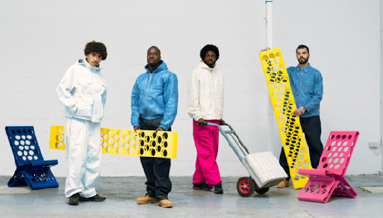 The September 2025 edition of
Maison&Objet is set to present a
new generation of designers, promising
a bold and fresh perspective on
the future of interiors and lifestyle.
Starting parallel with Paris Design
Week on September 4, the five day day
event brings together a curated selection
of studios and creators from varied
backgrounds. A pivotal highlight is the
Design District, a dynamic hub artfully
directed by the acclaimed Hall Haus collective,
explicitly dedicated to fostering
these new voices. This collaboration
sets the stage for a grand showcase of
emerging talent, envisioned through
the distinct lens of the collective.
Since its inception in 1994,
Maison&Objet has solidified its position
as an indispensable barometer for
the international decor, design, and
lifestyle community. With two annual
exhibitions and Paris Design Week in
September, it consistently provides a
platform for innovation and industry
evolution. ...
The September 2025 edition of
Maison&Objet is set to present a
new generation of designers, promising
a bold and fresh perspective on
the future of interiors and lifestyle.
Starting parallel with Paris Design
Week on September 4, the five day day
event brings together a curated selection
of studios and creators from varied
backgrounds. A pivotal highlight is the
Design District, a dynamic hub artfully
directed by the acclaimed Hall Haus collective,
explicitly dedicated to fostering
these new voices. This collaboration
sets the stage for a grand showcase of
emerging talent, envisioned through
the distinct lens of the collective.
Since its inception in 1994,
Maison&Objet has solidified its position
as an indispensable barometer for
the international decor, design, and
lifestyle community. With two annual
exhibitions and Paris Design Week in
September, it consistently provides a
platform for innovation and industry
evolution. ...
 In our modern, time-squeezed lives, it’s
tempting to train at lung-bursting intensity
in the gaps between your morning
meditation and the school run. But evidence
is piling up that it might not be as
beneficial as it seems —and that, in fact,
just introducing a lot more ultra-lowintensity
movement into your schedule
can improve your fitness as well as your
quality of life. Welcome to zone zero.
Zone training is a way of structuring
workouts based on how high your heart
rate gets as a percentage of the fastest it
can possibly thump. Lower means slower
—and most of us will never hit maximum
intensity in our day-to-day lives. Over
the decades, the most-recommended
zones have shifted as training techniques
evolve and knowledge of our biology
improves —but zone zero, the state just
slightly above total inactivity, where your
heart never gets above 50% of its maximum
rate, is enjoying a resurgence.
One reason? Most zone training
requires you to know your maximum
heart rate —the British Heart Foundation
recommends deducting your age
from 220— and then making sure it
doesn’t go too high or low, usually by
training with a heart rate monitor. Zone
zero, though, is essentially where you
spend most of your semi-active life:
walking slowly, doing light tidying,
or even working at a standing desk.
It shouldn’t really feel like exercise at
all —but it might help you live longer,
run faster, or feel better. ...
Read full text
In our modern, time-squeezed lives, it’s
tempting to train at lung-bursting intensity
in the gaps between your morning
meditation and the school run. But evidence
is piling up that it might not be as
beneficial as it seems —and that, in fact,
just introducing a lot more ultra-lowintensity
movement into your schedule
can improve your fitness as well as your
quality of life. Welcome to zone zero.
Zone training is a way of structuring
workouts based on how high your heart
rate gets as a percentage of the fastest it
can possibly thump. Lower means slower
—and most of us will never hit maximum
intensity in our day-to-day lives. Over
the decades, the most-recommended
zones have shifted as training techniques
evolve and knowledge of our biology
improves —but zone zero, the state just
slightly above total inactivity, where your
heart never gets above 50% of its maximum
rate, is enjoying a resurgence.
One reason? Most zone training
requires you to know your maximum
heart rate —the British Heart Foundation
recommends deducting your age
from 220— and then making sure it
doesn’t go too high or low, usually by
training with a heart rate monitor. Zone
zero, though, is essentially where you
spend most of your semi-active life:
walking slowly, doing light tidying,
or even working at a standing desk.
It shouldn’t really feel like exercise at
all —but it might help you live longer,
run faster, or feel better. ...
Read full text
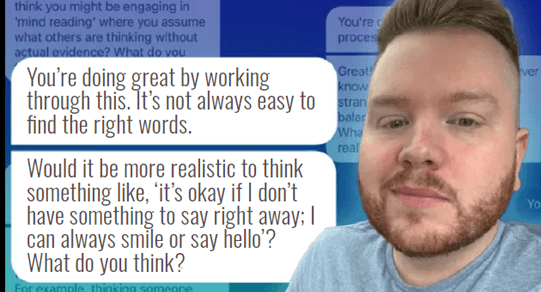 It’s the early hours of the morning,
and I can’t fall asleep. My mind is
racing with thoughts of the darkest
kind. I have battled with mental health
problems for most of my life... Being
heavily bullied in school also dented my
self-esteem and even resulted in me
trying to take my own life.
While regular sessions with a psychologist
helped me as a child, when I
turned 18, the appointments stopped
even though I was still gripped by depression.
As an adult, counselling was a
great help, but it wasn’t always to hand
as quickly as I needed, due to NHS waiting
lists being extremely long.
Cue AI therapy, where data and users
behaviour patterns are analysed so a
bot can ask questions, offer advice, and
suggest coping mechanisms to someone who might want it. Understandably, it’s
a practice cloaked in controversy. ... Is
it safe? Is it even ethical? ... I decided
to give it a try and downloaded Wysa, a
chatbot that uses AI to provide mental
health advice and support around the
clock. The app is completely anonymous
and free, but offers a paid-for plan with
additional premium features.
I’ve always struggled with self-doubt.
I am constantly comparing myself to
my non-identical twin brother ... and
experiencing a bad eczema flare-up
this week has really affected my selfesteem.
I admit this to my bot who is
incredibly empathic, saying it is sorry to
hear of my low self-esteem before asking
me how my feelings impact my dayto-
day life. ...
Read full text:
It’s the early hours of the morning,
and I can’t fall asleep. My mind is
racing with thoughts of the darkest
kind. I have battled with mental health
problems for most of my life... Being
heavily bullied in school also dented my
self-esteem and even resulted in me
trying to take my own life.
While regular sessions with a psychologist
helped me as a child, when I
turned 18, the appointments stopped
even though I was still gripped by depression.
As an adult, counselling was a
great help, but it wasn’t always to hand
as quickly as I needed, due to NHS waiting
lists being extremely long.
Cue AI therapy, where data and users
behaviour patterns are analysed so a
bot can ask questions, offer advice, and
suggest coping mechanisms to someone who might want it. Understandably, it’s
a practice cloaked in controversy. ... Is
it safe? Is it even ethical? ... I decided
to give it a try and downloaded Wysa, a
chatbot that uses AI to provide mental
health advice and support around the
clock. The app is completely anonymous
and free, but offers a paid-for plan with
additional premium features.
I’ve always struggled with self-doubt.
I am constantly comparing myself to
my non-identical twin brother ... and
experiencing a bad eczema flare-up
this week has really affected my selfesteem.
I admit this to my bot who is
incredibly empathic, saying it is sorry to
hear of my low self-esteem before asking
me how my feelings impact my dayto-
day life. ...
Read full text:
 One of the few stable glaciers in a
warming world, Perito Moreno, in
Argentina, is now undergoing a possibly
irreversible retreat, scientists say.
Over the past seven years, it has lost
1.92 sq km (0.74 sq miles) of ice cover
and its thickness is decreasing by up to
8 metres (26 ft) a year.
For decades, Perito Moreno defied
the global trend of glacial retreat,
maintaining an exceptional balance
between snow accumulation and melting.
Its dramatic calving events, when
massive blocks of ice crashed into Lago
Argentino, became a symbol of natural
wonder, drawing millions of visitors to
southern Patagonia.
Dr Lucas Ruiz, a glaciologist at the
Argentine Institute of Nivology, Glaciology
and Environmental Sciences,
said: “The Perito Moreno is a very
particular, exceptional glacier. Since
records began, it stood out to the first
explorers in the late 19th century because
it showed no signs of retreat —
on the contrary, it was advancing. And
it continued to do so until 2018, when
we began to see a different behaviour.
Since then, its mass loss has become
increasingly rapid.”
Scientists and local guides warn that
the balance is beginning to shift. “The
first year the glacier didn’t return to its
previous year’s position was 2022. The
same happened in 2023, again in 2024,
and now in 2025. The truth is, the retreat
continues. The glacier keeps thinning,
especially along its northern ...
Read full text:
One of the few stable glaciers in a
warming world, Perito Moreno, in
Argentina, is now undergoing a possibly
irreversible retreat, scientists say.
Over the past seven years, it has lost
1.92 sq km (0.74 sq miles) of ice cover
and its thickness is decreasing by up to
8 metres (26 ft) a year.
For decades, Perito Moreno defied
the global trend of glacial retreat,
maintaining an exceptional balance
between snow accumulation and melting.
Its dramatic calving events, when
massive blocks of ice crashed into Lago
Argentino, became a symbol of natural
wonder, drawing millions of visitors to
southern Patagonia.
Dr Lucas Ruiz, a glaciologist at the
Argentine Institute of Nivology, Glaciology
and Environmental Sciences,
said: “The Perito Moreno is a very
particular, exceptional glacier. Since
records began, it stood out to the first
explorers in the late 19th century because
it showed no signs of retreat —
on the contrary, it was advancing. And
it continued to do so until 2018, when
we began to see a different behaviour.
Since then, its mass loss has become
increasingly rapid.”
Scientists and local guides warn that
the balance is beginning to shift. “The
first year the glacier didn’t return to its
previous year’s position was 2022. The
same happened in 2023, again in 2024,
and now in 2025. The truth is, the retreat
continues. The glacier keeps thinning,
especially along its northern ...
Read full text:
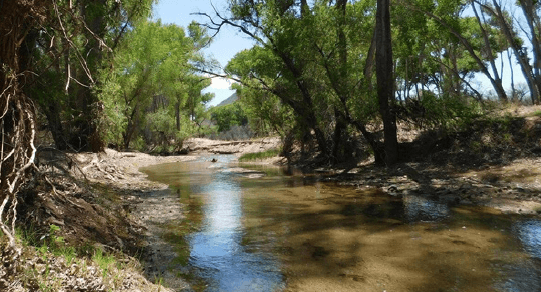 On the banks of the San Pedro River
lies one of the American Southwest’s
few remaining old-growth mesquite
bosques —a streamside forest in more
than 3,000 acres of riparian ecosystem
that is one of Arizona’s last intact
landscapes. Known as the 7B Ranch, the
mesquite forest is vital to the area’s
biodiversity. It is the centerpiece of a
land exchange between Resolution Copper
and the federal government that paves
the way for the company to dig a massive
copper mine roughly 60 miles north
that will lead to the destruction of a site
sacred to the Western Apache. The San
Carlos Tribe has been fighting for years
against the proposed Resolution Copper
mine and is actively engaged in litigation
over it with the federal government.
The current administration has signaled it will approve the mine once pending
litigation over the case is resolved.
Just eight miles up the road is another
proposed mine, this one pursued
by Faraday Copper, for which the Bureau
of Land Management has approved exploratory
drilling. Now, the San Carlos
Tribe and a coalition of environmental
groups appealed to the BLM’s Arizona
state director to review the agency’s
approval of Faraday’s Copper Creek
project, citing its impacts to 7B Ranch
as a property mitigating the impacts of
a mine elsewhere, and for the “serious
risks to wildlife, water resources, landscape
connectivity, human health, and
cultural resources” it poses to the tribe,
land and other local communities. ...
Read full text:
On the banks of the San Pedro River
lies one of the American Southwest’s
few remaining old-growth mesquite
bosques —a streamside forest in more
than 3,000 acres of riparian ecosystem
that is one of Arizona’s last intact
landscapes. Known as the 7B Ranch, the
mesquite forest is vital to the area’s
biodiversity. It is the centerpiece of a
land exchange between Resolution Copper
and the federal government that paves
the way for the company to dig a massive
copper mine roughly 60 miles north
that will lead to the destruction of a site
sacred to the Western Apache. The San
Carlos Tribe has been fighting for years
against the proposed Resolution Copper
mine and is actively engaged in litigation
over it with the federal government.
The current administration has signaled it will approve the mine once pending
litigation over the case is resolved.
Just eight miles up the road is another
proposed mine, this one pursued
by Faraday Copper, for which the Bureau
of Land Management has approved exploratory
drilling. Now, the San Carlos
Tribe and a coalition of environmental
groups appealed to the BLM’s Arizona
state director to review the agency’s
approval of Faraday’s Copper Creek
project, citing its impacts to 7B Ranch
as a property mitigating the impacts of
a mine elsewhere, and for the “serious
risks to wildlife, water resources, landscape
connectivity, human health, and
cultural resources” it poses to the tribe,
land and other local communities. ...
Read full text:
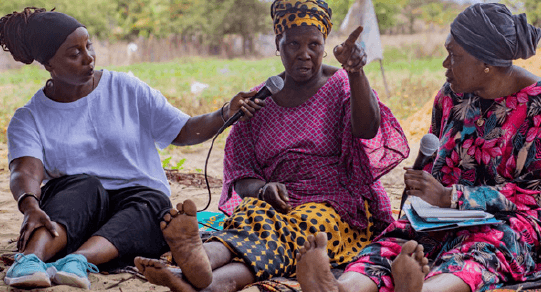 Addra insists that his aunt, Anyessi
Dossou, does not have a story to
tell. “She’s just an old woman who’s
never left the village,” he says, as he
guides us along dirt tracks in fading
light to her home in Avlo, Benin. When
Dossou, in her early 80s, emerges from
her room in the compound house she
shares with generations of her extended
family, the conversation begins
hesitantly. “I told you,” Addra says.
Then the levees break. Asked about
her husband, Dossou recounts the
impact of being widowed at a young age
and raising five children. She speaks
of small joys and triumphs, and of the
intense heartbreak of losing a son.
She describes her life now as an older
woman and the loneliness she feels in
her bones. Dossou clearly has a story. ...
At 59, life expectancy of women in west
Africa is the lowest of any female population
in the world. In 2023, I started to
chronicle a history of the region through
the experiences of older women, largely
overlooked in official narratives.
In 100 interviews with women over
the age of 60 in villages and towns on
the coasts of Benin, Togo, Sierra Leone
and the Gambia, covering how they
live, love, survive and thrive, there
were many stories. The commonality
was in almost all having defied stereotypes,
not just in terms of age but in
breaking social and cultural barriers.
These are women who are farmers
and traders, teachers and seamstresses,
businesswomen, mothers,
trade unionists and community
leaders. ...
Read full text:
Addra insists that his aunt, Anyessi
Dossou, does not have a story to
tell. “She’s just an old woman who’s
never left the village,” he says, as he
guides us along dirt tracks in fading
light to her home in Avlo, Benin. When
Dossou, in her early 80s, emerges from
her room in the compound house she
shares with generations of her extended
family, the conversation begins
hesitantly. “I told you,” Addra says.
Then the levees break. Asked about
her husband, Dossou recounts the
impact of being widowed at a young age
and raising five children. She speaks
of small joys and triumphs, and of the
intense heartbreak of losing a son.
She describes her life now as an older
woman and the loneliness she feels in
her bones. Dossou clearly has a story. ...
At 59, life expectancy of women in west
Africa is the lowest of any female population
in the world. In 2023, I started to
chronicle a history of the region through
the experiences of older women, largely
overlooked in official narratives.
In 100 interviews with women over
the age of 60 in villages and towns on
the coasts of Benin, Togo, Sierra Leone
and the Gambia, covering how they
live, love, survive and thrive, there
were many stories. The commonality
was in almost all having defied stereotypes,
not just in terms of age but in
breaking social and cultural barriers.
These are women who are farmers
and traders, teachers and seamstresses,
businesswomen, mothers,
trade unionists and community
leaders. ...
Read full text:
 A hairdresser has become a hero for
many for dedicating his time to help
build up the confidence of children affected
by hair loss in some way. He applies
hair prostheses on children for free.
Francisco Oliveira’s barbershop in São
Paulo, Brazil, began gaining viral attention
on social media after he decided to
share videos of him applying hair prosthetics
to men who struggle with hair
loss. The clips, often posted on TikTok
and Instagram, show how he manages
to give any balding man the illusion of
natural hair with prosthetics. In a matter
of hours, they go from bald or balding to
having a modern haircut.
With over five years of experience and
over 3,000 hair prostheses under his
belt, Francisco specialized in addressing
self-esteem challenges early on in his career. Working with kids wasn’t in his
plans initially, but with the transformations
reaching a bigger audience
online, he began receiving requests to
help other people.
The mother of a young boy, Juliana
Cerqueira, reached out to Francisco
and told the story of her son, João,
who had suffered serious burns at the
age of two. After 18 surgeries, he was
left with little hair due to the injuries.
Francisco was moved by his story, and
he decided to use his expertise to help
him. Despite the challenge, Francisco
applied a hair prosthesis and created a
natural look that put a huge smile on
João’s face. That was just the first of
many smiles. ...
A hairdresser has become a hero for
many for dedicating his time to help
build up the confidence of children affected
by hair loss in some way. He applies
hair prostheses on children for free.
Francisco Oliveira’s barbershop in São
Paulo, Brazil, began gaining viral attention
on social media after he decided to
share videos of him applying hair prosthetics
to men who struggle with hair
loss. The clips, often posted on TikTok
and Instagram, show how he manages
to give any balding man the illusion of
natural hair with prosthetics. In a matter
of hours, they go from bald or balding to
having a modern haircut.
With over five years of experience and
over 3,000 hair prostheses under his
belt, Francisco specialized in addressing
self-esteem challenges early on in his career. Working with kids wasn’t in his
plans initially, but with the transformations
reaching a bigger audience
online, he began receiving requests to
help other people.
The mother of a young boy, Juliana
Cerqueira, reached out to Francisco
and told the story of her son, João,
who had suffered serious burns at the
age of two. After 18 surgeries, he was
left with little hair due to the injuries.
Francisco was moved by his story, and
he decided to use his expertise to help
him. Despite the challenge, Francisco
applied a hair prosthesis and created a
natural look that put a huge smile on
João’s face. That was just the first of
many smiles. ...
 Beneath the ocean’s surface, a symphony
ripples and rolls, ricochets
and hums —and whales pour their songs
into the deep soundscape like streams
of molten silver. Deep within the noise,
a 32-mile-long cable stretches out from
the California coastline along the seafloor.
At its end is a metal cylinder, the
hydrophone, an underwater microphone
that can record and trace the ocean’s
shifting harmonies for years on end.
By tuning in to these underwater
songs, scientists can decode the
rhythms of ocean life, listening for
signs of imbalance and resilience, and
tracking how marine species respond to
human impact. As whales navigate seas
transformed by climate change, noise,
and industrial activity, their voices offer
a vital record of a world in flux. ... In the waters between New
Zealand’s islands, researchers studying
blue whales from 2016 to 2018
unexpectedly found eerily quiet waters
during the years of The Blob, just like
those heard in California [2014]. Using
underwater recorders in the South
Taranaki Bight, Dawn Barlow and her
team tracked two distinct vocalizations:
low-frequency D calls, linked to feeding,
and patterned songs, associated
with mating. During years of abnormally
warm water, they found fewer D
calls in spring and summer —signaling
a drop in foraging effort. In the following
fall, blue whale song intensity also
declined, suggesting reduced reproductive
activity. ...
Beneath the ocean’s surface, a symphony
ripples and rolls, ricochets
and hums —and whales pour their songs
into the deep soundscape like streams
of molten silver. Deep within the noise,
a 32-mile-long cable stretches out from
the California coastline along the seafloor.
At its end is a metal cylinder, the
hydrophone, an underwater microphone
that can record and trace the ocean’s
shifting harmonies for years on end.
By tuning in to these underwater
songs, scientists can decode the
rhythms of ocean life, listening for
signs of imbalance and resilience, and
tracking how marine species respond to
human impact. As whales navigate seas
transformed by climate change, noise,
and industrial activity, their voices offer
a vital record of a world in flux. ... In the waters between New
Zealand’s islands, researchers studying
blue whales from 2016 to 2018
unexpectedly found eerily quiet waters
during the years of The Blob, just like
those heard in California [2014]. Using
underwater recorders in the South
Taranaki Bight, Dawn Barlow and her
team tracked two distinct vocalizations:
low-frequency D calls, linked to feeding,
and patterned songs, associated
with mating. During years of abnormally
warm water, they found fewer D
calls in spring and summer —signaling
a drop in foraging effort. In the following
fall, blue whale song intensity also
declined, suggesting reduced reproductive
activity. ...
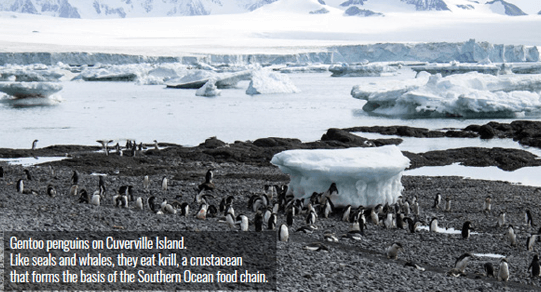 Antarctica’s krill fishery has shut
down months ahead of schedule
after reaching its full seasonal catchlimit
—a historic first. The early closure
is fueling urgent calls to protect the
Southern Ocean’s fragile marine ecosystems
from mounting industrial fishing
and climate change.
Typically, the fishery runs from
December 1 to November 30. This year,
it closed the first week of August,
according to Javier Arata, executive
officer of the Association of Responsible
Krill Harvesting Companies (ARK). The
organization includes 10 krill fishing
companies and 12 vessels from
China, Norway, South Korea, Chile and
Ukraine. Together, these vessels catch
up to 95 percent of the tiny crustaceans
caught each year used to make omega-3
supplements, fish meal for farm-raised
salmon and pet food.
There is concern among many
scientists and conservationists that
intensified krill fishing in concentrated
areas could result in whales, penguins
and other wildlife competing with the
industry.
The Associated Press first reported
the anticipated closure last week, after
receiving a leaked report by the Commission
for the Conservation of Antarctic
Marine Living Resources (CCAMLR),
the international body charged with
managing fisheries in Antarctica and
safeguarding its marine ecosystems. ...
Antarctica’s krill fishery has shut
down months ahead of schedule
after reaching its full seasonal catchlimit
—a historic first. The early closure
is fueling urgent calls to protect the
Southern Ocean’s fragile marine ecosystems
from mounting industrial fishing
and climate change.
Typically, the fishery runs from
December 1 to November 30. This year,
it closed the first week of August,
according to Javier Arata, executive
officer of the Association of Responsible
Krill Harvesting Companies (ARK). The
organization includes 10 krill fishing
companies and 12 vessels from
China, Norway, South Korea, Chile and
Ukraine. Together, these vessels catch
up to 95 percent of the tiny crustaceans
caught each year used to make omega-3
supplements, fish meal for farm-raised
salmon and pet food.
There is concern among many
scientists and conservationists that
intensified krill fishing in concentrated
areas could result in whales, penguins
and other wildlife competing with the
industry.
The Associated Press first reported
the anticipated closure last week, after
receiving a leaked report by the Commission
for the Conservation of Antarctic
Marine Living Resources (CCAMLR),
the international body charged with
managing fisheries in Antarctica and
safeguarding its marine ecosystems. ...

 Designed, produced
and tested by independent women, to
keep your sensitive skin comfortable every
day. Made from plant fibers, bamboo
and eucalyptus, which have natural antibacterial
properties and naturally reduce
humidity.
www.atalaco.com
Designed, produced
and tested by independent women, to
keep your sensitive skin comfortable every
day. Made from plant fibers, bamboo
and eucalyptus, which have natural antibacterial
properties and naturally reduce
humidity.
www.atalaco.com
 1. Naoki
Yoshimoto designed this 3D puzzle in
1971. This desktop puzzle is an addictively
tactile polyhedral dyad composed
of eight interconnected cubes that can
be configured multiple ways.
store.moma.org
1. Naoki
Yoshimoto designed this 3D puzzle in
1971. This desktop puzzle is an addictively
tactile polyhedral dyad composed
of eight interconnected cubes that can
be configured multiple ways.
store.moma.org

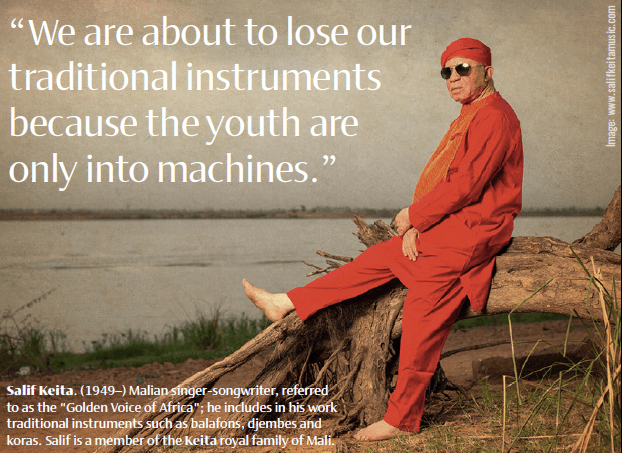


 The Bachelor of Occupational Health
and Safety degree will provide
students with a flexible, relevant, and
current curriculum that will include opportunities
for students to demonstrate
a depth and breadth of knowledge in
safety and health theory and technology
necessary to function at the safety and
health professional level in industry.
The Bachelor of Occupational Health
and Safety program is offered online via
distance learning. After evaluating both
academic record and life experience, AIU
staff working in conjunction with Faculty
and Academic Advisors will assist
students in setting up a custom-made
program, designed on an individual
basis. This flexibility to meet student
needs is seldom found in other distance
learning programs. Our online program
does not require all students to take the
same subjects/courses, use the same
books, or learning materials. Instead,
the Bachelor of Occupational Health and
Safety curriculum is designed individually
by the student and academic advisor.
It specifically addresses strengths
and weaknesses with respect to market
opportunities in the student’s major and
intended field of work.
Understanding that industry and
geographic factors should influence the
content of the curriculum instead of a
standardized one-fits-all design is the
hallmark of AIU’s unique approach to
adult education. This philosophy addresses
the dynamic and constantly changing
environment of working professionals by
helping adult students in reaching their
professional and personal goals within
the scope of the degree program.
The Bachelor of Occupational Health
and Safety degree will provide
students with a flexible, relevant, and
current curriculum that will include opportunities
for students to demonstrate
a depth and breadth of knowledge in
safety and health theory and technology
necessary to function at the safety and
health professional level in industry.
The Bachelor of Occupational Health
and Safety program is offered online via
distance learning. After evaluating both
academic record and life experience, AIU
staff working in conjunction with Faculty
and Academic Advisors will assist
students in setting up a custom-made
program, designed on an individual
basis. This flexibility to meet student
needs is seldom found in other distance
learning programs. Our online program
does not require all students to take the
same subjects/courses, use the same
books, or learning materials. Instead,
the Bachelor of Occupational Health and
Safety curriculum is designed individually
by the student and academic advisor.
It specifically addresses strengths
and weaknesses with respect to market
opportunities in the student’s major and
intended field of work.
Understanding that industry and
geographic factors should influence the
content of the curriculum instead of a
standardized one-fits-all design is the
hallmark of AIU’s unique approach to
adult education. This philosophy addresses
the dynamic and constantly changing
environment of working professionals by
helping adult students in reaching their
professional and personal goals within
the scope of the degree program.
 Atlantic International University is accredited by the Accreditation Service for International
Schools, Colleges and Universities (ASIC). ASIC Accreditation is an internationally renowned
quality standard for colleges and universities. Visit ASIC’s Directory of Accredited Colleges and
Universities. ASIC is a member of CHEA International Quality Group (CIQG) in the USA, an approved
accreditation body by the Ministerial Department of the Home Office in the UK, and is listed in the
International Directory of the Council for Higher Education Accreditation (CHEA). The University is based
in the United States and was established by corporate charter in 1998.
Atlantic International University is accredited by the Accreditation Service for International
Schools, Colleges and Universities (ASIC). ASIC Accreditation is an internationally renowned
quality standard for colleges and universities. Visit ASIC’s Directory of Accredited Colleges and
Universities. ASIC is a member of CHEA International Quality Group (CIQG) in the USA, an approved
accreditation body by the Ministerial Department of the Home Office in the UK, and is listed in the
International Directory of the Council for Higher Education Accreditation (CHEA). The University is based
in the United States and was established by corporate charter in 1998.
| Dr. Franklin Valcin Presi den t/Academic Dean |
Dr. José Mercado Chief Executive Officer Chairman of the Board of Trustees |
Ricardo González, PhD Provost |
| Dr. Ricardo Gonzalez Chief Operation Officer and MKT Director |
Linda Collazo Logistics Coordinator |
AIU Tutors Coordinators: Deborah Rodriguez Amiakhor Ejaeta Amanda Gutierrez William Mora Miriam James Admissions Coordinators: Amalia Aldrett Sandra Garcia Junko Shimizu Veronica Amuz Alba Ochoa Jenis Garcia Judith Brown Chris Soto René Cordón Dr. Anderas Rissler Academic Coordinators: Dr. Adesida Oluwafemi Dr. Emmanuel Gbagu Dr. Lucia Gorea Dr. Edgar Colon Dr. Mario Rios Freddy Frejus Dr. Nilani Ljunggren De Silva Dr. Scott Wilson Dr. Mohammad Shaidul Islam |
| Dr. Miriam Garibaldi Vice provost for Research |
Carolina Valdes Human Resource Coordinator |
|
| Dr. Ofelia Miller Director of AIU |
Carlos Aponte Teleco mmunications Coordinator |
|
| Clara Margalef Director of Special Projects of AIU |
David Jung Corporate/Legal Counsel |
|
| Juan Pablo Moreno Director of Operations |
Bruce Kim Advisor/Consultant |
|
| Paula Viera Director of Intelligence Systems |
Thomas Kim Corporate/ Accounting Counsel |
|
| Felipe Gomez Design Director / IT Supervisor |
Maricela Esparza Administrative Coordinator |
|
| Kevin Moll Web Designer |
Chris Benjamin IT and Hosting Support |
|
| Daritza Ysla IT Coordinator |
Maria Pastrana Accounting Coordinator |
|
| Daritza Ysla IT Coordinator |
Roberto Aldrett Communications Coordinator |
|
| Nadeem Awan Chief Programming Officer |
Giovanni Castillo IT Support |
|
| Dr. Edward Lambert Academic Director |
Antonella Fonseca Quality Control & Data Analysis |
|
| Dr. Ariadna Romero Advisor Coordinator |
Adrián Varela Graphic Design |
|
| Jhanzaib Awan Senior Programmer |
Vanesa D’Angelo Content Writer |
|
| Leonardo Salas Human Resource Manager |
Jaime Rotlewicz Dean of Admissions |
|
| Benjamin Joseph IT and Technology Support |
Michael Phillips Registrar’s Office |
|
| Rosie Perez Finance Coordinator |
||
 The School of Business and Economics
allows aspiring and practicing
professionals, managers, and entrepreneurs
in the private and public sectors
to complete a self paced distance
learning degree program of the highest
academic standard.
The ultimate goal is to empower
learners and help them take advantage
of the enormous array of resources
from the world environment in order
to eliminate the current continuum of
poverty and limitations.
Degree programs are designed for
those students whose professional experience has been in business,
marketing, administration, economics,
finance and management.
The School of Business and Economics
allows aspiring and practicing
professionals, managers, and entrepreneurs
in the private and public sectors
to complete a self paced distance
learning degree program of the highest
academic standard.
The ultimate goal is to empower
learners and help them take advantage
of the enormous array of resources
from the world environment in order
to eliminate the current continuum of
poverty and limitations.
Degree programs are designed for
those students whose professional experience has been in business,
marketing, administration, economics,
finance and management.
 The School of Social and Human Studies
is focused on to the development of
studies which instill a core commitment
to building a society based on social and
economic justice and enhancing opportunities
for human well being.
The founding principles lie on the
basic right of education as outlined
in the Declaration of Human Rights.
We instill in our students a sense of
confidence and self reliance in their
ability to access the vast opportunities
available through information channels,
the world wide web, private, public,
nonprofit, and nongovernmental organizations in an ever expanding
global community.
Degree programs are aimed towards
those whose professional life has been
related to social and human behavior,
with the arts, or with cultural studies.
The School of Social and Human Studies
is focused on to the development of
studies which instill a core commitment
to building a society based on social and
economic justice and enhancing opportunities
for human well being.
The founding principles lie on the
basic right of education as outlined
in the Declaration of Human Rights.
We instill in our students a sense of
confidence and self reliance in their
ability to access the vast opportunities
available through information channels,
the world wide web, private, public,
nonprofit, and nongovernmental organizations in an ever expanding
global community.
Degree programs are aimed towards
those whose professional life has been
related to social and human behavior,
with the arts, or with cultural studies.
 The School of Science and Engineering
seeks to provide dynamic, integrated,
and challenging degree programs
designed for those whose experience
is in industrial research, scientific production,
engineering and the general
sciences. Our system for research and
education will keep us apace with the
twenty-first century reach scientific
advance in an environmentally and
ecologically responsible manner to allow
for the sustainability of the human
population. We will foster among our
students a demand for ethical behavior,
an appreciation for diversity, an understanding
of scientific investigation, knowledge of design innovation, a
critical appreciation for the importance
of technology and technological change
for the advancement of humanity.
The School of Science and Engineering
seeks to provide dynamic, integrated,
and challenging degree programs
designed for those whose experience
is in industrial research, scientific production,
engineering and the general
sciences. Our system for research and
education will keep us apace with the
twenty-first century reach scientific
advance in an environmentally and
ecologically responsible manner to allow
for the sustainability of the human
population. We will foster among our
students a demand for ethical behavior,
an appreciation for diversity, an understanding
of scientific investigation, knowledge of design innovation, a
critical appreciation for the importance
of technology and technological change
for the advancement of humanity.
 With access to a global catalog created and maintained collectively by more than
9,000 participating institutions, AIU students have secured excellent research
tools for their study programs.
With access to a global catalog created and maintained collectively by more than
9,000 participating institutions, AIU students have secured excellent research
tools for their study programs.
