
October 2025 Edition!
AIU News + + Essays + Education + Culture + Science + Technology + Art + Design + Health + Environment + Human Rights + Animals & Nature Change Management + About AIU
Other Editions

AIU News + + Essays + Education + Culture + Science + Technology + Art + Design + Health + Environment + Human Rights + Animals & Nature Change Management + About AIU
 AUGUST 12
2025. Atlantic
International
University
proudly recognizes
the
outstanding
achievements of Dr. Claudio
Manuel de Rosa Ferreira, Doctor
of Economics graduate,
whose decades-long career has
shaped the economic and institutional
landscape of Central
America and inspired future
leaders across the globe.
From the halls of the International
Monetary Fund
(IMF) to the negotiation tables of historic reforms such as El
Salvador’s dollarization, Dr.
de Rosa’s influence has been
felt in national governments,
multilateral organizations, and
the private sector. Over a remarkable
career spanning five
decades, he has advised presidents,
central bank governors,
finance ministers, and legislators,
while also guiding critical
anti-corruption initiatives and
public policy transformations.
AIU’s flexible, researchdriven
model played a pivotal
role in advancing Dr. de Rosa’s
academic and professional
journey. His doctoral studies enabled him to synthesize
decades of real-world policy
work into rigorous academic
frameworks, deepening his
capacity to design innovative,
interdisciplinary solutions
to complex socioeconomic
challenges.
AUGUST 12
2025. Atlantic
International
University
proudly recognizes
the
outstanding
achievements of Dr. Claudio
Manuel de Rosa Ferreira, Doctor
of Economics graduate,
whose decades-long career has
shaped the economic and institutional
landscape of Central
America and inspired future
leaders across the globe.
From the halls of the International
Monetary Fund
(IMF) to the negotiation tables of historic reforms such as El
Salvador’s dollarization, Dr.
de Rosa’s influence has been
felt in national governments,
multilateral organizations, and
the private sector. Over a remarkable
career spanning five
decades, he has advised presidents,
central bank governors,
finance ministers, and legislators,
while also guiding critical
anti-corruption initiatives and
public policy transformations.
AIU’s flexible, researchdriven
model played a pivotal
role in advancing Dr. de Rosa’s
academic and professional
journey. His doctoral studies enabled him to synthesize
decades of real-world policy
work into rigorous academic
frameworks, deepening his
capacity to design innovative,
interdisciplinary solutions
to complex socioeconomic
challenges.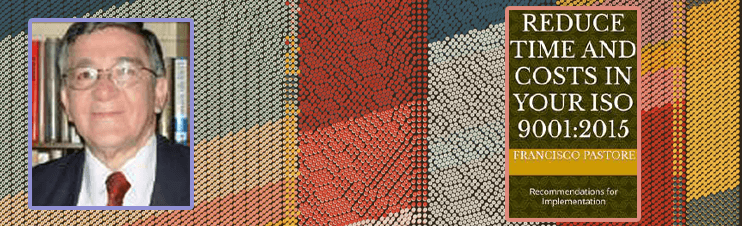 AUGUST 14
2025. We
proudly congratulate
our
distinguished
graduate, Francisco
Gallardo Pastore, on the
publication of his new book,
Reduce Time and Costs in Your ISO
9001:2015. This insightful guide
offers organizations a practical
roadmap to adapt, comply, and
thrive under the latest requirements
of the ISO 9001:2015
quality management standard.
AUGUST 14
2025. We
proudly congratulate
our
distinguished
graduate, Francisco
Gallardo Pastore, on the
publication of his new book,
Reduce Time and Costs in Your ISO
9001:2015. This insightful guide
offers organizations a practical
roadmap to adapt, comply, and
thrive under the latest requirements
of the ISO 9001:2015
quality management standard. AUGUST 18
2025. We are
writing to inform
you of the
deeply regrettable
news regarding
the passing of Mr. Kahisha
Alidor Munemeka on Tuesday,
July 28, 2025, in Turkey. Mr.
Kahisha was a dedicated student
in the Doctor of Legal Studies
program at Atlantic International
Universit and graduated
in December 2024.
Beyond his academic
achievements, Mr. Kahisha
also served as the Chief of Staff to the Minister of Justice
of the Democratic Republic of
Congo (DRC).
His passing is a great loss for
his family and the university
community in the DRC.
Read full text:
AUGUST 18
2025. We are
writing to inform
you of the
deeply regrettable
news regarding
the passing of Mr. Kahisha
Alidor Munemeka on Tuesday,
July 28, 2025, in Turkey. Mr.
Kahisha was a dedicated student
in the Doctor of Legal Studies
program at Atlantic International
Universit and graduated
in December 2024.
Beyond his academic
achievements, Mr. Kahisha
also served as the Chief of Staff to the Minister of Justice
of the Democratic Republic of
Congo (DRC).
His passing is a great loss for
his family and the university
community in the DRC.
Read full text:
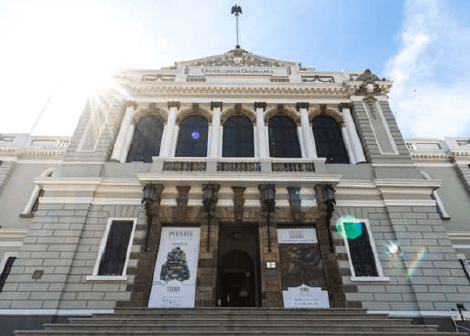 Call for Papers
This Conference will be hosted
9–11 September 2026
by University of Guadalajara,
México.
Call for Papers
This Conference will be hosted
9–11 September 2026
by University of Guadalajara,
México. Call for Papers
This Conference will be hosted
22–24 September 2026
by Chau Chak Wing Museum,
University of Sydney,
Sydney, Australia. +Online
Call for Papers
This Conference will be hosted
22–24 September 2026
by Chau Chak Wing Museum,
University of Sydney,
Sydney, Australia. +Online
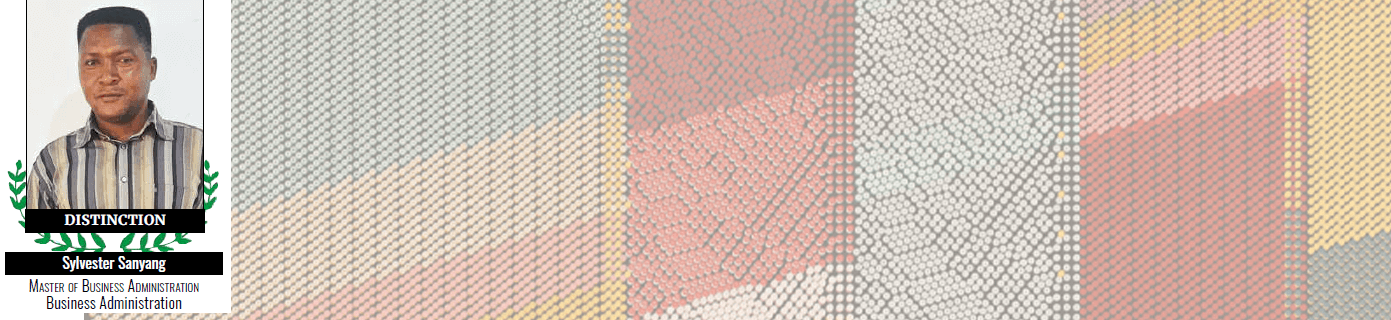 SEPTEMBER, 2025.
This graduate student
completed his program
with a high cumulative grade
point average, which reflects
the quality of performance
within his major.
Congratulations!
SEPTEMBER, 2025.
This graduate student
completed his program
with a high cumulative grade
point average, which reflects
the quality of performance
within his major.
Congratulations!
| José Masuka Bachelor of Science Engineering Geology Angola |
Gustavo Stella Bachelor of Psychology Cognitive Behavioral Argentina |
Federico Martin Durbas Bachelor of Science Artificial Intelligence Argentina |
Shadreck Batsile Modise Bachelor of Psychology Counselling Botswa na |
Onthusitse Maggie Rakole Doctor of Business Administration Strategic Management and Leadership Botswa na |
Colette Njweng Suna Doctor of International Relations Diplomacy Cameroo n |
| Onana Neme Blaise Joseph Doctor of Social and Human Studies Social Policies Cameroo n |
Priyanka Kaur Hayre Bachelor of Science Physical Therapy Canada |
Juan Fernando Arboleda Roldan Bachelor of Nutrition Nutrition Science Colombia |
Lamin P. Fofana Master of Business Administration Accounting Cuba |
Omar Francisco Frias de la Cruz Master of Architecture Interior Distribution in Modern Architecture Dominican Republic |
Rufino Esono Mangue Certificate of Business Administration Business Negotiation Equatorial Guinea |
| Emilia Feliciano S. De Sousa Gazola Bachelor of Science Social Science Germany |
Nichiren Tiruchellvam Pillai Doctor of Science Public Health Germany |
Kwaku Adu-Boateng Doctor of Philosop hy Business Management Ghana |
José Samuel Monterroso Moscoso Post-Doctorate of Science Energy Management and Energy Efficiency Guatemala |
Toyin Jibson Odidi Doctor of Social Work Social Work and Development Ireland |
Kevin H. Francis Doctor of Business Administration Business Administration Jamaica |
| Tracy-Ann Lynch Doctor of Philosop hy Educational Leadership Jamaica |
Jhanoy A Nicholson Bachelor of Computer Science Information Systems and Computer Science Jamaica |
Colin Clifford Kerr Doctor of Business Business Management Jamaica |
George Okoth Onyango Doctor of Science Electrical Engineering Kenya |
Joanne Chepchumba Mutai Doctor of International Relations International Relations Kenya |
Saul Davis Sango Bachelor of Science Data Analytics Kenya |
| Luckheenarain Trivedi Doctor of Philosop hy Civil and Environmental Engineering Mauritius |
Francisco Fernando Ruiz Torres Bachelor of Transpersonal Psychology Music Therapy Mexico |
Guillermina Gonzalez Gomez Bachelor of Psychology Clinical and Organizational Psychology Mexico |
Zara Itzel Chabur Gallo Bachelor of Psychology Psychotherapy and Development Mexico |
Guillermina Gonzalez Gomez Master of Psychotherap y Clinical Psychology and Psychotherapy Mexico |
Thamman Bahadur Budha Magar Doctor of Philosop hy Political Science Nepal |
| Bianca Damara Aguirre Zelaya Bachelor of Science Industrial Engineering Nicaragua |
Sylvia Eberechukwu Idika Doctor of Philosop hy Business Administration Nigeria |
Nnamdi George Friday Doctor of Philosop hy Leadership, Peacebuilding and Holistic Dev. Nigeria |
Godwin David Maga Master of Business Administration Business Administration Nigeria |
Udochukwu Onyeagba Doctor of Philosop hy Health and Human Services Management Nigeria |
Usman Umar Bichi Bachelor of Science Water Resources Engineering Nigeria |
| Efi, Uwhe Joshua Doctor of Philosop hy Food Chemistry and Toxicology Nigeria |
Vivian Ogochukwu Obiadika Master of Science Mining Engineering Nigeria |
Dikko Dahiru Mangal Doctor of Business Administration Business Administration Nigeria |
Olafenwa Olubodunde Kehinde Bachelor of Science Architecture Nigeria |
Uzoma Emilia Mmuogbo-Ejidike Doctor of Business Administration Business Administration Nigeria |
Iain Keith Riley Doctor of Education Education Pakistan |
| Oswaldo Julio Paz Exposito Bachelor of Science Industrial Engineering Panama |
Wilbert Afonso Ferreira Bachelor of Business Administration Strategic Management Sao Tome and Principe |
Sylvester Sanyang Master of Business Administration Business Administration The Gambia |
Isabirye Mawazi Bachelor of Accounting Accounting Uganda |
Basemera Sandra Doctor of Proj ect Management Project Monitoring and Evaluation Uganda |
Ifeanyi Nicky Nwosu Doctor of Philosop hy Renewable Energy USA |
| Mabibi Nzuau Juliana Master of Business and Economics Supply Chain Management USA |
Luz Dary Moncayo Herrera Bachelor of Business Administration Business Management USA |
Fanny I. Goris Doctor of Human Resources Management Human Resource Management USA |
Francis Sheka Kanu Doctor of Business Administration Leadership and Organizational Development USA |
Prudencia Anyizi Atabongakeng Doctor of Special Education Science of Education USA |
Kevin Adrian Andrade Merelo Bachelor of Science Commercial Engineering USA |
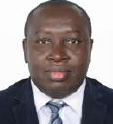 Guei Ounleu Gerard
 Majidadi Suleiman Muhammed
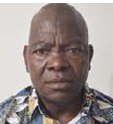 Olayeni Bisirodipe
 Osegha Onodiana
We live in a world where
everything is talked
about a lot, and we ask ourselves:
what is true and what
isn’t? A world where everyone
publishes in the media whatever
they want to present as
true. The big question is: in the
face of so much talk; wouldn’t
the first thing we should do is
know who we are so that, from
there, we can build the world
we need?
Much is written and spoken
with half-truths and misinformation
on a massive scale.
If we don’t know who we are,
what elements can we build
the world we need?
Edgar Morin, a French
philosopher and sociologist
who, in this July 2025, is now
104 years old, tells us: “It is
evident that we are, first and
foremost, physical beings
in a physical world, second,
biological beings in a biological
world, and finally, human
beings in a society and a
History”. (Morin, 2015. Teaching
to Live. Manifesto for Changing
Education, p. 94).
The big question is: why
does the world live with a
development of so-called hard
sciences like Physics, Chemistry,
Mathematics, and others?
Why do we talk about soft sciences
like Psychology, Sociology,
and Philosophy?
Morin gives us this answer.
“The human being is at once
physical, biological, psychological,
cultural, social, and
historical. It is this complex
unity of human nature that
is completely disintegrated
in disciplinary teaching, and it has become impossible to
teach what it means to be human”.
(Morin, 2015. Teaching to
Live. Manifesto for Changing Education,
p. 104).
Why has teaching developed
by forgetting the elements that
make us up, where it would
be easier to learn and achieve
results that make us grow? The
answer lies in the designation
of hard sciences and soft
sciences, because the pursuit
of economic growth has been
limited to a satisfactory life for
human beings.
“In fact, Western well-being
is identified with having a lot,
while there is an opposition,
often pointed out, between
being and having”. (Morin,
2015. Teaching to Live. Manifesto for
Changing Education, p. 24).
For a long time in History,
researchers have been addressing
the issue of having
or being. In the topic, we have
Erich Fromm’s work To Have
or To Be? published in 1978,
which we now have in 2021, in
a recent edition from Fondo de
Cultura Económica at the Paidós
Bookstore in Argentina. Paidós
in Argentina is a bookstore, not
the Paidós publishing house.
We have very important
work on the change that science
has undergone, which was carried out with a so-called
scientific method, the quantification
method. “The approach
through induction and
deduction, which underpins
both classical science and our
ordinary way of understanding
the world, is being questioned.
Popper showed the limits of
induction, and Udel’s theorem
showed the limits of deduction.
The evidentiary quality
of rationality is no longer
absolute”. (Morin, 2015. Teaching
to Live. Manifesto for Changing Education,
p. 32).
There is also Prigogine’s
work on dissipative structures,
which are systems far from
thermodynamic equilibrium
that achieve self-organization
through the energy and matter
of their environment.
Prigogine received the Nobel
Prize in Chemistry in 1977
for the theory of dissipative
structures.
We recently received a Nobel
Prize for production that
generates goods, as well as
the Nobel Prize for Economics in 2024. In 2024, it was
awarded to Daron Acemoglu,
Simon Johnson, and James A.
Robinson for their work on the
influence of the type of institutions
a society has; if there
is legality, there is well-being
because it is a mandatory space
for others.
Nowadays we have methods
that use quantification and
qualification; what we continue
to do is science and teaching to
produce goods.
What today’s society shows
us is that money matters more
than the quality of human life.
Morin says: “Living is
learned through one’s own
experiences, with the help of
parents first and then educators,
but also through books,
poetry, and encounters. Living
is living as an individual facing
the problems of one’s personal
life; it is living as a citizen of
one’s nation; it is also living
in one’s belonging to humanity.
Without a doubt, reading,
writing, and counting are
necessary for living”. (Morin,
2015. Teaching to Live. Manifesto for
Changing Education, p. 15).
This is what our society
lacks; we teach to produce
goods and to have them in
a frenzy that stimulates the
senses and emotions so that
people buy and buy. The Humanities
leave nothing rich,
and we see students seeking
out the disciplines that generate the most money.
That’s why Morin says:
“The teaching of literature,
history, mathematics, and
science contributes to integration
into social life; the
teaching of literature is very
useful because it develops both
sensitivity and knowledge; the
teaching of philosophy stimulates
the capacity for reflection
in every reflective mind, and,
without a doubt, specialized
teaching is necessary in
professional life”. (Morin, 2015.
Teaching to Live. Manifesto for
Changing Education, p. 15).
We are witnessing the way
in which previous disciplines
are being eliminated, their
content replaced by ideologies
that contribute to the governments
of the production of
goods, regardless of where we
are headed as human beings.
Life nowadays is uncertain as
to where it’s headed.
Everything is conflict,
conflicts generated by the
prevailing misinformation.
That’s why Morin says:
“Living is an adventure that
carries with it ever-renewed
uncertainties, eventually with
personal or collective crises
or catastrophes. Living means
constantly facing uncertainty,
even in the only certainty of
our death, the date of which,
however, we don’t know. We
don’t know where and when
we will be happy or unhappy, we don’t know what illnesses
we will suffer, we don’t know
our happiness and misfortunes
in advance. Furthermore, we
have entered a great era of
uncertainty about our futures,
that of our families, that of
our society, that of globalized
humanity”. (Morin, 2015. Teaching
to Live. Manifesto for Changing
Education, p. 21).
We live in a society that
cares little about life; if we
earn money, nothing else
concerns us. We are witnesses
to this rush toward money and
witnesses to the consequences
that grow every day; every day
the needs of those who have
the least increase.
That is why Morin says: “It is necessary to obey the
preceptor’s command in Jean
Jacques Rousseau’s Emile:
‘teach how to live.’ Undoubtedly,
there are no recipes for
life. But we can teach how
to link knowledge to life. We
can teach how to develop
maximum autonomy and,
as Descartes would say, a
method for properly guiding
one’s spirit that allows one to
personally confront the problems
of living. And we can
teach each and everyone what
helps avoid life's permanent
pitfalls”. (Morin, 2015. Teach
How to Live. Manifesto for Changing
Education, p. 22).
This teaching of how to live
nowadays is based on misinformation
and the use of what
could be good, such as Artificial
Intelligence (AI), which,
since it has not been fully
regulated, is used to create
needs that harm a large part of
the population.
The United Nations is working
hard to ensure that it can
be regulated in a way that
generates peace. “However,
until now, the benefits of AI
are distributed unequally,
concentrated in a few powerful
companies and countries. As
United Nations Secretary-General
António Guterres recently
stated, many nations struggle
to access artificial intelligence
tools, highlighting the need
for international cooperation and solidarity to close the AI
gap in developing countries”.
UN - Peace, Dignity and Equality on a
Healt hy Planet. https://www.un.org/
es/global-issues/artificial-intelligence
AI could greatly contribute
to creating a sustainable world
with opportunities for all, but
we are witnessing that this is
not the case; it is used by powerful
groups to maintain it.
“While artificial intelligence
has the potential to address
some of the greatest global
challenges —such as driving
economic growth and social
transformation— the rapid
advancement of this emerging
technology inevitably brings
with it a series of risks and
challenges, including threats
to the accuracy of information
and human rights”. UN - Peace,
Dignity and Equality on a Healt hy
Planet. https://www.un.org/en/global-
issues/artificial-intelligence
In response to the difficulties,
the UN has created a body
of experts. “For this reason,
the UN Secretary-General has
established the High-Level Advisory
Body on Artificial Intelligence.
This group of experts
analyzes the current situation
and recommends strategies for
international governance, taking
an integrative and comprehensive
approach. Composed of
up to 39 experts from various
disciplines, the Body aims to
align AI governance with human
rights and the Sustainable Development Goals. To ensure
a collaborative approach, it
works with diverse stakeholder
groups, including governments,
the private sector, and
civil society”. UN - Peace, Dignity
and Equality on a Healt hy Planet.
https://www.un.org/en/global-issues/
artificial-intelligence
Constant and efficient work
can create the world we desperately
need, which is why
Morin says: “All progress over
the unknown, every process of
adaptation to the environment
and the adaptation of the environment
to itself, begins from
the moment we come into the
world through trial and error
and will continue not only in
childhood and adolescence but
throughout life. An ignored
error is as harmful as an error
recognized, analyzed, and
overcome is positive”. (Morin,
2015. Teaching to Live. Manifesto for
Changing Education, p. 78).
Of Artificial Intelligence,
Morin says: “AI can be scary,
but I fear superficial human
intelligence above all.” This
expression is the result of
the interview conducted on
his 104th birthday, this July 8,
2025. https://www.elmundo.es/
papel/el-mundo-que-viene/2025/08/
03/6888ea0be4d4d829338b45bb.html
Also, at: http://www.elmundo.
es/papel/el-mundo-que-viene/202
5/08/03/6888ea0be4d4d829338b45
bb.html?utm_term=Autofeed&utm_
medium=Social&utm_source=Twitter#
Echobox=1754227665
You are in this world with
the characteristics of a human
being. What must you do to
achieve your fulfillment?
It seems you must recognize
that the social order we have
place a lot of importance on
disinformation and hate speech
and that it seeks every possible
means for, as is the case, the
use that is often given to AI.
You also know that education
is geared toward making
money and that it matters little
to the development of who we
are as human beings.
As human beings, whether
we like it or not, we simultaneously
possess physical, biological,
psychological, cultural,
social, and historical qualities,
so we can’t base our lives
solely on acquiring goods.
You are studying at Atlantic
International University
(AIU), where they require you
to study for your development,
based on your human condition.
Hence the assignments
that often pose the question:
What’s the point of this if I’m
doing a program based on the
so-called hard sciences? Why
do I read this book that looks
like History? Why read this
book or do this assignment
that looks like Psychology?
By developing the elements
that make you who you are,
human being, you can achieve
your well-being.
Study so that everything
we are witnessing is a
historical situation that
you can understand and
find your means
to realize what you are
—a human being.
Research, complete the
assignment they ask you
to do so you know
the reasons and can
contribute to creating
the world we need.
Take care to love others
it’s the word we have
for everyone.
Keep in mind that life
is made of periods
of well-being that are
built, and one appears
and the next comes.
We don’t live in and endless
heaven or disaster:
we gradually build what
allows us to be well.
Take advantage of the
opportunity you must
study to find out
who you are and
where you want to go.
BIBLIOGRAPHY. Fromm, E. 2021. ¿Tener o Ser? Fondo de Cultura Económico.
Argentina. | Morin E. 2015. Enseñar a vivir. Manifiesto para cambiar la
educación. | Argentina. Ediciones Nueva Visión. Original en francés. | Morin
E. 2015. Enseñar a vivir. Manifiesto para cambiar la educación. https://edgarmorinmultiversidad.
org/images/PDF/Ensenar-a-vivir.pdf | Morin. E. “La IA puede dar
miedo, pero yo temo sobre todo a la inteligencia humana superficial”. https://
www.elmundo.es/papel/el-mundo-que-viene/2025/08/03/6888ea0be4d4d829338b45bb.html
| El Mundo. El mundo que viene. www.elmundo.es/papel/el-mundo-que-viene/2025/
08/03/6888ea0be4d4d829338b45bb.html?utm_term=Autofeed&utm_medium=Social&utm_so
urce=Twitter#Echobox=1754227665 | ONU- Paz, Dignidad e Igualdad en un planeta
sano. https://www.un.org/es/global-issues/artificial-intelligence
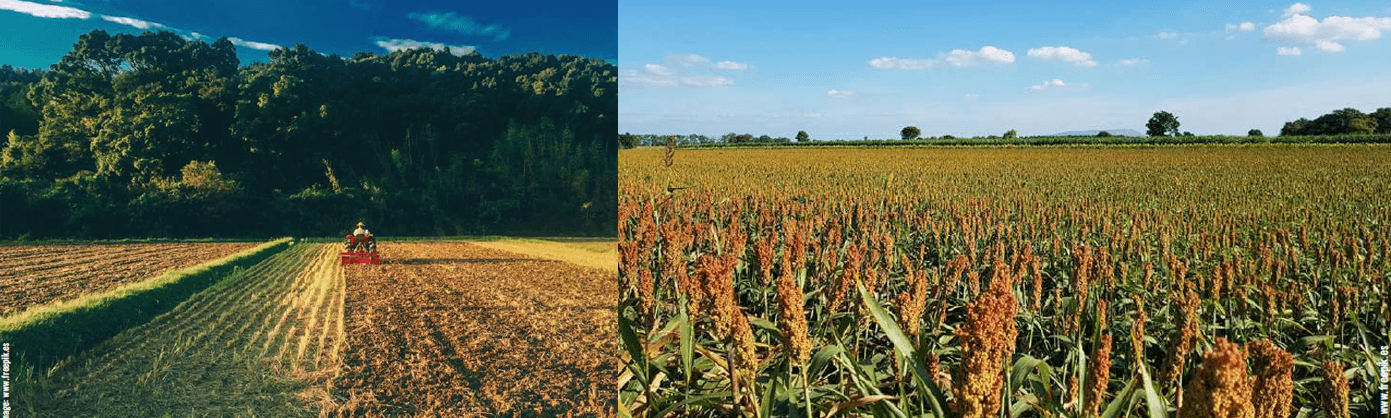
Introduction:
Global food security has become
one of the most pressing
challenges of the twenty-first
century. Population growth,
environmental degradation,
and climate change are
converging to create a complex
crisis in food systems. The
world’s population is projected
to surpass 9.5 billion by 2050,
with much of this growth
concentrated in regions already
struggling with poverty, malnutrition,
and limited agricultural
productivity. Ensuring an
adequate, stable, and nutritious
food supply under these conditions
requires not only greater
productivity but also more
resilient agricultural systems.
Among the vast array of
crops cultivated worldwide,
cereals occupy a preeminent
place. They account for the
majority of caloric intake
for humans, are central to
livestock feeding systems, and
provide raw material for a wide
range of industrial products.
Maize, rice, and wheat together
supply more than half of the calories consumed globally,
while other cereals such as
barley, sorghum, oats, rye, and
the millets play critical roles in
specific regions. These crops
have underpinned the rise of
civilizations, shaped global
trade networks, and continue
to serve as the backbone of
agricultural economies.
Yet the prominence of cereals
brings vulnerability. Heavy
reliance on just three species
—maize, rice, and wheat—
concentrates risk in the face
of climate instability, pests, and diseases. Moreover, cereal
production systems are often
input-intensive, dependent on
fertilizers, irrigation, and fossil
fuels, raising concerns of
sustainability. In this context,
the so-called “minor cereals,”
including sorghum, pearl millet, finger millet, rye, oats,
and triticale, have renewed
relevance. These crops frequently
demonstrate tolerance
to harsh conditions such as
drought, poor soils, and cold
climates, offering alternatives
and complements to the
dominant grains.
This condensed article
synthesizes a much larger
dissertation of more than
43,000 words into a scholarly
overview of approximately
5,000–6,000 words. The goal
is to present the essential
agronomic, ecological, and
socio-economic dimensions
of the main cereal crops,
highlighting both their global
importance and their local
significance. The structure
follows a logical progression:
first, a discussion of the general
characteristics of cereals
as a crop group; then cropby-
crop summaries of maize,
sorghum, barley, pearl millet,
finger millet, oats, rye, triticale,
rice, and wheat; followed
by a cross-cutting discussion
of themes such as food security, climate resilience,
and sustainability; and finally
a conclusion that reflects on
the collective role of cereals in
shaping humanity’s future.
This synthesis is intended
for scholars, practitioners, and
policymakers who require an
accessible yet academically rigorous
overview of cereal crop
production. By condensing the
information into a continuous
narrative rather than a set of
discrete chapters, the article
emphasizes connections across
crops, contexts, and challenges,
while retaining enough
detail to reflect the complexity
of each cereal’s agronomy and
role in society.
General characteristics
of cereal crops
Cereal crops are members of
the Poaceae, or grass family,
a large botanical group that
includes thousands of species,
of which only a few have been
domesticated for food. The
defining feature of cereals is
the production of small, dry,
one-seeded fruits known as
caryopses, in which the seed
coat is fused with the ovary
wall. This structure, coupled
with high concentrations of
starch, makes cereals an efficient
source of dietary energy.
The morphology of cereal
plants is broadly similar: fibrous
root systems that allow
for efficient water and nutrient
uptake; hollow stems with
nodes that provide structural
support; narrow, elongated
leaves with parallel venation;
and flowers arranged in
inflorescences such as panicles,
spikes, or racemes.
Most
cereals are annuals, completing
their life cycle within
one growing season. Their
physiology tends toward high
productivity under favorable
conditions, which has made
them the primary targets of
both ancient domestication and
modern plant breeding.
Nutritionally, cereals are rich
in carbohydrates, which typically
constitute 60–80 percent
of grain weight.
Protein content
varies, with wheat containing
10–15 percent, maize
around 8–10 percent, and
millets and sorghum comparable.
Oil content is generally
low, usually below 5 percent,
though maize germ can reach
higher levels. Micronutrient
content varies by species,
with millets often surpassing
major cereals in iron, zinc, and
calcium. However, cereals are
sometimes deficient in essential
amino acids such as lysine,
which has shaped dietary patterns
where cereals dominate.
Agronomically, cereals demonstrate
remarkable ecological
adaptability. Rice thrives in
flooded lowlands with abundant
water, while sorghum
and millets excel in semi-arid
zones with as little as 200–400
millimeters of annual rainfall.
Barley and rye tolerate cold and
nutrient-poor soils, oats perform
best in temperate, moist
conditions, and maize yields
abundantly in fertile soils with
adequate rainfall or irrigation.
This breadth of adaptation explains
why cereals collectively
are grown on more land than
any other crop group, spanning
nearly every inhabited continent
and agro-ecological zone.
Cereals are not merely biological
organisms but cultural
artifacts. Their domestication
represents a pivotal moment in
human history, enabling sedentary
societies, surplus production,
and the rise of cities and
states. They have shaped cuisines,
economies, and identities:
wheat bread in Europe, rice
in Asia, maize in the Americas,
and sorghum and millet in
Africa. Today, their role extends
to livestock feeding, brewing,
biofuel production, and
a variety of industrial uses,
demonstrating their versatility
and indispensability.
At the same time, cereal production
faces challenges. The
heavy reliance on chemical inputs
raises concerns about soil
degradation, water pollution,
and greenhouse gas emissions.
Climate change threatens yields
through increased frequency
of droughts, floods, and pest
outbreaks. Genetic erosion, as traditional landraces give way
to modern varieties, reduces
resilience. Addressing these
issues requires a nuanced approach
that balances productivity
with sustainability, diversity
with efficiency, and global trade
with local food security.
Maize (Zea mays)
Maize, also known as corn,
is the most widely produced
cereal in the world, with global
annual production surpassing
one billion metric tons. It
originated in Central America,
where it was domesticated
approximately 9,000 years ago
from a wild grass known as
teosinte. From its birthplace,
maize spread rapidly across
the Americas, and following
13
the Columbian exchange in
the sixteenth century, it was
introduced to Europe, Africa,
and Asia, where it became a
staple crop. Today, maize is
cultivated in diverse environments
ranging from temperate
plains in the United States to
highland regions in East Africa
and semi-arid zones in southern
Africa.
The versatility of maize
underpins its global significance.
In many developing
countries, particularly in Africa
and Latin America, maize is a
staple food consumed directly
as flour, porridge, tortillas,
and other traditional preparations.
In industrialized nations,
the majority of maize is used
as livestock feed, supporting intensive poultry, swine, and
dairy systems. Beyond food
and feed, maize serves as raw
material for starch, corn syrup,
ethanol, and a wide range of
industrial products, making it
an economic powerhouse.
Nutritionally, maize grain
consists of about 70–80 percent
starch, 8–10 percent protein,
and 3–5 percent oil. The protein
quality is limited by low lysine
and tryptophan content, but
biofortified varieties such as
Quality Protein Maize (QPM)
have been developed to address
this deficiency. Maize also provides
dietary fiber, B vitamins,
and small amounts of minerals.
Its nutritional contribution
varies by context: in subsistence
farming communities
it provides daily sustenance,
while in industrial economies
it indirectly contributes to diets
through animal products and
processed foods.
Agronomically, maize
requires warm conditions,
with optimal growth at temperatures
between 21–30°C.
It is moderately sensitive to
drought, particularly during
flowering and grain filling, but
modern breeding has produced
varieties with improved
drought tolerance. Rainfall
of 500–800 millimeters per
season is generally adequate,
though irrigation enhances
yields in dry regions. Maize
thrives in fertile, well-drained
soils, particularly those rich in
organic matter and nitrogen.
Management practices are
crucial for achieving high
yields. Hybrid cultivars dominate
in commercial systems,
offering heterosis that boosts
productivity. Planting density
varies depending on rainfall
and soil fertility, with closer
spacing in irrigated systems.
Fertilization focuses on nitrogen,
phosphorus, and potassium,
applied at critical growth
stages. Integrated pest man- agement is essential, as maize
is vulnerable to pests such as
stem borers, armyworms, and
fall armyworm, as well as diseases
like maize streak virus.
Weeds must be controlled early
to reduce competition.
Harvesting occurs when
kernels reach physiological
maturity, typically indicated
by a black layer at the base of
the grain. Delays in harvesting
expose the crop to lodging,
pests, and aflatoxin contamination.
Post-harvest handling
includes shelling, drying, and
storage in pest-proof containers
or silos. Losses during this
stage can be significant in
smallholder systems, where
inadequate storage exposes
grain to insects and mold.
Maize’s global prominence,
however, comes with sustainability
challenges. The crop is
resource-intensive, often requiring
high fertilizer and pesticide
inputs, and is sensitive
to climate extremes. Its role in
biofuel production has sparked
debates about food versus fuel,
as large-scale ethanol production
in the United States and
elsewhere diverts grain from
food markets. Nonetheless,
maize remains indispensable,
and innovations in breeding,
management, and post-harvest
systems will determine how
effectively it contributes to
global food security in the
decades ahead.
Sorghum
(Sorghum bicolor)
Sorghum is the fifth most
important cereal worldwide in
terms of production and area
cultivated, but it is arguably
the most resilient of all. Indigenous
to Africa, sorghum has
been cultivated for thousands
of years and remains a staple
for millions of people in semiarid
regions of Africa and Asia.
Its ability to withstand high
temperatures and low rainfall
makes it a lifeline in environments
where other cereals
cannot survive.
The uses of sorghum are
diverse. In human diets,
sorghum is consumed as porridge,
flatbreads, couscous-like
preparations, and fermented
products. It is also used in
brewing traditional and commercial
beers, as well as in
syrup production. In livestock
systems, both the grain and the
stalks are valuable: grain provides
concentrated feed, while
stalks serve as fodder or fuel.
Industrial applications, though
smaller in scale, include starch
and ethanol production.
Nutritionally, sorghum is
comparable to maize in carbohydrate
and protein content,
though its proteins are less
digestible due to the presence
of tannins and kafirin proteins.
However, tannin-free varieties
have improved digestibility,
and sorghum provides valuable micronutrients and dietary
fiber. Its gluten-free nature
has also sparked interest in
developed countries as an
alternative grain for individuals
with celiac disease or gluten
intolerance.
Ecologically, sorghum is
unparalleled in its drought
resistance. It can produce
reasonable yields with as little
as 400 millimeters of rainfall
and in soils with limited
fertility. Its deep root system,
waxy leaf cuticle, and ability
to temporarily suspend growth
under stress contribute to its
resilience. Sorghum is also
more tolerant of salinity and
waterlogging than many cereals,
broadening its adaptability.
Management practices for
sorghum emphasize low-input
resilience. Cultivar selection
focuses on maturity length
suited to rainfall patterns, as
well as resistance to diseases
such as anthracnose, smut,
and downy mildew. Planting
coincides with the onset
of rains in semi-arid regions,
and minimal fertilization is
applied, though moderate
nitrogen and phosphorus can
enhance yields. Weed control is
essential during early growth,
but once established, sorghum
competes well. Pests such as
shoot flies, stem borers, and
midge are threats, but integrated
pest management strategies
help mitigate damage. Harvesting sorghum requires
care, as the crop is susceptible
to bird predation and lodging.
Grain should be harvested
when fully mature and dried
promptly to prevent mold and
pest infestation. Post-harvest
losses are common in traditional
storage, highlighting
the need for improved facilities.
Despite these challenges,
sorghum’s low input requirements
and high adaptability
make it an attractive crop for
smallholder farmers.
In the broader context, sorghum’s
resilience positions it
as a climate-smart crop for the
future. As global temperatures
rise and rainfall becomes more
erratic, crops that can produce under stress will be increasingly
vital. Moreover, sorghum’s
multiple uses across food,
feed, and industry enhance its
economic potential. Investments
in breeding for higher
yields, better nutritional quality,
and resistance to emerging
pests will ensure that sorghum
remains a cornerstone of food
security in the world’s most
vulnerable regions.
Barley (Hordeum vulgare)
Barley is one of the oldest
domesticated cereals, with evidence
of its cultivation dating
back more than 10,000 years in
the Fertile Crescent. Its adaptability
and versatility ensured
its survival as a major crop across centuries, and today it
ranks among the most widely
grown cereals worldwide. Barley
has long been valued both
as food and as a raw material
for beverages, with its role in
malting and brewing making
it particularly significant in
global trade.
Barley is cultivated extensively
in temperate regions of
Europe, North America, and
Asia. Unlike maize or rice,
which demand fertile soils
and substantial water, barley
thrives under relatively harsh
conditions. It tolerates poor,
sandy, or saline soils and
grows successfully with limited
rainfall, often as low as 250–
300 millimeters annually. Its
ability to mature quickly under
cool conditions also makes it
suitable for high-altitude and
northern climates where other
cereals would fail.
The uses of barley are
diverse. Historically, it was a
staple food in many societies,
consumed as porridge,
bread, and soups. While its
importance in direct human
consumption has declined in
industrialized economies, it
remains significant in traditional
diets in North Africa,
parts of the Middle East, and
mountainous regions of Asia.
The largest share of global
barley production today is used
for animal feed, especially for
cattle, sheep, and horses. Per-
15
haps the most distinctive use
of barley is in malting, which
underpins the brewing and
distilling industries. Malting
requires grains with specific
enzymatic properties, and the
high demand for malt barley in
beer production continues to
drive its cultivation.
Nutritionally, barley grain
contains 60–65 percent starch,
10–12 percent protein, and
about 2 percent fat.
It is a good
source of dietary fiber, particularly
beta-glucans, which
have recognized health benefits
in reducing cholesterol and
improving digestion. Whole
grain barley is increasingly
promoted as a health food in
developed countries, though its
use remains overshadowed by
wheat and rice.
Agronomically, barley performs
best in cool climates
with temperatures between
15–20°C during the growing
season. It is less demanding
than wheat in soil fertility but
responds well to nitrogen and
phosphorus fertilizers. Modern
breeding has focused on improving
resistance to diseases
such as powdery mildew, rusts,
and barley yellow dwarf virus.
Early sowing and balanced fertilization
enhance yields, while
integrated pest management is
required to minimize losses.
Harvesting barley requires
careful timing, as delays
can lead to lodging or loss of malting quality. Grain
moisture content must be
reduced to safe storage levels
to prevent spoilage. In regions
where barley is grown as
animal feed, straw is also an
important by-product, valued
as livestock fodder.
Barley’s enduring importance
lies not only in its adaptability
but also in its cultural and
industrial roles. As climate
change alters rainfall patterns
and increases temperature variability,
barley’s resilience will
ensure its continued relevance.
Moreover, its nutritional qualities
and potential in healthoriented
markets may renew its
role in direct human consumption,
complementing its
established position in animal
feeding and brewing industries.
Pearl millet
(Pennisetum glaucum)
Pearl millet, sometimes referred
to simply as millet, is a
cereal of immense significance
in the dryland regions of Africa
and India. It is among the most
drought-tolerant cereal crops,
capable of producing harvests
in conditions that defeat
maize, wheat, or rice. For millions
of smallholder farmers in
semi-arid areas, pearl millet is
a vital staple, both nutritionally
and culturally.
Cultivated for more than
4,000 years, pearl millet originated
in the Sahel region of
Africa before spreading to India
and beyond. Today, it remains
a mainstay of farming systems
in sub-Saharan Africa, particularly
in Niger, Mali, and Nigeria,
and in the Indian states of
Rajasthan and Gujarat. Its ecological
resilience explains its
distribution: pearl millet grows
in sandy, infertile soils and can
produce yields with as little as
200–300 millimeters of annual
rainfall. It also withstands high
temperatures exceeding 40°C.
Nutritionally, pearl millet
is a powerhouse compared to
many other cereals. It contains
8–12 percent protein, 60–70
percent carbohydrates, and 5–7
percent fat, along with high
levels of iron, zinc, and other
micronutrients. Its protein
digestibility and amino acid
balance are superior to that
of sorghum, and its calcium
content is noteworthy among
cereals. For populations vulnerable
to malnutrition, pearl
millet provides essential nutrients
that help combat anemia
and micronutrient deficiencies.
In human diets, pearl millet
is consumed in a variety
of forms: ground into flour
for flatbreads such as rotis in
India, boiled into porridges in
Africa, or fermented into beverages.
Its ability to ferment readily makes it suitable for
traditional foods with extended
shelf life. The crop’s stalks
serve as fodder for livestock,
further enhancing its role in
mixed farming systems.
Agronomically, pearl millet’s
short growth cycle—often
just 70–90 days—makes
it well suited to regions with
brief and erratic rainy seasons.
Early sowing at the onset of
rains is essential to maximize
productivity. Fertilizer requirements
are low, though modest
applications of nitrogen and
phosphorus significantly increase yields. Weed competition
can be severe, so timely
weeding during the first month
of growth is critical. Pests such
as stem borers, shoot flies, and
downy mildew are threats, but
resilient landraces and improved
varieties help mitigate
these problems.
Harvesting pearl millet
involves cutting panicles when
grains are hard but before
shattering occurs. Post-harvest
practices include drying
and threshing, followed by
storage in sealed containers
or underground pits to protect
against insects and moisture.
Inadequate storage is a
persistent challenge in many
regions, leading to post-harvest
losses.
Pearl millet’s significance
extends beyond its agronomy
and nutrition. It is embedded in
cultural traditions, particularly
in India, where it is celebrated
in local cuisines and festivals.
As global interest in “climatesmart”
crops grows, pearl
millet is gaining recognition
for its resilience and nutritional
value. International initiatives
are now promoting its wider
adoption, not only in traditional
regions but also in areas seeking
alternatives to water- and
input-intensive cereals.
TO BE CONTINUED
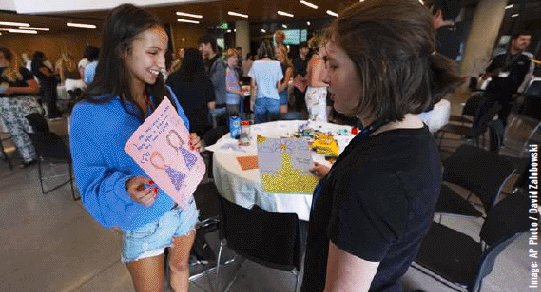 Having autism and ADHD, engineering
student Tory Ridgeway already
knew there were plenty of others like
him. But he hadn’t realized they shared
the same negative self-talk. He said he
locked into focus when he heard The
Neurodiversity Alliance President Jesse
Sanchez describe overcoming feelings
of being a “defective toy.”
“They talking to me,” Ridgeway said.
“I felt seen. I felt heard. And I’m gonna
try to recreate this feeling wherever I
go now.”
A peer-to-peer movement of high
school and college students is hitting
campuses this fall to foster that same
sense of liberation among their fellow
neurodivergent classmates, whose
brains function differently from what
is considered typical. Known as The
Neurodiversity Alliance, they’ve increased the number of schools reached from 60
to more than 600 in the past year.
Building on the visibility that followed
rising diagnoses and pandemic-
era awareness, the alliance says
it empowers youth to build more
inclusive spaces together. In early
August, more than 130 students took
up that mantle at a Denver summit.
They exchanged recruitment tactics,
asked professionals about navigating
“neurotypical” work cultures and
named their favorite neurodiverse
fictional characters. Throughout the
week’s sessions, many stimmed —
making repetitive movements to selfsoothe—
by building LEGO blocks,
braiding yarn or using fidgets. ...
Read full text:
Having autism and ADHD, engineering
student Tory Ridgeway already
knew there were plenty of others like
him. But he hadn’t realized they shared
the same negative self-talk. He said he
locked into focus when he heard The
Neurodiversity Alliance President Jesse
Sanchez describe overcoming feelings
of being a “defective toy.”
“They talking to me,” Ridgeway said.
“I felt seen. I felt heard. And I’m gonna
try to recreate this feeling wherever I
go now.”
A peer-to-peer movement of high
school and college students is hitting
campuses this fall to foster that same
sense of liberation among their fellow
neurodivergent classmates, whose
brains function differently from what
is considered typical. Known as The
Neurodiversity Alliance, they’ve increased the number of schools reached from 60
to more than 600 in the past year.
Building on the visibility that followed
rising diagnoses and pandemic-
era awareness, the alliance says
it empowers youth to build more
inclusive spaces together. In early
August, more than 130 students took
up that mantle at a Denver summit.
They exchanged recruitment tactics,
asked professionals about navigating
“neurotypical” work cultures and
named their favorite neurodiverse
fictional characters. Throughout the
week’s sessions, many stimmed —
making repetitive movements to selfsoothe—
by building LEGO blocks,
braiding yarn or using fidgets. ...
Read full text:
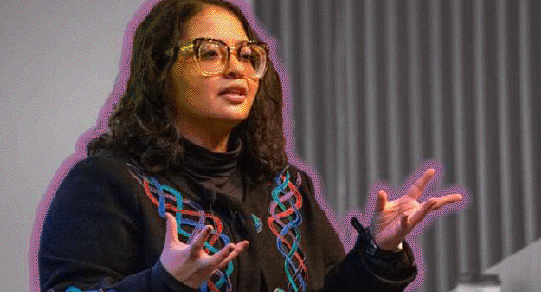 In 2020, while writing her PhD dissertation
on bringing land-restoration
efforts in urban settings in Seattle
under the management of Indigenous
peoples, the Indigenous scientist Jessica
Hernandez noticed that many of
the articles and books she wanted to
incorporate were not written by Indigenous
people. Moreover, those that
were were often not written in English.
She wrote her first book, Fresh Banana
Leaves (2022), as a way to help Indigenous
peoples feel represented and to
integrate Indigenous knowledge into
scientific research. The book ... highlights
Indigenous science, stewardship
and land management, and particularly
projects led by Indigenous women. ...
Hernandez’s heritage is both Maya
Ch’orti’, an Indigenous Maya group,
and Binnizá (Zapotec), an Indigenous
people from the Mexican state of
Oaxaca. She currently teaches environmental
studies at South Seattle College
in Washington. Her research focuses on
integrating Indigenous knowledge systems
—such as kincentric ecology, the
concept that all life is interconnected
as kin— into restoration and conservation
frameworks, and on pushing
back against colonialism in ecological
efforts. Her work also aims to redefine
how the topic of energy is taught in
secondary-school curricula, going beyond
the physics of it by incorporating
concepts of equity, justice and Indigenous
knowledge as they are applied
to energy access, climate change and
sustainability. ...
Read full text:
In 2020, while writing her PhD dissertation
on bringing land-restoration
efforts in urban settings in Seattle
under the management of Indigenous
peoples, the Indigenous scientist Jessica
Hernandez noticed that many of
the articles and books she wanted to
incorporate were not written by Indigenous
people. Moreover, those that
were were often not written in English.
She wrote her first book, Fresh Banana
Leaves (2022), as a way to help Indigenous
peoples feel represented and to
integrate Indigenous knowledge into
scientific research. The book ... highlights
Indigenous science, stewardship
and land management, and particularly
projects led by Indigenous women. ...
Hernandez’s heritage is both Maya
Ch’orti’, an Indigenous Maya group,
and Binnizá (Zapotec), an Indigenous
people from the Mexican state of
Oaxaca. She currently teaches environmental
studies at South Seattle College
in Washington. Her research focuses on
integrating Indigenous knowledge systems
—such as kincentric ecology, the
concept that all life is interconnected
as kin— into restoration and conservation
frameworks, and on pushing
back against colonialism in ecological
efforts. Her work also aims to redefine
how the topic of energy is taught in
secondary-school curricula, going beyond
the physics of it by incorporating
concepts of equity, justice and Indigenous
knowledge as they are applied
to energy access, climate change and
sustainability. ...
Read full text:
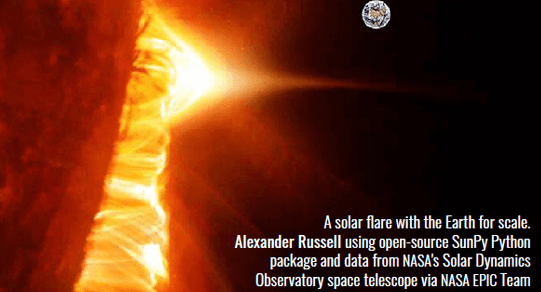 Solar flares —intense releases of electromagnetic
radiation into the sun’s
atmosphere— could be more than six
times hotter than solar physicists previously
believed.
These stunning events involve two
particles: electrons and ions. Previous
measurements of solar flare temperatures
were based on the temperature of electrons,
and it was assumed that electrons
and ions would have the same temperature.
But using computer simulations to
recalculate the temperature of solar flares
with modern data, the researchers found
that there could actually be important
differences in the temperatures of the two
particles that can last several minutes.
In fact, solar flares could be as hot as 180
million degrees Fahrenheit. The findings
were published in the Astrophysical Journal
Letters on September 3.
The new work offers a “paradigm
shift” in the understanding of flare
spectral lines, according to a statement.
Since the 1970s, researchers have tried
to find out why these dark or bright
lines in what’s an otherwise uniform
spectrum are broader than expected.
One controversial hypothesis was that
they occurred because of turbulent
motions, but scientists have never
been able to explain what caused that
turbulence. “The new ion temperature
fits well with the width of flare spectral
lines ...
Solar flares —intense releases of electromagnetic
radiation into the sun’s
atmosphere— could be more than six
times hotter than solar physicists previously
believed.
These stunning events involve two
particles: electrons and ions. Previous
measurements of solar flare temperatures
were based on the temperature of electrons,
and it was assumed that electrons
and ions would have the same temperature.
But using computer simulations to
recalculate the temperature of solar flares
with modern data, the researchers found
that there could actually be important
differences in the temperatures of the two
particles that can last several minutes.
In fact, solar flares could be as hot as 180
million degrees Fahrenheit. The findings
were published in the Astrophysical Journal
Letters on September 3.
The new work offers a “paradigm
shift” in the understanding of flare
spectral lines, according to a statement.
Since the 1970s, researchers have tried
to find out why these dark or bright
lines in what’s an otherwise uniform
spectrum are broader than expected.
One controversial hypothesis was that
they occurred because of turbulent
motions, but scientists have never
been able to explain what caused that
turbulence. “The new ion temperature
fits well with the width of flare spectral
lines ...
 The first interstellar object to
visit the solar system may have
been a fragment of an icy exoplanet,
research suggests.
When 1I/’Oumuamua was first spotted
in 2017, astronomers quickly
determined that it came from outside
the solar system. But although it was
initially classified as a comet from
another star system, it may actually be
the skin of an “exo-Pluto,” a completely
unexpected class of Pluto-like
objects anticipated to visit the sun.
“Everything about this object is
consistent with it being a slab of nitrogen
ice like you see on the surface of
Pluto,” said Steve Desch, an exoplanet
researcher at Arizona State University.
Desch presented his findings in July
at the Progress in Understanding the Pluto Mission: 10 Years after Flyby
conference in Laurel, Maryland.
Instead of being a mix of water ice,
rock and carbon-rich material left
over from the formation of the solar
system, ’Oumuamua appears to be
almost pure nitrogen ice. And rather
than being a compact ball, the visitor
is more elongated than any known
body in the solar system and starkly
different from the interstellar Comets
2I/Borisov and 3I/ATLAS, the only other
known interstellar visitors.
“’Oumuamua is in a different category
of object,” Desch told Space.com
by email. “It’s much harder to find, but
there are a lot more of them.” ...
Read full text
The first interstellar object to
visit the solar system may have
been a fragment of an icy exoplanet,
research suggests.
When 1I/’Oumuamua was first spotted
in 2017, astronomers quickly
determined that it came from outside
the solar system. But although it was
initially classified as a comet from
another star system, it may actually be
the skin of an “exo-Pluto,” a completely
unexpected class of Pluto-like
objects anticipated to visit the sun.
“Everything about this object is
consistent with it being a slab of nitrogen
ice like you see on the surface of
Pluto,” said Steve Desch, an exoplanet
researcher at Arizona State University.
Desch presented his findings in July
at the Progress in Understanding the Pluto Mission: 10 Years after Flyby
conference in Laurel, Maryland.
Instead of being a mix of water ice,
rock and carbon-rich material left
over from the formation of the solar
system, ’Oumuamua appears to be
almost pure nitrogen ice. And rather
than being a compact ball, the visitor
is more elongated than any known
body in the solar system and starkly
different from the interstellar Comets
2I/Borisov and 3I/ATLAS, the only other
known interstellar visitors.
“’Oumuamua is in a different category
of object,” Desch told Space.com
by email. “It’s much harder to find, but
there are a lot more of them.” ...
Read full text
 What if surfaces could sense our
emotions? What if a sofa or a
curtain could interact with its surroundings?
This isn’t science fiction—
it’s the vision driving Ricoh, the Japanese
company that has been pioneering
printing solutions and digital services
for over 85 years. Today, it looks to
the future to innovate the way people
and spaces connect, creating intelligent
environments where well-being is at
the heart of everyday experience.
This vision takes shape in the Soul
and Soil project, presented during
Milan Design Week 2025. Through a
conductive printing technique and the
use of AI, fabrics and furnishings are
transformed into sensitive surfaces
capable of communicating with the
environment and those who live in
it. A simple gesture —such as sitting
down— is enough to activate the interaction,
generating and transmitting
data in real time. ...
Read full text
What if surfaces could sense our
emotions? What if a sofa or a
curtain could interact with its surroundings?
This isn’t science fiction—
it’s the vision driving Ricoh, the Japanese
company that has been pioneering
printing solutions and digital services
for over 85 years. Today, it looks to
the future to innovate the way people
and spaces connect, creating intelligent
environments where well-being is at
the heart of everyday experience.
This vision takes shape in the Soul
and Soil project, presented during
Milan Design Week 2025. Through a
conductive printing technique and the
use of AI, fabrics and furnishings are
transformed into sensitive surfaces
capable of communicating with the
environment and those who live in
it. A simple gesture —such as sitting
down— is enough to activate the interaction,
generating and transmitting
data in real time. ...
Read full text
 Fukushima United FC announces plans
for a new timber stadium in Fukushima
Prefecture, Japan, designed in
collaboration with architecture startup
VUILD. Developed as a 5,000-seat venue,
the project introduces the country’s first
circular timber stadium concept, envisioned
as a model for sustainable and
community-driven architecture.
The proposal positions the stadium
as a ‘symbol of recovery,’ as it will occupy
a region that continues to carry
the memory of a 2011 earthquake and
nuclear disaster. Within this context, the
project is a forward-looking gesture of
resilience. With resilience and circular
design embedded into its architecture,
the stadium is intended as a lasting
expression of the spirit of the area.
With its initial planning of the timber
stadium for Fukushima, Japan, VUILD
seeks to maintain a human-scale form
while accommodating 5,000 seats.
Instead of concentrating all seating in
a dominant main stand, the design circulates
a cross-section equivalent to a
two-story house. The team divides the
stadium into four volumes, each with
its own entrance.
Central to the concept is the use
of timber sourced from local forests.
Laminated wood will form the structural
framework, with components
engineered for disassembly and reuse.
This approach by the at VUILD reflects
a circular model, in which materials
are cycled back into use rather than
discarded. ... Read full text at DesignBoom:
Read full text
Fukushima United FC announces plans
for a new timber stadium in Fukushima
Prefecture, Japan, designed in
collaboration with architecture startup
VUILD. Developed as a 5,000-seat venue,
the project introduces the country’s first
circular timber stadium concept, envisioned
as a model for sustainable and
community-driven architecture.
The proposal positions the stadium
as a ‘symbol of recovery,’ as it will occupy
a region that continues to carry
the memory of a 2011 earthquake and
nuclear disaster. Within this context, the
project is a forward-looking gesture of
resilience. With resilience and circular
design embedded into its architecture,
the stadium is intended as a lasting
expression of the spirit of the area.
With its initial planning of the timber
stadium for Fukushima, Japan, VUILD
seeks to maintain a human-scale form
while accommodating 5,000 seats.
Instead of concentrating all seating in
a dominant main stand, the design circulates
a cross-section equivalent to a
two-story house. The team divides the
stadium into four volumes, each with
its own entrance.
Central to the concept is the use
of timber sourced from local forests.
Laminated wood will form the structural
framework, with components
engineered for disassembly and reuse.
This approach by the at VUILD reflects
a circular model, in which materials
are cycled back into use rather than
discarded. ... Read full text at DesignBoom:
Read full text
 Primark, Irish multinational fashion
retailer, has unveiled its first seated
mannequin designed to represent a
manual wheelchair user, as part of its
ongoing commitment to inclusion.
Named ‘Sophie’, the mannequin was
inspired by and co-created with British
television presenter, disability advocate
and wheelchair user, Sophie Morgan.
Launching initially in 22 flagship
stores across nine countries, including
UK stores, ‘Sophie’ will take centre
stage in displays showcasing Primark’s
Adaptive range, the first major
women’s and men’s fashion collection
on the high street designed specifically
for those with disabilities, as well as its
main fashion ranges.
The launch is part of a broader effort
by Primark to bring more diversity
to its mannequin range and reflect a
wider variety of body sizes in store. ...
Primark, Irish multinational fashion
retailer, has unveiled its first seated
mannequin designed to represent a
manual wheelchair user, as part of its
ongoing commitment to inclusion.
Named ‘Sophie’, the mannequin was
inspired by and co-created with British
television presenter, disability advocate
and wheelchair user, Sophie Morgan.
Launching initially in 22 flagship
stores across nine countries, including
UK stores, ‘Sophie’ will take centre
stage in displays showcasing Primark’s
Adaptive range, the first major
women’s and men’s fashion collection
on the high street designed specifically
for those with disabilities, as well as its
main fashion ranges.
The launch is part of a broader effort
by Primark to bring more diversity
to its mannequin range and reflect a
wider variety of body sizes in store. ...
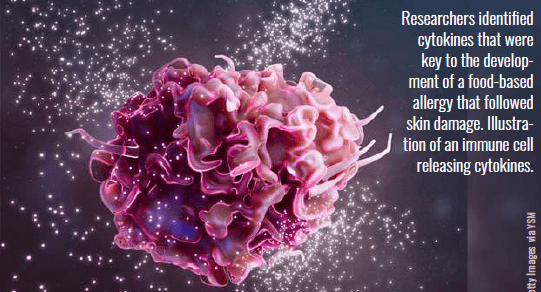 There’s a mysterious connection
between our skin and our guts,
specifically when it comes to food allergies.
For reasons scientists don’t fully
understand, chronic skin conditions
such as eczema are linked to food allergies;
while the national prevalence of
childhood food allergies is only around
8%, that prevalence rises to 30% in
children with eczema. Researchers have
discovered that in some cases, eczema
can precede food allergies.
Now, a new study led by researchers
at Yale School of Medicine (YSM) and
published April 4 in the journal Science
Immunology introduces a new hypothesis
about this link: In mice, skin damage
can trigger food allergies.
Working with mice with different
kinds of skin injuries, including
lacerations and ultraviolet light damage,
the scientists found that introducing
new food proteins directly into the gut
via a feeding tube at the time of skin
damage induced new food allergies in
the animals. The food had to be new to
the animals; they wouldn’t develop allergies
to foods they’d previously eaten.
And the introduction of the allergen —a
substance that causes allergic reactions—
had to happen within several
hours of the skin injury. Foods introduced
the next day seemed to be safe.
Before these findings, it was not clear
whether events taking place so far apart
from each other in the body could be
linked through the immune system to
trigger an allergy, the researchers said.
...
Read full text
There’s a mysterious connection
between our skin and our guts,
specifically when it comes to food allergies.
For reasons scientists don’t fully
understand, chronic skin conditions
such as eczema are linked to food allergies;
while the national prevalence of
childhood food allergies is only around
8%, that prevalence rises to 30% in
children with eczema. Researchers have
discovered that in some cases, eczema
can precede food allergies.
Now, a new study led by researchers
at Yale School of Medicine (YSM) and
published April 4 in the journal Science
Immunology introduces a new hypothesis
about this link: In mice, skin damage
can trigger food allergies.
Working with mice with different
kinds of skin injuries, including
lacerations and ultraviolet light damage,
the scientists found that introducing
new food proteins directly into the gut
via a feeding tube at the time of skin
damage induced new food allergies in
the animals. The food had to be new to
the animals; they wouldn’t develop allergies
to foods they’d previously eaten.
And the introduction of the allergen —a
substance that causes allergic reactions—
had to happen within several
hours of the skin injury. Foods introduced
the next day seemed to be safe.
Before these findings, it was not clear
whether events taking place so far apart
from each other in the body could be
linked through the immune system to
trigger an allergy, the researchers said.
...
Read full text
 If you enjoy binge-watching, chances
are you have told yourself, “Just one
more episode,” more times than you
can count. While it is often criticized as
an unhealthy habit, new research from
the University of Georgia suggests that
extended viewing sessions might also
carry some unexpected benefits.
According to the researchers, people
who watch multiple episodes in a row
often find that stories linger in their
minds long after the screen goes dark.
This tendency to keep thinking about
what they watched is not necessarily
negative. The study revealed that
those who consume movies, shows, or
even books in long stretches are more
likely to remember the narratives and
continue engaging with them through
imagination, daydreaming, and fantasy. “Humans are storytelling creatures,”
said Joshua Baldwin, lead author of the
study and postdoctoral researcher at
the University of Georgia. “One of the
functions of narratives is the ability
to satisfy motivations for things like
connecting with other people, feeling
autonomous and confident, and even
security and safety.
“Stories have characters that fulfill
these roles, and we can satisfy those
needs through them.”
Binge-watching may help viewers
build mental worlds where stories
continue even after finishing the series.
And these tales may help them cope in
times of stress. ...
Read full text:
If you enjoy binge-watching, chances
are you have told yourself, “Just one
more episode,” more times than you
can count. While it is often criticized as
an unhealthy habit, new research from
the University of Georgia suggests that
extended viewing sessions might also
carry some unexpected benefits.
According to the researchers, people
who watch multiple episodes in a row
often find that stories linger in their
minds long after the screen goes dark.
This tendency to keep thinking about
what they watched is not necessarily
negative. The study revealed that
those who consume movies, shows, or
even books in long stretches are more
likely to remember the narratives and
continue engaging with them through
imagination, daydreaming, and fantasy. “Humans are storytelling creatures,”
said Joshua Baldwin, lead author of the
study and postdoctoral researcher at
the University of Georgia. “One of the
functions of narratives is the ability
to satisfy motivations for things like
connecting with other people, feeling
autonomous and confident, and even
security and safety.
“Stories have characters that fulfill
these roles, and we can satisfy those
needs through them.”
Binge-watching may help viewers
build mental worlds where stories
continue even after finishing the series.
And these tales may help them cope in
times of stress. ...
Read full text:
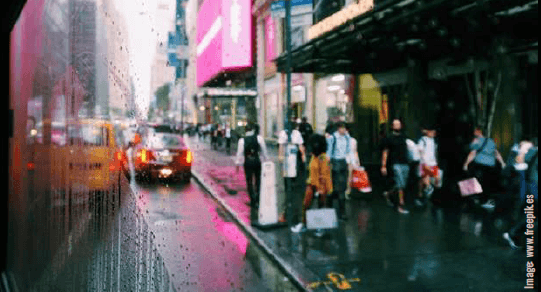 Among the kosher markets, eateries
and synagogues of Brooklyn’s
Borough Park neighborhood, a quiet
transformation is underway. On a recent
overcast Saturday, the intersection
of 37th Street and 12th Avenue looked
like any other intersection in the area,
surrounded by single-family homes
and parking garages. But an important
measure to mitigate mass flooding
was implemented here some months
ago, when New York’s Department of
Environmental Protection (DEP) began
to install seven miles of permeable
pavement along curb lines.
Pavement covers so much of the urban
landscape, but most of us probably
don’t think much about how it impacts
the flow of water through our cities
—until a hurricane or big rainstorm
hits, and stormwater runs swiftly right
off of it. The catastrophic flooding that
hit parts of New York, New Jersey and
Connecticut recently was an example of
how sudden and dramatic the impact of
such storms can be.
When storms produce widespread
torrential rains, floods from storm
surge can cause serious damage to our
sewer systems. Duringf the Atlantic
hurricane season, the risk for flooding
and storm surge increases. The
National Oceanic and Atmospheric
Administration (NOAA) projected that
the hurricane season would be above
normal, and rapid hurricane intensification
has become more common
in recent years. ...
Read full text:
Among the kosher markets, eateries
and synagogues of Brooklyn’s
Borough Park neighborhood, a quiet
transformation is underway. On a recent
overcast Saturday, the intersection
of 37th Street and 12th Avenue looked
like any other intersection in the area,
surrounded by single-family homes
and parking garages. But an important
measure to mitigate mass flooding
was implemented here some months
ago, when New York’s Department of
Environmental Protection (DEP) began
to install seven miles of permeable
pavement along curb lines.
Pavement covers so much of the urban
landscape, but most of us probably
don’t think much about how it impacts
the flow of water through our cities
—until a hurricane or big rainstorm
hits, and stormwater runs swiftly right
off of it. The catastrophic flooding that
hit parts of New York, New Jersey and
Connecticut recently was an example of
how sudden and dramatic the impact of
such storms can be.
When storms produce widespread
torrential rains, floods from storm
surge can cause serious damage to our
sewer systems. Duringf the Atlantic
hurricane season, the risk for flooding
and storm surge increases. The
National Oceanic and Atmospheric
Administration (NOAA) projected that
the hurricane season would be above
normal, and rapid hurricane intensification
has become more common
in recent years. ...
Read full text:
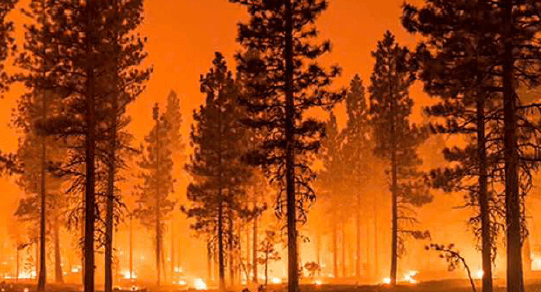 Five miles down a dirt road in Plumas
National Forest, at the northern end
of the Sierra Nevada mountain range,
lies a paradox. On one side of the road,
a scorched wasteland of burnt toothpicks
covers the Earth, a reminder of
the devastating Dixie Fire that swept
through this area four years ago. But
a few hundred feet away, a stand of
hardy, healthy ponderosa pines shoot
into the sky, their branches reaching
toward the sun. Small burn marks on
the trunks of these trees are the only
evidence of that brutal fire, which devoured
nearly 1 million acres across five
counties in 2021, making it California’s
largest single wildfire to date.
How did one stand manage to
survive such a devastating blaze almost
intact when the other perished entirely? Forest managers understandably
want an answer to this question,
backed by hard evidence.
Late last year, a team of researchers
from California, the Forest Service,
and The Nature Conservancy took a
systematic look at how different forest
management practices influence the
frequency of fires that kill entire groves
of trees. They surveyed 164 study plots
that burned in the Dixie Fire, including
the two neighboring stands in
Plumas National Forest. It turns out
that between 2003 and 2005, the U.S.
Forest Service had removed roughly
two‑thirds of the trees in the surviving
stand, and set a prescribed burn. The
forest that went up in flames had been
left untouched. ...
Read full text:
Five miles down a dirt road in Plumas
National Forest, at the northern end
of the Sierra Nevada mountain range,
lies a paradox. On one side of the road,
a scorched wasteland of burnt toothpicks
covers the Earth, a reminder of
the devastating Dixie Fire that swept
through this area four years ago. But
a few hundred feet away, a stand of
hardy, healthy ponderosa pines shoot
into the sky, their branches reaching
toward the sun. Small burn marks on
the trunks of these trees are the only
evidence of that brutal fire, which devoured
nearly 1 million acres across five
counties in 2021, making it California’s
largest single wildfire to date.
How did one stand manage to
survive such a devastating blaze almost
intact when the other perished entirely? Forest managers understandably
want an answer to this question,
backed by hard evidence.
Late last year, a team of researchers
from California, the Forest Service,
and The Nature Conservancy took a
systematic look at how different forest
management practices influence the
frequency of fires that kill entire groves
of trees. They surveyed 164 study plots
that burned in the Dixie Fire, including
the two neighboring stands in
Plumas National Forest. It turns out
that between 2003 and 2005, the U.S.
Forest Service had removed roughly
two‑thirds of the trees in the surviving
stand, and set a prescribed burn. The
forest that went up in flames had been
left untouched. ...
Read full text:
 American surrogacy is an enormous
industry, taking in approximately
$5 billion in 2024, and the practice is
expected to explode globally almost
tenfold in the next decade. It seems
especially popular in Silicon Valley,
where a growing cadre of investors and
executives have used it to grow their
families. More than a dozen big tech
companies provide five-figure subsidies
to any employee who needs or
wants to outsource gestational labor.
A shocking number of techies now believe
growing a baby can be a straightforward
business transaction.
But intended parents and gestational
carriers —IPs and GCs— are
often uninformed about the dearth
of regulation and completely unprepared
for what can go wrong. Only one
state, New York, requires agencies to be
licensed. America is the developed nation
with the highest maternal mortality
rate and one of the highest stillbirth
rates. Compared to natural conception,
carrying a genetically unrelated fetus
more than triples the risk of severe,
potentially deadly conditions, a statistic
surrogates are rarely given. IPs do not
always have to disclose complete medical
information, including histories of
certain conditions that may harm their
GCs. ... Meanwhile, the increasing acceptance
of “fetal personhood” means
that, in many states, losing a pregnancy
can be charged as a felony and potentially
punished with life in prison. This
is thorny enough when it’s a woman’s
own baby. It’s exponentially more
fraught when the carrier isn’t the parent.
...
Read full text:
American surrogacy is an enormous
industry, taking in approximately
$5 billion in 2024, and the practice is
expected to explode globally almost
tenfold in the next decade. It seems
especially popular in Silicon Valley,
where a growing cadre of investors and
executives have used it to grow their
families. More than a dozen big tech
companies provide five-figure subsidies
to any employee who needs or
wants to outsource gestational labor.
A shocking number of techies now believe
growing a baby can be a straightforward
business transaction.
But intended parents and gestational
carriers —IPs and GCs— are
often uninformed about the dearth
of regulation and completely unprepared
for what can go wrong. Only one
state, New York, requires agencies to be
licensed. America is the developed nation
with the highest maternal mortality
rate and one of the highest stillbirth
rates. Compared to natural conception,
carrying a genetically unrelated fetus
more than triples the risk of severe,
potentially deadly conditions, a statistic
surrogates are rarely given. IPs do not
always have to disclose complete medical
information, including histories of
certain conditions that may harm their
GCs. ... Meanwhile, the increasing acceptance
of “fetal personhood” means
that, in many states, losing a pregnancy
can be charged as a felony and potentially
punished with life in prison. This
is thorny enough when it’s a woman’s
own baby. It’s exponentially more
fraught when the carrier isn’t the parent.
...
Read full text:
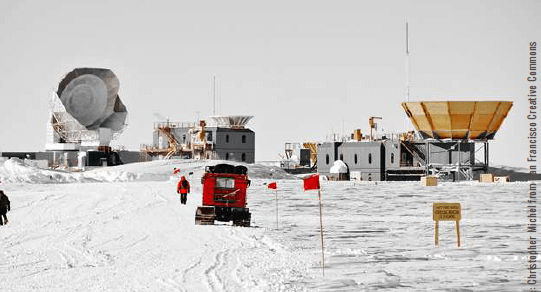 A horrifying new workplace survey by
the US National Science Foundation
is raising alarms about a terrible HR crisis
unfolding on the white continent. In
particular, the report found that sexual
assault, sexual harassment, and stalking
were regular facts of life for those
stationed on remote research stations.
The confidential survey was open to
all 2,760 US Antarctic Program (USAP)
employees and contractors stationed
between 2022 and 2024. Of those who
responded, a blistering 40% said they
experienced at least one incident of
sexual assault or harassment on the job.
Sexual assault and harassment is so
endemic on USAP research bases that just
under 70% of survey respondents said
they witnessed at least one incident.
These include sexual remarks or jokes,
overtly sexual flirtation, and touching
in sensitive places without consent.
While you might imagine predatory
men losing all self control due to cabin
fever overwinter —a real concern, to be
fair— the ratio of male to female victimhood
is actually higher in Antarctica
than the US national average. Of the
USAP workers who were assaulted or
harassed on base, nearly 60% identified
as female, while 36% identified as
male, suggesting a pervasive culture of
workplace harassment.
Though nearly all workers who responded
to the survey said they understood
the definitions of sexual assault
and harassment, less than 85% of them
knew their options when it came to reporting
incidents. ...
A horrifying new workplace survey by
the US National Science Foundation
is raising alarms about a terrible HR crisis
unfolding on the white continent. In
particular, the report found that sexual
assault, sexual harassment, and stalking
were regular facts of life for those
stationed on remote research stations.
The confidential survey was open to
all 2,760 US Antarctic Program (USAP)
employees and contractors stationed
between 2022 and 2024. Of those who
responded, a blistering 40% said they
experienced at least one incident of
sexual assault or harassment on the job.
Sexual assault and harassment is so
endemic on USAP research bases that just
under 70% of survey respondents said
they witnessed at least one incident.
These include sexual remarks or jokes,
overtly sexual flirtation, and touching
in sensitive places without consent.
While you might imagine predatory
men losing all self control due to cabin
fever overwinter —a real concern, to be
fair— the ratio of male to female victimhood
is actually higher in Antarctica
than the US national average. Of the
USAP workers who were assaulted or
harassed on base, nearly 60% identified
as female, while 36% identified as
male, suggesting a pervasive culture of
workplace harassment.
Though nearly all workers who responded
to the survey said they understood
the definitions of sexual assault
and harassment, less than 85% of them
knew their options when it came to reporting
incidents. ...
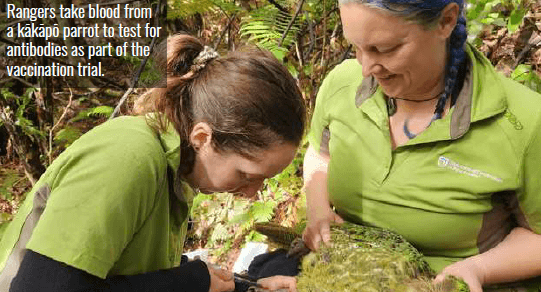 It is easy to imagine how it could
happen. A petrel, flying east from the
Indian Ocean at the end of the Austral
winter, makes landfall at New Zealand’s
southern Codfish Island/Whenua Hou.
Tired from its long journey, the petrel
seeks refuge in the burrow of a green
kākāpō: a critically endangered flightless
species that is the world’s fattest
parrot. If the seabird intrudes when the
kākāpō is primed to breed, the male
parrot may attempt to mate with the
smaller petrel, accidentally smothering
it in the process.
In this case, there are two unwitting
victims. The petrel harbours a deadly
agent: H5 avian influenza. Soon after,
bird flu begins to rip through the imperilled
parrot population, pushing the
waddling bird —which numbers fewer we can use them on a daily basis to prevent any abuse or limitations of them. Visit MyAIU Human Rights.
than 250 individuals— to extinction.
This is the kind of scenario that New
Zealand’s conservationists are considering
before the arrival of the spring migration
season—as they have done for
the past two years since a highly pathogenic
strain of bird flu known as H5N1
began burning through global wildlife,
spurring the largest sudden drop in the
world’s bird population in decades.
Tens of millions of wild birds have
succumbed to H5 worldwide, but so far
Oceania has managed to keep the virus
out —buying time for New Zealand
to add another weapon to its arsenal
before thousands of birds arrive from
distant shores. ...
It is easy to imagine how it could
happen. A petrel, flying east from the
Indian Ocean at the end of the Austral
winter, makes landfall at New Zealand’s
southern Codfish Island/Whenua Hou.
Tired from its long journey, the petrel
seeks refuge in the burrow of a green
kākāpō: a critically endangered flightless
species that is the world’s fattest
parrot. If the seabird intrudes when the
kākāpō is primed to breed, the male
parrot may attempt to mate with the
smaller petrel, accidentally smothering
it in the process.
In this case, there are two unwitting
victims. The petrel harbours a deadly
agent: H5 avian influenza. Soon after,
bird flu begins to rip through the imperilled
parrot population, pushing the
waddling bird —which numbers fewer we can use them on a daily basis to prevent any abuse or limitations of them. Visit MyAIU Human Rights.
than 250 individuals— to extinction.
This is the kind of scenario that New
Zealand’s conservationists are considering
before the arrival of the spring migration
season—as they have done for
the past two years since a highly pathogenic
strain of bird flu known as H5N1
began burning through global wildlife,
spurring the largest sudden drop in the
world’s bird population in decades.
Tens of millions of wild birds have
succumbed to H5 worldwide, but so far
Oceania has managed to keep the virus
out —buying time for New Zealand
to add another weapon to its arsenal
before thousands of birds arrive from
distant shores. ...
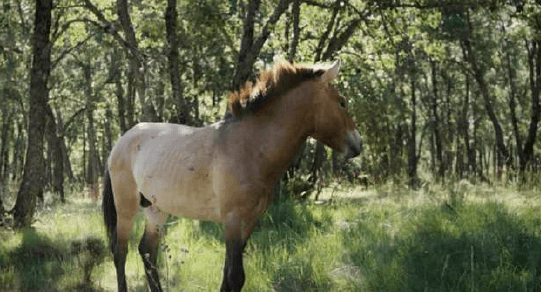 Some 30,000 years ago, Stone Age
people decorated a cave, today
known as Cueva de los Casares, in
central Spain with pictures of mating
humans (most famously), geometric
shapes, and animals. The most popular
carved animal is the wild horse.
Cueva de los Casares sports at least
two dozen images of wild horses. Eventually,
these Pleistocene-epoch horses
vanished —likely slaughtered for food
or domesticated. But some 10,000 years
later, wild horses have again returned to
central Spain— this time to help with
out-of-control fires and bring economic
opportunity to a struggling region.
In 2023, Rewilding Spain, apart of Rewilding
Europe’s network, brought in the
first 16 Przewalski’s horses (Equus ferus
przewalskii) from France to the highlands
of Spain’s Guadalajara province, one of
the least populated parts of the country.
Once extinct in the wild, Przewalski’s
horse is the last fully wild horse in
the world, genetically distinct from all
domesticated horses. Originally from
Mongolia, they’ve been rewilded to a
number of countries in Europe.
“It was an amazing feeling … to
bring these animals here,” says Pablo
Schapira, team leader with Rewilding
Spain. Before returning to his home
country, Schapira spent a dozen years
in Africa working with the NGO African
Parks, including on species reintroductions.
...
Today, the project has 35 Przewalski’s
horses. ...
Some 30,000 years ago, Stone Age
people decorated a cave, today
known as Cueva de los Casares, in
central Spain with pictures of mating
humans (most famously), geometric
shapes, and animals. The most popular
carved animal is the wild horse.
Cueva de los Casares sports at least
two dozen images of wild horses. Eventually,
these Pleistocene-epoch horses
vanished —likely slaughtered for food
or domesticated. But some 10,000 years
later, wild horses have again returned to
central Spain— this time to help with
out-of-control fires and bring economic
opportunity to a struggling region.
In 2023, Rewilding Spain, apart of Rewilding
Europe’s network, brought in the
first 16 Przewalski’s horses (Equus ferus
przewalskii) from France to the highlands
of Spain’s Guadalajara province, one of
the least populated parts of the country.
Once extinct in the wild, Przewalski’s
horse is the last fully wild horse in
the world, genetically distinct from all
domesticated horses. Originally from
Mongolia, they’ve been rewilded to a
number of countries in Europe.
“It was an amazing feeling … to
bring these animals here,” says Pablo
Schapira, team leader with Rewilding
Spain. Before returning to his home
country, Schapira spent a dozen years
in Africa working with the NGO African
Parks, including on species reintroductions.
...
Today, the project has 35 Przewalski’s
horses. ...
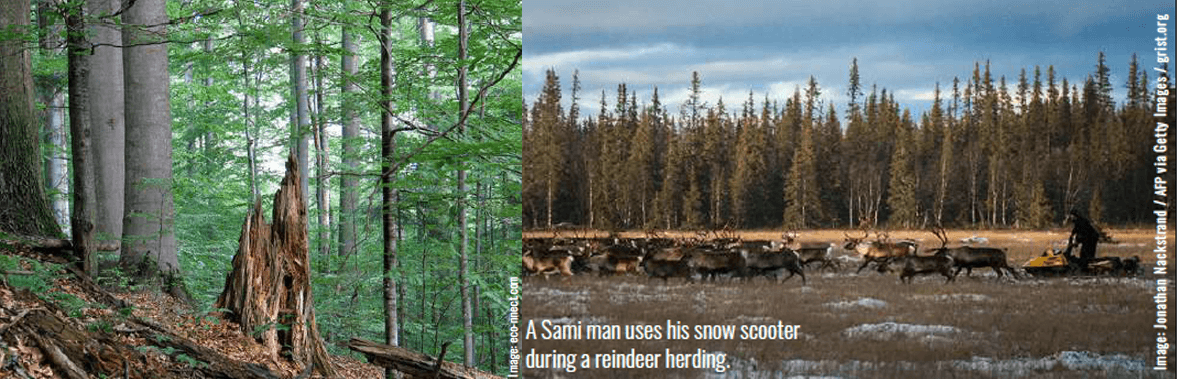
 Construct your own piece of radio history combining the best of
old and new technology —a genuine vacuum tube for strong reception and classic
sound, and a modern audio circuit board and speaker, for optimal volume— results
in a great listening experience. Enjoy building it, then tune in to radio stations
around the world with your very own retro-style receiver. Requires 4 x AA 1.5V batteries
(not included) and 1 x 9V battery (not included). This kit requires soldering.
This is not a toy!
www.presentindicative.com
Construct your own piece of radio history combining the best of
old and new technology —a genuine vacuum tube for strong reception and classic
sound, and a modern audio circuit board and speaker, for optimal volume— results
in a great listening experience. Enjoy building it, then tune in to radio stations
around the world with your very own retro-style receiver. Requires 4 x AA 1.5V batteries
(not included) and 1 x 9V battery (not included). This kit requires soldering.
This is not a toy!
www.presentindicative.com
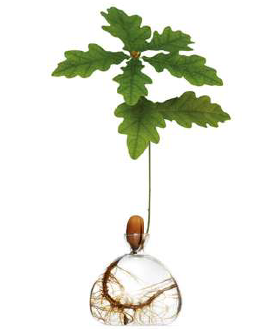 Observe the beauty of an
oakling’s leaves and roots as they sprout
in this glass vase. Just fill it with water
and place an acorn (not included) in the
chamber at the top.
store.moma.org
Observe the beauty of an
oakling’s leaves and roots as they sprout
in this glass vase. Just fill it with water
and place an acorn (not included) in the
chamber at the top.
store.moma.org

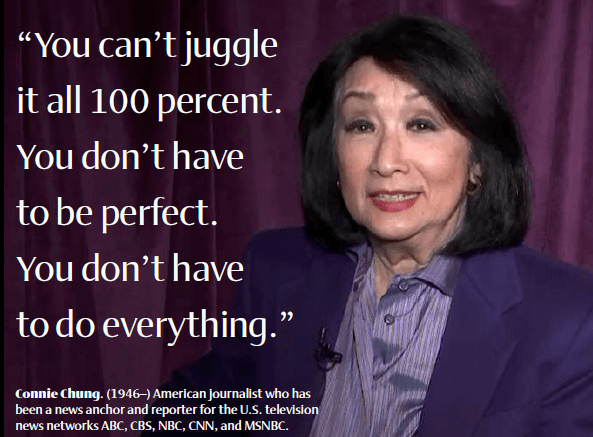

 The Bachelor in Change Management
prepares students to lead,
design, and implement successful
change initiatives in organizations
facing constant transformation due to
globalization, technological disruption,
and shifting business models. This
program blends leadership, psychology,
strategy, and organizational development
to equip graduates with the
tools to guide individuals, teams, and
institutions through transitions with
resilience and innovation.
The Bachelor of Change Management
program is offered online via
distance learning. After evaluating
both academic record and life
experience, AIU staff working in conjunction
with Faculty and Academic
Advisors will assist students in setting
up a custom-made program, designed
on an individual basis. This flexibility
to meet student needs is seldom found
in other distance learning programs.
Our online program does not require
all students to take the same subjects/
courses, use the same books, or
learning materials. Instead, the online
Bachelor of Change Management curriculum
is designed individually by
the student and academic advisor. It
specifically addresses strengths and
weaknesses with respect to market
opportunities in the student’s major
and intended field of work.
Important: Below is an example of
the topics or areas you may develop
and work on during your studies. By no
means is it a complete or required list as
AIU programs do not follow a standardized
curriculum. It is meant solely as a
reference point and example. Want to
learn more about the curriculum design
at AIU? (Course and Curriculum).
The Bachelor in Change Management
prepares students to lead,
design, and implement successful
change initiatives in organizations
facing constant transformation due to
globalization, technological disruption,
and shifting business models. This
program blends leadership, psychology,
strategy, and organizational development
to equip graduates with the
tools to guide individuals, teams, and
institutions through transitions with
resilience and innovation.
The Bachelor of Change Management
program is offered online via
distance learning. After evaluating
both academic record and life
experience, AIU staff working in conjunction
with Faculty and Academic
Advisors will assist students in setting
up a custom-made program, designed
on an individual basis. This flexibility
to meet student needs is seldom found
in other distance learning programs.
Our online program does not require
all students to take the same subjects/
courses, use the same books, or
learning materials. Instead, the online
Bachelor of Change Management curriculum
is designed individually by
the student and academic advisor. It
specifically addresses strengths and
weaknesses with respect to market
opportunities in the student’s major
and intended field of work.
Important: Below is an example of
the topics or areas you may develop
and work on during your studies. By no
means is it a complete or required list as
AIU programs do not follow a standardized
curriculum. It is meant solely as a
reference point and example. Want to
learn more about the curriculum design
at AIU? (Course and Curriculum).
 Atlantic International University is accredited by the Accreditation Service for International
Schools, Colleges and Universities (ASIC). ASIC Accreditation is an internationally renowned
quality standard for colleges and universities. Visit ASIC’s Directory of Accredited Colleges and
Universities. ASIC is a member of CHEA International Quality Group (CIQG) in the USA, an approved
accreditation body by the Ministerial Department of the Home Office in the UK, and is listed in the
International Directory of the Council for Higher Education Accreditation (CHEA). The University is based
in the United States and was established by corporate charter in 1998.
Atlantic International University is accredited by the Accreditation Service for International
Schools, Colleges and Universities (ASIC). ASIC Accreditation is an internationally renowned
quality standard for colleges and universities. Visit ASIC’s Directory of Accredited Colleges and
Universities. ASIC is a member of CHEA International Quality Group (CIQG) in the USA, an approved
accreditation body by the Ministerial Department of the Home Office in the UK, and is listed in the
International Directory of the Council for Higher Education Accreditation (CHEA). The University is based
in the United States and was established by corporate charter in 1998.
| Dr. Franklin Valcin Presi den t/Academic Dean |
Dr. José Mercado Chief Executive Officer Chairman of the Board of Trustees |
Ricardo González, PhD Provost |
| Dr. Ricardo Gonzalez Chief Operation Officer and MKT Director |
Linda Collazo Logistics Coordinator |
AIU Tutors Coordinators: Deborah Rodriguez Amiakhor Ejaeta Amanda Gutierrez William Mora Miriam James Admissions Coordinators: Amalia Aldrett Sandra Garcia Junko Shimizu Veronica Amuz Alba Ochoa Jenis Garcia Judith Brown Chris Soto René Cordón Dr. Anderas Rissler Academic Coordinators: Dr. Adesida Oluwafemi Dr. Emmanuel Gbagu Dr. Lucia Gorea Dr. Edgar Colon Dr. Mario Rios Freddy Frejus Dr. Nilani Ljunggren De Silva Dr. Scott Wilson Dr. Mohammad Shaidul Islam |
| Dr. Miriam Garibaldi Vice provost for Research |
Carolina Valdes Human Resource Coordinator |
|
| Dr. Ofelia Miller Director of AIU |
Carlos Aponte Teleco mmunications Coordinator |
|
| Clara Margalef Director of Special Projects of AIU |
David Jung Corporate/Legal Counsel |
|
| Juan Pablo Moreno Director of Operations |
Bruce Kim Advisor/Consultant |
|
| Paula Viera Director of Intelligence Systems |
Thomas Kim Corporate/ Accounting Counsel |
|
| Felipe Gomez Design Director / IT Supervisor |
Maricela Esparza Administrative Coordinator |
|
| Kevin Moll Web Designer |
Chris Benjamin IT and Hosting Support |
|
| Daritza Ysla IT Coordinator |
Maria Pastrana Accounting Coordinator |
|
| Daritza Ysla IT Coordinator |
Roberto Aldrett Communications Coordinator |
|
| Nadeem Awan Chief Programming Officer |
Giovanni Castillo IT Support |
|
| Dr. Edward Lambert Academic Director |
Antonella Fonseca Quality Control & Data Analysis |
|
| Dr. Ariadna Romero Advisor Coordinator |
Adrián Varela Graphic Design |
|
| Jhanzaib Awan Senior Programmer |
Vanesa D’Angelo Content Writer |
|
| Leonardo Salas Human Resource Manager |
Jaime Rotlewicz Dean of Admissions |
|
| Benjamin Joseph IT and Technology Support |
Michael Phillips Registrar’s Office |
|
| Rosie Perez Finance Coordinator |
||
 The School of Business and Economics
allows aspiring and practicing
professionals, managers, and entrepreneurs
in the private and public sectors
to complete a self paced distance
learning degree program of the highest
academic standard.
The ultimate goal is to empower
learners and help them take advantage
of the enormous array of resources
from the world environment in order
to eliminate the current continuum of
poverty and limitations.
Degree programs are designed for
those students whose professional experience has been in business,
marketing, administration, economics,
finance and management.
The School of Business and Economics
allows aspiring and practicing
professionals, managers, and entrepreneurs
in the private and public sectors
to complete a self paced distance
learning degree program of the highest
academic standard.
The ultimate goal is to empower
learners and help them take advantage
of the enormous array of resources
from the world environment in order
to eliminate the current continuum of
poverty and limitations.
Degree programs are designed for
those students whose professional experience has been in business,
marketing, administration, economics,
finance and management.
 The School of Social and Human Studies
is focused on to the development of
studies which instill a core commitment
to building a society based on social and
economic justice and enhancing opportunities
for human well being.
The founding principles lie on the
basic right of education as outlined
in the Declaration of Human Rights.
We instill in our students a sense of
confidence and self reliance in their
ability to access the vast opportunities
available through information channels,
the world wide web, private, public,
nonprofit, and nongovernmental organizations in an ever expanding
global community.
Degree programs are aimed towards
those whose professional life has been
related to social and human behavior,
with the arts, or with cultural studies.
The School of Social and Human Studies
is focused on to the development of
studies which instill a core commitment
to building a society based on social and
economic justice and enhancing opportunities
for human well being.
The founding principles lie on the
basic right of education as outlined
in the Declaration of Human Rights.
We instill in our students a sense of
confidence and self reliance in their
ability to access the vast opportunities
available through information channels,
the world wide web, private, public,
nonprofit, and nongovernmental organizations in an ever expanding
global community.
Degree programs are aimed towards
those whose professional life has been
related to social and human behavior,
with the arts, or with cultural studies.
 The School of Science and Engineering
seeks to provide dynamic, integrated,
and challenging degree programs
designed for those whose experience
is in industrial research, scientific production,
engineering and the general
sciences. Our system for research and
education will keep us apace with the
twenty-first century reach scientific
advance in an environmentally and
ecologically responsible manner to allow
for the sustainability of the human
population. We will foster among our
students a demand for ethical behavior,
an appreciation for diversity, an understanding
of scientific investigation, knowledge of design innovation, a
critical appreciation for the importance
of technology and technological change
for the advancement of humanity.
The School of Science and Engineering
seeks to provide dynamic, integrated,
and challenging degree programs
designed for those whose experience
is in industrial research, scientific production,
engineering and the general
sciences. Our system for research and
education will keep us apace with the
twenty-first century reach scientific
advance in an environmentally and
ecologically responsible manner to allow
for the sustainability of the human
population. We will foster among our
students a demand for ethical behavior,
an appreciation for diversity, an understanding
of scientific investigation, knowledge of design innovation, a
critical appreciation for the importance
of technology and technological change
for the advancement of humanity.
 With access to a global catalog created and maintained collectively by more than
9,000 participating institutions, AIU students have secured excellent research
tools for their study programs.
With access to a global catalog created and maintained collectively by more than
9,000 participating institutions, AIU students have secured excellent research
tools for their study programs.
