
November 2025 Edition!
AIU News + Essays + Education + Culture + Science + Technology + Art + Design + Health + Environment + Human Rights + Animals & Nature + Construction Technology + About AIU
Other Editions

AIU News + Essays + Education + Culture + Science + Technology + Art + Design + Health + Environment + Human Rights + Animals & Nature + Construction Technology + About AIU
 AUGUST 21, 2025.
Atlantic International
University
proudly announces
the academic
milestone of Dr.
Youssef Amin,
who has successfully earned
his PhD in Project Management.
On this occasion, Dr.
Amin had the distinguished
honor of being received
by His Eminence Engineer
Ibrahim Bin Hassan, where
he presented a copy of his
doctoral dissertation titled:
Investigating the Effectiveness
of Blended Learning for Project Management Certifications: A
Case Study in Bahrain.
AUGUST 21, 2025.
Atlantic International
University
proudly announces
the academic
milestone of Dr.
Youssef Amin,
who has successfully earned
his PhD in Project Management.
On this occasion, Dr.
Amin had the distinguished
honor of being received
by His Eminence Engineer
Ibrahim Bin Hassan, where
he presented a copy of his
doctoral dissertation titled:
Investigating the Effectiveness
of Blended Learning for Project Management Certifications: A
Case Study in Bahrain. OCTOBER 1,
2025. We want
to congratulate
our AIU graduate,
Mohammad
Shahidul Islam,
for his most recent achievement.
Mohammad was awarded
with a “Certificate of Excellence
in Reviewing” by Archives
of Current Research International
Journal, in recognition of an
outstanding contribution to the
quality of the journal.
OCTOBER 1,
2025. We want
to congratulate
our AIU graduate,
Mohammad
Shahidul Islam,
for his most recent achievement.
Mohammad was awarded
with a “Certificate of Excellence
in Reviewing” by Archives
of Current Research International
Journal, in recognition of an
outstanding contribution to the
quality of the journal.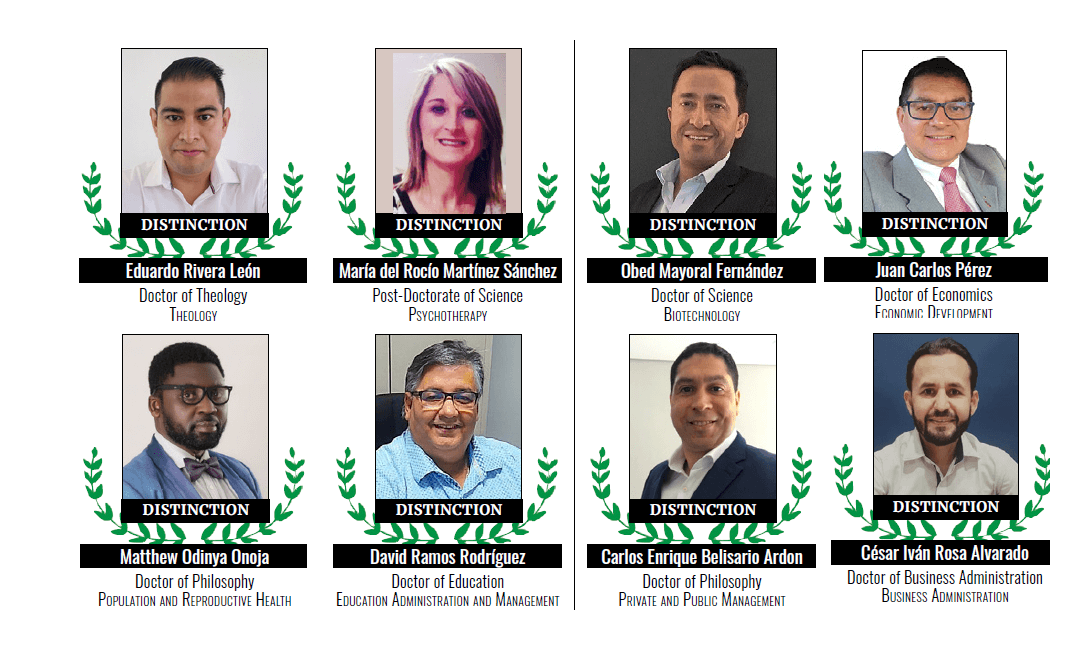 OCTOBER, 2025.
These graduate students
completed their program
with a high cumulative grade
point average, which reflects
the quality of performance
within their respective major.
Congratulations!
OCTOBER, 2025.
These graduate students
completed their program
with a high cumulative grade
point average, which reflects
the quality of performance
within their respective major.
Congratulations!
 OCTOBER 7,
2025. Atlantic
International
University
proudly announces
that
one of our
graduates,
Fredy Leonel Archila Morales,
was chosen as an Illustrious
Guatemalan in the Science
2025 category. This is a great
achievement considering
that Fredy was selected from
among Guatemalan scientists
from all branches of science.
Something interesting about this acknowledgement is that
Fredy also appears on billboards
at subway stops and
large billboards in the country’s
main cities.
OCTOBER 7,
2025. Atlantic
International
University
proudly announces
that
one of our
graduates,
Fredy Leonel Archila Morales,
was chosen as an Illustrious
Guatemalan in the Science
2025 category. This is a great
achievement considering
that Fredy was selected from
among Guatemalan scientists
from all branches of science.
Something interesting about this acknowledgement is that
Fredy also appears on billboards
at subway stops and
large billboards in the country’s
main cities. Call for Papers
This Conference will be hosted
1–2 October 2026 by Nanyang
Technological University,
Singapore.
We invite proposals for paper
presentations, workshops/
interactive sessions, posters/
exhibits, colloquia, focused
discussions, innovation showcases,
virtual posters, or virtual
lightning talks.
2026 Special Focus:
“The Image as Advocate:
Shaping Cultural
Conversations”
Call for Papers
This Conference will be hosted
1–2 October 2026 by Nanyang
Technological University,
Singapore.
We invite proposals for paper
presentations, workshops/
interactive sessions, posters/
exhibits, colloquia, focused
discussions, innovation showcases,
virtual posters, or virtual
lightning talks.
2026 Special Focus:
“The Image as Advocate:
Shaping Cultural
Conversations” AUGUST 18, 2025. We are excited
to announce an important
opportunity for you to enhance
your life-skills through our
upcoming virtual and practical
training course in Project Management
Officer PMO, based on
best practices by the experts in PM industries, with a certification
awarded by the university
for attending, participation in
exercises, and passing the given
test. This course is designed to
equip you with essential project
management skills that are invaluable
for both your academic
research projects and your
future careers.
AUGUST 18, 2025. We are excited
to announce an important
opportunity for you to enhance
your life-skills through our
upcoming virtual and practical
training course in Project Management
Officer PMO, based on
best practices by the experts in PM industries, with a certification
awarded by the university
for attending, participation in
exercises, and passing the given
test. This course is designed to
equip you with essential project
management skills that are invaluable
for both your academic
research projects and your
future careers.
| Lucy Gómez Heyliger Master of Human Resources Human Resources Aruba |
Earabilwe K. Ketlhanyegile Master of Education Education Botswa na |
Alcindo Neckel Doctor of Philosop hy Geography and Environmental Sciences Brazil |
Geolber García Reyes Bachelor of Political Science Public Policies Brazil |
Fleur Pembe Agbaw Ebai Doctor of Philosop hy Business Management Cameroo n |
Abdur Rashid Doctor of Human Rights Human Rights Canada |
| Juan Carlos Perez Doctor of Economics Economic Development Colombia |
Bukasa Musangu Ronsard Master of Business Administration Business Administration Congo |
Crephenia James-Turney Bachelor of Social Work Social Work Dominica |
Ángel Gonzalo Brito Brito Bachelor of Science Architecture Ecuador |
Flor de María Chicas de Cisneros Doctor of Psychology Child Psychology El Salvador |
Abraham Ashenafi Alemayehu Bachelor of Science Public Health Ethiop ia |
| Kalou Zouza Roland Clovis Doctor of Philosop hy International Relations and Diplomacy Germany |
Kofi Oduro Twumasi Doctor of Business Administration Project Management and Procurement Ghana |
Robert Wemegah Bachelor of Science Mechanical Engineering Ghana |
Augustine Agyemang-Duah Bachelor of Science Industrial Engineering Ghana |
Alejandro Gudberto Camas Chávez Post-Doctorate of Public Administration Public Administration Guatemala |
Daniela Ramirez Iglesias Bachelor of Psychology Clinical Psychology Guatemala |
| César Iván Rosa Alvarado Doctor of Business Administration Business Administration Guatemala |
Amadson Kollie Master of Political Science Political Science and Philosophy Guinea |
Aliou Diane Doctor of Philosop hy Project Management Guinea |
Luis Enrique Bejarano Nolasco Bachelor of Marketing Market Research Honduras |
Jose Ramon Rivera Martinez Doctor of Science Roads and Pavements Projects Honduras |
Carlos Alberto Sanarrucia Campos Master of Economics Economics Hondur |
| Nicola-Ann Marie Brown Pinnock Doctor of Management Management Jamaica |
Kyeva Laurent Baraka Doctor of Science Psychology Kenya |
Joseph Kimutai Boit Doctor of Philosop hy Project Management Kenya |
Saul Davis Sango Doctor of Philosop hy Psychology Kenya |
Peter Onyango Doctor of Philosop hy Behavioral Science Kenya |
Karaute Jane Bachelor of Project Management Project Management Kenya |
| Elenah Wachera Kariuki Doctor of Linguistics Linguistics Kenya |
Michael Tanoe Nah Master of Science Telecommunications Liberia |
Eduardo Rivera León Doctor of Theology Theology Mexico |
Francisco Fernando Ruiz Torres Bachelor of Transpersonal Psychology Music Therapy Mexico |
Maria del Rocio Martinez Sanchez Post-Doctorate of Science Psychotherap y Mexico |
Obed Mayoral Fernández Doctor of Science Biotechnology Mexico |
| Javier Enrique Rosas Aparicio Doctor of Science Psychology Mexico |
Francisco António Xavier Dos Santos Bachelor of Science Mechanical Engineering Mozambique |
Ruben Salvador Cossa Master of Science Project Management Mozambique |
Elias Carlos Queo Chapungo Master of Science Supply Chain Management Mozambique |
Athanase Habuhazi Master of Science Computer Science Mozambique |
Bigirimana Zepherin Doctor of Philosop hy Nutrition Mozambique |
| Friedrich Alpers Doctor of Science Environmental Science Namibia |
Gabriel Attah Baba Doctor of Leadership Leadership and Youth Development Nigeria |
Jonathan Oga Ukwuru Post-Doctorate of Management Project Management Nigeria |
Eke-Samuel Mary Doctor of Science Developmental Psychology Nigeria |
Sunday Ademola Adebamiro Doctor of Business Administration International Business Nigeria |
Matthew Odinya Onoja Doctor of Philosop hy Population and Reproductive Health Nigeria |
| Babashehu Abbakawu Doctor of Science Renewable Energy Nigeria |
Mohammed Bello Bachelor of Science Computer Engineering Nigeria |
Effiong Emmanuel Asuquo Bachelor of Science Human Resources Management Nigeria |
Fidelis Nchewi Ekom Doctor of Public Administration Public Policy and Administration Nigeria |
Victor Mosquera Rojas Bachelor of Science Electrical Engineering Panama |
Sam Mea Atta Doctor of Philosop hy Human Resources Management Pap ua New Gui |
| Marco Antonio Abad Zapata Bachelor of Science Mechanical Engineering Peru |
Grace V. Migriño Master of Business Administration Administration Philipp ines |
Marlen Malinao Valencia Master of Science Family and Couple Therapy Philipp ines |
Emma Priscilla De Jesús Alvarado Doctor of Science Nutrition Puerto Rico |
Herminio Flores Onofre Doctor of Philosop hy Theology Puerto Rico |
David Ramos Rodríguez Doctor of Education Education Administration and Management Puerto Rico |
| Shyaka Rodrigue Bachelor of Science Civil Engineering Rwa nda |
Aaron Donovan Bachelor of Science Sustainable Agriculture Saint Lucia |
Emmy Mitchel-Joseph Master of Management Project Management Saint Lucia |
Donna Evelyn Joyette Bascombe Doctor of Business Administration Business Administration Saint Vincent and the Grenadin |
Syed Mukith Ur Rahaman Doctor of Education Higher Education Management Saudi Arab ia |
Kingston Elington Mame Doctor of Science Project Management Sierra Leone |
| Sami Bsoul Doctor of Philosop hy Psychology Slovakia |
Maloeto Bella Sepalamelo Doctor of Philosop hy Public Health South Africa |
Nomhle Prudence Fihla Post-Doctorate of International Relations International Relations South Africa |
Karlo Kuot Madut Deng Master of Science Food Security and Climate Change South Sudan |
Moges Belachew Damen Doctor of Business Administration Business Management South Sudan |
Rozenhout Wesley Paitoe Doctor of Science Business Management and Economics Suriname |
| Ashabrick Nantege Doctor of Public Health Environmental Health Uganda |
Charles Nwaneri Ekeh Doctor of Philosop hy Project Management United Kingdom |
Erwin Semah Kamara Doctor of Philosop hy Public Health US A |
Ezéchias Jean Doctor of Philosop hy General Psychology US A |
Ally Jean-Francois Doctor of Science Criminal Justice US A |
Anyiam Hope Ihuoma Doctor of Philosop hy Public Administration and Int. Relations US A |
| Nora Pozo Doctor of Nutrition Nutrition Science US A |
Carlos Enrique Belisario Ardon Doctor of Philosop hy Private and Public Management US A |
Kouadio Richard Kouadio Bachelor of International Relations International Relations US A |
Elizabeth Dayanara Obando Gutierrez Bachelor of Legal Studies Legal Studies US A |
Protais Kayijuka Master of Science Public Health US |
Maria Julia Nunez Bachelor of Education Music Education US A |
| Engohang Nze Antoine Waldrys Doctor of Science Strategic Human Resources Management US A |
Carlos Mario Aragon Sampayo Master of Science Architecture US A |
David Victor Chipata Bachelor of Project Management Project Management Zambia |
Chimuka Mwiinga Doctor of Science Public Health Zambia |
 Sunday Ademola Adebamiro
 Emmanuel Effiong
 Ruben Cossa
 Ezechias Jean
Life nowadays: Where Is It
Going? We contemplate
the lives of human beings and
ask ourselves: What does each
human being seek to say they
live? What does each human
being want life for? What does
each person do for their life?
We know that people nowadays
talk about being happy.
Is it known for certain what
it means to be happy? Is it
known with any certainty what
we do in this world?
Grondin says: “Essential
thought asks about the meaning
of this existence: what
are we doing here? Why and
for what, or for whom are we
here? What should we and can
we do here? What are we allowed
to hope for?”. Grondin, on the Meaning of Life, 2005, p. 14.
We realize that it seems that
human beings’ only reason for
being is to work. As they say in
popular language: “to earn a
living.” Were we born only to
work? Is that living?
Or as Sartre said in Being and
Nothingness, we are a useless
passion. Why so much mad
rush for work and possessions?
Is that all we are born to do?
Faced with so much mad
rush for material things, we
must ask ourselves if those
who live only for the pursuit of
profit, for money. Do they live
in peace?
The good news comes that
they are persecuted by those
who want to have those goods,
and then life becomes a search
every day for greater security,
protection, so that they don’t
take away what makes me
important to others.
What does life become? The
first thing we should consider
is: Am I doing what I like? Am
I developing my skills?
Life is defined as the space
of time for being beings with
the skills inherited from parents,
with the skills acquired
through the education we
receive, through the culture we
are part of, and through what
we find satisfying. That’s why
Grondin says:
“It is evident that the social
sciences have been repeating
for many moons that thought
assigned to an ‘I’ is never truly
its own, that thought comes
from a language, a tradition,
an inheritance, a community,
a certain structural order”.
Grondin, The Meaning of Life, 2005,
pp. 17-18.
Is the only existence for human
beings to work and work
to have? Yes, it’s true, we must
meet our subsistence needs,
but life is not just about working
and having.
What do people who live in
the world of wealth enjoy?
If we attend all the Assemblies
held in all the organizations
we have, founded for
peace and coexistence after the
two Great Wars, all we hear
in the speeches is how some
people are eating away at others.
What we hear is who has
more power or how they can
obtain more.
We witness the research being
conducted and the Nobel
Prizes for research in recent
years, which are based on our
needs: we must have respect for others; laws were created
for growth; we must give
women space so that their sole
function is not to remain at
home raising children, and this
also means costs for companies
due to maternity leave that
must be paid.
Life seems to have a purpose
because those who dedicate
themselves to having and
showing off how much they
have don’t live in great happiness.
The sad thing is to say that
they always live with the
anguish of having more than
others and don’t show the
happiness they want us to
believe.
It seems that life is more
than just having.
We have many abilities.
What are they for?
Aren’t they to fill those
spaces with our lives, to find
the pleasure of filling them
more than with money and
possessions? Is having the only
thing we are for?
We have extraordinary scientific
advances; the question
is: why does scientific advancement benefit only a few?
Yes, there are vaccines to
prevent diseases; we have more
elements to cure many diseases
thanks to all the instruments
invented for surgical interventions,
there are more medications,
but unfortunately, they
are not for everyone.
Angus Deaton, in his work
The Great Escape: Health, Wealth,
and the Origins of Inequality,
demonstrates how many have
been left behind in the benefits
of this modern world.
We live dreaming of happiness,
but it’s only based on
work and money, forgetting all
the other elements that make
us human.
As Edgar Morin says in his
speech, which we could say in
gratitude for his 104th birthday
in 2025,
We study a lot of mathematics,
a lot of physics, or the
so-called hard sciences, but
human beings have other characteristics
that haven’t been
considered.
We relate to one another, we
have judgments or thoughts
about values, we associate certain aspects of ourselves
or of nature with what we call
art, we choose for this or that
reason, we are of this or that
height, we need these or those
foods, and aspects that the
hard sciences that have been
developed can’t cover; they
serve more to produce money.
We call the sciences that
aren’t useful for making money
the soft sciences. These soft
sciences are those that help us
exist, but they aren’t about being
for the sake of money.
Nowadays, we search and
search for happiness, but the
wrong kind of happiness, the
kind that only money offers. We buy it, but we don’t buy
love, the appreciation for others.
We talk about love, the
only kind, the kind that has to
do with sex.
Like crazy people chasing
happiness, but only one kind of
happiness, the kind that can be
bought.
All the means generated by
science are used to manipulate
human beings into buying and
buying this and that product.
That’s why we must work
and work to be able to be
in the world of buying and
buying because this and that
product is already obsolete,
even though they were on the
market three days ago, but ah!
This one is already old.
What is happiness? We will
explore one of the greatest of
Political Philosophy and Moral
Philosophy, John Rawls, in his
work A Theory of Justice.
Rawls was born in 1921, in
Baltimore, United States. He
trained at Princeton University,
went on to the Massachusetts
Institute of Technology (MIT),
and then to Harvard.
“First of all, happiness has
two aspects: one is the successful
execution of a rational
project (the inventory of
activities and purposes) that
a person strives to accom plish, and the other is the
state of mind, the confident
confidence, sustained by good
reasons, that his success will
continue. The condition of
being happy implies a certain
accomplishment in the action
and a rational certainty as to
the outcome”. Rawls. A Theory of
Justice. 2021, p. 496. https://www.
pensamientopenal.com.ar/system/
files/2019/12/doctrina48358.pdf
What Rawls is saying is what
we don’t do in the present;
there is no life project other
than having; the project means
analyzing the abilities we have,
both those we inherited and those we acquire. We don’t
analyze who we are or where
we want to go. We don’t trust
each other; it’s all just desire
without a plan or analysis.
Rawls continues: “Alternatively,
happiness could be defined,
subjectively, as follows:
a person is happy when they
believe they are on the path
to a (more or less) successful
execution of a rational project,
and so on as before, adding the
fact that if they are mistaken
or deceived, then, by chance
or coincidence, nothing causes
the disillusionment of their
misconceptions. Fortunately, they are not expelled from
their illusory paradise”. Rawls,
A Theory of Justice, 2021, p. 496.
In the above definition, there
is a marked path, there is a
project. If we ask many people
how they could be happy, they
will most likely start by talking
about the goods they will have.
A life project for happiness
involves analyzing who I am
and where I want to go.
This project can grow over
the years, providing security
that living for goods or for being
the most important person
does not offer.
“Within the general conception that was desired to be
followed, nothing essential is
lacking, nor is there any way
in which everything could have
been clearly better. Thus, even
though the material means
that sustain our way of life
can always be imagined to be
greater, and a different set of
objectives could often have
been chosen, the fact remains
that the true realization of the
project itself can have—as musical
compositions, paintings,
and poems frequently do —a
certain unity, which, although
distorted by circumstances and
human imperfection, is evident
from the whole”. Rawls, A Theory
of Justice, 2021, p. 497. https://www.
pensamientopenal.com.ar/system/
files/2019/12/doctrina48358.pdf
Unfortunately, goods are
built nowadays; hence the mad
rush this world is undergoing.
If you’re studying, let’s
hope it was a choice based on
your skills and a well-constructed
project. Enrich your
happiness project and work for
the space of all that you are as
a human being.
You’re studying at Atlantic
International University (AIU)
and enrich your life project
every day to be happy. Those
who are dedicated to selling,
let them continue selling, but
let them sell happiness.
The sad thing about it all is
that our planet Earth will not
withstand the unbridled extraction
of resources; remember
that some are nonrenewable.
May your life be
the path to happiness
with a project structured
by you to develop
all the skills
you possess!
BIBLIOGRAPHY. Deaton. A. 2015. El Gran Escape. Salud, riqueza y los
orígenes de la desigualdad. México. FCE. | Grondin, J. 2005. Del sentido de
la vida. Barcelona. España. | Morin. E. 2025. Edgar Morin: “La IA puede
dar miedo, pero yo temo sobre todo a la inteligencia humana superficial”.
Entrevista por los 104 años de Edgar Morin. https://www.elmundo.es/papel/elmundo-
que-viene/2025/08/03/6888ea0be4d4d829338b45bb.html?utm_term=Autofeed&utm_
medium=Social&utm_source=Twitter#Echobox=1754227665 | Rawls, J. 2021. Teoría de
la Justicia. México. FCE. | Rawls, J. 2006. Teoría de la Justicia. https://www.
pensamientopenal.com.ar/system/files/2019/12/doctrina48358.pdf
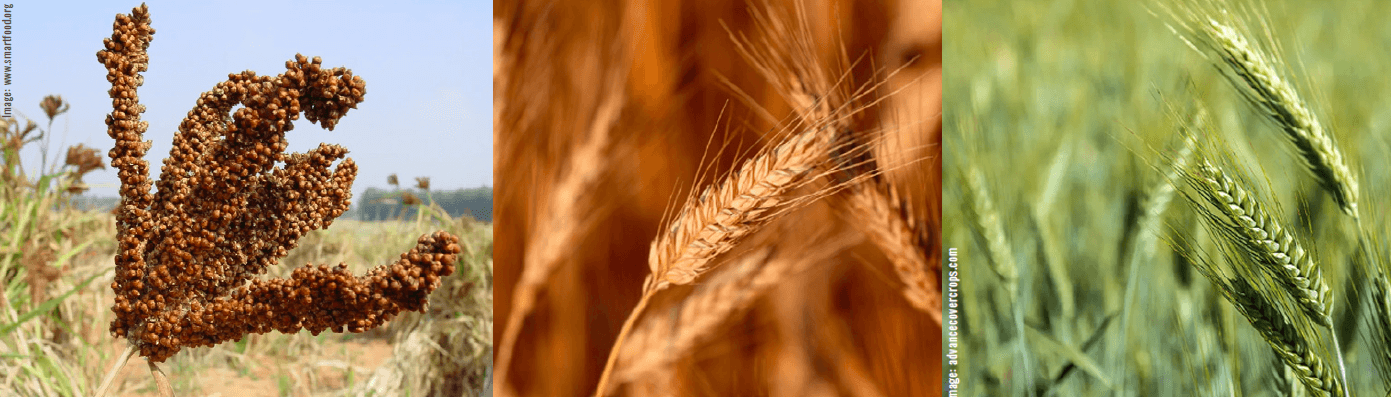
Finger Millet
(Eleusine coracana)
Finger millet, commonly
known as ragi in South Asia, is
another cereal with remarkable
resilience and nutritional value.
Cultivated primarily in East
Africa and the Indian subcontinent,
finger millet has a long
history dating back over 3,000
years. It is thought to have been
domesticated in the Ethiopian
highlands before spreading to
South Asia, where it became an
important food crop.
Finger millet thrives in a
wide range of conditions, from
sea level up to 2,000 meters in
altitude. It grows best with annual
rainfall between 400 and
1,000 millimeters and temperatures
of 20–30°C. Its ability to
tolerate poor soils and drought
makes it an important crop in
marginal farming areas. The
grain’s excellent storability —
lasting for years without infestation—
has historically made
it a famine reserve crop.
The nutritional profile of
finger millet distinguishes it
among cereals. It contains
65–75 percent carbohydrates,
6–8 percent protein, and 1–2
percent fat. More significantly,
it is exceptionally rich in
calcium, with contents ranging
from 250–350 mg per 100
grams, far exceeding that of
milk and most other foods. It
is also a good source of iron,
dietary fiber, and essential
amino acids such as methionine.
These properties make
finger millet a valuable food
for children, nursing mothers,
and populations vulnerable to
osteoporosis and anemia.
Finger millet is consumed
in diverse forms. In India, it
is ground into flour for rotis,
dosas, and porridge. In Africa,
it is commonly prepared as a
stiff porridge or fermented into
beverages, including traditional
beers. Its versatility in
both savory and sweet dishes
contributes to its enduring cul tural significance. Increasingly,
finger millet is being promoted
in urban health-conscious
markets as a “nutri-cereal”
because of its fiber content and
slow glycemic response.
Agronomic practices for
finger millet emphasize careful
timing of planting to coincide
with rainfall, as the crop
is sensitive to waterlogging.
Sowing may be broadcast or
line-seeded, with line planting
improving weed management.
The crop is relatively
low input, though modest
applications of nitrogen and
phosphorus increase yields.
The major disease constraint is
blast, caused by Magnaporthe
grisea, which can devastate
yields. Breeding efforts have
developed resistant varieties,
though integrated management
remains necessary.
Harvesting occurs when
panicles turn brown and grains
are hard. Manual harvesting is
common, followed by threshing
and drying. The small size
of the grains makes mechanization
more difficult, but
traditional methods remain
effective. Once stored, finger
millet’s natural resistance
to pests gives it a significant
advantage over other cereals in
reducing post-harvest losses.
Finger millet’s potential
in addressing contemporary
challenges is increasingly
recognized. Its calcium content
13
makes it a natural candidate
for addressing micronutrient
deficiencies. Its storability
contributes to food security
in regions prone to famine.
Its drought tolerance positions
it as a crop for climate
adaptation. As part of broader
diversification strategies,
finger millet offers nutritional,
agronomic, and cultural
benefits that complement the
more dominant cereals.
Oats (Avena sativa)
Oats are a cereal crop with a
somewhat different trajectory
from maize, wheat, and rice.
While they have been cultivated
for thousands of years,
they were long regarded as a
secondary crop, often associated
with marginal lands and
subsistence farming. Yet in
recent decades, oats have undergone
a renaissance, largely
due to their health-promoting
properties. Today, oats occupy
an important niche in both
human and animal nutrition,
with their cultivation concentrated
in temperate regions.
Oats are primarily grown in
northern Europe, Russia, Canada,
and the northern United
States, where cool, moist
climates prevail. Unlike maize
or sorghum, oats prefer acidic
soils and can tolerate wetter
conditions, making them well
suited to areas where other
cereals perform poorly. Their relatively short growing season
allows for flexibility in crop
rotations, often serving as a
break crop that helps manage
pests and diseases.
Historically, the majority of
oats were used for animal feed,
particularly for horses, cattle,
and poultry. While this remains
an important use, the human
consumption of oats has grown
significantly. The popularity
of oatmeal, rolled oats, and
oat-based breakfast cereals
reflects both cultural traditions
in northern Europe and
new health-conscious markets
worldwide. Oats are valued for
their soluble fiber, especially
beta-glucans, which are known
to reduce cholesterol levels and
support cardiovascular health.
In addition, oats contain 12–14
percent protein, higher than
many cereals, and provide
a good balance of essential
amino acids. They are also rich
in lipids, with 5–7 percent oil
content, primarily unsaturated
fatty acids.
Oats have unique agronomic
traits. They are more tolerant
of wet soils than wheat or barley
but less tolerant of heat and
drought. Optimal temperatures
range between 15–25°C, and
rainfall of 600–1,000 millimeters
during the growing
season supports good yields.
Fertilization requirements are
moderate, though oats respond
well to nitrogen. Diseases such
as crown rust and stem rust
pose challenges, and breeding
for resistant cultivars remains
a priority.
Harvesting oats involves
swathing or direct combining
when grains reach maturity,
typically at 12–14 percent
moisture. Straw is a valuable
by-product, often used
as animal bedding or feed.
Post-harvest processing includes
dehulling, as oat grains
are tightly enclosed in hulls
that must be removed before
consumption.
The modern resurgence
of oats is linked to changing
dietary preferences. As
consumers seek whole grains,
plant-based diets, and functional
foods, oats have gained
prominence as a “superfood.”
Products such as oat milk and
oat-based snack bars illustrate
their growing versatility in
food industries. At the same
time, oats continue to play a
vital role in livestock feeding
and crop rotations. Their
adaptability to cooler climates
and their health-promoting
qualities ensure that oats will
remain important in both traditional
and emerging agricultural
systems.
Rye (Secale cereale)
Rye is another cereal with a
long history of cultivation in
northern and eastern Europe,
where harsh winters and poor
soils limit the success of other
cereals. Though less globally
significant than wheat, maize,
or rice, rye has been indispensable
in regions where resilience
to cold and low fertility are
paramount.
Rye’s origins trace back
to wild species that grew as
weeds in wheat and barley
fields of the Fertile Crescent.
Over time, farmers recognized
its hardiness and began to
cultivate it deliberately. Today,
rye is grown primarily in
Germany, Poland, Russia, and
Scandinavia, though smaller
areas exist in North America.
The crop’s greatest strength
is its adaptability. Rye grows in
sandy, acidic soils where wheat
and barley fail, and it withstands
temperatures as low as
–25°C. It also tolerates drought
and requires fewer inputs than
many cereals. These qualities
have made rye a survival crop
in challenging environments.
Rye has multiple uses. It is
a staple in traditional breads,
particularly in Eastern Europe,
where dense rye loaves are
central to local cuisines. Rye is
also used in whiskey production,
animal feed, and as a
forage or cover crop. Its role in
soil conservation is significant:
rye is commonly planted as a
winter cover crop in rotation
systems, where it prevents
erosion, improves soil structure,
and suppresses weeds. Nutritionally, rye provides
60–65 percent carbohydrates,
8–12 percent protein, and
about 2 percent fat. It is rich
in dietary fiber and contains
higher levels of pentosans,
which give rye bread its characteristic
density and texture.
Rye also offers micronutrients
such as magnesium and selenium.
Its lower gluten content
compared to wheat makes it
less suitable for leavened bread
on its own, but blended with
wheat flour, it produces highly
valued bakery products.
Agronomically, rye is relatively
undemanding. It requires
little fertilizer, though nitrogen
applications can enhance
yields. Diseases such as ergot
(Claviceps purpurea) are a serious
concern, as ergot-contaminated
rye causes toxic alkaloid
poisoning. This problem,
14
known historically as “St. Anthony’s
fire,” influenced both
medical history and cultural
perceptions of rye. Modern
crop management emphasizes
resistant cultivars, crop rotation,
and vigilant monitoring
to prevent outbreaks.
Harvesting rye resembles
that of wheat, with direct combining
when grains are fully
mature. Straw is another valuable
output, used in livestock
bedding, thatching, and crafts.
Post-harvest, rye requires
careful drying and storage to
avoid fungal contamination.
While rye’s global importance
is limited compared
to other cereals, its ecological
resilience makes it highly
valuable in specific contexts.
As climate change forces
agriculture into more extreme
conditions, rye’s ability to thrive where other cereals fail
could gain renewed relevance.
Its cultural importance in
European diets and its role in
sustainable farming systems
reinforce its place within the
broader family of cereals.
Triticale (× Triticosecale)
Triticale is a relatively recent
addition to the cereal family,
developed through deliberate
hybridization of wheat (Triticum
aestivum) and rye (Secale
cereale). The goal of breeders in
the late nineteenth and twentieth
centuries was to combine
wheat’s high grain quality with
rye’s resilience to poor soils
and harsh climates. The result
was triticale, a synthetic cereal
that has since found niches in
global agriculture.
The genetic complexity of
triticale initially posed challenges,
as early hybrids suffered
from sterility and instability.
Advances in cytogenetics
eventually produced fertile,
stable varieties with desirable
traits. Today, triticale is grown
in parts of Europe, North
America, and Africa, though its
area remains small compared
to other cereals.
Triticale’s greatest strength
is its adaptability. It performs
well on marginal soils, tolerates
drought, and produces
respectable yields in conditions
where wheat or barley might
fail. It also has resistance
to some diseases that affect
wheat, though susceptibility to
others remains a concern. As
a crop for low-input systems,
triticale offers farmers an option
for balancing productivity
with resilience.
The uses of triticale are
diverse but still developing.
Much of its production
goes into animal feed, as the
grain and forage are highly
digestible for cattle, pigs, and
poultry. Its protein content
ranges from 10–15 percent,
often higher than wheat, and
it has a favorable amino acid
profile. For human consumption,
triticale can be milled
into flour for bread, though
its weaker gluten properties
limit its baking performance.
Blended with wheat flour, it
produces acceptable bread and
baked goods. In some regions,
triticale is also used for brewing
and bioethanol production.
Agronomically, triticale
resembles wheat in its cultivation
requirements but
demonstrates greater tolerance
to poor soils and variable
climates. It grows well in
rainfall zones of 400–800 millimeters
and at temperatures of
15–25°C. Fertilization practices
are moderate, and weed control
is essential during early growth
stages. Breeding continues to
focus on improving disease
resistance, grain quality, and
stability across environments.
Harvesting triticale follows
wheat practices, with combine
harvesting once grain
moisture declines to around
12–14 percent. Straw and forage
value enhance its role in
mixed farming systems. Postharvest,
triticale stores well under dry, clean conditions.
While triticale has not yet
achieved the global prominence
of its parent crops, it represents
an important innovation
in crop diversification.
Its combination of resilience,
productivity, and versatility offers
promise in contexts where
farmers seek alternatives to
traditional cereals. As climate
variability increases, triticale’s
hybrid vigor may make it a
valuable addition to the global
food and feed basket.
Rice (Oryza sativa)
Rice is the staple food
for nearly half of the global
population, particularly in Asia,
where it dominates diets, culture,
and agriculture. With annual
production exceeding 750
million metric tons, rice ranks
alongside maize and wheat as
one of the three primary cereals
underpinning food security.
Its importance extends beyond
nutrition; rice has shaped civilizations,
rituals, and economies
across millennia.
Rice cultivation originated
in Asia, with evidence of
domestication in the Yangtze
River basin in China more than
9,000 years ago. From there
it spread across Asia, Africa,
and eventually the rest of the
world. Today, Asia accounts
for more than 90 percent of
global rice production and
consumption, with China,
15
India, Indonesia, Bangladesh,
and Vietnam among the leading
producers.
Nutritionally, rice consists
of 70–75 percent starch, 6–8
percent protein, and minimal
fat. While it is energydense,
rice is relatively low in
micronutrients and essential
amino acids. Polishing, which
removes the bran and germ,
reduces its vitamin and mineral
content further, contributing
to widespread deficiencies
such as beriberi (vitamin B1
deficiency). To address this,
initiatives such as fortification
and the development of biofortified
varieties (e.g., Golden
Rice enriched with vitamin A)
have been pursued. Despite
these limitations, rice remains
irreplaceable in the diets of
billions due to its digestibility,
versatility, and cultural embeddedness.
Ecologically, rice is unique
among cereals in its ability to
grow in flooded conditions.
Lowland rice, which dominates
global production, requires
fields to be flooded during
much of the growing season,
which suppresses weeds and
supports plant growth. Upland
rice varieties also exist, grown
without flooding in rainfed
conditions, though yields are
generally lower. Rice is waterintensive,
requiring 1,200–
2,000 millimeters of water per
crop cycle, whether through rainfall or irrigation. This
poses challenges in regions
facing water scarcity.
Agronomic practices vary
widely. Traditional systems
involve transplanting seedlings
from nurseries into
flooded paddies, while direct
seeding has gained ground in
some areas to reduce labor.
Fertilization emphasizes
nitrogen, but overuse can lead
to lodging and environmental
issues. Pests and diseases
are significant constraints,
including rice blast, bacterial
blight, brown planthopper,
and stem borers. Integrated
pest management and resistant
varieties are crucial tools
in addressing these threats.
Harvesting rice requires
careful timing to balance grain
maturity with risks of shattering
and lodging. Post-harvest
operations include threshing,
drying, milling, and storage.
Losses at these stages can be
substantial, particularly in
smallholder systems where
mechanization is limited. Milling
determines rice quality,
with polished white rice being
the most widely consumed
form, though brown rice retains
greater nutritional value.
Rice production faces sustainability
challenges. Its heavy
water use strains resources,
while flooded fields generate
methane, a potent greenhouse
gas. Climate change exacerbates
these problems, with
rising temperatures threatening
yields and salinity intrusion
affecting coastal rice
systems. Nevertheless, rice
remains indispensable, and
efforts to enhance its sustainability—
through water-saving
technologies such as alternate
wetting and drying, improved
cultivars, and better post-harvest
systems—are critical.
Wheat
(Triticum aestivum)
Wheat is the most widely
grown cereal globally, cultivated
on more land than any
other crop. Its origins lie in the
Fertile Crescent, where early
farmers domesticated einkorn
and emmer wheat more than
10,000 years ago. Over time,
wheat spread across Europe,
Asia, and beyond, evolving
into the modern bread wheat
(Triticum aestivum) and durum
wheat (Triticum durum).
Today, wheat is central to
diets worldwide, particularly
in Europe, North America, the
Middle East, and increasingly
Asia and Africa.
Wheat’s dominance stems
from its versatility and nutritional
quality. Its grain
contains 60–70 percent starch,
10–15 percent protein, and 2–3
percent fat. What sets wheat
apart is the unique viscoelastic
properties of gluten proteins,
which enable the production
of leavened bread and a vast
array of baked goods. Beyond
bread, wheat is used in pasta,
noodles, biscuits, and countless
processed foods. Durum
wheat, with its high protein and gluten strength, is the basis
of pasta production, while
soft wheat varieties support
pastries and cakes.
Agronomically, wheat
thrives in temperate climates
with rainfall of 500–1,000
millimeters annually, though
irrigation allows cultivation
in drier regions. Optimal
temperatures range between
15–25°C. Wheat is adaptable
to diverse soils but performs
best in well-drained loams.
Fertilization, especially nitrogen,
is critical for high yields
and protein content. However,
over-fertilization contributes
to environmental problems
such as nitrate leaching.
Disease pressure is a major
constraint in wheat production.
Rusts—stem rust, leaf rust,
and stripe rust—have historically
devastated crops, and new
virulent strains such as Ug99
pose ongoing threats. Other
diseases include powdery mildew,
fusarium head blight, and
smuts. Pests such as aphids
and Hessian fly also impact
yields. Breeding for disease
resistance has been central to
wheat improvement, alongside
agronomic practices such as
crop rotation and fungicide
application.
Harvesting wheat involves
combine harvesting when
grains reach around 12 percent
moisture. Post-harvest, wheat
must be stored in dry, pest free conditions to prevent
spoilage. Milling converts
wheat into flour, with different
fractions (bran, germ,
and endosperm) used for
varied purposes. Whole wheat
products retain more nutrients,
while refined flour dominates
in commercial markets.
Globally, wheat is a cornerstone
of trade and geopolitics.
Exporters such as Russia, the
United States, Canada, Australia,
and the European Union
supply much of the world’s demand,
while import-dependent
countries in the Middle East
and Africa rely heavily on these
flows. Disruptions in supply—
whether due to war, drought,
or trade restrictions—can
destabilize markets and exacerbate
food insecurity.
Looking ahead, wheat faces
the dual challenges of increasing
demand and climate stress.
Rising temperatures threaten
yields, particularly in South
Asia, while water scarcity and
soil degradation compound
risks. Expanding research in
heat-tolerant and diseaseresistant
varieties, coupled
with sustainable agronomic
practices, will be critical to
maintaining wheat’s role as a
global staple.
Cross-Cutting
Discussion
Examining cereals collectively
highlights both their shared attributes and their
distinct contributions to global
food systems. Several themes
emerge across the major and
minor cereals.
First, cereals remain the
backbone of caloric supply
worldwide. Together, maize,
rice, and wheat provide more
than 40 percent of dietary energy
globally. Their dominance
reflects not only their productivity
but also their embeddedness
in cultures and economies.
Yet this concentration is
risky. Heavy dependence on a
small number of crops exposes
food systems to vulnerabilities
from pests, diseases, and
climate shocks. Diversification
through “minor cereals” such
as sorghum, millets, oats, rye,
and triticale is therefore essential.
These crops offer ecological
resilience and nutritional
diversity that complement the
dominant staples.
Second, the ecological adaptability
of cereals is a defining
strength. Few crop groups can
match the breadth of environments
they occupy: rice in
flooded lowlands, sorghum
and pearl millet in semi-arid
regions, barley and rye in cold
and poor soils, maize in fertile
temperate plains, and finger
millet in high-altitude zones.
This diversity ensures that
cereals collectively sustain
human populations across the
globe, even under difficult conditions. As climate change
intensifies, this adaptability
becomes increasingly valuable.
Third, cereals are multifunctional.
Beyond food, they serve
as feed for livestock, substrates
for brewing and biofuel production,
and raw materials for
industry. These multiple roles
generate opportunities but
also tensions. The diversion of
maize to ethanol production,
for example, raises concerns
about food versus fuel. Similarly,
the use of wheat and barley
for animal feed competes with
human consumption. Balancing
these competing demands requires
careful policy and market
management.
Fourth, post-harvest handling
and value addition are
critical bottlenecks. Losses
due to pests, mold, and poor
storage remain high in many
regions, undermining food
security. At the same time,
processing adds value and
shapes nutritional outcomes.
Polishing rice, refining wheat,
and dehulling oats all alter
nutrient profiles, sometimes to
the detriment of human health.
Promoting whole grains and
improving storage technologies
can enhance both nutrition and
sustainability.
Fifth, the role of cereals
in global trade underscores
their geopolitical importance.
Wheat and rice, in particular,
are highly traded commodities and disruptions in supply
chains reverberate worldwide.
Price volatility can trigger
political instability, as seen in
food crises of the past. Ensuring
stability requires both
international cooperation and
local self-reliance through
diversified cropping systems.
Finally, innovation in breeding
and agronomy is central to
the future of cereals. The Green
Revolution demonstrated the
potential of improved varieties
and management to boost
yields, but it also revealed the
environmental costs of inputintensive
systems. The next
wave of innovation must focus
on climate resilience, resource
efficiency, and nutritional
quality. Advances in genomics,
biotechnology, and digital
agriculture provide new tools
for this transformation.
Conclusion
Cereal crops are, and will remain,
the foundation of global
food security. Their domestication
enabled the rise of civilizations,
and their continued
cultivation sustains billions
today. The diversity within the
cereal family—ranging from
globally dominant crops such
as maize, rice, and wheat to
resilient but regionally important
grains such as sorghum,
millets, oats, rye, and triticale—
ensures that humanity can
thrive across diverse environments.
Yet the challenges are formidable.
Climate change threatens
yields through heat stress,
drought, floods, and new pest
pressures. Population growth
increases demand, while natural resource constraints limit
expansion. Over-reliance on a
handful of crops undermines
resilience, while post-harvest
losses and nutritional deficiencies
persist.
Addressing these challenges
requires a multi-pronged
approach. Diversifying cereal
production by supporting minor
cereals will reduce vulnerability
and enhance nutritional
security. Investments in breeding
for resilience, nutrition,
and sustainability are crucial.
Improved agronomic practices,
post-harvest systems, and value
chains will minimize losses
and maximize benefits. Policy
frameworks must balance
competing demands for food,
feed, and fuel while ensuring
equitable access to staples.
Cereals are not merely crops;
they are the lifeblood of societies.
Their cultural, nutritional,
and economic significance
transcends generations and
borders. The future of food
security depends on harnessing
their strengths while
addressing their limitations.
If humanity can rise to this
challenge, cereals will continue
to serve not only as staples
of diet but also as engines of
resilience, sustainability, and
development in an increasingly
uncertain world.
THE END
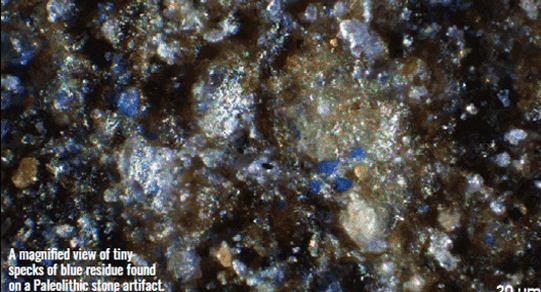 Researchers just found something
that could change the way we
envision color during the Paleolithic
era —and it’s been sitting in a German
museum for the past 50 years.
While re-examining a 13,000-yearold
Paleolithic oil lamp housed at the
Mühlheim City Museum, archaeologists
from Denmark’s Aarhus University
noticed small dots of blue pigment.
This residue is around 13,000 years old,
making it the oldest instance of blue
pigment in Europe by 8,000 years, the
team writes in the journal Antiquity.
The archaeologists initially analyzed
the lamp in search of traces of animal
fat. After spotting the pigment, the
researchers joked that perhaps modern
ink had gotten onto the artifact while it
was in storage, the study’s lead author,
Izzy Wisher, tells National Geographic’s Jaimie Seaton. “This is actually one
of the rare examples when we were
completely surprised by the discovery,”
Wisher says. The newly discovered pigment
is “nearly the oldest blue pigment
in the world,” Wisher tells IFLScience’s
Tom Hale. The only older known instance
is pigment found on figurines in
Siberia, which date to between 19,000
and 23,000 years ago.
For the study, Wisher’s team used
X-ray fluorescence and microscopic
imaging tests to determine that the
pigmentation was human-made and
created from a mineral called azurite,
native to the area in Germany where
the artifact was originally unearthed
in the 1970s. ...
Read full text:
Researchers just found something
that could change the way we
envision color during the Paleolithic
era —and it’s been sitting in a German
museum for the past 50 years.
While re-examining a 13,000-yearold
Paleolithic oil lamp housed at the
Mühlheim City Museum, archaeologists
from Denmark’s Aarhus University
noticed small dots of blue pigment.
This residue is around 13,000 years old,
making it the oldest instance of blue
pigment in Europe by 8,000 years, the
team writes in the journal Antiquity.
The archaeologists initially analyzed
the lamp in search of traces of animal
fat. After spotting the pigment, the
researchers joked that perhaps modern
ink had gotten onto the artifact while it
was in storage, the study’s lead author,
Izzy Wisher, tells National Geographic’s Jaimie Seaton. “This is actually one
of the rare examples when we were
completely surprised by the discovery,”
Wisher says. The newly discovered pigment
is “nearly the oldest blue pigment
in the world,” Wisher tells IFLScience’s
Tom Hale. The only older known instance
is pigment found on figurines in
Siberia, which date to between 19,000
and 23,000 years ago.
For the study, Wisher’s team used
X-ray fluorescence and microscopic
imaging tests to determine that the
pigmentation was human-made and
created from a mineral called azurite,
native to the area in Germany where
the artifact was originally unearthed
in the 1970s. ...
Read full text:
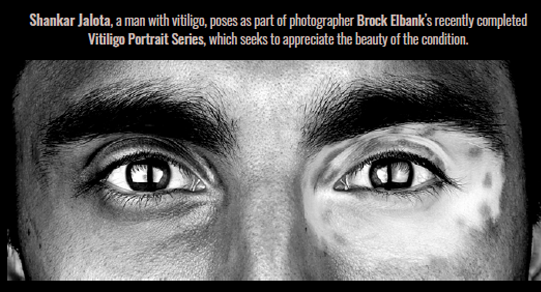 Scientist John Harris doesn’t like to
say the word “cure.” But after his
discovery last year of a new strategy to
alleviate a skin condition known as vitiligo,
he now talks of a future in which
long-term relief may be possible for
the millions of people who have it.
Excited to share the results with
non-scientists, Harris wrote about
his findings for The Conversation. He
expected enthusiasm. Instead, he was
blindsided by a wave of online hostility.
“It was ‘F you. F you. You don’t even
have vitiligo. What do you know?’”
recalls Harris.
The backlash stemmed from Harris’s
choice of language: In his article, he
had twice referred to vitiligo as “disfiguring,”
once in the headline and again
in the first sentence. Many people did
not read past that word. “That just
totally triggered people,” says Alicia
Roufs. “I am losing my pigment. This
does not classify as a disfigurement,”
wrote one of the moderators of Vitiligo
Pride, a Facebook group that counts
around 6,000 members.
In vitiligo, a faulty immune reaction
kills off pigment cells called melanocytes
and leaves patches of white skin.
Considered an autoimmune disorder, it
often emerges in adolescence or later,
occurring in an estimated 1% of the
world’s population and affecting all
ethnic groups equally —although the
depigmentation is more obvious on
darker skin and carries greater social
stigma in certain cultures. ...
Read full text:
Scientist John Harris doesn’t like to
say the word “cure.” But after his
discovery last year of a new strategy to
alleviate a skin condition known as vitiligo,
he now talks of a future in which
long-term relief may be possible for
the millions of people who have it.
Excited to share the results with
non-scientists, Harris wrote about
his findings for The Conversation. He
expected enthusiasm. Instead, he was
blindsided by a wave of online hostility.
“It was ‘F you. F you. You don’t even
have vitiligo. What do you know?’”
recalls Harris.
The backlash stemmed from Harris’s
choice of language: In his article, he
had twice referred to vitiligo as “disfiguring,”
once in the headline and again
in the first sentence. Many people did
not read past that word. “That just
totally triggered people,” says Alicia
Roufs. “I am losing my pigment. This
does not classify as a disfigurement,”
wrote one of the moderators of Vitiligo
Pride, a Facebook group that counts
around 6,000 members.
In vitiligo, a faulty immune reaction
kills off pigment cells called melanocytes
and leaves patches of white skin.
Considered an autoimmune disorder, it
often emerges in adolescence or later,
occurring in an estimated 1% of the
world’s population and affecting all
ethnic groups equally —although the
depigmentation is more obvious on
darker skin and carries greater social
stigma in certain cultures. ...
Read full text:
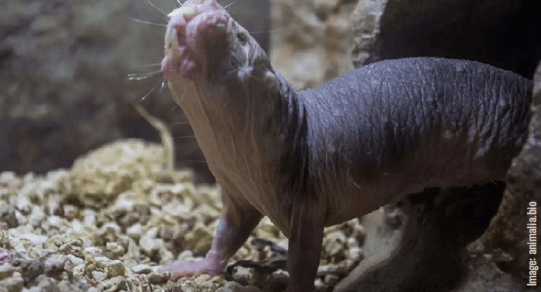 Naked mole rats live for up to 37
years —far longer than other
rodents their size. What is the secret of
their longevity? Among other factors,
it could be down to a variant of an immune
protein that boosts DNA repair.
The discovery might lead to therapies
that extend human lifespans, say
Zhiyong Mao at Tongji University in
Shanghai, China. It is also another piece
of evidence supporting the idea that the
accumulation of mutations —that is,
the failure to repair damaged DNA— is
one of the main causes of ageing.
The immune protein in question,
called cGAS, is found in many animals.
Its main function is thought to be to
sound the alarm when it detects DNA
outside the nucleus of a cell, which could
be a sign of cancer or a viral attack.
But cGAS is also found in the nucleus
of cells. In humans and mice, it has
been shown to suppress DNA repair,
increasing the mutation rate and the
risk of cancer. Exactly why is unclear
—it could be an undesirable side effect
rather than an evolved function.
Mao’s team has now shown that the
version of cGAS found in naked mole
rats has the opposite effect in the
nucleus, actually boosting DNA repair.
This is due to differences in four of
the amino acids that make up the cGAS
protein. If these four amino acids are
altered in mole rat cells, the animal’s
cGAS no longer boosts ...
Naked mole rats live for up to 37
years —far longer than other
rodents their size. What is the secret of
their longevity? Among other factors,
it could be down to a variant of an immune
protein that boosts DNA repair.
The discovery might lead to therapies
that extend human lifespans, say
Zhiyong Mao at Tongji University in
Shanghai, China. It is also another piece
of evidence supporting the idea that the
accumulation of mutations —that is,
the failure to repair damaged DNA— is
one of the main causes of ageing.
The immune protein in question,
called cGAS, is found in many animals.
Its main function is thought to be to
sound the alarm when it detects DNA
outside the nucleus of a cell, which could
be a sign of cancer or a viral attack.
But cGAS is also found in the nucleus
of cells. In humans and mice, it has
been shown to suppress DNA repair,
increasing the mutation rate and the
risk of cancer. Exactly why is unclear
—it could be an undesirable side effect
rather than an evolved function.
Mao’s team has now shown that the
version of cGAS found in naked mole
rats has the opposite effect in the
nucleus, actually boosting DNA repair.
This is due to differences in four of
the amino acids that make up the cGAS
protein. If these four amino acids are
altered in mole rat cells, the animal’s
cGAS no longer boosts ...
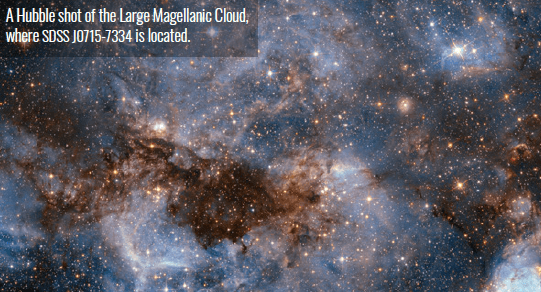 Stars are the original nuclear fusion
reactors. As it evolves, a star continuously
fuses hydrogen, helium, and
—if it becomes big enough— heavier
elements, releasing the energy created
into space as light and heat. The
earliest stars, however, were a little
different. Astronomers believed that
the universe’s first stars were more
“pristine,” meaning that they consisted
of only the lightest of elements.
For years, scientists thought it
unlikely that such primordial stars
still existed —until now. A team of
astronomers led by Alexander Ji at
the University of Chicago recently
revealed that they had spotted a star,
SDSS J0715-7334, that appears to have
an unprecedentedly low concentration
of metals (astronomy shorthand for elements other than hydrogen and
helium). The star seems to be sitting
in the halo of the Large Magellanic
Cloud, a dwarf galaxy about 163,000
light-years from the Milky Way. The
astronomers detailed the discovery in a
paper uploaded to arXiv, which has yet
to be peer-reviewed.
The team first detected SDSS J0715-
7334 using data from the Sloan Digital
Sky Survey, and then used the Magellan
telescope in Chile to further observe
the star. To be clear, this isn’t the first
“pristine” star astronomers have found
—the James Webb Space Telescope has
proven particularly adept at picking out
candidates for early-generation stars—
but this one sets itself apart ...
Read full text
Stars are the original nuclear fusion
reactors. As it evolves, a star continuously
fuses hydrogen, helium, and
—if it becomes big enough— heavier
elements, releasing the energy created
into space as light and heat. The
earliest stars, however, were a little
different. Astronomers believed that
the universe’s first stars were more
“pristine,” meaning that they consisted
of only the lightest of elements.
For years, scientists thought it
unlikely that such primordial stars
still existed —until now. A team of
astronomers led by Alexander Ji at
the University of Chicago recently
revealed that they had spotted a star,
SDSS J0715-7334, that appears to have
an unprecedentedly low concentration
of metals (astronomy shorthand for elements other than hydrogen and
helium). The star seems to be sitting
in the halo of the Large Magellanic
Cloud, a dwarf galaxy about 163,000
light-years from the Milky Way. The
astronomers detailed the discovery in a
paper uploaded to arXiv, which has yet
to be peer-reviewed.
The team first detected SDSS J0715-
7334 using data from the Sloan Digital
Sky Survey, and then used the Magellan
telescope in Chile to further observe
the star. To be clear, this isn’t the first
“pristine” star astronomers have found
—the James Webb Space Telescope has
proven particularly adept at picking out
candidates for early-generation stars—
but this one sets itself apart ...
Read full text
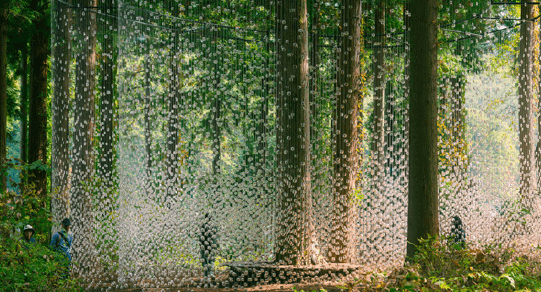 A Whisper in the Eye of the Storm is an
immersive installation created from
14,000 prescription lenses for Northern
Alps Art Festival (Japan). Towering
above the viewer like a shimmering
forcefield or suspended rain storm, the
piece draws from the powerful relationship
between the surrounding region
and water —as a source of sustenance,
electricity, leisure, and life. The
installation was designed in response
to Omachi, a shrinking town in the
Japanese Alps known for hydroelectric
dams, beautiful mountainside lakes,
and a rapidly shrinking population.
This installation invites visitors to
see what they’d normally overlook. The work, installed in a cedar forest
behind Nishina Shrine along the
shore of Lake Kizaki, invites visitors to
look at the landscape (and each other)
with fresh eyes, seeing differently and
peering deeply into the ancient and
evolving landscape. ...
Read full text
A Whisper in the Eye of the Storm is an
immersive installation created from
14,000 prescription lenses for Northern
Alps Art Festival (Japan). Towering
above the viewer like a shimmering
forcefield or suspended rain storm, the
piece draws from the powerful relationship
between the surrounding region
and water —as a source of sustenance,
electricity, leisure, and life. The
installation was designed in response
to Omachi, a shrinking town in the
Japanese Alps known for hydroelectric
dams, beautiful mountainside lakes,
and a rapidly shrinking population.
This installation invites visitors to
see what they’d normally overlook. The work, installed in a cedar forest
behind Nishina Shrine along the
shore of Lake Kizaki, invites visitors to
look at the landscape (and each other)
with fresh eyes, seeing differently and
peering deeply into the ancient and
evolving landscape. ...
Read full text
 In the final challenge of Danmarks
Næste Klassiker, we were tasked
with creating a piece of furniture that
made a difference using repurposed
materials. I chose to challenge myself
with an overlooked category: the
wheelchair.
Traditional wheelchairs feel clinical,
complex, undignified, and out-ofplace
in a home. My goal was to bridge
the gap between assistive devices and
interior-friendly furniture by designing
an indoor wheelchair for elderly users
in private homes and nursing facilities.
This project revealed a huge market
gap and a clear design responsibility. I
am eager to continue development in
collaboration with relevant stakeholders,
with a focus on: Further refinement
and modular adaptations for different
users · Collaboration with healthcare
professionals to enhance functionality
· Scaling production while maintaining
craftsmanship. ...
Read full text
In the final challenge of Danmarks
Næste Klassiker, we were tasked
with creating a piece of furniture that
made a difference using repurposed
materials. I chose to challenge myself
with an overlooked category: the
wheelchair.
Traditional wheelchairs feel clinical,
complex, undignified, and out-ofplace
in a home. My goal was to bridge
the gap between assistive devices and
interior-friendly furniture by designing
an indoor wheelchair for elderly users
in private homes and nursing facilities.
This project revealed a huge market
gap and a clear design responsibility. I
am eager to continue development in
collaboration with relevant stakeholders,
with a focus on: Further refinement
and modular adaptations for different
users · Collaboration with healthcare
professionals to enhance functionality
· Scaling production while maintaining
craftsmanship. ...
Read full text
 The strong opioid painkiller, tramadol,
is not that effective at easing
chronic pain for which it’s widely prescribed,
finds a pooled data analysis of
the available research, published online
in BMJ Evidence Based Medicine.
And it likely increases the risk of
serious side effects, including heart
disease, the findings indicate, prompting
the researchers to conclude that the
potential harms of tramadol probably
outweigh its benefits, and that its use
should be minimised.
Tramadol is a dual action opioid
widely prescribed for the treatment of
moderate to severe acute and chronic
pain. As such, it’s recommended in several
medical guidelines for pain management,
note the researchers. Its use
has surged in recent years, and it’s now
among the most commonly prescribed
opioids in the US, possibly because of its
perceived lower risk of side effects and
the widespread belief that it is safer and
less addictive than other short-acting
opioids, they add.
Although tramadol has been included
in previous systematic reviews, none
has provided a comprehensive assessment
of its efficacy and safety in a range
of chronic pain conditions, they say. In
a bid to plug this knowledge gap, the
researchers scoured research databases
for randomised clinical trials published
up to February 2025 that compared tramadol
with placebo (dummy treatment)
for patients with chronic pain, including
cancer pain. ...
Read full text
The strong opioid painkiller, tramadol,
is not that effective at easing
chronic pain for which it’s widely prescribed,
finds a pooled data analysis of
the available research, published online
in BMJ Evidence Based Medicine.
And it likely increases the risk of
serious side effects, including heart
disease, the findings indicate, prompting
the researchers to conclude that the
potential harms of tramadol probably
outweigh its benefits, and that its use
should be minimised.
Tramadol is a dual action opioid
widely prescribed for the treatment of
moderate to severe acute and chronic
pain. As such, it’s recommended in several
medical guidelines for pain management,
note the researchers. Its use
has surged in recent years, and it’s now
among the most commonly prescribed
opioids in the US, possibly because of its
perceived lower risk of side effects and
the widespread belief that it is safer and
less addictive than other short-acting
opioids, they add.
Although tramadol has been included
in previous systematic reviews, none
has provided a comprehensive assessment
of its efficacy and safety in a range
of chronic pain conditions, they say. In
a bid to plug this knowledge gap, the
researchers scoured research databases
for randomised clinical trials published
up to February 2025 that compared tramadol
with placebo (dummy treatment)
for patients with chronic pain, including
cancer pain. ...
Read full text
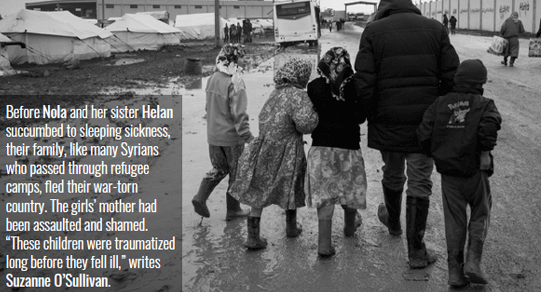 Nola and Helan are two of the
hundreds of sleeping children who
have appeared sporadically in Sweden
over a span of 20 years. The first official
medical reports of the epidemic
appeared in the early 2000s. Typically,
the sleeping sickness had an insidious
onset. Children initially became anxious
and depressed. Their behavior changed:
They stopped playing with other children
and, over time, stopped playing
altogether. They slowly withdrew into
themselves, and soon they couldn’t
go to school. They spoke less and less,
until they didn’t speak at all. Eventually,
they took to bed. If they entered
the deepest stage, they could no longer
eat or open their eyes. They became
completely immobile, showing no
response to encouragement from family or friends, and no longer acknowledging
pain or hunger or discomfort. They
ceased having any active participation in
the world. ...
The lucky ones were sick for a few
months, but many didn’t wake for
years. Some still haven’t woken. ...
Resignation syndrome is not indiscriminate.
It is a disorder that
exclusively affects children of asylumseeking
families. These children were
traumatized long before they fell
ill. Some were already showing very
early signs of illness when they arrived
in Sweden, but most only began
to withdraw when their families were
faced with the long process of asylum
application. ...
Read full text:
Nola and Helan are two of the
hundreds of sleeping children who
have appeared sporadically in Sweden
over a span of 20 years. The first official
medical reports of the epidemic
appeared in the early 2000s. Typically,
the sleeping sickness had an insidious
onset. Children initially became anxious
and depressed. Their behavior changed:
They stopped playing with other children
and, over time, stopped playing
altogether. They slowly withdrew into
themselves, and soon they couldn’t
go to school. They spoke less and less,
until they didn’t speak at all. Eventually,
they took to bed. If they entered
the deepest stage, they could no longer
eat or open their eyes. They became
completely immobile, showing no
response to encouragement from family or friends, and no longer acknowledging
pain or hunger or discomfort. They
ceased having any active participation in
the world. ...
The lucky ones were sick for a few
months, but many didn’t wake for
years. Some still haven’t woken. ...
Resignation syndrome is not indiscriminate.
It is a disorder that
exclusively affects children of asylumseeking
families. These children were
traumatized long before they fell
ill. Some were already showing very
early signs of illness when they arrived
in Sweden, but most only began
to withdraw when their families were
faced with the long process of asylum
application. ...
Read full text:
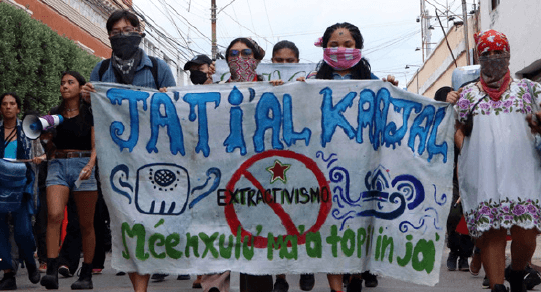 On a summer evening in southern
Mexico, a percussion group using
water bottles as instruments leads a
procession through Mérida, capital of
Yucatán state. Children walking alongside
elderly people are guided by members
of Múuch’ Xíinbal, a Maya land
rights organisation. The placards they
carry declare: “Water is not for sale.”
A heavy chant accompanies the march:
“It’s not a drought —it’s plunder!”
At a rallying point in the city,
protesters read from a manifesto and
accuse the government of prioritising
profit over water, health and land. They
denounce a wave of mega-projects
imposed without their consent, from
industrial-scale pig farms to the controversial
Maya Train tourist expansion.
But they reserve their greatest
anger for the Heineken brewery in
Kanasín, near Mérida, which was announced
in June.
To many of Yucatán’s Maya people,
the plans for the Heineken factory are
seen not as a promising development,
but as a continuation of a deeper problem:
of government-backed industrial
developments that threaten water
supplies and human rights, leaving
local communities caught in an uneven
conflict to protect their cultural and
environmental survival. ... Indigenous
communities have criticised a lack of
community consent and raising concerns
about its environmental impacts,
particularly the effects of its water use
on local communities. ...
Read full text:
On a summer evening in southern
Mexico, a percussion group using
water bottles as instruments leads a
procession through Mérida, capital of
Yucatán state. Children walking alongside
elderly people are guided by members
of Múuch’ Xíinbal, a Maya land
rights organisation. The placards they
carry declare: “Water is not for sale.”
A heavy chant accompanies the march:
“It’s not a drought —it’s plunder!”
At a rallying point in the city,
protesters read from a manifesto and
accuse the government of prioritising
profit over water, health and land. They
denounce a wave of mega-projects
imposed without their consent, from
industrial-scale pig farms to the controversial
Maya Train tourist expansion.
But they reserve their greatest
anger for the Heineken brewery in
Kanasín, near Mérida, which was announced
in June.
To many of Yucatán’s Maya people,
the plans for the Heineken factory are
seen not as a promising development,
but as a continuation of a deeper problem:
of government-backed industrial
developments that threaten water
supplies and human rights, leaving
local communities caught in an uneven
conflict to protect their cultural and
environmental survival. ... Indigenous
communities have criticised a lack of
community consent and raising concerns
about its environmental impacts,
particularly the effects of its water use
on local communities. ...
Read full text:
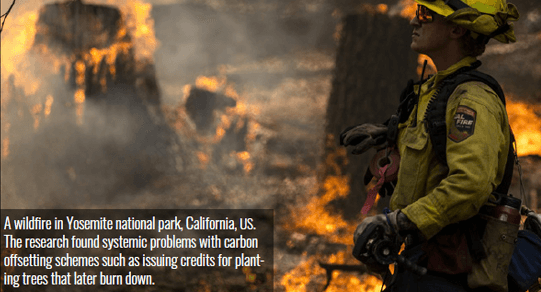 The failure of carbon offsets to cut
planet-heating pollution is “not
due to a few bad apples”, a review paper
has found, but down to deep-seated
systemic problems that incremental
change will not solve. Research over
two decades has found “intractable”
problems that have made carbon credits
in most big programmes poor quality,
according to the study. While the industry
and diplomats have made efforts
to improve the system, it found muchawaited
rules agreed at a UN climate
summit last year “did not substantially
address the quality problem”.
“We must stop expecting carbon
offsetting to work at scale,” said Stephen
Lezak, a researcher at the U. of
Oxford’s Smith School and co-author
of the study, in Annual Reviews. “We have assessed 25 years of evidence and
almost everything up until this point
has failed.”
Carbon offsets are a tool to cut
emissions efficiently by crediting rich
polluters for financing cheap climate
action abroad while pumping out the
same amount of planet-heating gas
at home. In theory, the practice could
lead to lower levels of global heating by
funnelling money to the places where
it will do the most good as soon as
possible. But voluntary carbon markets
have long been plagued by “junk offsets”
that overstate their impact.
The worst problems were with issuing
additional credits for “non-additional”
projects ...
Read full text:
The failure of carbon offsets to cut
planet-heating pollution is “not
due to a few bad apples”, a review paper
has found, but down to deep-seated
systemic problems that incremental
change will not solve. Research over
two decades has found “intractable”
problems that have made carbon credits
in most big programmes poor quality,
according to the study. While the industry
and diplomats have made efforts
to improve the system, it found muchawaited
rules agreed at a UN climate
summit last year “did not substantially
address the quality problem”.
“We must stop expecting carbon
offsetting to work at scale,” said Stephen
Lezak, a researcher at the U. of
Oxford’s Smith School and co-author
of the study, in Annual Reviews. “We have assessed 25 years of evidence and
almost everything up until this point
has failed.”
Carbon offsets are a tool to cut
emissions efficiently by crediting rich
polluters for financing cheap climate
action abroad while pumping out the
same amount of planet-heating gas
at home. In theory, the practice could
lead to lower levels of global heating by
funnelling money to the places where
it will do the most good as soon as
possible. But voluntary carbon markets
have long been plagued by “junk offsets”
that overstate their impact.
The worst problems were with issuing
additional credits for “non-additional”
projects ...
Read full text:
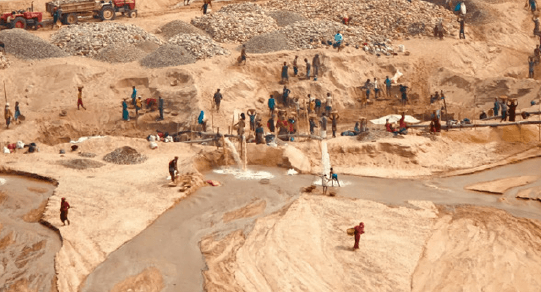 The siege of Goma is yet another
grim chapter in the ongoing cycle of
violence in the Democratic Republic of
Congo (DRC). As the M23 militia asserts
control over North Kivu’s provincial
capital, nearly two million civilians are
caught in the crossfire, while geopolitical
and corporate interests continue to
drive instability in the region.
Despite its vast mineral wealth —
estimated at $24 trillion, equivalent to
the combined GDP of Europe and the
USA— the DRC remains mired in conflict
and resource exploitation. Critical
minerals like coltan, gold, cobalt, and
tin are systematically looted and funneled
into Rwanda, from where they
are laundered into global supply chains.
For nearly three decades, the DRC has
suffered from a war as a consequence
of a direct spillover of the Rwandan
genocide. Over six million lives lost,
systematic sexual violence used as a
weapon of war, and an ongoing battle
for control over the country’s mineral
riches. UN investigations have repeatedly
exposed the role of illicit trade
networks in sustaining the violence,
yet the plunder continues. ...
As the clean energy transition picks
up steam, eyes are on the conflictridden
eastern provinces of North and
South Kivu, where much of the country’s
3T minerals —tin, tungsten, and
tantalum extracted from coltan— are
mined for use in many components.
Rwanda is positioned to continue
laundering ‘blood minerals’ into global
supply chains, minerals that ultimately
power European industries. ...
Read full text:
The siege of Goma is yet another
grim chapter in the ongoing cycle of
violence in the Democratic Republic of
Congo (DRC). As the M23 militia asserts
control over North Kivu’s provincial
capital, nearly two million civilians are
caught in the crossfire, while geopolitical
and corporate interests continue to
drive instability in the region.
Despite its vast mineral wealth —
estimated at $24 trillion, equivalent to
the combined GDP of Europe and the
USA— the DRC remains mired in conflict
and resource exploitation. Critical
minerals like coltan, gold, cobalt, and
tin are systematically looted and funneled
into Rwanda, from where they
are laundered into global supply chains.
For nearly three decades, the DRC has
suffered from a war as a consequence
of a direct spillover of the Rwandan
genocide. Over six million lives lost,
systematic sexual violence used as a
weapon of war, and an ongoing battle
for control over the country’s mineral
riches. UN investigations have repeatedly
exposed the role of illicit trade
networks in sustaining the violence,
yet the plunder continues. ...
As the clean energy transition picks
up steam, eyes are on the conflictridden
eastern provinces of North and
South Kivu, where much of the country’s
3T minerals —tin, tungsten, and
tantalum extracted from coltan— are
mined for use in many components.
Rwanda is positioned to continue
laundering ‘blood minerals’ into global
supply chains, minerals that ultimately
power European industries. ...
Read full text:
 I was just wondering. That’s how it
started. A question in the back of my
head I couldn’t shake, even though I
wasn’t planning to base my life on it.
Just… wondering. What is my life expectancy?
I’m 58. I’m autistic. I’ve had
precancerous breast disease and a double
mastectomy. I live in the United States,
where the health care system is a labyrinth
and safety nets are being cut from
beneath us in real time. I’m not obese,
I don’t smoke, I eat fairly well, and I
do my best to manage the stress of just
surviving in a country that often seems
indifferent to whether I do.
So I asked. And I learned. And what
I learned shocked me. The average life
expectancy for a white woman in the U.S.
is around 79 years. I thought it would be
longer. I thought, even with all the chaos
and inequality, we were still generally
expected to live into our 80s, right?
But then I found the other number
— the one for autistic people. Especially
autistic women. Especially those diagnosed
late. Especially those with limited
support, inconsistent access to care, high
stress, or overlapping disabilities.
That number? Fifty-four.
Fifty-four years old.
And while I know that’s a statistical
average — not a personal prophecy — it
still hit me in the chest. Because I’m
already older than that. I’ve already
outlived the version of me the system
expected to fail. No one tells you this
when you’re diagnosed with autism as
an adult. They don’t mention that many of us die early — not because of autism
itself, but because of neglect, poverty,
isolation, medical trauma, misdiagnosis,
and sheer lack of support.
We aren’t dying because we’re broken.
We’re dying because we’ve been
left behind. When people talk about life
expectancy, they often make it sound
like a fixed line. A number based on
genetics, habits, maybe a few lifestyle
choices. But it’s not. It’s shaped by
whether people like you are valued,
protected, and seen. Whether systems
are built to keep you alive, or let you
disappear quietly. Whether doctors
listen. Whether therapy is affordable.
Whether housing is stable. Whether
your pain is believed. ...
I was just wondering. That’s how it
started. A question in the back of my
head I couldn’t shake, even though I
wasn’t planning to base my life on it.
Just… wondering. What is my life expectancy?
I’m 58. I’m autistic. I’ve had
precancerous breast disease and a double
mastectomy. I live in the United States,
where the health care system is a labyrinth
and safety nets are being cut from
beneath us in real time. I’m not obese,
I don’t smoke, I eat fairly well, and I
do my best to manage the stress of just
surviving in a country that often seems
indifferent to whether I do.
So I asked. And I learned. And what
I learned shocked me. The average life
expectancy for a white woman in the U.S.
is around 79 years. I thought it would be
longer. I thought, even with all the chaos
and inequality, we were still generally
expected to live into our 80s, right?
But then I found the other number
— the one for autistic people. Especially
autistic women. Especially those diagnosed
late. Especially those with limited
support, inconsistent access to care, high
stress, or overlapping disabilities.
That number? Fifty-four.
Fifty-four years old.
And while I know that’s a statistical
average — not a personal prophecy — it
still hit me in the chest. Because I’m
already older than that. I’ve already
outlived the version of me the system
expected to fail. No one tells you this
when you’re diagnosed with autism as
an adult. They don’t mention that many of us die early — not because of autism
itself, but because of neglect, poverty,
isolation, medical trauma, misdiagnosis,
and sheer lack of support.
We aren’t dying because we’re broken.
We’re dying because we’ve been
left behind. When people talk about life
expectancy, they often make it sound
like a fixed line. A number based on
genetics, habits, maybe a few lifestyle
choices. But it’s not. It’s shaped by
whether people like you are valued,
protected, and seen. Whether systems
are built to keep you alive, or let you
disappear quietly. Whether doctors
listen. Whether therapy is affordable.
Whether housing is stable. Whether
your pain is believed. ...
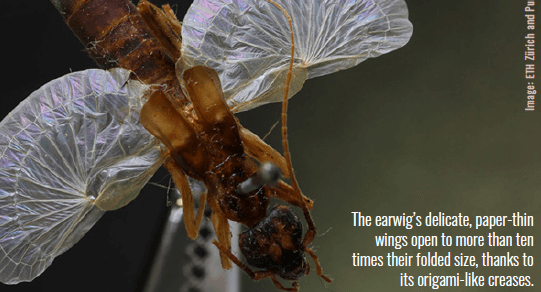 As the microscopic, tear-shaped Lacrymaria
olor swims around hunting
for food, it does something remarkable:
In a blink, the tiny protist extends its
neck more than 30 times its body length,
snatching up unwitting prey. Then, just
as quickly, the neck withdraws, returning
to its original size. The movement
is akin to a six-foot human suddenly
stretching their neck some 200 feet and
then snapping it back to normal.
This acrobatic behavior had been
observed for more than a hundred
years, yet only in 2024 did scientists
finally understand how L. olor manages
to whip out and store its neck so deftly.
The tiny hunter uses a kind of cellular
origami: It folds its external membrane
in pleats that it can unfold, deploy and
retract at will. “This particular origami, which we
named Lacrygami —humans did not
invent it, nature invented it,” says
Stanford U. bioengineer Manu Prakash.
In recent years, scientists have taken
a closer look at these complex folds of
the biological realm, such as in delicate
insect wings, a chick’s developing gut
or the lightning-fast neck of L. olor.
The nature of origami itself is
enough to keep scientists fascinated.
Origami exists at a particular boundary,
says Harvard U. physicist Lakshminarayanan
Mahadevan, “where there is
just enough balance between constraints
and freedom, so that you can
do remarkable things.” ...
As the microscopic, tear-shaped Lacrymaria
olor swims around hunting
for food, it does something remarkable:
In a blink, the tiny protist extends its
neck more than 30 times its body length,
snatching up unwitting prey. Then, just
as quickly, the neck withdraws, returning
to its original size. The movement
is akin to a six-foot human suddenly
stretching their neck some 200 feet and
then snapping it back to normal.
This acrobatic behavior had been
observed for more than a hundred
years, yet only in 2024 did scientists
finally understand how L. olor manages
to whip out and store its neck so deftly.
The tiny hunter uses a kind of cellular
origami: It folds its external membrane
in pleats that it can unfold, deploy and
retract at will. “This particular origami, which we
named Lacrygami —humans did not
invent it, nature invented it,” says
Stanford U. bioengineer Manu Prakash.
In recent years, scientists have taken
a closer look at these complex folds of
the biological realm, such as in delicate
insect wings, a chick’s developing gut
or the lightning-fast neck of L. olor.
The nature of origami itself is
enough to keep scientists fascinated.
Origami exists at a particular boundary,
says Harvard U. physicist Lakshminarayanan
Mahadevan, “where there is
just enough balance between constraints
and freedom, so that you can
do remarkable things.” ...
 In 2002, the town council of Albion in
Mendocino County, California, heard
a proposal to pull fresh water from the
Gualala and Albion Rivers, store it in
large inflatable bags, and float those
bags down the coastline to replenish
San Diego’s nearly dry water table.
Albion is defined by stark coastlines
and thick forest. Nestled in the north of
California, Albion is rich in natural resources.
I am aware as I write “natural
resources” —a genre of things that are
only valuable when they are being used
(which often means used up)— that
this delimits the purpose of the trees,
the water, the people, within a sort of
utility complex. Indeed, the water bag
proposal tapped into a long-standing
frame through which Americans have
approached water: use it or lose it. That
is, if Albion wasn’t using its abundance
of fresh water, it might as well move it
somewhere that would.
California has been built on an ideal
of paradise: That anything can happen
here, that we can defy the laws of
gravity and water flow to create heaven
on earth. That we can ignore the real
constraints of dry places. That the particularities
of “here” are just technical
challenges waiting for the right innovation.
Despite earthquakes and fires
and drought, this place keeps getting
built up as if we could build anywhere,
undergirded by a tenuous scaffolding
of water moving against the current’s
instinctual pull.
Water bags have been used in other
places ...
In 2002, the town council of Albion in
Mendocino County, California, heard
a proposal to pull fresh water from the
Gualala and Albion Rivers, store it in
large inflatable bags, and float those
bags down the coastline to replenish
San Diego’s nearly dry water table.
Albion is defined by stark coastlines
and thick forest. Nestled in the north of
California, Albion is rich in natural resources.
I am aware as I write “natural
resources” —a genre of things that are
only valuable when they are being used
(which often means used up)— that
this delimits the purpose of the trees,
the water, the people, within a sort of
utility complex. Indeed, the water bag
proposal tapped into a long-standing
frame through which Americans have
approached water: use it or lose it. That
is, if Albion wasn’t using its abundance
of fresh water, it might as well move it
somewhere that would.
California has been built on an ideal
of paradise: That anything can happen
here, that we can defy the laws of
gravity and water flow to create heaven
on earth. That we can ignore the real
constraints of dry places. That the particularities
of “here” are just technical
challenges waiting for the right innovation.
Despite earthquakes and fires
and drought, this place keeps getting
built up as if we could build anywhere,
undergirded by a tenuous scaffolding
of water moving against the current’s
instinctual pull.
Water bags have been used in other
places ...
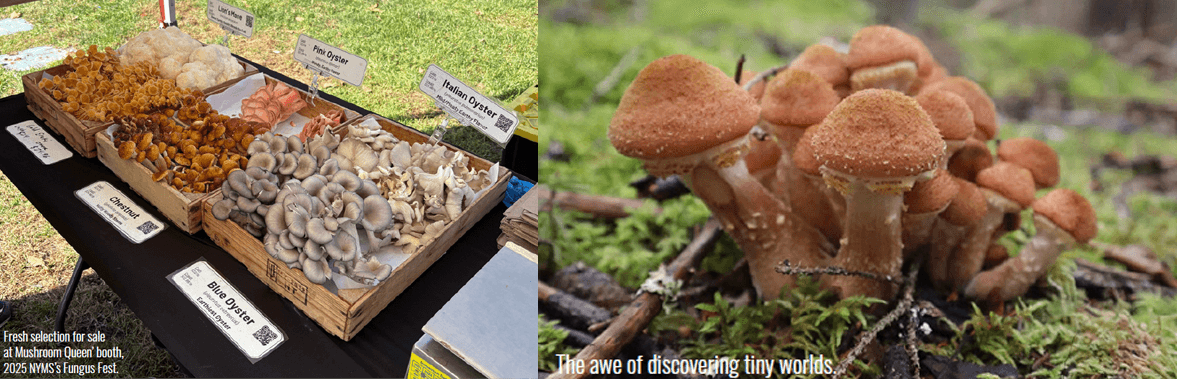
 Make everyday surfaces, like your
shower door, sound like a concert. The
bigger the object, the bigger the sound.
Find what objects sound best.
anythingspeaker.com
www.presentindicative.com
Make everyday surfaces, like your
shower door, sound like a concert. The
bigger the object, the bigger the sound.
Find what objects sound best.
anythingspeaker.com
www.presentindicative.com
 Made from 100% cotton. Reusable
& washable. Environment-friendly.
Breathable produce bags to be used in
the refrigerator. Tare weight on the
label. www.organiccottonmart.com
store.moma.org
Made from 100% cotton. Reusable
& washable. Environment-friendly.
Breathable produce bags to be used in
the refrigerator. Tare weight on the
label. www.organiccottonmart.com
store.moma.org

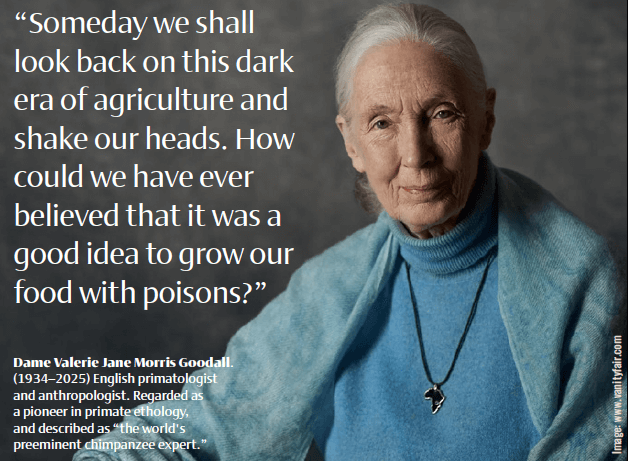


 The Bachelor of Construction
Technology program prepares
students to become innovative professionals
in the construction industry
by combining engineering principles,
management strategies, and emerging
technologies. Students will explore the
science and technology behind modern
construction systems, materials, and
methods while developing the skills
to plan, design, and manage projects
efficiently and sustainably.
AIU’s distance learning approach
allows students to integrate their
previous experience, interests, and
professional goals into a personalized
curriculum. Through independent
study, research, and practical projects,
learners will develop the ability to
analyze complex construction challenges,
apply technological solutions,
and lead multidisciplinary teams in a
dynamic global environment.
The Bachelor of Construction Technology
program is offered online via
distance learning. After evaluating both
academic record and life experience, AIU
staff working in conjunction with Faculty
and Academic Advisors will assist
students in setting up a custom-made
program, designed on an individual
basis. This flexibility to meet student
needs is seldom found in other distance
learning programs. Our online program
does not require all students to take the
same subjects/courses, use the same
books, or learning materials. Instead,
the curriculum addresses strengths and
weaknesses with respect to market opportunities
in the student’s major and
intended field of work.
The Bachelor of Construction
Technology program prepares
students to become innovative professionals
in the construction industry
by combining engineering principles,
management strategies, and emerging
technologies. Students will explore the
science and technology behind modern
construction systems, materials, and
methods while developing the skills
to plan, design, and manage projects
efficiently and sustainably.
AIU’s distance learning approach
allows students to integrate their
previous experience, interests, and
professional goals into a personalized
curriculum. Through independent
study, research, and practical projects,
learners will develop the ability to
analyze complex construction challenges,
apply technological solutions,
and lead multidisciplinary teams in a
dynamic global environment.
The Bachelor of Construction Technology
program is offered online via
distance learning. After evaluating both
academic record and life experience, AIU
staff working in conjunction with Faculty
and Academic Advisors will assist
students in setting up a custom-made
program, designed on an individual
basis. This flexibility to meet student
needs is seldom found in other distance
learning programs. Our online program
does not require all students to take the
same subjects/courses, use the same
books, or learning materials. Instead,
the curriculum addresses strengths and
weaknesses with respect to market opportunities
in the student’s major and
intended field of work.
 AIU holds International Accreditation from
ASIC
(Accreditation Service for International Schools, Colleges, and Universities) with Premier Status for its commendable Areas of Operation. ASIC Accreditation is a leading, globally recognized quality standard in international education. Institutions undergo an impartial and independent external assessment process to confirm their provision meets rigorous internationally accepted standards, covering the whole spectrum of its administration, governance, and educational offering.
AIU holds International Accreditation from
ASIC
(Accreditation Service for International Schools, Colleges, and Universities) with Premier Status for its commendable Areas of Operation. ASIC Accreditation is a leading, globally recognized quality standard in international education. Institutions undergo an impartial and independent external assessment process to confirm their provision meets rigorous internationally accepted standards, covering the whole spectrum of its administration, governance, and educational offering.
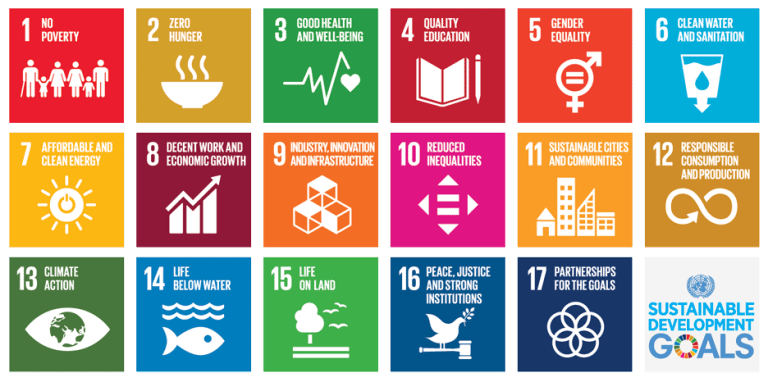
| Dr. Franklin Valcin Presi den t/Academic Dean |
Dr. José Mercado Chief Executive Officer Chairman of the Board of Trustees |
Ricardo González, PhD Provost |
| Dr. Ricardo Gonzalez Chief Operation Officer and MKT Director |
Linda Collazo Logistics Coordinator |
AIU Tutors Coordinators: Deborah Rodriguez Amiakhor Ejaeta Amanda Gutierrez William Mora Miriam James Admissions Coordinators: Amalia Aldrett Sandra Garcia Junko Shimizu Veronica Amuz Alba Ochoa Jenis Garcia Judith Brown Chris Soto René Cordón Dr. Anderas Rissler Academic Coordinators: Dr. Adesida Oluwafemi Dr. Emmanuel Gbagu Dr. Lucia Gorea Dr. Edgar Colon Dr. Mario Rios Freddy Frejus Dr. Nilani Ljunggren De Silva Dr. Scott Wilson Dr. Mohammad Shaidul Islam |
| Dr. Miriam Garibaldi Vice provost for Research |
Carolina Valdes Human Resource Coordinator |
|
| Dr. Ofelia Miller Director of AIU |
Carlos Aponte Teleco mmunications Coordinator |
|
| Clara Margalef Director of Special Projects of AIU |
David Jung Corporate/Legal Counsel |
|
| Juan Pablo Moreno Director of Operations |
Bruce Kim Advisor/Consultant |
|
| Paula Viera Director of Intelligence Systems |
Thomas Kim Corporate/ Accounting Counsel |
|
| Felipe Gomez Design Director / IT Supervisor |
Maricela Esparza Administrative Coordinator |
|
| Kevin Moll Web Designer |
Chris Benjamin IT and Hosting Support |
|
| Daritza Ysla IT Coordinator |
Maria Pastrana Accounting Coordinator |
|
| Daritza Ysla IT Coordinator |
Roberto Aldrett Communications Coordinator |
|
| Nadeem Awan Chief Programming Officer |
Giovanni Castillo IT Support |
|
| Dr. Edward Lambert Academic Director |
Antonella Fonseca Quality Control & Data Analysis |
|
| Dr. Ariadna Romero Advisor Coordinator |
Adrián Varela Graphic Design |
|
| Jhanzaib Awan Senior Programmer |
Vanesa D’Angelo Content Writer |
|
| Leonardo Salas Human Resource Manager |
Jaime Rotlewicz Dean of Admissions |
|
| Benjamin Joseph IT and Technology Support |
Michael Phillips Registrar’s Office |
|
| Rosie Perez Finance Coordinator |
||
 The School of Business and Economics
allows aspiring and practicing
professionals, managers, and entrepreneurs
in the private and public sectors
to complete a self paced distance
learning degree program of the highest
academic standard.
The ultimate goal is to empower
learners and help them take advantage
of the enormous array of resources
from the world environment in order
to eliminate the current continuum of
poverty and limitations.
Degree programs are designed for
those students whose professional experience has been in business,
marketing, administration, economics,
finance and management.
The School of Business and Economics
allows aspiring and practicing
professionals, managers, and entrepreneurs
in the private and public sectors
to complete a self paced distance
learning degree program of the highest
academic standard.
The ultimate goal is to empower
learners and help them take advantage
of the enormous array of resources
from the world environment in order
to eliminate the current continuum of
poverty and limitations.
Degree programs are designed for
those students whose professional experience has been in business,
marketing, administration, economics,
finance and management.
 The School of Social and Human Studies
is focused on to the development of
studies which instill a core commitment
to building a society based on social and
economic justice and enhancing opportunities
for human well being.
The founding principles lie on the
basic right of education as outlined
in the Declaration of Human Rights.
We instill in our students a sense of
confidence and self reliance in their
ability to access the vast opportunities
available through information channels,
the world wide web, private, public,
nonprofit, and nongovernmental organizations in an ever expanding
global community.
Degree programs are aimed towards
those whose professional life has been
related to social and human behavior,
with the arts, or with cultural studies.
The School of Social and Human Studies
is focused on to the development of
studies which instill a core commitment
to building a society based on social and
economic justice and enhancing opportunities
for human well being.
The founding principles lie on the
basic right of education as outlined
in the Declaration of Human Rights.
We instill in our students a sense of
confidence and self reliance in their
ability to access the vast opportunities
available through information channels,
the world wide web, private, public,
nonprofit, and nongovernmental organizations in an ever expanding
global community.
Degree programs are aimed towards
those whose professional life has been
related to social and human behavior,
with the arts, or with cultural studies.
 The School of Science and Engineering
seeks to provide dynamic, integrated,
and challenging degree programs
designed for those whose experience
is in industrial research, scientific production,
engineering and the general
sciences. Our system for research and
education will keep us apace with the
twenty-first century reach scientific
advance in an environmentally and
ecologically responsible manner to allow
for the sustainability of the human
population. We will foster among our
students a demand for ethical behavior,
an appreciation for diversity, an understanding
of scientific investigation, knowledge of design innovation, a
critical appreciation for the importance
of technology and technological change
for the advancement of humanity.
The School of Science and Engineering
seeks to provide dynamic, integrated,
and challenging degree programs
designed for those whose experience
is in industrial research, scientific production,
engineering and the general
sciences. Our system for research and
education will keep us apace with the
twenty-first century reach scientific
advance in an environmentally and
ecologically responsible manner to allow
for the sustainability of the human
population. We will foster among our
students a demand for ethical behavior,
an appreciation for diversity, an understanding
of scientific investigation, knowledge of design innovation, a
critical appreciation for the importance
of technology and technological change
for the advancement of humanity.
 With access to a global catalog created and maintained collectively by more than
9,000 participating institutions, AIU students have secured excellent research
tools for their study programs.
With access to a global catalog created and maintained collectively by more than
9,000 participating institutions, AIU students have secured excellent research
tools for their study programs.
