JANUARY 9 2025.
Atlantic International
University takes pride
in celebrating the remarkable
journey of one
of its students, Ugwu
Niger Martins. This
success story is a testament to
resilience, perseverance, and
an commitment to personal
and communal growth. From
polygamous roots to political
success, Martins has transformed
every challenge into an
opportunity.
Born near the tumultuous
Nigerian Civil War, as the sole
surviving male child out of twenty-one, he overcame
the loss of his father
and a lack of value
for education in his upbringing.
Despite these
hardships, he completed
primary and secondary
education through sheer determination.
Today, as a student
of AIU, Martins reflects on his
path, stating, “AIU has given me
the platform to shine and share
my story with the world.”
JANUARY 9 2025.
Atlantic International
University takes pride
in celebrating the remarkable
journey of one
of its students, Ugwu
Niger Martins. This
success story is a testament to
resilience, perseverance, and
an commitment to personal
and communal growth. From
polygamous roots to political
success, Martins has transformed
every challenge into an
opportunity.
Born near the tumultuous
Nigerian Civil War, as the sole
surviving male child out of twenty-one, he overcame
the loss of his father
and a lack of value
for education in his upbringing.
Despite these
hardships, he completed
primary and secondary
education through sheer determination.
Today, as a student
of AIU, Martins reflects on his
path, stating, “AIU has given me
the platform to shine and share
my story with the world.” JANUARY 15
2025. Ngan
Joyciline
Naah, a social
entrepreneur
and proud
graduate
of Atlantic
International University, has
dedicated her life to transforming
marginalized communities
by championing education
and economic empowerment.
Through her non-profit organization,
Ngan has designed
and implemented a range of
innovative initiatives aimed at
improving access to education and opportunities for underprivileged
youth and women.
From marginalization
to leadership
Growing up in a marginalized
neighborhood, Ngan witnessed
the challenges of limited access
to education and resources.
Fueled by her desire to make a
positive impact, she pursued a
degree in Community Development
at AIU, where she developed
the skills, knowledge, and
confidence to tackle the societal
issues close to her heart. Her
educational journey was not
just a personal achievement but a turning point that shaped her
path to community leadership.
JANUARY 15
2025. Ngan
Joyciline
Naah, a social
entrepreneur
and proud
graduate
of Atlantic
International University, has
dedicated her life to transforming
marginalized communities
by championing education
and economic empowerment.
Through her non-profit organization,
Ngan has designed
and implemented a range of
innovative initiatives aimed at
improving access to education and opportunities for underprivileged
youth and women.
From marginalization
to leadership
Growing up in a marginalized
neighborhood, Ngan witnessed
the challenges of limited access
to education and resources.
Fueled by her desire to make a
positive impact, she pursued a
degree in Community Development
at AIU, where she developed
the skills, knowledge, and
confidence to tackle the societal
issues close to her heart. Her
educational journey was not
just a personal achievement but a turning point that shaped her
path to community leadership.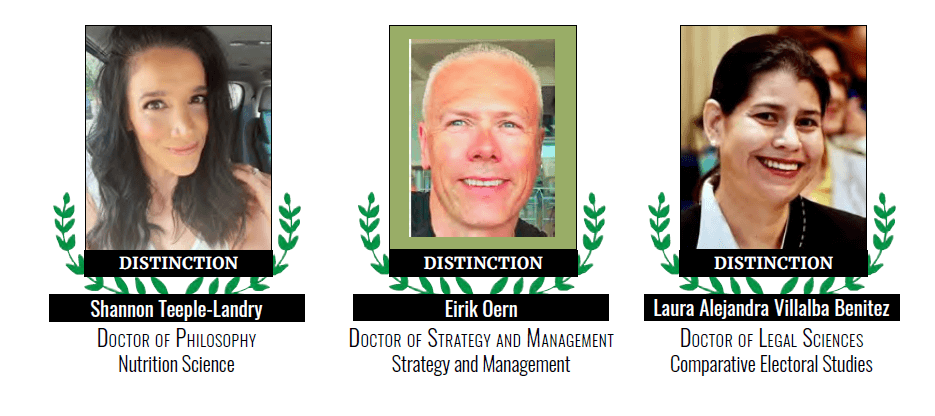 FEBRUARY 2025. These graduate students completed his program
with a high cumulative grade point average, which reflects the
quality of performance within their respective major.
Congratulations!
FEBRUARY 2025. These graduate students completed his program
with a high cumulative grade point average, which reflects the
quality of performance within their respective major.
Congratulations! JANUARY 31 2025.
Known for its academic
excellence and
its vital role in shaping
the intellectual landscape
of Guatemala,
Mariano Gálvez University
has chosen Dr. Carlos
Federico Cárdenas Castellanos
to lead the institution into a
new era of educational innovation
and growth.
JANUARY 31 2025.
Known for its academic
excellence and
its vital role in shaping
the intellectual landscape
of Guatemala,
Mariano Gálvez University
has chosen Dr. Carlos
Federico Cárdenas Castellanos
to lead the institution into a
new era of educational innovation
and growth. JANUARY 27 2025.
In a world grappling
with the challenges of
climate change, Chance
Kanoga, a notable
graduate from AIU is
making remarkable
strides in environmental
sustainability. Chance
Kaonga, driven by an enduring
passion for science and a commitment
to positive change,
has embarked on a mission of
tree planting initiatives that is
transforming his community
and contributing to global efforts
to combat climate change. Chance developed
a bold plan to
initiate transformative
projects in his
community. “Roots
of Hope” focuses
on tree planting,
reforestation for
sustainable development, fruit
tree cultivation, giant bamboo
growth, and waste management
efforts within and around Dwasulu
Community Day Secondary
School. ...
JANUARY 27 2025.
In a world grappling
with the challenges of
climate change, Chance
Kanoga, a notable
graduate from AIU is
making remarkable
strides in environmental
sustainability. Chance
Kaonga, driven by an enduring
passion for science and a commitment
to positive change,
has embarked on a mission of
tree planting initiatives that is
transforming his community
and contributing to global efforts
to combat climate change. Chance developed
a bold plan to
initiate transformative
projects in his
community. “Roots
of Hope” focuses
on tree planting,
reforestation for
sustainable development, fruit
tree cultivation, giant bamboo
growth, and waste management
efforts within and around Dwasulu
Community Day Secondary
School. ...
 JANUARY 28 2025. The global
AIU community deeply mourns
the recent passing of our esteemed
AIU Alumni member,
Dr. Carlos Garcia Mendez, who
successfully completed the
Doctor of Philosophy program
in Education at AIU. Dr. Garcia
Mendez served as the Rector
of the University of Xalapa,
Mexico, demonstrating exemplary
leadership in the field of
education. For several years,
AIU and the University of Xalapa
have maintained a fruitful
collaboration agreement.
We offer our heartfelt condolences
to Dr. Garcia Mendez’s
family, friends, and the
entire University of Xalapa
community during this difficult
time.
JANUARY 28 2025. The global
AIU community deeply mourns
the recent passing of our esteemed
AIU Alumni member,
Dr. Carlos Garcia Mendez, who
successfully completed the
Doctor of Philosophy program
in Education at AIU. Dr. Garcia
Mendez served as the Rector
of the University of Xalapa,
Mexico, demonstrating exemplary
leadership in the field of
education. For several years,
AIU and the University of Xalapa
have maintained a fruitful
collaboration agreement.
We offer our heartfelt condolences
to Dr. Garcia Mendez’s
family, friends, and the
entire University of Xalapa
community during this difficult
time.
 Call for Papers
This Conference will be hosted
11–12 September 2025
by Université Paris 1 Panthéon-
Sorbonne, Paris, France.
We invite proposals for paper
presentations, workshops/
interactive sessions, posters/
exhibits, colloquia, focused
discussions, innovation showcases,
virtual posters, or virtual
lightning talks.
Call for Papers
This Conference will be hosted
11–12 September 2025
by Université Paris 1 Panthéon-
Sorbonne, Paris, France.
We invite proposals for paper
presentations, workshops/
interactive sessions, posters/
exhibits, colloquia, focused
discussions, innovation showcases,
virtual posters, or virtual
lightning talks.
 JANUARY 30 2025.
Abah Emmanuel
Akugwu, a dedicated
student at AIU, is
currently pursuing a
Bachelor’s degree in
Accounting. His educational
journey is marked not
only by academic achievement
but also by a profound commitment
to utilizing leadership
and teamwork skills to
effect positive change in his
community.
As one of the standout students
at AIU, Abah’s experience
in leadership and teamwork
for community impact sheds light on how
higher education can
be a catalyst for societal
transformation.
At AIU, the emphasis
on self-directed
learning and flexibility
has empowered Abah to
take charge of his educational
path. This unique approach
allows students to tailor their
learning experiences to fit
their personal and professional
goals. ...
Read full text:
JANUARY 30 2025.
Abah Emmanuel
Akugwu, a dedicated
student at AIU, is
currently pursuing a
Bachelor’s degree in
Accounting. His educational
journey is marked not
only by academic achievement
but also by a profound commitment
to utilizing leadership
and teamwork skills to
effect positive change in his
community.
As one of the standout students
at AIU, Abah’s experience
in leadership and teamwork
for community impact sheds light on how
higher education can
be a catalyst for societal
transformation.
At AIU, the emphasis
on self-directed
learning and flexibility
has empowered Abah to
take charge of his educational
path. This unique approach
allows students to tailor their
learning experiences to fit
their personal and professional
goals. ...
Read full text:
 FEBRUARY 3 2025.
In every community,
waste management
and sanitation practices
are vital to maintaining
a clean and
healthy environment.
Antoinette Agbozo,
an industrious student at AIU,
has taken significant steps to
address the littering and poor
sanitation issues that have been
prevalent in her school and local
community. As the founder
and coordinator of a sanitation
club, Antoinette has created
an impactful initiative that not
only focuses on reducing waste but also encourages
recycling and reusing
materials to ensure a
cleaner future. Under
her leadership, this
project has led to
remarkable changes
in both the school
and the surrounding areas.
The journey began when
Antoinette recognized that
littering was becoming a
major problem, both within
the school grounds and in the
neighboring community. ...
Visit the website:
FEBRUARY 3 2025.
In every community,
waste management
and sanitation practices
are vital to maintaining
a clean and
healthy environment.
Antoinette Agbozo,
an industrious student at AIU,
has taken significant steps to
address the littering and poor
sanitation issues that have been
prevalent in her school and local
community. As the founder
and coordinator of a sanitation
club, Antoinette has created
an impactful initiative that not
only focuses on reducing waste but also encourages
recycling and reusing
materials to ensure a
cleaner future. Under
her leadership, this
project has led to
remarkable changes
in both the school
and the surrounding areas.
The journey began when
Antoinette recognized that
littering was becoming a
major problem, both within
the school grounds and in the
neighboring community. ...
Visit the website:
 Call for Papers
This Conference will be hosted
11–13 June 2025 by University
of Nicosia, Nicosia, Cyprus.
We invite proposals for paper
presentations, workshops/
interactive sessions, posters/
exhibits, colloquia, focused
discussions, innovation showcases,
virtual posters, or virtual
lightning talks.
Call for Papers
This Conference will be hosted
11–13 June 2025 by University
of Nicosia, Nicosia, Cyprus.
We invite proposals for paper
presentations, workshops/
interactive sessions, posters/
exhibits, colloquia, focused
discussions, innovation showcases,
virtual posters, or virtual
lightning talks. FEBRUARY 7 2025. Atlantic
International University is
proud to share the inspiring
story of Ricles Thomas, a doctoral
student who has successfully
applied the knowledge
gained through his studies to
make a significant impact in
his professional environment
at Compassion International.
In his role at Compassion
International, Ricles is responsible
for completing a Personal
Development Plan (PDP) each
fiscal year, outlining goals for
growth. Going beyond the routine
task, Ricles used his AIU
education to drive deeper conversations
on leadership within
his team. Specifically, he introduced
concepts of emotional
intelligence and leadership
effectiveness, transforming not
only his own leadership style
but that of his colleagues. ...
Read full text:
FEBRUARY 7 2025. Atlantic
International University is
proud to share the inspiring
story of Ricles Thomas, a doctoral
student who has successfully
applied the knowledge
gained through his studies to
make a significant impact in
his professional environment
at Compassion International.
In his role at Compassion
International, Ricles is responsible
for completing a Personal
Development Plan (PDP) each
fiscal year, outlining goals for
growth. Going beyond the routine
task, Ricles used his AIU
education to drive deeper conversations
on leadership within
his team. Specifically, he introduced
concepts of emotional
intelligence and leadership
effectiveness, transforming not
only his own leadership style
but that of his colleagues. ...
Read full text:

| Onias Mpofu Associate of Business Administration Business Administration Angola |
Desrie Marisa Southwell Doctor of Business Administration Business Management Antigua and Barbuda |
Guaicaipuro José Jiménez Jiménez Post Doctorate of Philosop hy Philosophy Aruba |
Agbocou Jules Clotaire Kossi Doctor of Science Computer Science Benin |
Rafael Vladimir Pardo Elio Bachelor of Science Electrical Engineering Bolivia |
Norma Valeria Cecilia Moscoso Valda Bachelor of Science Psychology Bolivia |
| Channthorn Mao Doctor of Business and Economics Business Management Cambo dia |
Shannon Teeple-Landry Doctor of Philosop hy Nutrition Science Canada |
Rosa Soledad Fernández Herrera Doctor of Education Education Chile |
Rawhoudine Said Charriffaini Doctor of Mathematics Mathematics Education Comoros |
Paul Kaposela Kapopo Master of Science Environmental Science Congo |
Bieme Mpikandutu Daddy Master of Administration AEV Affairs Developmental Rural Congo |
| José Luis Stonestreet Quintero Bachelor of Science Civil Engineering Costa Rica |
Caridad Nolasco Alvarez Doctor of Agronomy Plant Protection Dominican Republic |
María Fernanda López Granja Bachelor of Business Administration Marketing Ecuador |
Wilson Elías Guanoquiza Cando Doctor of Philosop hy Mathematics Ecu |
Carlos Guillermo González Coloma Bachelor of Spo rts Science Sports Science Ecuador |
Segundo Justo Aviles Bachelor of Science Psychology Ecuador |
| Lourdes Farfan Bachelor of Psychology Clinical Psychology Ecuador |
Yuleiki Del Carmen Duque Franco Bachelor of Education Early Childhood Pedagogy Equatorial Guinea |
Vishnu Naraine Panday Doctor of Education Educational Psychology Guyana |
Rigane Mascary Master of Economics Economics Haiti |
Lesby Daniela Ochoa Molina Masters in Legal Studies Legal Studies Honduras |
Marliz Elizabeth Vidal Salas Bachelor of Philology Hispa nic Education, Literature and Spanish Grammar Hungary |
| Roy Yakov Ben Ishay (Amir) Doctor of Science Supply Chain Management Israel |
Claudia P. Barrientos Cambara de P. Doctor of Philosop hy Peace, Climate Change and Sust. Dev. Italy |
Raquel Ann-Monique Brown Bachelor of Psychology Education Psychology Jamaica |
Hilary Suzette Edmond Bassaragh Master of Education Education Jamaica |
Loai Ziad Hasan Al-Adim Doctor of Science Business Innov. in Elect. Power Engineering Jord |
Lisebo Ramakatsa Doctor of Management Human Resource Management Lesotho |
| José Salvador Gutiérrez Peña Bachelor of Science Civil Engineering Mexico |
Mounir Bensalah Doctor of Philosop hy Human Rights Morocco |
Ademola Adedeji Odutola Doctor of Science Architecture Nigeria |
Joseph C. Awodeha Doctor of Philosop hy Human Resources Management Niger |
Morgan Ajoku Doctor of Philosop hy Supply Chain Management Nigeria |
Abdulrahman Kitilly Hudu Master of Science Public Health and Epidemiology Nigeria |
| Ibanga Eyo Ekong Doctor of Philosop hy Renewable and Sustainable Energy Nigeri |
Sekoni Temiloluwa Odunayo Bachelor of Science Computer Science Nigeri |
Dr. Eirik Oern Doctor of Strategy and Management Strategy and Management Norway |
Pedro Eloy Yataco Tasayco Bachelor of Agronomic Engineering Agronomic Engineering Peru |
Elgeen Edmée Montilla Ortiz Doctor of Business Administration Marketing Puerto Ri |
Jody Eiser Doctor of Science Psychology South Africa |
| Max Vladimir Martínez Portillo Bachelor of Arts Social Work Spa in |
Navin Riteshkumar Ruben Samoedj Doctor of Business Management Business Management Suriname |
Emmanuel Peter Kichere Bachelor of Science Civil Engineering Tanza |
Jose Manuel Maniqun Doctor of Urba n Planning and Mgmt. Urban Planning and Management Timor Leste |
Omijie Ailen Elijah Doctor of Science Information Systems Togo |
Parvin Mashoori Doctor of Science Agriculture (Herbal Therapy) Türkiye |
| Roxanne Magdalene St. Clair Doctor of Business Administration Business Administration and Management United Kingdom |
Yaremi Ledesma Alvarez Bachelor of Music Music USA |
Gabriel Ochoa Rangel Bachelor of International Relations International Relations USA |
Bright Karikari Brako Bachelor of Science Information Technology USA |
Lázaro Daniel González Valdés Master of Science Psychology USA |
Gil Ramon Paiz Zeledon Doctor of Science Nutrition USA |
| Laura Alejandra Villalba Benitez Doctor of Legal Sciences Comparative Electoral Studies USA |
Dominique Danielle De Lira Bachelor of Science Biochemistry Engineering USA |
Ronald Chandra Master of Engineering Mechanical Engineering USA |
Maria Elena Zegarra Vasquez Doctor of Philosop hy Biotechnology USA |
Dr. Gil Ramon Paiz Zeledon Doctor of Science Nutrition USA |
Shatha A Ghanem Bachelor of Arts Arts USA |
| Melvin Robert Harris Doctor of Public Health Public Health USA |
Luis .E. Bayter O. Master of Business Administration Global Business USA |
Gabriel Ochoa Rangel Bachelor of International Relations International Relations USA |
Freddy ChandaNg'uni Doctor in Public Health Public Health Zambia |
Vongai Madamombe Taruvingira Master of Science Public Health Zimbabwe |
 Achulo Osara Florence
 Annie Penda
 Conde Mamoudou
 Agbocou Jules Kossi
We are in a world that asks
us: What is happening?
Let’s look at the thought that
has given us many benefits,
many answers: Science.
Science refers to knowledge.
What is knowledge?
When we talk about knowledge,
we think of other
concepts that are related to it,
which means close, but don’t
define it as such, these concepts
are: Believe and Know.
Within my bibliographic world I have a job that has
always enriched me because
few are interested in what
they mean: Believe, Know and
Know. The work I mention is
by Luis Villoro published by
Siglo Veinte y Uno- Siglo XXI.
It also appears published
in 2024, by the Philosophical
magazine of the National
Autonomous University of
Mexico-UNAM.
At first glance it seems that these concepts mean the same
thing. By studying them the result
clarifies the definition and
therefore with the difference we
avoid many errors in their use.
“If we take Believing in its
most general sense, it simply
means “to hold a statement to
be true” or “to hold a fact to be
existing”, to accept the truth
and reality of something, without
implying that my evidence
is sufficient or not”. (Villoro,
2009, p. 15).
The situation of belief is
clear; I don’t have sufficient
evidence for the thought I
express. Villoro continues: “A
belief is true only if the proposition
in which it is expressed
is true”. (Villoro, 2009, p. 16).
Here Villoro goes to the
foundation that Science has
in the Logical Principles of
the same worked by Aristotle.
Stagira, Greece, 384 BC - 322
BC Chalcis, Greece.
Villoro also says that belief
is “…an acquired dispositional
state that causes a coherent
set of responses and that is
determined by an apprehended
objective object or situation”.
(Villoro, 2009, p. 71).
What Villoro says is that
what we call belief is what we perceive: it is what we independently
and without a demonstration
as such capture of
something that we will call the
object of that belief. Regarding
Knowledge, Villoro tells us:
“Because Wise is not the one
who knows many general principles,
nor the one who can explain
everything through safe
theories, but the one who can
distinguish in each circumstance
the essential behind the
appearances, the one who can
integrate into a concrete unit
the apparent manifestations of
an object; wise is also the one
who, in each individual situation,
can better distinguish
what is truly important, and
for this he has a more shrewd
look than others”. (Villoro,
2009, p. 226).
From the above conceptualization
we can effectively differentiate the qualities and
attitudes that any human being
must have to be called wise.
From what is clear from the
above definition, being wise
doesn’t mean having all possible
degrees; being wise is
having the ability to see more
than what others can determine
by their ability to abstract
what others can’t extract from
the object, whether conceptual
or concrete.
Now let’s look at what
Knowing is: “In short, knowledge
in general is a dispositional
state to act, acquired,
determined by an apprehended
objective object or situation,
which is accompanied by a sure
guarantee of success”. (Villoro.
2009, pp. 220-221).
“Science consists of a set
of knowledge that can be
shared by a given epistemic
community: theories, statements
that relate them to
a domain of objects, statements
of observation that
can be verified intersubjectively;
all of this constitutes a
body of propositions founded
on objectively sufficient rea sons”. (Villoro, 2009, p. 222).
Science is special in that it’s
demonstrated and proven in
its results.
In Science, other knowledge
must also be taken into consideration;
a proposal that is
divergent from other knowledge
can’t be given as part of
science.
In Science, we are conditioned
to consider congruence
with other knowledge as
obligatory: there is always a
relationship with the epistemic
community.
Clarifying the meaning of
concepts that are often used
interchangeably to refer to
scientific knowledge because
it’s said: he is wise because
he knows a lot, identifying it
with knowing about science,
or he knows a lot but doesn’t
refer to scientific knowledge
that is referred to the epistemic
community.
We are in a new year,
2025, and we have had many
elections of governments,
some good and others called
“populist”. The big question
is: why are there so many reapopulist governments?
The neediest are taken, those
who have little knowledge of
science because they didn’t
have the opportunity to study.
What is striking is that these
governments have it or those
who want the money are looking
for it. A high percentage
of their members even have
studies. The surprise is that
these studies have remained in
a time of science that is already
very far away.
Science, in which the Nobel
Prizes have been awarded for
the last 10 years, is unknown
to these people and they want
to stay in these paradigms to
obtain money, even if they harm the planet, even if they
end world peace with hate
speech and disinformation.
Disinformation goes hand in
hand with hate speech because
the other human being must
be annulled so that no one
believes in his or her.
We are witnessing situations
that don’t involve compliance
with Human Rights. For the
types of governments, especially
the “populist” ones,
Education is the tool to keep
people subjugated.
What is happening with
UNESCO’s work for Sustainable
Development?
What is happening with Article
4 for Sustainable Development
regarding Education?
UNECO is doing the following:
“By mobilizing its
thousands of scientific partners
around the world, its 194
Member States, its educational
institutions and its networks
of cultural and natural sites,
UNESCO will support the development
of initiatives to achieve
the objectives of the Decade.
All partners, including governments,
research institutes,
universities, industry, civil
societies, the private sector and
individuals are called to participate
through the development
of their own initiatives”.
UNESCO launc hes the International
Dec ade of Science for Sus tainable Deve lopmen t (2024-2033) 3
Decem ber 2024. https://www.unesco.
org/en/articles/unesco-launches-theinternational-
decade-of-science-forsustainable-
development-2024-2033
It seems that nothing is
happening with Education and
governments that want their
people to remain in the dark
are silent about this work.
There is also a monitoring of
Education in the world, which
was done a few months ago.
“Based on the United Nations Pact for the Future, GEM
2024 marked a key moment for
education, bringing together
the international education
community, including governmental
and non-state actors,
to agree on acceleration strategies
for the rest of the 2030
Agenda, taking into account
the vision of transforming
education”.
(GEM Report) The Global Educ ation
Monitoring Report.
Global Educ ation Mee ting 2024 - 31 October - 1 Novem ber 2024
- Fortaleza, Brazil https://w”ww.
unesco.org/sdg4education2030/
en/2024-global-education-meeting
What was the objective of
this follow-up?
“…the Global Education
Meeting 2024 convened
by UNESCO aimed to foster
multilateral, intersectoral and
multi-stakeholder dialogue,
recognizing education as a
social equalizer and a driving
force for sustainable development.”
Global Educ ation Mee ting
2024. 31 October – 1 Novem ber
2024 – Fortaleza, Brazil. https://
www.unesco.org/sdg4education2030/
en/2024-global-education-meeting
What is clear is that the plan
of populist governments is to keep the smallest possible
population close to science.
Given what UNESCO is doing,
we are witnessing the work
of universities and Scientific
Research Centers: greater dissemination
of science.
The dissemination of science
is one of the objectives of every
university.
To counteract hate speech
and misinformation, there
must be greater dissemination
of science; you must see what
they are doing:
• Cambridge and Oxford in
England,
• The Max Planck Research Institutes
- 80 - most of them
in Germany,
• The University of Leuven in
Belgium,
• Yale University and The Massachusetts
Institute of Technology
in the United States,
among others.
You are doing your
study program at Atlantic International
University- AIU:
when they offer you
to do articles for scientific
journals this
is the reason.
Here are the reasons
why completing
your program at AIU
is the way to live
in peace and not be
used by anyone.
Here is the way to be
able to work without
being offered to
give you this or that
which is never there;
it is only lies.
Nowadays, more is published
about what research institutions
and universities do.
Those who want to keep
science static and remain in
power forever seem to be failing
in their objective.
BIBLIOGRAPHY. UNAM. Diánoia- Revista Filosófica. Hurtado, G.
(2024). Una relectura de Creer, saber, conocer. Diánoia, 68(93),
233–246. https://doi.org/10.22201/iifs.18704913e.2024.93.2064.
https://dianoia.filosoficas.unam.mx/index.php/dianoia/article/
view/2064- noviembre 13-2024 | UNESCO. La UNESCO lanza el
Decenio Internacional de la Ciencia para el Desarrollo Sostenible
(2024-2033) 3 de diciembre 2024. https://www.unesco.org/es/articles/
la-unesco-lanza-el-decenio-internacional-de-la-ciencia-parael-
desarrollo-sostenible-2024-2033 | UNESCO. Reunión Mundial
sobre la Educación 2024, 31 de octubre – 1° de noviembre de
2024- Fortaleza, Brasil. https://www.unesco.org/sdg4education2030/
es/2024-global-education-meeting | Villoro, Luis. (2009). Creer,
saber y conocer. México. Siglo XXI.

The principle
of isomorphism
in architecture
and its basic property
The principle of isomorphism
in Architecture refers to
a great analogy, similarities, and correspondence, the
extension of relations between
two or many domains,
structures, spaces, ecological
units, environmental sets or
systems. It could be divided
into many sets of aspects:
the unity of environment, the
relations, and the priority of
the original ecological unit in
creating spaces or in solving
architectural problems. Many
principles could be identified
as aspects of the principle of
isomorphism. The principal
ones are the principle of
correspondence (of structure,
relations, operations…), the
principle of extension/ continuity,
the principle of reciprocal
influence, the principle of
the strength of the original
ecological unit, the principle
of constancy, the principle of
similarity / similitude.
Understanding the principle of
isomorphism in architecture
From which aspects of the
principle of isomorphism in
architecture, appropriate explanation
and changes could be
stated and realized in order to
improve the situation of some
created spaces?
The main aspects of the
principle of isomorphism to be
considered when explaining or
solving the problems related to
created spaces could be divided
into categories.
Category 1: The relationship
between spaces
(i) The principle of
correspondence; this principle
stipulates that when creating
spaces or improving the quality
of spaces already created
(house, building, green space,
town…), every pertinent
element of the space to be
created or to be transformed
should have its correspondent
in the original space to which
the building or created space
is related.
(ii) The principle of environmental
continuity stipulates
that the space to be created is
to some extent the continuity
of its surrounding space,
environment or set of its surrounding
spaces; every space
is reflecting its surrounding
environment.
(iii) The principle of reciprocal
influence of spaces stipulates
that when two or many
spaces are near, each of them
influences another or the other
—and this influence may have
a negative or a positive effect
on the other (Mum y, 2016).
(iv) The principle of similarity
/ similitude which implies the principle of correspondence,
states that, without being identical,
the created spaces (house,
building, green space, town…)
and the original space to which
the created space is related have
a resemblance, when considering
their pertinent characteristics,
functions, …
(v) The principle of constancy;
specifies the importance of
maintaining the spaces and the
relations inside each of them
and the relation between the
created spaces (house, building,
green space, town…) and
the original space in harmony;
that principle is materialized
through actions and behavior
aiming at permanently maintaining
created spaces (houses,
buildings, green spaces…) and
at frequently protecting the
environment.
Category 2: the priority of original
space in solving and preventing
architectural problems
(vi) The principle of the
strength of original ecological
or environmental units:
This principle stipulates
that when creating spaces
or improving the quality of
spaces already created, well
understanding and taking
into consideration the original
space and relation would
probably be more efficient.
The principle of the strength
of original ecological or
environmental units implies
also relationship between
spaces; however, it has
purposely been classified in
another category.
Explaining the problems related
to the Conflict between
occupants’ behavior and the
environmental characteristics
of the building, from conflicts
interspaces in connection with
the principle of isomorphism
in architecture
Two types of spaces are
concerned when studying
building from the principle of
isomorphism in architecture:
the initial or original space and
the target space that is created
or the transformed one.
After the definition of each of
these spaces and the relationship
between the spaces, it
might be possible to come out
with two possibilities: (i) a
congruence situation hypothesis
which is a situation of
harmony between spaces; (ii) a
conflictual situation hypothesis
which is a situation of disharmony.
In this last hypothesis,
the conflictual situation will be
a hypothesis stated to explain
the problems of buildings
and spaces. In this perspective,
in order to explain the
problems of a specific building
from the principle of isomorphism
in architecture, we will
firstly state the problem to be
solved based on the initial data collected; secondly, analyze
the situation characterizing
the type of relation that exists
between spaces; thirdly, state
the problem to be solved from
the conflict interspaces in connection
with the principle of
isomorphism in architecture.
Defining the problem to be solved
from initial data collected
From data collected through
the first interview with the client,
we came out with a set of
problems. These problems are
grouped in many categories.
1. Climatic characteristics:
The problems identified are
related to (i) thermal comfort;
heat storage; humidity; the residential building is not one
that meets up with ventilation
requirements; this problem
involves also air movement
and thermal comfort of the
building; (ii) Insufficiency of
day lighting.
2. Building Materials used: The
problem identified is related to
humidity that affects walls and
other objects. This problem
involves also the durability of
building materials.
3. Energy efficiency and water
comfort: The problems identified
are related to (i) Insufficiency
of electrical energy; (ii)
Insufficiency of water supply.
4. Relief characteristics of the
site: The problem identified is related to structural stability
that affects walls and other
parts of the building.
These data and identified
problems of the building were
just considered as hypotheses
of the situation to be analyzed.
Analysis and diagnostic
of the situation
From the interview with the
occupants and the observation
of the building, we came out
with some data related to the
situation to be analyzed. The
analysis and diagnostic of the
situation consisted of defining
the main spaces (the original
and target spaces), the different
pertinent relations and of identifying the conflict situation
to be solved.
Definition of spaces
The original space: Defining
the original space and
its characteristics consists of
stating the different pertinent
elements of the original
space and surroundings.
They could involve the relief
characteristics of the site, the
climatic conditions, building
materials, natural sources of
energy, resources in terms of
water supply and other.
The target space: Defining the
target space and its characteristics
consists of stating the
different pertinent elements of
the building and its surroundings.
They involve the relief
characteristics of the site, the
climatic characteristics, the
building materials used, the
sources of energy used and the
resources used in terms of water
supply. Table 2 present the
environmental characteristics
of the original space and of the
target one. (See Table 2)
The different spaces
are made up of elements belonging to four subsets corresponding
to the four aspects
of the environmental characteristics.
After the definition of
the main spaces, the different
pertinent relations are below
stated with the intention to
identify the conflicting situation
to be solved.
Definition of the relationships:
different conflicting
situations between spaces
What relationship exit
between elements of original
space and of elements of
target space? This section is
focused on the determination
of the relationship between
spaces, specifying the original
and the reverse relations and
identifying from the principle
of correspondence or bijective
relation, the different
conflictual situations within
the whole set of relationships
between spaces (original space
and target space).
1. The relief characteristics
of the original space
and the relief characteristics
of the building
Relief characteristics of the
site in the original space are
mainly made up of hilly landscape
and the relief characteristics
related to the building
is the one of a house on hilly
relief. When we considered
the original relation; from
original space to target space,
and the reverse relation: from
the target space to the original
one, it is easy to observe that
there is no conflictual situation.
This situation is unlikely
to generate a problem related
to the structural stability of
the building.
2. Climatic characteristics of
the original space and Climatic
characteristics of the building
Climatic characteristics of
the original space are mainly
made up of heat, humidity; a
lot of precipitations and the
climatic characteristics related
to the building are the one
of a house in hot temperate.
Even free air movement is very
light. Concerning wind access,
the building of the project is
south west-oriented. From
the orientation above stated,
it is manifest that the building
wind access represents at least
11% of the time. The building
has a good orientation. Consequently,
the environmental
characteristics harmonize with
the building characteristics.
There is no conflictual situation.
The principle of correspondence
is taken into
consideration. This situation
is not likely to induce heat and
humidity in the building.
3. Building Materials in the
original space and Building
Materials in the building
The Building Materials in the original space are mainly
made up of (clay bricks, stone
and cement). The Building
Materials used to construct the
building is made up of cement
blocks, clay bricks, wood)
whose quality was quite good.
In terms of building materials
used the situation of the
building is suitable to the
environmental characteristics
of the original space. This situation
that positively affect the
comfort the building occupants
is not a conflictual situation
between the environmental
characteristics and the building
characteristics. This situation
is unlikely to induce heat in the
building and problems related
to its structural stability.
4. Sources of energy in the
original space and sources of
energy used in the building
The sources of energy available
in the original space are
made up of solar energy. Electrical
energy is very insufficient.
The source of energy used in
the building is electrical energy.
Also, from time to time, solar
energy is used. When we considered
the original relation (from
original space to target space)
and the reverse relation (from
the target space to the original
one), it is easy to observe that
there is no conflictual situation.
This situation is unlikely
to induce problems related to
insufficient lighting and energy
efficiency in the building.
5. Resources in terms of water
in the original space and Resources
used in terms of water
used in the building
The resources in terms of
water, available in the original
space are mainly made up of
water from wells. There is no
direct access to water from
the national company. The
resources in terms of water in
the building are made up of
rainfall water during rainy seasons,
water from pipe-borne
water during dry seasons and
of water from well from time
to time. When we considered
the set of relations between the
original space and the target
space, the situation of the
building in terms of water supply
is quite in harmony with
the environmental characteristics
of the original space.
This situation of the building
that doesn’t conflict with the
environmental characteristics
is unlikely to cause problems
related to insufficient clean
water in the building.
Referring to the determination
of the relationship between
spaces and taking into consideration
the principle of
correspondence or bijective relation
to identify the different
conflictual situations within
the whole set of relationships
between spaces (original space
and target space), there is no
conflictual situation, especially
when taking into account the
relation between the environmental
characteristics and the
building characteristics.
In order to finally state the
problem to be solved, the first
step of the analysis must be
added to another step that involves
the relation between the
building occupants’ behavior
and the environmental characteristics.
The table written
below presents the main
problems from conflict situations
to be solved and taking
into consideration the Initial
conflict between environmental
characteristics and building
characteristics as well as the
conflict between the occupants’
behavior and the environmental
characteristic, stated from data
related to the interview with the
occupants of the building.
The main problems of the
house to be solved are related
to (i) structural stability (ii)
lighting (iii) heat storage and
ventilation (iv) humidity in the
building (v) energy efficiency
(vi) clean water (vii) acoustics
problems. (See Table 3)
Comment
1. Initial conflict between environmental
characteristics and building characteristics
i. Structural stability: inexistent
initial conflict between
environmental characteristics
and building characteristics
ii. Lighting: inexistent initial
conflict between environmental
characteristics and building
characteristics
iii. Heat storage and ventilation:
inexistent initial conflict
between environmental
characteristics and building
characteristics
iv. Humidity in the building: inexistent
initial conflict between
environmental characteristics
and building characteristics
v. Energy efficiency: inexistent
initial conflict between environmental
characteristics and
building characteristics
vi. Clean water: inexistent
initial conflict between environmental
characteristics and
building characteristics
vii. Acoustics problems: Light
Initial conflict between environmental
characteristics and
building characteristics
2. Conflict between the
building occupants’ behavior
and the environmental
characteristics
i. Structural stability: High
Conflict between the occupants’
behavior and the
environmental characteristics
(Very often human behavior
and activities consisting of destroying
herbs and discharging
wastewater have negative influence
on the Structural stability
of the house);
ii. Lighting: High Conflict between
the occupants’ behavior
and the environmental characteristics
(even on day times, all
the openings are closed.)
iii. Heat storage and ventilation:
High Conflict between occupants’
behavior and environmental
characteristics (even on
day times, most of the openings
are closed);
iv. Humidity in the building: High
Conflict between the occupants’
behavior and the environmental
characteristics (even on day
times, most of the openings are
closed; sometimes people pour
water on some walls);
v. Energy efficiency: High Conflict
between the occupants ‘behavior
and the environmental
characteristics (they have given
energy to occupants of another
residential building, probably
increasing energy inefficiency
of the building);
vi. Clean water: High Conflict
between the occupants’
behavior and the environmental
characteristics (waste
of clean water);
vii. Acoustics problems: High
Conflict between the occupants’
behavior and the environmental
characteristics (very
often some occupants of the
building and near-by buildings
are noisy and don’t often consider
the rights of others).
To sum up, concerning the
initial relation between the
environmental characteristics
and the building characteristics,
the conflict is either light
or quite inexistent. In contrary,
there is a high conflict
between occupants’ behavior
and environmental characteristics.
From the analysis of
these data, the final statement
of the problem to be solved
could be formulated.
Defining the final problem
to be solved
The main conflictual situations
are related to aspects
such as the durability of materials
used for construction, the suitability of building materials
and equipment to the climate
and to the environment (wood,
soil, wind, water, solar energy…),
Recycling of resources,
Conservation of resources, Day
lighting, Openings, air movement,
heat storage, structural
stability, location of the house
and acoustics problems. All
these problems result from the
conflict interspaces. In other
words, the conflict between
occupants’ behavior and the
environmental characteristics
of the building negatively
impact on the building and
the comfort of his occupants.
Solving these conflictual situations
corresponds to solving the problems related to the
Conflict between occupants’
behavior and the environmental
characteristics of the
building from conflicts interspaces
in connection with the
principle of isomorphism in
architecture and in the context
of environmental design (Elvira
Mum y, 2016).
Conclusion
This study was realized in a
global context of increasingly
rapid human need of reducing
the gap between human
activities and the environment.
From the increasing human
need of improving the way of
resolving the housing problem in the world, the study aimed
at explaining and solving the
problems related to the Conflict
between occupants’ behavior
and the environmental
characteristics of the building,
from conflicts interspaces in
connection with the principle
of isomorphism in architecture
and in the context of environmental
design. Based on a theoretical
framework focused on
the concept of isomorphism in
architecture, ecological design,
the principles of physics and
people’s behavior in a building,
as well as on the theory
of linear spaces in relation to
architecture, we came out with
a set of pertinent results.
After the analysis of the
architectural problem situation
to be solved, and referring to
the principle of correspondence
that mainly characterized the
principle or isomorphism in
architecture, the different
conflict situations within the
whole set of relations between
spaces (original space and
target space) in general and
specifically between occupants’
behavior and environmental
characteristics were stated. The
main problems of the specific
building to be solved were
related to Structural stability,
Lighting, Heat storage and
ventilation, Humidity in the
building, Energy efficiency,
clean water and Acoustics
problems. These problems
were due to conflict situations
between spaces. To conclude,
the study revealed that in the
context of ecological design,
“conflicts between spaces” in
connection with the principle
of isomorphism in architecture,
could be used to explain as
well as to prevent problems of
buildings. To specify this final
statement, the conflict between
occupants’ behavior and the
environmental characteristics
of the building negatively impacts
on the building and the
comfort of his occupants.
THE END
REFERENCES. Agoshkov, V.I., Dubovsky, P.B., Shutiaye, V.P. (2006).
Methods for solving Mathematical Physics Problems, Cambridge International
Science Pub. | Akadiri P. O., Chinyio E. A. and Olomolaiye P.
O. (2012). Design of a Sustainable Building: A Conceptual Framework for
Implementing Sustainability in the Building Sector. In Buildings 2012, 2,
126-152; Retrieved from: https://www.mdpi.com/2075-5309/2/2/126 | Aposporos,
D. (2012). Constructive Move. Old House Journal, 16-18.
Balocco, C., Grazzini, G. (2010). Cool Power: Natural Ventilation Systems
in Historic Building In Energy Science, Engineering and Technology
Senes, New York: Nova Science Publishers, Inc. | Bokalders, V., Block, M.
(2010).The Whole Building Handbook: How to design Healthy, Efficient
and sustainable Buildings. London: Rout ledge. | Crawford, R. (2011).
Life cycle Assessment in the Built Environment. London: Rout ledge.
| Dovilė Šorytė & Vilmantė Pakalniškienė (2019). Why it is important
to protect the environment: reasons given by children. In International
Research in Geographical and Environmental Education, DOI:
10.1080/10382046.2019.1582771. Retrieved from: https://www.researchgate.
net/publication/331632993_Why_it_is_important_to_protect_the_environment_
reasons_given_by_children | Elvira Mumy, A. (2016). Architecture
centered on the principle of isomorphism in the context of environmental
design and human dwelling. Renewing a building from the principle of
isomorphism. A Thesis presented in partial fulfillment of the requirements
for the degree of Master of Science in Architecture. Atlantic International
University. Honolulu, Hawaii. Summer, 2016. | Pankov, M. (2010).
Grassmannians of classical Buildings. In algebra and Discreet. Mathematics.
Singapore: world Scientific. | Piotrowich, L. & Osgood, S. (2009).
Building Science 101. Save money, energy and resources by getting a better
understanding of how your building works. American Libraries. 40, issue
4, 56-58. | Random House Kernerman Webster’s College Dictionary (2016).
Retrieved from: http://www.thefreedictionary.com/isomorphism | Roth (
2017). Building In Harmony With Nature. From https://www.roth.com.au/
blog/ building-in-harmony-with-nature/ | Santamouris, M. (2006). Environmental
design of Urban Buildings: an Integrated Approach, Earthscan.
| Sayigh, A; (2014).Sustainability, Energy and Architecture: Case studies
in Realizing Green Buildings. Oxford, UK: Academic Press. | Sendzimir,
J., Bradley, G.G (2002). Construction Ecology: Nature as the Basis for
the Green Buildings. New York: Spon Press 2002. | Tabb, P., Devine, A. S
(2013). The Greening of Architecture. Burlington IT: Ash gate. | Timmermans,
B. (2012). Prehistory of the concept of Mathematical Structure:
Isomorphism between Group Theory, Crystallography, and Philosophy.
In Mathematical Intelligencer. Springer science & Business Media. LLC,
Volume 34, number 3, 2012. P41-54. | Yellamraju, V. (2011). LEED–new
Construction Project Management. In McGraw-Hills Green source series.
New York: McGraw-Hill.
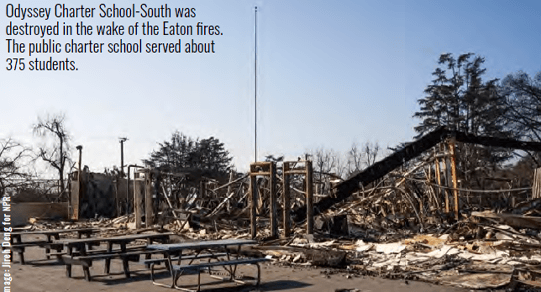 Augusta Robbins and her family
have been hopping between
temporary housing for the last three
weeks or so. When the smell of smoke
crept into their family home on January
7th, the second grader was playing laser
tag. Now, not only has Augusta lost her
home, but most of her school is gone,
too. “I really miss my friends, my
teachers and playing soccer,” she says.
That soccer field is now covered with
toxins and ash.
Thinking about all that loss makes
Augusta anxious. “And then I just go
off and draw because it makes me
feel better when I do that,” she says.
She pulls out a drawing she had just
completed. “I've been drawing houses
lately a lot. I always draw a new house
every day.”
Augusta’s mother, Jennifer O’Kaine, says her children’s school, Odyssey
Charter School-South, has been
the center of her children’s universe.
She says while losing their home was
unimaginable, it was when she realized
some schools had burned that she
began to grasp the scale of the destruction.
“Then, I realized, anything could
go. Like, if you let a school go, I mean,
that is the heart of the community.”
The family had rented in Altadena for
several years, and finally bought a home
there in 2023. “It’s a really special
school,” she says, “and a part of our
moving to that house was we were like
three minutes from the school.”
O’Kaine has been heavily involved
with the Odyssey-South —she’s vice
president of its parent association. ...
Read full text:
Augusta Robbins and her family
have been hopping between
temporary housing for the last three
weeks or so. When the smell of smoke
crept into their family home on January
7th, the second grader was playing laser
tag. Now, not only has Augusta lost her
home, but most of her school is gone,
too. “I really miss my friends, my
teachers and playing soccer,” she says.
That soccer field is now covered with
toxins and ash.
Thinking about all that loss makes
Augusta anxious. “And then I just go
off and draw because it makes me
feel better when I do that,” she says.
She pulls out a drawing she had just
completed. “I've been drawing houses
lately a lot. I always draw a new house
every day.”
Augusta’s mother, Jennifer O’Kaine, says her children’s school, Odyssey
Charter School-South, has been
the center of her children’s universe.
She says while losing their home was
unimaginable, it was when she realized
some schools had burned that she
began to grasp the scale of the destruction.
“Then, I realized, anything could
go. Like, if you let a school go, I mean,
that is the heart of the community.”
The family had rented in Altadena for
several years, and finally bought a home
there in 2023. “It’s a really special
school,” she says, “and a part of our
moving to that house was we were like
three minutes from the school.”
O’Kaine has been heavily involved
with the Odyssey-South —she’s vice
president of its parent association. ...
Read full text:
 Ania Zimnoch, a photographer living
in the San Francisco Bay Area
with her 9-year-old daughter, Ella,
found herself weathering a rough patch
several years ago. Her husband of 16
years had left, and Zimnoch’s mother,
who lived all the way on the other side
of the country, was also ill.
“I was lonely and going through a
difficult period in my life,” Zimnoch
told HuffPost.
Zimnoch’s loneliness led her to
search online for some sort of solution.
While browsing one night, she discovered
a Facebook group for “surrogate
grandparents”: families with children
looking for the kind of care and support
that biological grandparents often
provide —and older individuals seeking
that kind of a caring relationship—
write posts introducing themselves and then wait to see if anyone else in the
group is a potential match.
Figuring she didn’t have anything
to lose, Zimnoch said she wrote a post
revealing “the truth” about her current
situation. She also wrote that she
had “a daughter who’s very spunky
and creative, and we’re looking for
connections.”
Because the Facebook group is national,
there’s no guarantee of finding
a match in your geographical area. At
first, Zimnoch said, most of the people
who responded to her post were “outof-
state well-wishers.” While she “felt
disappointed,” she had forgotten about
the whole thing until months later,
when a woman named Christine sent
her a message on Facebook. ...
Read full text:
Ania Zimnoch, a photographer living
in the San Francisco Bay Area
with her 9-year-old daughter, Ella,
found herself weathering a rough patch
several years ago. Her husband of 16
years had left, and Zimnoch’s mother,
who lived all the way on the other side
of the country, was also ill.
“I was lonely and going through a
difficult period in my life,” Zimnoch
told HuffPost.
Zimnoch’s loneliness led her to
search online for some sort of solution.
While browsing one night, she discovered
a Facebook group for “surrogate
grandparents”: families with children
looking for the kind of care and support
that biological grandparents often
provide —and older individuals seeking
that kind of a caring relationship—
write posts introducing themselves and then wait to see if anyone else in the
group is a potential match.
Figuring she didn’t have anything
to lose, Zimnoch said she wrote a post
revealing “the truth” about her current
situation. She also wrote that she
had “a daughter who’s very spunky
and creative, and we’re looking for
connections.”
Because the Facebook group is national,
there’s no guarantee of finding
a match in your geographical area. At
first, Zimnoch said, most of the people
who responded to her post were “outof-
state well-wishers.” While she “felt
disappointed,” she had forgotten about
the whole thing until months later,
when a woman named Christine sent
her a message on Facebook. ...
Read full text:
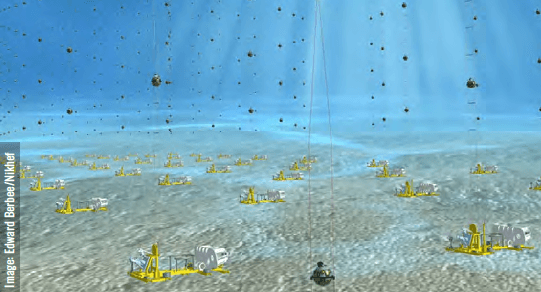 Information has been released on a
neutrino estimated to have an energy
of 220 peta electron volts (PeV). The
previous record-holder was 6.05 PeV,
and while there is a wide error bar on
the latest discovery, even at the lower
end of estimates it’s an order of magnitude
above anything we’ve seen before.
The source is yet to be identified, but
implies an event of terrific power.
Last year, attendees at a conference
on neutrino research were teased with
hints of the most powerful example of
this subatomic particle ever detected.
Only those involved in the research,
however, knew just how far off the
charts the discovery was.
A paper now published on the event
reports its energy as 120 PeV (with
wide margins) but Professor Miroslav
Filipovic of the University of Western
Sydney told IFLScience: “There are two
ways to measure the energy of particles
like this.” The other measure, which
gives a result of 220 PeV, is more relevant
according to Filipovic, completely
outshining anything seen before. It’s a
little like if someone ran the hundred
meters in a third of a second.
By comparison, Filipovic noted,
the photons from your lamp have an
energy of around 4 eV, so this discovery
is around half a million billion times
as powerful. No particle accelerator
on Earth can produce neutrinos with a
thousandth this energy. ...
Information has been released on a
neutrino estimated to have an energy
of 220 peta electron volts (PeV). The
previous record-holder was 6.05 PeV,
and while there is a wide error bar on
the latest discovery, even at the lower
end of estimates it’s an order of magnitude
above anything we’ve seen before.
The source is yet to be identified, but
implies an event of terrific power.
Last year, attendees at a conference
on neutrino research were teased with
hints of the most powerful example of
this subatomic particle ever detected.
Only those involved in the research,
however, knew just how far off the
charts the discovery was.
A paper now published on the event
reports its energy as 120 PeV (with
wide margins) but Professor Miroslav
Filipovic of the University of Western
Sydney told IFLScience: “There are two
ways to measure the energy of particles
like this.” The other measure, which
gives a result of 220 PeV, is more relevant
according to Filipovic, completely
outshining anything seen before. It’s a
little like if someone ran the hundred
meters in a third of a second.
By comparison, Filipovic noted,
the photons from your lamp have an
energy of around 4 eV, so this discovery
is around half a million billion times
as powerful. No particle accelerator
on Earth can produce neutrinos with a
thousandth this energy. ...
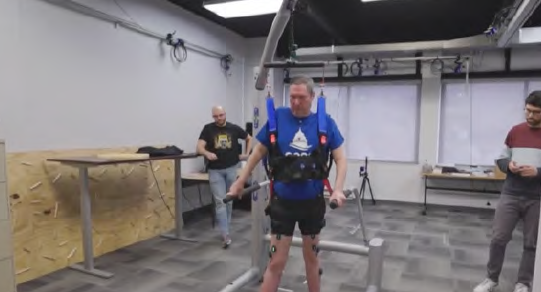 Three people with a muscle-destroying
disease destined to worsen got a
little stronger —able to stand and walk
more easily— when an implanted device
zapped their spinal cord. On Wednesday
[Feb. 5], researchers reported what they
called the first evidence that a spinestimulating
implant already being tested
for paralysis might also aid neurodegenerative
diseases like spinal muscle
atrophy —by restoring some muscle
function, at least temporarily.
“These people were definitely not
expecting an improvement,” said Marco
Capogrosso, an assistant professor at
the University of Pittsburgh who led the
research. Yet over the month-long pilot
study, “they were getting better and
better.” Spinal muscle atrophy or SMA is
a genetic disease that gradually destroys motor neurons, nerve cells in the spinal
cord that control muscles. That leads
muscles to waste away, especially in the
legs, hips and shoulders and sometimes
those involved with breathing and swallowing.
There is no cure. A gene therapy
can save the lives of very young children
with a severe form of the disease, and
there are some medicines to slow worsening
in older patients.
Stimulating the spinal cord with low
levels of electricity has long been used
to treat chronic pain but Capogrosso’s
team also has tested it to help people
paralyzed from strokes or spinal cord
injury move their limbs unaided. While
turned on, it zaps circuits of dormant
nerves downstream of the ...
Read full text
Three people with a muscle-destroying
disease destined to worsen got a
little stronger —able to stand and walk
more easily— when an implanted device
zapped their spinal cord. On Wednesday
[Feb. 5], researchers reported what they
called the first evidence that a spinestimulating
implant already being tested
for paralysis might also aid neurodegenerative
diseases like spinal muscle
atrophy —by restoring some muscle
function, at least temporarily.
“These people were definitely not
expecting an improvement,” said Marco
Capogrosso, an assistant professor at
the University of Pittsburgh who led the
research. Yet over the month-long pilot
study, “they were getting better and
better.” Spinal muscle atrophy or SMA is
a genetic disease that gradually destroys motor neurons, nerve cells in the spinal
cord that control muscles. That leads
muscles to waste away, especially in the
legs, hips and shoulders and sometimes
those involved with breathing and swallowing.
There is no cure. A gene therapy
can save the lives of very young children
with a severe form of the disease, and
there are some medicines to slow worsening
in older patients.
Stimulating the spinal cord with low
levels of electricity has long been used
to treat chronic pain but Capogrosso’s
team also has tested it to help people
paralyzed from strokes or spinal cord
injury move their limbs unaided. While
turned on, it zaps circuits of dormant
nerves downstream of the ...
Read full text
 The needle powerfully penetrates
the white cloth, almost like a skier
moving across untouched, white snow
where poles and skis sink into the
newly fallen snow to slowly create a
pattern. The skier —or the needle—
slowly embroiders Sámi history.
Huts and snowmobiles, shamans and
deforested land, reindeer and humans,
the mundane and the mythical, good
and evil. Everything finds its place in
Britta Marakatt-Labba’s embroidery.
Britta started with her art in the
1970s, she first finished a program at a
residential college for adult education
in Sunderbyn, Luleå, then moved on to HDK-Valand,
Academy of
Art Design,
at the
University of
Gothenburg.
Embroidery
wasn’t exactly
trendy then.
Everything is about images, images
that exist inside Britta’s head, slowly
travelling down the white fabric of her
embroidery. She treasures her images.
She worries they will disappear.
1981, once Britta had finished her
education in Gothenburg, she joined the
protest against the power plant expansion
by the Alta River in Norway. She
ended up in prison, as did many of the
others who protested. ...
The needle powerfully penetrates
the white cloth, almost like a skier
moving across untouched, white snow
where poles and skis sink into the
newly fallen snow to slowly create a
pattern. The skier —or the needle—
slowly embroiders Sámi history.
Huts and snowmobiles, shamans and
deforested land, reindeer and humans,
the mundane and the mythical, good
and evil. Everything finds its place in
Britta Marakatt-Labba’s embroidery.
Britta started with her art in the
1970s, she first finished a program at a
residential college for adult education
in Sunderbyn, Luleå, then moved on to HDK-Valand,
Academy of
Art Design,
at the
University of
Gothenburg.
Embroidery
wasn’t exactly
trendy then.
Everything is about images, images
that exist inside Britta’s head, slowly
travelling down the white fabric of her
embroidery. She treasures her images.
She worries they will disappear.
1981, once Britta had finished her
education in Gothenburg, she joined the
protest against the power plant expansion
by the Alta River in Norway. She
ended up in prison, as did many of the
others who protested. ...
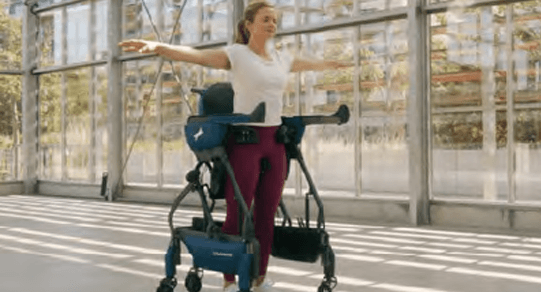 This innovation could change the
lives of millions of people in
wheelchairs. The French company
Lifebloom has developed a new therapy
to allow wheelchair users to stand and
walk with more autonomy. Lifebloom
One therapy is available to people with
reduced mobility due to: Accidents
(stroke, traumatic brain injuries, spinal
cord injuries), illnesses (multiple sclerosis,
Parkinson’s, Guillain-Barré s.),
or deconditioning (frail elderly people)
who retain partial lower limb mobility.
It starts with Oxilio, a medical device
that combines an exoskeleton and a
wheelchair. This device provides up
to 80% anti-gravity assistance, lower
limb oscillation assistance, balance
support, and the reproduction of a
natural gait. More compact and agile
than a traditional wheelchair, this
device can be used both in healthcare
facilities and at home. ...
Read full text
This innovation could change the
lives of millions of people in
wheelchairs. The French company
Lifebloom has developed a new therapy
to allow wheelchair users to stand and
walk with more autonomy. Lifebloom
One therapy is available to people with
reduced mobility due to: Accidents
(stroke, traumatic brain injuries, spinal
cord injuries), illnesses (multiple sclerosis,
Parkinson’s, Guillain-Barré s.),
or deconditioning (frail elderly people)
who retain partial lower limb mobility.
It starts with Oxilio, a medical device
that combines an exoskeleton and a
wheelchair. This device provides up
to 80% anti-gravity assistance, lower
limb oscillation assistance, balance
support, and the reproduction of a
natural gait. More compact and agile
than a traditional wheelchair, this
device can be used both in healthcare
facilities and at home. ...
Read full text
 A long-awaited nonopioid pain
drug won approval yesterday from
the U.S. Food and Drug Administration
(FDA) to treat moderate to severe
short-term pain. Suzetrigine, an oral
drug marketed by Vertex Pharmaceuticals
as Journavx, is the first to
reach the market in a new class of pain
treatments that avoid risks such as
slowed breathing and the potential for
addiction that come with opioid drugs
such as oxycodone.
Rather than dulling pain by targeting
the brain’s opioid receptors, suzetrigine
works by blocking a sodium channel
called Nav1.8 on pain-sensing nerves. Its
development grew out of the discovery
that people with genetic mutations that
increase the channel’s activity suffered
nerve pain even in the absence of injury.
Vertex announced last year that
suzetrigine outperformed a placebo in
its two pivotal trials, which involved
people with pain after surgeries to
remove bunions and excess abdominal
fat. FDA has cleared the drug specifically
for use in acute pain conditions,
such as those after tissue injury from
surgery or trauma.
Many in the field hope suzetrigine
will also prove effective against harder
to manage chronic pain conditions. But
results Vertex announced last month
from a phase 2 study, in people with
the painful nerve condition lumbosacral
radiculopathy, left some doubt.
...
A long-awaited nonopioid pain
drug won approval yesterday from
the U.S. Food and Drug Administration
(FDA) to treat moderate to severe
short-term pain. Suzetrigine, an oral
drug marketed by Vertex Pharmaceuticals
as Journavx, is the first to
reach the market in a new class of pain
treatments that avoid risks such as
slowed breathing and the potential for
addiction that come with opioid drugs
such as oxycodone.
Rather than dulling pain by targeting
the brain’s opioid receptors, suzetrigine
works by blocking a sodium channel
called Nav1.8 on pain-sensing nerves. Its
development grew out of the discovery
that people with genetic mutations that
increase the channel’s activity suffered
nerve pain even in the absence of injury.
Vertex announced last year that
suzetrigine outperformed a placebo in
its two pivotal trials, which involved
people with pain after surgeries to
remove bunions and excess abdominal
fat. FDA has cleared the drug specifically
for use in acute pain conditions,
such as those after tissue injury from
surgery or trauma.
Many in the field hope suzetrigine
will also prove effective against harder
to manage chronic pain conditions. But
results Vertex announced last month
from a phase 2 study, in people with
the painful nerve condition lumbosacral
radiculopathy, left some doubt.
...
 According to a recent study conducted
at the University of Jyväskylä,
Finland, eating behavior is associated
with symptoms of pelvic floor
disorders in middle-aged women.
For example, higher consumption of
highly processed ready-made foods
and fast food increased the risk for
experiencing symptoms of stress and
urgency urinary incontinence. Higher
consumption of fruits and an overall
higher quality diet decreased the risk
for stress urinary incontinence.
The prevalence of pelvic floor disorders
increases as women approach
their menopausal years. Estrogen
deprivation during menopause, natural
aging, reproductive history, and factors
increasing intra-abdominal pressure
may lead to structural and functional failure in the pelvic floor. In addition,
lifestyle choices such as quality of nutrition
and eating behavior may have a
significant effect on the mechanisms of
pelvic floor disorders.
Disordered eating includes overeating,
restrictive eating as well as alternating
between the two behaviors. ... The
disorders studied were stress urinary
incontinence, urgency urinary incontinence,
fecal incontinence, and constipation
and defecation difficulties. ...
As a preventive measure, the eating
behavior of women at risk for these
symptoms should be assessed, and guidance
towards healthy eating patterns
should be provided. ...
Read full text:
According to a recent study conducted
at the University of Jyväskylä,
Finland, eating behavior is associated
with symptoms of pelvic floor
disorders in middle-aged women.
For example, higher consumption of
highly processed ready-made foods
and fast food increased the risk for
experiencing symptoms of stress and
urgency urinary incontinence. Higher
consumption of fruits and an overall
higher quality diet decreased the risk
for stress urinary incontinence.
The prevalence of pelvic floor disorders
increases as women approach
their menopausal years. Estrogen
deprivation during menopause, natural
aging, reproductive history, and factors
increasing intra-abdominal pressure
may lead to structural and functional failure in the pelvic floor. In addition,
lifestyle choices such as quality of nutrition
and eating behavior may have a
significant effect on the mechanisms of
pelvic floor disorders.
Disordered eating includes overeating,
restrictive eating as well as alternating
between the two behaviors. ... The
disorders studied were stress urinary
incontinence, urgency urinary incontinence,
fecal incontinence, and constipation
and defecation difficulties. ...
As a preventive measure, the eating
behavior of women at risk for these
symptoms should be assessed, and guidance
towards healthy eating patterns
should be provided. ...
Read full text:
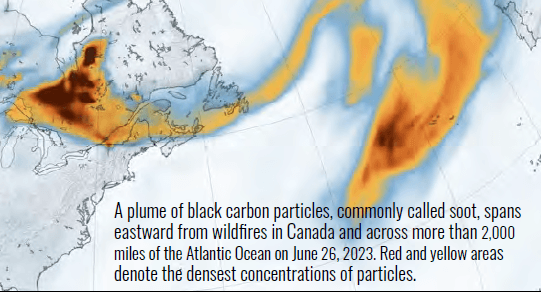 In recent years, fires have blasted
through cities in California, Colorado,
the southern Appalachians and the island
of Maui, along with Canada, Australia,
Portugal and Greece. What wasn’t burned
was smoked in. Is this another case of a
future not only dire but strange, without
a narrative to join past to present or an
analog for what is to come?
I’m a historian of fire, and my reply
is that we have both a narrative and an
analog. The narrative is the unbroken
saga of humanity and fire, a companionship
that extends through all our existence
as a species. The analog is that
humanity’s fire practices have become
so vast, especially in recent centuries,
that we are creating the fire equivalent
of an ice age.
Humanity and fire have been reforging
the Earth since the end of the last glaciation,
about 11,500 years ago. Generally,
these changes have made landscapes
more fire-receptive. The scale
is significant. Recent studies speculate
that massive depopulation, especially
in the Americas, which removed the
torch and allowed forests to reclaim
land and so sequester atmospheric
carbon, may have even helped nudge
the planet into the Little Ice Age from
the mid-16th to mid-19th centuries.
Still, there were limits. Fire and life had
coevolved across 420 million years, and
ecological checks and balances limited
how far humans could push and pull
fire within the constraints of terrestrial
landscapes. ...
Read full text:
In recent years, fires have blasted
through cities in California, Colorado,
the southern Appalachians and the island
of Maui, along with Canada, Australia,
Portugal and Greece. What wasn’t burned
was smoked in. Is this another case of a
future not only dire but strange, without
a narrative to join past to present or an
analog for what is to come?
I’m a historian of fire, and my reply
is that we have both a narrative and an
analog. The narrative is the unbroken
saga of humanity and fire, a companionship
that extends through all our existence
as a species. The analog is that
humanity’s fire practices have become
so vast, especially in recent centuries,
that we are creating the fire equivalent
of an ice age.
Humanity and fire have been reforging
the Earth since the end of the last glaciation,
about 11,500 years ago. Generally,
these changes have made landscapes
more fire-receptive. The scale
is significant. Recent studies speculate
that massive depopulation, especially
in the Americas, which removed the
torch and allowed forests to reclaim
land and so sequester atmospheric
carbon, may have even helped nudge
the planet into the Little Ice Age from
the mid-16th to mid-19th centuries.
Still, there were limits. Fire and life had
coevolved across 420 million years, and
ecological checks and balances limited
how far humans could push and pull
fire within the constraints of terrestrial
landscapes. ...
Read full text:
 Geopolitical boundaries can present
challenges to wildlife conservation
because of varying environmental regulations,
and increasingly, the existence
of border barriers.
As of 2024, approximately 1,023 km of
border walls and 169 km of vehicle barriers
exist along the USA-Mexico border.
Some small wildlife passages (21.5 x
27.8 cm) were installed in border walls
but few other accommodations for wildlife
connectivity exist. As such, ecological
consequences of border barriers may
be severe and documenting the ability
of wildlife to traverse these barriers will
be essential to conservation efforts.
We placed 36 wildlife cameras across
163.5 km of the USA-Mexico border in
Arizona, USA and Sonora, MX to evaluate
crossing rates through border barriers for 20 terrestrial species. We observed
9,240 wildlife events, including 1,920
successful crossing events. All focal
species crossed through vehicle barriers,
whereas white-tailed deer, mule
deer, American black bear, American
badger, wild turkey, and mountain
lion appeared unable to cross through
interstitial spaces in border walls.
Small wildlife passages improved
crossing rates for several species,
including American badger, collared
peccary, coyote, and mountain lion. Yet,
small wildlife passages were scarce with
only 13 along >130 km of continuous
border wall and failed to allow American
black bear, deer, and wild turkey
to cross. Additional research ...
Read full text:
Geopolitical boundaries can present
challenges to wildlife conservation
because of varying environmental regulations,
and increasingly, the existence
of border barriers.
As of 2024, approximately 1,023 km of
border walls and 169 km of vehicle barriers
exist along the USA-Mexico border.
Some small wildlife passages (21.5 x
27.8 cm) were installed in border walls
but few other accommodations for wildlife
connectivity exist. As such, ecological
consequences of border barriers may
be severe and documenting the ability
of wildlife to traverse these barriers will
be essential to conservation efforts.
We placed 36 wildlife cameras across
163.5 km of the USA-Mexico border in
Arizona, USA and Sonora, MX to evaluate
crossing rates through border barriers for 20 terrestrial species. We observed
9,240 wildlife events, including 1,920
successful crossing events. All focal
species crossed through vehicle barriers,
whereas white-tailed deer, mule
deer, American black bear, American
badger, wild turkey, and mountain
lion appeared unable to cross through
interstitial spaces in border walls.
Small wildlife passages improved
crossing rates for several species,
including American badger, collared
peccary, coyote, and mountain lion. Yet,
small wildlife passages were scarce with
only 13 along >130 km of continuous
border wall and failed to allow American
black bear, deer, and wild turkey
to cross. Additional research ...
Read full text:
 When it comes to falsehoods
declared by the psychiatry
establishment and their Big Pharma
partners, it would be difficult to find
one that has created more damage than
the chemical imbalance theory of depression
—harming not only individual
patients but society. This is the subject
of psychiatrist Joanna Moncrieff’s
recently published Chemically Imbalanced:
The Making and Unmaking of the
Serotonin Myth.
Moncrieff is a consultant psychiatrist
for the National Health Services (NHS)
in England, Professor of Critical and
Social Psychiatry at University College
London, and co-chairperson of the
Critical Psychiatry Network.
In 2022, Moncrieff was the lead author
of a landmark review of research
studies that showed that there is no
evidence that depression is caused by
a serotonin imbalance. This systematic
analysis of the research became one of
the most widely read and influential
papers in recent times.
While Moncrieff’s conclusion was
no surprise to those in the scientific
community familiar with some of these
studies, it was a shock to much of the
public, which for decades had repeatedly
heard the opposite message —that
serotonin deficiency caused depression—
from establishment psychiatry
and antidepressant commercials. ...
Moncrieff and her co-researchers
were not the first to bring to light
studies showing that depression was
unrelated to a serotonin deficiency ...
When it comes to falsehoods
declared by the psychiatry
establishment and their Big Pharma
partners, it would be difficult to find
one that has created more damage than
the chemical imbalance theory of depression
—harming not only individual
patients but society. This is the subject
of psychiatrist Joanna Moncrieff’s
recently published Chemically Imbalanced:
The Making and Unmaking of the
Serotonin Myth.
Moncrieff is a consultant psychiatrist
for the National Health Services (NHS)
in England, Professor of Critical and
Social Psychiatry at University College
London, and co-chairperson of the
Critical Psychiatry Network.
In 2022, Moncrieff was the lead author
of a landmark review of research
studies that showed that there is no
evidence that depression is caused by
a serotonin imbalance. This systematic
analysis of the research became one of
the most widely read and influential
papers in recent times.
While Moncrieff’s conclusion was
no surprise to those in the scientific
community familiar with some of these
studies, it was a shock to much of the
public, which for decades had repeatedly
heard the opposite message —that
serotonin deficiency caused depression—
from establishment psychiatry
and antidepressant commercials. ...
Moncrieff and her co-researchers
were not the first to bring to light
studies showing that depression was
unrelated to a serotonin deficiency ...
 Hundreds of women were raped and
burned alive during the chaos after
a Rwandan-backed rebel group entered
the Congolese city of Goma. The female
inmates were attacked in their wing
inside Goma’s Munzenze prison during
a mass jailbreak, according to a senior
UN official. The deputy head of the UN
peacekeeping force based in Goma,
Vivian van de Perre, said that while
several thousand men managed to escape
from the prison, the area reserved
for women was set on fire.
Images taken shortly after Rwandan-
backed M23 rebels reached the
centre of Goma reveal vast plumes of
black smoke rising from the prison on
the morning of 27 January.
Although details of the incident are
scarce, the atrocity appears to be the
worst of the recent M23-led conflict
in the eastern Democratic Republic of
the Congo. UN peacekeepers, however,
have been unable to visit the prison to
investigate further because of restrictions
imposed by the M23 rebels,
meaning the identity of the perpetrators
remains unclear.
Later, it emerged that about 2,000
bodies were still awaiting burial in
Goma after M23 fighters seized Goma,
capital of DRC’s North Kivu province, on
27 January. Van de Perre, who is now
based in Goma with thousands of UN
peacekeeping troops deployed to protect
citizens, said: “There was a major
prison breakout of 4,000 escaped prisoners.
...
Hundreds of women were raped and
burned alive during the chaos after
a Rwandan-backed rebel group entered
the Congolese city of Goma. The female
inmates were attacked in their wing
inside Goma’s Munzenze prison during
a mass jailbreak, according to a senior
UN official. The deputy head of the UN
peacekeeping force based in Goma,
Vivian van de Perre, said that while
several thousand men managed to escape
from the prison, the area reserved
for women was set on fire.
Images taken shortly after Rwandan-
backed M23 rebels reached the
centre of Goma reveal vast plumes of
black smoke rising from the prison on
the morning of 27 January.
Although details of the incident are
scarce, the atrocity appears to be the
worst of the recent M23-led conflict
in the eastern Democratic Republic of
the Congo. UN peacekeepers, however,
have been unable to visit the prison to
investigate further because of restrictions
imposed by the M23 rebels,
meaning the identity of the perpetrators
remains unclear.
Later, it emerged that about 2,000
bodies were still awaiting burial in
Goma after M23 fighters seized Goma,
capital of DRC’s North Kivu province, on
27 January. Van de Perre, who is now
based in Goma with thousands of UN
peacekeeping troops deployed to protect
citizens, said: “There was a major
prison breakout of 4,000 escaped prisoners.
...
 Whether as folkloric villains, wise
teachers, or emblems of what’s
wild in us, wolves play a prominent
part in countless cultural mythologies.
Among these associations exists a key
contradiction. On the one hand, when
we think of wolves, we often imagine
them in packs—calling to one another
on a full moon, sets of eyes in the
dark, encircling a wayward traveler.
On the other hand, we have the idea of
the lone wolf, one who prefers to go it
alone. Wolves have come to represent
a dire dichotomy that’s deeply embedded
in our world today: individualism
vs. collectivism.
Gray wolves typically live in packs of
between six and 10. Even within these
packs, a prevailing idea in the public
imagination is that individual wolves compete for the dominant title of
“alpha wolf.” In an interview with The
Scientific American, leading wolf expert
David Mech noted that the idea of the
alpha wolf is outdated and misleading,
and he discourages the use of the
phrase. It turns out that these alpha
wolves are really no more than parents.
Wolves mate for life; together with
their offspring, they form packs that
get larger with more pups born. In
other words, what we assumed to be
groups driven by inward competition
and aggression are actually families.
So, what are the advantages of living
in a pack? For starters, it allows wolves
to hunt in ways they never could alone.
...
Whether as folkloric villains, wise
teachers, or emblems of what’s
wild in us, wolves play a prominent
part in countless cultural mythologies.
Among these associations exists a key
contradiction. On the one hand, when
we think of wolves, we often imagine
them in packs—calling to one another
on a full moon, sets of eyes in the
dark, encircling a wayward traveler.
On the other hand, we have the idea of
the lone wolf, one who prefers to go it
alone. Wolves have come to represent
a dire dichotomy that’s deeply embedded
in our world today: individualism
vs. collectivism.
Gray wolves typically live in packs of
between six and 10. Even within these
packs, a prevailing idea in the public
imagination is that individual wolves compete for the dominant title of
“alpha wolf.” In an interview with The
Scientific American, leading wolf expert
David Mech noted that the idea of the
alpha wolf is outdated and misleading,
and he discourages the use of the
phrase. It turns out that these alpha
wolves are really no more than parents.
Wolves mate for life; together with
their offspring, they form packs that
get larger with more pups born. In
other words, what we assumed to be
groups driven by inward competition
and aggression are actually families.
So, what are the advantages of living
in a pack? For starters, it allows wolves
to hunt in ways they never could alone.
...
 A cloud forest in northern Ecuador is
protected from deforestation and
mining after being recognised as an
entity possessing legal personhood.
For more than 30 years, José DeCoux
woke each morning to a deafening
noise. In his home in Ecuador’s Los
Cedros forest, monkeys squeal, squirrels
scuffle, and 400 species of bird flit and
squawk. A mist hangs in the trees, and
ferns and mosses in countless shades of
green cover every rock and tree trunk.
DeCoux moved to the Los Cedros
reserve in northern Ecuador from the US
in the 1980s. He was “sort of heeding
the call to save the rainforest, or something”,
he told BBC Future Planet with a
smile in April [2024]. ...
Life continues to thrive in Los Cedros,
but its survival wasn’t always certain
—and it is largely thanks to a powerful,
and increasingly influential, global legal
movement that the forest is still standing.
In 2008, Ecuador became the first
country to change its constitution to
state that nature has the same rights as
people. The change was led by Ecuador’s
Indigenous movement, and marked
one of the first major steps in what has
become known as the ‘rights of nature’
movement —a movement centred on
a legal framework that recognises the
inherent right of the natural world to
the same protections as people and
corporations. ... To date, initiatives to
recognise the rights of nature have been
pursued in 44 countries, from Bolivia to
Brazil and Uganda to the US. ...
A cloud forest in northern Ecuador is
protected from deforestation and
mining after being recognised as an
entity possessing legal personhood.
For more than 30 years, José DeCoux
woke each morning to a deafening
noise. In his home in Ecuador’s Los
Cedros forest, monkeys squeal, squirrels
scuffle, and 400 species of bird flit and
squawk. A mist hangs in the trees, and
ferns and mosses in countless shades of
green cover every rock and tree trunk.
DeCoux moved to the Los Cedros
reserve in northern Ecuador from the US
in the 1980s. He was “sort of heeding
the call to save the rainforest, or something”,
he told BBC Future Planet with a
smile in April [2024]. ...
Life continues to thrive in Los Cedros,
but its survival wasn’t always certain
—and it is largely thanks to a powerful,
and increasingly influential, global legal
movement that the forest is still standing.
In 2008, Ecuador became the first
country to change its constitution to
state that nature has the same rights as
people. The change was led by Ecuador’s
Indigenous movement, and marked
one of the first major steps in what has
become known as the ‘rights of nature’
movement —a movement centred on
a legal framework that recognises the
inherent right of the natural world to
the same protections as people and
corporations. ... To date, initiatives to
recognise the rights of nature have been
pursued in 44 countries, from Bolivia to
Brazil and Uganda to the US. ...

 Each of the
leaves and the pot hold your bathroom
items. It is mounted to the mirror which
gives the illusion of a full plant, but in
reality it is only half!
thangs.com (a free online community for sharing,
searching, and collaborating on 3D models)
Each of the
leaves and the pot hold your bathroom
items. It is mounted to the mirror which
gives the illusion of a full plant, but in
reality it is only half!
thangs.com (a free online community for sharing,
searching, and collaborating on 3D models)

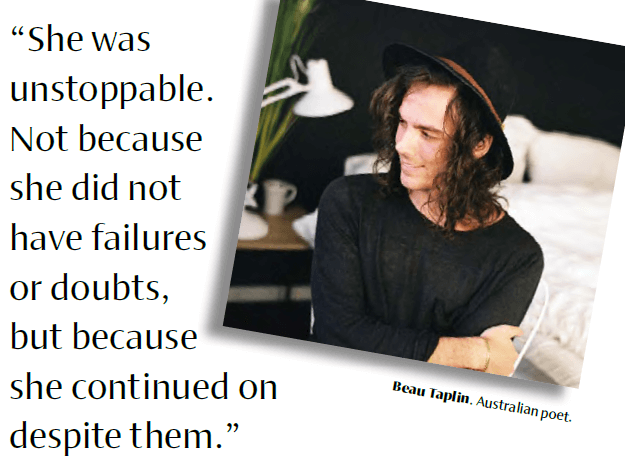

 The Bachelor of Art History (BA)
program objective is to help
students develop an understanding of
contemporary trends in the fine arts,
including painting, video, film, sculpture
and digital art. The Bachelor of
Art History program is offered online
via distance learning. After evaluating
both academic record and life experience,
AIU staff working in conjunction
with Faculty and Academic Advisors
will assist students in setting up a
custom-made program, designed on
an individual basis. This flexibility to
meet student needs is seldom found
in other distance learning programs.
Our online program does not require
all students to take the same subjects/
courses, use the same books, or
learning materials. Instead, the online
Bachelor of Art History curriculum is
designed individually by the student
and academic advisor.
It specifically addresses strengths
and weaknesses with respect to market
opportunities in the student’s major
and intended field of work. Understanding
that industry and geographic
factors should influence the content
of the curriculum instead of a
standardized one-fits-all design is the
hallmark of AIU’s unique approach to
adult education. This philosophy addresses
the dynamic and constantly
changing environment of working professionals
by helping adult students in
reaching their professional and personal
goals within the scope of the degree
program.
The Bachelor of Art History (BA)
program objective is to help
students develop an understanding of
contemporary trends in the fine arts,
including painting, video, film, sculpture
and digital art. The Bachelor of
Art History program is offered online
via distance learning. After evaluating
both academic record and life experience,
AIU staff working in conjunction
with Faculty and Academic Advisors
will assist students in setting up a
custom-made program, designed on
an individual basis. This flexibility to
meet student needs is seldom found
in other distance learning programs.
Our online program does not require
all students to take the same subjects/
courses, use the same books, or
learning materials. Instead, the online
Bachelor of Art History curriculum is
designed individually by the student
and academic advisor.
It specifically addresses strengths
and weaknesses with respect to market
opportunities in the student’s major
and intended field of work. Understanding
that industry and geographic
factors should influence the content
of the curriculum instead of a
standardized one-fits-all design is the
hallmark of AIU’s unique approach to
adult education. This philosophy addresses
the dynamic and constantly
changing environment of working professionals
by helping adult students in
reaching their professional and personal
goals within the scope of the degree
program.
 Atlantic International University is accredited by the Accreditation Service for International
Schools, Colleges and Universities (ASIC). ASIC Accreditation is an internationally
renowned quality standard for colleges and universities. Visit ASIC’s Directory of Accredited
Colleges and Universities. ASIC is a member of CHEA International Quality Group
(CIQG) in the USA, an approved accreditation body by the Ministerial Department of the Home Office
in the UK, and is listed in the International Directory of the Council for Higher Education Accreditation
(CHEA). The University is based in the United States and was established by corporate charter in 1998.
Atlantic International University is accredited by the Accreditation Service for International
Schools, Colleges and Universities (ASIC). ASIC Accreditation is an internationally
renowned quality standard for colleges and universities. Visit ASIC’s Directory of Accredited
Colleges and Universities. ASIC is a member of CHEA International Quality Group
(CIQG) in the USA, an approved accreditation body by the Ministerial Department of the Home Office
in the UK, and is listed in the International Directory of the Council for Higher Education Accreditation
(CHEA). The University is based in the United States and was established by corporate charter in 1998.
 In some cases, accredited colleges
may not accept for transfer courses and degrees
completed at unaccredited colleges, and some
employers may require an accredited degree as
a basis for eligibility for employment. Potential
students should consider how the above may affect
their interests, AIU respects the unique rules and
regulations of each country and does not seek to
influence the respective authorities. In the event
that a prospective student wishes to carry out any
government review or process in regards to his
university degree, we recommend that the requirements
of such are explored in detail with the relevant
authorities by the prospective student as the
university does not intervene in such processes.
AIU students can be found in over 180 countries,
they actively participate and volunteer
in their communities as part of their academic
program and have allocated thousands of service
hours to diverse causes and initiatives. AIU
programs follow the standards commonly used by
colleges and universities in the United States with
regards to the following: academic program
structure, degree issued, transcript, and
other graduation documents.
AIU graduation documents can include
an apostille and authentication from the
US Department of State to facilitate their
use internationally.
In some cases, accredited colleges
may not accept for transfer courses and degrees
completed at unaccredited colleges, and some
employers may require an accredited degree as
a basis for eligibility for employment. Potential
students should consider how the above may affect
their interests, AIU respects the unique rules and
regulations of each country and does not seek to
influence the respective authorities. In the event
that a prospective student wishes to carry out any
government review or process in regards to his
university degree, we recommend that the requirements
of such are explored in detail with the relevant
authorities by the prospective student as the
university does not intervene in such processes.
AIU students can be found in over 180 countries,
they actively participate and volunteer
in their communities as part of their academic
program and have allocated thousands of service
hours to diverse causes and initiatives. AIU
programs follow the standards commonly used by
colleges and universities in the United States with
regards to the following: academic program
structure, degree issued, transcript, and
other graduation documents.
AIU graduation documents can include
an apostille and authentication from the
US Department of State to facilitate their
use internationally.
| Dr. Franklin Valcin Presi den t/Academic Dean |
Dr. José Mercado Chief Executive Officer Chairman of the Board of Trustees |
Ricardo González, PhD Provost |
| Dr. Ricardo Gonzalez Chief Operation Officer and MKT Director |
Linda Collazo Logistics Coordinator |
AIU Tutors Coordinators: Deborah Rodriguez Amiakhor Ejaeta Amanda Gutierrez William Mora Miriam James Admissions Coordinators: Amalia Aldrett Sandra Garcia Junko Shimizu Veronica Amuz Alba Ochoa Jenis Garcia Judith Brown Chris Soto René Cordón Dr. Anderas Rissler Academic Coordinators: Dr. Adesida Oluwafemi Dr. Emmanuel Gbagu Dr. Lucia Gorea Dr. Edgar Colon Dr. Mario Rios Freddy Frejus Dr. Nilani Ljunggren De Silva Dr. Scott Wilson Dr. Mohammad Shaidul Islam |
| Dr. Miriam Garibaldi Vice provost for Research |
Carolina Valdes Human Resource Coordinator |
|
| Dr. Ofelia Miller Director of AIU |
Carlos Aponte Teleco mmunications Coordinator |
|
| Clara Margalef Director of Special Projects of AIU |
David Jung Corporate/Legal Counsel |
|
| Juan Pablo Moreno Director of Operations |
Bruce Kim Advisor/Consultant |
|
| Paula Viera Director of Intelligence Systems |
Thomas Kim Corporate/ Accounting Counsel |
|
| Felipe Gomez Design Director / IT Supervisor |
Maricela Esparza Administrative Coordinator |
|
| Kevin Moll Web Designer |
Chris Benjamin IT and Hosting Support |
|
| Daritza Ysla IT Coordinator |
Maria Pastrana Accounting Coordinator |
|
| Daritza Ysla IT Coordinator |
Roberto Aldrett Communications Coordinator |
|
| Nadeem Awan Chief Programming Officer |
Giovanni Castillo IT Support |
|
| Dr. Edward Lambert Academic Director |
Antonella Fonseca Quality Control & Data Analysis |
|
| Dr. Ariadna Romero Advisor Coordinator |
Adrián Varela Graphic Design |
|
| Jhanzaib Awan Senior Programmer |
Vanesa D’Angelo Content Writer |
|
| Leonardo Salas Human Resource Manager |
Jaime Rotlewicz Dean of Admissions |
|
| Benjamin Joseph IT and Technology Support |
Michael Phillips Registrar’s Office |
|
| Rosie Perez Finance Coordinator |
||
 The School of Business and Economics
allows aspiring and practicing
professionals, managers, and entrepreneurs
in the private and public sectors
to complete a self paced distance
learning degree program of the highest
academic standard.
The ultimate goal is to empower
learners and help them take advantage
of the enormous array of resources
from the world environment in order
to eliminate the current continuum of
poverty and limitations.
Degree programs are designed for
those students whose professional experience has been in business,
marketing, administration, economics,
finance and management.
The School of Business and Economics
allows aspiring and practicing
professionals, managers, and entrepreneurs
in the private and public sectors
to complete a self paced distance
learning degree program of the highest
academic standard.
The ultimate goal is to empower
learners and help them take advantage
of the enormous array of resources
from the world environment in order
to eliminate the current continuum of
poverty and limitations.
Degree programs are designed for
those students whose professional experience has been in business,
marketing, administration, economics,
finance and management.
 The School of Social and Human Studies
is focused on to the development of
studies which instill a core commitment
to building a society based on social and
economic justice and enhancing opportunities
for human well being.
The founding principles lie on the
basic right of education as outlined
in the Declaration of Human Rights.
We instill in our students a sense of
confidence and self reliance in their
ability to access the vast opportunities
available through information channels,
the world wide web, private, public,
nonprofit, and nongovernmental organizations in an ever expanding
global community.
Degree programs are aimed towards
those whose professional life has been
related to social and human behavior,
with the arts, or with cultural studies.
The School of Social and Human Studies
is focused on to the development of
studies which instill a core commitment
to building a society based on social and
economic justice and enhancing opportunities
for human well being.
The founding principles lie on the
basic right of education as outlined
in the Declaration of Human Rights.
We instill in our students a sense of
confidence and self reliance in their
ability to access the vast opportunities
available through information channels,
the world wide web, private, public,
nonprofit, and nongovernmental organizations in an ever expanding
global community.
Degree programs are aimed towards
those whose professional life has been
related to social and human behavior,
with the arts, or with cultural studies.
 The School of Science and Engineering
seeks to provide dynamic, integrated,
and challenging degree programs
designed for those whose experience
is in industrial research, scientific production,
engineering and the general
sciences. Our system for research and
education will keep us apace with the
twenty-first century reach scientific
advance in an environmentally and
ecologically responsible manner to allow
for the sustainability of the human
population. We will foster among our
students a demand for ethical behavior,
an appreciation for diversity, an understanding
of scientific investigation, knowledge of design innovation, a
critical appreciation for the importance
of technology and technological change
for the advancement of humanity.
The School of Science and Engineering
seeks to provide dynamic, integrated,
and challenging degree programs
designed for those whose experience
is in industrial research, scientific production,
engineering and the general
sciences. Our system for research and
education will keep us apace with the
twenty-first century reach scientific
advance in an environmentally and
ecologically responsible manner to allow
for the sustainability of the human
population. We will foster among our
students a demand for ethical behavior,
an appreciation for diversity, an understanding
of scientific investigation, knowledge of design innovation, a
critical appreciation for the importance
of technology and technological change
for the advancement of humanity.
 With access to a global catalog created and maintained collectively by more than
9,000 participating institutions, AIU students have secured excellent research
tools for their study programs.
With access to a global catalog created and maintained collectively by more than
9,000 participating institutions, AIU students have secured excellent research
tools for their study programs.