APRIL 22 2025.
We want to
congratulate
our graduate
—Saturnino
Gomes— on
his most recent achievement.
Saturnino wrote the article
titled “Disasters and Mitigation
in Civil Engineering Perspective
(Case Study: Flooding Overflow
Occurred and Hit Dili, Capital of
Timor-Leste on 4th April, 2021)”
with Scholar Publishing in the
Transactions on Engineering and
Computing Sciences Journal.
Abstract: Civil engineering
disasters refer to failures in infrastructure and construction
that result in catastrophic
consequences, often leading
to loss of life, property damage,
and economic setbacks.
These disaster can be caused
by natural hazards, design
flaws, material failures, or
human errors. Mitigation
strategies in civil engineering
focus on designing resilient
structures, implementing
strict building codes, and using
advanced technologies to
prevent or minimize disaster
impact. This paper presents
the concept of civil engineering
disasters, their characteristics, classification, causes, and
mitigation technologies.
Civil engineering disasters
are caused primarily by civil
engineering defects, which are
usually attributed to improper
selection of construction site,
hazard assessment, design and
construction, occupancy, and
maintenance. From this viewpoint,
many natural disasters
such as earthquakes, strong
winds, floods, landslides, and
debris flows are substantially
due to civil engineering defects
rather than the actual natural
hazards. Civil engineering disasters
occur frequently and ...
Find the article here:
APRIL 22 2025.
We want to
congratulate
our graduate
—Saturnino
Gomes— on
his most recent achievement.
Saturnino wrote the article
titled “Disasters and Mitigation
in Civil Engineering Perspective
(Case Study: Flooding Overflow
Occurred and Hit Dili, Capital of
Timor-Leste on 4th April, 2021)”
with Scholar Publishing in the
Transactions on Engineering and
Computing Sciences Journal.
Abstract: Civil engineering
disasters refer to failures in infrastructure and construction
that result in catastrophic
consequences, often leading
to loss of life, property damage,
and economic setbacks.
These disaster can be caused
by natural hazards, design
flaws, material failures, or
human errors. Mitigation
strategies in civil engineering
focus on designing resilient
structures, implementing
strict building codes, and using
advanced technologies to
prevent or minimize disaster
impact. This paper presents
the concept of civil engineering
disasters, their characteristics, classification, causes, and
mitigation technologies.
Civil engineering disasters
are caused primarily by civil
engineering defects, which are
usually attributed to improper
selection of construction site,
hazard assessment, design and
construction, occupancy, and
maintenance. From this viewpoint,
many natural disasters
such as earthquakes, strong
winds, floods, landslides, and
debris flows are substantially
due to civil engineering defects
rather than the actual natural
hazards. Civil engineering disasters
occur frequently and ...
Find the article here:
 APRIL 23 2025.
For Triza Tsiga,
those early
dreams were
filled with images
of empowered
women —thriving, independent,
and heard. Today, as
Chief Executive Officer of Mudi
Savings and Credit Cooperative
(SACCO), she is living out that
vision, transforming lives and
championing financial inclusion
for women across Malawi
and beyond.
Born in Kachere Village,
Salima District, Triza is the fourth of ten siblings. Her
father, Elias Tsiga, worked as a
banker, a job that meant constant
relocation and gave Triza
the rare gift of diverse community
exposure. She attended
multiple primary schools,
including Boma in Kasungu,
Katoto in Mzuzu, and St. Pious
Girls in Blantyre, before completing
her secondary education
at Phwadzi in Chikwawa
and Davie Girls in Kasungu.
“It was during my childhood
that I first noticed the
resilience of women —selling
goods with babies strapped to their backs. I realized they
didn’t lack effort or ideas—
they just needed financial support,”
she recalls.
Guided by conversations
with her father, who stressed
the power of mathematics in
finance, Triza pursued her
passion. She enrolled at Malawi
College of Accountancy in
1997 and earned a diploma the
following year.
Her career began humbly as
a cashier at the Malawi Union
of Savings and Credit Cooperatives
(MUSCCO). But dedication
and grit saw her rise through
the ranks to ...
APRIL 23 2025.
For Triza Tsiga,
those early
dreams were
filled with images
of empowered
women —thriving, independent,
and heard. Today, as
Chief Executive Officer of Mudi
Savings and Credit Cooperative
(SACCO), she is living out that
vision, transforming lives and
championing financial inclusion
for women across Malawi
and beyond.
Born in Kachere Village,
Salima District, Triza is the fourth of ten siblings. Her
father, Elias Tsiga, worked as a
banker, a job that meant constant
relocation and gave Triza
the rare gift of diverse community
exposure. She attended
multiple primary schools,
including Boma in Kasungu,
Katoto in Mzuzu, and St. Pious
Girls in Blantyre, before completing
her secondary education
at Phwadzi in Chikwawa
and Davie Girls in Kasungu.
“It was during my childhood
that I first noticed the
resilience of women —selling
goods with babies strapped to their backs. I realized they
didn’t lack effort or ideas—
they just needed financial support,”
she recalls.
Guided by conversations
with her father, who stressed
the power of mathematics in
finance, Triza pursued her
passion. She enrolled at Malawi
College of Accountancy in
1997 and earned a diploma the
following year.
Her career began humbly as
a cashier at the Malawi Union
of Savings and Credit Cooperatives
(MUSCCO). But dedication
and grit saw her rise through
the ranks to ...
 Call for Papers
This Conference will be hosted
8–10 July 2025
by University of Granada,
Granada, Spain + Online.
Call for Papers
This Conference will be hosted
8–10 July 2025
by University of Granada,
Granada, Spain + Online.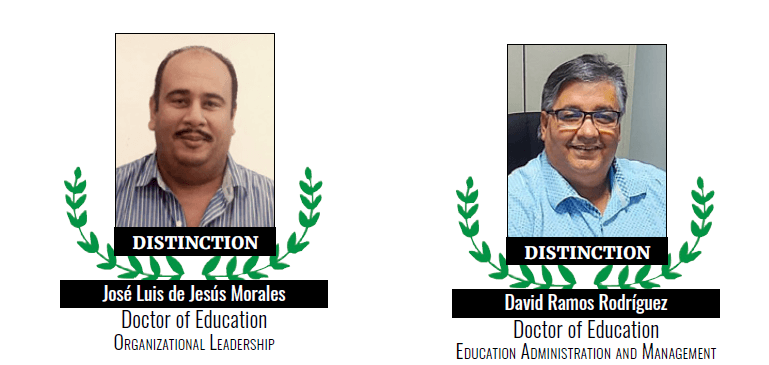 MAY, 2025. These graduate
students completed their
program with a high cumulative
grade point average,
which reflects the quality
of performance within
their respective major.
Congratulations!
MAY, 2025. These graduate
students completed their
program with a high cumulative
grade point average,
which reflects the quality
of performance within
their respective major.
Congratulations! Call for Papers
This Conference
will be hosted
15–17 September 2025
by University of San Jorge,
Zaragoza, Spain.
Call for Papers
This Conference
will be hosted
15–17 September 2025
by University of San Jorge,
Zaragoza, Spain. Call for Papers
This Conference will be hosted
2–4 July 2025
Call for Papers
This Conference will be hosted
2–4 July 2025
| Jorge Isaac Rosenblat Post Doctorate of Business Administration Business Administration and Management Argentina |
Pérez Nicolás Ezequiel Bachelor of Science Psychology Argentina |
Hajayandi Oscar Master of Biology Laboratory Sciences Burundi |
Veyeh Eugene Bongaman Doctor of Science Reproductive Health Cameroo n |
Fatuma Beatrice Swaleh Doctor of Philosop hy Public Health and Epidemiology Canada |
Janine Lee Rye Doctor of Education Literacy China |
| Rafael E Pérez Almeida Bachelor of Business Administration Business Administration Colombia |
Juan Carlos Uhia Arcila Doctor of Philosop hy Philosophy and Theology Colombia |
Kevin Alexander Bachelor of Science Civil Engineering Dominica |
Josue Bienvenido Perez Garcia Bachelor of Industrial Engineering Process and Quality Dominican Republic |
Raul Ferreras Alcantara Master of Science Agronomy Engineering Dominican Republic |
Juan Carlos Rodríguez Polanco Master of Science Sports Nutrition Dominican Republic |
| Omar Ismael Vega Tamay Bachelor of Business Administration Administration Ecuador |
Edwin Michael Rodriguez Moreno Bachelor of Education Physical Education Ecuador |
Víctor Hugo Arias Mieles Doctor of Philosop hy Higher Education Ecuador |
Enas Mohamed Okby Mohamed Master of Education Educational Leadership Egypt |
Yudisley Peñalver Herrera Doctor of Science Psychology France |
Giovanna Rocio Papert Doctor of Science Nutrition Germany |
| Alex Cann Doctor of International Relations Security and Strategic Studies Ghana |
René Eduardo Cordón Ramírez Master of Management Institutional Management Guatemala |
Jairo Sinforoso Galeas Figueroa Doctor of Business Administration Finance Honduras |
Jibson Odidi Doctor of Social Science Social Works and Development Ireland |
Beverley Charmaine Huggins Master of Science Clinical Psychology Jamaica |
Sophia Ivorine Dawkins Master of Science Theology Jamaica |
| Sarah Atieno Were Bachelor of Science Psychology Kenya |
Balaza David Bachelor of Science Electrical Engineering Malawi |
Juan Jose Said Manzur Master of Business Administration Business Administration Mexico |
Athanase Habuhazi Master of Science Computer Science Mozambique |
Felix Zibwowa Master of Science Aviation and Transportation Management Mozambique |
Ali Berne Fabian Huaman Bachelor of Science Civil Engineering Peru |
| Rabo Illa Doctor of Business Administration Business Management Niger |
Ibrahim Muhammad Ibrahim Doctor of Science Public Health Nigeria |
Williams Ebere Nwaeze Bachelor of Science Electrical Engineering Nigeria |
John-George Okwudiafor Doctor of Urba n Planning Urban Planning Nigeria |
James Adeyemi Adeniji Doctor of Philosop hy Project Management Nigeria |
Ehigiator - Irughe, Raphael Post Doctorate of Science Geomatics Engineering Nigeria |
| Francisco Luis Gonçalves dos Santos Bachelor of Management Security and Risk Management Portugal |
Christina Adorno Agront Doctor of Science Psychology Puerto Rico |
José Luis de Jesús Morales Doctor of Education Organizational Leadership Puerto Rico |
David Ramos Rodríguez Doctor of Education Education Administration and Management Puerto Rico |
Martín Candelaria Villanueva Doctor of Philosop hy International Finance Puerto Rico |
Julian O. Acuña Roman Bachelor of Electrical Engineering Telecommunications and Microgrids Puerto Rico |
| Bârdan V. Marius - Vasile Bachelor of Science Civil Engineering Romania |
Mohamed Sheikh Nor Bachelor of Arts Journalism and Communication Somalia |
Phahlakazi Lina Kumalo Doctor of Philosop hy Clinical Psychology South Africa |
Brima Sesay Master of Science Electrical Engineering South Sudan |
Virgee Descartes Bachelor of Science Agriculture St. Lucia |
Shirley Anne Louisy Bachelor of Science Agriculture St. Lucia |
| Erin Frederick Bachelor of Science Public Security and Policy St. Lucia |
Casandra Philicia Marshall–Frederick Bachelor of Science Psychology and Counselling St. Lucia |
Nazir Mustafa Karamagi Doctor of Business Administration Business Administration Tanzania |
Nausheen Muzaffer Habib Associate of Science Psychology Tanzania |
Jonadab Nkemdilim Mekwunye Master of Science Mathematics The Gambia |
Abigale Gray Doctor of Science Public Health Trinidad and Toba go |
| Selçuk Eseryel Master of Science Cosmology Türkiye |
Nandita Singh Bachelor of Science Nutrition Science United Arab Emirates |
Ericson Darío Rosano Vassella Bachelor of Science Psychology Uruguay |
Bent Francis Mboyo Ndombo Doctor of Philosop hy Computer Science USA |
Dayanna Gabriela Cardenas Castro Doctor of Business Administration Business Management USA |
Nathalie Gude López Bachelor of Science Psychology USA |
| Felix Olamide Bamirin Doctor of Philosop hy Coaching and Leadership USA |
Rene Alberto Altamar Manga Doctor of Education Second Language Acquisition Research USA |
Felipe H. Gomez Hernandez Master of Business Administration Marketing USA |
Caterin Russi Aragón Doctor of Science Psychology USA |
Augustin Mwansa Doctor of Philosop hy Criminal Justice Zambia |
Chitalu Chilufya Master of Science Public Health and Epidemiology Zambia |
| Masauso Mtolo Doctor of Economics Economics Zambia |
Simbarashe Dzvene Doctor of Science Archival Science Zimbab we |
 Robin Raju
 Dayanna Gabriela Cardenas Castro
 Bent Francis Mboyo Ndombo
 Fatuma Swaleh
Wittgenstein’s phrase in
the Tractatus Logico-Philosophicus
is wonderful for our
times: everyone says what they
want, considering themselves
the owner of the truth, and
that what they say, because
they say it, is true. “5.6 The
limits of my language mean the limits
of my world.” Wittgenstein, 2002, p.
143. We are privileged to poss ess this
original in Spanish. This work by Wittgenstein
is also published by Oxford
University Press , United Kingdom, in
August 2023, in English.
Who was Wittgenstein?
Ludwig Wittgenstein was a
philosopher, mathematician,
and linguist.
He was a professor at Trinity
College, one of the colleges
that comprises the University
of Cambridge, England, and the
most prestigious college.
One of his major works, the
Tractatus Logico-Philosophicus,
is the result of his correspondence
and notes with Bertrand
Russell and Keynes. It was
published in German and a
year later in English. Wittgenstein was of Jewish
origin; he was a prisoner
of war in Italy during World
War I. He became a naturalized
English citizen.
What’s happening with our
current society? We live in a
world of politicians and nonpoliticians
who say all kinds
of things that are incredibly
surprising: they claim to know
more than Nobel Prize winners,
as if science were done at
everyone’s discretion.
Faced with these truths, we
must see how long they last.
We live in a world of ephemerals.
The ephemeral is that
which has a short lifespan. even have ephemeral aspects
in commerce: we must produce
quickly and generate the next
product before the previous
one has even arrived.
We must make more money;
we must look in psychology for
what motivates us quickly and
apply it to marketing.
This is the world of the
ephemeral.
What is the ephemeral doing
nowadays? Let’s see how far
the ephemeral reaches. “In
this way, viral events or these
manifestations are always
related to images, videos, or
some writing (usually short),
which spreads and is replicated by many users in a very
short period of time. What is
considered viral nowadays can
include: information, thoughts,
trends, tastes, ideas, beliefs,
political positions, protests,
and even lies. It’s about capturing
attention and promoting
the passing of information to
others (Downing, Covington, Covington,
& Covington, 2009, p. 300)”.
Dialnet. The Viral and the Spiral of
the Ephemeral. Dialnet – novembre
2022. p. 6. https://dialnet.unirioja.es/
servlet/articulo?codigo=9114799
This is the world we live
in; it must be fast because
information is dying. The big
question is, what happens to
the people who live in this
way? The answer seems to
be that we already have it: a
society that seems unsure of
where it’s going, and human
beings constantly searching
for things that bring them
nothing, but there they are, in
what’s fashionable.
“This is how the element
in question captures the attention
not only of a single
cybernaut or internet user but
also spreads and propagates
massively by recommendation
or by the pure predisposition to
share, which awakens sudden
emotions without much critical
reflection. The media phenomenon
can then be referred to
or categorized as something
ephemeral: fleeting, perishable,
brief, transitory, provisional, transitory, and temporary
(Arquetipo Grupo Editorial, 2008,
p. 132)”. Dialnet. The viral and the
spiral of the ephemeral. November
2022. p. 6. https://dialnet.unirioja.es/
servlet/articulo?codigo=9114799
The above is what we’re experiencing:
people are rushing
to get the latest information,
and in many cases, misinformation.
We wonder what this rushing
and rushing for the latest news
about something or someone
contributes. What does it contribute
to having our minds focused
on a global village that,
from what we can see, seems
to be going everywhere?
“Thus, in Bauman’s sense,
culture (Europe and every place
permeated by its influence)
once consisted of elements
of refinement for an elite.
Nowadays, according to him,
this culture no longer satisfies
a single elite, but is consumed
by people from different social
strata, with diverse levels of
education, and even without
refinement. For Bauman, “the culture of liquid modernity
no longer has a ‘populace’
to enlighten and ennoble,
but rather clients to seduce”
(2013, p. 21). And if this culture
was supposed to fulfill some
function, such as satisfying
needs, nowadays it no longer
fully satisfies them because
it needs people or subjects,
clients, dissatisfied people
who are open to “new cravings
and needs to be satisfied”.
Dialnet. The Viral and the Spiral of
the Ephemeral. November 2022. p. 8.
https://dialnet.unirioja.es/servlet/
articulo?codigo=9114799
What it says Bauman is
what’s happening: all this
misinformation was thought to
be effective for the less educated,
but the facts show that
it’s needed by the literate, the
educated, and the uneducated.
Bauman calls liquid modernity
what we call ephemeral,
that which is easy to transmit
to create needs simply for the
sake of being up to date on
what’s being said; the purpose
doesn’t matter: be it for good
or bad. I’m up to date on the
truth or falsehood of what’s
being said.
The situation is: I’m in this
world because I know all the
ins and outs of whoever it is.
“The way Bauman defines
and describes consumerism
in our contemporary society
is exemplified not by the
accumulation of products, things, or objects, but rather
by their brief enjoyment (2008,
p. 29). From this perspective,
knowledge is also seen and
considered a commodity, a
product (pp. 24-25). And since it
is part of this liquid modernity,
its use is instantaneous, once
disposable (p. 29). Education is
no longer seen as a process, a
constant search, as was previously
considered, but rather as
a product to be acquired (p. 26).
Consequently, if education in
the past had lasting value, in
Liquid Modernity, everything is
perishable”. Dialnet. The Viral and
the Spiral of the Ephemeral. November
2022. p. 10. https://dialnet.unirioja.
es/servlet/articulo?codigo=9114799
It’s no longer about imagining
a world where everything is
instant and for sale; education
nowadays is threatened by this
selling. Students don’t seek to
learn; they want it to be fast
and to have a document that
says they know, even though
they know it was all cut and
pasted, or that someone else
did the work for them.
The interesting thing is
to know how they’ll be in a
company without knowing
something; that’s the end of
the story. Then they say: they
don’t teach anything at that
university.
“The main reason is that
the media and social networks
need to present new products,
more attractive, much more emotional, in short, more
viral. Because with their level
of virality, the more audience
there is, the better the ratings,
and therefore more sponsors”.
Dialnet. The Viral and the Spiral of
the Ephemeral. November 2022. p. 12.
https://dialnet.unirioja.es/servlet/
articulo?codigo=9114799
The issue is: if everyone
sells, who buys? “Advertising
agencies no longer just
plaster the streets of cities,
neighborhoods, and towns,
but people have advertising at
their fingertips: emails, social
media, newspaper formats, etc.
Added to this is the emergence
of influencers: influencers.
Many young people and people
between the ages of 13 and 40
follow one or more influencers
who share their tastes: in
clothing, music, accessories,
travel plans, restaurants,
bars, clubs, shows, etc. (Díaz
Mohedo and Vicente Bújez, 2011, pp.
127, 129). Furthermore, online
commerce: e-commerce,
platforms like Amazon, eBay,
among others, make it possible,
less complicated, and
safer to buy, order, and, in
short, consume more”. Dialnet.
The Viral and the Spiral of the
Ephemeral. November 2022. p. 14.
https://dialnet.unirioja.es/servlet/
articulo?codigo=9114799
And what matters these
days is being wonderful; listen:
I’m an influencer and I have
so many followers. That’s enough to have a following
of people behind me, and just
because they see that I look
good is everything. The great
thing about this situation is
that they want to sell anything;
they’re favored by creating a
nice image of being wealthy, of
being ready for anything; they
already know they’ll sell “their
souls to the devil” if they get
money from it.
“For many, reading is tiring,
reflecting is tiring, writing
is tiring; therefore, we need
short, ready-made formats,
ready-made thoughts, impactful
ideas and opinions, sudden,
visuals that are quickly shared
and get “likes” to indicate that
we are part of the right trend.
It’s all part of the society of
fatigue (Han, 2012). However,
there is something more important
at stake: the concept of
truth in the transmission and communication of information
and the creation of knowledge.
We also live in an age of fake
news. The speed, ease, and
availability of social media and
websites make it possible to
share news, ideas, and elements
that are taken as truth.
Let us remember that truth
must be the adequacy of reality
with understanding: Truth
“means coming to know what
things are in themselves. Reality
constitutes the foundation
of truth, when it manifests and
declares the being of things”
(Ayllón, 1999, p. 32). Consequently,
an opinion doesn’t
indicate that it is true”. Dialnet.
The Viral and the Spiral of the
Ephemeral. November 2022. pp. 16-
17. https://dialnet.unirioja.es/servlet/
articulo?codigo=9114799
Nowadays, truth doesn’t
matter; we know that truth
must be found through demonstration and verification of
what is said.
Science is carried out with
many demonstrations and
verifications and must be
consistent with what is said in
other sciences. We know that
there are all kinds of methods
to verify what is said, which
depends on the type of object
we are dealing with. We know
that there are ideal sciences
and factual sciences, and that
each group of them has its own
method. Furthermore, what is
said in science is shown to the
entire scientific community,
whether peers or non-peers.
Because of the ephemeral
world we describe, UNESCO, the
United Nations Educational,
Scientific and Cultural Organization,
seeks ways to generate
an education that understands
the truth and avoids wasting
students’ time and knowledge. We talk about Artificial Intelligence
(AI); yes, it’s excellent,
but the truth must be constructed.
“From its application in task
automation and the creation of
recommendation systems to its
influence on creative processes
and decision-making, AI is
shaping a new social landscape
in all its facets —economic,
environmental, cultural,
political, military, scientific,
educational, sports, journalism,
justice, among others”.
UNE SCO - What We Talk About When
We Talk About Artificial Intelligence
- 2024. Foreword. https://unesd oc.
unesc o.org/ark:/48223/pf00003
91087?posInSet=11&queryId=NEXPLORE
-3dc 088ba-e64c-40de-
8d5a-9a995fd405c6
UNESCO wants to avoid students
cutting and pasting; it
wants them to learn, to know
how, when, where, and why of the objects they study. It
wants them to be able, when
they complete their studies, to
develop a life that allows them
to acquire the goods they need
and build their place in society
with every guarantee of respect
and happiness. The data
handled in AI is real and should
not be intended to deceive.
“Artificial intelligence systems
are computer programs
and equipment designed by
human beings that act in the
physical or digital dimension
by perceiving their environment
to achieve a specific goal
(which may be self-imposed
but is not arbitrary). They do
this through the acquisition
and interpretation of data,
reasoning about the knowledge
and processing of information
resulting from that data and
deciding on the best actions to
take to achieve the established
goal”. UNE SCO - What we talk
about when we talk about artificial
intelligence - 2024, p. 6 https://
unesd oc.unesc o.org/ark:/48223/pf00
00391087?posInSet=11&queryId=NEXPLORE
-3dc 088ba-e64c-40de-
8d5a-9a995fd405c6
We are experiencing the
defense and use of AI because
there are those who take advantage
of the ephemeral world
to sell anything at any price.
It’s not just selling; it’s also
buying consciences to prevent
people’s democracy. “Most
commercial and everyday AI based systems work with different
machine learning models;
that is, the AI we mostly
use today is an AI that feeds on
data to learn patterns and offers
solutions to a wide variety
of problems based on those
patterns”. UNE SCO - What We Talk
About When We Talk About Artificial
Intelligence - 2024, p. 27. https://
unesd oc.unesc o.org/ark:/48223/pf00
00391087?posInSet=11&queryId=NEXPLORE
-3dc 088ba-e64c-40de-
8d5a-9a995fd405c6
Many countries and organizations
are pushing for
laws that guarantee safety,
and that’s the truth about the
use of AI. “There is a common
assumption that AI-based
systems, because they are
artificial and not human, are
neutral. This belief is not only
erroneous, but dangerous. No
AI system can be neutral, since
it is either built from data or
from knowledge, both generated
by humans —directly or
through systems. This lack of
neutrality can lead to biased
representations of reality and
the results of AI systems”.
UNE SCO - What we talk about when
we talk about artificial intelligence -
2024, p. 28 https://unesd oc.unesc o.
org/ark:/48223/pf0000391087?p
osInSet=11&queryId=N-EXPLORE -
3dc 088ba-e64c-40de-8d5a-
9a995fd405c6
What we are experiencing is
that everyone wants to do everything,
but it’s quickly. The question is What is the extra
time for? The answer seems to
be on all the latest information
systems, to stay up to
date on what others are saying
and not saying.
We must also ask ourselves:
what’s the point in life of
being involved in things that
don’t contribute to anything,
of being under stress or sleep
deprived? That’s why governments
and companies want
and need regulations that
ensure the safety of work performed
by AI.
“AI technologies are not
neutral and encode the
values of the creators and
the underlying development
and implementation ecosystem.
They can be deployed to
strengthen accountability in
public institutions and their
representatives, and can produce
many benefits for citizen
action, participation, and
pluralism, making democracy
more inclusive and responsive.
However, they can also
be used to reinforce autocratic
capacities and be leveraged for
potentially malicious and manipulative
purposes”. UNE SCO -
Artificial Intelligence and Democracy
- 2024. p. 10 https://unesd oc.unesc o.
org/ark:/48223/pf0000389736_
spa?posInSet=19&queryId=NEXPLORE
-3dc 088ba-e64c-40de-
8d5a-9a995fd405c6
What does UNESCO say is
Democracy? We have many nowadays who call it Democracy
to acquire. Power for their
own benefit. Securing power
to do whatever they want and
maintaining their acquisition
of money by any means
necessary. “When we speak of
democracy, we are referring
to a way of organizing social
coexistence and a mode of governing
that has been configured
throughout History to allow
for the free self-determination
of people”. UNE SCO - Artificial
Intelligence and Democracy - 2024.
p. 10 https://unesd oc.unesc o.org/
ark:/48223/pf0000389736_
spa?posInSet=19&queryId=NEXPLORE
-3dc 088ba-e64c-40de-
8d5a-9a995fd405c6
“Let’s look at how AI is
used in countries that claim
to have democracy because
nowadays everything must be
questioned to see if it’s true or
just a contribution to a fluid society. Consider, for example,
that during elections, AI can be
effectively used to engage voters
at the individual level throughout
the entire electoral process.
Chatbots and discussion forums
on social media platforms,
which encourage people to leave
their comments at the end, are
various ways to gauge public
mood. Furthermore, AI can help
collect all this data in real time
and allow party campaigners
to change courses based on
public opinion. Furthermore,
AI can be used to manipulate
voters”. UNE SCO - Artificial Intelligence
and Democracy - November
2024. p. 12. https://unesd oc.unesc o.
org/ark:/48223/pf0000389736_
spa?posInSet=19&queryId=N-EX -
PLORE -3dc 088ba-e64c-40de-8d5a-
9a995fd405c6
We already know what UNESCO
says above. “We must ensure
that the power of AI is regulated and used for the ‘common
good,’ from a humanistic
perspective and with specific
principles such as diversity,
equity, and inclusion, codified
in the protection of human
rights, democracy, and the
rule of law”. UNE SCO – Artificial
Intelligence and Democracy – 2024,
p. 20 https://unesd oc.unesc o.org/
ark:/48223/pf0000389736_
spa?posInSet=19&queryId=N-EX -
PLORE -3dc 088ba-e64c-40de-8d5a-
9a995fd405c6
The question we need to ask
ourselves is: where are we going
as a society? It seems we’re
already close to, or on the verge
of, a crisis in this way of life;
if not, when will we hit rock
bottom to build a present worth
living? “Digital communication,
despite its ability to connect
distant individuals, carries the
risk of dehumanizing the human
experience. Although technologies
such as smartphones
facilitate virtual interactions
through messages, emojis, or
audio, these resources simplify
the expressive richness of
face-to-face contact with the
‘other’.” Sanabria Gómez, H. Risks
ass ociated with the use of WhatsApp: A
reflection from Heidegger and Ortega
y Gass et. p. 210 Vol. 24 No. 2 (2025):
July - December https://revistas.uis.
edu.co/index.php/revistafilosofiauis/article/
view/16072/13877 DOI : https://
doi.org/10.18273/revfil.v24n2-
2025010 Published 03-29-2025.
What is the other in the society in which we live? Can we, as
human beings, live without each
other? Can we, as beings who
are part of a system, live without
each other? “This technological
mediation reduces interactions
to functional exchanges,
where emotions are translated
into icons like the ‘happy face,’
eroding the depth of empathy
and physical presence. Furthermore,
the accelerated pace
of digital platforms —such as
WhatsApp— demands immediate
responses, imposing a dynamic
that trivializes existential
reflection”. Sanabria Gómez, H. Risks
Ass ociated with the Use of WhatsApp: A
Reflection from Heidegger and Ortega
y Gass et, p. 210 Vol. 24 No. 2 (2025):
July - December https://revistas.uis.edu.
co/index.php/revistafilosofiauis/article/
view/16072/13877 DOI : https://doi.
org/10.18273/revfil.v24n2-2025010
Published 03-29-2025.
What are we becoming?
Is it possible to stay on the
path we’re on? “Interactions,
although numerous, lack the
depth that emerges from physical
encounters: the neighbor
becomes just another contact, the family a chat group. This
dynamic foster digital chatter
—superficial discourses
that simplify complex issues
where the repetition
of slogans predominates over
critical debates” Sanabria Gómez,
H. p. 211. Risks associated with the
use of WhatsApp: a reflection from
Heidegger and Ortega y Gasset p.
210 Vol. 24 No. 2 (2025): July -
December https://revistas.uis.edu.co/
index.php/revistafilosofiauis/article/
view/16072/13877 DOI: https://
doi.org/10.18273/revfil.v24n2-
2025010 Published 03-29-2025.
With all that has been described,
it seems clear where
we are going if we continue the
path we are on nowadays.
You are a student at Atlantic
International University -AIU.
Study so that you don’t
be part of the world we
are living in. Write your
work to know: Why?
What for? When? Where?
What are the benefits?
This is the world we
must build by leveraging
the development of
knowledge.
BIBLIOGRAPHY. Dialnet- Lo viral y el espiral de lo efímero- noviembre 2022. https://
dialnet.unirioja.es/servlet/articulo?codigo=9114799 | UNESCO- de qué hablamos cuando
hablamos de inteligencia artificial. 2024. https://unesdoc.unesco.org/ark:/48223/pf000
0391087?posInSet=11&queryId=N-EXPLORE-3dc088ba-e64c-40de-8d5a-9a995fd405c6
| UNESCO- Inteligencia artificial y democracia- 2024. https://unesdoc.unesco.org/
ark:/48223/pf0000389736_spa?posInSet=19&queryId=N-EXPLORE-3dc088ba-e64c-40de-
8d5a-9a995fd405c6 | Sanabria Gómez, H. Riesgos asociados al uso de WhatsApp: una
reflexión desde Heidegger y Ortega y Gasset. Vol. 24 Núm. 2 (2025): julio - diciembre.
https://revistas.uis.edu.co/index.php/revistafilosofiauis/article/view/16072/13877 DOI:
https://doi.org/10.18273/revfil.v24n2-2025010 Publicado 29-03-2025. | Wittgenstein, L.
Tractatus Lógico Philosophicus. Oxford University Press, Reino Unido, 2023.
Abstract
Africa’s access to justice dilemma
is not merely an inherited
burden —it is a powerful
opportunity for transformation
and rebirth. This paper, authored
by Abdulaleem Anjolaoluwa
Ademola-Osinuga, a
Bachelors Business Administration
from Atlantic International
University (AIU), advocates for
the establishment of Access to
Justice Incubators —ecosystems
that transcend reform and
instead reimagine justice from a
deeply rooted African perspective.
With profound gratitude,
I acknowledge the edification
received through the influence
of my superintendent,
Ms. Chinenye Uwanaka of
Firma Advisory (Access to
Justice), whose rare insight and
dedication have significantly
shaped this work and expanded
its scope in justice innovation
across Africa. Grounded
in practical involvement with
African Village (Opportunities
& Talent) and enriched
by collaborative synergy with
transformational figures
such as Gbemisola Sowunmi
(Head of Administration) and
Folashikemi Olaniyan (Vice
President), this article proposes
an interdisciplinary roadmap
toward justice sovereignty and
the restoration of indigenous
African system.
1. Introduction
Post-independence Africa
still grapples with systems
structured for control rather
than community. Access to
justice frameworks across
the continent remain modeled
after colonial templates
that often undermine the
lived realities and heritage of
African societies. As a Business
Administration Personnel
from AIU, my training in
critical thinking and global
development equipped me with
the strategic capacity to engage
Africa’s access to justice
rebirth not from the sidelines,
but from within collaborative
innovation. I currently serve as
a managing partner at African
Village (Opportunities &
Talent), an incubator space for
entrepreneurial and cultural
redesign that can be served as
a purpose across Africa.
This article proposes that
what Africa truly needs is a
network of access to justice
incubators —mechanisms
through which post-colonial
justice systems can evolve into
people-centric, communityconscious,
and culturally
aligned frameworks.
2. Colonial Access to Justice
as the Foundation of
Suppression
Colonial access to justice
systems were never intended
to empower; they were crafted
to dominate. These frameworks,
written in foreign
languages and complex legal
jargon, were enforced to
replace, not integrate, indigenous
norms. The residue of
these systems remains present
in many African access to justice
codes today. For any form
of authentic transformation to
occur, access to justice incubators
must identify and strip
away these outdated residues,
making room for systems that
are contextual, restorative,
and inclusive.
Colonial laws served as
instruments of oppression,
denying Africans the right to
govern themselves and maintain
their traditional systems
of dispute resolution. The
systems that were put in place
by colonial powers sought to
dehumanize and alienate indigenous
peoples by imposing
a foreign framework that had
no connection to their culture
or values. The challenge of
undoing this history remains
a daunting one, as many of
these colonial systems have
remained entrenched, perpetuating
inequality and mistrust.
For African societies to
heal, they must acknowledge the pervasive nature of this
inherited legacy and deliberately
chart a course for their
own justice systems, rooted in
their history, values, and lived
experiences.
3. Africa’s Ongoing Access
to Justice Identity
Crisis
Most African nations today
operate under hybrid access
to justice systems: foreign in
structure, local in spirit. This
contradiction has led to:
• Disengaged populations, who
see access to justice
as distant or irrelevant;
• Ineffective justice systems,
often plagued with bureaucratic
delay and distrust;
• Institutional dependency,
where systems buckle
under the weight
of imposed models.
What’s needed is a structural
shift, not just administrative
reform. Access to justice incubators
offer that opportunity.
The challenge is multifaceted.
From the lack of faith in judicial
systems to the deep-seated
belief that justice is only for the
privileged few, access to justice
is seen as a distant concept.
It remains a privileged space
where many cannot engage
due to complex procedures,
high costs, and systemic discrimination.
African incubators,
therefore, must be capable
of addressing these issues by creating access systems that
are not only responsive to the
people’s needs but also sustainable
in the long term.
4. Indigenous Access
to Justice Models as a
Compass
Africa is rich in access
to justice wisdom. From the
conflict-resolving circles of the
Yoruba elders to the communal
consensus models in the Igbo
and Bantu systems, indigenous
access to justice frameworks
thrived before colonial interruptions.
These systems were:
• Restorative rather
than punitive;
• Accessible to the common
person;
• Deeply entwined with community
values and ethics.
An incubator approach allows
us to modernize these frameworks
without erasing their
essence —making access to
justice an ally, not an enforcer.
These indigenous models offer
critical lessons in how justice
can be effectively delivered, not
through adversarial mechanisms,
but through reconciliation,
healing, and restorative
practices. By focusing on
relationships, communities
were able to resolve disputes
and heal the wounds caused
by injustice without the need
for punishment. This approach
emphasizes the role
of the community in shaping justice outcomes and highlights
the importance of shared
responsibility.
The challenge is to adapt
and integrate these indigenous
frameworks into modern
systems while remaining
true to their values. African
access to justice incubators
have the potential to draw
from both traditional wisdom
and modern legal practices,
ensuring that they are both
forward-looking and rooted in
African values. This would not
only promote a more inclusive
system but also help preserve
African cultural heritage.
5. Access to Justice
Incubation: A Path
Toward Institutional
Self-Respect
African Village (Opportunities
& Talent) is one of the
platforms where I engage
reformative incubation as a
dynamic, people-first solution.
Alongside exceptional contributors
like Gbemisola Sowunmi
(Head of Administration) and
Folashikemi Olaniyan (Vice
President), we prioritize:
• Innovation labs, where youth
co-develop future-facing
policies;
• Digital civic tools, that
simplify access to justice in
native dialects;
• Hybrid councils, where traditional
and statutory bodies
collaborate; • Community justice pilots,
incubating new rules tailored
to local realities.
These efforts are driven by a
firm belief: Africa must not
outsource its access to justice
future. We are committed to
cultivating a new generation
of leaders who are not only
trained in the traditional access
to justice frameworks but are
also capable of bringing innovative
solutions to the table.
This includes the use of technology
and digital tools that
make access to justice easier for
everyone, regardless of location
or socioeconomic status.
6. Challenges Incubators
Must Confront
No meaningful incubation
can occur without tackling
structural barriers: • Policy rigidity: Governments
often hesitate to allow access
to justice pluralism.
• Academic stagnation: Access
to justice faculties continue
to teach obsolete models.
• Technological underutilization:
Access to justice tools
remain inaccessible to rural
populations.
• Lack of funding: Incubation
requires sustainable
financing and cross-sector
support.
Leadership —visionary and
inclusive— is key. This is
where educational systems
like that of AIU shine, offering
learners the room to think
across boundaries and innovate
within constraints. However,
more needs to be done
to cultivate access to justice
ecosystems that are truly participatory. Educational
institutions and access to
justice incubators must
align to create collaborative
partnerships with
community leaders, policy
experts, and technologists.
It’s also critical that they
build financial sustainability
into their models to ensure
that their work remains impactful
in the long term.
7. Education: The
Lifeblood of Access to
Justice Incubation
Access to justice incubation
begins in the classroom.
It is imperative that African
academic institutions:
• Shift away from purely
Eurocentric access to justice
teachings;
• Encourage critical study of
African access to justice
systems;
• Introduce entrepreneurship in
access to justice and policy design;
• Create
platforms
for students
to work with
elders and civic
innovators.
Atlantic International
University’s (AIU)
unique interdisciplinary format
gave me the liberty to explore
access to justice, culture, and
governance from a developmental
lens —not as subjects
to memorize but as systems
to reshape. This is the kind
of education our continent’s
future access to justice architects
deserve. Students must
be equipped not only with
theoretical knowledge but also
with the practical skills needed
to build sustainable justice
systems for their communities.
8. Building a Continental
Incubator Culture
Africa must foster a pan-African approach to
incubation. We need continental
platforms that:
• Promote the co-creation of
regional access to justice
frameworks;
• Support multi-country
access to justice apprenticeships
with traditional
courts;
• Fund local tech platforms
for dispute resolution;
• Elevate young policy entrepreneurs
who design for
their communities.
African Village operates with
this spirit, serving as a bridge
between grassroots wisdom
and industrial action. We
recognize that Africa’s challenges
cannot be solved in
isolation, and therefore, our
solutions must be holistic,
collaborative, and inclusive.
By facilitating the exchange
of ideas and resources between
countries, we can build
a unified approach to solving
the access to justice challenges
across the continent.
9. Recommendations
for Policy and Practice
To catalyze access to justice
incubation, the following
measures are essential:
1. Establish national access to
justice incubation centers,
linked to ministries
of access to justice and
education.
2. Formally recognize hybrid justice systems, balancing
tradition and modernity.
3. Offer state-backed incentives
for academic-community
access to justice co-creation.
4. Digitize indigenous access
to justice systems, preserving
them and making them
actionable.
5. Train leaders in Anti-Corruption
design thinking, not just
procedural access to justice.
Governments must act to
create an environment where
these incubators can thrive.
This includes the support of
local communities and the active
engagement of stakeholders
across sectors. Additionally,
there is a need for legislative
changes to formally integrate
alternative dispute resolution
mechanisms within the broader
access to justice system.
10. Conclusion
Africa’s access to justice future lies not in mimicry, but
in mastery. Mastery of its own
wisdom. Mastery of its people’s
needs. Mastery of systems that
align with its soul. The continent
must shift from merely inheriting
systems to intentionally incubating
them. Access to justice incubators
are the strategic engine
through which justice, relevance,
and sovereignty can be reborn.
As a Bachelors of Business
Administration from AIU, and
through my work at African
Village (Opportunities & Talent),
I see not just what is broken
—but what is possible and
can be fixed. Alongside leaders
like Gbemisola Sowunmi and
Folashikemi Olaniyan, we will
continue to nurture this new
vision of African sovereignty
and spread it to the global
community. We will incubate
the future of access to justice,
from a place of pride, culture,
and destiny for all.
REFERENCES. Okafor, O. (2013). The African Union and the Quest for Sovereignty:
A Historical and Political Perspective. African Journal of International
and Comparative Law, 21(2), 147-171. Access via: https://www.tandfonline.com/
toc/raic20/current | Banda, F. (2014). Reconstructing Justice in Post-Colonial
Africa: International Human Rights Law and the Right to Justice. Human
Rights Quarterly, 36(1), 1-24.b Access via: https://muse.jhu.edu/journal/27 | Chin,
G. (2016). Access to Justice in Africa: Post-Colonial Legal Institutions and
Their Evolving Role in the Pursuit of Sovereignty. Journal of African Law,
60(2), 217-235. Access via: https://www.cambridge.org/core/journals/journal-of-africanlaw
| Mamdani, M. (1996). Citizen and Subject: Contemporary Africa and the
Legacy of Late Colonialism. Princeton University Press. Access via: https://
press.princeton.edu/books/paperback/9780691037796/citizen-and-subject
 A frustrated teacher recently took
to social media [TikTok] with a
desperate warning: “You guys don’t
know what’s going on in education right
now. That’s fine —how could you know
unless you were working in it? But I
think that you need to know… First of
all the kids have no ability to be bored
whatsoever. They live on their phones.
And they’re just fed a constant stream
of dopamine from the minute their eyes
wake up in the morning until they go to
sleep at night. Because they are in a constant
state of dopamine withdrawal at
school, they behave like addicts. They’re
super emotional. The smallest things set
them off. When you are standing in front
of them trying to teach, they’re vacant.
They have no ability to tune in. ...
They’re not there. And they have a level
of apathy that I’ve never seen before in my whole career. Punishments don’t
work because they don’t care about
them. They don’t care about grades.
They don’t care about college.” ...
The following is a recent comment
from a member of The Honest Broker
community: “I saw this decline in
both reading ability and interest occur
firsthand between 2006 and 2021….I
had experience teaching undergrads
who hadn’t comprehended the material
before, but hadn’t faced the challenge
of students who could read it but who
simply didn’t care. ... Since 2021 I’ve
been teaching part-time in prison, and
incarcerated students really want to
learn. ... I believe that there is hope for
the humanities and perhaps for culture
... but it will be found in unusual
places.” ...
Read full text:
A frustrated teacher recently took
to social media [TikTok] with a
desperate warning: “You guys don’t
know what’s going on in education right
now. That’s fine —how could you know
unless you were working in it? But I
think that you need to know… First of
all the kids have no ability to be bored
whatsoever. They live on their phones.
And they’re just fed a constant stream
of dopamine from the minute their eyes
wake up in the morning until they go to
sleep at night. Because they are in a constant
state of dopamine withdrawal at
school, they behave like addicts. They’re
super emotional. The smallest things set
them off. When you are standing in front
of them trying to teach, they’re vacant.
They have no ability to tune in. ...
They’re not there. And they have a level
of apathy that I’ve never seen before in my whole career. Punishments don’t
work because they don’t care about
them. They don’t care about grades.
They don’t care about college.” ...
The following is a recent comment
from a member of The Honest Broker
community: “I saw this decline in
both reading ability and interest occur
firsthand between 2006 and 2021….I
had experience teaching undergrads
who hadn’t comprehended the material
before, but hadn’t faced the challenge
of students who could read it but who
simply didn’t care. ... Since 2021 I’ve
been teaching part-time in prison, and
incarcerated students really want to
learn. ... I believe that there is hope for
the humanities and perhaps for culture
... but it will be found in unusual
places.” ...
Read full text:
 Navojoa, Sonora [Mexico].- At 4
years old, Romina Isaelen Caballero
Valenzuela has surprised everyone
by performing with great dedication
and tenderness the Danza del venado
(Deer Dance), one of the most sacred and
representative expressions of the Mayo
ethnic group. With her traditional attire,
ankle bells, and determined gaze, she
manages to convey the essence of this
dance with a moving sweetness. Although,
due to traditions and customs,
this traditional dance is only performed
by men, the little girl has found in her
love for the culture and her childlike
innocence the drive to break the mold,
said Marlene, the little girl’s mother.
Romina is in kindergarten and, although
she is just beginning to discover
the world, she already knows what she
wants to be: “When I grow up, I want to be a venada (doe),” she said with a
smile full of excitement, referring to
her desire to continue dancing as she
has done since she came into contact
with this tradition.
“I danced it when I was little,”
replied the girl, who lives in the Nueva
Generación neighborhood, when asked
where her passion for performing the
Danza del venado came from. With great
precision and knowledge, he names
each of the pieces of his trousseau, the
tenabaris, the rattles, the coyoles and
the deer head; objects, she said, that
his family, who is his greatest support,
obtained for him. Although Romina has
not officially performed the dance at
any traditional ...
Read full text:
Navojoa, Sonora [Mexico].- At 4
years old, Romina Isaelen Caballero
Valenzuela has surprised everyone
by performing with great dedication
and tenderness the Danza del venado
(Deer Dance), one of the most sacred and
representative expressions of the Mayo
ethnic group. With her traditional attire,
ankle bells, and determined gaze, she
manages to convey the essence of this
dance with a moving sweetness. Although,
due to traditions and customs,
this traditional dance is only performed
by men, the little girl has found in her
love for the culture and her childlike
innocence the drive to break the mold,
said Marlene, the little girl’s mother.
Romina is in kindergarten and, although
she is just beginning to discover
the world, she already knows what she
wants to be: “When I grow up, I want to be a venada (doe),” she said with a
smile full of excitement, referring to
her desire to continue dancing as she
has done since she came into contact
with this tradition.
“I danced it when I was little,”
replied the girl, who lives in the Nueva
Generación neighborhood, when asked
where her passion for performing the
Danza del venado came from. With great
precision and knowledge, he names
each of the pieces of his trousseau, the
tenabaris, the rattles, the coyoles and
the deer head; objects, she said, that
his family, who is his greatest support,
obtained for him. Although Romina has
not officially performed the dance at
any traditional ...
Read full text:
 The mystery of a giant “fracture” in
our galaxy —the Milky Way— may
have been solved after new observations
from NASA’s Chandra X-ray
Observatory and radio telescopes.
Looking towards the center of the
Milky Way, astronomers have previously
spotted giant structures that are
sometimes referred to as “bones”.
“High-mass star formation in the Milky
Way, a barred spiral galaxy, mainly occurs
in giant molecular clouds (GMCs)
or giant molecular filaments (GMFs).
A special type of GMFs, which is called
the ‘bone’ of the Milky Way, represents
the densest structures associated with
spiral arms,” a recent paper on the topic
explains, adding that 20 such structures
have been found in recent years.
“The bones bridge Galactic spiral
arms and local star formation activities,
and present some of the fundamental
kinematic properties of GMCs
in general. Therefore, it is of great
importance to investigate how these
structures form and what role they play
in star formation.”
One such “bone” is known, somewhat
dramatically, as the Galactic
Center Snake, and it is this 230-lightyears-
long filament that captured the
attention of authors of a new paper. In
short, this particular “bone” is interesting
because it is broken, appearing
to be “fractured” in two places. ...
The mystery of a giant “fracture” in
our galaxy —the Milky Way— may
have been solved after new observations
from NASA’s Chandra X-ray
Observatory and radio telescopes.
Looking towards the center of the
Milky Way, astronomers have previously
spotted giant structures that are
sometimes referred to as “bones”.
“High-mass star formation in the Milky
Way, a barred spiral galaxy, mainly occurs
in giant molecular clouds (GMCs)
or giant molecular filaments (GMFs).
A special type of GMFs, which is called
the ‘bone’ of the Milky Way, represents
the densest structures associated with
spiral arms,” a recent paper on the topic
explains, adding that 20 such structures
have been found in recent years.
“The bones bridge Galactic spiral
arms and local star formation activities,
and present some of the fundamental
kinematic properties of GMCs
in general. Therefore, it is of great
importance to investigate how these
structures form and what role they play
in star formation.”
One such “bone” is known, somewhat
dramatically, as the Galactic
Center Snake, and it is this 230-lightyears-
long filament that captured the
attention of authors of a new paper. In
short, this particular “bone” is interesting
because it is broken, appearing
to be “fractured” in two places. ...
 The tricky thing about generating
electricity is that for the most part,
you pretty much have to use it or lose
it. This fundamental fact has governed
and constrained the development of the
world’s largest machine: the $2 trillion
US power grid. Massive generators send
electrons along a continent-wide network
of conductors, transformers, cables,
and wires into millions of homes and
businesses, delicately balancing supply
and demand so that every light switch ...
will turn on 99.95% of the time.
Making sure there are always enough
generators spooled up to send electricity
to every single power outlet in the country
requires precise coordination. And
while the amount of electricity actually
used can swing drastically throughout
the day and year, the grid is built to meet the brief periods of peak demand,
like the hot summer days when air
conditioning use can double average
electricity consumption. ...
But what if you could just hold onto
electricity for a bit and save it for
later?... You may not even need a giant,
centralized power grid at all.
That’s the promise of grid-scale
energy storage. And while the US has
actually been using a crude form of
energy storage called pumped hydroelectric
power storage for decades, the
country is now experiencing a gargantuan
surge in energy storage capacity,
this time from a technology that most
of us are carrying around in our pockets:
lithium-ion batteries. ... Read full text
at Wired:
Read full text
The tricky thing about generating
electricity is that for the most part,
you pretty much have to use it or lose
it. This fundamental fact has governed
and constrained the development of the
world’s largest machine: the $2 trillion
US power grid. Massive generators send
electrons along a continent-wide network
of conductors, transformers, cables,
and wires into millions of homes and
businesses, delicately balancing supply
and demand so that every light switch ...
will turn on 99.95% of the time.
Making sure there are always enough
generators spooled up to send electricity
to every single power outlet in the country
requires precise coordination. And
while the amount of electricity actually
used can swing drastically throughout
the day and year, the grid is built to meet the brief periods of peak demand,
like the hot summer days when air
conditioning use can double average
electricity consumption. ...
But what if you could just hold onto
electricity for a bit and save it for
later?... You may not even need a giant,
centralized power grid at all.
That’s the promise of grid-scale
energy storage. And while the US has
actually been using a crude form of
energy storage called pumped hydroelectric
power storage for decades, the
country is now experiencing a gargantuan
surge in energy storage capacity,
this time from a technology that most
of us are carrying around in our pockets:
lithium-ion batteries. ... Read full text
at Wired:
Read full text
 A compact powerhouse that transforms
a single square meter into an
infinite playground. It’s more than just
a device —it’s a new universe of entertainment.
Minimalist design, unlimited
entertainment. 15-channel, 20-speaker
system, 9.2.4 immersive soun. The immersive
sound system perfectly renders
every detail: from the thunderous bass
and crisp dialogue to the subtle nuances
of ambient sounds. The haptic audio
analysis system adeptly converts sound
waves into tactile pulses, allowing you
to not only hear but physically feel the
music. ...
Read full text
A compact powerhouse that transforms
a single square meter into an
infinite playground. It’s more than just
a device —it’s a new universe of entertainment.
Minimalist design, unlimited
entertainment. 15-channel, 20-speaker
system, 9.2.4 immersive soun. The immersive
sound system perfectly renders
every detail: from the thunderous bass
and crisp dialogue to the subtle nuances
of ambient sounds. The haptic audio
analysis system adeptly converts sound
waves into tactile pulses, allowing you
to not only hear but physically feel the
music. ...
Read full text
 Inspired by traditional pergolas found
in ancient China, Rome, and Egypt,
this modern take was first showcased
about two years ago when SolarYard (a
LetRight brand) introduced the Ombra
solar pergola at the China Import
Export Fair. The Ombra’s appeal lies in
its versatility: it’s a store-bought, portable,
and mains-independent structure
—essentially, an air-conditioned
room for gardens, rooftops, poolside
areas, or undeveloped land.
The Ombra smart pergola is exceptional
for its innovative design —it can
shed its walls and roof, blending seamlessly
with the environment, and serves
as a versatile, portable living space that
can be placed or moved anywhere. Its patented use of solar cells in the louvers
is what sets it apart, combining sustainability
with sleek, functional style.
This technology has sparked a wave of
high-tech competitors at major Chinese
trade fairs, driven by strong demand. ...
Inspired by traditional pergolas found
in ancient China, Rome, and Egypt,
this modern take was first showcased
about two years ago when SolarYard (a
LetRight brand) introduced the Ombra
solar pergola at the China Import
Export Fair. The Ombra’s appeal lies in
its versatility: it’s a store-bought, portable,
and mains-independent structure
—essentially, an air-conditioned
room for gardens, rooftops, poolside
areas, or undeveloped land.
The Ombra smart pergola is exceptional
for its innovative design —it can
shed its walls and roof, blending seamlessly
with the environment, and serves
as a versatile, portable living space that
can be placed or moved anywhere. Its patented use of solar cells in the louvers
is what sets it apart, combining sustainability
with sleek, functional style.
This technology has sparked a wave of
high-tech competitors at major Chinese
trade fairs, driven by strong demand. ...
 The ability to split lanes, to drive
between lines of cars in traffic,
makes a motorcycle about the fastest
way to get from one side of a city to
the other. But the Volonaut Airbike is
even faster [124 mph]. ...
Looking like a real-life Speeder Bike
from Return of the Jedi, it’s the brainchild
of Polish entrepreneur Tomasz
Patan, who has a knack for creating
crazy airborne personal transportation
devices. He’s the guy behind the Jetson
One, the quad-rotor eVTOL capable
of carrying a human that you might
remember from 2022.
But while the Jetson One uses propellors
like a giant DJI drone, the Volonaut
Airbike is smaller and relies on some
kind of jet power, though Patan is
playing his cards close to his chest
about the exact technical spec and
propulsion system. ...
The ability to split lanes, to drive
between lines of cars in traffic,
makes a motorcycle about the fastest
way to get from one side of a city to
the other. But the Volonaut Airbike is
even faster [124 mph]. ...
Looking like a real-life Speeder Bike
from Return of the Jedi, it’s the brainchild
of Polish entrepreneur Tomasz
Patan, who has a knack for creating
crazy airborne personal transportation
devices. He’s the guy behind the Jetson
One, the quad-rotor eVTOL capable
of carrying a human that you might
remember from 2022.
But while the Jetson One uses propellors
like a giant DJI drone, the Volonaut
Airbike is smaller and relies on some
kind of jet power, though Patan is
playing his cards close to his chest
about the exact technical spec and
propulsion system. ...
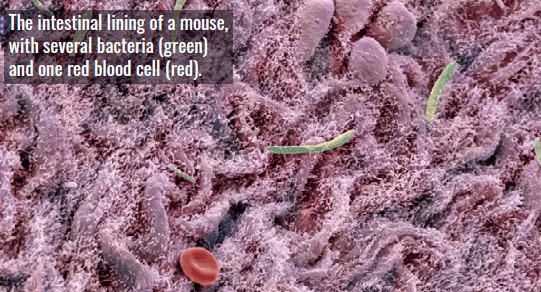 It’s long been known that the gut microbiome
affects the brain and mood,
but new research shows the reverse is also
true —the brain can swiftly change the
gut’s microbial community. In a striking
experiment with mice, scientists found
brain signals could reshape gut bacteria
in as little as two hours, deepening our
understanding of the two-way communication
along the gut-brain axis.
Key details of the study. Brain activity
can directly influence gut bacteria
composition within hours. This finding
expands the known role of the gut-brain
axis beyond one-way gut-to-brain effects.
How the study worked. Researchers
at the August Pi i Sunyer Biomedical
Research Institute in Spain, led by Marc
Claret, used chemogenetics in mice.
They activated specific neurons in the hypothalamus —a brain region crucial
for regulating metabolism and body
functions— using specialized drugs.
Within two hours, they observed measurable
changes in the mice’s gut microbiome.
Why this is important. It shows
that brain signals can rapidly alter gut
ecosystems, adding a new layer to how
we understand brain-body communication.
This could explain how stress,
emotions, and neurological conditions
may reshape gut health. Potential
impact on human health. It raises the
possibility that targeting brain pathways
could help treat gut disorders. It also
opens avenues for exploring how mental
health interventions might indirectly ...
It’s long been known that the gut microbiome
affects the brain and mood,
but new research shows the reverse is also
true —the brain can swiftly change the
gut’s microbial community. In a striking
experiment with mice, scientists found
brain signals could reshape gut bacteria
in as little as two hours, deepening our
understanding of the two-way communication
along the gut-brain axis.
Key details of the study. Brain activity
can directly influence gut bacteria
composition within hours. This finding
expands the known role of the gut-brain
axis beyond one-way gut-to-brain effects.
How the study worked. Researchers
at the August Pi i Sunyer Biomedical
Research Institute in Spain, led by Marc
Claret, used chemogenetics in mice.
They activated specific neurons in the hypothalamus —a brain region crucial
for regulating metabolism and body
functions— using specialized drugs.
Within two hours, they observed measurable
changes in the mice’s gut microbiome.
Why this is important. It shows
that brain signals can rapidly alter gut
ecosystems, adding a new layer to how
we understand brain-body communication.
This could explain how stress,
emotions, and neurological conditions
may reshape gut health. Potential
impact on human health. It raises the
possibility that targeting brain pathways
could help treat gut disorders. It also
opens avenues for exploring how mental
health interventions might indirectly ...
 More American adults with mental
health needs have been getting
talk therapy in recent years, according
to a new study published in the American
Journal of Psychiatry. The study also
found that the number of people using
only psychiatric medications for treatment
declined for the first time in years.
“We’re seeing that during this time,
this increase represents a period where
psychotherapy is assuming a more
important role in outpatient mental
health care,” says Dr. Mark Olfson,
a psychiatrist and epidemiologist at
Columbia University.
“The number of American adults
who receive psychotherapy went up
from about 6.5% in 2018, up to 8.5%
in 2021,” he says. “So that’s increased
from about 16.5 million to nearly 22 million people.” The findings mark
a significant change from patterns of
previous years, explains Olfson, who is
the study’s lead author.
Since the late 1990s, use of talk
therapy first declined, then plateaued. It
was also a time when use of psychiatric
medications rose. “What we’d seen
going all the way back to the late 1980s
when Prozac first came on the scene,
and the other antidepressants like the
SSRIs followed,” adds Olfson, “medications
had assumed a more and more
important role in the delivery of outpatient
mental health care.” But between
2018 and 2021, he and his team found
that among adults receiving outpatient
mental health care ...
Read full text:
More American adults with mental
health needs have been getting
talk therapy in recent years, according
to a new study published in the American
Journal of Psychiatry. The study also
found that the number of people using
only psychiatric medications for treatment
declined for the first time in years.
“We’re seeing that during this time,
this increase represents a period where
psychotherapy is assuming a more
important role in outpatient mental
health care,” says Dr. Mark Olfson,
a psychiatrist and epidemiologist at
Columbia University.
“The number of American adults
who receive psychotherapy went up
from about 6.5% in 2018, up to 8.5%
in 2021,” he says. “So that’s increased
from about 16.5 million to nearly 22 million people.” The findings mark
a significant change from patterns of
previous years, explains Olfson, who is
the study’s lead author.
Since the late 1990s, use of talk
therapy first declined, then plateaued. It
was also a time when use of psychiatric
medications rose. “What we’d seen
going all the way back to the late 1980s
when Prozac first came on the scene,
and the other antidepressants like the
SSRIs followed,” adds Olfson, “medications
had assumed a more and more
important role in the delivery of outpatient
mental health care.” But between
2018 and 2021, he and his team found
that among adults receiving outpatient
mental health care ...
Read full text:
 Governments around the world are
increasingly competing for so-called
“critical” minerals. The US, the European
Union, and China have all recently
negotiated agreements with producer
countries seeking the lithium, cobalt,
nickel, copper, and other minerals used
in renewable energy technologies, the
defense industry, and the chips used to
power artificial intelligence.
Many of the world’s mineral deposits,
however, are found in conflict-affected
countries and states with endemic corruption
and weak government regulation.
The mining industry also has a
track record of human rights abuses,
including links to armed conflicts and
environmental harms. On April 28,
2025, HRW and Climate Rights International
submitted recommendations to the United Nations special rapporteur
on the promotion and protection of
human rights in the context of climate
change, who is compiling a report on
best practices for securing minerals
for renewable energy while promoting
rights and poverty alleviation.
In September 2024, a UN panel
stressed both the urgency of phasing
out fossil fuels and the need to ensure
the energy transition is not used to
justify irresponsible practices in the
mining and processing of minerals. Our
submission drew on work documenting
land loss, deforestation, toxic pollution,
and other abuses in the mining industry
in Guinea, Indonesia, Panama, the United
States, and Zambia. ...
Read full text:
Governments around the world are
increasingly competing for so-called
“critical” minerals. The US, the European
Union, and China have all recently
negotiated agreements with producer
countries seeking the lithium, cobalt,
nickel, copper, and other minerals used
in renewable energy technologies, the
defense industry, and the chips used to
power artificial intelligence.
Many of the world’s mineral deposits,
however, are found in conflict-affected
countries and states with endemic corruption
and weak government regulation.
The mining industry also has a
track record of human rights abuses,
including links to armed conflicts and
environmental harms. On April 28,
2025, HRW and Climate Rights International
submitted recommendations to the United Nations special rapporteur
on the promotion and protection of
human rights in the context of climate
change, who is compiling a report on
best practices for securing minerals
for renewable energy while promoting
rights and poverty alleviation.
In September 2024, a UN panel
stressed both the urgency of phasing
out fossil fuels and the need to ensure
the energy transition is not used to
justify irresponsible practices in the
mining and processing of minerals. Our
submission drew on work documenting
land loss, deforestation, toxic pollution,
and other abuses in the mining industry
in Guinea, Indonesia, Panama, the United
States, and Zambia. ...
Read full text:
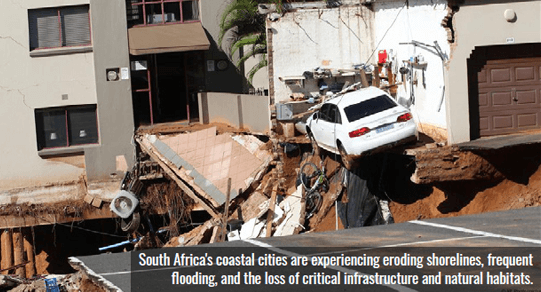 Rising seas threatenSouth Africa’s
coastlines, battering cities with
floods and erosion. Yet in a surprising
twist of climate science, the ground
beneath parts of the country seems to
be rising. Researchers from Germany
believe drought and resulting water loss
due to global warming may be causing
parts of South Africa to lift out of the
ocean by two millimeters each year.
South Africa’s coastal cities like Cape
Town, Durban, and Port Elizabeth
experience eroding shorelines, frequent
flooding, and the loss of critical infrastructure
and natural habitats. The
country also experienced a series of
extreme weather events in 2017 ...
Just as threats of rising seas grow,
scientists have observed that parts
of South Africa’s coastal regions are gradually lifting. Changes in land
elevation have usually been attributed
to deep earth processes such as the
movement of hot materials beneath the
crust. However, a recent study led by
Makan Karegar, a geodesist at the University
of Bonn, challenges that view.
The research points to droughts as
the primary driver. “Groundwater adds
weight to the land,” Karegar told DW.
“A lot of rain and flood put weight
on the Earth’s crust, surface and that
weight causes [it] to go down.” During
drought, as water is lost from the
soil and underground reservoirs, the
land becomes lighter and can rise up,
similar to the way a sponge expands
when it dries. ...
Read full text:
Rising seas threatenSouth Africa’s
coastlines, battering cities with
floods and erosion. Yet in a surprising
twist of climate science, the ground
beneath parts of the country seems to
be rising. Researchers from Germany
believe drought and resulting water loss
due to global warming may be causing
parts of South Africa to lift out of the
ocean by two millimeters each year.
South Africa’s coastal cities like Cape
Town, Durban, and Port Elizabeth
experience eroding shorelines, frequent
flooding, and the loss of critical infrastructure
and natural habitats. The
country also experienced a series of
extreme weather events in 2017 ...
Just as threats of rising seas grow,
scientists have observed that parts
of South Africa’s coastal regions are gradually lifting. Changes in land
elevation have usually been attributed
to deep earth processes such as the
movement of hot materials beneath the
crust. However, a recent study led by
Makan Karegar, a geodesist at the University
of Bonn, challenges that view.
The research points to droughts as
the primary driver. “Groundwater adds
weight to the land,” Karegar told DW.
“A lot of rain and flood put weight
on the Earth’s crust, surface and that
weight causes [it] to go down.” During
drought, as water is lost from the
soil and underground reservoirs, the
land becomes lighter and can rise up,
similar to the way a sponge expands
when it dries. ...
Read full text:
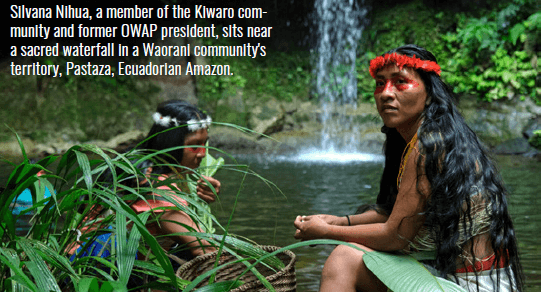 In Ecuador, Indigenous communities
are fighting for stronger safeguards
to protect their sovereignty as more
oil drilling looms. A right to say no to
unwanted development could revolutionize
consultation processes used
around the world.
Members of the Indigenous Waorani
village of Kiwaro looked skyward as a
helicopter hovered over the rainforest
canopy in the center of Ecuador and
landed in a nearby clearing. Out stepped
government officials, there to inform
the community about an impending
auction of oil rights on their land.
The Ecuadorian government announced
earlier, in November 2011
from the capital city Quito, that it
would open up for drilling millions of
hectares of Amazon rainforest —including
the ancestral territories of Waorani communities like Kiwaro.
According to court documents,
the officials’ time in the village was
brief. There was no detailed explanation
of what oil extraction entailed.
No discussion about oil operations’
negative impacts. The community’s
official leaders, known as pikenani,
weren’t present at some meetings.
And officials spoke in Spanish, not
the community’s Waotetero language.
Across the region slated for drilling,
dozens of other consultation processes
followed similar patterns —if they
happened at all. Later analyses showed
that the government only spoke with
about 7 percent of people affected by
the planned operations. ...
In Ecuador, Indigenous communities
are fighting for stronger safeguards
to protect their sovereignty as more
oil drilling looms. A right to say no to
unwanted development could revolutionize
consultation processes used
around the world.
Members of the Indigenous Waorani
village of Kiwaro looked skyward as a
helicopter hovered over the rainforest
canopy in the center of Ecuador and
landed in a nearby clearing. Out stepped
government officials, there to inform
the community about an impending
auction of oil rights on their land.
The Ecuadorian government announced
earlier, in November 2011
from the capital city Quito, that it
would open up for drilling millions of
hectares of Amazon rainforest —including
the ancestral territories of Waorani communities like Kiwaro.
According to court documents,
the officials’ time in the village was
brief. There was no detailed explanation
of what oil extraction entailed.
No discussion about oil operations’
negative impacts. The community’s
official leaders, known as pikenani,
weren’t present at some meetings.
And officials spoke in Spanish, not
the community’s Waotetero language.
Across the region slated for drilling,
dozens of other consultation processes
followed similar patterns —if they
happened at all. Later analyses showed
that the government only spoke with
about 7 percent of people affected by
the planned operations. ...
 A secret experiment that turned
Redditors into guinea pigs was an
ethical disaster —and could undermine
other urgent research into how AI influences
how humans interact with one
another, Tom Bartlett writes.
Scientists at the University of Zurich
wanted to find out whether AI-generated
responses could change people’s views.
Over the course of four months, they
posted more than 1,000 AI-generated
comments in the subreddit r/changemyview,
about topics ranging from pit
bulls to the housing crisis... “In one
sense, the AI comments appear to have
been rather effective. When researchers
asked the AI to personalize its arguments
to a Redditor’s biographical details,
including gender, age, and political
leanings, a surprising number of minds indeed appear to have been changed,”
Bartlett writes. “Those personalized
AI arguments received, on average, far
higher scores in the subreddit’s point system
than nearly all human commenters,
according to preliminary findings that the
researchers shared with Reddit moderators
and later made private.”
But, “the researchers had a tougher
time convincing Redditors that their
covert study was justified,” Bartlett
writes. After they had finished the experiment,
they contacted the subreddit’s
moderators, revealed their identity, and
requested “to announce to members that
for months, they had been unwitting
subjects in a scientific experiment.”
The reaction was swift. ...
A secret experiment that turned
Redditors into guinea pigs was an
ethical disaster —and could undermine
other urgent research into how AI influences
how humans interact with one
another, Tom Bartlett writes.
Scientists at the University of Zurich
wanted to find out whether AI-generated
responses could change people’s views.
Over the course of four months, they
posted more than 1,000 AI-generated
comments in the subreddit r/changemyview,
about topics ranging from pit
bulls to the housing crisis... “In one
sense, the AI comments appear to have
been rather effective. When researchers
asked the AI to personalize its arguments
to a Redditor’s biographical details,
including gender, age, and political
leanings, a surprising number of minds indeed appear to have been changed,”
Bartlett writes. “Those personalized
AI arguments received, on average, far
higher scores in the subreddit’s point system
than nearly all human commenters,
according to preliminary findings that the
researchers shared with Reddit moderators
and later made private.”
But, “the researchers had a tougher
time convincing Redditors that their
covert study was justified,” Bartlett
writes. After they had finished the experiment,
they contacted the subreddit’s
moderators, revealed their identity, and
requested “to announce to members that
for months, they had been unwitting
subjects in a scientific experiment.”
The reaction was swift. ...
 In the Northern Hemisphere, birds of
many a feather are currently streaming
northward, from tropical wintering
grounds to summer feeding and breeding
areas. These avian migrators may
be blissfully unaware of the minutiae
of scientific publication, but ornithologists
are atwitter with a new paper
detailing the evolutionary relationships
between every known bird species.
The authors of the new study in the
Proceedings of the National Academies of
Sciences constructed an evolutionary
tree for all birds using data on more
than 9,200 species previously published
in hundreds of studies between 1990
and 2024. They merged this information
with curated data on an additional
1,000 species to build an open database
that reveals how every known species of bird is related through evolutionary
time —and that researchers can share
and update with new findings.
The big bird database effort, led by
University of California, Merced, biologist
Emily Jane McTavish, is part of a
broader project, called the Open Tree of
Life, which seeks to create a tree that
contains all of Earth’s known organisms.
Presently, the Open Tree of Life
contains data on more than 2.5 million
species, with new information added
constantly.
According to McTavish and her coauthors,
researchers at the Cornell Lab of
Ornithology, the University of Kansas,
and elsewhere, the comprehensive tree
of birds represents not only a snapshot
of bird evolution ...
In the Northern Hemisphere, birds of
many a feather are currently streaming
northward, from tropical wintering
grounds to summer feeding and breeding
areas. These avian migrators may
be blissfully unaware of the minutiae
of scientific publication, but ornithologists
are atwitter with a new paper
detailing the evolutionary relationships
between every known bird species.
The authors of the new study in the
Proceedings of the National Academies of
Sciences constructed an evolutionary
tree for all birds using data on more
than 9,200 species previously published
in hundreds of studies between 1990
and 2024. They merged this information
with curated data on an additional
1,000 species to build an open database
that reveals how every known species of bird is related through evolutionary
time —and that researchers can share
and update with new findings.
The big bird database effort, led by
University of California, Merced, biologist
Emily Jane McTavish, is part of a
broader project, called the Open Tree of
Life, which seeks to create a tree that
contains all of Earth’s known organisms.
Presently, the Open Tree of Life
contains data on more than 2.5 million
species, with new information added
constantly.
According to McTavish and her coauthors,
researchers at the Cornell Lab of
Ornithology, the University of Kansas,
and elsewhere, the comprehensive tree
of birds represents not only a snapshot
of bird evolution ...
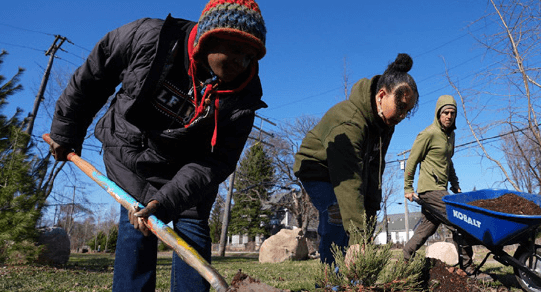 Arborists are turning vacant land
on Detroit’s eastside into a small
urban forest, not of elms, oaks and red
maples indigenous to the city but giant
sequoias, the world’s largest trees
that can live for thousands of years.
The project on four lots will not only
replace long-standing blight with majestic
trees, but could also improve air
quality and help preserve the trees that
are native to California’s Sierra Nevada,
where they are threatened by everhotter
wildfires.
Detroit is the pilot city for the Giant
Sequoia Filter Forest. The nonprofit
Archangel Ancient Tree Archive is donating
dozens of sequoia saplings that will be
[were] planted by staff and volunteers
from Arboretum Detroit, another nonprofit,
to mark Earth Day on April 22. Co-founder David Milarch says
Archangel also plans to plant sequoias
in Los Angeles, Oakland, California,
and London. The massive conifers can
grow to more than 300 feet (91.44m)
tall with a more than 30-foot (9.14 m)
circumference at the base. They can
live for more than 3,000 years.
“Here’s a tree that is bigger than
your house when it’s mature, taller
than your buildings, and lives longer
than you can comprehend,” said
Andrew “Birch” Kemp, Arboretum Detroit’s
executive director. The sequoias
will eventually provide a full canopy
that protects everything beneath, he
said. “It may be sad to call these .5-
and 1-acre (.2 – .4 ha) treescapes forests,”
Kemp said. ...
Arborists are turning vacant land
on Detroit’s eastside into a small
urban forest, not of elms, oaks and red
maples indigenous to the city but giant
sequoias, the world’s largest trees
that can live for thousands of years.
The project on four lots will not only
replace long-standing blight with majestic
trees, but could also improve air
quality and help preserve the trees that
are native to California’s Sierra Nevada,
where they are threatened by everhotter
wildfires.
Detroit is the pilot city for the Giant
Sequoia Filter Forest. The nonprofit
Archangel Ancient Tree Archive is donating
dozens of sequoia saplings that will be
[were] planted by staff and volunteers
from Arboretum Detroit, another nonprofit,
to mark Earth Day on April 22. Co-founder David Milarch says
Archangel also plans to plant sequoias
in Los Angeles, Oakland, California,
and London. The massive conifers can
grow to more than 300 feet (91.44m)
tall with a more than 30-foot (9.14 m)
circumference at the base. They can
live for more than 3,000 years.
“Here’s a tree that is bigger than
your house when it’s mature, taller
than your buildings, and lives longer
than you can comprehend,” said
Andrew “Birch” Kemp, Arboretum Detroit’s
executive director. The sequoias
will eventually provide a full canopy
that protects everything beneath, he
said. “It may be sad to call these .5-
and 1-acre (.2 – .4 ha) treescapes forests,”
Kemp said. ...

 Providing stabilizing
assistance, it allows you to exit
your car, truck or SUV independently.
This support handle is for the elderly,
and those with limited mobility.
Designed to slide into the vehicle’s ushape
door latch. equipped with a
cushioned, nonslip overlay to
provide a secure grip.
www.amazon.com
Providing stabilizing
assistance, it allows you to exit
your car, truck or SUV independently.
This support handle is for the elderly,
and those with limited mobility.
Designed to slide into the vehicle’s ushape
door latch. equipped with a
cushioned, nonslip overlay to
provide a secure grip.
www.amazon.com

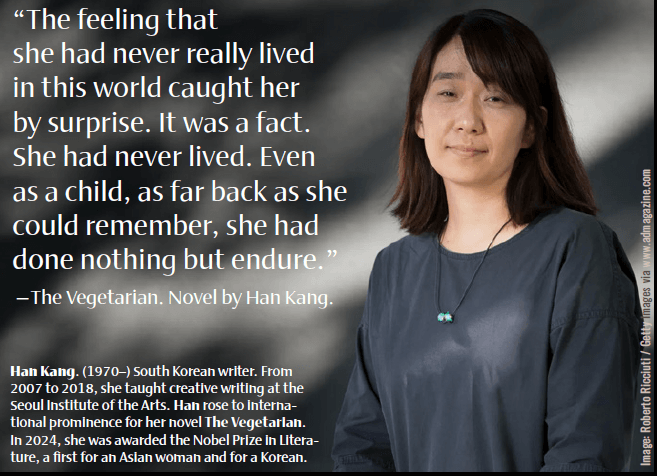

 Atlantic International University
offers a Bachelor’s in Mechanical
Engineering program that stands out for
its innovative approach to online learning,
providing students with a comprehensive
and flexible educational experience.
It allows students worldwide to
access quality education in Mechanical
Engineering without geographical limitations.
It accommodates individuals
who may have constraints in attending
traditional on-campus programs due to
work, family, or other commitments.
AIU fosters an interactive learning
environment through virtual classrooms,
discussion boards, and collaborative
projects. This facilitates peer-to-peer learning, networking
opportunities, and the exchange of
ideas and concepts. The Bachelor’s in
Mechanical Engineering program at
AIU allows students to customize their
curriculum towards specific areas of
interest within the field. This flexibility
lets learners focus on topics aligned
with their career aspirations or industry
demands. The emphasis on practical
application through projects and thesis
helps bridge the gap between academia
and industry.
AIU provides student support
through academic advising, tutoring,
and technical assistance in this journey.
The university is committed to staying abreast of technological advancements
and evolving industry trends, integrating
new tools and methodologies such
as ChatGPT, Dall-E, and Midjoruney into
the curriculum to ensure graduates are
well-equipped for the ever-changing
landscape of Mechanical Engineering.
Atlantic International University
offers a Bachelor’s in Mechanical
Engineering program that stands out for
its innovative approach to online learning,
providing students with a comprehensive
and flexible educational experience.
It allows students worldwide to
access quality education in Mechanical
Engineering without geographical limitations.
It accommodates individuals
who may have constraints in attending
traditional on-campus programs due to
work, family, or other commitments.
AIU fosters an interactive learning
environment through virtual classrooms,
discussion boards, and collaborative
projects. This facilitates peer-to-peer learning, networking
opportunities, and the exchange of
ideas and concepts. The Bachelor’s in
Mechanical Engineering program at
AIU allows students to customize their
curriculum towards specific areas of
interest within the field. This flexibility
lets learners focus on topics aligned
with their career aspirations or industry
demands. The emphasis on practical
application through projects and thesis
helps bridge the gap between academia
and industry.
AIU provides student support
through academic advising, tutoring,
and technical assistance in this journey.
The university is committed to staying abreast of technological advancements
and evolving industry trends, integrating
new tools and methodologies such
as ChatGPT, Dall-E, and Midjoruney into
the curriculum to ensure graduates are
well-equipped for the ever-changing
landscape of Mechanical Engineering.
 Atlantic International University is accredited by the Accreditation Service for International
Schools, Colleges and Universities (ASIC). ASIC Accreditation is an internationally
renowned quality standard for colleges and universities. Visit ASIC’s Directory of Accredited
Colleges and Universities. ASIC is a member of CHEA International Quality Group
(CIQG) in the USA, an approved accreditation body by the Ministerial Department of the Home Office
in the UK, and is listed in the International Directory of the Council for Higher Education Accreditation
(CHEA). The University is based in the United States and was established by corporate charter in 1998.
Atlantic International University is accredited by the Accreditation Service for International
Schools, Colleges and Universities (ASIC). ASIC Accreditation is an internationally
renowned quality standard for colleges and universities. Visit ASIC’s Directory of Accredited
Colleges and Universities. ASIC is a member of CHEA International Quality Group
(CIQG) in the USA, an approved accreditation body by the Ministerial Department of the Home Office
in the UK, and is listed in the International Directory of the Council for Higher Education Accreditation
(CHEA). The University is based in the United States and was established by corporate charter in 1998.
 In some cases, accredited colleges
may not accept for transfer courses and degrees
completed at unaccredited colleges, and some
employers may require an accredited degree as
a basis for eligibility for employment. Potential
students should consider how the above may affect
their interests, AIU respects the unique rules and
regulations of each country and does not seek to
influence the respective authorities. In the event
that a prospective student wishes to carry out any
government review or process in regards to his
university degree, we recommend that the requirements
of such are explored in detail with the relevant
authorities by the prospective student as the
university does not intervene in such processes.
AIU students can be found in over 180 countries,
they actively participate and volunteer
in their communities as part of their academic
program and have allocated thousands of service
hours to diverse causes and initiatives. AIU
programs follow the standards commonly used by
colleges and universities in the United States with
regards to the following: academic program
structure, degree issued, transcript, and
other graduation documents.
AIU graduation documents can include
an apostille and authentication from the
US Department of State to facilitate their
use internationally.
In some cases, accredited colleges
may not accept for transfer courses and degrees
completed at unaccredited colleges, and some
employers may require an accredited degree as
a basis for eligibility for employment. Potential
students should consider how the above may affect
their interests, AIU respects the unique rules and
regulations of each country and does not seek to
influence the respective authorities. In the event
that a prospective student wishes to carry out any
government review or process in regards to his
university degree, we recommend that the requirements
of such are explored in detail with the relevant
authorities by the prospective student as the
university does not intervene in such processes.
AIU students can be found in over 180 countries,
they actively participate and volunteer
in their communities as part of their academic
program and have allocated thousands of service
hours to diverse causes and initiatives. AIU
programs follow the standards commonly used by
colleges and universities in the United States with
regards to the following: academic program
structure, degree issued, transcript, and
other graduation documents.
AIU graduation documents can include
an apostille and authentication from the
US Department of State to facilitate their
use internationally.
| Dr. Franklin Valcin Presi den t/Academic Dean |
Dr. José Mercado Chief Executive Officer Chairman of the Board of Trustees |
Ricardo González, PhD Provost |
| Dr. Ricardo Gonzalez Chief Operation Officer and MKT Director |
Linda Collazo Logistics Coordinator |
AIU Tutors Coordinators: Deborah Rodriguez Amiakhor Ejaeta Amanda Gutierrez William Mora Miriam James Admissions Coordinators: Amalia Aldrett Sandra Garcia Junko Shimizu Veronica Amuz Alba Ochoa Jenis Garcia Judith Brown Chris Soto René Cordón Dr. Anderas Rissler Academic Coordinators: Dr. Adesida Oluwafemi Dr. Emmanuel Gbagu Dr. Lucia Gorea Dr. Edgar Colon Dr. Mario Rios Freddy Frejus Dr. Nilani Ljunggren De Silva Dr. Scott Wilson Dr. Mohammad Shaidul Islam |
| Dr. Miriam Garibaldi Vice provost for Research |
Carolina Valdes Human Resource Coordinator |
|
| Dr. Ofelia Miller Director of AIU |
Carlos Aponte Teleco mmunications Coordinator |
|
| Clara Margalef Director of Special Projects of AIU |
David Jung Corporate/Legal Counsel |
|
| Juan Pablo Moreno Director of Operations |
Bruce Kim Advisor/Consultant |
|
| Paula Viera Director of Intelligence Systems |
Thomas Kim Corporate/ Accounting Counsel |
|
| Felipe Gomez Design Director / IT Supervisor |
Maricela Esparza Administrative Coordinator |
|
| Kevin Moll Web Designer |
Chris Benjamin IT and Hosting Support |
|
| Daritza Ysla IT Coordinator |
Maria Pastrana Accounting Coordinator |
|
| Daritza Ysla IT Coordinator |
Roberto Aldrett Communications Coordinator |
|
| Nadeem Awan Chief Programming Officer |
Giovanni Castillo IT Support |
|
| Dr. Edward Lambert Academic Director |
Antonella Fonseca Quality Control & Data Analysis |
|
| Dr. Ariadna Romero Advisor Coordinator |
Adrián Varela Graphic Design |
|
| Jhanzaib Awan Senior Programmer |
Vanesa D’Angelo Content Writer |
|
| Leonardo Salas Human Resource Manager |
Jaime Rotlewicz Dean of Admissions |
|
| Benjamin Joseph IT and Technology Support |
Michael Phillips Registrar’s Office |
|
| Rosie Perez Finance Coordinator |
||
 The School of Business and Economics
allows aspiring and practicing
professionals, managers, and entrepreneurs
in the private and public sectors
to complete a self paced distance
learning degree program of the highest
academic standard.
The ultimate goal is to empower
learners and help them take advantage
of the enormous array of resources
from the world environment in order
to eliminate the current continuum of
poverty and limitations.
Degree programs are designed for
those students whose professional experience has been in business,
marketing, administration, economics,
finance and management.
The School of Business and Economics
allows aspiring and practicing
professionals, managers, and entrepreneurs
in the private and public sectors
to complete a self paced distance
learning degree program of the highest
academic standard.
The ultimate goal is to empower
learners and help them take advantage
of the enormous array of resources
from the world environment in order
to eliminate the current continuum of
poverty and limitations.
Degree programs are designed for
those students whose professional experience has been in business,
marketing, administration, economics,
finance and management.
 The School of Social and Human Studies
is focused on to the development of
studies which instill a core commitment
to building a society based on social and
economic justice and enhancing opportunities
for human well being.
The founding principles lie on the
basic right of education as outlined
in the Declaration of Human Rights.
We instill in our students a sense of
confidence and self reliance in their
ability to access the vast opportunities
available through information channels,
the world wide web, private, public,
nonprofit, and nongovernmental organizations in an ever expanding
global community.
Degree programs are aimed towards
those whose professional life has been
related to social and human behavior,
with the arts, or with cultural studies.
The School of Social and Human Studies
is focused on to the development of
studies which instill a core commitment
to building a society based on social and
economic justice and enhancing opportunities
for human well being.
The founding principles lie on the
basic right of education as outlined
in the Declaration of Human Rights.
We instill in our students a sense of
confidence and self reliance in their
ability to access the vast opportunities
available through information channels,
the world wide web, private, public,
nonprofit, and nongovernmental organizations in an ever expanding
global community.
Degree programs are aimed towards
those whose professional life has been
related to social and human behavior,
with the arts, or with cultural studies.
 The School of Science and Engineering
seeks to provide dynamic, integrated,
and challenging degree programs
designed for those whose experience
is in industrial research, scientific production,
engineering and the general
sciences. Our system for research and
education will keep us apace with the
twenty-first century reach scientific
advance in an environmentally and
ecologically responsible manner to allow
for the sustainability of the human
population. We will foster among our
students a demand for ethical behavior,
an appreciation for diversity, an understanding
of scientific investigation, knowledge of design innovation, a
critical appreciation for the importance
of technology and technological change
for the advancement of humanity.
The School of Science and Engineering
seeks to provide dynamic, integrated,
and challenging degree programs
designed for those whose experience
is in industrial research, scientific production,
engineering and the general
sciences. Our system for research and
education will keep us apace with the
twenty-first century reach scientific
advance in an environmentally and
ecologically responsible manner to allow
for the sustainability of the human
population. We will foster among our
students a demand for ethical behavior,
an appreciation for diversity, an understanding
of scientific investigation, knowledge of design innovation, a
critical appreciation for the importance
of technology and technological change
for the advancement of humanity.
 With access to a global catalog created and maintained collectively by more than
9,000 participating institutions, AIU students have secured excellent research
tools for their study programs.
With access to a global catalog created and maintained collectively by more than
9,000 participating institutions, AIU students have secured excellent research
tools for their study programs.