 JUNE, 2025.
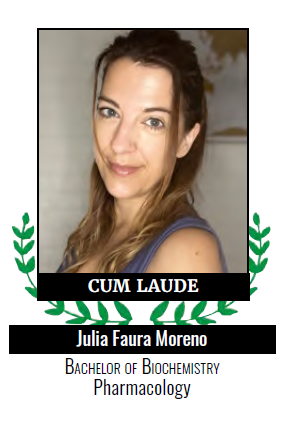
This graduate student completed
the majority of the
requirements to obtain honors,
which included a 4.0 GPA,
published works, recommendation
from her respective
advisors, patent a product, etc.
Congratulations!
JUNE, 2025.
This graduate student completed
the majority of the
requirements to obtain honors,
which included a 4.0 GPA,
published works, recommendation
from her respective
advisors, patent a product, etc.
Congratulations!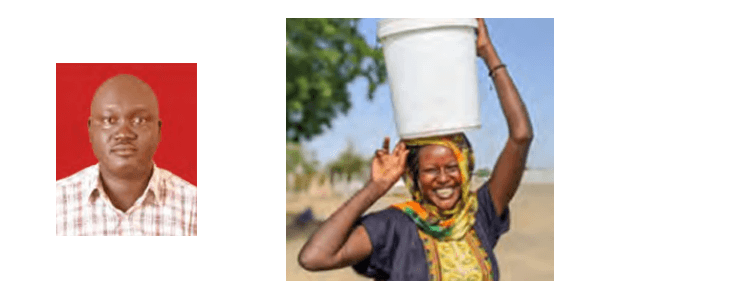 MAY 27 2025. In
the heart of Tonj
North County,
Warrap State,
South Sudan, lies
Pankot Village,
a community that has long
faced the challenges of water
scarcity. For years, residents
relied on unprotected wells,
exposing them to the risk of
waterborne diseases. However,
a recent project has brought a
wave of hope and happiness to
this village —a newly
constructed 32m3 water
yard that promises to
change lives.
The journey to
establishing the water
yard was not without its challenges. From gathering
resources to engaging with
community members, every
step required dedication and
perseverance. The goal was
clear: to provide a sustainable
and safe water supply to the
people of Pankot Village. The
project aimed not only to improve
access to clean water but
also to foster a sense of community
and collaboration ...
Garang Ajou Akuei Ajou
completed a Bachelor program
in Civil Engineering
at Atlantic International
University.
Read full text:
MAY 27 2025. In
the heart of Tonj
North County,
Warrap State,
South Sudan, lies
Pankot Village,
a community that has long
faced the challenges of water
scarcity. For years, residents
relied on unprotected wells,
exposing them to the risk of
waterborne diseases. However,
a recent project has brought a
wave of hope and happiness to
this village —a newly
constructed 32m3 water
yard that promises to
change lives.
The journey to
establishing the water
yard was not without its challenges. From gathering
resources to engaging with
community members, every
step required dedication and
perseverance. The goal was
clear: to provide a sustainable
and safe water supply to the
people of Pankot Village. The
project aimed not only to improve
access to clean water but
also to foster a sense of community
and collaboration ...
Garang Ajou Akuei Ajou
completed a Bachelor program
in Civil Engineering
at Atlantic International
University.
Read full text:
 MAY 12 2025.
Atlantic
International
University as
an institution
encourages
all students
to be creative, individualistic,
and holistically successful.
Recently we are pleased to
celebrate an astounding accomplishment
of one of our
alumna, Dr. Lucila Del Rosario
Romero, she has moved from
being a student at AIU to an
incredible published author!
Her book C’happiness is a
motivating guide to happiness, mindset, gratitude, and living
with purpose.
This accomplishment is a
testament to Dr.Lucila’s commitment
and passion but also
it epitomizes what is possible
when passion becomes action!
Dr. Lucila’s journey reminds
us all that at AIU, students can
develop academic knowledge
and flourish in their passion to
live out a remarkable life!
Dr. Lucila’s C’happiness:
La Llave que Abre Puertas
(C’happiness: The Key that Opens
Doors) is an exploration of
happiness as something that
is available for each of us, regardless of circumstance.
Through her writing, Dr. Lucila
guides us into discovering the
power of mindset and how
gratitude is paramount in our
levels of happiness; ultimately
we will see that happiness
starts from the inside.
Find the book here:
MAY 12 2025.
Atlantic
International
University as
an institution
encourages
all students
to be creative, individualistic,
and holistically successful.
Recently we are pleased to
celebrate an astounding accomplishment
of one of our
alumna, Dr. Lucila Del Rosario
Romero, she has moved from
being a student at AIU to an
incredible published author!
Her book C’happiness is a
motivating guide to happiness, mindset, gratitude, and living
with purpose.
This accomplishment is a
testament to Dr.Lucila’s commitment
and passion but also
it epitomizes what is possible
when passion becomes action!
Dr. Lucila’s journey reminds
us all that at AIU, students can
develop academic knowledge
and flourish in their passion to
live out a remarkable life!
Dr. Lucila’s C’happiness:
La Llave que Abre Puertas
(C’happiness: The Key that Opens
Doors) is an exploration of
happiness as something that
is available for each of us, regardless of circumstance.
Through her writing, Dr. Lucila
guides us into discovering the
power of mindset and how
gratitude is paramount in our
levels of happiness; ultimately
we will see that happiness
starts from the inside.
Find the book here:
 MAY 15 2025.
Paul Allsworth
claims that
cultural ties and
environmental
factors are
strong contributing forces to
corruption in the Cook Islands
government.
Speaking during a public
presentation of his newly
published doctoral thesis at
the University of the South
Pacific (USP), Allsworth said
the “heart” of his research lies
in the symbolic representation
he developed to explain how cultural influences feed into
corrupt behaviour.
Allsworth’s PhD thesis, ‘Cook
Islands – A Small Island Developing
State – The Causes and
Consequences of Corruption in
the Public Sector – 1978 to 2018’,
represents a significant contribution
to the field of Political
Science in the Pacific.
His Thesis research scrutinises
and analyses the diverse
types of corrupt activities committed
by former Members of
Parliament, Cabinet Ministers,
and public officials, utilising
the “fraud triangle model”. “In this fourth element, I
will call the ‘Te Toki e te Kaa
Rakau’,” he said, describing the
metaphor based on traditional
Cook Islands imagery. The toki
(stone axe), ka’a (coconut fibre
binding), and rakau (timber
handle) together represent the
unethical cultural and environmental
threads that contribute
to white-collar crime in
government. ...
Dr. Paul Allsworth completed
his doctoral thesis in
Political Science (with Honors)
through part-time study
online at AIU.
Find the book here:
MAY 15 2025.
Paul Allsworth
claims that
cultural ties and
environmental
factors are
strong contributing forces to
corruption in the Cook Islands
government.
Speaking during a public
presentation of his newly
published doctoral thesis at
the University of the South
Pacific (USP), Allsworth said
the “heart” of his research lies
in the symbolic representation
he developed to explain how cultural influences feed into
corrupt behaviour.
Allsworth’s PhD thesis, ‘Cook
Islands – A Small Island Developing
State – The Causes and
Consequences of Corruption in
the Public Sector – 1978 to 2018’,
represents a significant contribution
to the field of Political
Science in the Pacific.
His Thesis research scrutinises
and analyses the diverse
types of corrupt activities committed
by former Members of
Parliament, Cabinet Ministers,
and public officials, utilising
the “fraud triangle model”. “In this fourth element, I
will call the ‘Te Toki e te Kaa
Rakau’,” he said, describing the
metaphor based on traditional
Cook Islands imagery. The toki
(stone axe), ka’a (coconut fibre
binding), and rakau (timber
handle) together represent the
unethical cultural and environmental
threads that contribute
to white-collar crime in
government. ...
Dr. Paul Allsworth completed
his doctoral thesis in
Political Science (with Honors)
through part-time study
online at AIU.
Find the book here:
 JUNE 4
2025.
Our
student,
Fredy
Leonel
Archila
Morales, is the only representative
of Guatemala in the
Latin American Botanical Association
(Asociación Latinoamericana
de Botánica).
The Latin American Botanical
Association is a scientific
organization that brings together
botanical professionals,
researchers, teachers, students,
and enthusiasts in Latin America. Its main objective is
to promote the study, research,
and dissemination of botanical
knowledge in the region.
This association organizes
scientific events, such
as conferences, symposia,
and workshops, where recent
research in the field of botany
is presented and discussed.
It also fosters collaboration
among its members, promotes
the conservation of plant
diversity in Latin America, and
supports botanical education at
the regional level.
By joining the Latin American
Botanical Association, members have the opportunity
to participate in academic
activities, network with colleagues
in the region, access
specialized resources and
publications, and contribute to
the advancement of botany in
Latin America.
Fredy Archila completed a
Doctorate program in Environmental
Science at AIU.
JUNE 4
2025.
Our
student,
Fredy
Leonel
Archila
Morales, is the only representative
of Guatemala in the
Latin American Botanical Association
(Asociación Latinoamericana
de Botánica).
The Latin American Botanical
Association is a scientific
organization that brings together
botanical professionals,
researchers, teachers, students,
and enthusiasts in Latin America. Its main objective is
to promote the study, research,
and dissemination of botanical
knowledge in the region.
This association organizes
scientific events, such
as conferences, symposia,
and workshops, where recent
research in the field of botany
is presented and discussed.
It also fosters collaboration
among its members, promotes
the conservation of plant
diversity in Latin America, and
supports botanical education at
the regional level.
By joining the Latin American
Botanical Association, members have the opportunity
to participate in academic
activities, network with colleagues
in the region, access
specialized resources and
publications, and contribute to
the advancement of botany in
Latin America.
Fredy Archila completed a
Doctorate program in Environmental
Science at AIU.
 JUNE 2 2025.
Every great
writer starts
with a single
idea —a story
worth telling, a
truth worth sharing. For Eridania
Rodríguez Peguero, that
idea grew into a mission —one
that continues to change not
only her life, but the lives of
others across the Dominican
Republic and beyond.
In the 2022–2023 academic
year, Eridania entered a national
writing contest hosted by
the Ministry of Education of the Dominican Republic (MINERD).
Her essay stood out among
hundreds. It earned her national
recognition, a cash prize, and
a featured spot in a forthcoming
literacy publication aimed
at fostering a reading culture
throughout the country.
But this was only the beginning.
Fueled by her passion for
education and ethical communication,
Eridania published
her first book, The Importance of
Effective Communication: 7 Steps
to Achieve Meaningful Learning.
In it, she explores how communication
begins even before birth and continues to shape
our learning, relationships, and
societal values. ... Her book
is now available worldwide
through major retailers ...
Her academic and personal
growth have been supported
by Atlantic International
University, an institution that
champions lifelong learning,
ethical leadership, and transformative
education. Through
AIU, students like Eridania are
empowered not just to succeed
—but to serve.
Find the book here:
JUNE 2 2025.
Every great
writer starts
with a single
idea —a story
worth telling, a
truth worth sharing. For Eridania
Rodríguez Peguero, that
idea grew into a mission —one
that continues to change not
only her life, but the lives of
others across the Dominican
Republic and beyond.
In the 2022–2023 academic
year, Eridania entered a national
writing contest hosted by
the Ministry of Education of the Dominican Republic (MINERD).
Her essay stood out among
hundreds. It earned her national
recognition, a cash prize, and
a featured spot in a forthcoming
literacy publication aimed
at fostering a reading culture
throughout the country.
But this was only the beginning.
Fueled by her passion for
education and ethical communication,
Eridania published
her first book, The Importance of
Effective Communication: 7 Steps
to Achieve Meaningful Learning.
In it, she explores how communication
begins even before birth and continues to shape
our learning, relationships, and
societal values. ... Her book
is now available worldwide
through major retailers ...
Her academic and personal
growth have been supported
by Atlantic International
University, an institution that
champions lifelong learning,
ethical leadership, and transformative
education. Through
AIU, students like Eridania are
empowered not just to succeed
—but to serve.
Find the book here:
 Call for Papers
This Conference will be hosted
4–5 September 2025
by University of Granada,
Granada, Spain. + Online
Call for Papers
This Conference will be hosted
4–5 September 2025
by University of Granada,
Granada, Spain. + Online Call for Papers
This Conference will be hosted
11–12 September 2025
by Université Paris 1 Panthéon-
Sorbonne, Paris, France.
Call for Papers
This Conference will be hosted
11–12 September 2025
by Université Paris 1 Panthéon-
Sorbonne, Paris, France.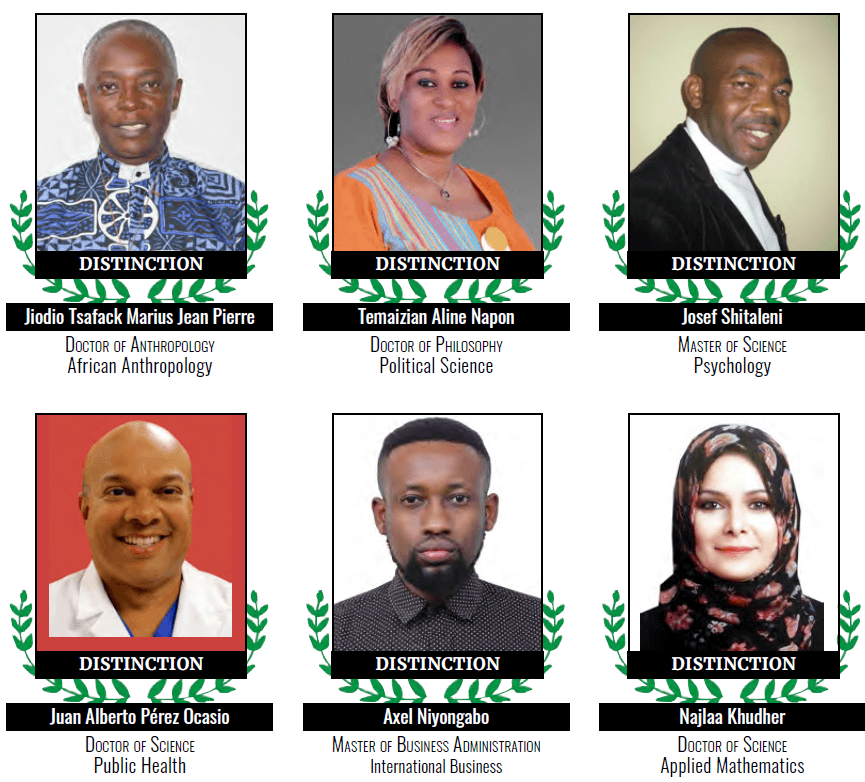 JUNE, 2025. These graduate students completed their program
with a high cumulative grade point average, which reflects the quality
of performance within their respective major.
Congratulations!
JUNE, 2025. These graduate students completed their program
with a high cumulative grade point average, which reflects the quality
of performance within their respective major.
Congratulations!
| José Adriano Ukwatchali Master of Anthropo logy Religion Angola |
Rodrigues Alberto Tambi Master of Electrical Engineering Green Energy Angola |
Jorge Adrián Velurtas Doctor of Project Management Project Management Argentina |
Gustavo Alejandro Hedemann Bachelor of Science Industrial Engineering Argentina |
Ana Estrampes de Barbeito Doctor of Psychology Marriage and Family Therapy Argentina |
Sandra Yaneth Rojas Gonzalez Bachelor of Science Psychology Belgium |
| Camila Karen Davila Gonzales Bachelor of Science Psychology Bolivia |
Thato Brian Makepe Master of Legal Studies Criminal Justice Botswana |
Jean Michel Ndayikengurutse Master of Arts Communications Burundi |
Jiodio Tsafack Marius Jean Pierre Doctor of Anthropo logy African Anthropology Cameroo n |
Lord -Emmanuel Orock Tambe- Eyong Master of Psychology Industrial and Organizational Psychology Canada |
Elías Moisés Balladares Fernández Master of Theology Theology Chile |
| Mónica Rosa Morales Seguel Doctor of Education Education Chile |
Erwin Bryan Utchanah Master of Arts Fine Arts China |
Eric Viana Buendia Associate of Science Information Technology Colombia |
Temaizian Aline Napon Doctor of Philosop hy Political Science Congo |
Jessica Useni Master of Management Management Congo |
Mina Bakhteyari Haftlangi Doctor of Psychology Clinical Psychology Cyprus |
| Manuel de Jesus Ramirez Valera Bachelor of International Legal Studies Canonical Marriages Dominican Republic |
Jade Marisol Zamora Machuca Master of Legal Studies Legal Studies Ecuador |
Luis Alberto Galarza Mejía Doctor of Science Physics Ecuador |
Amy Angela Ceron Moran Bachelor of Human Resources Human Resources Management Ecuador |
Ailyn Alejandra Miño Vera Bachelor of Human Resources Human Resources Management Ecuador |
Reyna del Tránsito Ramírez Huezo Doctor of Education Education Curriculum Management El Salvador |
| Edgar Mauricio Lainez Monge Doctor of Business Administration Business Management and Marketing El Salvador |
Isaac Kwaku Boakye Doctor of Management Human Resources Management Ghana |
Mathias Ackon-Swanzy Bachelor of Science Electrical Engineering Ghana |
Mariela Esmeralda Gómez Girón Bachelor of Science Psychology Guatemala |
Juan Carlos Quirós Chamorro Master of Business Administration Marketing Guatemala |
Belony Joseph Doctor of Science Artificial Intelligence Haiti |
| Nanou Agnini Alex Antoine Master of Public Administration Public Administration Ivory Coa st |
Stacy-Ann Whyte Toolsie Doctor of Philosop hy Educational Leadership Jamaica |
Avril Wendy LeVel Doctor of Philosop hy Psychology Jamaica |
Kerry Ann Thompson Doctor of Philosop hy Psychology Jamaica |
Yolandah Barbaricia Bloomfield Doctor of Human Resource Management Human Resource Management Jamaica |
Mwanakombo Rama Mada Bachelor of Business Information Tech. Communication and Research Kenya |
| Rachel M. Gikanga Doctor of International Relations International Development Kenya |
Rehab Abdulmunem Ali Alshireef Doctor of Philosop hy Computer Science Libya |
Pia Kinnen Fisher Doctor of Philosop hy Neuropsychology Luxembo urg |
Lorena Santos Espinosa Doctor of Science Industrial Engineering Mexico |
Rosana Mendes Neiva Bachelor of Science Psychology Mozambique |
Josef Shitaleni Master of Science Psychology Namibia |
| Miguel Fernando Ramírez Ocón Doctor of Business Administration Finance Nicaragua |
Agatha Anulika Okeke Post Doctorate of Legal Studies Legal Studies Nigeria |
Oseagwina Gregory Edeaghe Master of Science Mechanical Engineering Nigeria |
Douglas Onyenweuwa Jombo Doctor of Philosop hy Public Health Management Nigeria |
Fatima Ibrahim Maikaita Bachelor of Science Nutrition Nigeria |
Ike, Edwin Nnanna Master of Science Electrical Engineering Nigeria |
| Ezeh, Okechukwu Timothy Doctor of Engineering Structural Engineering Nigeria |
Timothy Adebisi Oyeniyi Doctor of Philosop hy Business Management Nigeria |
Ekwe, Chukwu Agwu Doctor of Philosop hy Strategic Management Nigeria |
Eric Alberto Chang Cazorla Bachelor of Legal Studies Criminolog |
George Erick Mazulis Ochoa Bachelor of Project Management Organizational Development Panama |
Alexis De La Cruz Lombardo Post-Doctor of Science Microbiology and Physiology Panama |
| Katherine Daniela Murillo Araya Bachelor of Education Early Childhood Education Panama |
Baldomir Rodolfo Barron Belevan Bachelor of Science Environmental Engineering Peru |
Arturo Paraiso Pilapil Master of Science Civil Engineering - Geotechnical Philippines |
Mae Ann Manganaan Master of Business Administration Financial Management Philippines |
Juan Alberto Pérez Ocasio Doctor of Science Public Health Puerto Rico |
Kelvin Thomas Lamb Doctor of Education Education Republic of Korea |
| Axel Niyongabo Master of Business Administration International Business Rwanda |
Jeanne Ella Andrianambinina Doctor of Management Strategic Management Sierra Leone |
Livhuwani Fulufhelo Mukapu Doctor of Education Education South Africa |
Farrington Mncedi Mdolo Doctor of Theology Theology South Africa |
Tebere Benson Master of Science Psychology South Sudan |
Gonzalo Pablo Mpanga Eboji Bachelor of Science Information Technology Spa in |
| Julia Faura Moreno Bachelor of Biochemistry Pharmacology Spa in |
Shameda Delaney Weekes Doctor of Sociology Sociology St. Maa rten |
Alsheikh Ismail Mohammed Tutu Bachelor of Business Administration Business Administration Sudan |
Zainab Rattansi-Lalji Master of Science Nutritional Psychology Tanzania |
Alex Martin Mnyambwa Master of Engineering Construction Management Tanzania |
Naresh Persad Birju Doctor of Education Education Trinidad and Toba go |
| Charles Nwaneri Ekeh Master of Project Management Renewable Energy Engineering United Kingdom |
Thelma Vimbai Mutamba Master of Science Psychology US A |
Leonardo Morales Cáceres Bachelor of Science Electrical Engineering US A |
Roberto Jose Lozano Doctor of Philosop hy Clinical Psychology US A |
Eyong Efobi Bate Takang John Doctor of Science Public Health US A |
William Sunpewoh Master of Science Project Management US A |
| Najlaa Khudher Doctor of Science Applied Mathematics US A |
Christian Beya Kabeya Doctor of Philosop hy English Language and Literature US A |
Abiodun Babalola Doctor of Social Develop ment Leadership US A |
Sayyed `Abd Al-Mahdi Musawi Doctor of Philosop hy Sociology and Anthropology US A |
Michael Kakoma Njapau Doctor of Business Administration Risk Management and Insurance Zambia |
John Alufeyo Master of Project Management Project Management Zambia |
| Alice Jere Tembo Master of Business Administration Business Administration and Management Zambia |
Thomas Chipulu Bachelor of Science Civil Engineering Zambia |
Jessy M. Lengwe Bachelor of Business Administration Business Management Zambia |
 Ernest Udeh
 Garang Ajou Akuei Ajou
 Jamiu Akano Adeleke
 Nandita Singh
When we speak of truth,
our thoughts immediately
turn to the Greco-Roman
antiquity of Socrates, Plato,
and Aristotle; this in the West.
Truth: the adequacy of
thought with the object.
Nowadays, what the object is
has been the subject of much
discussion: what we can’t
deny, in the first instance, is
that which human thought
seeks to point out.
What is it? At first glance, we
identify the human being and
his thoughts. The problem has
always been the relationship of
the subject with what it calls
the object.
Science, throughout History,
shows us what we can consider
truth. The human being is that
something existing alongside
the other elements of nature.
The great question we always
ask ourselves is what truth is?
The men and women whose
occupation is the explanations
of everything that exists and is
known by them is what we call truth. Men and women of science
present their explanations
to peers and non-peers. When
an explanation or an element
of that explanation seems
different from the research
carried out, further explanation
is required until the new
contribution is demonstrated
and proven. Look at Figure 1,
where Bohr, Heisenberg, and
Pauli are discussing.
It’s very easy these days
to say this and that with the
slightest explanation consistent
with proven scientific thinking.
Nowadays, we have highly
developed scientific thinking.
We talk a lot about Artificial
Intelligence (AI), and many
blunders are made with it. The
big question is why not work
with all the benefits it provides
and can continue to provide.
We have physics that allows
us many benefits: quantum physics. Werner Karl Heisenberg,
1932 Nobel Prize in Physics
for the creation of quantum
mechanics. “Technologies such
as modern computers, GPS,
lasers, mobile phones, and
online shopping were implemented
through the mastery
and application of quantum
mechanics. Budding technologies
such as artificial intelligence,
robotics, self-driving
cars, and telemedicine are also
conditioned by its principles.
We couldn’t conceive of today's
everyday life without quantum
physics.” What exactly is quantum
physics? https://www .gaceta.unam.
mx/que-es-exactamente-la-fisicacuantica/
February 6, 2025
It is very easy to say and say
without demonstration and
verification. Where does the
work that has benefited us so
much come from, even if some
don’t want to accept it?
That work comes from 20th
century physicists. It was the
work of human beings who,
often deferring, sought all possible
explanations to arrive at
theories that have yielded the
fruits we obtain nowadays.
Werner Karl Heisenberg was
and continues to be a great
figure in Quantum Physics.
“Heisenberg made his most
important contributions in the
theory of atomic structure. In
1925, he began to develop a
system of quantum mechanics,
called matrix mechanics, in
which the mathematical formulation
was based on the frequencies
and amplitudes of the
radiation absorbed and emitted
by the atom and on the energy
levels of the atomic system”.
WordPress. Physics, Fluids, and
Thermodynamics. Werner Heisenberg
https://athanieto.wordpress.com/
biografias/werner-heisenberg/ 2025.
It should be noted that
Heisenberg was conducting
his intensive work in quantum
mechanics at just 23 years old.
“Some other applications of quantum
physics
include electronics
(such
as transistors
and microprocessors),
information
technology
(such as
computational
chemistry),
other imaging
technologies
(such as electron
microscopes),
and
energy technology
(such
as nuclear reactors), among others.”
What exactly is Quantum Physics?
https://www .gaceta.unam.mx/quees-
exactamente-la-fisica-cuantica/
February 6, 2025
Quantum Mechanics
emerged with Heisenberg’s
work. Quantum Mechanics
differs from Newtonian
Mechanics because Newtonian
mechanics consider the
object as fixed.
Heisenberg’s Uncertainty
Principle: “States that there
is a limit to the precision
with which the position and
momentum of an object can
be measured simultaneously.
Depending on the experimental
conditions, either quantity
can be measured with the
desired precision (at least in principle), but the greater the
precision with which one is
measured, the less precise the
other is known.
What we must learn is that
nature is there and that we
humans are the ones who
must seek paths to understand
it. Not just anyone can
say this is true and that it is
not. The world and the beings
that inhabit it only expect us
to find the path that leads to
explanation. Believing that we
humans make the world is a
somewhat arrogant assumption;
everything is and has
always been there.
Those who say this and that
and aren’t people seeking
knowledge can’t offer explanations
they don’t know.
The problem we have is
believing that the world is
created by us. We must study
to understand what scientists
have been able to delve into
and explain until now.
Saying and saying this and
that without a guideline for
how science is done benefits no
one. The sad thing about the
present we live in is that many
confuse money with knowledge.
The big question is: what
will those who claim to know
do when the necessary time to
verify their claim has passed?
Nature holds its truth, and
when human beings fail to
find it, nature itself insists:
it's not that way.
We can say that there is no
impact, that nonrenewable resources aren’t multiplying,
but nature, no matter how
much you deny it, will say
this is so. Do things as you
see fit, and I will always say:
it’s not that way.
We can say that nothing is
happening to nature with the
way we use the resources we
take from here and there; it
will say, “It’s over here,” no
more vegetation will grow, and
there will be no more animals.
We aren’t creating; Nature
tells us, and from there, human
beings can grow.
If you want to advance, learn
what I tell you, and from there
you can move forward.
All sciences grow and grow
from what scientists discover.
We need a few years —they
will be few— to see the outcome
of this crazy world created
by those who think they
know, and in two seconds, it's
clear it’s false.
The sad thing is that we will
all pay for the consequences;
they live as if they were going
to move to another galaxy.
All creations based on quantum
mechanics are extraordinary.
Science is extraordinary.
Learn so that others don’t
tell you what they want.
Learn so that others don’t
use you for their own benefit.
Money can be used to buy
things, but it doesn’t provide
the peace of mind that comes
with knowing how things
go, what the things we call
objects are. It can be bought,
but there’s a limit; inner peace
can’t be sold.
You are completing a study
program at Atlantic International
University (AIU).
Study; look for
the explanations
that scientists make.
Study so that
no one uses you.
Study to have explanations
for things
and know the path to
where you want to go.
Work on learning,
not passing by to say,
“I have a diploma.”
BIBLIOGRAPHY. Britannica- Werner Heisenberg. https://www.britannica.com/biography/
Werner-Heisenberg Abril 15- 2025. Inglés | Britannica- Mecánica Cuántica. https://www.
britannica.com/science/quantum-mechanics-physics/Heisenberg-uncertainty-principle
6 de mayo 2025. Inglés | Britannica- Principio de incertidumbre. https://www.britannica.
com/science/uncertainty-principle Abril 2025. Español | Jauregui Renaud, R. ¿Qué
es exactamente la Física Cuántica? https://www.gaceta.unam.mx/que-es-exactamente-lafisica-
cuantica/ Febrero 6 2025. Español | Premio Nobel de Física 193. https://www.
nobelprize.org/prizes/physics/1932/summary/ Español | Todos los Permios Nobel.
https://www.nobelprize.org/all-nobel-prizes-2024/ Inglés | Werner Heisenberg -
https://www.nobelprize.org/prizes/physics/1932/heisenberg/biographical/ Inglés | WordPress
Física, Fluidos y Termodinámica. Werner Heisenberg. https://athanieto.wordpress.com/
biografias/werner-heisenberg/ 2025. Español.

Article overview
The resurrection of Jesus
Christ stands as a pivotal event
in Christian theology and apologetics,
sparking intense debate
and scrutiny across academic
and religious circles [1]. This
article embarks on a critical
exploration of the resurrection,
integrating biblical exegesis,
historical analysis, and
apologetic inquiry to unveil the
complexities and significance of
this foundational event.
The resurrection
in Biblical context
The resurrection narratives
in the Gospels (Matthew 28,
Mark 16, Luke 24, John 20-21)
present a multifaceted portrayal
of Jesus’ post-crucifixion
appearances, emphasizing the
significance of the empty tomb
and the transformed lives of
the disciples [2]. As N.T. Wright
notes, “the tomb was empty,
and the disciples were not
merely hallucinating” [3].
Historical Jesus
and the resurrection
Historical approaches to
the resurrection, including
the “minimal facts” argument,
offer a framework
for examining the event’s
historicity [4]. Scholars such
as William Lane Craig argue
that the resurrection is a
historically verifiable event
that supports the truth of
Christianity [5]. In contrast,
skeptics like Bart Ehrman
challenge the historicity of
the resurrection narratives,
underscoring the limitations
of historical analysis in verifying
miraculous claims [6].
Apologetic challenges
and responses
Contemporary objections
to the resurrection, including
naturalistic explanations and
mythological interpretations,
necessitate a robust apologetic
response [7]. By engaging
with skeptical perspectives
and examining the historical
evidence and apologetic
implications, apologists can
demonstrate the validity of the
resurrection and its significance
for Christian faith.
Theological significance
of the resurrection
The resurrection has
profound implications for
Christology, soteriology, and
eschatology, underscoring
Jesus’ divinity, the efficacy
of his sacrifice, and the hope
of eternal life [8]. As Paul
notes, “if Christ has not been
raised, your faith is futile”
(1 Corinthians 15:17) [9]. The
resurrection’s significance
extends beyond historical
verification, shaping Christian
worship, discipleship,
and evangelism.
Interdisciplinary
perspectives
on the resurrection
Insights from philosophy,
archaeology, and other
disciplines inform our understanding
of the resurrection,
highlighting its complex interplay
between biblical narrative,
historical evidence, and theological
interpretation [10]. By
embracing an interdisciplinary
approach, scholars can develop
a more nuanced understanding
of the resurrection’s
significance and relevance in
contemporary contexts.
Case study: The resurrection
in contemporary
apologetics
The resurrection remains
a cornerstone of Christian
apologetics, providing a
robust response to skeptical
views of Jesus’ life and
teachings [11]. By examining
the historical evidence
and apologetic implications,
apologists can demonstrate
the validity of the resurrection
and its significance for
Christian faith and practice.
Conclusion and future
directions
The resurrection of Jesus
Christ is a foundational event
in Christian apologetics, offering
a rich and complex topic
for exploration and discussion.
By examining the resurrection’s
historical, theological,
and apologetic significance,
scholars can develop effective
strategies for engaging diverse
audiences and articulating the
relevance of Christian faith in
contemporary contexts.
REFERENCES. [1] Wright, N.T. The Resurrection of the Son of God. | [2]
Bauckham, R. Jesus and the Eyewitnesses. | [3] Wright, N.T. The Resurrection
of the Son of God, 614. | [4] Craig, W.L. The Son Rises. | [5] Craig,
W.L. The Son Rises, 125. | [6] Ehrman, B.D. How Jesus Became God. | [7]
Habermas, G.R. The Risen Jesus and Future Hope. | [8] Moltmann, J. The
Theology of Hope. | [9] Fee, G.D. Gospel and Spirit. | [10] Pannenberg, W.
Systematic Theology, vol. 2. | [11] Craig, W.L. Reasonable Faith.
 Former elementary school teacher
Spencer Russell posed a question
to parents who follow his Instagram
account, Toddlers Can Read: “Why aren’t
you reading aloud to your kids?” The
responses, which Russell shared with
the Guardian, ranged from embarrassed
to annoyed to angry. “It’s so boring,”
said one parent. “I don’t have time,”
said another. One mother wrote in: “I
don’t enjoy reading myself.”
Others reported difficulty getting
their children to sit still long enough:
“He’s always interrupting,” or “my son
just wants to skip all the pages.” They
noted the monotony of story time, with
one saying: “I love reading with my
kids, but they request the same book
over and over.”
Parents who struggle to read to
their children tend to be younger themselves, according to a recent survey
from HarperCollins UK. Fewer than
half of gen Z parents called reading to
their children “fun for me”, and almost
one in three saw reading as “more of a
subject to learn” than something to be
enjoyed —significantly more than their
gen X counterparts. ...
America’s so-called “literacy crisis”
is well-documented; an Atlantic report
from last fall found that many elite
college students fail to complete English
assignments, as they never had to
read a full book in high school. ... Kids
who don’t get a head start reading at
home often have trouble catching up
to those who do, says Dawna Duff, an
associate professor of speech language
pathology at Suny’s Binghamton ...
Read full text:
Former elementary school teacher
Spencer Russell posed a question
to parents who follow his Instagram
account, Toddlers Can Read: “Why aren’t
you reading aloud to your kids?” The
responses, which Russell shared with
the Guardian, ranged from embarrassed
to annoyed to angry. “It’s so boring,”
said one parent. “I don’t have time,”
said another. One mother wrote in: “I
don’t enjoy reading myself.”
Others reported difficulty getting
their children to sit still long enough:
“He’s always interrupting,” or “my son
just wants to skip all the pages.” They
noted the monotony of story time, with
one saying: “I love reading with my
kids, but they request the same book
over and over.”
Parents who struggle to read to
their children tend to be younger themselves, according to a recent survey
from HarperCollins UK. Fewer than
half of gen Z parents called reading to
their children “fun for me”, and almost
one in three saw reading as “more of a
subject to learn” than something to be
enjoyed —significantly more than their
gen X counterparts. ...
America’s so-called “literacy crisis”
is well-documented; an Atlantic report
from last fall found that many elite
college students fail to complete English
assignments, as they never had to
read a full book in high school. ... Kids
who don’t get a head start reading at
home often have trouble catching up
to those who do, says Dawna Duff, an
associate professor of speech language
pathology at Suny’s Binghamton ...
Read full text:
 For two decades, Ann Johnson has
been unable to walk or talk after she
experienced a stroke that impaired her
balance and her breathing and swallowing
abilities. But in 2022, Johnson was
finally able to hear her voice through an
avatar, thanks to a brain implant.
The implant is an example of the
neurotechnologies that have entered
human trials during the past five years.
These devices, developed by research
teams and firms including entrepreneur
Elon Musk’s Neuralink, can alter
the nervous system’s activity to influence
functions such as speech, touch
and movement. Last month, they were
the topic of a meeting in Paris, hosted
by the UNESCO, at which delegates
finalized a set of ethical principles to
govern neurotechnologies.
The recommendations focus on protecting users from technology misuse
that could infringe on their human
rights, including their autonomy and
freedom of thought. The delegates, who
included scientists, ethicists and legal
specialists, decided on nine principles.
These include recommendations that
technology developers disclose how
neural information is collected and
used, and that they ensure the longterm
safety of a product on people’s
mental states.
“This document clarifies how to protect
human rights, especially in relation
to the nervous system,” says Pedro
Maldonado, a neuroscientist at the U.
of Chile in Santiago who was one of 24
experts who drafted the recommendations
in 2024. The principles are not
legally binding, but ...
Read full text:
For two decades, Ann Johnson has
been unable to walk or talk after she
experienced a stroke that impaired her
balance and her breathing and swallowing
abilities. But in 2022, Johnson was
finally able to hear her voice through an
avatar, thanks to a brain implant.
The implant is an example of the
neurotechnologies that have entered
human trials during the past five years.
These devices, developed by research
teams and firms including entrepreneur
Elon Musk’s Neuralink, can alter
the nervous system’s activity to influence
functions such as speech, touch
and movement. Last month, they were
the topic of a meeting in Paris, hosted
by the UNESCO, at which delegates
finalized a set of ethical principles to
govern neurotechnologies.
The recommendations focus on protecting users from technology misuse
that could infringe on their human
rights, including their autonomy and
freedom of thought. The delegates, who
included scientists, ethicists and legal
specialists, decided on nine principles.
These include recommendations that
technology developers disclose how
neural information is collected and
used, and that they ensure the longterm
safety of a product on people’s
mental states.
“This document clarifies how to protect
human rights, especially in relation
to the nervous system,” says Pedro
Maldonado, a neuroscientist at the U.
of Chile in Santiago who was one of 24
experts who drafted the recommendations
in 2024. The principles are not
legally binding, but ...
Read full text:
 More than 100,000 people in the
United States are waiting for a
new heart, kidney or some other organ.
Many will die waiting. Some scientists
see new hope for these people in organs
from pigs that have been engineered
to work within the human body. Such
species-to-species transplants offer a
technical solution to a basic problem:
There are more people in need than
there are organs, be they from living or
brain-dead donors, to go around.
“Unfortunately, as we speak, someone
is dying just waiting for an organ,”
says surgeon Muhammad Mansoor
Mohiuddin, director of the cardiac
xenotransplantation program at the
University of Maryland, Baltimore. Over
the past few years, a handful of people in the United States and China have
received specially modified pig kidneys,
hearts and livers, but getting those
organs to function safely in a person
is a huge challenge, as laid out in the
2024 Annual Review of Animal Biosciences.
Now, thanks to technological and
medical advances, United Therapeutics
is starting the first official clinical trials
of xenotransplantation, and many
researchers believe the procedure could
eventually become routine.
Yet there are ongoing questions,
including risks that pig organs will
transmit viruses to people, and a number
of ethical concerns. Here’s a look at
the state of play and ...
More than 100,000 people in the
United States are waiting for a
new heart, kidney or some other organ.
Many will die waiting. Some scientists
see new hope for these people in organs
from pigs that have been engineered
to work within the human body. Such
species-to-species transplants offer a
technical solution to a basic problem:
There are more people in need than
there are organs, be they from living or
brain-dead donors, to go around.
“Unfortunately, as we speak, someone
is dying just waiting for an organ,”
says surgeon Muhammad Mansoor
Mohiuddin, director of the cardiac
xenotransplantation program at the
University of Maryland, Baltimore. Over
the past few years, a handful of people in the United States and China have
received specially modified pig kidneys,
hearts and livers, but getting those
organs to function safely in a person
is a huge challenge, as laid out in the
2024 Annual Review of Animal Biosciences.
Now, thanks to technological and
medical advances, United Therapeutics
is starting the first official clinical trials
of xenotransplantation, and many
researchers believe the procedure could
eventually become routine.
Yet there are ongoing questions,
including risks that pig organs will
transmit viruses to people, and a number
of ethical concerns. Here’s a look at
the state of play and ...
 Astronomers using data from NASA,
the European Space Agency (ESA),
and other observatories around the
world have discovered the most energetic
explosions to occur since the Big Bang
13.8 billion years ago.
Black holes cannot be seen by our observations
except when something else
interacts with them. For years, we have
observed them indirectly through tidal
disruption events (TDEs), when gravitational
forces of the black hole create
“tides” that tear apart a star into giant
streams of gas that surround the black
hole as debris.
These events are highly energetic, but
in a new study, a team from the University
of Hawaii’s Institute for Astronomy
(IfA) report a new class of event that
makes them look puny in comparison. Searching through ESA’s Gaia data, lead
author Jason Hinkle found several unusual,
long-lived flares that took place
in 2016 and 2018.
After looking at observations from
other ground and space-based telescopes,
the team found that they —and
a third identified in 2020— were the
highest-energy explosions known to
date. The new class of cosmic explosion
has been dubbed Extreme Nuclear
Transients (ENTs).
“We’ve observed stars getting ripped
apart as tidal disruption events for over
a decade, but these ENTs are different
beasts, reaching brightnesses nearly 10
times greater than what we typically
see,” Hinkle said in a statement. ...
Read full text
Astronomers using data from NASA,
the European Space Agency (ESA),
and other observatories around the
world have discovered the most energetic
explosions to occur since the Big Bang
13.8 billion years ago.
Black holes cannot be seen by our observations
except when something else
interacts with them. For years, we have
observed them indirectly through tidal
disruption events (TDEs), when gravitational
forces of the black hole create
“tides” that tear apart a star into giant
streams of gas that surround the black
hole as debris.
These events are highly energetic, but
in a new study, a team from the University
of Hawaii’s Institute for Astronomy
(IfA) report a new class of event that
makes them look puny in comparison. Searching through ESA’s Gaia data, lead
author Jason Hinkle found several unusual,
long-lived flares that took place
in 2016 and 2018.
After looking at observations from
other ground and space-based telescopes,
the team found that they —and
a third identified in 2020— were the
highest-energy explosions known to
date. The new class of cosmic explosion
has been dubbed Extreme Nuclear
Transients (ENTs).
“We’ve observed stars getting ripped
apart as tidal disruption events for over
a decade, but these ENTs are different
beasts, reaching brightnesses nearly 10
times greater than what we typically
see,” Hinkle said in a statement. ...
Read full text
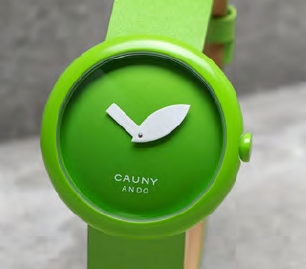 Tadao Ando has designed watches
for Cauny, inspired by green apples
and the concept of youth underlined
in Samuel Ullman’s poem. There are
two models for the series. One is in
apple green, while the other is in silver,
drawn from the concrete architecture
that the 1995 Pritzker Architecture
Prize awardee is known for. The Tadao
Ando apple-inspired watches both have
Italian leather straps. They also have a
sapphire glass with AR coating for the
dial’s top. For both of Tadao Ando’s
apple watches, there are no visible time
markers: no hours, no minutes.
One of the timepiece hands resembles
the shape of a leaf, a homage
to the fruit it refers to. The dials
are also clear of any designs. Like the
architect’s masterworks, they show the
materiality. ...
Read full text
Tadao Ando has designed watches
for Cauny, inspired by green apples
and the concept of youth underlined
in Samuel Ullman’s poem. There are
two models for the series. One is in
apple green, while the other is in silver,
drawn from the concrete architecture
that the 1995 Pritzker Architecture
Prize awardee is known for. The Tadao
Ando apple-inspired watches both have
Italian leather straps. They also have a
sapphire glass with AR coating for the
dial’s top. For both of Tadao Ando’s
apple watches, there are no visible time
markers: no hours, no minutes.
One of the timepiece hands resembles
the shape of a leaf, a homage
to the fruit it refers to. The dials
are also clear of any designs. Like the
architect’s masterworks, they show the
materiality. ...
Read full text
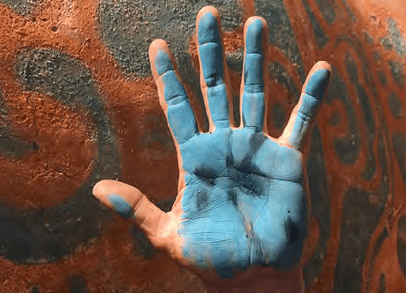 Luis May Ku was intent on finding
the plant. He felt certain that
somewhere among the shrubs of his
home village in Mexico or in the surrounding
jungle grew the wild ch’oj.
He needed the plant to extract indigo, a
dye he could experiment with to unlock
the recipe of “Mayan blue”—a pigment
no longer available in the markets of
the Yucatan peninsula, and a favorite
color of the Mayan gods.
“There are five cardinal points in
the Mayan cosmogony,” says May Ku,
who is a ceramics artist and identifies
as Mayan. In addition to north, south,
east, and west, there is the cardinal
point that stands for the center of the
Earth. “Its color is a mixture of blue
and green,” May Ku says. “It holds the
world together.”
A native of Dzán, a tiny village nestled
in Yucatan, May Ku splits his time
between home and Cobá, a renowned
hub of classical Mayan culture, where a collection
of pyramids
—estimated
to be some
1,100 to
1,500 years
old— attracts
tourists and
scholars in
search of
the past. At
Cobá, May Ku is the director of the local cultural
center and a public school teacher.
After years of scouring for clues far
and near —the internet and his local
environment— May Ku found a single
ch’oj plant (Indigofera suffruticosa) in
the backyard of the very cultural center
where he worked. He confirmed with a
botanist friend that this was the plant
he was looking for. Deciding between
cutting the plant down to experiment
immediately and setting up a small
grove, May Ku settled for the patient
option. It took him a few months to
collect the seeds, plant them, and nurture
them before attempting to extract
the indigo dye. ...
Then he harvested leaves and soaked
them in water for a full day; the leaves
began to ferment. He shook this broth
to aerate it, and the dye precipitated.
If you were to soak clothes in the fermented
water, they would first bleach
and then begin to turn it blue, he explains.
“This practice was
used by the
ancient Mayans,”
May
Ku says, “to
paint their
clothes.”...
Luis May Ku was intent on finding
the plant. He felt certain that
somewhere among the shrubs of his
home village in Mexico or in the surrounding
jungle grew the wild ch’oj.
He needed the plant to extract indigo, a
dye he could experiment with to unlock
the recipe of “Mayan blue”—a pigment
no longer available in the markets of
the Yucatan peninsula, and a favorite
color of the Mayan gods.
“There are five cardinal points in
the Mayan cosmogony,” says May Ku,
who is a ceramics artist and identifies
as Mayan. In addition to north, south,
east, and west, there is the cardinal
point that stands for the center of the
Earth. “Its color is a mixture of blue
and green,” May Ku says. “It holds the
world together.”
A native of Dzán, a tiny village nestled
in Yucatan, May Ku splits his time
between home and Cobá, a renowned
hub of classical Mayan culture, where a collection
of pyramids
—estimated
to be some
1,100 to
1,500 years
old— attracts
tourists and
scholars in
search of
the past. At
Cobá, May Ku is the director of the local cultural
center and a public school teacher.
After years of scouring for clues far
and near —the internet and his local
environment— May Ku found a single
ch’oj plant (Indigofera suffruticosa) in
the backyard of the very cultural center
where he worked. He confirmed with a
botanist friend that this was the plant
he was looking for. Deciding between
cutting the plant down to experiment
immediately and setting up a small
grove, May Ku settled for the patient
option. It took him a few months to
collect the seeds, plant them, and nurture
them before attempting to extract
the indigo dye. ...
Then he harvested leaves and soaked
them in water for a full day; the leaves
began to ferment. He shook this broth
to aerate it, and the dye precipitated.
If you were to soak clothes in the fermented
water, they would first bleach
and then begin to turn it blue, he explains.
“This practice was
used by the
ancient Mayans,”
May
Ku says, “to
paint their
clothes.”...
 Located in the village of Hignigada
near Baramati, Maharashtra, India,
POD for Happiness is a multi-functional
community structure designed by Craft
Narrative. Positioned around a mature
banyan tree, the intervention organizes
space on a school campus where
an avenue of trees separates a large
playground. The POD functions as a
play area, an outdoor classroom, and a
communal gathering space. The structure
is designed as a curving arc that
partially encloses the banyan tree. Its
form creates a porous connection between
two sections of the playground,
allowing movement across multiple
points. Children can climb, slide, and
traverse a raised bridge that offers
views of the school and the adjacent
village temple. Within the arc, small
pockets are integrated for reading and
quiet play. ...
Located in the village of Hignigada
near Baramati, Maharashtra, India,
POD for Happiness is a multi-functional
community structure designed by Craft
Narrative. Positioned around a mature
banyan tree, the intervention organizes
space on a school campus where
an avenue of trees separates a large
playground. The POD functions as a
play area, an outdoor classroom, and a
communal gathering space. The structure
is designed as a curving arc that
partially encloses the banyan tree. Its
form creates a porous connection between
two sections of the playground,
allowing movement across multiple
points. Children can climb, slide, and
traverse a raised bridge that offers
views of the school and the adjacent
village temple. Within the arc, small
pockets are integrated for reading and
quiet play. ...
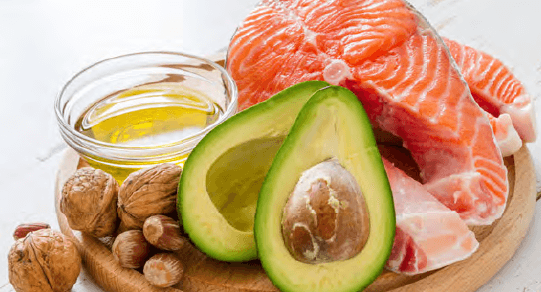 A new research paper on the diet’s
effects has whipped the nutrition
field into a frenzy. Researchers
behind the study say it supports keto’s
health credentials; opponents claim the
research shows the exact opposite. Cue
public spats on social media, questions
about the study’s rigor, and calls for
it to be withdrawn. “It’s a collective
mess,” says Kevin Klatt, an assistant
research scientist and instructor in the
Department of Nutrition Sciences and
Toxicology at UC Berkeley.
Published on April 7 in JACC: Advances,
the paper examines the relationship
between cholesterol and the ketogenic
diet —the practice of consuming lowcarb,
high-fat foods to try to push the
body into “ketosis,” where cells burn
fat instead of carbs for energy. Keto diets have become a popular strategy
used by millions for losing weight,
though detractors have questioned how
healthy it is to consistently consume
high amounts of fat.
The study has received a significant
amount of attention. Altmetric, which
measures the attention a publication
receives in the press and on social media,
puts it in the top 5% of the papers
it tracks —more than 24 million pieces
of research.
According to some keto advocates,
the paper’s findings are a step towards
refuting the widely accepted theory that
LDL cholesterol has a causal relationship
with heart disease and other
cardiovascular conditions. ...
Read full text
A new research paper on the diet’s
effects has whipped the nutrition
field into a frenzy. Researchers
behind the study say it supports keto’s
health credentials; opponents claim the
research shows the exact opposite. Cue
public spats on social media, questions
about the study’s rigor, and calls for
it to be withdrawn. “It’s a collective
mess,” says Kevin Klatt, an assistant
research scientist and instructor in the
Department of Nutrition Sciences and
Toxicology at UC Berkeley.
Published on April 7 in JACC: Advances,
the paper examines the relationship
between cholesterol and the ketogenic
diet —the practice of consuming lowcarb,
high-fat foods to try to push the
body into “ketosis,” where cells burn
fat instead of carbs for energy. Keto diets have become a popular strategy
used by millions for losing weight,
though detractors have questioned how
healthy it is to consistently consume
high amounts of fat.
The study has received a significant
amount of attention. Altmetric, which
measures the attention a publication
receives in the press and on social media,
puts it in the top 5% of the papers
it tracks —more than 24 million pieces
of research.
According to some keto advocates,
the paper’s findings are a step towards
refuting the widely accepted theory that
LDL cholesterol has a causal relationship
with heart disease and other
cardiovascular conditions. ...
Read full text
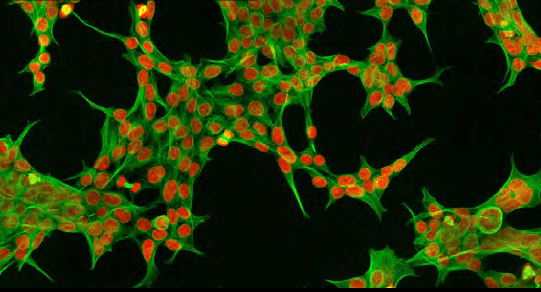 Think learning and memory are all
the job of the brain? You might
want to think again, if the results of
a recent study are to be believed. In a
first, scientists at New York University
(NYU) uncovered evidence of a type of
learning called the massed-space effect
in cells from outside the brain, suggesting
that it’s not so much about the type
of cells, but rather just the fact that
they are cells that matters.
The study, published in November
2024, was co-led by Nikolay Kukushkin,
a Clinical Associate Professor at
NYU, who recently sat down with IFLScience
for a fascinating chat about the
capacity of the human memory.
“We find that other cells —not just
brain cells— store patterns of information,
and they can detect differences between surprisingly fine patterns,”
Kukushkin told IFLScience. “We used
kidney cells and neuroblastoma cells,
which are neuronal precursors but not
neurons, and both of those cells work the
same way. So, we believe that it’s not a
property of either type of cell —it’s just
a generic property of all cells.” ...
With co-lead Professor Thomas Carew
and colleagues, Kukushkin carried
out experiments in the lab using two
immortalized human cell lines. The
cells were engineered to synthesize a
fluorescent protein when a specific gene
associated with memory in brain cells
was switched on. “We give these cells
imitated experiences,” Kukushkin explained.
...
Read full text:
Think learning and memory are all
the job of the brain? You might
want to think again, if the results of
a recent study are to be believed. In a
first, scientists at New York University
(NYU) uncovered evidence of a type of
learning called the massed-space effect
in cells from outside the brain, suggesting
that it’s not so much about the type
of cells, but rather just the fact that
they are cells that matters.
The study, published in November
2024, was co-led by Nikolay Kukushkin,
a Clinical Associate Professor at
NYU, who recently sat down with IFLScience
for a fascinating chat about the
capacity of the human memory.
“We find that other cells —not just
brain cells— store patterns of information,
and they can detect differences between surprisingly fine patterns,”
Kukushkin told IFLScience. “We used
kidney cells and neuroblastoma cells,
which are neuronal precursors but not
neurons, and both of those cells work the
same way. So, we believe that it’s not a
property of either type of cell —it’s just
a generic property of all cells.” ...
With co-lead Professor Thomas Carew
and colleagues, Kukushkin carried
out experiments in the lab using two
immortalized human cell lines. The
cells were engineered to synthesize a
fluorescent protein when a specific gene
associated with memory in brain cells
was switched on. “We give these cells
imitated experiences,” Kukushkin explained.
...
Read full text:
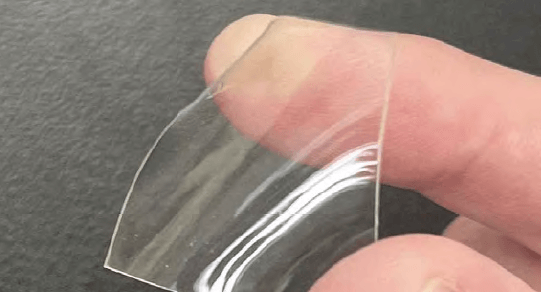 Primarily made from petroleum, plastic
often lingers in the environment
long after use. The impact of microplastics
and other pollutants has emerged as
a major global concern. In response, a
research team led by Takuzo Aida, Group
Director at RIKEN and Distinguished
Professor at the University of Tokyo, has
achieved a groundbreaking development:
plastic that dissolves in seawater. This
innovative material uses compounds
commonly found in food additives.
Their findings, published in Science
(Nov. 22, 2024) reveal that this plastic
matches the strength and processability
of conventional plastics while being
eco-friendly. ...
The research team developed a
material called supramolecular plastic.
Supramolecules are assemblies of two or more molecules held together by weak
interactions like hydrogen bonds. Their
structure allows innovative functions
beyond single molecules. ...
Conventional plastics are made from
large polymer molecules formed by
bonding smaller units called monomers.
When polymers are built from
supramolecules, their bonds break
more easily, allowing the material to
revert to its monomer form. This property
has traditionally limited them to
soft, rubber-like materials.
The team combined two monomers:
sodium hexametaphosphate, used
in food additives and fertilizers, and
guanidinium sulfate, easily synthesized
from natural raw materials. ...
Read full text:
Primarily made from petroleum, plastic
often lingers in the environment
long after use. The impact of microplastics
and other pollutants has emerged as
a major global concern. In response, a
research team led by Takuzo Aida, Group
Director at RIKEN and Distinguished
Professor at the University of Tokyo, has
achieved a groundbreaking development:
plastic that dissolves in seawater. This
innovative material uses compounds
commonly found in food additives.
Their findings, published in Science
(Nov. 22, 2024) reveal that this plastic
matches the strength and processability
of conventional plastics while being
eco-friendly. ...
The research team developed a
material called supramolecular plastic.
Supramolecules are assemblies of two or more molecules held together by weak
interactions like hydrogen bonds. Their
structure allows innovative functions
beyond single molecules. ...
Conventional plastics are made from
large polymer molecules formed by
bonding smaller units called monomers.
When polymers are built from
supramolecules, their bonds break
more easily, allowing the material to
revert to its monomer form. This property
has traditionally limited them to
soft, rubber-like materials.
The team combined two monomers:
sodium hexametaphosphate, used
in food additives and fertilizers, and
guanidinium sulfate, easily synthesized
from natural raw materials. ...
Read full text:
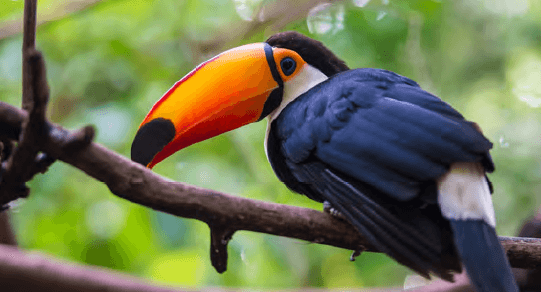 In Panama, the best protection for
keeping rainforests from disappearing
hasn’t been putting them inside
protected refuges. It’s been putting
them in the hands of the region’s
Indigenous tribes. In the two decades
starting in 2000, just 3% of the roughly
19,000 square kilometers of Indigenous
forestland was deforested. By comparison,
protected areas lost more than 5%
of their forests, while 27% of forests
outside these designated regions were
cleared, according to a new study in the
journal Ecology and Society.
The findings add to the growing
evidence that giving Indigenous people
more control of lands is often an effective
way to stem the tide of forest
loss sweeping much of the world. And
scientists’ interviews with inhabitants of Indigenous villages in Panama help
illuminate key reasons why their lands
keep more of their trees. It’s not that
the forests are left untouched —in fact,
it’s the opposite.
“Forests remain intact not just
because they’re remote, but because of
how people value them,” said E. Camilo
Alejo, who completed the research
as a Ph.D. biology student at McGill
University in Montreal, Canada. “These
aren’t just undisturbed forests; they’re
consistently cared for.”
To document how the country’s forests
were altered over two decades, the
scientists used common methods: They
looked at satellite images and tracked
how they ...
Read full text:
In Panama, the best protection for
keeping rainforests from disappearing
hasn’t been putting them inside
protected refuges. It’s been putting
them in the hands of the region’s
Indigenous tribes. In the two decades
starting in 2000, just 3% of the roughly
19,000 square kilometers of Indigenous
forestland was deforested. By comparison,
protected areas lost more than 5%
of their forests, while 27% of forests
outside these designated regions were
cleared, according to a new study in the
journal Ecology and Society.
The findings add to the growing
evidence that giving Indigenous people
more control of lands is often an effective
way to stem the tide of forest
loss sweeping much of the world. And
scientists’ interviews with inhabitants of Indigenous villages in Panama help
illuminate key reasons why their lands
keep more of their trees. It’s not that
the forests are left untouched —in fact,
it’s the opposite.
“Forests remain intact not just
because they’re remote, but because of
how people value them,” said E. Camilo
Alejo, who completed the research
as a Ph.D. biology student at McGill
University in Montreal, Canada. “These
aren’t just undisturbed forests; they’re
consistently cared for.”
To document how the country’s forests
were altered over two decades, the
scientists used common methods: They
looked at satellite images and tracked
how they ...
Read full text:
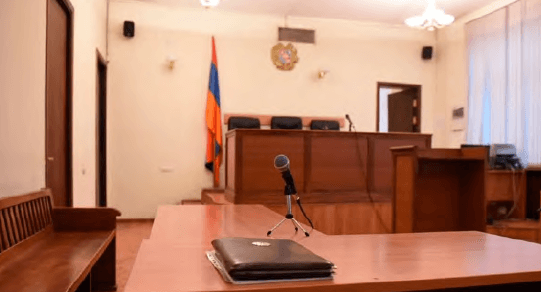 Vahagn Petrosyan was 36 years
old when a court stripped him of
his legal capacity in September 2015,
claiming his psychosocial disability
prevented him from being able to make
his own decisions. For years he endured
neglect and violence in institutions,
without the right to control his
life or access justice.
Armenian law obligates the state to
ensure people with disabilities are fully
included in public life, but the country
lacks community-based support for
persons with psychosocial disabilities
and adequate assistance for their families.
The state is also obligated to ensure
equal access to justice but does not
provide any procedural accommodations,
such as remote hearings, personal
assistance, or accessible documents.
In November 2023, Petrosyan managed to restore his legal capacity
and attempted to restart his life,
seeking acceptance, employment, and
the chance to rebuild his social connections.
But his ongoing experience
illustrates the exclusion that results
from the state’s systemic failures.
Following a violent incident involving
a family member in August 2024,
Petrosyan was arrested and placed in a
penitentiary hospital for two months.
During that time, he participated in
three court hearings.
A few months later, the state psychiatric
commission declared Petrosyan
“insane,” deemed him unfit for trial
and in need of hospitalization in a
psychiatric facility, where he remains
involuntarily. ...
Read full text:
Vahagn Petrosyan was 36 years
old when a court stripped him of
his legal capacity in September 2015,
claiming his psychosocial disability
prevented him from being able to make
his own decisions. For years he endured
neglect and violence in institutions,
without the right to control his
life or access justice.
Armenian law obligates the state to
ensure people with disabilities are fully
included in public life, but the country
lacks community-based support for
persons with psychosocial disabilities
and adequate assistance for their families.
The state is also obligated to ensure
equal access to justice but does not
provide any procedural accommodations,
such as remote hearings, personal
assistance, or accessible documents.
In November 2023, Petrosyan managed to restore his legal capacity
and attempted to restart his life,
seeking acceptance, employment, and
the chance to rebuild his social connections.
But his ongoing experience
illustrates the exclusion that results
from the state’s systemic failures.
Following a violent incident involving
a family member in August 2024,
Petrosyan was arrested and placed in a
penitentiary hospital for two months.
During that time, he participated in
three court hearings.
A few months later, the state psychiatric
commission declared Petrosyan
“insane,” deemed him unfit for trial
and in need of hospitalization in a
psychiatric facility, where he remains
involuntarily. ...
Read full text:
 As a youngster, Barry McCovey Jr.
would sneak through metal gates
and hide from security guards just to
catch a steelhead trout in Blue Creek
amid northwestern California redwoods.
Since time immemorial, his ancestors
from the Yurok Tribe had fished, hunted
and gathered in this watershed flanked
by coastal forests. But for more than
100 years, these lands were owned and
managed by timber companies, severing
the tribe’s access to its homelands.
When McCovey started working as a
fisheries technician, the company would
let him go there to do his job. “Snorkeling
Blue Creek ... I felt the significance
of that place to myself and to our
people, and I knew then that we had to
do whatever we could to try and get that
back,” McCovey said. After a 23-year effort and $56 million,
that became reality. Roughly 73
square miles (189 km2) of homelands
have been returned to the Yurok, more
than doubling the tribe’s land holdings,
according to a deal announced Thursday
[June 5]. Completion of the landback
conservation deal along the lower
Klamath River is being called the largest
in California history.
The Yurok Tribe had 90% of its territory
taken during the California Gold
Rush in the mid-1800s, suffering massacres
and disease from settlers. “To go
from when I was a kid and 20 years ago
even, from being afraid to go out there
to having it be back in tribal hands … is
incredible” ...
As a youngster, Barry McCovey Jr.
would sneak through metal gates
and hide from security guards just to
catch a steelhead trout in Blue Creek
amid northwestern California redwoods.
Since time immemorial, his ancestors
from the Yurok Tribe had fished, hunted
and gathered in this watershed flanked
by coastal forests. But for more than
100 years, these lands were owned and
managed by timber companies, severing
the tribe’s access to its homelands.
When McCovey started working as a
fisheries technician, the company would
let him go there to do his job. “Snorkeling
Blue Creek ... I felt the significance
of that place to myself and to our
people, and I knew then that we had to
do whatever we could to try and get that
back,” McCovey said. After a 23-year effort and $56 million,
that became reality. Roughly 73
square miles (189 km2) of homelands
have been returned to the Yurok, more
than doubling the tribe’s land holdings,
according to a deal announced Thursday
[June 5]. Completion of the landback
conservation deal along the lower
Klamath River is being called the largest
in California history.
The Yurok Tribe had 90% of its territory
taken during the California Gold
Rush in the mid-1800s, suffering massacres
and disease from settlers. “To go
from when I was a kid and 20 years ago
even, from being afraid to go out there
to having it be back in tribal hands … is
incredible” ...
 The question isn’t “Why did the
salamander cross the road?” It’s
“Why did the salamander cross UNDER
the road?” The answer: To get to the
other side without being squished by a
car. For salamanders and other amphibians,
like so much wildlife, roads are no
joke —not even a bad one. For creatures
who migrate between the water and the
surrounding forest, the effects can be
particularly lethal. Each spring, adult
frogs, newts and salamanders will move
en masse from their wooded homes to
nearby ponds and streams to mate and
lay eggs. If a road lies in their path, the
results are predictable.
Residents of of Monkton, a small
town in the far outskirts of Vermont’s
largest city, Burlington, witnessed a
cruel example in the spring of 2006 on a town road. “They counted over a
thousand dead animals on the road in
just two nights,” said Brittany Mosher,
an ecologist at UVM in Burlington.
Instead of just shaking their heads
and muttering about the damn traffic,
locals got busy. Led by Monkton
resident and state wildlife biologist
Steve Parren, neighbors, state officials,
university scientists and environmental
groups collaborated to build a possible
solution: Two 1.5 meter-wide concrete
tunnels were built beneath the road,
amphibious underpasses meant to give
these creatures a safe route when they
felt the stirrings of spring. ...
The question isn’t “Why did the
salamander cross the road?” It’s
“Why did the salamander cross UNDER
the road?” The answer: To get to the
other side without being squished by a
car. For salamanders and other amphibians,
like so much wildlife, roads are no
joke —not even a bad one. For creatures
who migrate between the water and the
surrounding forest, the effects can be
particularly lethal. Each spring, adult
frogs, newts and salamanders will move
en masse from their wooded homes to
nearby ponds and streams to mate and
lay eggs. If a road lies in their path, the
results are predictable.
Residents of of Monkton, a small
town in the far outskirts of Vermont’s
largest city, Burlington, witnessed a
cruel example in the spring of 2006 on a town road. “They counted over a
thousand dead animals on the road in
just two nights,” said Brittany Mosher,
an ecologist at UVM in Burlington.
Instead of just shaking their heads
and muttering about the damn traffic,
locals got busy. Led by Monkton
resident and state wildlife biologist
Steve Parren, neighbors, state officials,
university scientists and environmental
groups collaborated to build a possible
solution: Two 1.5 meter-wide concrete
tunnels were built beneath the road,
amphibious underpasses meant to give
these creatures a safe route when they
felt the stirrings of spring. ...
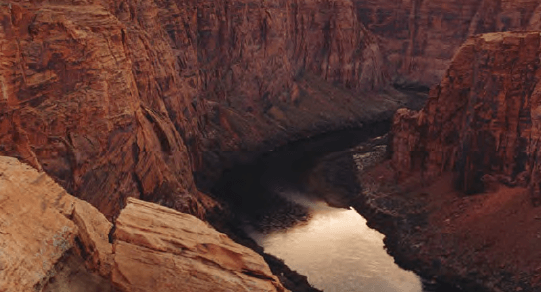 There is a place deep in Utah’s
canyon country that will tell you
a story if you’re patient. The spot in
question lies in a gorge in the southeastern
corner of Utah, flanked by
sandstone cliffs 2,000 feet high.
For eons, the Colorado River flowed
through this canyon, its pounding
rapids carving the landscape. In 1963,
though, the government —determined
to tame the river and feed the Southwest’s
unrelenting appetite for water—
built Glen Canyon Dam. Slowly, year
by year, the giant reservoir it created
backed upstream, drowning 18 rapids
whole and transforming 186 miles of
what had been a rushing river into a
wide, still, man-made pool. After that,
it was eerily quiet, the river current
slackening as it submitted to the lake. But if you visit this place now, you’ll
hear a rumble. And there, right in front
of you, you’ll see it: white water flashing
in the sun. A standing wave big
enough to flip a boat. Water moving
and moving fast. A rapid, drowned for
60 years, is emerging from the depths.
If you had come to this place a
century ago, you’d have found one of
the wildest, least restricted rivers in
the Lower 48. Around you would be a
Martian scene: towering red sandstone
cliffs, contorted spires, a heaving mass
of burnished red rock frozen at impossible
angles. Here, the names live up
to the scenery. You are below the Doll
House next to the Maze in the Land of
Standing Rocks. You are in the middle
of a ...
There is a place deep in Utah’s
canyon country that will tell you
a story if you’re patient. The spot in
question lies in a gorge in the southeastern
corner of Utah, flanked by
sandstone cliffs 2,000 feet high.
For eons, the Colorado River flowed
through this canyon, its pounding
rapids carving the landscape. In 1963,
though, the government —determined
to tame the river and feed the Southwest’s
unrelenting appetite for water—
built Glen Canyon Dam. Slowly, year
by year, the giant reservoir it created
backed upstream, drowning 18 rapids
whole and transforming 186 miles of
what had been a rushing river into a
wide, still, man-made pool. After that,
it was eerily quiet, the river current
slackening as it submitted to the lake. But if you visit this place now, you’ll
hear a rumble. And there, right in front
of you, you’ll see it: white water flashing
in the sun. A standing wave big
enough to flip a boat. Water moving
and moving fast. A rapid, drowned for
60 years, is emerging from the depths.
If you had come to this place a
century ago, you’d have found one of
the wildest, least restricted rivers in
the Lower 48. Around you would be a
Martian scene: towering red sandstone
cliffs, contorted spires, a heaving mass
of burnished red rock frozen at impossible
angles. Here, the names live up
to the scenery. You are below the Doll
House next to the Maze in the Land of
Standing Rocks. You are in the middle
of a ...

 A wheelchairaccessible
swing
designed to be
integrated into the
playground setting.
This swing lets kids
of all abilities play
together and experience
the thrill of
swinging. With no
need to transfer,
the We-Go-Swing
opens up a whole
new world of playground
fun.
www.playlsi.com
A wheelchairaccessible
swing
designed to be
integrated into the
playground setting.
This swing lets kids
of all abilities play
together and experience
the thrill of
swinging. With no
need to transfer,
the We-Go-Swing
opens up a whole
new world of playground
fun.
www.playlsi.com
 It looks like a pair
of headphones that
you’ve just taken off
or are waiting to put
on —but in reality,
each “earpiece”
quietly delivers a
gentle stream of air
that helps you keep
your cool in any
situation. this fan
is designed to be
worn comfortably
around your neck for
extended periods,
providing a handsfree,
continuous
cooling experience.
store.moma.org
It looks like a pair
of headphones that
you’ve just taken off
or are waiting to put
on —but in reality,
each “earpiece”
quietly delivers a
gentle stream of air
that helps you keep
your cool in any
situation. this fan
is designed to be
worn comfortably
around your neck for
extended periods,
providing a handsfree,
continuous
cooling experience.
store.moma.org

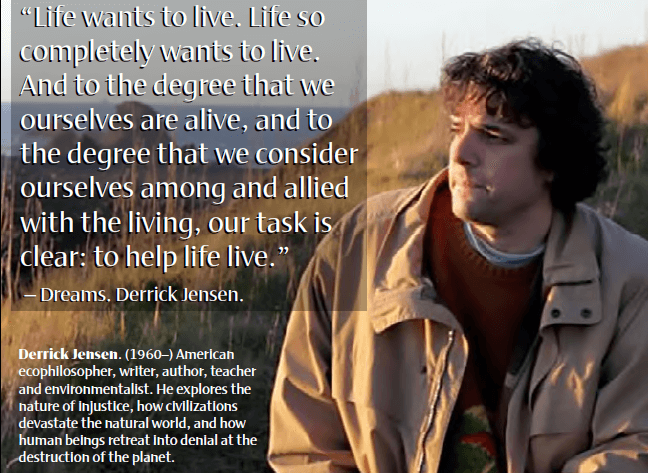

 The Bachelor of Petroleum Engineering
(BS) program objective is
to help students further widen their
knowledge as it applies to the exploration
and development of mineral resources
and upon the economics of the
business of Petroleum. The Bachelor of
Petroleum Engineering program is offered
online via distance learning. After
evaluating both academic record and
life experience, AIU staff working in
conjunction with Faculty and Academic
Advisors will assist students in setting
up a custom-made program, designed
on an individual basis. This flexibility
to meet student needs is seldom found
in other distance learning programs.
Our online program does not require
all students to take the same subjects/
courses, use the same books, or
learning materials. Instead, the online
Bachelor of Petroleum Engineering
curriculum is designed individually by
the student and academic advisor. It
specifically addresses strengths and
weaknesses with respect to market
opportunities in the student’s major
and intended field of work. Understanding
that industry and geographic
factors should influence the content of
the curriculum instead of a standardized
one-fits-all design is the hallmark
of AIU’s unique approach to adult
education. This philosophy addresses
the dynamic and constantly changing
environment of working professionals by
helping adult students in reaching their
professional and personal goals within
the scope of the degree program.
The Bachelor of Petroleum Engineering
(BS) program objective is
to help students further widen their
knowledge as it applies to the exploration
and development of mineral resources
and upon the economics of the
business of Petroleum. The Bachelor of
Petroleum Engineering program is offered
online via distance learning. After
evaluating both academic record and
life experience, AIU staff working in
conjunction with Faculty and Academic
Advisors will assist students in setting
up a custom-made program, designed
on an individual basis. This flexibility
to meet student needs is seldom found
in other distance learning programs.
Our online program does not require
all students to take the same subjects/
courses, use the same books, or
learning materials. Instead, the online
Bachelor of Petroleum Engineering
curriculum is designed individually by
the student and academic advisor. It
specifically addresses strengths and
weaknesses with respect to market
opportunities in the student’s major
and intended field of work. Understanding
that industry and geographic
factors should influence the content of
the curriculum instead of a standardized
one-fits-all design is the hallmark
of AIU’s unique approach to adult
education. This philosophy addresses
the dynamic and constantly changing
environment of working professionals by
helping adult students in reaching their
professional and personal goals within
the scope of the degree program.
 Atlantic International University is accredited by the Accreditation Service for International
Schools, Colleges and Universities (ASIC). ASIC Accreditation is an internationally
renowned quality standard for colleges and universities. Visit ASIC’s Directory of Accredited
Colleges and Universities. ASIC is a member of CHEA International Quality Group
(CIQG) in the USA, an approved accreditation body by the Ministerial Department of the Home Office
in the UK, and is listed in the International Directory of the Council for Higher Education Accreditation
(CHEA). The University is based in the United States and was established by corporate charter in 1998.
Atlantic International University is accredited by the Accreditation Service for International
Schools, Colleges and Universities (ASIC). ASIC Accreditation is an internationally
renowned quality standard for colleges and universities. Visit ASIC’s Directory of Accredited
Colleges and Universities. ASIC is a member of CHEA International Quality Group
(CIQG) in the USA, an approved accreditation body by the Ministerial Department of the Home Office
in the UK, and is listed in the International Directory of the Council for Higher Education Accreditation
(CHEA). The University is based in the United States and was established by corporate charter in 1998.
 In some cases, accredited colleges
may not accept for transfer courses and degrees
completed at unaccredited colleges, and some
employers may require an accredited degree as
a basis for eligibility for employment. Potential
students should consider how the above may affect
their interests, AIU respects the unique rules and
regulations of each country and does not seek to
influence the respective authorities. In the event
that a prospective student wishes to carry out any
government review or process in regards to his
university degree, we recommend that the requirements
of such are explored in detail with the relevant
authorities by the prospective student as the
university does not intervene in such processes.
AIU students can be found in over 180 countries,
they actively participate and volunteer
in their communities as part of their academic
program and have allocated thousands of service
hours to diverse causes and initiatives. AIU
programs follow the standards commonly used by
colleges and universities in the United States with
regards to the following: academic program
structure, degree issued, transcript, and
other graduation documents.
AIU graduation documents can include
an apostille and authentication from the
US Department of State to facilitate their
use internationally.
In some cases, accredited colleges
may not accept for transfer courses and degrees
completed at unaccredited colleges, and some
employers may require an accredited degree as
a basis for eligibility for employment. Potential
students should consider how the above may affect
their interests, AIU respects the unique rules and
regulations of each country and does not seek to
influence the respective authorities. In the event
that a prospective student wishes to carry out any
government review or process in regards to his
university degree, we recommend that the requirements
of such are explored in detail with the relevant
authorities by the prospective student as the
university does not intervene in such processes.
AIU students can be found in over 180 countries,
they actively participate and volunteer
in their communities as part of their academic
program and have allocated thousands of service
hours to diverse causes and initiatives. AIU
programs follow the standards commonly used by
colleges and universities in the United States with
regards to the following: academic program
structure, degree issued, transcript, and
other graduation documents.
AIU graduation documents can include
an apostille and authentication from the
US Department of State to facilitate their
use internationally.
| Dr. Franklin Valcin Presi den t/Academic Dean |
Dr. José Mercado Chief Executive Officer Chairman of the Board of Trustees |
Ricardo González, PhD Provost |
| Dr. Ricardo Gonzalez Chief Operation Officer and MKT Director |
Linda Collazo Logistics Coordinator |
AIU Tutors Coordinators: Deborah Rodriguez Amiakhor Ejaeta Amanda Gutierrez William Mora Miriam James Admissions Coordinators: Amalia Aldrett Sandra Garcia Junko Shimizu Veronica Amuz Alba Ochoa Jenis Garcia Judith Brown Chris Soto René Cordón Dr. Anderas Rissler Academic Coordinators: Dr. Adesida Oluwafemi Dr. Emmanuel Gbagu Dr. Lucia Gorea Dr. Edgar Colon Dr. Mario Rios Freddy Frejus Dr. Nilani Ljunggren De Silva Dr. Scott Wilson Dr. Mohammad Shaidul Islam |
| Dr. Miriam Garibaldi Vice provost for Research |
Carolina Valdes Human Resource Coordinator |
|
| Dr. Ofelia Miller Director of AIU |
Carlos Aponte Teleco mmunications Coordinator |
|
| Clara Margalef Director of Special Projects of AIU |
David Jung Corporate/Legal Counsel |
|
| Juan Pablo Moreno Director of Operations |
Bruce Kim Advisor/Consultant |
|
| Paula Viera Director of Intelligence Systems |
Thomas Kim Corporate/ Accounting Counsel |
|
| Felipe Gomez Design Director / IT Supervisor |
Maricela Esparza Administrative Coordinator |
|
| Kevin Moll Web Designer |
Chris Benjamin IT and Hosting Support |
|
| Daritza Ysla IT Coordinator |
Maria Pastrana Accounting Coordinator |
|
| Daritza Ysla IT Coordinator |
Roberto Aldrett Communications Coordinator |
|
| Nadeem Awan Chief Programming Officer |
Giovanni Castillo IT Support |
|
| Dr. Edward Lambert Academic Director |
Antonella Fonseca Quality Control & Data Analysis |
|
| Dr. Ariadna Romero Advisor Coordinator |
Adrián Varela Graphic Design |
|
| Jhanzaib Awan Senior Programmer |
Vanesa D’Angelo Content Writer |
|
| Leonardo Salas Human Resource Manager |
Jaime Rotlewicz Dean of Admissions |
|
| Benjamin Joseph IT and Technology Support |
Michael Phillips Registrar’s Office |
|
| Rosie Perez Finance Coordinator |
||
 The School of Business and Economics
allows aspiring and practicing
professionals, managers, and entrepreneurs
in the private and public sectors
to complete a self paced distance
learning degree program of the highest
academic standard.
The ultimate goal is to empower
learners and help them take advantage
of the enormous array of resources
from the world environment in order
to eliminate the current continuum of
poverty and limitations.
Degree programs are designed for
those students whose professional experience has been in business,
marketing, administration, economics,
finance and management.
The School of Business and Economics
allows aspiring and practicing
professionals, managers, and entrepreneurs
in the private and public sectors
to complete a self paced distance
learning degree program of the highest
academic standard.
The ultimate goal is to empower
learners and help them take advantage
of the enormous array of resources
from the world environment in order
to eliminate the current continuum of
poverty and limitations.
Degree programs are designed for
those students whose professional experience has been in business,
marketing, administration, economics,
finance and management.
 The School of Social and Human Studies
is focused on to the development of
studies which instill a core commitment
to building a society based on social and
economic justice and enhancing opportunities
for human well being.
The founding principles lie on the
basic right of education as outlined
in the Declaration of Human Rights.
We instill in our students a sense of
confidence and self reliance in their
ability to access the vast opportunities
available through information channels,
the world wide web, private, public,
nonprofit, and nongovernmental organizations in an ever expanding
global community.
Degree programs are aimed towards
those whose professional life has been
related to social and human behavior,
with the arts, or with cultural studies.
The School of Social and Human Studies
is focused on to the development of
studies which instill a core commitment
to building a society based on social and
economic justice and enhancing opportunities
for human well being.
The founding principles lie on the
basic right of education as outlined
in the Declaration of Human Rights.
We instill in our students a sense of
confidence and self reliance in their
ability to access the vast opportunities
available through information channels,
the world wide web, private, public,
nonprofit, and nongovernmental organizations in an ever expanding
global community.
Degree programs are aimed towards
those whose professional life has been
related to social and human behavior,
with the arts, or with cultural studies.
 The School of Science and Engineering
seeks to provide dynamic, integrated,
and challenging degree programs
designed for those whose experience
is in industrial research, scientific production,
engineering and the general
sciences. Our system for research and
education will keep us apace with the
twenty-first century reach scientific
advance in an environmentally and
ecologically responsible manner to allow
for the sustainability of the human
population. We will foster among our
students a demand for ethical behavior,
an appreciation for diversity, an understanding
of scientific investigation, knowledge of design innovation, a
critical appreciation for the importance
of technology and technological change
for the advancement of humanity.
The School of Science and Engineering
seeks to provide dynamic, integrated,
and challenging degree programs
designed for those whose experience
is in industrial research, scientific production,
engineering and the general
sciences. Our system for research and
education will keep us apace with the
twenty-first century reach scientific
advance in an environmentally and
ecologically responsible manner to allow
for the sustainability of the human
population. We will foster among our
students a demand for ethical behavior,
an appreciation for diversity, an understanding
of scientific investigation, knowledge of design innovation, a
critical appreciation for the importance
of technology and technological change
for the advancement of humanity.
 With access to a global catalog created and maintained collectively by more than
9,000 participating institutions, AIU students have secured excellent research
tools for their study programs.
With access to a global catalog created and maintained collectively by more than
9,000 participating institutions, AIU students have secured excellent research
tools for their study programs.