
September 2024 Edition!
AIU News + Essays + Education + Culture + Science + Technology + Art + Design + Body + Mind + Environment + Human Rights + Animal Rights + + Sustainable Tourism + About AIU
Other Editions

AIU News + Essays + Education + Culture + Science + Technology + Art + Design + Body + Mind + Environment + Human Rights + Animal Rights + + Sustainable Tourism + About AIU
 AUGUST 2024. This graduate student completed
the majority of the requirements to obtain honors,
which included a 4.0 GPA, published works,
recommendationfrom her advisors,
patent a product, etc.
Congratulations!
AUGUST 2024. This graduate student completed
the majority of the requirements to obtain honors,
which included a 4.0 GPA, published works,
recommendationfrom her advisors,
patent a product, etc.
Congratulations!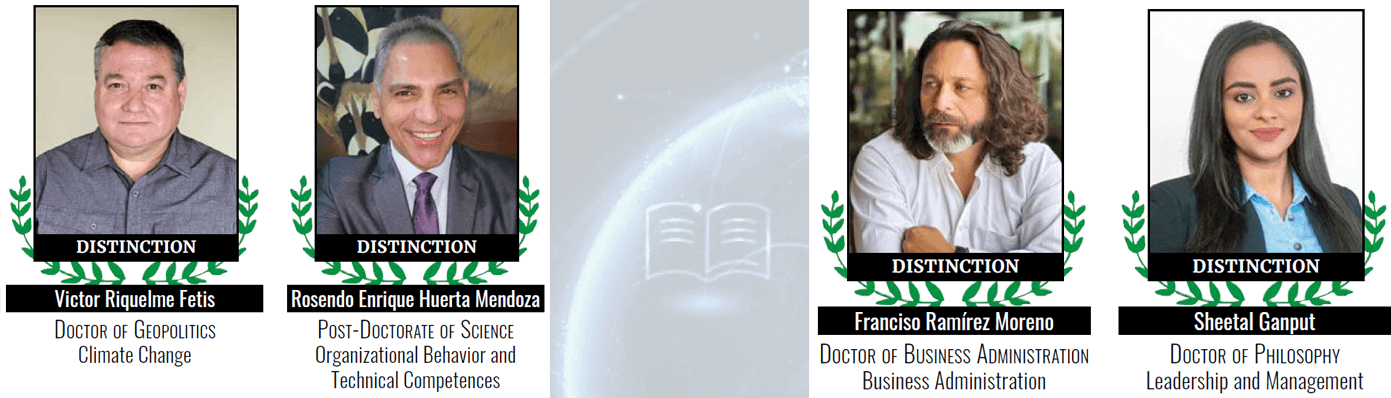 AUGUST 2024. These graduate students completed their program
with a high cumulative grade point average, which reflects the
quality of performance within their respective major.
Congratulations!
AUGUST 2024. These graduate students completed their program
with a high cumulative grade point average, which reflects the
quality of performance within their respective major.
Congratulations! JULY 22,
2024.
AIU
student,
Jesca
Nabulya,
has
been
invited to contribute to a book
chapter by IntechOpen.
IntechOpen is a pioneer of
Open Access book publishing.
They published their first
Open Access book, Cutting Edge
Robotics, in 2005. IntechOpen
is committed to working with
organizations and people who
care about scientific discovery,
putting the scientific community’s
academic needs first,
and providing an Open Access
environment where authors can maximize their contribution
to scientific advancement.
By opening up access to the
world’s scientific research book
chapters, IntechOpen aims to
facilitate greater opportunity
for collaboration, scientific
discovery, and progress. When
selecting authors to contribute
to their publications, they apply
rigorous criteria to ensure
quality and only invite experts
within a particular subject area
based on:
JULY 22,
2024.
AIU
student,
Jesca
Nabulya,
has
been
invited to contribute to a book
chapter by IntechOpen.
IntechOpen is a pioneer of
Open Access book publishing.
They published their first
Open Access book, Cutting Edge
Robotics, in 2005. IntechOpen
is committed to working with
organizations and people who
care about scientific discovery,
putting the scientific community’s
academic needs first,
and providing an Open Access
environment where authors can maximize their contribution
to scientific advancement.
By opening up access to the
world’s scientific research book
chapters, IntechOpen aims to
facilitate greater opportunity
for collaboration, scientific
discovery, and progress. When
selecting authors to contribute
to their publications, they apply
rigorous criteria to ensure
quality and only invite experts
within a particular subject area
based on:
| Rui Duarte Abano Rodrigues Doctor of Business Administration Business Administration Angola |
Helena Hope Jose Kasusuma Bachelor of Science Industrial Engineering Angola |
Jorge Eduardo Catelli Doctor of Psychology Psychoanalysis Argentina |
Tatah Humphrey Mbuy Doctor of Science Cultural Anthropology Cameroo n |
Khaled El Tannir Doctor of Science Artificial Intelligence Canada |
Victor Riquelme Fetis Doctor of Geopo litics Climate Change Chile |
| Hernán Antonio Martínez Stevens Doctor of Education Education Chile |
Pedro Rodríguez Pineda Doctor of Science Computer Science Colombia |
Kafama Lawe Luc de Sion Master of Business Economics Project Management Congo |
Mudimbe Maurice Kalungu Master of Business Administration Economics and Management Congo |
Paul Raui Pokoati Allsworth Doctor of Philosop hy Political Science Coo k Islands |
Prudencio Marmolejo Mendez Master of Science Political Science Dominican Republic |
| Carmen Luiso Bachelor of Business Administration Business Administration Dominican Republic |
Solange Rodríguez Amparo Master of Science Nutrition Dominican Republic |
César Augusto Martínez Mateo Doctor of Marketing Marketing Research Dominican Republic |
Nathaly Ochoa Cordero Bachelor of Arts English Language Ecuador |
Somaia Mohamed Taher Master of Education Higher Education Management Egypt |
Edwin Bladimir López Garzona Doctor of Business Administration Business Administration El Salvador |
| Ana Ruth Marquez Segovia Doctor of Education Superior Education El Salvador |
Dereje Tesfalidet Tesfu Bachelor of Science Civil Engineering Ethiop ia |
Stephen Acquah Bachelor of Science Mechanical Engineering Ghana |
Juan Marcel Rossell Reinosa Bachelor of Industrial Engineering Finance Guatemala |
Julio César Padilla Mejía Doctor of Science Systems Engineering Guatemala |
Lakeram Shewram Master of Science Human Resources Guyana |
| Rajesh Goel Master of Science Psychology India |
Iona Reid Master of Education Education and Organizational Leadership Jamaica |
Ibtissam Raymond Daher Doctor of Science Nutrition Leba non |
Francine Bruce Master of Education Educational Management Madagascar |
Souleymane Balahira Doctor of Science Education Mali |
Kawsar Koodaruth Doctor of Science Mental Health Mauritius |
| Franciso Ramírez Moreno Doctor of Business Administration Business Administration Mexico |
María Alejandra Quijada Tijerina Doctor of Philosop hy Industrial Biotechnology Mexico |
Rosemary Chinelo Chikwendu Doctor of Social and Human Studies Mediation, Dispute Res. and Human Rights Nigeria |
Adenekan Moses Olayinka Bachelor of Science Electrical Engineering Nigeria |
Ana Lazarovska Post-Doctorate of Science Aeronautical Science Management North Macedonia |
Carlos Domingo Almeida Delgado Doctor of Science Computer Systems Paraguay |
| Abigail Folgar Bautista Bachelor of Business and Economics International Business Peru |
Jose Luis Jalandoni Galay Master of Science Structural Engineering Philipp ines |
Clarence Joseph Elavathingal Doctor of Science Psychology Qatar |
Fiona Uberewe Bachelor of Science Hydrology Rwanda |
Lemau Charleen Palaamo Master of Arts Pastoral Care and Counselling Samoa |
Nomathamsanqa Caroline Siwisa Doctor of Philosop hy Sociology South Africa |
| Gustavo Lucio Lauria Doctor of Science Political Science Spain |
Miguel Harold Kenswil Master of Education Philosophy of Education St. Lucia |
Joanna Charlery Bachelor of Literature English Literature St. Maa rten |
Marilin Peterson Garcia Bachelor of Education Physical Education St. Maa rten |
Sharawi Alkamil Abbas Ahmed Doctor of Business Administration Business Administration Sudan |
Sheetal Ganput Doctor of Philosop hy Leadership and Management Suriname |
| Brigitte Ramdeo–Pracht Master of Science Special Education Suriname |
Phazi Fortunate Zwane Master of Science Health, Safety and Environment Swaz iland |
Mavenjina Cathy Winnie Doctor of Arts Conflict Resolution and Peace Building Uganda |
Kasanda Danyela Idris Doctor of Science Project Management Uganda |
Ssebalu Kijjambu Jamil Master of Business Administration Business Management Uganda |
Alptekin Aydin Doctor of Science Clinical Psychology United Kingdom |
| Mauricio Adrian Kanigina Cap Doctor of Science Psychology Uruguay |
Rose Anna Jeanty Michel Bachelor of Science Accounting USA |
Lorena Alejandra Barrios Barrios Bachelor of Science Nutrition USA |
Muhammad Saa'd Adeniyi Tinubu Master of Business Administration Real Estate Business USA |
Luisa Mercedes Jorge Grullon Bachelor of Business Administration Business Administration USA |
Bornface Ndole Bachelor of Management Business Management Zambia |
| George Ebare Doctor of International Relations International Relations USA |
Shirley Velásquez Echavarria Bachelor of Science Psychology USA |
Araceli Fuentes Osnaya Doctor of Finance Finance USA |
Caleb Ryan Holder Doctor of Business Administration Organizational Leadership USA |
Rosendo Enrique Huerta Mendoza Post-Doctorate of Science Org. Behavior and Tech. Competences USA |
Marvin Ngosa Bachelor of Science Information Systems Zambia |
| Sandisiwe Moyo Bachelor of Science Psychology Zimbab we |
|||||

 Tosin Ademola Adedoyin
  Tolga Tasci
  Moses Komakech
  Sandisiwe Moyo
We live nowadays in the
world of Globalization.
It’s all global trade and culture
to create the same production:
it’s all the pursuit of profit.
Profit is the profit from
innovation and creativity,
from monetary investment
for the operational infrastructure
for the product or good,
from payment to employees
for production time, from
taxes on investment, and
from the cost of advertising
for market search.
The profit described is the
profit for any production
agent and is the result that every
company needs to be able
to operate. What is happening to
the truth? The truth is
that what is said corresponds
to the facts.
From the point of view of
the area of science that deals
with truth, there is Logic.
When we talk about Logic, the
great one in it was Aristotle,
philosopher of Ancient Greece (Stagira, 384 BC. – Chalcis, 322
BC.) and who has not yet been
surpassed in the Principles for
obtaining the truth from the
point of view of discourse, the
Logical Principles.
The expression judgment in
Logic refers to a statement.
Logical Principles
1. Principle of Identity. Every
object is identical to itself.
With another that says the
same; It’s just similar.
2. Principle of Non-Contradiction.
Two judgments that
contradict each other cannot
both be true.
3. Excluded Third Party Principle.
Of two judgments that
contradict each other, both
can’t be false.
4. Principle of Sufficient Reason.
Every judgment has a
reason that supports it.
From the above we have
that experimental sciences
explain what the object is,
and they must do it through
statements. It’s from these
statements that true and false
judgments are inferred.
When we explain something,
if we are not researchers, we
do so from the point of view of the judgments or statements
we have, therefore we must
consider the truth of what we
say in accordance with the
judgments we have.
What happens when
the truth is not told?
In the mind the true
judgment exists and they
express a different one.
What is happening
nowadays?
What is observed is unlimited
wealth in certain groups and
rampant poverty in others.
Every investment requires its
profit. What doesn’t correspond
is the minimum investment
and the maximum profit
through the falsehood of what
is invested and what is sold.
Going back in time and in
the research of great scientists
we find elements to note that correspond to the concern in
the way the world was going.
Ilya Prigogine, Nobel Prize in
Chemistry in 1977, developed
the theory of dissipative structures;
in his work From Being to
Becoming he tells us:
“Our current relationship
with the world is characterized
by a certain decline of
the mythical element and the
transcendental element; and,
by contrast, by the inclusion
of a more naturalistic, more
ecological element: reason,
from now on, is more listening
to the world than lying in wait
for its dominion over a world
subjected without conditions”.
Prigogine, 2015, p.189.
Since the last century,
people have been writing
about the changes that are beginning
to be very marked in
our society; human beings are
aware of the world in which
they live, but today it seems
that the only thing pending in
that world is money.
Prigogine tells us about the
world subjected without conditions;
nowadays we live what
seems to be the extreme degree
of that submission.
The French philosopher
and sociologist Edgard
Morin writes a lot about the
situation of the great problems
of society.
In his 2024 work —Wake
Up— he analyzes one of the
problems of the way in which wealth is distributed: migration.
The problem is big for
Europe and for America.
Morin says: “It’s not about
opening the borders wide, but
rather about regulating migratory
flows through an inter-
European agreement (sic) with
African countries, putting an
end to the disgusting trade of
traffickers and rescuing people.
desperate people in danger of
drowning”. He refers to the
problem in Europe which is
the same as in America. Morin,
2024. p. 27.
Morin wonders where we are
going with all the conflicts that
are being experienced nowadays,
where is the solution.
The big problem is the lies
of rulers and those governed in
the interest of easy money.
We are witnessing a very
united politics; money: we talk
about the extreme left and the
extreme right and the names
you can imagine.
We know that government
coffers are wonderful, but
nowadays we are facing a phenomenon
that seemed somewhat
strange to us, but we are
seeing what the response is.
Political parties that are
voted for by citizens, often the
poorest in a nation.
It was thought that these
people were the least able to
vote for the parties that want
all spheres of government.
We said that this group of citizens was those that bad
governments had left without
education and that that is why
these people lacked everything.
Oh surprise, those people
vote for those political parties!
Those who run these parties
give them little money and
a small amount of food and
those people vote for them.
It’s a divine change: those who
want the government to give a
pittance and those governed by
that misery vote for them.
The facts are now showing
us that those governments they
call “democracies” flourish, a
political situation from which
they are far removed, that
those people who give them
power are happy to live with
the little they are given, but
they do nothing.
Even more, they acquire a
discourse that feels like they
are graduates of the most
prestigious university in the
world and in any situation of
losing that tiny privilege they
immediately band together to
defend “democracy” which is a
dictatorship.
Those who want to govern
well know the lies they are
telling, but the government's
coffers without anyone to
question are wonderful.
Where are we going with this
new “democracy” full of lies.
The wealth of the countries
is managed with lies, so the
profits are only received by those who govern, hence the
monumental works that they
always build to exalt the ego
they have and to make money
disappear more easily.
Throughout History it has
been seen that the people who
lead these groups suffer from
serious self-esteem problems
because they couldn’t achieve
achievements due to their
efforts or they had illnesses
that also consumed their
self-esteem.
You are studying, you are
acquiring a degree at Atlantic
International University - AIU. You have to study, so
that you don’t become
prey to those who
promise the kingdom of
abundance.
You have to study so
that you are free and you
achieve the benefits of
your knowledge.
You have to study so
that you have the benefit
of the truth and build the
future you want.
Falseness in the elements
that make up the
gain will not given, hence
the benefit of the truth.
BIBLIOGRAPHY. Morin, E. (2024) Despertemos. España, Paidós |
Prigogine, I. (2023) El Desorden Creador y otros textos. Biblioteca
Virtual OMEGALFA. file:///C:/Users/rhlor/Downloads/el-desorden-creador-yotros-
textos.pdf | Prigogine y otros. (2015) El Tiempo y el Devenir.
España, Gedisa
In the realm of personal
development, the synthesis
of emotional intelligence (EI)
with the principles of quantum
psychology energy unveils a
profound pathway toward unlocking
one’s fullest potential.
In this intricate dance between
mind and universe, individuals
are empowered to navigate the
frequencies of their emotions,
thus sculpting their realities in
alignment with their deepest
aspirations. As we delve
into the symbiotic relationship
between EI and quantum psychology,
we unearth practical
methodologies that serve as
gateways to self-discovery and
exponential growth.
Emotional intelligence, often
dubbed as the silent protagonist
behind success, encompasses
a myriad of competencies
ranging from self-awareness
and self-regulation to empathy
and social skills. At its
core, EI embodies the capacity
to recognize, understand, and
manage one’s own emotions
while adeptly navigating interpersonal
dynamics. Concurrently,
quantum psychology
posits a paradigm wherein the
universe operates as an interconnected
web of energy fields
and frequencies. Every thought,
emotion, and intention emits
a vibrational resonance that
interacts with the cosmic
tapestry, shaping individual
experiences and realities.
Central to the amalgamation
of EI and quantum psychology
is the understanding that all
phenomena, including human
emotions, are governed by
frequencies. By harnessing this
insight, individuals can embark
on a transformative journey of
self-mastery and actualization.
Here, we delineate three
practical methodologies that
serve as conduits for integrating
EI with quantum psychology
energy:
Cultivating Self-Awareness
Through Frequency Awareness:
At the nucleus of emotional
intelligence lies self-awareness
—the cornerstone upon which
all other facets of EI are built.
To embark on this journey of
self-discovery, individuals must
first attune themselves to the
frequencies of their emotions.
Much like tuning into a radio
station, cultivating frequency
awareness entails observing
the subtle nuances of one’s
emotional landscape without
judgment or resistance.
Through mindfulness practices
such as meditation, breathwork,
and journaling, individuals can
deepen their connection to their
emotional frequencies, thereby
unraveling the intricacies of
their inner world.
Furthermore, integrating the
principles of quantum psychology
amplifies this process
by illuminating the interconnectedness
between thoughts,
emotions, and the cosmic
field. By acknowledging the
vibrational nature of emotions,
individuals gain insight
into the energetic patterns that
underpin their experiences.
Through this lens of frequency
awareness, emotions cease to
be arbitrary occurrences and
instead become potent conduits
for self-transformation
and manifestation.
Harnessing the Power of
Quantum Visualization:
Visualization serves as a
potent catalyst for bridging the realms of thought and
manifestation. Grounded in the
principles of quantum psychology,
visualization entails vividly
imagining desired outcomes
with unwavering clarity and
conviction. By harnessing the
power of quantum visualization,
individuals can sculpt
their realities from the canvas
of their imagination.
To embark on this journey of
quantum visualization, individuals
are encouraged to create
a sacred space conducive to
deep introspection and creativity.
Through guided imagery
and sensory immersion, individuals
can evoke the sensations
and emotions associated
with their desired outcomes.
By aligning their thoughts and
emotions with the frequency
of their aspirations, individuals
set in motion a series of
energetic ripples that reverberate
throughout the cosmos,
magnetizing opportunities and
synchronicities in alignment
with their intentions.
Quantum psychology stands
at the forefront of a revolutionary
paradigm shift in our
understanding of personal
growth and mental health,
particularly in the intricate
realm of emotions. Rooted in
the fundamental principles
of quantum mechanics, this
burgeoning field posits that
the universe operates as an
interconnected web of energy
fields and frequencies, wherein
every thought, emotion, and
intention emits a vibrational
resonance that shapes our individual
experiences and realities.
At the heart of quantum
psychology lies the recognition
that our emotions serve as potent
gateways to self-discovery
and transformation. Far from
mere ephemeral sensations,
emotions are energetic frequencies
that encode profound
insights into the depths of the
human psyche. By harnessing
the principles of quantum psychology,
individuals gain the
tools to navigate the labyrinth
of their emotions with clarity,
purpose, and resilience.
Central to the significance
of quantum psychology in
personal growth and mental
health is its emphasis on frequency
awareness. In a world
inundated with distractions
and stimuli, many individuals
find themselves adrift amidst
the tumultuous waves of their
emotions, unaware of the
subtle energetic currents that
underpin their experiences.
Quantum psychology invites
us to become keen observers
of our emotional landscape,
attuning ourselves to
the frequencies that govern
our thoughts, feelings, and
behaviors.
Through practices such as
mindfulness, meditation, and
introspection, individuals can
lens of pathology, focusing on
symptom management rather
than addressing the root causes
of suffering. In contrast, quantum
psychology recognizes that
mental health is not merely the
absence of illness but rather
the harmonious integration of
mind, body, and spirit.
By embracing the principles
of quantum psychology,
individuals can transcend the
limitations of conventional
paradigms and embark on a
holistic journey toward mental
wellness. Through practices
such as emotional alchemy,
quantum visualization, and
cultivate a heightened sense of
frequency awareness, thereby
unlocking the hidden treasures
buried within their emotional
terrain. By peering beneath the
surface of our emotions, we
unearth the underlying beliefs,
traumas, and patterns that
shape our reality, empowering
us to embark on a journey of
self-discovery and healing.
Moreover, quantum psychology
offers a transformative
lens through which to perceive
the nature of mental health
and well-being. Traditional
approaches to psychology often
view mental illness through the
energy healing, individuals can
harness the inherent power
of their emotions to catalyze
profound shifts in consciousness
and achieve optimal
well-being.
Alchemy of Emotional
Transmutation:
Within the crucible of emotional
alchemy lies the transformative
power to transmute
leaden emotions into golden
opportunities for growth and
evolution. Drawing upon the
principles of quantum psychology
energy, emotional alchemy
invites individuals to wield their emotional frequencies
as alchemical instruments for
personal mastery.
At its essence, emotional
alchemy entails the conscious
recognition and acceptance
of one’s emotional landscape.
Instead of resisting or
suppressing uncomfortable
emotions, individuals are
encouraged to embrace them
as sacred messengers bearing
profound insights into the
depths of the psyche. Through
practices such as journaling,
inner dialogue, and somatic
experiencing, individuals can
excavate the underlying beliefs
and traumas that imbue their
emotions with resonance.
Armed with this newfound awareness, individuals can engage
in the alchemical process
of transmutation, wherein they
consciously redirect the energetic
currents of their emotions
toward higher states of being.
By reframing limiting beliefs,
cultivating self-compassion,
and practicing radical forgiveness,
individuals catalyze profound
shifts in their emotional
frequencies, paving the way for
newfound states of joy, abundance,
and fulfillment.
Also, Emotional intelligence
emerges as a cornerstone in
the edifice of personal growth
and mental health, wielding
profound influence over
the landscape of our emotions.
Defined as the ability to recognize, understand, and
manage both our own emotions
and those of others, EI
serves as a compass guiding
us through the intricate terrain
of human experience. In
navigating the ebbs and flows
of our emotional landscape, we
cultivate resilience, empathy,
and self-awareness, thereby
fostering a profound sense of
well-being and fulfillment.
At its essence, emotional
intelligence empowers us to
forge deeper connections with
ourselves and others, laying the
groundwork for meaningful relationships
and authentic selfexpression.
Through practices
such as self-reflection, active
listening, and empathetic communication,
individuals hone
their emotional acumen, cultivating
a nuanced understanding
of the myriad emotions that
color the human experience.
Moreover, emotional intelligence
plays a pivotal role in
safeguarding our mental health
and resilience in the face of
adversity. In a world fraught
with stressors and challenges,
the ability to regulate our
emotions serves as a bulwark
against the tide of anxiety, depression,
and burnout. By cultivating
emotional resilience,
individuals equip themselves
with the tools to navigate life's
inevitable ups and downs with
grace and fortitude.
Furthermore, emotional intelligence serves as a catalyst
for personal growth and
self-actualization, empowering
individuals to transcend
the limitations of their past
experiences and embrace the
boundless possibilities of the
present moment. Through
practices such as mindfulness,
self-compassion, and
emotional alchemy, individuals
harness the transformative
power of their emotions
to catalyze profound shifts in
consciousness and behavior.
In summation, the integration
of emotional intelligence
with quantum psychology energy
heralds a paradigm shift
in the landscape of personal
development. Through the
cultivation of frequency awareness,
harnessing the power of
quantum visualization, and the alchemy of emotional transmutation,
individuals embark
on a transformative odyssey
toward self-actualization
and empowerment. As we
navigate the frequencies of our
emotions, we become adept
architects of our realities,
co-creating a world imbued
with harmony, abundance, and
infinite possibility. Also, quantum
psychology holds the key
to unlocking the full spectrum
of human potentiality, offering
a transformative pathway
toward personal growth, healing,
and self-actualization. As
we traverse the frequencies
of our emotions with courage
and curiosity, we awaken to
the boundless possibilities that
lie within, illuminating the
path toward a life of profound
meaning, joy, and fulfillment.
BIBLIOGRAPHY. Goleman, D. (1995). Emotional Intelligence: Why
It Can Matter More Than IQ. Bantam Books. | Bradberry, T., &
Greaves, J. (2009). Emotional Intelligence 2.0. TalentSmart. | Lipton,
B. (2008). The Biology of Belief: Unleashing the Power of Consciousness,
Matter & Miracles. Hay House. | Dispenza, J. (2012).
Breaking the Habit of Being Yourself: How to Lose Your Mind and
Create a New One. Hay House. | Siegel, D. J. (2012). Mindsight: The
New Science of Personal Transformation. Bantam Books. | Chopra,
D. (2012). Super Brain: Unleashing the Explosive Power of Your
Mind to Maximize Health, Happiness, and Spiritual Well-Being.
Harmony. | Kharitidi, O. (1995). Master of Lucid Dreams. Hampton
Roads Publishing. | Pert, C. B. (1999). Molecules of Emotion: The
Science Behind Mind-Body Medicine. Simon & Schuster. | Dossey,
L. (2013). One Mind: How Our Individual Mind Is Part of a Greater
Consciousness and Why It Matters. Hay House. | Braden, G. (2010).
Fractal Time: The Secret of 2012 and a New World Age. Hay House.
 Schools across the U.S. have been
introducing yoga, meditation and
mindfulness exercises to help students
manage stress and emotions. As
the depths of student struggles with
mental health became clear in the
aftermath of the COVID-19 pandemic,
the U.S. Centers for Disease Control and
Prevention (CDC) last year endorsed
schools’ use of the practices. Research
has found school-based mindfulness
programs can help, especially in lowincome
communities where students
face high levels of stress or trauma.
The mindfulness program reached
Smith Elementary through a contract
with the school system, Clayton County
Public Schools, where two-thirds of
the students are Black. GreenLight Fund
Atlanta, a network that matches communities
with local nonprofits, helps Georgia school systems pay for the
mindfulness program provided by Inner
Explorer, an audio platform.
Joli Cooper, GreenLight Fund Atlanta’s
executive director, said it was important
to the group to support an organization
that is accessible and relevant
for communities of color in the Greater
Atlanta area.
Children nationwide struggled with
the effects of isolation and remote
learning as they returned from the
pandemic school closures. The CDC
in 2023 reported more than a third of
students were affected by feelings of
persistent sadness and hopelessness.
The agency recommended schools use
mindfulness practices to help students
manage emotions. ...
Read full text:
Schools across the U.S. have been
introducing yoga, meditation and
mindfulness exercises to help students
manage stress and emotions. As
the depths of student struggles with
mental health became clear in the
aftermath of the COVID-19 pandemic,
the U.S. Centers for Disease Control and
Prevention (CDC) last year endorsed
schools’ use of the practices. Research
has found school-based mindfulness
programs can help, especially in lowincome
communities where students
face high levels of stress or trauma.
The mindfulness program reached
Smith Elementary through a contract
with the school system, Clayton County
Public Schools, where two-thirds of
the students are Black. GreenLight Fund
Atlanta, a network that matches communities
with local nonprofits, helps Georgia school systems pay for the
mindfulness program provided by Inner
Explorer, an audio platform.
Joli Cooper, GreenLight Fund Atlanta’s
executive director, said it was important
to the group to support an organization
that is accessible and relevant
for communities of color in the Greater
Atlanta area.
Children nationwide struggled with
the effects of isolation and remote
learning as they returned from the
pandemic school closures. The CDC
in 2023 reported more than a third of
students were affected by feelings of
persistent sadness and hopelessness.
The agency recommended schools use
mindfulness practices to help students
manage emotions. ...
Read full text:
 The neurological reality of the music
hallucination may have dawned in
1964. In a study from that year, researchers
asked subjects to close their
eyes and imagine hearing Bing Crosby
sing “White Christmas.” Following 30 seconds
of silence, over half of the subjects
said they had heard the song playing in
their head. Five percent said a record had
been playing. The psychologists concluded
that an auditory image could be
generated from imagination alone.
Modern brain scanners have confirmed
the “White Christmas” test. In one
2012 study, subjects were shown lyrics of
popular songs. Half of the subjects heard
the song as they read the lyrics, and the
other half imagined the song as they
read them. Based on fMRI data, the auditory
cortex, responsible for processing
sound, was active in both groups. The
auditory cortex also acts as an intersection
to the rest of the brain. Subjects
who imagined the songs triggered
increased activity in the prefrontal cortex,
the supplemental motor area, the
intraparietal sulcus, and the cerebellum,
brain areas associated with how we
perceive and navigate the world. ...
Recent research shows ... there is a
correlation between the frequency of
use of mobile music devices and the
susceptibility to earworm infliction. ...
It seems that they occur more frequently,
are more bothersome, and are
more difficult to control in individuals
with neurotic traits. ...
While some musical images are uninvited,
obtrusive, and bothersome, they
are, ultimately, instances of unbridled
creativity. ...
The neurological reality of the music
hallucination may have dawned in
1964. In a study from that year, researchers
asked subjects to close their
eyes and imagine hearing Bing Crosby
sing “White Christmas.” Following 30 seconds
of silence, over half of the subjects
said they had heard the song playing in
their head. Five percent said a record had
been playing. The psychologists concluded
that an auditory image could be
generated from imagination alone.
Modern brain scanners have confirmed
the “White Christmas” test. In one
2012 study, subjects were shown lyrics of
popular songs. Half of the subjects heard
the song as they read the lyrics, and the
other half imagined the song as they
read them. Based on fMRI data, the auditory
cortex, responsible for processing
sound, was active in both groups. The
auditory cortex also acts as an intersection
to the rest of the brain. Subjects
who imagined the songs triggered
increased activity in the prefrontal cortex,
the supplemental motor area, the
intraparietal sulcus, and the cerebellum,
brain areas associated with how we
perceive and navigate the world. ...
Recent research shows ... there is a
correlation between the frequency of
use of mobile music devices and the
susceptibility to earworm infliction. ...
It seems that they occur more frequently,
are more bothersome, and are
more difficult to control in individuals
with neurotic traits. ...
While some musical images are uninvited,
obtrusive, and bothersome, they
are, ultimately, instances of unbridled
creativity. ...
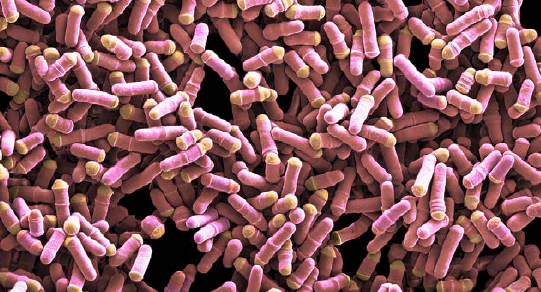 Reine Protacio couldn’t figure out
why all her cells kept dying. A
molecular biologist at the University
of Arkansas, she kept trying to grow
colonies of fission yeast (Schizosaccharomyces
pombe) on petri dishes
plated with nutrients... but even in the
control experiments, none of the yeast
survived. Protacio and her colleagues
investigated several possible suspects
—from dirty glassware to contaminated
water— before landing on a
surprising culprit: bad agar.
Derived from seaweed, agar is a gelatinlike
ingredient used to grow yeast
on a solid surface. ... As is turned out,
Protacio’s lab wasn’t alone.
When Protacio first identified the
bad agar last summer, one of the heads
of her lab, molecular biologist Wayne
Wahls, posted about the find on a community
group called PombeList. Labs on
entirely different continents responded
that they faced what seemed like the
same problem, even though their agar
had come from different companies
and lots, sometimes years apart.
As for what component is actually
killing the yeast, Patrick Gibney,
a biologist at Cornell University
has some suspicions. After a
colleague mentioned that washing
the agar seemed to resolve the issue,
he believes the toxin must be water
soluble. Its presence in agar means it
can withstand the autoclave ...
Reine Protacio couldn’t figure out
why all her cells kept dying. A
molecular biologist at the University
of Arkansas, she kept trying to grow
colonies of fission yeast (Schizosaccharomyces
pombe) on petri dishes
plated with nutrients... but even in the
control experiments, none of the yeast
survived. Protacio and her colleagues
investigated several possible suspects
—from dirty glassware to contaminated
water— before landing on a
surprising culprit: bad agar.
Derived from seaweed, agar is a gelatinlike
ingredient used to grow yeast
on a solid surface. ... As is turned out,
Protacio’s lab wasn’t alone.
When Protacio first identified the
bad agar last summer, one of the heads
of her lab, molecular biologist Wayne
Wahls, posted about the find on a community
group called PombeList. Labs on
entirely different continents responded
that they faced what seemed like the
same problem, even though their agar
had come from different companies
and lots, sometimes years apart.
As for what component is actually
killing the yeast, Patrick Gibney,
a biologist at Cornell University
has some suspicions. After a
colleague mentioned that washing
the agar seemed to resolve the issue,
he believes the toxin must be water
soluble. Its presence in agar means it
can withstand the autoclave ...
 The average adult human body
contains 206 bones —the hardened
mixtures of calcium, minerals,
and collagen that provide the biological
scaffolding that walks us through our
day. Bones are incredibly resilient, but
if they do break, they have this nifty
trick of regrowing themselves.
Teeth, however, are not bones.
Although they’re made of some of
the same stuff and are the hardest
material in the human body, they lack
the crucial ability to heal and regrow
themselves. But Japanese researchers
are moving forward with an experimental
drug that promises to regrow
human teeth, and human trials are set
to begin in September.
“We want to do something to help
those who are suffering from tooth loss or absence,” Katsu Takahashi, the head
of dentistry at the medical research institute
at Kitano Hospital in Osaka, told
The Mainichi. “While there has been no
treatment to date providing a permanent
cure, we feel that people’s expectations
for tooth growth are high.”
This development follows years of
study around a particularly antibody
named Uterine sensitization–associated
gene-1 (USAG-1), which has been
shown to inhibit the growth of teeth in
ferrets and mice. Back in 2021, scientists
from the Kyoto University discovered a
monoclonal antibody (a technique usually
used in fighting cancer) that disrupted
the interaction between USAG-1
and molecules known as bone ...
Read full text
The average adult human body
contains 206 bones —the hardened
mixtures of calcium, minerals,
and collagen that provide the biological
scaffolding that walks us through our
day. Bones are incredibly resilient, but
if they do break, they have this nifty
trick of regrowing themselves.
Teeth, however, are not bones.
Although they’re made of some of
the same stuff and are the hardest
material in the human body, they lack
the crucial ability to heal and regrow
themselves. But Japanese researchers
are moving forward with an experimental
drug that promises to regrow
human teeth, and human trials are set
to begin in September.
“We want to do something to help
those who are suffering from tooth loss or absence,” Katsu Takahashi, the head
of dentistry at the medical research institute
at Kitano Hospital in Osaka, told
The Mainichi. “While there has been no
treatment to date providing a permanent
cure, we feel that people’s expectations
for tooth growth are high.”
This development follows years of
study around a particularly antibody
named Uterine sensitization–associated
gene-1 (USAG-1), which has been
shown to inhibit the growth of teeth in
ferrets and mice. Back in 2021, scientists
from the Kyoto University discovered a
monoclonal antibody (a technique usually
used in fighting cancer) that disrupted
the interaction between USAG-1
and molecules known as bone ...
Read full text
 When Carlos Casas was filming
a project in Sri Lanka, his
interactions with an elephant gave the
Catalonian filmmaker and installation
artist an idea: What if instead of relying
on images alone, he could use sound to
create a physical connection between
an audience of people and the subjects
that fascinate him most, the animals
with which we share life on this planet?
Bestiari, his audio-visual project, on
display inside a former shipping warehouse,
weaves an immersive landscape
for visitors. Audio of the sounds the
animals make is accompanied by video
collected from remote camera traps
set across national parks of Catalonia
and Kenya, together with abstract film
meant to capture the world as the animals
see it, which is based on scientific
research. A series of texts serve as
field guides to each animal featured in
the installation. Entering the dark warehouse, you
are invited to lie on the floor before
communing with seven different species:
bees, donkeys, parakeets, snakes,
bats, dolphins, and elephants. Each of
the chosen species is represented by
a speaker, customized to deliver the
desired acoustics. The pitches and volumes
were curated to be authentic to
the original animal but perceptible by
humans. For example, the echolocation
chirps of bats have been slowed down
to showcase the tonal progression of
the sound. (You can explore some of
the project, which was curated by Filipa
Ramos, at the Instagram page for the
installation.) ...
“I wanted to select species that are
using the whole spectrum of sound,”
Casas says, “and then allow these
seven species to talk, to dialogue, to
show their understanding of the world
in a trial against the spectator.”
Casas credits Roger
Payne and Katy Payne
for pioneering the
use of technology to
change the way we
perceive the sounds
different species of
animals make. ...
Read full text:
When Carlos Casas was filming
a project in Sri Lanka, his
interactions with an elephant gave the
Catalonian filmmaker and installation
artist an idea: What if instead of relying
on images alone, he could use sound to
create a physical connection between
an audience of people and the subjects
that fascinate him most, the animals
with which we share life on this planet?
Bestiari, his audio-visual project, on
display inside a former shipping warehouse,
weaves an immersive landscape
for visitors. Audio of the sounds the
animals make is accompanied by video
collected from remote camera traps
set across national parks of Catalonia
and Kenya, together with abstract film
meant to capture the world as the animals
see it, which is based on scientific
research. A series of texts serve as
field guides to each animal featured in
the installation. Entering the dark warehouse, you
are invited to lie on the floor before
communing with seven different species:
bees, donkeys, parakeets, snakes,
bats, dolphins, and elephants. Each of
the chosen species is represented by
a speaker, customized to deliver the
desired acoustics. The pitches and volumes
were curated to be authentic to
the original animal but perceptible by
humans. For example, the echolocation
chirps of bats have been slowed down
to showcase the tonal progression of
the sound. (You can explore some of
the project, which was curated by Filipa
Ramos, at the Instagram page for the
installation.) ...
“I wanted to select species that are
using the whole spectrum of sound,”
Casas says, “and then allow these
seven species to talk, to dialogue, to
show their understanding of the world
in a trial against the spectator.”
Casas credits Roger
Payne and Katy Payne
for pioneering the
use of technology to
change the way we
perceive the sounds
different species of
animals make. ...
Read full text:
 An Owen Sound chef is bringing his
Indigenous-inspired sweetgrass ice
cream to one of Canada’s most iconic
frozen treat manufacturing facilities.
Zach Keeshig, who is from Chippewas
of Nawash Unceded First Nation
at Cape Croker Reserve, is teaming
up with Chapman’s to create a limited
edition ice cream flavour.
“We’re pushing the boundary on
what Indigenous food could be,” said
Keeshig, who is the owner of Indigenous
restaurant, Naagan.
“It doesn’t just have to be wild rice
and squash,” Keeshig said. “We can
introduce new techniques to bring
Indigenous food to life and put it on
the forefront.”
The ice cream flavour is called
Wiingashk, which is the Ojibway word
for sweetgrass. Keeshig said the green
dessert tastes like a floral version of
vanilla and is balanced out by hints of maple syrup.
“Replacing something
as typical in the culinary
world as vanilla with
sweetgrass is innovative
to say the least,” said
Ashley Chapman, chief
operating officer of Chapman’s.
“What he is doing
is truly pioneering.”
The idea to use sweetgrass
in ice cream came
from Keeshig’s childhood,
when he saw dried sweetgrass used in traditional ceremonies
in his community. “My dad would
light it up and it [smelled] faintly like
vanilla,” said Keeshig, who is visited
the reserve frequently as a child. ...
Read full text
An Owen Sound chef is bringing his
Indigenous-inspired sweetgrass ice
cream to one of Canada’s most iconic
frozen treat manufacturing facilities.
Zach Keeshig, who is from Chippewas
of Nawash Unceded First Nation
at Cape Croker Reserve, is teaming
up with Chapman’s to create a limited
edition ice cream flavour.
“We’re pushing the boundary on
what Indigenous food could be,” said
Keeshig, who is the owner of Indigenous
restaurant, Naagan.
“It doesn’t just have to be wild rice
and squash,” Keeshig said. “We can
introduce new techniques to bring
Indigenous food to life and put it on
the forefront.”
The ice cream flavour is called
Wiingashk, which is the Ojibway word
for sweetgrass. Keeshig said the green
dessert tastes like a floral version of
vanilla and is balanced out by hints of maple syrup.
“Replacing something
as typical in the culinary
world as vanilla with
sweetgrass is innovative
to say the least,” said
Ashley Chapman, chief
operating officer of Chapman’s.
“What he is doing
is truly pioneering.”
The idea to use sweetgrass
in ice cream came
from Keeshig’s childhood,
when he saw dried sweetgrass used in traditional ceremonies
in his community. “My dad would
light it up and it [smelled] faintly like
vanilla,” said Keeshig, who is visited
the reserve frequently as a child. ...
Read full text
 For more than 50 years, scientists
have warned about the risks of
drinking alcohol in pregnancy. Recent
research has found that a mother’s consumption
of as little as one drink a week
may affect a child’s brain development,
cognitive function and behaviour, and
facial shape, while for decades, public
health campaigns have repeatedly said
that there’s no safe amount of alcohol
for mums to drink while pregnant. ...
But as the risks of maternal alcohol
consumption have become betterdocumented,
another potential contributing
factor to FASD has remained
largely overlooked: how much the
father drinks. Research on fertility and
reproduction “has been so womanfocused,
so maternal centric, that we’ve
not really done our due diligence on
the male side”, says Michael Golding,
a developmental physiologist at Texas
A&M University who researches alcohol
exposure and foetal development. ...
But recent population studies have
found that babies whose fathers drank
are at a higher risk for various poor
health outcomes. One 2021 study of
more than half a million couples in
China found that the risk of birth defects
—including cleft palate, congenital
heart disease, and digestive tract
anomalies— was higher if the father
drank before conception, even when the
mother did not drink. Another study
compared 5,000 children with congenital
heart defects to 5,000 without.
Again, while overall risk ...
Read full text
For more than 50 years, scientists
have warned about the risks of
drinking alcohol in pregnancy. Recent
research has found that a mother’s consumption
of as little as one drink a week
may affect a child’s brain development,
cognitive function and behaviour, and
facial shape, while for decades, public
health campaigns have repeatedly said
that there’s no safe amount of alcohol
for mums to drink while pregnant. ...
But as the risks of maternal alcohol
consumption have become betterdocumented,
another potential contributing
factor to FASD has remained
largely overlooked: how much the
father drinks. Research on fertility and
reproduction “has been so womanfocused,
so maternal centric, that we’ve
not really done our due diligence on
the male side”, says Michael Golding,
a developmental physiologist at Texas
A&M University who researches alcohol
exposure and foetal development. ...
But recent population studies have
found that babies whose fathers drank
are at a higher risk for various poor
health outcomes. One 2021 study of
more than half a million couples in
China found that the risk of birth defects
—including cleft palate, congenital
heart disease, and digestive tract
anomalies— was higher if the father
drank before conception, even when the
mother did not drink. Another study
compared 5,000 children with congenital
heart defects to 5,000 without.
Again, while overall risk ...
Read full text
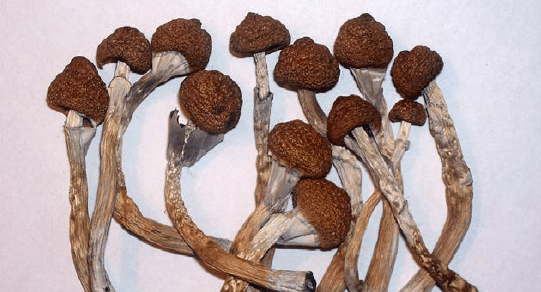 Tripping on magic mushrooms
causes brain activity to become less
organized and more random, with these
effects lasting for several weeks. Having
observed this phenomenon in action, the
authors of a new brain-imaging study
suggest that this scrambling of connectivity
patterns may lead to more flexible
cognition, which could explain how
psychedelics help to alleviate depression
and other mental health conditions.
The researchers recruited seven people
to take a high dose of either psilocybin
(psychoactive compound in mushrooms)
or methylphenidate (generic form of
Ritalin). Participants had an average of
18 MRI brain scans in the weeks before
and after their trip, as well as during the
experience, in order to reveal the acute
and persistent effects of the drug. Initially, the study authors found that
each person had a highly defined and
completely unique pattern of network
connectivity, like a kind of neural fingerprint
that could be used to identify
any given individual. Immediately after
taking psilocybin, however, connectivity
patterns became more chaotic, to the
point that participants could no longer
be distinguished from one another
based on their brain activity.
“The brains of people on psilocybin
look more similar to each other than to
their untripping selves,” explained study
author Nico Dosenbach. “Their individuality
is temporarily wiped out. This
verifies, at a neuroscientific level, what
people say about losing their sense of
...
Read full text:
Tripping on magic mushrooms
causes brain activity to become less
organized and more random, with these
effects lasting for several weeks. Having
observed this phenomenon in action, the
authors of a new brain-imaging study
suggest that this scrambling of connectivity
patterns may lead to more flexible
cognition, which could explain how
psychedelics help to alleviate depression
and other mental health conditions.
The researchers recruited seven people
to take a high dose of either psilocybin
(psychoactive compound in mushrooms)
or methylphenidate (generic form of
Ritalin). Participants had an average of
18 MRI brain scans in the weeks before
and after their trip, as well as during the
experience, in order to reveal the acute
and persistent effects of the drug. Initially, the study authors found that
each person had a highly defined and
completely unique pattern of network
connectivity, like a kind of neural fingerprint
that could be used to identify
any given individual. Immediately after
taking psilocybin, however, connectivity
patterns became more chaotic, to the
point that participants could no longer
be distinguished from one another
based on their brain activity.
“The brains of people on psilocybin
look more similar to each other than to
their untripping selves,” explained study
author Nico Dosenbach. “Their individuality
is temporarily wiped out. This
verifies, at a neuroscientific level, what
people say about losing their sense of
...
Read full text:
 ‘I never want to own anything
again,” messaged my son, packing
up after a year abroad. He was experiencing
the self-loathing rite of passage
that is confronting your acquisitive
tendencies; next year, he vowed, he will
“live like a spartan”. ...
Enter “underconsumption core”. It’s
the latest slightly earnest TikTok trend,
in which young people extoll the virtues
of buying only what you need.
Underconsumers come in various flavours.
Some present basic frugality tips
(cutting up tubes to use the last dregs
of product or repurposing jars). Others
introduce revolutionary concepts such
as “just having one of a thing” (shampoo,
handbag), “looking for secondhand
alternatives” or “not replacing stuff
unless it’s broken”. ...
Consumer goods companies are powerful
and sophisticated, with huge budgets
to throw at conventional advertising
and influencers to make people want
their stuff. Why not try to beat them at
their own game?...
Underconsumption is part of a
de-influencing fightback against the
dispiriting, destructive churn of hyperconsumerism
and it targets influencers’
audiences ... And if you already reuse
teabags and boil up ivy to wash your
clothes, if you have never succumbed to
75% off something unnecessary, congratulations.
Maybe an earlier iteration
of anti-consumption hit home for you;
maybe you are naturally ascetic. ...
Read full text:
‘I never want to own anything
again,” messaged my son, packing
up after a year abroad. He was experiencing
the self-loathing rite of passage
that is confronting your acquisitive
tendencies; next year, he vowed, he will
“live like a spartan”. ...
Enter “underconsumption core”. It’s
the latest slightly earnest TikTok trend,
in which young people extoll the virtues
of buying only what you need.
Underconsumers come in various flavours.
Some present basic frugality tips
(cutting up tubes to use the last dregs
of product or repurposing jars). Others
introduce revolutionary concepts such
as “just having one of a thing” (shampoo,
handbag), “looking for secondhand
alternatives” or “not replacing stuff
unless it’s broken”. ...
Consumer goods companies are powerful
and sophisticated, with huge budgets
to throw at conventional advertising
and influencers to make people want
their stuff. Why not try to beat them at
their own game?...
Underconsumption is part of a
de-influencing fightback against the
dispiriting, destructive churn of hyperconsumerism
and it targets influencers’
audiences ... And if you already reuse
teabags and boil up ivy to wash your
clothes, if you have never succumbed to
75% off something unnecessary, congratulations.
Maybe an earlier iteration
of anti-consumption hit home for you;
maybe you are naturally ascetic. ...
Read full text:
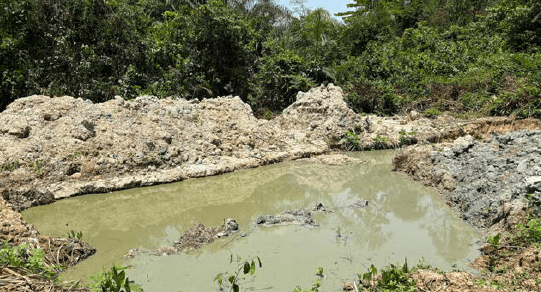 New research has found that 4,642
species of vertebrates are threatened
by mineral extraction around the
world through mining and quarrying,
and drilling for oil and gas. Mining
activity coincides with the world’s most
valuable biodiversity hotspots, which
contain a hyper-diversity of species and
unique habitats found nowhere else on
Earth. The biggest risk to species comes
from mining for materials fundamental
to our transition to clean energy, such
as lithium and cobalt —both essential
components of solar panels, wind
turbines and electric cars. Quarrying for
limestone, which is required for cement
as a construction material, is also putting
many species at risk.
The threat to nature is not limited
to the physical locations of the minesspecies living at great distances away
can also be impacted, for example by
polluted watercourses, or deforestation
for new access roads and infrastructure.
The researchers say governments
and the mining industry should focus
on reducing the pollution driven by
mining as an “easy win” to reduce the
biodiversity loss associated with mineral
extraction.
This is the most complete global assessment
of the threat to biodiversity
from mineral extraction ever undertaken.
The results were published in the
journal Current Biology. ... To get their
results, the researchers used International
Union for the Conservation of Nature
data to see which species are threatened
...
Read full text:
New research has found that 4,642
species of vertebrates are threatened
by mineral extraction around the
world through mining and quarrying,
and drilling for oil and gas. Mining
activity coincides with the world’s most
valuable biodiversity hotspots, which
contain a hyper-diversity of species and
unique habitats found nowhere else on
Earth. The biggest risk to species comes
from mining for materials fundamental
to our transition to clean energy, such
as lithium and cobalt —both essential
components of solar panels, wind
turbines and electric cars. Quarrying for
limestone, which is required for cement
as a construction material, is also putting
many species at risk.
The threat to nature is not limited
to the physical locations of the minesspecies living at great distances away
can also be impacted, for example by
polluted watercourses, or deforestation
for new access roads and infrastructure.
The researchers say governments
and the mining industry should focus
on reducing the pollution driven by
mining as an “easy win” to reduce the
biodiversity loss associated with mineral
extraction.
This is the most complete global assessment
of the threat to biodiversity
from mineral extraction ever undertaken.
The results were published in the
journal Current Biology. ... To get their
results, the researchers used International
Union for the Conservation of Nature
data to see which species are threatened
...
Read full text:
 They were found in gutters, on
streets, in bushes. They were
boarded on trains, deserted in hospitals,
dumped at temples. They were
sent away for being sick or outliving
paychecks or simply growing too old.
By the time they reached this home for
the aged and unwanted, many were too
numb to speak. Some took months to
mouth the truth of how they came to
spend their final days in exile.
“They said, ‘Taking care of him is
not our cup of tea,’” says Amirchand
Sharma, 65, a retired policeman whose
sons left him to die near the river
after he was badly hurt in an accident.
“They said, ‘Throw him away.’” ...
This is a country where grandparents
routinely share a roof with children and
grandchildren, and where the expectation
that the young care for the old is
so ingrained in the national ethos that
nursing homes are a relative rarity and
hiring caregivers is often seen as taboo.
But expanding lifespans have brought
ballooning caregiving pressure, a wave
of urbanization has driven many young
far from their home villages and a
creeping Western influence has begun
eroding the tradition of multigenerational
living.
Courtrooms swell with thousands
of cases of parents seeking help from
their children. Footpaths and alleys are
crowded with older people who now
call them home. And a cottage industry
of nonprofits for the abandoned has
sprouted, operating a constantly growing
number of shelters that continually
fill. ...
They were found in gutters, on
streets, in bushes. They were
boarded on trains, deserted in hospitals,
dumped at temples. They were
sent away for being sick or outliving
paychecks or simply growing too old.
By the time they reached this home for
the aged and unwanted, many were too
numb to speak. Some took months to
mouth the truth of how they came to
spend their final days in exile.
“They said, ‘Taking care of him is
not our cup of tea,’” says Amirchand
Sharma, 65, a retired policeman whose
sons left him to die near the river
after he was badly hurt in an accident.
“They said, ‘Throw him away.’” ...
This is a country where grandparents
routinely share a roof with children and
grandchildren, and where the expectation
that the young care for the old is
so ingrained in the national ethos that
nursing homes are a relative rarity and
hiring caregivers is often seen as taboo.
But expanding lifespans have brought
ballooning caregiving pressure, a wave
of urbanization has driven many young
far from their home villages and a
creeping Western influence has begun
eroding the tradition of multigenerational
living.
Courtrooms swell with thousands
of cases of parents seeking help from
their children. Footpaths and alleys are
crowded with older people who now
call them home. And a cottage industry
of nonprofits for the abandoned has
sprouted, operating a constantly growing
number of shelters that continually
fill. ...
 Britain has been convulsed by violence
recently as crowds spouting
anti-immigrant and Islamophobic slogans
clashed with police. The disturbances
have been fueled by right-wing
activists using social media to spread
misinformation. ...
The violence, some of Britain’s worst
in years, has led to hundreds of arrests
as the government pledges that the
rioters will feel “the full force of the
law” after hurling bricks and other
projectiles at police, looting shops and
attacking hotels used to house asylumseekers.
As Britain’s new government
struggles to quell the unrest and announces
a “standing army” of specialist
police to deal with rioting, here’s a
look at what’s happening and why.
People across Britain were shocked
by what police described as a “ferocious knife attack” that killed three girls
between 6 and 9 on July 29 in Southport,
a seaside town north of Liverpool.
Eight other children and two adults
were injured. Police detained a 17-yearold
suspect. Rumors, later debunked,
quickly circulated on social media that
the suspect was an asylum-seeker, or a
Muslim immigrant.
The next day ... hundreds of protesters
attacked a local mosque with bricks,
bottles and rocks. Police said the rioters
were “believed to be supporters of the
English Defence League,” a far-right
group that has organized anti-Muslim
protests since 2009. Authorities on Aug.
1 took the unusual step of identifying
the underage suspect in an effort to
stop the rumors ...
Britain has been convulsed by violence
recently as crowds spouting
anti-immigrant and Islamophobic slogans
clashed with police. The disturbances
have been fueled by right-wing
activists using social media to spread
misinformation. ...
The violence, some of Britain’s worst
in years, has led to hundreds of arrests
as the government pledges that the
rioters will feel “the full force of the
law” after hurling bricks and other
projectiles at police, looting shops and
attacking hotels used to house asylumseekers.
As Britain’s new government
struggles to quell the unrest and announces
a “standing army” of specialist
police to deal with rioting, here’s a
look at what’s happening and why.
People across Britain were shocked
by what police described as a “ferocious knife attack” that killed three girls
between 6 and 9 on July 29 in Southport,
a seaside town north of Liverpool.
Eight other children and two adults
were injured. Police detained a 17-yearold
suspect. Rumors, later debunked,
quickly circulated on social media that
the suspect was an asylum-seeker, or a
Muslim immigrant.
The next day ... hundreds of protesters
attacked a local mosque with bricks,
bottles and rocks. Police said the rioters
were “believed to be supporters of the
English Defence League,” a far-right
group that has organized anti-Muslim
protests since 2009. Authorities on Aug.
1 took the unusual step of identifying
the underage suspect in an effort to
stop the rumors ...
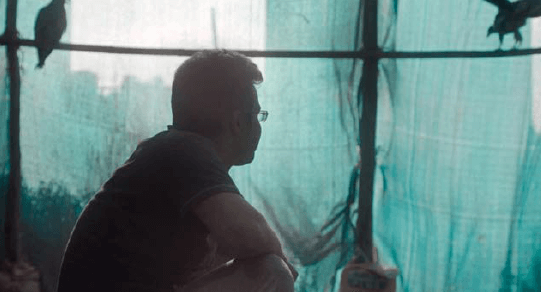 All That Breathes is a wonderful
documentary garlanded with international
awards. Directed by Shaunak
Sen —and ravishingly shot by Ben
Bernhard— this inspiring film takes us
inside the lives of two ordinary seeming
Muslim brothers in Delhi who are actually
extraordinary in their dedication
to doing good in a city teetering on the
edge of apocalypse.
The brothers, Saud and Nadeem,
along with their somewhat comical
sidekick, Salik, devote themselves to a
project they began as kids: protecting
the bird of prey known as the black kite,
a glorious, hovering creature widely
detested as a scavenging nuisance.
Day after day, ailing and injured kites
arrive at their homemade infirmary
where the trio nurses them until they are able to fly back into the urban wild.
The guys have helped 20,000 so far.
And the injured kites just keep falling
from the sky in a city whose air is infamously
filthy and whose toxin-laced
landfills may be the world’s largest.
“Delhi is a gaping wound,” Saud says,
“and we’re just a Band-Aid on it.” ...
All That Breathes is filled with shots
of Delhi’s animal life —lizards, insects,
dogs, rats and the city’s notoriously
troublesome monkeys. These creatures
all are doing what the kites have
done: adapting to an often-hostile
environment shaped by humans. In
this ecosystem, kites serve a necessary
role by devouring vermin and rubbish
in those huge landfills. ...
All That Breathes is a wonderful
documentary garlanded with international
awards. Directed by Shaunak
Sen —and ravishingly shot by Ben
Bernhard— this inspiring film takes us
inside the lives of two ordinary seeming
Muslim brothers in Delhi who are actually
extraordinary in their dedication
to doing good in a city teetering on the
edge of apocalypse.
The brothers, Saud and Nadeem,
along with their somewhat comical
sidekick, Salik, devote themselves to a
project they began as kids: protecting
the bird of prey known as the black kite,
a glorious, hovering creature widely
detested as a scavenging nuisance.
Day after day, ailing and injured kites
arrive at their homemade infirmary
where the trio nurses them until they are able to fly back into the urban wild.
The guys have helped 20,000 so far.
And the injured kites just keep falling
from the sky in a city whose air is infamously
filthy and whose toxin-laced
landfills may be the world’s largest.
“Delhi is a gaping wound,” Saud says,
“and we’re just a Band-Aid on it.” ...
All That Breathes is filled with shots
of Delhi’s animal life —lizards, insects,
dogs, rats and the city’s notoriously
troublesome monkeys. These creatures
all are doing what the kites have
done: adapting to an often-hostile
environment shaped by humans. In
this ecosystem, kites serve a necessary
role by devouring vermin and rubbish
in those huge landfills. ...
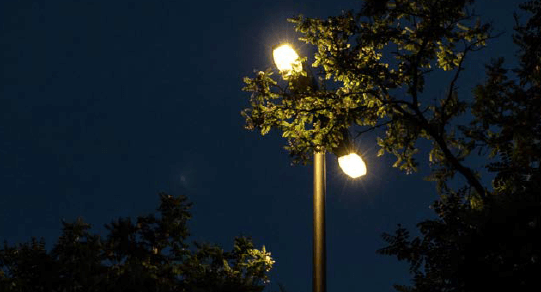 Streetlights left on all night cause
leaves to become so tough that
insects cannot eat them, threatening the
food chain, a study has found.
Scientists noticed that trees in urban
ecosystems showed far less damage than
those in more rural areas. Their research,
published in Frontiers in Plant Science, has
shed light on a potential reason. ... “In
two of the most common tree species
in Beijing, artificial light at night led to
increased leaf toughness and decreased
levels of leaf herbivory,” said the study’s
author, Dr Shuang Zhang of the Chinese
Academy of Sciences.
Artificial light from streetlights had
a surprising effect on the leaves of
trees surveyed. The scientists tested
two common species of street tree in
Beijing: Japanese pagoda and green ash
trees. The pagoda trees have smaller, softer leaves that insects prefer to
munch on. ... To test the trees they
found 30 sampling sites on main roads
that are usually lit by streetlights all
night. They measured the amount of
light —illuminance— at each site and
then tested the leaves of the trees for
toughness. They tested almost 5,500
leaves for properties including size,
toughness, water content, and levels of
nutrients and chemical defences.
If the leaves were larger, this would
indicate that plants directed their energy
to growth of leaves, but if they were
tough and contained tannins or other
chemical defences this would indicate
that they had allocated their energy ...
Streetlights left on all night cause
leaves to become so tough that
insects cannot eat them, threatening the
food chain, a study has found.
Scientists noticed that trees in urban
ecosystems showed far less damage than
those in more rural areas. Their research,
published in Frontiers in Plant Science, has
shed light on a potential reason. ... “In
two of the most common tree species
in Beijing, artificial light at night led to
increased leaf toughness and decreased
levels of leaf herbivory,” said the study’s
author, Dr Shuang Zhang of the Chinese
Academy of Sciences.
Artificial light from streetlights had
a surprising effect on the leaves of
trees surveyed. The scientists tested
two common species of street tree in
Beijing: Japanese pagoda and green ash
trees. The pagoda trees have smaller, softer leaves that insects prefer to
munch on. ... To test the trees they
found 30 sampling sites on main roads
that are usually lit by streetlights all
night. They measured the amount of
light —illuminance— at each site and
then tested the leaves of the trees for
toughness. They tested almost 5,500
leaves for properties including size,
toughness, water content, and levels of
nutrients and chemical defences.
If the leaves were larger, this would
indicate that plants directed their energy
to growth of leaves, but if they were
tough and contained tannins or other
chemical defences this would indicate
that they had allocated their energy ...

 Sensory bungee/
swing for children special needs,
cerebral palsy, or muscular dystrophy.
Natalia Kokhana / www.etsy.com
Sensory bungee/
swing for children special needs,
cerebral palsy, or muscular dystrophy.
Natalia Kokhana / www.etsy.com
 A beautiful, space-saving solution to your storage
needs. The 5 drawers of this multicolor cabinet pivot out completely, fully exposing
the items within it. Made in Italy of powder-coated steel. store.moma.org
A beautiful, space-saving solution to your storage
needs. The 5 drawers of this multicolor cabinet pivot out completely, fully exposing
the items within it. Made in Italy of powder-coated steel. store.moma.org

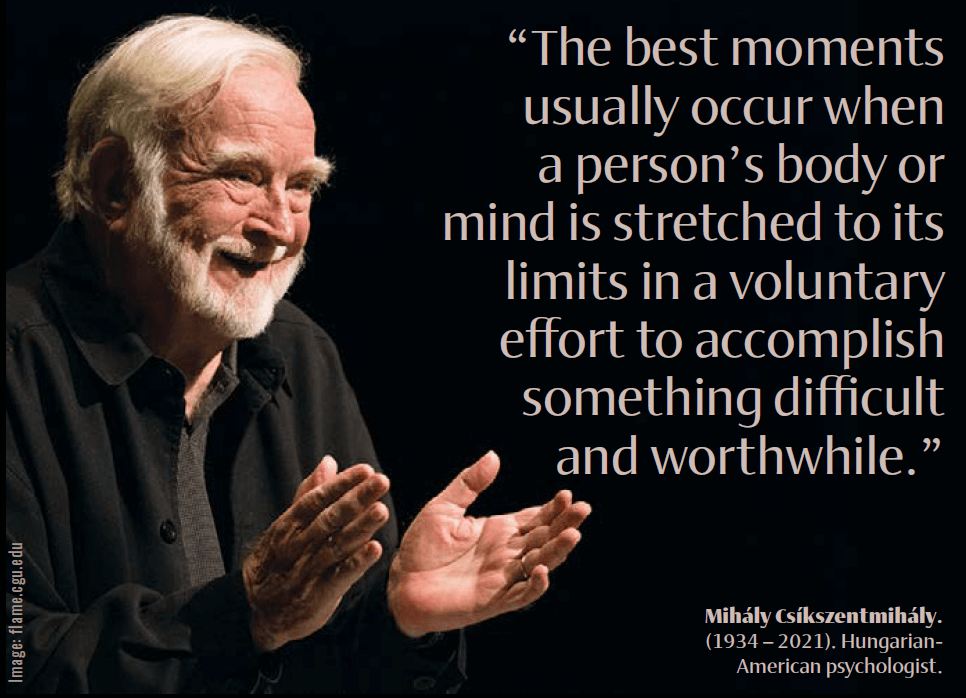
 Apparel designed to
allow children to dress themselves.
Winner of the excellent award of Kids
Design Award (2023). ido-button.com
Apparel designed to
allow children to dress themselves.
Winner of the excellent award of Kids
Design Award (2023). ido-button.com

 The Bachelor Degree in Sustainable
Tourism offers students the
necessary knowledge to begin a career
that promotes the formation of people
and companies capable of identifying
and integrating the social, economic
and environmental factors involved in a
subject of study that will allow them to
design and execute proposals, to substantially
contribute to the sustainable
development of the subject of study.
If you are a purpose-driven person
who wants to elevate your life and
make a solid contribution to the world,
then this program is ideal for you.
Your AIU Distance Learning
Bachelor Degree in Sustainable
Tourism will be a custom-made
program, designed just for you by
you and your advisor. This flexibility
to meet your needs is seldom
found in other distance learning
programs. Our program does not
require every student to study the
same subjects and use the same
books and other learning materials
as every other student. Instead,
our online Bachelor programs are
designed just for you. They are
individually designed to meet your
needs and help you to reach your
professional and personal goals.
The Bachelor Degree in Sustainable
Tourism offers students the
necessary knowledge to begin a career
that promotes the formation of people
and companies capable of identifying
and integrating the social, economic
and environmental factors involved in a
subject of study that will allow them to
design and execute proposals, to substantially
contribute to the sustainable
development of the subject of study.
If you are a purpose-driven person
who wants to elevate your life and
make a solid contribution to the world,
then this program is ideal for you.
Your AIU Distance Learning
Bachelor Degree in Sustainable
Tourism will be a custom-made
program, designed just for you by
you and your advisor. This flexibility
to meet your needs is seldom
found in other distance learning
programs. Our program does not
require every student to study the
same subjects and use the same
books and other learning materials
as every other student. Instead,
our online Bachelor programs are
designed just for you. They are
individually designed to meet your
needs and help you to reach your
professional and personal goals.
 Atlantic International University is accredited by the Accreditation Service for International
Schools, Colleges and Universities (ASIC). ASIC Accreditation is an internationally
renowned quality standard for colleges and universities. Visit ASIC’s Directory of Accredited
Colleges and Universities. ASIC is a member of CHEA International Quality Group
(CIQG) in the USA, an approved accreditation body by the Ministerial Department of the Home Office
in the UK, and is listed in the International Directory of the Council for Higher Education Accreditation
(CHEA). The University is based in the United States and was established by corporate charter in 1998.
Atlantic International University is accredited by the Accreditation Service for International
Schools, Colleges and Universities (ASIC). ASIC Accreditation is an internationally
renowned quality standard for colleges and universities. Visit ASIC’s Directory of Accredited
Colleges and Universities. ASIC is a member of CHEA International Quality Group
(CIQG) in the USA, an approved accreditation body by the Ministerial Department of the Home Office
in the UK, and is listed in the International Directory of the Council for Higher Education Accreditation
(CHEA). The University is based in the United States and was established by corporate charter in 1998.
 In some cases, accredited colleges
may not accept for transfer courses and degrees
completed at unaccredited colleges, and some
employers may require an accredited degree as
a basis for eligibility for employment. Potential
students should consider how the above may affect
their interests, AIU respects the unique rules and
regulations of each country and does not seek to
influence the respective authorities. In the event
that a prospective student wishes to carry out any
government review or process in regards to his
university degree, we recommend that the requirements
of such are explored in detail with the relevant
authorities by the prospective student as the
university does not intervene in such processes.
AIU students can be found in over 180 countries,
they actively participate and volunteer
in their communities as part of their academic
program and have allocated thousands of service
hours to diverse causes and initiatives. AIU
programs follow the standards commonly used by
colleges and universities in the United States with
regards to the following: academic program
structure, degree issued, transcript, and
other graduation documents.
AIU graduation documents can include
an apostille and authentication from the
US Department of State to facilitate their
use internationally.
In some cases, accredited colleges
may not accept for transfer courses and degrees
completed at unaccredited colleges, and some
employers may require an accredited degree as
a basis for eligibility for employment. Potential
students should consider how the above may affect
their interests, AIU respects the unique rules and
regulations of each country and does not seek to
influence the respective authorities. In the event
that a prospective student wishes to carry out any
government review or process in regards to his
university degree, we recommend that the requirements
of such are explored in detail with the relevant
authorities by the prospective student as the
university does not intervene in such processes.
AIU students can be found in over 180 countries,
they actively participate and volunteer
in their communities as part of their academic
program and have allocated thousands of service
hours to diverse causes and initiatives. AIU
programs follow the standards commonly used by
colleges and universities in the United States with
regards to the following: academic program
structure, degree issued, transcript, and
other graduation documents.
AIU graduation documents can include
an apostille and authentication from the
US Department of State to facilitate their
use internationally.
| Dr. Franklin Valcin Presi den t/Academic Dean |
Dr. José Mercado Chief Executive Officer Chairman of the Board of Trustees |
Ricardo González, PhD Provost |
| Dr. Ricardo Gonzalez Chief Operation Officer and MKT Director |
Linda Collazo Logistics Coordinator |
AIU Tutors Coordinators: Deborah Rodriguez Amiakhor Ejaeta Amanda Gutierrez William Mora Miriam James Admissions Coordinators: Amalia Aldrett Sandra Garcia Junko Shimizu Veronica Amuz Alba Ochoa Jenis Garcia Judith Brown Chris Soto René Cordón Dr. Anderas Rissler Academic Coordinators: Dr. Adesida Oluwafemi Dr. Emmanuel Gbagu Dr. Lucia Gorea Dr. Edgar Colon Dr. Mario Rios Freddy Frejus Dr. Nilani Ljunggren De Silva Dr. Scott Wilson Dr. Mohammad Shaidul Islam |
| Dr. Miriam Garibaldi Vice provost for Research |
Carolina Valdes Human Resource Coordinator |
|
| Dr. Ofelia Miller Director of AIU |
Carlos Aponte Teleco mmunications Coordinator |
|
| Clara Margalef Director of Special Projects of AIU |
David Jung Corporate/Legal Counsel |
|
| Juan Pablo Moreno Director of Operations |
Bruce Kim Advisor/Consultant |
|
| Paula Viera Director of Intelligence Systems |
Thomas Kim Corporate/ Accounting Counsel |
|
| Felipe Gomez Design Director / IT Supervisor |
Maricela Esparza Administrative Coordinator |
|
| Kevin Moll Web Designer |
Chris Benjamin IT and Hosting Support |
|
| Daritza Ysla IT Coordinator |
Maria Pastrana Accounting Coordinator |
|
| Daritza Ysla IT Coordinator |
Roberto Aldrett Communications Coordinator |
|
| Nadeem Awan Chief Programming Officer |
Giovanni Castillo IT Support |
|
| Dr. Edward Lambert Academic Director |
Antonella Fonseca Quality Control & Data Analysis |
|
| Dr. Ariadna Romero Advisor Coordinator |
Adrián Varela Graphic Design |
|
| Jhanzaib Awan Senior Programmer |
Vanesa D’Angelo Content Writer |
|
| Leonardo Salas Human Resource Manager |
Jaime Rotlewicz Dean of Admissions |
|
| Benjamin Joseph IT and Technology Support |
Michael Phillips Registrar’s Office |
|
| Rosie Perez Finance Coordinator |
||
 The School of Business and Economics
allows aspiring and practicing
professionals, managers, and entrepreneurs
in the private and public sectors
to complete a self paced distance
learning degree program of the highest
academic standard.
The ultimate goal is to empower
learners and help them take advantage
of the enormous array of resources
from the world environment in order
to eliminate the current continuum of
poverty and limitations.
Degree programs are designed for
those students whose professional experience has been in business,
marketing, administration, economics,
finance and management.
The School of Business and Economics
allows aspiring and practicing
professionals, managers, and entrepreneurs
in the private and public sectors
to complete a self paced distance
learning degree program of the highest
academic standard.
The ultimate goal is to empower
learners and help them take advantage
of the enormous array of resources
from the world environment in order
to eliminate the current continuum of
poverty and limitations.
Degree programs are designed for
those students whose professional experience has been in business,
marketing, administration, economics,
finance and management.
 The School of Social and Human Studies
is focused on to the development of
studies which instill a core commitment
to building a society based on social and
economic justice and enhancing opportunities
for human well being.
The founding principles lie on the
basic right of education as outlined
in the Declaration of Human Rights.
We instill in our students a sense of
confidence and self reliance in their
ability to access the vast opportunities
available through information channels,
the world wide web, private, public,
nonprofit, and nongovernmental organizations in an ever expanding
global community.
Degree programs are aimed towards
those whose professional life has been
related to social and human behavior,
with the arts, or with cultural studies.
The School of Social and Human Studies
is focused on to the development of
studies which instill a core commitment
to building a society based on social and
economic justice and enhancing opportunities
for human well being.
The founding principles lie on the
basic right of education as outlined
in the Declaration of Human Rights.
We instill in our students a sense of
confidence and self reliance in their
ability to access the vast opportunities
available through information channels,
the world wide web, private, public,
nonprofit, and nongovernmental organizations in an ever expanding
global community.
Degree programs are aimed towards
those whose professional life has been
related to social and human behavior,
with the arts, or with cultural studies.
 The School of Science and Engineering
seeks to provide dynamic, integrated,
and challenging degree programs
designed for those whose experience
is in industrial research, scientific production,
engineering and the general
sciences. Our system for research and
education will keep us apace with the
twenty-first century reach scientific
advance in an environmentally and
ecologically responsible manner to allow
for the sustainability of the human
population. We will foster among our
students a demand for ethical behavior,
an appreciation for diversity, an understanding
of scientific investigation, knowledge of design innovation, a
critical appreciation for the importance
of technology and technological change
for the advancement of humanity.
The School of Science and Engineering
seeks to provide dynamic, integrated,
and challenging degree programs
designed for those whose experience
is in industrial research, scientific production,
engineering and the general
sciences. Our system for research and
education will keep us apace with the
twenty-first century reach scientific
advance in an environmentally and
ecologically responsible manner to allow
for the sustainability of the human
population. We will foster among our
students a demand for ethical behavior,
an appreciation for diversity, an understanding
of scientific investigation, knowledge of design innovation, a
critical appreciation for the importance
of technology and technological change
for the advancement of humanity.
 With access to a global catalog created and maintained collectively by more than
9,000 participating institutions, AIU students have secured excellent research
tools for their study programs.
With access to a global catalog created and maintained collectively by more than
9,000 participating institutions, AIU students have secured excellent research
tools for their study programs.