 Call for Papers
This Conference will be held
2-4 July 2025
at University of Málaga,
Málaga, Spain.
Call for Papers
This Conference will be held
2-4 July 2025
at University of Málaga,
Málaga, Spain. In the lush heartland of
Panama, where the tropical
rainforest meets the
azure waters of the Pacific, a
remarkable scientist, Dr. Lurys
Bourdett Stanziola embarked
on a transformative journey
that would not only redefine
scientific boundaries in her
homeland but also resonate
globally. Driven by an insatiable
curiosity and an unyielding
passion for scientific exploration,
she emerged as a beacon
of inspiration, illuminating the
path for future researchers and
community leaders.
In the lush heartland of
Panama, where the tropical
rainforest meets the
azure waters of the Pacific, a
remarkable scientist, Dr. Lurys
Bourdett Stanziola embarked
on a transformative journey
that would not only redefine
scientific boundaries in her
homeland but also resonate
globally. Driven by an insatiable
curiosity and an unyielding
passion for scientific exploration,
she emerged as a beacon
of inspiration, illuminating the
path for future researchers and
community leaders.
| Marcelo Fabian Warnes Bachelor of Science Agronomy Argentina |
Robin Raju Doctor of Philosop hy Finance Australia |
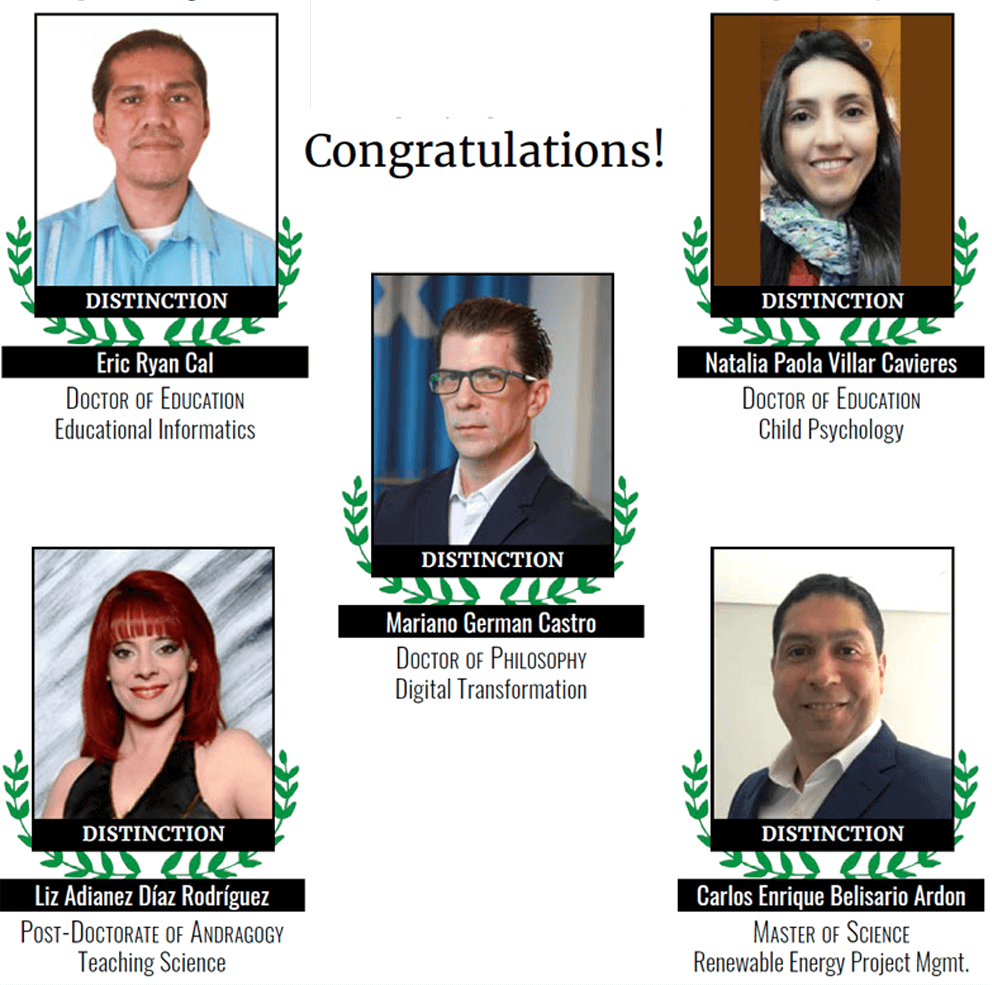
Eric Ryan Cal Doctor of Education Educational Informatics Belize |
Alvaro Ruben Ortiz Coca Bachelor of Science Telecommunications Bolivia |
Keletso Koosaletse Tladi Doctor of Philosop hy Business Psychology Botswana |
Mpho Gabatshwane Master of Science International Relations and Diplomacy Botswana |
| Ranieri Alberton Marchioro Doctor of Political Science Political Science Brazil |
Mbuh Sunday Vincent Post-Doctorate of Accounting Accounting and Auditing Cameroo n |
Farah Kulmie Elmi Master of Human Resources Human Resources Management Canada |
Natalia Paola Villar Cavieres Doctor of Education Child Psychology Chile |
Jimmy Ebi Patrick Master of Human Resources Human Resources China |
Chancellain Mabongo Katembo Master of Science Business Management Congo |
| Nyembo Salumu Guelord Certificate of Business and Economics Supply Chain and Logistics Management Congo |
Alex Otárola Fallas Bachelor of Science Engineering Electromechanics Costa Rica |
Batundi Hangi Vicar Doctor of Philosop hy Project Management Dominican Republic |
Robinson Esteban Segura Feliz Doctor of Legal Studies Taxation and Auditing Dominican Republic |
Alba Altagracia Rosa Lora Doctor of Education Universal History Dominican Republic |
Dionil Rodríguez Monegro Bachelor of Music Theory Music Production Dominican Republic |
| Miranda Camarena Rocío Paulina Bachelor of Science Industrial Engineering Ecuador |
Renata Vásconez Olalla Bachelor of Education Early Childhood Education Ecuador |
Mario Osmin Urquilla Barrientos Bachelor of Science Architecture El Salvador |
Katherine Stephanie Diaz Rivera Bachelor of International Relations International Relations El Salvador |
Amancio Esono Fernández Master of Legal Studies Commercial Contractors Equatorial Guinea |
Mubarak Ishaque Doctor of Science Social Science and Human Studies Ghana |
| Francisco Andre Alvarado Gordillo Bachelor of Science Architecture Guatemala |
Ligia María Vélez Salazar Bachelor of Science Psychology Guatemala |
María de los Angeles Roa Martínez Bachelor of Business Administration Business Administration Guatemala |
Joanna Noella Sealey Master of Public Health Health Promotion and Disease Prevention Guyana |
Etienne Jackson Master of Business Administration Accounting Haiti |
Marc-Coulange Joseph Bachelor of Science Information Systems Haiti |
| Darwin Omar Andino Quintanilla Bachelor of Business Administration Business Administration Honduras |
Gracia Ivonne Bonilla Morán Doctor of International Relations Immigration India |
Gideon Babatunde Olatunji Doctor of Science Information Technology Ireland |
Sherniki Y. Smith Bachelor of Science Business Management Jamaica |
Camille Loye Hudson Doctor of Science Psychology Jamaica |
Kaume Adams Kubai Bachelor of Arts Legal Studies Kenya |
| Abdullah A. Mohammed Hassan Bachelor of Science Public Health Kuwait |
Marco Antonio Gordillo Cervantes Doctor of Education Education Mexico |
Mai Leine Htung Doctor of Education Education Myanmar |
Emmanuel Owurre Master of Science Electrical Engineering Nigeria |
Bilqiz Olaide Alayaki Doctor of Philosop hy Information Systems Nigeria |
Christian Idoga Bachelor of Business Administration Accounting Nigeria |
| Emeruwa Victor Bachelor of Science Mass Media and Communication Nigeria |
Kurginama Mathew Joktan Master of Business Management Finance and Business Management Nigeria |
Mariano German Castro Doctor of Philosop hy Digital Transformation Panama |
Artemio Alarcon Leon Doctor of Finance International Finance Peru |
Larissa Alexandra Siveroni Urrutia Bachelor of Business Administration International Business Peru |
Federico Holgado Abarca Post-Doctorate of Accounting Accounting Peru |
| Cary Hermo Beatisula Doctor of Science Structural Engineering Philipp ines |
Liz Adianez Díaz Rodríguez Post-Doctorate of Andragogy Teaching Science Puerto Rico |
Alison Miguel Joseph Doctor of Science Psychology Saint Lucia |
Luciana Telemaque Doctor of Philosop hy Project Management Seychelles |
Cintia Karina de Sousa Pedreira Bachelor of Education Education South Africa |
David Opedun Doctor of Nutrition Nutrition Science South Africa |
| Martha Aguer Ajung Aguer Bachelor of Science Political Science South Sudan |
Vuonze Patrick Associate of Science Psychology South Sudan |
Christiana Anyorkor Sowah Bachelor of Education English Education Tanzania |
Jackson Chacha Francis Doctor of Education Educational Leadership Tanzania |
Omer Alkilani Bachelor of Music Music Türkiye |
Roza Mbakumira Lwanga Bachelor of Communications Mass Communications Uganda |
| Joy Obunezi Akinola Master of Foo d Science Technology Safety and Quality Management US A |
Adenike Olanrewaju Okoro Doctor of Education Educational Administration and Management US A |
Jorge Washington Almeida Romero Bachelor of Business Administration International Business US A |
Carlos Enrique Belisario Ardon Master of Science Renewable Energy Project Management US A |
Maritza Ramos Cerezo Doctor of Psychotherap y Psychotherapy US A |
Cecilia Antoine-Jean Charles Doctor of Science Counseling Psychology US A |
| Narda Oneida Mendoza de Guzmán Master of Science Psychology Learning and Family Counseling Virgin Islands |
Robert Shakikupe Kilembo Bachelor of Theology Theology Zambia |
Thomas Munyaradzi Chikadaya Doctor of Philosop hy Statistics Zimbab we |

 Augustine Ogaji Anthony
  David Clement Mahlalela
  Gertrude Kafui Boamah
 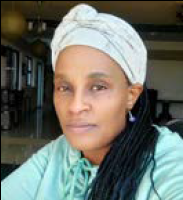 Joyce Sibeko
We are living in a world of
big media, of big platforms,
that every day invest
more money in their resources
so that what they broadcast
reaches a greater number of
inhabitants of our planet Earth.
The great moment is that
every day there are more
events and more to say.
There are political events,
what they say and who those
politicians follow; changes in
governments everywhere, wars
of great interests, the expansion
of trade, the necessary
changes in education: we see
that there is much to say.
We are witnesses of the
information that is provided:
people from science are interviewed
who expose scientific
themes but who present their
points of view. They offer
what scientists say in their
favor, but they don’t say what
other scientists offer. In addition,
their conclusions don’t
come from the aspects with
which science is done.
They interview anyone anywhere
and present it as if it
were a majority. They present one who says this and another
who opposes it and they draw
conclusions as if it were an
element that must be considered
as truth.
We have platforms with communicators openly
dedicated to spreading fallacies
where they handle images and
manipulative dialogue in an
extraordinary way.
Before we said that those with fewer resources and less
education did so because the
States or governments hadn’t
given them the opportunity to
grow, today we see a different
panorama. These people lend themselves to being used
by certain groups that want
power at any cost. They want
power to erase all rights so
that democracies, the right
for everyone to have the same
opportunities, are conspicuous
by their absence so they can do
whatever they want for their
own benefit.
The groups of human beings
that we mention now are
happy with the benefits that are
granted to them and do what is
plain to see: they give their vote
to convenient politicians.
What is the benefit of those
who were previously marginalized?
They give —they sell
their vote— for what they are
given because they have found
the benefit of not having the
commitment to study, which
means: schedules and effort,
not having a schedule to
develop a task or job and living
without any responsibility.
The governments that use
them offer them small scholarships
for their children’s
studies, small amounts of food, very poor health services and
housing with the minimum of
services.
The only thing they have an
obligation to do is to attend
the events held by those parties
that become governments
thanks to them and protest
when asked to do so in order to
annul their opponents.
The big question is: what is
happening in this society?
This society doesn’t know
where to go.
In the face of this world,
there are countries that want
to limit the power of the
Platforms and there are others
that see the benefit they can
gain from the disinformation
that is spread.
We ask ourselves: how has
the creation of the world we
are living in been possible in
the face of the great development
of science?
We have to see how science
is done and contrast it with
what the Platforms, the informants
and many governments
do. We know that science has
a procedure, it has methods
to carry out its work: these
methods indicate the process
that must be followed to build
it. Science has:
1. Principles. These are
the obvious, universal and
necessary starting points. They
don’t need demonstration.
Each science has its principles or axioms; these serve
to provide a basis for other
propositions or judgments.
The principles of Geometry
and Algebra are famous.
Principle of Euclidean Geometry.
Only one parallel line
can be drawn through a point
outside a straight line.
Algebraic axiom of associative
addition (a+b)+c = a+(b+c)
2. Laws. A law in science
is a proposition, judgment or
statement that expresses a
constant relationship.
In Physics we have Max Karl
Ernst Ludwig Planck, a German
researcher born in Kiel in
1858 and died in Göttingen in
1947. Nobel Prize in Physics in
1918. Creator of Quantum Mechanics.
He worked with Einstein,
and they were friends.
Creator of the law identified
with his surname, Planck’s
law, which says: the energy
emitted by a black body is a
function of temperature and
wavelength.
3. Theories. Theories are
explanations that contain
axioms and laws, for example
Einstein’s theory of relativity.
(1879, Germany – 1955, USA).
Nobel Prize in Physics 1921.
Special theory of relativity:
The speed of light is always
constant while the movement
is relative to the observer.
Famous formula E=mc2
4. Methods or procedures.
The methods or
procedures are the ways in
which work is done to say that
a study is scientific.
We have methods whose
objects of study are measurable
and methods for sciences
whose objects can’t be transferred
to a laboratory.
There is the so-called quantitative
research and qualitative
research.
5. Discourse follows
logic to reach the truth.
Following Logic, science must be based on Logical Principles.
a) Principle of Identity
b) Principle of
non-contradiction
c) Principle of excluded
middle and
d) Principle of sufficient reason
Also to be science it must
demonstrate (theoretical
foundations) which is the part
corresponding to the rules for
reasoning and prove (experiment)
which refers to the experiment
for sciences of objects
taken to the laboratory.
The qualitative ones remain
in the demonstration or
prove with statistics where
the number of elements to
work is obtained. Now we talk
about quantitative sciences and
qualitative sciences.
6. The truth established
by a science must
be congruent with the
truth demonstrated by
others. No research can
contradict the heritage of
other sciences. In science, it’s
always necessary to demonstrate
(logical process) and
verify (experiment or apply
statistics). Analyzing what truth means,
we have to question what
communication media do
today; the objective that the
Platforms have: to sell and sell
no matter what is said.
We are witnesses and victims
of a society in which people are
easily manipulated.
We can infer that more science
is needed.
Universities need to carry out
their functions, which are:
a) Teaching science
b) Research
c) Spreading culture More science teaching is needed;
otherwise, we wouldn’t be
in the society we live in.
When a student finishes his
or her studies, the economic
costs are high, imposed by
governments, because he or her
has to pay this and the other
fee to receive his or her degree.
Governments charge the same
to private universities that must
register all documents. After
finishing their studies, students
don’t find work because everywhere
they are told that they
don’t have experience.
There are the internships
they do in the middle of their
studies or at the end; it’s not
the same as the responsibility of
those who are employees of an
organization. Finishing a career
that means extending scientific
knowledge becomes an odyssey.
Governments should give
scholarships at the end of their
studies so that graduates can
begin to organize themselves.
They should give certain
benefits to companies that hire
recent graduates. When they
finish their studies, it seems that they are punished for having
learned science.
It’s in the interest of nations
to have more people with a
scientific education; what we
see now wouldn’t happen:
disinformation and misinformation
that is simply opinion
or false information for certain
purposes. Also, citizens with
less culture, less knowledge of
science wouldn’t become the
popular masses because they
would have knowledge of what
they are useful for and what
their countries become.
Angus Deaton, Nobel Prize
winner in Economics 2015,
makes a study in his work The
Great Escape where he shows
what happens with governments
that are helped to support
the poor: the rulers take
the money for themselves.
There are countries that do
give an elite the opportunity
to study, but they keep them
subject and pay them what
they want and send them to
help other countries that are
similar to them in their system
of government where rights are
conspicuous by their absence.
You are doing a program at
Atlantic International University
(AIU); you are lucky in life.
Study, give all the interest
possible to learn.
Learning is the great
treasure of life: few will
be able to use you.
You would contribute
to creating a society
different from the one
we are living in.
You would have a life
in which you could explain
all the events
in this world.
If there was more
teaching of science
—teaching— we
wouldn’t have the world
of populist governments
and so much opinion
and misinformation.
It wouldn’t be necessary
to be behind the
platforms and informers
skilled in manipulating.
BIBLIOGRAPHY. Aristóteles. (2019) El Organon. México, Porrúa.
| Cohen, N. y Gabriela Gómez Rojas. (2019). Metodología de la
investigación ¿Para qué? Argentina. Teseo. https://biblioteca.clacso.edu.
ar/clacso/se/20190823024606/Metodologia_para_que.pdf | Deaton, A. (2015)
El Gran Escape. Salud, riqueza y los orígenes de la desigualdad.
México, FCE. | Gutiérrez Sáenz, R. (2011) Introducción a la Lógica.
México, Esfinge. | Hernández Sampieri, R. (2023) Metodología de
la Investigación. México, Mc Graw Hill.

The role of play pedagogy
One of the most outstanding
educators and psychologists,
Lew S. Vygotski, in his reflections
on play and its meaning
believes that when talking
about play, one should focus on
two aspects, namely: it is necessary
to consider the genesis
and what role plays in development.
Vygotski therefore
believes that an answer should
be found to the question: “Is
play the most important activity
of a child in this period of development, or is it simply a
dominant activity?” He believes
that from the point of view of
development in the preschool
period, play is not the dominant
form of activity, but it is
its most important path.
By defining the framework for
the meaning of play, Vygotsky
negates the definition of play
using the pleasure quality it
gives to the child. He believes
that this understanding of
“fun” is inappropriate for two
reasons: the first is the fact that we encounter many child-bearing
activities definitely more
fun than having fun. The child
is satisfied through playing with
one’s needs, without noticing
the motives or the uniqueness
of motives activities, we will
not be able to understand play.
Preschool not directly realized
desires arise in the child, which
is the reason, in other words, the
main reason for the emergence
of various games, but you can
observed in children in the early
period of childhood a certain
tendency to quick release and
fulfil your desires. Vygotsky is
of the opinion that by observing
the emotional side of the
child, it can be concluded that
it is unsatisfied children’s desires
release “ways of vicarious
gratification.” In a child over the
age of three, a certain contradiction
appears, namely there are
many needs that are not met
immediately during this period,
or desires that do not pass, and
on the other hand tend to their
immediate satisfaction. We are
dealing here with gaining new
experiences that form the basis
for further development.
Guidelines WHO and
American Paediatrician
Association about using
electronics by children
The guidelines of the American
Academy of Paediatrics
are that children under the age
of two should not have contact
with television, computer
games, computers, tablets or
smartphones, while for children
aged 2–6 years, the time spent
in front of the screen should
not exceed a maximum of 20
minutes a day.
WHO has published new recommendations
for the healthy
upbringing of children up to
5 years of age. WHO, like the
American Academy of Paediatrics,
is of the opinion that until
the age of 2 children should not
look at the screen, while after
the age of 2 this time cannot
exceed one hour a day. Why this
discrepancy? Well, I think from
the observation of children, how
they like to use screens.
Autism and Verbal Apraxia
Childs’ apraxia of speech
is an uncommon disorder
in which the child has
considerable difficulty initiating
and making the precise
movements needed for articulation,
even though he or
she has no physical contraindications
for speaking.
The toddler does not have
any muscle damage, abnormalities
in muscle tone or the
lack of strength of these muscles,
which determine a very
sophisticated and specific cycle
of movements of the tongue,
lips, jaw and palate, necessary
to create intelligible speech.
Speech apraxia is sometimes
called verbal apraxia or developmental
apraxia of speech.
Regardless of the name, the
most important concept is
the word “praxia”, in other
words movement planning.
This inability to plan deliberate
movements of the articulation
apparatus prevents the child
from speaking. A child with
speech apraxia wants and tries
to speak, but does not know
how to do it.
Some specialists believe that
the cause lies in brain disorders,
some say that studies do
not confirm it. When the brains of the children with apraxic
speech were scanned, they
looked quite normal. Another
theory points to disruptions
in communication between
the brain and muscles, hence
difficulties in directing or coordinating
movements. Some
occupational therapists suggest
that children who, from
birth, were inactive and not
mobile enough in childhood,
for various reasons, did not
develop the necessary plans for
movement. This also applies to
specific and precise articulation
movements
Speech apraxia often accompanies
other childhood
disorders, such as autism,
Down’s syndrome, and cerebral
palsy. In addition, it can be the
result of a stroke, infection, or
traumatic brain injury; appear
as a symptom of a genetic
disease, metabolic syndrome
or constitute an independent
deficit. I have heard that
speech apraxia is genetically,
autosomal dominant.
Supporting autistic children
with verbal apraxia
through optimised mobile
platforms
I work as a music therapist
and therapist with autistic
children. It often happens that
a parent comes with a child
who does not say anything,
begins to open up after therapy
and utters the first words. I
conducted therapies for the
boy and both his parents and
doctors —mom and dad—
were delighted with the effects
of the therapy. My therapy is
based on a broad understanding
of the family as a whole
and focusing on the child with
the problem of verbal apraxia.
A huge phenomenon for me
was that virtually all of my
autistic clients loved electronics
and it was difficult for
them to tear themselves away
from tablets or smartphones
that they kept somewhere in
their sleeves and sometimes
searched on my table.
Hence, in my head the idea
was born that children with
autism should easily and efficiently
use electronics, it could
create something that would be
a bridge in communication between
them and their environment
even in childhood, I do
not mean communicating with
the use of electronics, but extracting
speech from children,
as I can do as a music therapist
through music and songs, but
here the child will operate the
device under parental control
at home? Because if they
already use tablets, let it have a
deeper meaning than calming
the child, but let it work based
on the pedagogy of play, and
I would even say: on the basis
of a special pedagogy of play,
meeting the needs of contemporary
reality.
As a result, the program will
be adapted to the preferences
of each child, different graphics
may be for girls and boys etc.
One child may love dinosaurs
and the other may be fascinated
by Sponge Bob, for example,
each child has very different
preferences, it can be anything
he loves and treats as a reward.
So it would be a double gratification
to the little one. The first
step will be to click the icons
and connect the sound of the
words, but then the child will
have to repeat the words and
the software will treat it like a
passport to the next level. From
simple to more complicated
words. I know from experience
that children with autism begin
to speak, the process of speech
development is slower, but it
takes place with appropriate
therapy. The software is not
intended to replace therapy, but
to use electronics wisely, supporting
the speech outcomes
possible for an autistic child
with verbal apraxia. I give the
voice to Mr. Oskar Narkowicz,
who will describe the technical
parameters of the program.
The system in question will
be based on set of applications.
Each application targeting
specific age group and/or level
of childs’ advancement.
Initially the application will
be optimised for all mobile
platforms: Android, IOS,
Windows Mobile, and will be available through all major
mobile software providers: Play
store, Apple store, etc. Will
also be available for all current
screen sizes, ranging from tablets
and smartphones to smart
IOS or Android TV sets.
The main idea behind each
application will be implementation
of incentives or motivation
systems which, in conjunction
with the core speech recognition
functionality will provide
the child with the age targeted,
feature based set of words
or sentences for the child to
verbally repeat after the prompt
from the application.
Each correct repetition
will result in immediate
gratification in the form of in-application currency which
a child can spend to advance or
buy additional features.
In the event of mispronunciation
the child will be still
provided with incentive for
simply trying.
Such a system will ensure
that children will be properly
motivated through the course
designed specifically for them.
Application will be reasonably
customisable for each
child. Customisation should
be done by a parent/guardian
or appointed psychologist and
speech and language therapist
working with the child to
ensure sufficient level of commitment
and to stay within
outlined WHO guidelines.
 Sweden says children under the age
of 2 should not be exposed to any
digital screens. The recommendations,
issued by the public health agency
earlier this month, are the latest in a
worldwide effort to limit screen time
for young children. The coronavirus
lockdowns exacerbated the problem as
schools turned to Zoom for distancelearning
and parents relied on TV shows
and movies to keep their children occupied
while they worked from home.
Sweden suggests that toddlers
should not have any exposure to digital
screens, including TV. The recommendations
ease slightly as the children
age: From 2 to 5 years old, a maximum
of one hour a day in front of a screen,
for youngsters aged 6 to 12, two hours.
Teenagers should have no more than
three hours of screen time a day. Sweden’s suggestions came after
research found that children reported
negative effects like poorer sleep, depression
and limited physical activity
with high use of digital devices. Similar
recommendations have come out of
other countries as well, including the US,
Ireland, Canada, Australia and France.
France has the strictest suggestions so
far, saying children under 3 should not
have any time in front of screens. The
recommendation comes from a report
published in April that was commissioned
by President Emmanuel Macron.
Ireland and the U.S. say babies
and toddlers can engage in video calls
with family and friends — though
Canada, Australia and Sweden do not
make such distinctions. ...
Read full text:
Sweden says children under the age
of 2 should not be exposed to any
digital screens. The recommendations,
issued by the public health agency
earlier this month, are the latest in a
worldwide effort to limit screen time
for young children. The coronavirus
lockdowns exacerbated the problem as
schools turned to Zoom for distancelearning
and parents relied on TV shows
and movies to keep their children occupied
while they worked from home.
Sweden suggests that toddlers
should not have any exposure to digital
screens, including TV. The recommendations
ease slightly as the children
age: From 2 to 5 years old, a maximum
of one hour a day in front of a screen,
for youngsters aged 6 to 12, two hours.
Teenagers should have no more than
three hours of screen time a day. Sweden’s suggestions came after
research found that children reported
negative effects like poorer sleep, depression
and limited physical activity
with high use of digital devices. Similar
recommendations have come out of
other countries as well, including the US,
Ireland, Canada, Australia and France.
France has the strictest suggestions so
far, saying children under 3 should not
have any time in front of screens. The
recommendation comes from a report
published in April that was commissioned
by President Emmanuel Macron.
Ireland and the U.S. say babies
and toddlers can engage in video calls
with family and friends — though
Canada, Australia and Sweden do not
make such distinctions. ...
Read full text:
 Before mirrors became commonplace,
most people would not be well
acquainted with what their own faces
would look like. The internal self-image
of many of our ancestors would have
been based only on how others reacted
to them, not on what they actually
looked like. ...
Whoever and wherever you are, there
will always be a gap between how you
imagine you look, and what you actually
look like —none of us will ever get
to experience ourselves outside of our
own bodies. And I’m afraid we might be
a bit too generous in how we imagine
ourselves to be. Some psychologists
have suggested that how we exist in our
heads is generally quite an overly flattering
picture.
In one experiment, Nicholas Epley and
Erin Whitchurch asked a group of people to sit at a computer and spot themselves
in a lineup of faces as quickly
as possible. Then the scientists started
doctoring some of the images to make
the participants look more or less conventionally
attractive. The results were
fascinating —people were quicker at
spotting the fake, better looking version
of themselves than they were at finding
the real un-doctored pictures. Epley
and Whitchurch concluded that people
“evaluate their own traits more favourably
than is objectively warranted”.
Maybe this is why we like selfies so
much. When you have some control
over the lighting, the angles, the framing,
you can create a more flattering
image that aligns to how ...
Read full text:
Before mirrors became commonplace,
most people would not be well
acquainted with what their own faces
would look like. The internal self-image
of many of our ancestors would have
been based only on how others reacted
to them, not on what they actually
looked like. ...
Whoever and wherever you are, there
will always be a gap between how you
imagine you look, and what you actually
look like —none of us will ever get
to experience ourselves outside of our
own bodies. And I’m afraid we might be
a bit too generous in how we imagine
ourselves to be. Some psychologists
have suggested that how we exist in our
heads is generally quite an overly flattering
picture.
In one experiment, Nicholas Epley and
Erin Whitchurch asked a group of people to sit at a computer and spot themselves
in a lineup of faces as quickly
as possible. Then the scientists started
doctoring some of the images to make
the participants look more or less conventionally
attractive. The results were
fascinating —people were quicker at
spotting the fake, better looking version
of themselves than they were at finding
the real un-doctored pictures. Epley
and Whitchurch concluded that people
“evaluate their own traits more favourably
than is objectively warranted”.
Maybe this is why we like selfies so
much. When you have some control
over the lighting, the angles, the framing,
you can create a more flattering
image that aligns to how ...
Read full text:
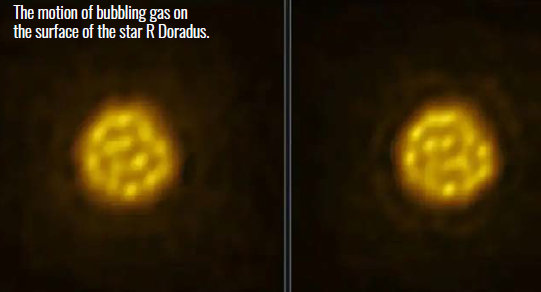 Giant bubbles of hot gas more than
75 times the size of our sun have
been observed on the surface of a nearby
star, which researchers say may lead
to better solar computer simulations.
Wouter Vlemmings and his colleagues
at Chalmers University of
Technology in Gothenburg, Sweden,
hoped to observe R Doradus, which
is 178 light years from Earth and 350
times larger than the sun, to better
understand how matter is ejected from
ageing stars.
Vlemmings says they booked time
with the Atacama Large Millimeter/
submillimeter Array (ALMA) observatory
in Chile, where only one in seven
applications make it, to collect a single
snapshot observation.
The first two attempts were hindered
by Earth weather conditions, so only
the third met the strict quality criteria
set out in the researchers’ application
for observatory time. But this meant
they accumulated multiple images,
which Vlemmings says were actually
all usable, allowing the team to plot
movement over time.
Not only was this the first time such
bubbles have been observed in detail
outside our solar system, but the images
also formed a sort of flipbook,
allowing the researchers to gauge speed
as well as size. “That was a bonus,”
says Vlemmings. “We didn’t plan for it,
and certainly we ...
Giant bubbles of hot gas more than
75 times the size of our sun have
been observed on the surface of a nearby
star, which researchers say may lead
to better solar computer simulations.
Wouter Vlemmings and his colleagues
at Chalmers University of
Technology in Gothenburg, Sweden,
hoped to observe R Doradus, which
is 178 light years from Earth and 350
times larger than the sun, to better
understand how matter is ejected from
ageing stars.
Vlemmings says they booked time
with the Atacama Large Millimeter/
submillimeter Array (ALMA) observatory
in Chile, where only one in seven
applications make it, to collect a single
snapshot observation.
The first two attempts were hindered
by Earth weather conditions, so only
the third met the strict quality criteria
set out in the researchers’ application
for observatory time. But this meant
they accumulated multiple images,
which Vlemmings says were actually
all usable, allowing the team to plot
movement over time.
Not only was this the first time such
bubbles have been observed in detail
outside our solar system, but the images
also formed a sort of flipbook,
allowing the researchers to gauge speed
as well as size. “That was a bonus,”
says Vlemmings. “We didn’t plan for it,
and certainly we ...
 The fastest supercomputer in the
world is a machine known as Frontier,
but even this speedster with nearly
50,000 processors has its limits. On a
sunny Monday in April, its power consumption
is spiking as it tries to keep
up with the amount of work requested
by scientific groups around the world.
The electricity demand peaks at
around 27 megawatts, enough to power
roughly 10,000 houses, says Bronson
Messer, director of science at Oak
Ridge National Laboratory in Tennessee,
where Frontier is located. ... Frontier
churns through data at record speed,
outpacing 100,000 laptops working
simultaneously. When it debuted in
2022, it was the first to break through
supercomputing’s exascale speed barrier
—the capability of executing an exaflop, or 1018 floating point operations per
second. The Oak Ridge behemoth is the
latest chart-topper in a decades-long
global trend of pushing towards larger
supercomputers (although it is possible
that faster computers exist in military
labs or otherwise secret facilities).
But speed and size are secondary to
Frontier’s main purpose —to push the
bounds of human knowledge. Frontier
excels at creating simulations that capture
large-scale patterns with smallscale
details, such as how tiny cloud
droplets can affect the pace at which
Earth’s climate warms. Researchers
are using the supercomputer to create
cutting-edge models of everything
from subatomic particles to galaxies. ...
Read full text
The fastest supercomputer in the
world is a machine known as Frontier,
but even this speedster with nearly
50,000 processors has its limits. On a
sunny Monday in April, its power consumption
is spiking as it tries to keep
up with the amount of work requested
by scientific groups around the world.
The electricity demand peaks at
around 27 megawatts, enough to power
roughly 10,000 houses, says Bronson
Messer, director of science at Oak
Ridge National Laboratory in Tennessee,
where Frontier is located. ... Frontier
churns through data at record speed,
outpacing 100,000 laptops working
simultaneously. When it debuted in
2022, it was the first to break through
supercomputing’s exascale speed barrier
—the capability of executing an exaflop, or 1018 floating point operations per
second. The Oak Ridge behemoth is the
latest chart-topper in a decades-long
global trend of pushing towards larger
supercomputers (although it is possible
that faster computers exist in military
labs or otherwise secret facilities).
But speed and size are secondary to
Frontier’s main purpose —to push the
bounds of human knowledge. Frontier
excels at creating simulations that capture
large-scale patterns with smallscale
details, such as how tiny cloud
droplets can affect the pace at which
Earth’s climate warms. Researchers
are using the supercomputer to create
cutting-edge models of everything
from subatomic particles to galaxies. ...
Read full text
 Dashi Namdakov is a Russian
sculptor, graphic artist and jeweller
whose works draw on the ancient
culture and artistic styles of the
Eurasian steppes and on Buddhist and
shamanic mythology. His mysterious
figures of warriors, princesses, bulls
and imaginary creatures create a world
of imagery that is powerful yet intricately
detailed, conveying an ancient
spirituality.
‘My concept of beauty took shape
during my now distant childhood
when, as children, we used to sit
around the bonfire in the steppes and
look at the bottomless black skies with
shimmering stars above our heads ...
it's the harmony, the single law of
universe,’ says the artist. ...
Dashi Namdakov is a Russian
sculptor, graphic artist and jeweller
whose works draw on the ancient
culture and artistic styles of the
Eurasian steppes and on Buddhist and
shamanic mythology. His mysterious
figures of warriors, princesses, bulls
and imaginary creatures create a world
of imagery that is powerful yet intricately
detailed, conveying an ancient
spirituality.
‘My concept of beauty took shape
during my now distant childhood
when, as children, we used to sit
around the bonfire in the steppes and
look at the bottomless black skies with
shimmering stars above our heads ...
it's the harmony, the single law of
universe,’ says the artist. ...
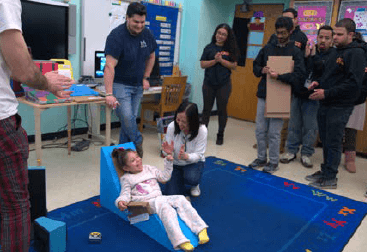 Years ago, the founding directors of
Adaptive Design Association, Inc.
had a vision to build adaptive equipment
and teach others how to do so in a least
restrictive way. They took a risk by advocating
that a person, no matter their
ability, can participate in the making of
Adaptive Design.
Students from Adaptive Design’s local
school partner, P138 Park West High
School, have been busy working on
their pre-vocational and technical skills
through our adaptive design school
workshop program called Made to Learn.
This past semester, our student’s experience
was captured through the lens of
a documentary filmmaker. In this film,
you will see the work of 6 students and
their support staff at school, in Adaptive
design, and in the community.
The high school students were challenged
this year to come up with a
design for supportive floor seating for Paulina and her friends in their
elementary classroom. Adam and Eric,
the design team at Adaptive Design met
with Paulina’s teachers and took on the
challenge to create equipment that was
inexpensive, portable, and comfortable.
Eric and Adam got help building
the chairs from students in the
Made to Learn program. “We share our
workshop with students from a public
school nearby. The students have their
own personal disabilities but have a
desire to build equipment to help others.”
Said Eric. The first two chairs
were completed, and the design team
went to Paulina’s classroom. One of her
teachers gently placed her in the bright
blue chair. “Paulina lit up with a huge
smile.” Said Eric. She was able to feel
the floor with her feet and hands and
experience her surroundings in a whole
new way. ” ...
Years ago, the founding directors of
Adaptive Design Association, Inc.
had a vision to build adaptive equipment
and teach others how to do so in a least
restrictive way. They took a risk by advocating
that a person, no matter their
ability, can participate in the making of
Adaptive Design.
Students from Adaptive Design’s local
school partner, P138 Park West High
School, have been busy working on
their pre-vocational and technical skills
through our adaptive design school
workshop program called Made to Learn.
This past semester, our student’s experience
was captured through the lens of
a documentary filmmaker. In this film,
you will see the work of 6 students and
their support staff at school, in Adaptive
design, and in the community.
The high school students were challenged
this year to come up with a
design for supportive floor seating for Paulina and her friends in their
elementary classroom. Adam and Eric,
the design team at Adaptive Design met
with Paulina’s teachers and took on the
challenge to create equipment that was
inexpensive, portable, and comfortable.
Eric and Adam got help building
the chairs from students in the
Made to Learn program. “We share our
workshop with students from a public
school nearby. The students have their
own personal disabilities but have a
desire to build equipment to help others.”
Said Eric. The first two chairs
were completed, and the design team
went to Paulina’s classroom. One of her
teachers gently placed her in the bright
blue chair. “Paulina lit up with a huge
smile.” Said Eric. She was able to feel
the floor with her feet and hands and
experience her surroundings in a whole
new way. ” ...
 Hostile architecture is the practice
of designing things to create
environments that discourage people
from being there or using the space in
specific ways. An example would be installing
spikes in a doorway so homeless
people couldn’t sleep there. Or using a
high-pitched sound in a city center that
young people can hear yet older people
can’t, which is used to discourage
skateboarding. It could be a metal bar
on a bench so nobody could sleep on it.
I believe our towns, cities, high
streets, and civic centers are really
important. They are social spaces that
we all use, and they are becoming
increasingly hostile. As an artist and
a designer I’ve always tried my very
best to use what little talent I have
to make things better for people and
solve problems. Hostile design is the
opposite of that; it’s using creativity to
cause harm. ...
Hostile architecture is the practice
of designing things to create
environments that discourage people
from being there or using the space in
specific ways. An example would be installing
spikes in a doorway so homeless
people couldn’t sleep there. Or using a
high-pitched sound in a city center that
young people can hear yet older people
can’t, which is used to discourage
skateboarding. It could be a metal bar
on a bench so nobody could sleep on it.
I believe our towns, cities, high
streets, and civic centers are really
important. They are social spaces that
we all use, and they are becoming
increasingly hostile. As an artist and
a designer I’ve always tried my very
best to use what little talent I have
to make things better for people and
solve problems. Hostile design is the
opposite of that; it’s using creativity to
cause harm. ...
 When it comes to maintaining a
regular sleep schedule, sometimes
a busy week can throw everything out
of whack even when you have the best
of intentions. Naturally, catching up
on sleep over the weekend is often the
solution. New research suggests doing
so may even benefit your heart health,
amounting to a 19% lower risk of developing
heart disease, according to a research
abstract. The abstract hasn’t been
published in a journal but was presented
at the European Society of Cardiology’s
annual congress on September 1.
“The association becomes even more
pronounced among individuals who
regularly experience inadequate sleep
on weekdays,” said research coauthor
Yanjun Song of the State Key Laboratory
of Infectious Disease of the National Center for Cardiovascular Disease at
Fuwai Hospital in Beijing, in a news
release. The authors used data from
90,903 participants in the UK Biobank
study, which has followed the health
outcomes of more than 500,000 people
generally between the ages 40 and 69 in
the United Kingdom. ...
After a follow-up period of nearly
14 years on average, the group with
the most weekend compensatory sleep
was 19% less likely to develop cardiovascular
conditions such as heart
disease, heart failure, atrial fibrillation
and stroke, compared with the group
compensating for sleep the least on
weekends. ...
Read full text
When it comes to maintaining a
regular sleep schedule, sometimes
a busy week can throw everything out
of whack even when you have the best
of intentions. Naturally, catching up
on sleep over the weekend is often the
solution. New research suggests doing
so may even benefit your heart health,
amounting to a 19% lower risk of developing
heart disease, according to a research
abstract. The abstract hasn’t been
published in a journal but was presented
at the European Society of Cardiology’s
annual congress on September 1.
“The association becomes even more
pronounced among individuals who
regularly experience inadequate sleep
on weekdays,” said research coauthor
Yanjun Song of the State Key Laboratory
of Infectious Disease of the National Center for Cardiovascular Disease at
Fuwai Hospital in Beijing, in a news
release. The authors used data from
90,903 participants in the UK Biobank
study, which has followed the health
outcomes of more than 500,000 people
generally between the ages 40 and 69 in
the United Kingdom. ...
After a follow-up period of nearly
14 years on average, the group with
the most weekend compensatory sleep
was 19% less likely to develop cardiovascular
conditions such as heart
disease, heart failure, atrial fibrillation
and stroke, compared with the group
compensating for sleep the least on
weekends. ...
Read full text
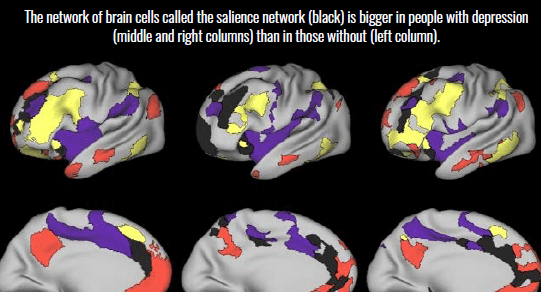 The symptoms of depression might
come and go, but new evidence
suggests that the pattern of brain wiring
behind it remains the same for life.
The largest imaging study of its kind
has found that a certain brain network
involved in directing attention to
stimuli is nearly twice as big in people
with depression as it is in the rest of
the population —and that it remains
that way when a person no longer feels
depressed.
The results are a step towards a
biological marker for depression, which
is at present diagnosed mainly using
questionnaires. But the authors say
their finding should be validated in
more populations before it is used clinically.
The study was published September
4 in Nature. ... So the team turned to existing data
sets containing fMRI images of people
who had been repeatedly scanned over
time: 135 people with major depressive
disorder, which causes severe and
long-lasting symptoms; and 37 healthy
participants. In almost every person
with depression, they found, a brain
circuit known as the salience network
was almost twice as large as it was
in controls. The salience network is
itself a connector between other brain
circuits. It is involved in switching
the brain between internal awareness
and working memory, and it helps the
brain to decide which environmental
stimuli and internal emotions it should
pay attention to. ...
Read full text:
The symptoms of depression might
come and go, but new evidence
suggests that the pattern of brain wiring
behind it remains the same for life.
The largest imaging study of its kind
has found that a certain brain network
involved in directing attention to
stimuli is nearly twice as big in people
with depression as it is in the rest of
the population —and that it remains
that way when a person no longer feels
depressed.
The results are a step towards a
biological marker for depression, which
is at present diagnosed mainly using
questionnaires. But the authors say
their finding should be validated in
more populations before it is used clinically.
The study was published September
4 in Nature. ... So the team turned to existing data
sets containing fMRI images of people
who had been repeatedly scanned over
time: 135 people with major depressive
disorder, which causes severe and
long-lasting symptoms; and 37 healthy
participants. In almost every person
with depression, they found, a brain
circuit known as the salience network
was almost twice as large as it was
in controls. The salience network is
itself a connector between other brain
circuits. It is involved in switching
the brain between internal awareness
and working memory, and it helps the
brain to decide which environmental
stimuli and internal emotions it should
pay attention to. ...
Read full text:
 As the world’s capacity for plundering
the ocean for food grows, our
ability to know what level of fishing is
sustainable isn’t keeping pace. Officials
in charge of preventing overfishing
are often relying on excessively rosy
forecasts of the health of a particular
fish population, increasing the danger
that permitted fishing levels are too
high, scientists reported last week in
the journal Science.
“It’s vital to bring these issues to the
public’s attention,” said Nils Krueck, a
fisheries scientist at University of Tasmania
(UTAS) who was involved in the
new research. “This will hopefully lead
to improvements.”
Estimating the size of fish populations
is a crucial but tricky task for
fisheries managers. The overall number of fish from a sought-after species in
a particular area is key to establishing
how many fish can be caught without
overwhelming the ability for reproduction
to keep up. Fish counts from year
to year can also indicate whether a
population is growing or shrinking.
But coming up with these population
estimates is about as easy as, well,
knowing how many fish there are in
the sea. The number of fish pulled up in
nets, either by fishers or research vessels,
is just a small sample from a very
big and largely invisible world. Fisheries
experts rely on complex models to fill
in the blanks. These can include more
than 40 variables, everything from how
quickly a fish ...
Read full text:
As the world’s capacity for plundering
the ocean for food grows, our
ability to know what level of fishing is
sustainable isn’t keeping pace. Officials
in charge of preventing overfishing
are often relying on excessively rosy
forecasts of the health of a particular
fish population, increasing the danger
that permitted fishing levels are too
high, scientists reported last week in
the journal Science.
“It’s vital to bring these issues to the
public’s attention,” said Nils Krueck, a
fisheries scientist at University of Tasmania
(UTAS) who was involved in the
new research. “This will hopefully lead
to improvements.”
Estimating the size of fish populations
is a crucial but tricky task for
fisheries managers. The overall number of fish from a sought-after species in
a particular area is key to establishing
how many fish can be caught without
overwhelming the ability for reproduction
to keep up. Fish counts from year
to year can also indicate whether a
population is growing or shrinking.
But coming up with these population
estimates is about as easy as, well,
knowing how many fish there are in
the sea. The number of fish pulled up in
nets, either by fishers or research vessels,
is just a small sample from a very
big and largely invisible world. Fisheries
experts rely on complex models to fill
in the blanks. These can include more
than 40 variables, everything from how
quickly a fish ...
Read full text:
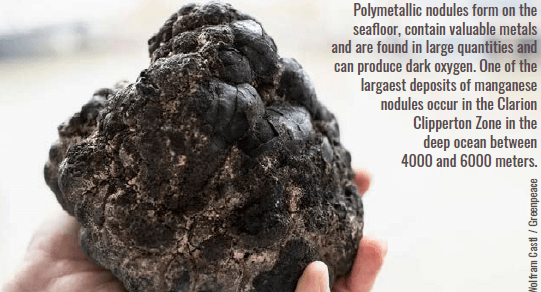 Scientists have found a source of
‘dark oxygen’ 4,000 meters below
the surface of the Pacific in the target
zone for deep sea mining. The discovery
could have far-reaching implications for
science and the wannabe deep sea mining
industry. ...
What scientists mean by ‘dark oxygen’
is that in the total darkness of the
very deep ocean, around 4,000 meters
below the surface of the Pacific Ocean,
oxygen is being produced in the dark.
It’s previously been thought that oxygen
on Earth is produced on land and at
the surface of the ocean, where sunlight
makes plant photosynthesis possible. ...
The dark oxygen discovery is being
hailed as a groundbreaking scientific
discovery, but it also has other implications.
... ... This dark oxygen is being produced by potato-shaped metallic
lumps found on the deep sea floor.
It turns out that these ‘polymetallic
nodules’ give off almost as much
electricity as AA batteries. By reacting
with salt water, their electrical charge
is producing oxygen way down there on
the seabed of the deep ocean through a
process known ‘seawater electrolysis’
which splits seawater into hydrogen
and oxygen. ... The discovery of this
metallic nodules could be the final
straw in the case against deep sea mining.
It could stop the industry before
they begin. ... These oxygen-producing
nodules could be supporting a whole
range of known and unknown deep sea
lifeforms. Dark oxygen could be a critical
factor in the deep sea ecosystem!
Read full text:
Scientists have found a source of
‘dark oxygen’ 4,000 meters below
the surface of the Pacific in the target
zone for deep sea mining. The discovery
could have far-reaching implications for
science and the wannabe deep sea mining
industry. ...
What scientists mean by ‘dark oxygen’
is that in the total darkness of the
very deep ocean, around 4,000 meters
below the surface of the Pacific Ocean,
oxygen is being produced in the dark.
It’s previously been thought that oxygen
on Earth is produced on land and at
the surface of the ocean, where sunlight
makes plant photosynthesis possible. ...
The dark oxygen discovery is being
hailed as a groundbreaking scientific
discovery, but it also has other implications.
... ... This dark oxygen is being produced by potato-shaped metallic
lumps found on the deep sea floor.
It turns out that these ‘polymetallic
nodules’ give off almost as much
electricity as AA batteries. By reacting
with salt water, their electrical charge
is producing oxygen way down there on
the seabed of the deep ocean through a
process known ‘seawater electrolysis’
which splits seawater into hydrogen
and oxygen. ... The discovery of this
metallic nodules could be the final
straw in the case against deep sea mining.
It could stop the industry before
they begin. ... These oxygen-producing
nodules could be supporting a whole
range of known and unknown deep sea
lifeforms. Dark oxygen could be a critical
factor in the deep sea ecosystem!
Read full text:
 The tech industry is a substantial
contributor to the estimated $468
billion worth of imported goods that
are at risk of being produced by forced
labor, a new report found.
International human rights group
Walk Free’s fifth Global Slavery Index, released
in May, revealed that there were
49.6 million people globally in “modern
slavery on any given day in 2021,”
which the group defines as “situations
of exploitation that a person cannot
refuse or leave because of threats, violence,
coercion, deception, or abuses of
power.” That definition includes forms
of forced labor, human trafficking, and
child labor.
Electronics from China and Malaysia
account for the highest-value at-risk
imports in G20 countries, totaling
$243.6 billion. Of those, the majority
come from Malaysia —where the industry
relies on laborers from Bangladesh,
Nepal, Myanmar, and Indonesia,
and where cases of forced labor and
debt bondage have been reported in
the electronics industry— and China,
where electronics factories reportedly
rely on state-forced laborers belonging
to the Uyghur ethnic group. Elsewhere
in the tech industry, solar panels are
the No. 4 at-risk product in terms of
value, with $14.8 billion in imports to
the G20 economic bloc, which includes
19 countries plus the European Union.
According to the report, nearly twothirds
of forced labor globally is linked
to supply chains, with the majority
of cases occurring in raw materials
extraction and production. ...
Read full text:
The tech industry is a substantial
contributor to the estimated $468
billion worth of imported goods that
are at risk of being produced by forced
labor, a new report found.
International human rights group
Walk Free’s fifth Global Slavery Index, released
in May, revealed that there were
49.6 million people globally in “modern
slavery on any given day in 2021,”
which the group defines as “situations
of exploitation that a person cannot
refuse or leave because of threats, violence,
coercion, deception, or abuses of
power.” That definition includes forms
of forced labor, human trafficking, and
child labor.
Electronics from China and Malaysia
account for the highest-value at-risk
imports in G20 countries, totaling
$243.6 billion. Of those, the majority
come from Malaysia —where the industry
relies on laborers from Bangladesh,
Nepal, Myanmar, and Indonesia,
and where cases of forced labor and
debt bondage have been reported in
the electronics industry— and China,
where electronics factories reportedly
rely on state-forced laborers belonging
to the Uyghur ethnic group. Elsewhere
in the tech industry, solar panels are
the No. 4 at-risk product in terms of
value, with $14.8 billion in imports to
the G20 economic bloc, which includes
19 countries plus the European Union.
According to the report, nearly twothirds
of forced labor globally is linked
to supply chains, with the majority
of cases occurring in raw materials
extraction and production. ...
Read full text:
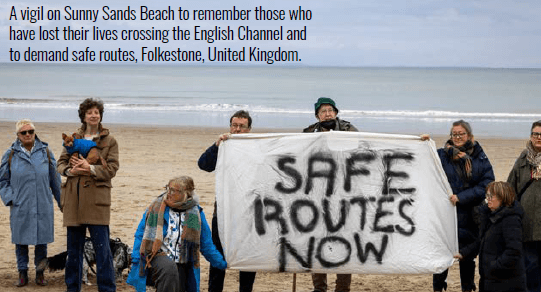 Last week, the United Kingdom
home secretary convened a summit
with ministers, intelligence agencies,
and law enforcement bodies to discuss
small boat crossings, focused on stopping
“smuggling gangs.” This followed
the deaths of at least 12 people, including
a pregnant woman and six children,
attempting to reach the UK by boat, in
what is believed to be one of the deadliest
incidents in the English Channel
this decade.
Around 70 people were reportedly
on board the flimsy and overcrowded
dinghy, which capsized near the French
coast. French authorities said that
many who died appeared to be from
Eritrea, whose nationals, including
schoolchildren, continue to flee serious
human rights violations and widespread
repression at home. The UK government called it a “horrifying
and deeply tragic incident,”
but then doubled down on dismantling
“smuggling gangs” and bolstering
border security and said there are no
plans to expand safe pathways to the
UK. France responded, as Human Rights
Watch has documented in the past, by
deploying riot police and machines
to clear the encampment near Calais,
where the people who died at sea were
said to have been staying, and forcing
some of those remaining in the camps
onto buses to the north-east of France.
The new UK government’s focus on
law enforcement and border security
will not prevent deaths at sea.
There is little evidence that restrictive
and harmful deterrence ...
Last week, the United Kingdom
home secretary convened a summit
with ministers, intelligence agencies,
and law enforcement bodies to discuss
small boat crossings, focused on stopping
“smuggling gangs.” This followed
the deaths of at least 12 people, including
a pregnant woman and six children,
attempting to reach the UK by boat, in
what is believed to be one of the deadliest
incidents in the English Channel
this decade.
Around 70 people were reportedly
on board the flimsy and overcrowded
dinghy, which capsized near the French
coast. French authorities said that
many who died appeared to be from
Eritrea, whose nationals, including
schoolchildren, continue to flee serious
human rights violations and widespread
repression at home. The UK government called it a “horrifying
and deeply tragic incident,”
but then doubled down on dismantling
“smuggling gangs” and bolstering
border security and said there are no
plans to expand safe pathways to the
UK. France responded, as Human Rights
Watch has documented in the past, by
deploying riot police and machines
to clear the encampment near Calais,
where the people who died at sea were
said to have been staying, and forcing
some of those remaining in the camps
onto buses to the north-east of France.
The new UK government’s focus on
law enforcement and border security
will not prevent deaths at sea.
There is little evidence that restrictive
and harmful deterrence ...
 You know how Brian May is now an
animal activist —specialising in
badgers and the necessity or otherwise
of culling them— as well as an astrophysicist
and the guitarist with Queen?
May has never been convinced by the
government’s insistence that the creatures
are responsible for the spread of
bovine TB, which requires the slaughter
of any infected cattle —about 20,000 a
year— with all the ramifications for the
farmers that losing animals they care
for involves.
The culling of the badgers themselves,
of course, has been going on
for about 20 years. And never without
controversy, because there have always
been those advocating for vaccinating
rather than killing the badgers (officially
a protected species), but always with the backing of those most directly
affected: the farmers. About 200,000
badgers have been killed in the last
decade and tackling the disease as
a whole costs the taxpayer around
£100m a year.
May believes that badgers cannot be
the main source of transmission for
bovine TB and sets out to prove it with
the help of Anne Brummer, his cofounder
of the animal welfare charity
the Save Me Trust, and large-animal vet
Dave Sibley. ...
The film (Brian May: The Badgers, the
Farmers and Me, aired on BBC Two and
now on iPlayer) undoubtedly introduces
doubt about ...
You know how Brian May is now an
animal activist —specialising in
badgers and the necessity or otherwise
of culling them— as well as an astrophysicist
and the guitarist with Queen?
May has never been convinced by the
government’s insistence that the creatures
are responsible for the spread of
bovine TB, which requires the slaughter
of any infected cattle —about 20,000 a
year— with all the ramifications for the
farmers that losing animals they care
for involves.
The culling of the badgers themselves,
of course, has been going on
for about 20 years. And never without
controversy, because there have always
been those advocating for vaccinating
rather than killing the badgers (officially
a protected species), but always with the backing of those most directly
affected: the farmers. About 200,000
badgers have been killed in the last
decade and tackling the disease as
a whole costs the taxpayer around
£100m a year.
May believes that badgers cannot be
the main source of transmission for
bovine TB and sets out to prove it with
the help of Anne Brummer, his cofounder
of the animal welfare charity
the Save Me Trust, and large-animal vet
Dave Sibley. ...
The film (Brian May: The Badgers, the
Farmers and Me, aired on BBC Two and
now on iPlayer) undoubtedly introduces
doubt about ...
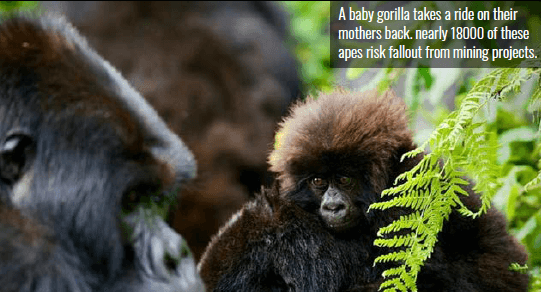 Scientists have warned that mining
of the metals needed for the global
clean energy transition could threaten
Africa’s already beleaguered great apes
unless strong conservation measures
are implemented.
Nearly 180,000 gorillas, chimpanzees
and bonobos —more than a third of the
entire great ape population in Africa—
could be threatened by mining now and
in the near future, according to a recent
study in the journal Science Advances.
“The minerals used to help us reduce
climate change come from areas covered
with habitat that could be important to
great apes,” study lead author Jessica
Junker, a researcher at wildlife conservation
NGO Re:wild and former postdoctoral
researcher at the German Centre
for Integrative Biodiversity Research, told Mongabay in a video interview.
“Taking these minerals out of the Earth
can have quite a severe impact and
cause these habitats to disappear.”
Junker and an international team
from Germany, Australia and several
African countries looked at the current
and future potential effects of mining
on great apes in Africa, choosing
this group of species to illustrate the
implications of mining operations in
Africa and worldwide. While Africa is
home to 30% of the world’s mineral
resources —including 19% of reserves
of so-called critical metals like
bauxite, cobalt and aluminum— the
continent currently accounts for less
than 5% of global mining activity,
researchers say. ...
Scientists have warned that mining
of the metals needed for the global
clean energy transition could threaten
Africa’s already beleaguered great apes
unless strong conservation measures
are implemented.
Nearly 180,000 gorillas, chimpanzees
and bonobos —more than a third of the
entire great ape population in Africa—
could be threatened by mining now and
in the near future, according to a recent
study in the journal Science Advances.
“The minerals used to help us reduce
climate change come from areas covered
with habitat that could be important to
great apes,” study lead author Jessica
Junker, a researcher at wildlife conservation
NGO Re:wild and former postdoctoral
researcher at the German Centre
for Integrative Biodiversity Research, told Mongabay in a video interview.
“Taking these minerals out of the Earth
can have quite a severe impact and
cause these habitats to disappear.”
Junker and an international team
from Germany, Australia and several
African countries looked at the current
and future potential effects of mining
on great apes in Africa, choosing
this group of species to illustrate the
implications of mining operations in
Africa and worldwide. While Africa is
home to 30% of the world’s mineral
resources —including 19% of reserves
of so-called critical metals like
bauxite, cobalt and aluminum— the
continent currently accounts for less
than 5% of global mining activity,
researchers say. ...

 Through our partnership with
MADE FREE® your gift supports days
of freedom from human trafficking,
modern slavery, and poverty through
a sustainable job.
www.giftsforgood.com
Through our partnership with
MADE FREE® your gift supports days
of freedom from human trafficking,
modern slavery, and poverty through
a sustainable job.
www.giftsforgood.com
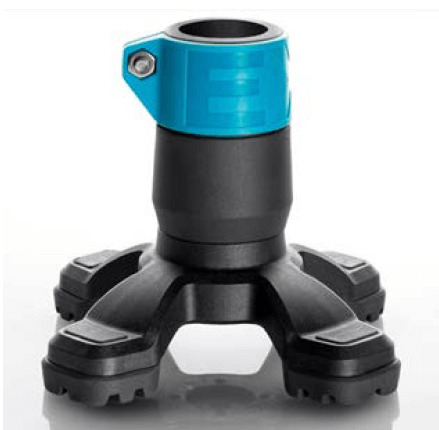 The first lightweight ‘trekking shoes’
for your walking aids. Solid, anti-slip
and stable for maximum mobility
and flexibility on any surface.
livingspinal.com
The first lightweight ‘trekking shoes’
for your walking aids. Solid, anti-slip
and stable for maximum mobility
and flexibility on any surface.
livingspinal.com


 The Bachelor’s degree program in
Behavior Analysis in Special Education
aims to meet the demand that
prevails in the region to have trainers
in Special Education specializing in the
intellectual area.
At AIU we seek to train professionals
who are distinguished by their ethics,
innovation, broad and deep knowledge
of children with special educational
needs with or without disabilities, and
at the same time favor in them the
development of a comprehensive education
based on educational inclusion.
Additionally, our students will develop
critical capacity from a pedagogicaldidactic
perspective, to understand
the problem of disability from the
paradigm of inclusion.
Our program does not require every
student to study the same subjects and
use the same books and other learning
materials as every other student.
If you are a purpose-driven individual
who wants to elevate their life and
make a solid contribution to the world,
then this program is for you.
The Bachelor’s degree program in
Behavior Analysis in Special Education
aims to meet the demand that
prevails in the region to have trainers
in Special Education specializing in the
intellectual area.
At AIU we seek to train professionals
who are distinguished by their ethics,
innovation, broad and deep knowledge
of children with special educational
needs with or without disabilities, and
at the same time favor in them the
development of a comprehensive education
based on educational inclusion.
Additionally, our students will develop
critical capacity from a pedagogicaldidactic
perspective, to understand
the problem of disability from the
paradigm of inclusion.
Our program does not require every
student to study the same subjects and
use the same books and other learning
materials as every other student.
If you are a purpose-driven individual
who wants to elevate their life and
make a solid contribution to the world,
then this program is for you.
 Atlantic International University is accredited by the Accreditation Service for International
Schools, Colleges and Universities (ASIC). ASIC Accreditation is an internationally
renowned quality standard for colleges and universities. Visit ASIC’s Directory of Accredited
Colleges and Universities. ASIC is a member of CHEA International Quality Group
(CIQG) in the USA, an approved accreditation body by the Ministerial Department of the Home Office
in the UK, and is listed in the International Directory of the Council for Higher Education Accreditation
(CHEA). The University is based in the United States and was established by corporate charter in 1998.
Atlantic International University is accredited by the Accreditation Service for International
Schools, Colleges and Universities (ASIC). ASIC Accreditation is an internationally
renowned quality standard for colleges and universities. Visit ASIC’s Directory of Accredited
Colleges and Universities. ASIC is a member of CHEA International Quality Group
(CIQG) in the USA, an approved accreditation body by the Ministerial Department of the Home Office
in the UK, and is listed in the International Directory of the Council for Higher Education Accreditation
(CHEA). The University is based in the United States and was established by corporate charter in 1998.
 In some cases, accredited colleges
may not accept for transfer courses and degrees
completed at unaccredited colleges, and some
employers may require an accredited degree as
a basis for eligibility for employment. Potential
students should consider how the above may affect
their interests, AIU respects the unique rules and
regulations of each country and does not seek to
influence the respective authorities. In the event
that a prospective student wishes to carry out any
government review or process in regards to his
university degree, we recommend that the requirements
of such are explored in detail with the relevant
authorities by the prospective student as the
university does not intervene in such processes.
AIU students can be found in over 180 countries,
they actively participate and volunteer
in their communities as part of their academic
program and have allocated thousands of service
hours to diverse causes and initiatives. AIU
programs follow the standards commonly used by
colleges and universities in the United States with
regards to the following: academic program
structure, degree issued, transcript, and
other graduation documents.
AIU graduation documents can include
an apostille and authentication from the
US Department of State to facilitate their
use internationally.
In some cases, accredited colleges
may not accept for transfer courses and degrees
completed at unaccredited colleges, and some
employers may require an accredited degree as
a basis for eligibility for employment. Potential
students should consider how the above may affect
their interests, AIU respects the unique rules and
regulations of each country and does not seek to
influence the respective authorities. In the event
that a prospective student wishes to carry out any
government review or process in regards to his
university degree, we recommend that the requirements
of such are explored in detail with the relevant
authorities by the prospective student as the
university does not intervene in such processes.
AIU students can be found in over 180 countries,
they actively participate and volunteer
in their communities as part of their academic
program and have allocated thousands of service
hours to diverse causes and initiatives. AIU
programs follow the standards commonly used by
colleges and universities in the United States with
regards to the following: academic program
structure, degree issued, transcript, and
other graduation documents.
AIU graduation documents can include
an apostille and authentication from the
US Department of State to facilitate their
use internationally.
| Dr. Franklin Valcin Presi den t/Academic Dean |
Dr. José Mercado Chief Executive Officer Chairman of the Board of Trustees |
Ricardo González, PhD Provost |
| Dr. Ricardo Gonzalez Chief Operation Officer and MKT Director |
Linda Collazo Logistics Coordinator |
AIU Tutors Coordinators: Deborah Rodriguez Amiakhor Ejaeta Amanda Gutierrez William Mora Miriam James Admissions Coordinators: Amalia Aldrett Sandra Garcia Junko Shimizu Veronica Amuz Alba Ochoa Jenis Garcia Judith Brown Chris Soto René Cordón Dr. Anderas Rissler Academic Coordinators: Dr. Adesida Oluwafemi Dr. Emmanuel Gbagu Dr. Lucia Gorea Dr. Edgar Colon Dr. Mario Rios Freddy Frejus Dr. Nilani Ljunggren De Silva Dr. Scott Wilson Dr. Mohammad Shaidul Islam |
| Dr. Miriam Garibaldi Vice provost for Research |
Carolina Valdes Human Resource Coordinator |
|
| Dr. Ofelia Miller Director of AIU |
Carlos Aponte Teleco mmunications Coordinator |
|
| Clara Margalef Director of Special Projects of AIU |
David Jung Corporate/Legal Counsel |
|
| Juan Pablo Moreno Director of Operations |
Bruce Kim Advisor/Consultant |
|
| Paula Viera Director of Intelligence Systems |
Thomas Kim Corporate/ Accounting Counsel |
|
| Felipe Gomez Design Director / IT Supervisor |
Maricela Esparza Administrative Coordinator |
|
| Kevin Moll Web Designer |
Chris Benjamin IT and Hosting Support |
|
| Daritza Ysla IT Coordinator |
Maria Pastrana Accounting Coordinator |
|
| Daritza Ysla IT Coordinator |
Roberto Aldrett Communications Coordinator |
|
| Nadeem Awan Chief Programming Officer |
Giovanni Castillo IT Support |
|
| Dr. Edward Lambert Academic Director |
Antonella Fonseca Quality Control & Data Analysis |
|
| Dr. Ariadna Romero Advisor Coordinator |
Adrián Varela Graphic Design |
|
| Jhanzaib Awan Senior Programmer |
Vanesa D’Angelo Content Writer |
|
| Leonardo Salas Human Resource Manager |
Jaime Rotlewicz Dean of Admissions |
|
| Benjamin Joseph IT and Technology Support |
Michael Phillips Registrar’s Office |
|
| Rosie Perez Finance Coordinator |
||
 The School of Business and Economics
allows aspiring and practicing
professionals, managers, and entrepreneurs
in the private and public sectors
to complete a self paced distance
learning degree program of the highest
academic standard.
The ultimate goal is to empower
learners and help them take advantage
of the enormous array of resources
from the world environment in order
to eliminate the current continuum of
poverty and limitations.
Degree programs are designed for
those students whose professional experience has been in business,
marketing, administration, economics,
finance and management.
The School of Business and Economics
allows aspiring and practicing
professionals, managers, and entrepreneurs
in the private and public sectors
to complete a self paced distance
learning degree program of the highest
academic standard.
The ultimate goal is to empower
learners and help them take advantage
of the enormous array of resources
from the world environment in order
to eliminate the current continuum of
poverty and limitations.
Degree programs are designed for
those students whose professional experience has been in business,
marketing, administration, economics,
finance and management.
 The School of Social and Human Studies
is focused on to the development of
studies which instill a core commitment
to building a society based on social and
economic justice and enhancing opportunities
for human well being.
The founding principles lie on the
basic right of education as outlined
in the Declaration of Human Rights.
We instill in our students a sense of
confidence and self reliance in their
ability to access the vast opportunities
available through information channels,
the world wide web, private, public,
nonprofit, and nongovernmental organizations in an ever expanding
global community.
Degree programs are aimed towards
those whose professional life has been
related to social and human behavior,
with the arts, or with cultural studies.
The School of Social and Human Studies
is focused on to the development of
studies which instill a core commitment
to building a society based on social and
economic justice and enhancing opportunities
for human well being.
The founding principles lie on the
basic right of education as outlined
in the Declaration of Human Rights.
We instill in our students a sense of
confidence and self reliance in their
ability to access the vast opportunities
available through information channels,
the world wide web, private, public,
nonprofit, and nongovernmental organizations in an ever expanding
global community.
Degree programs are aimed towards
those whose professional life has been
related to social and human behavior,
with the arts, or with cultural studies.
 The School of Science and Engineering
seeks to provide dynamic, integrated,
and challenging degree programs
designed for those whose experience
is in industrial research, scientific production,
engineering and the general
sciences. Our system for research and
education will keep us apace with the
twenty-first century reach scientific
advance in an environmentally and
ecologically responsible manner to allow
for the sustainability of the human
population. We will foster among our
students a demand for ethical behavior,
an appreciation for diversity, an understanding
of scientific investigation, knowledge of design innovation, a
critical appreciation for the importance
of technology and technological change
for the advancement of humanity.
The School of Science and Engineering
seeks to provide dynamic, integrated,
and challenging degree programs
designed for those whose experience
is in industrial research, scientific production,
engineering and the general
sciences. Our system for research and
education will keep us apace with the
twenty-first century reach scientific
advance in an environmentally and
ecologically responsible manner to allow
for the sustainability of the human
population. We will foster among our
students a demand for ethical behavior,
an appreciation for diversity, an understanding
of scientific investigation, knowledge of design innovation, a
critical appreciation for the importance
of technology and technological change
for the advancement of humanity.
 With access to a global catalog created and maintained collectively by more than
9,000 participating institutions, AIU students have secured excellent research
tools for their study programs.
With access to a global catalog created and maintained collectively by more than
9,000 participating institutions, AIU students have secured excellent research
tools for their study programs.