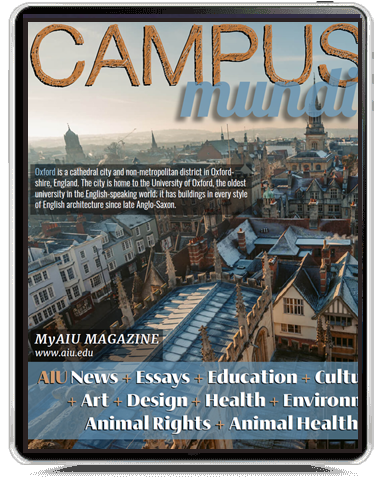

December 2024 Edition!
AIU News + Essays + Education + Culture + Science + Technology + Art + Design + Health + Environment + Human Rights + Animal Rights + + Animal Health Science + About AIU
Other Editions

AIU News + Essays + Education + Culture + Science + Technology + Art + Design + Health + Environment + Human Rights + Animal Rights + + Animal Health Science + About AIU
 OCTOBER 15, 2024.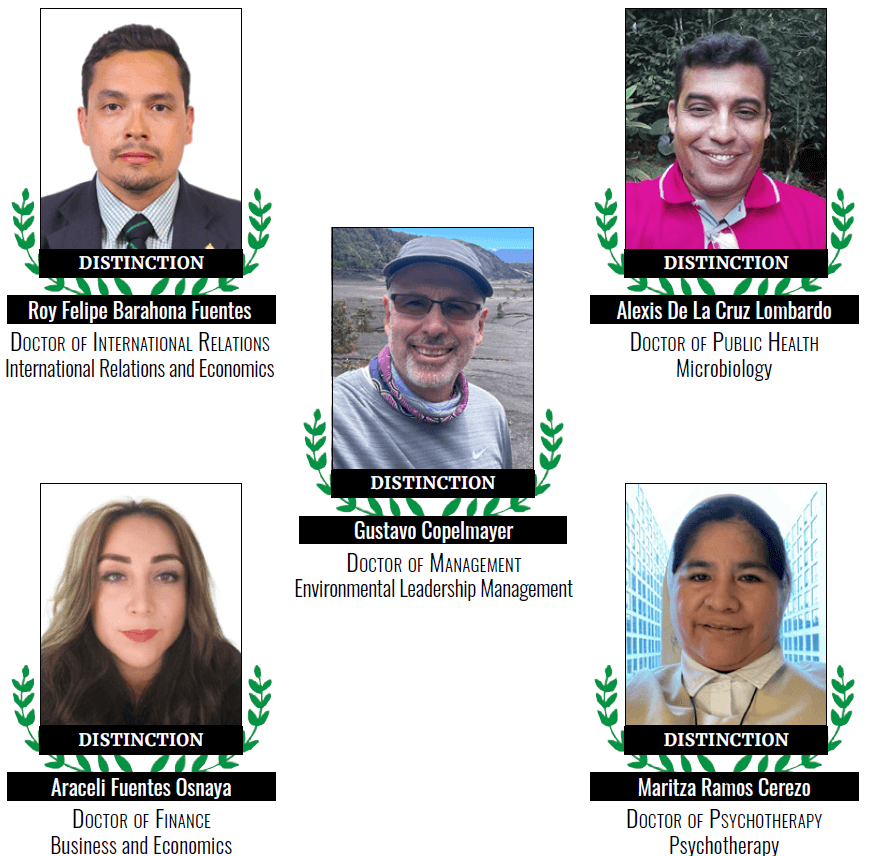
 In a time when education
is evolving at breakneck
speed, Atlantic International
University (AIU) stands at
the forefront, redefining the
learning experience to meet
the demands of a rapidly
changing global landscape.
With the emergence of artificial
intelligence and the vast
resources available through
the internet, AIU empowers
students to take control of
their destinies and fulfill their
individual purposes.
Breaking away from tradition
Traditional universities have
clung to outdated policies and
practices, but AIU is breaking
the mold with a groundbreaking
educational model designed
for the modern learner. As the
two most significant criticisms
of U.S. universities today are the
excessive time and cost
required to earn a degree
and the lack of job market preparedness,
AIU addresses these
challenges head-on.
In a time when education
is evolving at breakneck
speed, Atlantic International
University (AIU) stands at
the forefront, redefining the
learning experience to meet
the demands of a rapidly
changing global landscape.
With the emergence of artificial
intelligence and the vast
resources available through
the internet, AIU empowers
students to take control of
their destinies and fulfill their
individual purposes.
Breaking away from tradition
Traditional universities have
clung to outdated policies and
practices, but AIU is breaking
the mold with a groundbreaking
educational model designed
for the modern learner. As the
two most significant criticisms
of U.S. universities today are the
excessive time and cost
required to earn a degree
and the lack of job market preparedness,
AIU addresses these
challenges head-on.  Call for Papers
This Conference will be held
25-27 June 2025 at University
of Hawaii, Hilo, USA.
We invite proposals for paper
presentations, workshops/
interactive sessions, posters/
exhibits, colloquia, focused
discussions, innovation showcases,
virtual posters, or virtual
lightning talks.
Call for Papers
This Conference will be held
25-27 June 2025 at University
of Hawaii, Hilo, USA.
We invite proposals for paper
presentations, workshops/
interactive sessions, posters/
exhibits, colloquia, focused
discussions, innovation showcases,
virtual posters, or virtual
lightning talks.
| Timóteo Admar de Castro Borges Bachelor of Engineering Mechanical Engineering Angola |
Monica Baigorria Doctor of Education Practical Theology Argentin |
Alejandra del C. Ascanio Carmona Bachelor of Business Administration Business Administration Aruba |
Qadir Manafov Bachelor of Science Civil Engineering Azerbaijan |
Jamila I. Smith Doctor of Philosop hy Nutrition and Health Bo |
Abdoulaye Abderahman Abdoulaye Doctor of Science Computer Science Chad |
| Miguel Ángel Leguizamón Orjuela Bachelor of Science Psychology Colombia |
Héctor Gonzalo Guzmán García Bachelor of Education Psychopedagogy Colombia |
Juan Pablo Acosta Garcia Doctor of International Relations International Relations Dominican Republic |
Felix del Carmen Abreu Diaz Bachelor of Anthropo logy Human Rights Dominican Republic |
Willy Starllin Javier Reyes Bachelor of Hospitality Management Tourism Dominican Republic |
Felíx Miguel Ureña Ramírez Bachelor of Science Architecture Dominican Republic |
| Ronald Jorge Marciano Kelly Bachelor of Hospitality Management Business Management Dutch Caribb ean |
Gisella Del Rocio Santillan Briones Bachelor of Science Accounting and Auditing Ecuador |
Rosa Alexandra Verdezoto Armijos Bachelor of Science Architecture Ecuador |
Adriana González Soto Bachelor of Business Administration Business Administration El Salvador |
Nelsiwe Lungile Tshabalala Doctor of Philosop hy Business Administration Eswatini |
William Kafui Assem Doctor of Philosop hy Development Finance Ghana |
| Jose Antonio Quan Almengor Bachelor of Science Agricultural Science Guatemal |
Amadson Kollie Bachelor of Political Science Political Philosophy Guinea |
Frantz Lisma Doctor of Philosop hy Leadership and Change Management Haiti |
Alma Gloria Mendoza Rodriguez Bachelor of Science Civil Engineering Honduras |
Roy Felipe Barahona Fuentes Doctor of International Relations International Relations and Economics Honduras |
Jodi-Ann Vanessa Anderson Bachelor of Business and Economics Accounting Jamaica |
| Nicole Annette Brown Master of Science Public Health and Epidemiology Jamaica |
Marva Jean Hewitt Doctor of Philosop hy Food Systems Management Jamaic |
Samantha Morris Lawrence Doctor of Arts Community Development Jamaica |
Hiroki Ito Doctor of Management Sports Management Japan |
Washington Zeddy Ombewa Bachelor of Science Telecommunications Kenya |
Simon Muchoki Gakenia Bachelor of Science Psychology Kenya |
| Juliana Yunia Simbe Master of Science Public Health Kenya |
Calleb Oribo Magutu Post-Doctoral of Science Electrical Engineering Kenya |
Rachel Nyanquoi Jackson Doctor of Project Management Community Development Liberia |
Fredrick Shadrec Bonyonga Doctor of Chain Supp ly Management Procurement and Logistics Malawi |
Emmanuel Yamikani Mawindo Bachelor of Science Petroleum Engineering Malawi |
Salomon Ongoiba Doctor of Sociology Sociology Mali |
| Claudia del Castillo Falcon Master of Science Psychotherapy for Couples Mexico |
El Kiasse Rafik Doctor of Economics Economics Morocco |
Eurico João Baptista Master of Business Administration International Business Management Mozambique |
Jeffrey Phiri Master of Project Management Project Budget and Implementation Mozambique |
Simone Adriano Doctor of Science Family Psychotherapy Mozambique |
Robert Kizito Ojok Master of Science Hydraulic and Environmental Engineering Myanma |
| Priya Sidhaiyan Doctor of Arts Interior Design Netherlands |
Mohammed, N. Aimanekhi Elijah Post-Doctorate of Public Policy Public Policy Nigeria |
Victorino Vieira Bamba Doctor of Philosop hy Finance and Economics Nigeria |
Chukwunonimem Michael Ike Doctor of Science Information Technology Nigeria |
Adeleke, Oluwakemi Esther Master of Finance Finance Nigeria |
Eraite Bivbere Doctor of Science Legal Studies Nigeria |
| Olumide Ojo Doctor of Philosop hy Rural Development Nigeria |
Myne Wilfred Bachelor of Management Hospitality and Tourism Management Nigeria |
Florence Ogochukwu Nwabueze Doctor of Science Legal Studies Nigeria |
Matthew Ejime Kogwuonye Bachelor of Engineering Electrical Engineering Nigeria |
Amara Ogbaji George Doctor of Philosop hy Project Management Nigeria |
Gabriela Palomino Rincón Bachelor of Education English Teaching Panama |
| Lourdes Gabriela Gutierrez Tedesco Bachelor of Business Management Management and Direction Panama |
Alexis De La Cruz Lombardo Doctor of Public Health Microbiology Panama |
David Osita Mba Master of Business Management Business Management Pap ua New Guinea |
Julia Agueda Valencia Grijalva Doctor of Journalism Journalism Peru |
Sonia Marilin Beltre Mejia Master of Education Educational Administration and Leadership Puerto Rico |
Eustacia Kelly Master of Science Psychology Saint Lucia |
| Anna Williams Master of Business Administration Business Administration Sierra Leone |
Joseph Ntlhoki Moraka Doctor of Agriculture Agriculture South Africa |
Jacoline Martha Seboko Doctor of Science Public Health South Africa |
Tshifhiwa Nemakhavhani Doctor of Science Environmental Sciences South Africa |
Joyce Nxumalo Doctor of Entrepreneurship Business Management South Africa |
Warnakulasooriya P. R. S. H. Fonseka Bachelor of Economics Economics Sri Lanka |
| Grace Sangiwa Simba Doctor of Management Project Management Tanzania |
Ramazan Ömeroğlu Bachelor of Arts Business Administration Türkiye |
Jane Nampala Mayambala Doctor of Science Microbiology Uganda |
Etoru Martin Doctor of Philosop hy Metaphysics Uganda |
Akol Otemor Benard Doctor of Education Technical Vocational Education and Training Uganda |
Vinod Mangat Doctor of Philosop hy International Business United Arab Emirates |
| Caroline F. Olukemi Bosede Olatigbe Doctor of Philosop hy Public Health United Kingdom |
Araceli Fuentes Osnaya Doctor of Finance Business and Economics USA |
Osualdo Rosa Doctor of Social Studies Counseling and Social Justice USA |
Mario Alberto Morales López Doctor of Philosop hy International Relations USA |
Radhames Apolinar Antigua Sánchez Doctor of Philosop hy International Relations USA |
Gabriela Carranza Ortegón Post-Doctorate of Business Administration Business Administration USA |
| Kimberly Fray-Carter Master of Science Psychology USA |
Nevroy Francis Master of Science Strategic Management and Leadership USA |
Gustavo Copelmayer Doctor of Management Environmental Leadership Management USA |
Paul Onuntuei Usine Doctor of Philosop hy Human Development USA |
Eric Kamanzi Master of Project Management Engineering and Global Sustainability USA |
Kaelah Witte Bachelor of Science Zoology USA |
| Paula Andrea Calle Aguirre Bachelor of Business Administration Business Administration USA |
Maritza Ramos Cerezo Doctor of Psychotherap y Psychotherapy USA |
Simeon Byiringiro Certificate of Business Business Administration USA |
Richie Paul Bachelor of Education Education Virgin Islands |
George Manyele Doctor of Business Administration Business Administration Zambia |
Henry Joe Sakala Bachelor of Communications Communications Zambia |
| Aubrey Moono Doctor of Philosop hy Inclusive Education Zambia |
Chisela Kaliwile Bachelor of Science Nutrition Zambia |
Fred Kapaya Doctor of Philosop hy Public Health Zambia |
Isheunesu Makuzwa Doctor of Business Administration Strategic Business Administration Zimbabwe |
||

 Demiter Seke Nsakala
  Deng Reng
  Janet McBean
  Mai Leine Htung
We are in a world with a
development of science
that seems incredible to us:
Artificial Intelligence, Global
Trade, Platforms, instant
communication, but also a
society of misinformation
and hate speech that has no
limits, although governments
are looking and looking for
ways to stop this type of
communication that brings
humanity to total madness.
We are also witnessing
the proliferation of populist
governments that grow like
mushrooms. It seems that
human beings don’t know
where to run. What happens
that in the absence of limits,
human beings seem not to be
happy? What happens that in
the face of so many elements
to be happy, the good economic
situation doesn’t reach
everyone equally? While some
say they have no limits, others
die of hunger. It seemed that at
this stage in the History of Humanity
we would all have what
is necessary to be happy.
First of all, with so much
knowledge, human beings still
seem not to know what life is.
Secondly, they also don’t know
what it is to be happy. Everyone
is after goods; the more it
seems, the better.
Why is it that beings with
so many elements to live well
with each other don’t achieve
life in common and with the necessary elements for each
one? The beings that live on
this planet are the flora and
fauna. The beings that direct
this ship are human beings.
What happens to human
beings? Some are male and
others are female. What has
happened to the training that
has been given to men and
women in all cultures?
Morphological and physiological
nature indicates that
those who belong to the male
gender have a muscular system
with strong fibers, which is
why they have greater power
than women’s muscles; men
have greater muscle and bone
mass than women.
Also, the production of
hormones such as testosterone
in men and progesterone and
estrogen in women produce the
differences we mentioned.
What has happened throughout
History with the differences
mentioned? It has happened
that due to the greater muscular
strength and height of men
in relation to women, men are
dedicated to work requiring
greater strength than women.
In addition, due to the type of
hormones, women are the ones
who can develop a living being
from male and female cells
called sperm and eggs.
Due to the greater muscular
strength of men and the
gestation of women, men devoted
themselves to work and women to raising children.
With the development of industry,
the necessary production
is not sufficient with the
work of men alone; in addition,
it should not be possible
to condemn men to work and
women to child rearing. This
was the division of labor for
many centuries. Today, since
the development of production,
women need to be considered
and treated with the same
rights and obligations as men.
The division of labor by the
nature of men and women developed
a culture in which men
had to be served by women
because they were the ones
who brought the resources to
the family.
Still, according to the development
of countries, women
continue to serve men and men
are considered superior.
What is happening with
current wealth? What is
happening with the right of
women to have an education
equal to men? Women are
human beings with rights to equal development given that
men are not superior, and
women are not inferior: they
are the ones who give birth to
new human beings.
We are experiencing the
development of the family.
Women in the stage of
life of the reproduction of the
species have all the possible
impediments. Companies have
difficulties with the time that
women need for pregnancy
and then the care of children,
which is why they prefer the
work of men. Women are punished
for having children.
Speaking of wealth, inequalities
and the problems
that we currently have, there is
a high migration to countries
that offer better living conditions.
Faced with the situation
mentioned, the 2015 Nobel
Prize winner in Economics,
Angus Deaton, in his work: The
Great Escape. Health, Wealth and
the Origins of Inequality, says
that as a solution to migration,
governments can’t be helped
directly because what they do
is appropriate the resources.
When we talk about populist
governments, this is what
happens: a group takes power
in whatever way to keep the
country’s economic resources
and subjects the population to
all the punishments they want:
economic and human rights.
The great thing about the situation
is that they want all the money in the world, but they
can’t spend it as they please:
all the money in the world to
keep it hidden.
Deaton says: “Without adequate
taxation capacity, the
state denies its citizens many
of the protections taken for
granted in the rich world. They
may lack the protection of
the law, because courts don’t
function or are corrupt, and
police may harass or exploit
poor people rather than protect
them. People may not be able
to start a business, because
debts are not paid, and contracts
are not fulfilled or because
public ‘servants’ demand
bribes”. Deaton, 2015, p. 327.
In 2023, another Nobel Prize
winner in Economics, Claudia
Goldin, deals with the problem
of development and women’s
right to grow in working life
and the problem with motherhood
in her work: Career
and Family. Women’s Long
Journey to Equality. Goldin
works her work with all the
difficulties that women in the
United States must overcome
to develop a career by having
to fight against the obstacles
to overcome due to pregnancy
and raising children.
“A career is the path that
a person travels and through
which life progresses. It must
be continuous for a certain
period. ‘Career’ doesn’t mean
just -sic- being employed in a job; it generally means moving
forward and persisting.
It implies learning, growing,
investing and reaping the rewards”.
Goldin, 2024, p. 42.
Goldin separates the women
into groups and analyzes the
situation in which those who
were able to do university
studies have worked.
She tells us that: “…a career
—building it and progressing
in it— requires total attention.
Otherwise, it is not a career,
but a job.” Goldin, 2024, p. 43.
The researcher traces the
achievements of women at
university to develop a career: a) At first it was considered
that raising children was the
responsibility of women.
b) Women practically had to
stop developing their careers
because their obligation
was to take care of their
children.
c) Later women had to fight
against the prejudice that if
mothers worked, their children
were poorly cared for.
d) Women at university postpone
motherhood in order
to develop their careers.
Goldin deals with women at
university to develop their
careers. The big question is:
nothing happened, and nothing
happens with men. Men have
always been forced to work to
support their family.
Goldin concludes her work
with the high percentage of
divorces and the reluctance
of both women and men who
have completed university to
marry and raise children.
This is true for university
students, but we must ask
ourselves: what happens with
men and women who have not
completed university?
How many of them go to
university today? What does
the United Nations Educational, Scientific and Cultural
Organization —UNESCO— say
about those who begin university
studies? What does it say
about those who can complete
university studies?
“Despite the achievements
made, some 250 million children
and young people remain
out of school, according to the
UNESCO Institute for Statistics:
of which 122 million are girls
and 128 million are boys. And
women continue to represent
almost two thirds of the 765
million adults who lack basic
reading and writing skills.”
UNESCO. What you should know about
UNESCO’s action to achieve progress
in education and gender equality.
July 17, 2024, https://www.unesco.
org/en/gender-equality/education/
need-know
If that many human beings
are still not in school by 2024,
what can we expect from them
in universities?
“Gender equality is a global
priority for UNESCO. It is inextricably
linked to its mandate
to lead the Education 2030
Agenda, which recognizes
that gender equality requires
an approach that “ensures not only that girls and boys,
women and men gain access
to and successfully complete
different levels of education,
but that they acquire the
same skills in and through
education.” UNESCO. What you
should know about UNESCO’s action
to achieve progress in education
and gender equality. July 17, 2024,
https://www.unesco.org/en/genderequality/
education/need-know
Analyzing the economic
situation of the world in which
we live: There is no room for
family development. Children
don’t have the space for their development. Men must work
hard to educate their children.
Women can’t detach themselves
from gestation because
it is their function in the
biological world of which they
are a part.
The problem of economic
development is
that society is not made
for human life. What are we
going to do? Create laboratories
to produce human beings?
Create colonies where children
are cared for so that men and
women can work?
As Carl Sagan said when the
photograph of the Earth was
taken in 1990 from Voyager I
at a distance of 6,000 million
km. “Let us take another look
at that little dot. There it is. It
is our home. It is us. The lives
of all the people we love, the
people we know or have heard
of, and ultimately, everyone
who has ever existed, have
passed and pass on it.” Sagan,
2003, p. 14.
We are fellow travelers on
this planet, which, as Sagan
said, is: “a pale blue dot.” Service in organizations
has to be of quality, it doesn’t
matter whether it is given by a
man or a woman.
We have to find the
way for the species to
develop where what
produces it, which is
the family, has opportunities
as men and as
women, with the same
rights and responsibilities
and where there is
space for gestation and
upbringing.
You have the privilege
of being a university
student at Atlantic
International University
—AIU:
Study, learn and give
space to women because
you are a travel companion.
Jobs shouldn’t have
labels —man, woman:
They are for everyone in
a home of growth of human
beings.
Let’s work to create
the world we need.
BIBLIOGRAPHY. Deaton, A. 2015. El Gran Escape. Salud, riqueza
y los orígenes de la desigualdad. México. Fondo de Cultura
Económica. | Goldin, C. 2024. Carrera y Familia. El largo viaje de
las mujeres hacia la igualdad. México. Taurus. | Sagan, C. 2003.
Un punto azul pálido. Una visión del futuro humano en el espacio.
España. Planeta. | UNESCO. Qué debe saber acerca de la acción
de la UNESCO para lograr avances en la educación y la igualdad de
género. 17 de Julio de 2024 https://www.unesco.org/es/gender-equality/
education/need-know

METHODS
This cross-sectional pilot
study was conducted at EFSTH
in Banjul from 12th to 16th June
2023. The EFSTH is the only
tertiary hospital in The Gambia.
The hospital serves as the
primary referral center for the
nation and sees patients from
across the country.
The screening team was composed
of principal investigators,
clinical investigators, counselors,
laboratory staff, public
health officers as vaccinators
and data collectors as well as
nurses. Before the screening,
the team met and determined
roles and responsibilities of
staff which were reiterated each
morning before the start of the
screening day. Once the team
was set up in the morning,
the principal investigator and
the clinical investigator visited
potential study participants in
their respective unit locations
or offices to briefly introduce
the pilot and invite them for
screening. This was done daily
to serve as a gentle reminder
for those yet to be screened.
The study participants were
first seen at the counseling
unit for pre-test counseling
and to obtain written informed
consent. After a participant
consented, a study number was
allocated, which became their
study identifier to maintain
confidentiality. The participants
were then sent to the data collection
room. The data collectors
then administered the
study questionnaire and sent
the participant to the laboratory
with a form where 2 ml of blood
was collected in an EDTA tube.
The sample was spun for 5 mins
at 5000 RPM and the plasma
was used for rapid Hepatitis B
surface antigen (Rapi Card Instatest,
Diagnostic Automation/
Cortez Diagnostics, Woodland
Hills, CA) and Hepatitis B surface
antibody tests (Rapid Response
HepBs Ab test cassettes, BTNX
inc, Ontario, Canada) which
takes about 15 minutes.
Results were recorded in
the form, sealed, and handed
over to the counselor in the
counseling room for posttest
counseling. Those with
negative hepatitis B surface
antigen were then referred to
the vaccination room for the
first adult Hep B vaccination
dose. They were also scheduled
for the subsequent 2nd and
3rd doses. Those with positive
hepatitis B surface antigen
were referred to the EFSTH liver
clinic for liver assessment.
The study further divided
the healthcare workers into 2
groups. The first group is the
likely vaccinated age group.
This is defined as those healthcare
workers who were born
after the introduction of the
nationwide hepatitis B vaccine
into the expanded program of
immunization in 1990. The
second group is the likely unvaccinated
age group who were
born before the introduction
of the nationwide hepatitis B
vaccination into the expanded
program of immunization.
Linkage to care
Among health workers who
tested positive for hepatitis
B surface antigen, linkage to
care was defined as visiting the
EFSTH liver clinic at least once
after screening. Liver disease assessment
Those HBsAg-positive participants
who visited the EFSTH
liver clinic had an ultrasound
scan performed by the clinical
investigator. Blood samples
were also collected for hematology,
biochemistry, and hepatitis
B virus DNA (HBV DNA).
Ethical approval
Ethics approval and consent
to participate in this pilot study
were approved by the Institutional
Review Board of Edward
Francis’s Small Teaching Hospital
(EFSTH-REC-017).
Data analysis
Data were entered using a
tablet. Data were then imported
and analyzed using kobo
collect. The simple proportions
were calculated for discrete
variables.
RESULTS
Demographic characteristics
of the participants
A total of 70 healthcare
workers in EFSTH were enrolled
in this pilot study. Most of
the participants were female
44 (62.9%) and Gambians
67(95.7%). The median age of
the participants was 35 years
old and most of them were
32 years old. 42 years old and
above (60%) were likely to be
non-vaccinated age group.
The majority of the participants
42 (60%) also reported
having taken at least 1 dose
of the hepatitis B vaccine in
the past (Table 2). A third of
the participants attained a
bachelor's degree 22 (31.4%)
(Figure 2) and most 43 (61.4%)
of them were from the clinical
laboratory.
Prevalence of Hepatitis B
The overall prevalence of
Hepatitis B amongst the health
workers in this pilot study was
3 (4.29%). The prevalence in
the likely unvaccinated age
group was 3 (7.1%). There
were no positive antigen
results amongst the likely
vaccinated age group.
Hepatitis B antibody
Of the 70 participants
included in the study, only
28 (40%) tested positive for
Hepatitis B antibody. Hepatitis
B antibody testing was negative
in 42 (60%) participants.
Twenty (65.5%) of the likely
vaccinated age group tested
negative for the anti-HBs and
22 (52.4%) of the likely unvaccinated
age group tested negative
for the anti-HBs.
Vaccination after screening
The results shows that 65
(86.7%) participants who
tested negative for HBsAg were
vaccinated and the remaining
5 (3.3%) were not vaccinated.
Three of those not vaccinated
had positive HBsAg and the remaining 2 declined to take
the vaccine.
DISCUSSION
Vaccinating the health
workforce is a cost-effective
investment and a prerequisite
for building a robust
health workforce. These
actions bolster the stability
and resilience of emerging
health systems and directly
impact the achievement of the
UN Sustainable Development
Goals (SDGs) targets (Naimoli,
et. al. 2018).
The overall prevalence of
Hepatitis B amongst the health
workers in this pilot study was 4.3%. The prevalence in the
likely unvaccinated age group
was 7.1%. There were no positive
antigen findings amongst
the likely vaccinated age group.
This result is similar to other
studies done in The Gambia
among the adult population
which showed an 8.2%
prevalence of hepatitis B (Jarju ,
et. al. 2022). All the Hepatitis Bpositive
cases in this pilot were
in the likely unvaccinated age
group. These health workers
were born before 1990 when
nationwide Hepatitis B virus
vaccination was introduced
into The Gambia’s Expanded
Program on Immunization (Peto, et. al. 2014).
This study also showed that
60% of the healthcare workers
tested negative for Hepatitis B
antibodies. In the likely vaccinated
age group, 65.6% tested
negative, and 52.4% in the
likely un-vaccinated age group.
These findings suggest that a
majority of our health workers
are not protected against
Hepatitis B virus infection,
even as they are at high risk of
exposure to potentially infectious
patients. This justifies
the need for a well-planned
and clear HBV screening and
vaccination policy among
healthcare workers throughout the Gambia, especially those
at the highest risk of exposure
to blood or other potentially
infectious material.
The only limitation of the
study was the delay in the
procurement of the vaccine
to start the pilot, vaccines
were however borrowed from
a partner institution, thus
the need to have all required
logistics in place before the
scale up.
CONCLUSIONS
This study confirms a high
prevalence of hepatitis B
amongst the likely unvaccinated
age group in EFSTH.
It also further confirms the
fact that a high proportion of
healthcare workers are not
protected against hepatitis B
virus infection. This therefore
justifies the need to protect
health care workers in an already
challenged health system
against vaccine-preventable
disease and death. Thus, there
is an urgent need for wellplanned
and clear policies for
HBV screening and vaccination
among healthcare workers
throughout the Gambia,
especially those who are at
a greater risk of exposure to
blood or other potentially infectious
material.
THE END
REFERENCES. Akbar, S. M. F., Al Mahtab, M., Begum, F., Hossain, S. A. S., Sarker, S., Shrestha, A., ... & Hiasa,
Y. (2021). Implications of birth-dose vaccination against hepatitis B virus in Southeast Asia. Vaccines, 9(4), 374. |
Akibu, M., Nurgi, S., Tadese, M., & Tsega, W. D. (2018). Attitude and vaccination status of healthcare workers against
hepatitis B infection in a teaching hospital, Ethiopia. Scientifica, 2018(1), 6705305. | Bhadoria, A. S., Dhankhar, A.,
Khwairakpam, G., Grover, G. S., Pathak, V. K., Pandey, P., & Gupta, R. (2022). Viral hepatitis as a public health
concern: a narrative review about the current scenario and the way forward. Cureus, 14(2). | Gebremeskel, A. T.,
Otu, A., Abimbola, S., & Yaya, S. (2021). Building resilient health systems in Africa beyond the COVID-19 pandemic
response. BMJ Global Health, 6(6), e006108. | Hill, H. A., Elam-Evans, L. D., Yankey, D., Singleton, J. A., & Kolasa,
M. (2015). National, state, and selected local area vaccination coverage among children aged 19–35 months—United
States, 2014. MMWR Morb Mortal Wkly Rep, 64(33), 889-896. | Jarju, L., Bittaye, S. O., Keita, A., Tamba, S., & Njie,
R. (2022). Knowledge and attitude of hepatitis B infection among patients with the infection in the main liver clinic
in The Gambia. Pan African Medical Journal, 42(1). | Kao, J. H. (2015). Hepatitis B vaccination and prevention of hepatocellular
carcinoma. Best practice & research Clinical gastroenterology, 29(6), 907-917. | Kuhlmann, E., Brînzac,
M. G., Burau, V., Correia, T., & Ungureanu, M. I. (2021). Health workforce protection and preparedness during the
COVID-19 pandemic: a tool for the rapid assessment of EU health systems. European journal of public health, 31(Supplement_
4), iv14-iv20. | Lemoine, M., Shimakawa, Y., Njie, R., Taal, M., Ndow, G., Chemin, I., ... & Thursz, M. R.
(2016). Acceptability and feasibility of a screen-and-treat programme for hepatitis B virus infection in The Gambia:
the Prevention of Liver Fibrosis and Cancer in Africa (PROLIFICA) study. The Lancet Global Health, 4(8), e559-e567. |
Leuridan, E., & Van Damme, P. (2011). Hepatitis B and the need for a booster dose. Clinical Infectious Diseases, 53(1),
68-75. | Madihi, S., Syed, H., Lazar, F., Zyad, A., & Benani, A. (2020). A systematic review of the current hepatitis
B viral infection and hepatocellular carcinoma situation in Mediterranean countries. Biomed research international,
2020(1), 7027169. | Mahamat, G., Kenmoe, S., Akazong, E. W., Ebogo-Belobo, J. T., Mbaga, D. S., Bowo-Ngandji,
A., ... & Njouom, R. (2021). Global prevalence of hepatitis B virus serological markers among healthcare workers: A
systematic review and meta-analysis. World Journal of Hepatology, 13(9), 1190. | Mellins, C. A., Chu, C., Malee, K.,
Allison, S., Smith, R., Harris, L., ... & Larussa, P. (2008). Adherence to antiretroviral treatment among pregnant and
postpartum HIV-infected women. AIDS care, 20(8), 958-968. | Mendy, M. E., Welzel, T., Lesi, O. A., Hainaut, P.,
Hall, A. J., Kuniholm, M. H., ... & Kirk, G. D. (2010). Hepatitis B viral load and risk for liver cirrhosis and hepatocellular
carcinoma in The Gambia, West Africa. Journal of viral hepatitis, 17(2), 115-122. | Mohanty, P., Jena, P., & Patnaik,
L. (2020). Vaccination against hepatitis B: a scoping review. Asian Pacific Journal of Cancer Prevention: APJCP, 21(12),
3453. | Naimoli, J. F., Saxena, S., Hatt, L. E., Yarrow, K. M., White, T. M., & Ifafore-Calfee, T. (2018). Health system
strengthening: prospects and threats for its sustainability on the global health policy agenda. Health Policy and Planning,
33(1), 85-98. | Osiowy, C. (2018). From infancy and beyond… ensuring a lifetime of hepatitis B virus (HBV)
vaccine-induced immunity. Human Vaccines & Immunotherapeutics, 14(8), 2093-2097. | Peto, T. J., Mendy, M. E.,
Lowe, Y., Webb, E. L., Whittle, H. C., & Hall, A. J. (2014). Efficacy and effectiveness of infant vaccination against
chronic hepatitis B in the Gambia Hepatitis Intervention Study (1986–90) and in the nationwide immunisation program.
BMC infectious diseases, 14, 1-8. | Shimakawa, Y., Lemoine, M., Mendy, M., Njai, H. F., D’alessandro, U., Hall,
A., ... & Njie, R. (2014). Population-based interventions to reduce the public health burden related with hepatitis B
virus infection in The Gambia, West Africa. Tropical medicine and health, 42 (2SUPPLEMENT), S59-S64. | Suy, A.,
Martínez, E., Coll, O., Lonca, M., Palacio, M., de Lazzari, E., ... & Gatell, J. M. (2006). Increased risk of pre-eclampsia
and fetal death in HIV-infected pregnant women receiving highly active antiretroviral therapy. Aids, 20(1), 59-66.
| Tekle, A. H., Zouré, H. G., Noma, M., Boussinesq, M., Coffeng, L. E., Stolk, W. A., & Remme, J. H. (2016). Progress
towards onchocerciasis elimination in the participating countries of the African Programme for Onchocerciasis
Control: epidemiological evaluation results. Infectious Diseases of Poverty, 5, 1-25. | Thomson, A., Robinson, K., &
Vallée-Tourangeau, G. (2016). The 5As: A practical taxonomy for the determinants of vaccine uptake. Vaccine, 34(8),
1018-1024. | Uwizihiwe, J. P., & Bock, H. (2015). 40th anniversary of introduction of Expanded Immunization Program
(EPI): a literature review of introduction of new vaccines for routine childhood immunization in sub-Saharan Africa.
Int J Vaccines Vaccin, 1(1), 00004. | Wijayadi, T., Sjahril, R., Turyadi, Ie, S. I., Wahyuni, R., Pattelongi, I., ... & Muljono,
D. H. (2018). Seroepidemiology of HBV infection among health-care workers in South Sulawesi, Indonesia. BMC
Infectious Diseases, 18, 1-11. | WHO. (2017). Global hepatitis report 2017. World Health Organization. | WHO. (2022).
Considerations for integrating COVID-19 vaccination into immunization programmes and primary health care for
2022 and beyond. | Yu, W., Lee, L. A., Liu, Y., Scherpbier, R. W., Wen, N., Zhang, G., ... & Wang, H. (2018). Vaccinepreventable
disease control in the People’s Republic of China: 1949–2016. Vaccine, 36(52), 8131-8137.
 Research into burnout started in the
helping professions —people who
take care of other people for a living.
It was first introduced in 1974 by the
psychologist Herbert Freudenberger,
who spent his nights working in a free
clinic that offered mental health, drug,
and STI treatment in New York City’s
East Village. He noticed that the staff
in his clinic, who worked day jobs and
volunteered nights, were especially
prone to burnout.
“The physical signs are easy to spot,”
he wrote. “For one, there is a feeling of
exhaustion and fatigue, being unable to
shake a lingering cold, suffering from
frequent headaches and gastrointestinal
disturbances, sleeplessness and
shortness of breath.” He also described
an inability to contain emotions —
more yelling and crying— paranoia, risk-taking, substance abuse, cynicism,
and stubbornness (because change feels
overwhelming).
In her book Burnout: The Emotional
Experience of Political Defeat, Hannah
Proctor traces the evolution of the
term: “Burnout in Freudenberger’s
articles from this period is not just
defined in terms of physical tiredness
as a result of doing too many things;
rather, it emerges from emotional
investment in a cause and from the
disappointments that arise when flaws
in a political project become apparent.
Freudenberger’s concept not only
describes physical exhaustion but also
acknowledges the need to deal with
anger caused by grief brought about by
the ‘loss of an ideal’.” ...
Read full text:
Research into burnout started in the
helping professions —people who
take care of other people for a living.
It was first introduced in 1974 by the
psychologist Herbert Freudenberger,
who spent his nights working in a free
clinic that offered mental health, drug,
and STI treatment in New York City’s
East Village. He noticed that the staff
in his clinic, who worked day jobs and
volunteered nights, were especially
prone to burnout.
“The physical signs are easy to spot,”
he wrote. “For one, there is a feeling of
exhaustion and fatigue, being unable to
shake a lingering cold, suffering from
frequent headaches and gastrointestinal
disturbances, sleeplessness and
shortness of breath.” He also described
an inability to contain emotions —
more yelling and crying— paranoia, risk-taking, substance abuse, cynicism,
and stubbornness (because change feels
overwhelming).
In her book Burnout: The Emotional
Experience of Political Defeat, Hannah
Proctor traces the evolution of the
term: “Burnout in Freudenberger’s
articles from this period is not just
defined in terms of physical tiredness
as a result of doing too many things;
rather, it emerges from emotional
investment in a cause and from the
disappointments that arise when flaws
in a political project become apparent.
Freudenberger’s concept not only
describes physical exhaustion but also
acknowledges the need to deal with
anger caused by grief brought about by
the ‘loss of an ideal’.” ...
Read full text:
 Today, we have a confusing lookup
table of generational names. We have
the Silent Generation, the Baby Boomers,
Gen X, Millennials, Gen Z, and, newest
of all, Gen Alpha. Whether you like it or
not, you will be jammed into a neat box
and forced to wear a sign around your
neck. You cannot self-define as a different
generation. Age is a raw, unchangeable
constant, and it labels you.
We cannot choose to belong to a certain
generation. A 16-year-old, deciding
on who they want to be, cannot say,
“I’m going to be a boomer” without
getting a laugh. But is this right? Is this
fair? Is there more to generational labels
than simply our birth date?
The short answer is yes. A generation
is often defined by two things: the social
context in which they grow up and the
technology available to them. So, if we can identify certain characteristics and
values of each “generation,” can we
choose our generation? Well, no —at
least not yet. Because terms like “millennial”
or “Gen Z” require you to be
of a certain age, which, then, makes
the logical error of assuming you must
be a certain way.
I say “not yet” because of something
called a “semantic shift.” This is the
term linguists use for when a word or
term changes its meaning over time.
... Yes, I cannot be a “boomer,” but I
definitely can do “boomer-like” things.
When I was at school, one of my teachers
called me an “old soul” (which I
always liked). Maybe he should have
called me a “boomer” instead (which
I don’t like as much). ...
Read full text:
Today, we have a confusing lookup
table of generational names. We have
the Silent Generation, the Baby Boomers,
Gen X, Millennials, Gen Z, and, newest
of all, Gen Alpha. Whether you like it or
not, you will be jammed into a neat box
and forced to wear a sign around your
neck. You cannot self-define as a different
generation. Age is a raw, unchangeable
constant, and it labels you.
We cannot choose to belong to a certain
generation. A 16-year-old, deciding
on who they want to be, cannot say,
“I’m going to be a boomer” without
getting a laugh. But is this right? Is this
fair? Is there more to generational labels
than simply our birth date?
The short answer is yes. A generation
is often defined by two things: the social
context in which they grow up and the
technology available to them. So, if we can identify certain characteristics and
values of each “generation,” can we
choose our generation? Well, no —at
least not yet. Because terms like “millennial”
or “Gen Z” require you to be
of a certain age, which, then, makes
the logical error of assuming you must
be a certain way.
I say “not yet” because of something
called a “semantic shift.” This is the
term linguists use for when a word or
term changes its meaning over time.
... Yes, I cannot be a “boomer,” but I
definitely can do “boomer-like” things.
When I was at school, one of my teachers
called me an “old soul” (which I
always liked). Maybe he should have
called me a “boomer” instead (which
I don’t like as much). ...
Read full text:
 For a few months now, the mathematical
world has been abuzz.
Rumors abound of a new proof, monumental
in length and virtually impenetrable
even to the experts —and which,
if correct, has the potential to reform
the entire mathematical landscape from
here on out.
Now, as the dust settles around
the nearly 1000 pages of dense math
offered up by a team of nine mathematicians,
a consensus seems to be
growing: it’s true. A key piece of the
Langlands Program —a set of ideas so
important it’s sometimes referred to as
the “grand unified theory” of math—
really has been toppled.
Like so many foundational ideas in
mathematics, the concept that is now
known as the Langlands Program began
as a somewhat hastily scribbled note to
a pal about something that looked like
it might be cool. You know, if it panned
out. ... At its core, the Langlands Program
is actually a collection of closely
related conjectures across a range of
mathematical fields. ...
And one of the major branches,
especially in the past couple of decades,
has been the “geometric” form of the
Langlands Program —a corner of the
problem in which “some of the ideas
are converted from number theory into
statements in geometry,” Edward Witten
explained. ...
For a few months now, the mathematical
world has been abuzz.
Rumors abound of a new proof, monumental
in length and virtually impenetrable
even to the experts —and which,
if correct, has the potential to reform
the entire mathematical landscape from
here on out.
Now, as the dust settles around
the nearly 1000 pages of dense math
offered up by a team of nine mathematicians,
a consensus seems to be
growing: it’s true. A key piece of the
Langlands Program —a set of ideas so
important it’s sometimes referred to as
the “grand unified theory” of math—
really has been toppled.
Like so many foundational ideas in
mathematics, the concept that is now
known as the Langlands Program began
as a somewhat hastily scribbled note to
a pal about something that looked like
it might be cool. You know, if it panned
out. ... At its core, the Langlands Program
is actually a collection of closely
related conjectures across a range of
mathematical fields. ...
And one of the major branches,
especially in the past couple of decades,
has been the “geometric” form of the
Langlands Program —a corner of the
problem in which “some of the ideas
are converted from number theory into
statements in geometry,” Edward Witten
explained. ...
 A US startup company is offering to
help wealthy couples screen their
embryos for IQ using controversial
technology that raises questions about
the ethics of genetic enhancement.
The company, Heliospect Genomics,
has worked with more than a dozen
couples undergoing IVF, according to
undercover video footage. The recordings
show the company marketing its
services at up to $50,000 (£38,000) for
clients seeking to test 100 embryos, and
claiming to have helped some parents
select future children based on genetic
predictions of intelligence. Managers
boasted their methods could produce
a gain of more than six IQ points.
Experts say the development represents
an ethical minefield.
The information has emerged from video recordings made by the campaign
group Hope Not Hate ...
The footage shows experimental
genetic selection techniques being
advertised to prospective parents. A
Heliospect employee ... outlined how
couples could rank up to 100 embryos
based on “IQ and the other naughty
traits that everybody wants”, including
sex, height, risk of obesity and risk of
mental illness.
The startup says its prediction tools
were built using data provided by UK
Biobank, a taxpayer-funded store of
genetic material donated by half a million
British volunteers, which aims to
only share data for projects that are “in
the public interest”. ...
Read full text
A US startup company is offering to
help wealthy couples screen their
embryos for IQ using controversial
technology that raises questions about
the ethics of genetic enhancement.
The company, Heliospect Genomics,
has worked with more than a dozen
couples undergoing IVF, according to
undercover video footage. The recordings
show the company marketing its
services at up to $50,000 (£38,000) for
clients seeking to test 100 embryos, and
claiming to have helped some parents
select future children based on genetic
predictions of intelligence. Managers
boasted their methods could produce
a gain of more than six IQ points.
Experts say the development represents
an ethical minefield.
The information has emerged from video recordings made by the campaign
group Hope Not Hate ...
The footage shows experimental
genetic selection techniques being
advertised to prospective parents. A
Heliospect employee ... outlined how
couples could rank up to 100 embryos
based on “IQ and the other naughty
traits that everybody wants”, including
sex, height, risk of obesity and risk of
mental illness.
The startup says its prediction tools
were built using data provided by UK
Biobank, a taxpayer-funded store of
genetic material donated by half a million
British volunteers, which aims to
only share data for projects that are “in
the public interest”. ...
Read full text
 A sampler guitar without strings
is exactly what Lava Genie is. It
might be a dream come true for air
guitar players because this time, they
can use the musical instrument by
touching and tapping on the fingerboard
to use it. They can also bring it
anywhere because the sampler guitar
is detachable and foldable, splitting in
two parts so they can all fit in a carryon
bag. When users lock all the parts
in, they can sit down and begin to play.
There’s a TapPad replacing the ends
of the strings. It’s located next to the
arpeggio section, and here, the users
just glide their thumb over it to play
the sounds. The stringless fingerboard
is customizable and can extend to up to
21 chords. ...
Lava Music develops a companion
app so users can access thousands of
licensed songs to jam with. ...
Read full text
A sampler guitar without strings
is exactly what Lava Genie is. It
might be a dream come true for air
guitar players because this time, they
can use the musical instrument by
touching and tapping on the fingerboard
to use it. They can also bring it
anywhere because the sampler guitar
is detachable and foldable, splitting in
two parts so they can all fit in a carryon
bag. When users lock all the parts
in, they can sit down and begin to play.
There’s a TapPad replacing the ends
of the strings. It’s located next to the
arpeggio section, and here, the users
just glide their thumb over it to play
the sounds. The stringless fingerboard
is customizable and can extend to up to
21 chords. ...
Lava Music develops a companion
app so users can access thousands of
licensed songs to jam with. ...
Read full text
 As with Applied Design Works’ collaboration
with the Braille Institute
on Atkinson Hyperlegible in 2021
and, more recently, Typotheque’s Zed
typeface and others, Pablo Navarlaz
set out with his final degree project,
Frecuencias Divergentes, to “improve the
reading experience for people with low
vision through typography.”
What began as a question for
Navarlaz —Could I create a typeface
that could better leverage individual
capabilities?— soon turned into a
deep research exercise. He combed
through findings from two centuries
of legibility studies but found a lack
of consensus, contradictory results,
and missing typography expertise.
“There was a lot of chaos within the
research,” said Navarlaz.
“I also noticed that there is always
an attempt to standardize the term legibility
as if there were a typeface with
superior legibility and configuration,”
explained Navarlaz. “This is a mistake
because each person has different background,
visual conditions, and environments
where they perform best...”
As a test case, Navarlaz created the
typeface Ivy Flex. He readily admits that
it is not the most legible typeface ever
designed. “It is simply a sample of
the methodology I propose in Frecuencias
Divergentes. The methodology is
based on avoiding standards, offering
as many adjustments as possible so
that the best option can be found for
each context” he said. ...
Read full text
As with Applied Design Works’ collaboration
with the Braille Institute
on Atkinson Hyperlegible in 2021
and, more recently, Typotheque’s Zed
typeface and others, Pablo Navarlaz
set out with his final degree project,
Frecuencias Divergentes, to “improve the
reading experience for people with low
vision through typography.”
What began as a question for
Navarlaz —Could I create a typeface
that could better leverage individual
capabilities?— soon turned into a
deep research exercise. He combed
through findings from two centuries
of legibility studies but found a lack
of consensus, contradictory results,
and missing typography expertise.
“There was a lot of chaos within the
research,” said Navarlaz.
“I also noticed that there is always
an attempt to standardize the term legibility
as if there were a typeface with
superior legibility and configuration,”
explained Navarlaz. “This is a mistake
because each person has different background,
visual conditions, and environments
where they perform best...”
As a test case, Navarlaz created the
typeface Ivy Flex. He readily admits that
it is not the most legible typeface ever
designed. “It is simply a sample of
the methodology I propose in Frecuencias
Divergentes. The methodology is
based on avoiding standards, offering
as many adjustments as possible so
that the best option can be found for
each context” he said. ...
Read full text
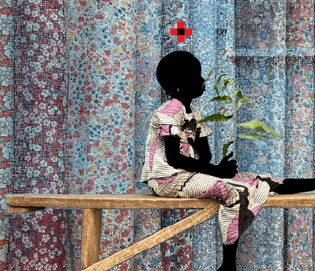 Among the sea of conversationsparking
displays [of African art],
one artist’s work stood out: Saïdou
Dicko, the Burkina Faso-born, Parisbased
multimedia artist whose obsession
with shadows brings the complexities
of humanity to life.
Self-taught, Dicko’s work is heavily
influenced by his childhood as a Fulani
shepherd, when he would studying the
outlines of the natural landscape intently.
Nature and innocence are constant
threads in his series of painted
photographs dubbed The Shadowed
People. In them, images of children are
flattened into silhouettes using black
paint and situated against boldly patterned
backgrounds.
“I often focus on children because
they are the source of joy, happiness,
and carelessness,” Dicko says. “They’re
also fascinatingly creative.” ...
Read full text
Among the sea of conversationsparking
displays [of African art],
one artist’s work stood out: Saïdou
Dicko, the Burkina Faso-born, Parisbased
multimedia artist whose obsession
with shadows brings the complexities
of humanity to life.
Self-taught, Dicko’s work is heavily
influenced by his childhood as a Fulani
shepherd, when he would studying the
outlines of the natural landscape intently.
Nature and innocence are constant
threads in his series of painted
photographs dubbed The Shadowed
People. In them, images of children are
flattened into silhouettes using black
paint and situated against boldly patterned
backgrounds.
“I often focus on children because
they are the source of joy, happiness,
and carelessness,” Dicko says. “They’re
also fascinatingly creative.” ...
Read full text
 The occasional sweet treat likely
won’t ruin your health. But too
much added sugar at a young age could
increase the risk of health complications
later in life.
Limiting added sugars during pregnancy
and a baby’s first two years
reduces the risk of a child developing
diabetes and hypertension in adulthood,
researchers report October 31 in Science.
“In the first 1,000 days of life, the
brain and body are gearing up to finish
developing,” says Sue-Ellen Anderson-
Haynes, a registered dietitian in Boston
and a spokesperson for the Academy of
Nutrition and Dietetics. Nutrition during
that timeframe is particularly important,
she says, because “everything
the mother eats gets transformed into
nutrients for the fetus.”
Current nutritional guidelines recommend
that adults consume less than 40
grams of added sugars per day and that
children under age 2 consume no added
sugars. But by age 2, the average American
child consumes about 29 grams of
added sugars a day; the average adult
consumes nearly 80 grams per day.
To study the effects of excess added
sugars early in life, economist Tadeja
Gracner of the U. of Southern California
in LA took advantage of a natural experiment:
the end of sugar rationing in
the UK after WWII. While rationing was
in effect, each person was allotted about
227 gr of sugar per week. Once sugar
rationing ended (1953), daily sugar consumption
for adults jumped to around
80 gr per day ...
Read full text
The occasional sweet treat likely
won’t ruin your health. But too
much added sugar at a young age could
increase the risk of health complications
later in life.
Limiting added sugars during pregnancy
and a baby’s first two years
reduces the risk of a child developing
diabetes and hypertension in adulthood,
researchers report October 31 in Science.
“In the first 1,000 days of life, the
brain and body are gearing up to finish
developing,” says Sue-Ellen Anderson-
Haynes, a registered dietitian in Boston
and a spokesperson for the Academy of
Nutrition and Dietetics. Nutrition during
that timeframe is particularly important,
she says, because “everything
the mother eats gets transformed into
nutrients for the fetus.”
Current nutritional guidelines recommend
that adults consume less than 40
grams of added sugars per day and that
children under age 2 consume no added
sugars. But by age 2, the average American
child consumes about 29 grams of
added sugars a day; the average adult
consumes nearly 80 grams per day.
To study the effects of excess added
sugars early in life, economist Tadeja
Gracner of the U. of Southern California
in LA took advantage of a natural experiment:
the end of sugar rationing in
the UK after WWII. While rationing was
in effect, each person was allotted about
227 gr of sugar per week. Once sugar
rationing ended (1953), daily sugar consumption
for adults jumped to around
80 gr per day ...
Read full text
 As heavy rains were battering Porto
Alegre in May, many mental-health
researchers from across Brazil were
gathered at the city’s Federal University
of Rio Grande do Sul (UFRGS). The
meeting marked the launch of efforts to
conduct the country’s first nationwide
mental-health survey, a project led by
Flavio Kapczinski, a psychiatrist at the
university. ...
The heavy rains lasted several days
between late April and mid-May, pouring
mainly in the Guaíba River basin,
which supplies water to Porto Alegre,
and several of its tributaries. In some
areas of the state, nearly one metre of
rain fell during a two-week span. ...
Most people going through a disaster
will experience symptoms of
distress, including anxiety, sadness, hopelessness, difficulty sleeping and
fatigue. For most people, the symptoms
will go away with time, according to
the World Health Organization (WHO).
But studies have pointed to actions
that can prevent these from becoming
long-term mental-health issues. The
first is ensuring that people have access
to basic necessities such as shelter,
water, food and safety. “Even more
than providing access to psychologists
and psychiatrists, what’s important is
offering a sense of safety,” says Bruno
Paz Mosqueiro, a psychiatrist at UFRGS’s
teaching hospital.
The WHO also recommends allowing
communities to help themselves by creating
groups that work collaboratively
to solve problems. ...
Read full text:
As heavy rains were battering Porto
Alegre in May, many mental-health
researchers from across Brazil were
gathered at the city’s Federal University
of Rio Grande do Sul (UFRGS). The
meeting marked the launch of efforts to
conduct the country’s first nationwide
mental-health survey, a project led by
Flavio Kapczinski, a psychiatrist at the
university. ...
The heavy rains lasted several days
between late April and mid-May, pouring
mainly in the Guaíba River basin,
which supplies water to Porto Alegre,
and several of its tributaries. In some
areas of the state, nearly one metre of
rain fell during a two-week span. ...
Most people going through a disaster
will experience symptoms of
distress, including anxiety, sadness, hopelessness, difficulty sleeping and
fatigue. For most people, the symptoms
will go away with time, according to
the World Health Organization (WHO).
But studies have pointed to actions
that can prevent these from becoming
long-term mental-health issues. The
first is ensuring that people have access
to basic necessities such as shelter,
water, food and safety. “Even more
than providing access to psychologists
and psychiatrists, what’s important is
offering a sense of safety,” says Bruno
Paz Mosqueiro, a psychiatrist at UFRGS’s
teaching hospital.
The WHO also recommends allowing
communities to help themselves by creating
groups that work collaboratively
to solve problems. ...
Read full text:
 Combating climate change will need
every tool we have in our belt. One
of those is capturing carbon dioxide
(CO2) from air. But technologies that nab
CO2 directly from air remain expensive,
and it takes a lot of energy to release
that captured CO2 for burial or use.
Researchers at the University of
California, Berkeley now report a material
that releases carbon dioxide at low
temperature. ... This makes it stable and
reusable, a key advantage over previous
materials and one that could bring down
carbon capture costs. In laboratory tests,
just 200 grams of the material could absorb
up to 20 kg of CO2 per year. That’s
as much as a mature tree will capture in
that timeframe.
The new material belongs to a family
of porous polymers called covalent
organic frameworks (COFs), which were
invented by Omar Yaghi, a chemistry
professor co-author of the paper. COFs
have rigid, highly ordered crystalline
structures with regularly spaced
internal pores that provide a large
surface area for gases to stick. For this
particular materia (COF-999), the team
attached amine polymers to the material’s
hexagonal pores. When air flows
through the pores, the amine, which is
basic, captures the CO2, which is acidic.
Amine solutions are commonly used
right now for direct carbon capture, but
heating them up takes a lot of energy.
Other solid materials that are being ...
Read full text:
Combating climate change will need
every tool we have in our belt. One
of those is capturing carbon dioxide
(CO2) from air. But technologies that nab
CO2 directly from air remain expensive,
and it takes a lot of energy to release
that captured CO2 for burial or use.
Researchers at the University of
California, Berkeley now report a material
that releases carbon dioxide at low
temperature. ... This makes it stable and
reusable, a key advantage over previous
materials and one that could bring down
carbon capture costs. In laboratory tests,
just 200 grams of the material could absorb
up to 20 kg of CO2 per year. That’s
as much as a mature tree will capture in
that timeframe.
The new material belongs to a family
of porous polymers called covalent
organic frameworks (COFs), which were
invented by Omar Yaghi, a chemistry
professor co-author of the paper. COFs
have rigid, highly ordered crystalline
structures with regularly spaced
internal pores that provide a large
surface area for gases to stick. For this
particular materia (COF-999), the team
attached amine polymers to the material’s
hexagonal pores. When air flows
through the pores, the amine, which is
basic, captures the CO2, which is acidic.
Amine solutions are commonly used
right now for direct carbon capture, but
heating them up takes a lot of energy.
Other solid materials that are being ...
Read full text:
 The BHP Group has become a master
of the greenwashing experiment,
an adept promoter of sham environmental
responsibility and a ruthless
negotiator and litigant over contentious
claims.
After nine years of negotiations
and attritive legal proceedings, BHP
has reached a settlement with Brazilian
authorities regarding its role in
the Fundão tailings dam collapse in
Mariana, Minas Gerais. Taking place
on November 5, 2015, the results were
catastrophic to human life and nature,
leaving 19 people dead and spilling
toxic sludge over some 700 km [434
Mi] of land. The Samarco-owned facility,
which held something like 26,000
Olympic-sized swimming pools’ worth
of tailings (50 million m3), was a joint venture between BHP and Vale. In addition
to killing 14 company employees
and five residents, the released tailings
rapidly reached Bento Rodrigues, Paracatu
de Baixo and Gesteira, and flooded
the centre of Barra Longa. ...
In response, BHP, Vale and Samarco
established the Renova Foundation,
intended to compensate individuals
and small businesses for losses and
ameliorating environmental impacts.
“Conveniently, the company creates its
foundation to repair its own damages.
Through the dense patchwork of multiple
lawsuits filed in Brazil, Australia,
the US and the UK, BHP has repeatedly
denied any central culpability in the
collapse. ...
Read full text:
The BHP Group has become a master
of the greenwashing experiment,
an adept promoter of sham environmental
responsibility and a ruthless
negotiator and litigant over contentious
claims.
After nine years of negotiations
and attritive legal proceedings, BHP
has reached a settlement with Brazilian
authorities regarding its role in
the Fundão tailings dam collapse in
Mariana, Minas Gerais. Taking place
on November 5, 2015, the results were
catastrophic to human life and nature,
leaving 19 people dead and spilling
toxic sludge over some 700 km [434
Mi] of land. The Samarco-owned facility,
which held something like 26,000
Olympic-sized swimming pools’ worth
of tailings (50 million m3), was a joint venture between BHP and Vale. In addition
to killing 14 company employees
and five residents, the released tailings
rapidly reached Bento Rodrigues, Paracatu
de Baixo and Gesteira, and flooded
the centre of Barra Longa. ...
In response, BHP, Vale and Samarco
established the Renova Foundation,
intended to compensate individuals
and small businesses for losses and
ameliorating environmental impacts.
“Conveniently, the company creates its
foundation to repair its own damages.
Through the dense patchwork of multiple
lawsuits filed in Brazil, Australia,
the US and the UK, BHP has repeatedly
denied any central culpability in the
collapse. ...
Read full text:
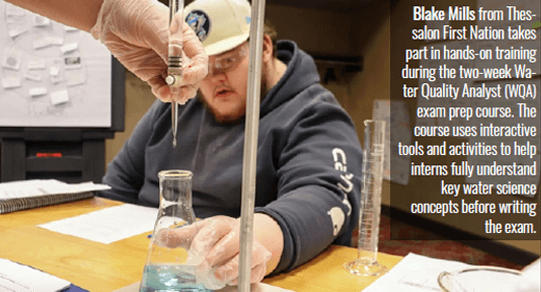 Dr. Geoffrey Hinton, a recent corecipient
of the prestigious Nobel
Prize for Physics has announced a donation
of $350,000 to Water First Education
& Training Inc. —the sum of half of his
prize winnings. Dr. Hinton, a computer
scientist and professor emeritus from
University of Toronto, was awarded the
prize for his groundbreaking contributions,
along with John Hopfield, in the
field of artificial intelligence.
Speaking with Water First, Dr. Hinton
expressed his concern with the conditions
in many Indigenous communities,
and his connection to safe water
that prompted the donation. “We lived
in Peru for a couple of months where
we adopted a child. The water was not
safe to drink, and seeing the extra work
and health care that goes into protecting
a child from poisonous water
cemented the belief that we must have
clean water.”
Indigenous communities across
Canada face serious and complex clean
water challenges. Water First works in
collaboration with Indigenous communities
to deliver training and education
programs to help build local capacity
and support highly-skilled people in
the fields of water operation and environmental
resource management.
As a scientist and educator, Dr. Hinton
praised the Water First model of providing
STEM education to build capacity
in Indigenous communities. “When
you provide education, you’ve now got
somebody who can keep the water safe
for forty years.” ...
Read full text:
Dr. Geoffrey Hinton, a recent corecipient
of the prestigious Nobel
Prize for Physics has announced a donation
of $350,000 to Water First Education
& Training Inc. —the sum of half of his
prize winnings. Dr. Hinton, a computer
scientist and professor emeritus from
University of Toronto, was awarded the
prize for his groundbreaking contributions,
along with John Hopfield, in the
field of artificial intelligence.
Speaking with Water First, Dr. Hinton
expressed his concern with the conditions
in many Indigenous communities,
and his connection to safe water
that prompted the donation. “We lived
in Peru for a couple of months where
we adopted a child. The water was not
safe to drink, and seeing the extra work
and health care that goes into protecting
a child from poisonous water
cemented the belief that we must have
clean water.”
Indigenous communities across
Canada face serious and complex clean
water challenges. Water First works in
collaboration with Indigenous communities
to deliver training and education
programs to help build local capacity
and support highly-skilled people in
the fields of water operation and environmental
resource management.
As a scientist and educator, Dr. Hinton
praised the Water First model of providing
STEM education to build capacity
in Indigenous communities. “When
you provide education, you’ve now got
somebody who can keep the water safe
for forty years.” ...
Read full text:
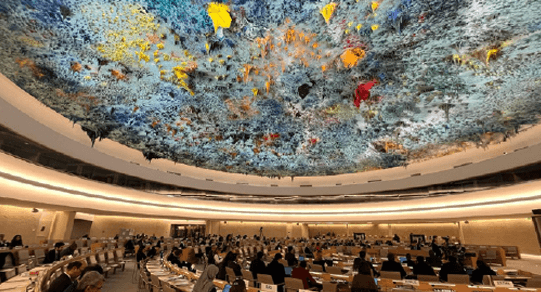 The United Nations Human Rights
Council in Geneva [October 11]
gave us three reasons to be encouraged.
This Council is a body within the
UN system that promotes human rights
and addresses situations of human
rights violations around the world. It’s
been going since 2006. The Council
can do things like establish investigations
into human rights abuses in a
particular country. It assigns independent
human rights experts to collect
information and report their findings
back to the Council. ...
1. On Sudan, Council members voted
to renew the work of the Independent
International Fact-Finding Mission for
the Sudan. This mission investigates
crimes committed by Sudan’s warring
parties. It collects evidence and
preserves it to identify those responsible
and for future prosecutions.
2. On Venezuela, the Council also
extended its probe, the Independent
International Fact-Finding Mission on
Venezuela. This mission was among the
first international bodies to say Venezuelan
authorities have engaged in serious
human rights violations that could
amount to crimes against humanity.
3. On Russia, the Council renewed
the work of the special rapporteur on
the situation of human rights there.
While Russia’s invasion of Ukraine is
under investigation by other bodies
—not least the International Criminal
Court— the rapporteur looks at the
Kremlin’s vicious crackdown on dissent
at home. ...
The United Nations Human Rights
Council in Geneva [October 11]
gave us three reasons to be encouraged.
This Council is a body within the
UN system that promotes human rights
and addresses situations of human
rights violations around the world. It’s
been going since 2006. The Council
can do things like establish investigations
into human rights abuses in a
particular country. It assigns independent
human rights experts to collect
information and report their findings
back to the Council. ...
1. On Sudan, Council members voted
to renew the work of the Independent
International Fact-Finding Mission for
the Sudan. This mission investigates
crimes committed by Sudan’s warring
parties. It collects evidence and
preserves it to identify those responsible
and for future prosecutions.
2. On Venezuela, the Council also
extended its probe, the Independent
International Fact-Finding Mission on
Venezuela. This mission was among the
first international bodies to say Venezuelan
authorities have engaged in serious
human rights violations that could
amount to crimes against humanity.
3. On Russia, the Council renewed
the work of the special rapporteur on
the situation of human rights there.
While Russia’s invasion of Ukraine is
under investigation by other bodies
—not least the International Criminal
Court— the rapporteur looks at the
Kremlin’s vicious crackdown on dissent
at home. ...
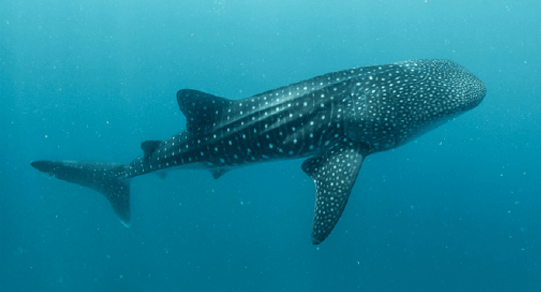 Global warming has the potential to
reshuffle the spaces used by life
on Earth, across all ecosystems. And
our new research shows whale sharks
—the world’s largest fish— could be
at risk, as warming oceans may force
them into busy human shipping lanes.
More than 12,000 marine species
are expected to redistribute in future
as seas warm up. Those animals that
are unable to move to remain within
suitable environments risk being wiped
out entirely. But things are different
for larger and highly mobile animals
that can move freely to find conditions
that suit their needs. For them, changing
ocean conditions may not be such
a huge threat in isolation, as they can
migrate to cooler seas. Rather, shifting
conditions may force species into new and more dangerous areas where they
come into contact with ship propellers
and other direct human threats.
We fear this will happen with whale
sharks. These huge sharks can reach up
to 18 metres —about four cars end to
end— but despite their size, their numbers
have already declined by over 50%
in the last 75 years. In previous research
we discovered this decline may be partly
due to collisions with large ships. Whale
sharks are particularly vulnerable as
they cruise around feeding on plankton,
rarely needing to swim faster than human
walking pace. While spending long
periods moving slowly near the surface,
they’re often struck by ships ...
Global warming has the potential to
reshuffle the spaces used by life
on Earth, across all ecosystems. And
our new research shows whale sharks
—the world’s largest fish— could be
at risk, as warming oceans may force
them into busy human shipping lanes.
More than 12,000 marine species
are expected to redistribute in future
as seas warm up. Those animals that
are unable to move to remain within
suitable environments risk being wiped
out entirely. But things are different
for larger and highly mobile animals
that can move freely to find conditions
that suit their needs. For them, changing
ocean conditions may not be such
a huge threat in isolation, as they can
migrate to cooler seas. Rather, shifting
conditions may force species into new and more dangerous areas where they
come into contact with ship propellers
and other direct human threats.
We fear this will happen with whale
sharks. These huge sharks can reach up
to 18 metres —about four cars end to
end— but despite their size, their numbers
have already declined by over 50%
in the last 75 years. In previous research
we discovered this decline may be partly
due to collisions with large ships. Whale
sharks are particularly vulnerable as
they cruise around feeding on plankton,
rarely needing to swim faster than human
walking pace. While spending long
periods moving slowly near the surface,
they’re often struck by ships ...
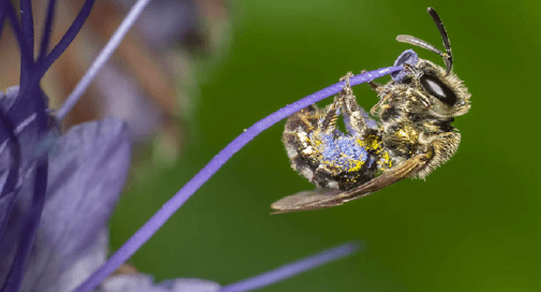 Within the world of bees, the
Smeathman’s furrow bee (Lasioglossum
smeathmanellum) is an unlikely
survivor. Many a “bee-loud glade”
—as the poet William Butler Yeats described—
has gone quiet as bee populations
worldwide succumb to myriad
threats. But the Smeathman’s, native to
the UK and Ireland, is thriving.
The Smeathman’s is about the size
of a small housefly. Like other furrow
bees, it is a social, nesting species in
the larger family of sweat bees —so
called because they gravitate to the dissolved
electrolytes of human sweat.
Sweat bees are found all over the
world, except Antarctica, in varying
colors and patterns, from metallic
green to striped or black-brown. Sweat
bees rarely sting and do not produce honey but are often important native
pollinators, having coevolved with local
flowering plants.
Wild bees like the Smeathman’s are
essential to most ecosystems: About
80% of flowering plant species rely
upon bees for pollination. But in recent
years, bee populations around the
globe have suffered devastating losses
due to development, habitat loss and
fragmentation, pesticide use, climate
change, and invasive species. The
Smeathman’s has managed to evade
the fate of so many of its cousins.
Its adaptability is its superpower:
This bee seems just as comfortable
in a vacant lot or a vineyard as in its
conventional habitat atop the region’s
craggy cliffs, ...
Within the world of bees, the
Smeathman’s furrow bee (Lasioglossum
smeathmanellum) is an unlikely
survivor. Many a “bee-loud glade”
—as the poet William Butler Yeats described—
has gone quiet as bee populations
worldwide succumb to myriad
threats. But the Smeathman’s, native to
the UK and Ireland, is thriving.
The Smeathman’s is about the size
of a small housefly. Like other furrow
bees, it is a social, nesting species in
the larger family of sweat bees —so
called because they gravitate to the dissolved
electrolytes of human sweat.
Sweat bees are found all over the
world, except Antarctica, in varying
colors and patterns, from metallic
green to striped or black-brown. Sweat
bees rarely sting and do not produce honey but are often important native
pollinators, having coevolved with local
flowering plants.
Wild bees like the Smeathman’s are
essential to most ecosystems: About
80% of flowering plant species rely
upon bees for pollination. But in recent
years, bee populations around the
globe have suffered devastating losses
due to development, habitat loss and
fragmentation, pesticide use, climate
change, and invasive species. The
Smeathman’s has managed to evade
the fate of so many of its cousins.
Its adaptability is its superpower:
This bee seems just as comfortable
in a vacant lot or a vineyard as in its
conventional habitat atop the region’s
craggy cliffs, ...

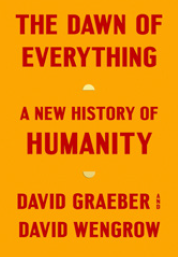 A New History of Humanity is a 2021
book by anthropologist David Graeber
and archaeologist David Wengrow.
Describing the diversity of early human
societies, the book critiques traditional
narratives of history’s linear development
from primitivism to civilization.
Instead, it posits that humans lived in
large, complex, but decentralized polities
for millennia. www.amazon.com
A New History of Humanity is a 2021
book by anthropologist David Graeber
and archaeologist David Wengrow.
Describing the diversity of early human
societies, the book critiques traditional
narratives of history’s linear development
from primitivism to civilization.
Instead, it posits that humans lived in
large, complex, but decentralized polities
for millennia. www.amazon.com
 This premium tool
set is designed not
only for practicality
but also to embody
exceptional quality
and attention
to detail. Whether
for yourself or as a
gift to a fellow craft
lover, these scissors
represent a
thoughtful choice.
www.lindellal.co
This premium tool
set is designed not
only for practicality
but also to embody
exceptional quality
and attention
to detail. Whether
for yourself or as a
gift to a fellow craft
lover, these scissors
represent a
thoughtful choice.
www.lindellal.co

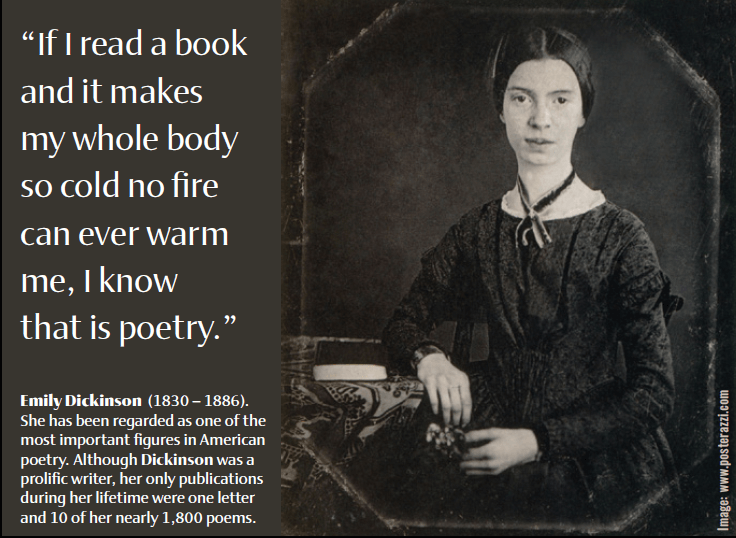


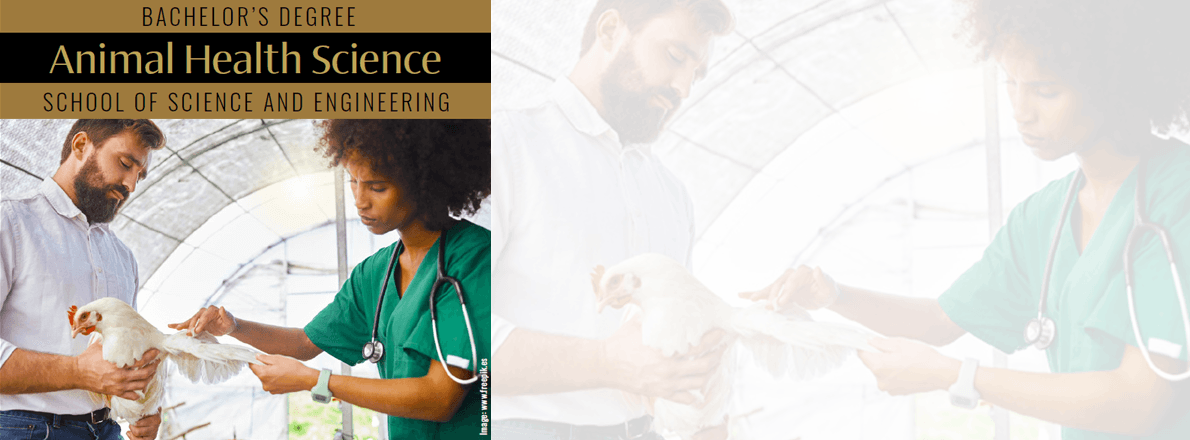 A Bachelor of Animal Health Science
program focuses on the health,
welfare, and medical care of animals,
preparing students for careers in
veterinary and animal care industries.
Students learn to identify, prevent,
and manage common animal diseases
and explore advanced diagnostic and
therapeutic practices.
The Bachelor of Animal Health
Science program is offered online via
distance learning. After evaluating
both academic record and life experience,
AIU staff working in conjunction
with Faculty and Academic Advisors
will assist students in setting up a
custom-made program, designed on an
individual basis. This flexibility to meet
student needs is seldom found in other
distance learning programs.
Our online program does not require
all students to take the same subjects/
courses, use the same books, or learning
materials. Instead, the online Bachelor
of Animal Health Science curriculum is
designed individually by the student and
academic advisor. Understanding that
industry and geographic factors should
influence the content of the curriculum
instead of a standardized one-fits-all
design is the hallmark of AIU’s unique
approach to adult education.
A Bachelor of Animal Health Science
program focuses on the health,
welfare, and medical care of animals,
preparing students for careers in
veterinary and animal care industries.
Students learn to identify, prevent,
and manage common animal diseases
and explore advanced diagnostic and
therapeutic practices.
The Bachelor of Animal Health
Science program is offered online via
distance learning. After evaluating
both academic record and life experience,
AIU staff working in conjunction
with Faculty and Academic Advisors
will assist students in setting up a
custom-made program, designed on an
individual basis. This flexibility to meet
student needs is seldom found in other
distance learning programs.
Our online program does not require
all students to take the same subjects/
courses, use the same books, or learning
materials. Instead, the online Bachelor
of Animal Health Science curriculum is
designed individually by the student and
academic advisor. Understanding that
industry and geographic factors should
influence the content of the curriculum
instead of a standardized one-fits-all
design is the hallmark of AIU’s unique
approach to adult education.
 Atlantic International University is accredited by the Accreditation Service for International
Schools, Colleges and Universities (ASIC). ASIC Accreditation is an internationally
renowned quality standard for colleges and universities. Visit ASIC’s Directory of Accredited
Colleges and Universities. ASIC is a member of CHEA International Quality Group
(CIQG) in the USA, an approved accreditation body by the Ministerial Department of the Home Office
in the UK, and is listed in the International Directory of the Council for Higher Education Accreditation
(CHEA). The University is based in the United States and was established by corporate charter in 1998.
Atlantic International University is accredited by the Accreditation Service for International
Schools, Colleges and Universities (ASIC). ASIC Accreditation is an internationally
renowned quality standard for colleges and universities. Visit ASIC’s Directory of Accredited
Colleges and Universities. ASIC is a member of CHEA International Quality Group
(CIQG) in the USA, an approved accreditation body by the Ministerial Department of the Home Office
in the UK, and is listed in the International Directory of the Council for Higher Education Accreditation
(CHEA). The University is based in the United States and was established by corporate charter in 1998.
 In some cases, accredited colleges
may not accept for transfer courses and degrees
completed at unaccredited colleges, and some
employers may require an accredited degree as
a basis for eligibility for employment. Potential
students should consider how the above may affect
their interests, AIU respects the unique rules and
regulations of each country and does not seek to
influence the respective authorities. In the event
that a prospective student wishes to carry out any
government review or process in regards to his
university degree, we recommend that the requirements
of such are explored in detail with the relevant
authorities by the prospective student as the
university does not intervene in such processes.
AIU students can be found in over 180 countries,
they actively participate and volunteer
in their communities as part of their academic
program and have allocated thousands of service
hours to diverse causes and initiatives. AIU
programs follow the standards commonly used by
colleges and universities in the United States with
regards to the following: academic program
structure, degree issued, transcript, and
other graduation documents.
AIU graduation documents can include
an apostille and authentication from the
US Department of State to facilitate their
use internationally.
In some cases, accredited colleges
may not accept for transfer courses and degrees
completed at unaccredited colleges, and some
employers may require an accredited degree as
a basis for eligibility for employment. Potential
students should consider how the above may affect
their interests, AIU respects the unique rules and
regulations of each country and does not seek to
influence the respective authorities. In the event
that a prospective student wishes to carry out any
government review or process in regards to his
university degree, we recommend that the requirements
of such are explored in detail with the relevant
authorities by the prospective student as the
university does not intervene in such processes.
AIU students can be found in over 180 countries,
they actively participate and volunteer
in their communities as part of their academic
program and have allocated thousands of service
hours to diverse causes and initiatives. AIU
programs follow the standards commonly used by
colleges and universities in the United States with
regards to the following: academic program
structure, degree issued, transcript, and
other graduation documents.
AIU graduation documents can include
an apostille and authentication from the
US Department of State to facilitate their
use internationally.
| Dr. Franklin Valcin Presi den t/Academic Dean |
Dr. José Mercado Chief Executive Officer Chairman of the Board of Trustees |
Ricardo González, PhD Provost |
| Dr. Ricardo Gonzalez Chief Operation Officer and MKT Director |
Linda Collazo Logistics Coordinator |
AIU Tutors Coordinators: Deborah Rodriguez Amiakhor Ejaeta Amanda Gutierrez William Mora Miriam James Admissions Coordinators: Amalia Aldrett Sandra Garcia Junko Shimizu Veronica Amuz Alba Ochoa Jenis Garcia Judith Brown Chris Soto René Cordón Dr. Anderas Rissler Academic Coordinators: Dr. Adesida Oluwafemi Dr. Emmanuel Gbagu Dr. Lucia Gorea Dr. Edgar Colon Dr. Mario Rios Freddy Frejus Dr. Nilani Ljunggren De Silva Dr. Scott Wilson Dr. Mohammad Shaidul Islam |
| Dr. Miriam Garibaldi Vice provost for Research |
Carolina Valdes Human Resource Coordinator |
|
| Dr. Ofelia Miller Director of AIU |
Carlos Aponte Teleco mmunications Coordinator |
|
| Clara Margalef Director of Special Projects of AIU |
David Jung Corporate/Legal Counsel |
|
| Juan Pablo Moreno Director of Operations |
Bruce Kim Advisor/Consultant |
|
| Paula Viera Director of Intelligence Systems |
Thomas Kim Corporate/ Accounting Counsel |
|
| Felipe Gomez Design Director / IT Supervisor |
Maricela Esparza Administrative Coordinator |
|
| Kevin Moll Web Designer |
Chris Benjamin IT and Hosting Support |
|
| Daritza Ysla IT Coordinator |
Maria Pastrana Accounting Coordinator |
|
| Daritza Ysla IT Coordinator |
Roberto Aldrett Communications Coordinator |
|
| Nadeem Awan Chief Programming Officer |
Giovanni Castillo IT Support |
|
| Dr. Edward Lambert Academic Director |
Antonella Fonseca Quality Control & Data Analysis |
|
| Dr. Ariadna Romero Advisor Coordinator |
Adrián Varela Graphic Design |
|
| Jhanzaib Awan Senior Programmer |
Vanesa D’Angelo Content Writer |
|
| Leonardo Salas Human Resource Manager |
Jaime Rotlewicz Dean of Admissions |
|
| Benjamin Joseph IT and Technology Support |
Michael Phillips Registrar’s Office |
|
| Rosie Perez Finance Coordinator |
||
 The School of Business and Economics
allows aspiring and practicing
professionals, managers, and entrepreneurs
in the private and public sectors
to complete a self paced distance
learning degree program of the highest
academic standard.
The ultimate goal is to empower
learners and help them take advantage
of the enormous array of resources
from the world environment in order
to eliminate the current continuum of
poverty and limitations.
Degree programs are designed for
those students whose professional experience has been in business,
marketing, administration, economics,
finance and management.
The School of Business and Economics
allows aspiring and practicing
professionals, managers, and entrepreneurs
in the private and public sectors
to complete a self paced distance
learning degree program of the highest
academic standard.
The ultimate goal is to empower
learners and help them take advantage
of the enormous array of resources
from the world environment in order
to eliminate the current continuum of
poverty and limitations.
Degree programs are designed for
those students whose professional experience has been in business,
marketing, administration, economics,
finance and management.
 The School of Social and Human Studies
is focused on to the development of
studies which instill a core commitment
to building a society based on social and
economic justice and enhancing opportunities
for human well being.
The founding principles lie on the
basic right of education as outlined
in the Declaration of Human Rights.
We instill in our students a sense of
confidence and self reliance in their
ability to access the vast opportunities
available through information channels,
the world wide web, private, public,
nonprofit, and nongovernmental organizations in an ever expanding
global community.
Degree programs are aimed towards
those whose professional life has been
related to social and human behavior,
with the arts, or with cultural studies.
The School of Social and Human Studies
is focused on to the development of
studies which instill a core commitment
to building a society based on social and
economic justice and enhancing opportunities
for human well being.
The founding principles lie on the
basic right of education as outlined
in the Declaration of Human Rights.
We instill in our students a sense of
confidence and self reliance in their
ability to access the vast opportunities
available through information channels,
the world wide web, private, public,
nonprofit, and nongovernmental organizations in an ever expanding
global community.
Degree programs are aimed towards
those whose professional life has been
related to social and human behavior,
with the arts, or with cultural studies.
 The School of Science and Engineering
seeks to provide dynamic, integrated,
and challenging degree programs
designed for those whose experience
is in industrial research, scientific production,
engineering and the general
sciences. Our system for research and
education will keep us apace with the
twenty-first century reach scientific
advance in an environmentally and
ecologically responsible manner to allow
for the sustainability of the human
population. We will foster among our
students a demand for ethical behavior,
an appreciation for diversity, an understanding
of scientific investigation, knowledge of design innovation, a
critical appreciation for the importance
of technology and technological change
for the advancement of humanity.
The School of Science and Engineering
seeks to provide dynamic, integrated,
and challenging degree programs
designed for those whose experience
is in industrial research, scientific production,
engineering and the general
sciences. Our system for research and
education will keep us apace with the
twenty-first century reach scientific
advance in an environmentally and
ecologically responsible manner to allow
for the sustainability of the human
population. We will foster among our
students a demand for ethical behavior,
an appreciation for diversity, an understanding
of scientific investigation, knowledge of design innovation, a
critical appreciation for the importance
of technology and technological change
for the advancement of humanity.
 With access to a global catalog created and maintained collectively by more than
9,000 participating institutions, AIU students have secured excellent research
tools for their study programs.
With access to a global catalog created and maintained collectively by more than
9,000 participating institutions, AIU students have secured excellent research
tools for their study programs.