 February
22, 2021. One
of our graduates,
Francis
Chishala,
was officially
appointed as
International
Disability Special Rapporteur
(IDSR) of People of African
descent with Disabilities by
the Global Pan Africanism
Network (GPAN) Accra, Ghana
dated 20th November 2020,
and subsequently confirmed
through the Ministry of Foreign
Affairs through the office of the Permanent Secretary
(International Relations and
Cooperation) Ambassador
Chalwe Lombe, Lusaka,
Zambia.
Francis Chishala has completed
a Master's program in
Occupational Health at Atlantic
International University.
February
22, 2021. One
of our graduates,
Francis
Chishala,
was officially
appointed as
International
Disability Special Rapporteur
(IDSR) of People of African
descent with Disabilities by
the Global Pan Africanism
Network (GPAN) Accra, Ghana
dated 20th November 2020,
and subsequently confirmed
through the Ministry of Foreign
Affairs through the office of the Permanent Secretary
(International Relations and
Cooperation) Ambassador
Chalwe Lombe, Lusaka,
Zambia.
Francis Chishala has completed
a Master's program in
Occupational Health at Atlantic
International University.
 February 26, 2021.
One of our graduates,
Oluseyi Adefila,
published an article
titled, “Education as
a Human Right,” at
AIU. You can read an
abstract of the article below:
Abstract: Education is the
process of facilitating learning,
or the acquisition of knowledge,
skills, values, beliefs,
and habits. Educational methods
include teaching, training,
storytelling, discussion and
directed research. Education
frequently takes place under
the guidance of educators; however learners can
also educate themselves.
Education can
take place in formal or
informal settings and
any experience that
has a formative effect
on the way one thinks, feels,
or acts may be considered
educational. The methodology
of teaching is called pedagogy.
Formal education is commonly
divided formally into
such stages as preschool
or kindergarten, primary
school, secondary school and
then college, university, or
apprenticeship. A right to education has
been recognized by some
governments and the United
Nations. In most regions,
education is compulsory up to
a certain age. There is a movement
for education reform,
and in particular for evidencebased
education with global
initiatives aimed at achieving
the Sustainable Development
Goal 4, which promotes quality
education for all.
February 26, 2021.
One of our graduates,
Oluseyi Adefila,
published an article
titled, “Education as
a Human Right,” at
AIU. You can read an
abstract of the article below:
Abstract: Education is the
process of facilitating learning,
or the acquisition of knowledge,
skills, values, beliefs,
and habits. Educational methods
include teaching, training,
storytelling, discussion and
directed research. Education
frequently takes place under
the guidance of educators; however learners can
also educate themselves.
Education can
take place in formal or
informal settings and
any experience that
has a formative effect
on the way one thinks, feels,
or acts may be considered
educational. The methodology
of teaching is called pedagogy.
Formal education is commonly
divided formally into
such stages as preschool
or kindergarten, primary
school, secondary school and
then college, university, or
apprenticeship. A right to education has
been recognized by some
governments and the United
Nations. In most regions,
education is compulsory up to
a certain age. There is a movement
for education reform,
and in particular for evidencebased
education with global
initiatives aimed at achieving
the Sustainable Development
Goal 4, which promotes quality
education for all.
 February 23,
2021. One of
our Academic
Advisors,
Dr. Mohammad
Shahidul
Islam, has published his
book titled, “Bioester production
from shea oil using
ethanol and alkaline catalyst
- Bioester with medicinal
property offers opportunity
to be used in pharmaceutical
and personal care product
industries” and is available on
MoreBooks!
Summary: Shea butter is a vegetable oil, a tiny yellowish
or ivory-colored fat extracted
from the nut of the African
shea tree. It is widely used in
cosmetics as a moisturizer,
salve or lotion. It is edible
and is used in food
preparation in Africa.
One problem associated
with the use of
neat shea butter is its
relatively high viscosity
(80 mm2/s at 50oC). Possible process for the reduction
of viscosity is splitting off
of glycerol backbone thorough
transesterification.
February 23,
2021. One of
our Academic
Advisors,
Dr. Mohammad
Shahidul
Islam, has published his
book titled, “Bioester production
from shea oil using
ethanol and alkaline catalyst
- Bioester with medicinal
property offers opportunity
to be used in pharmaceutical
and personal care product
industries” and is available on
MoreBooks!
Summary: Shea butter is a vegetable oil, a tiny yellowish
or ivory-colored fat extracted
from the nut of the African
shea tree. It is widely used in
cosmetics as a moisturizer,
salve or lotion. It is edible
and is used in food
preparation in Africa.
One problem associated
with the use of
neat shea butter is its
relatively high viscosity
(80 mm2/s at 50oC). Possible process for the reduction
of viscosity is splitting off
of glycerol backbone thorough
transesterification.
 March 16, 2021. One
of our graduates, James
Komolafe, and his wife
Veronica Komolafe,
have published a book
together titled, “Depression:
Recognising
The Stages And Walking Away
From It” and it is available on
Amazon.
Summary: The rate at which
people think, imagine and handle
issues of life around them
is today reaching an unacceptable
dimension. This situation
is further worsened by the
biting times and the inability
to find relevant answers within
their scope of expression and
influence given the soaring
expectation, the mounting bills
in the face of inadequate and
dwindling resources.
In view of this, many
appear stranded within,
slumping from sadness
to the trough of depression
even without
knowing it. They continue
to think the bad and the
ugly-the negatives. Up till now,
recounting the old analogue
photography “Negatives are developed
in the darkroom”.
March 16, 2021. One
of our graduates, James
Komolafe, and his wife
Veronica Komolafe,
have published a book
together titled, “Depression:
Recognising
The Stages And Walking Away
From It” and it is available on
Amazon.
Summary: The rate at which
people think, imagine and handle
issues of life around them
is today reaching an unacceptable
dimension. This situation
is further worsened by the
biting times and the inability
to find relevant answers within
their scope of expression and
influence given the soaring
expectation, the mounting bills
in the face of inadequate and
dwindling resources.
In view of this, many
appear stranded within,
slumping from sadness
to the trough of depression
even without
knowing it. They continue
to think the bad and the
ugly-the negatives. Up till now,
recounting the old analogue
photography “Negatives are developed
in the darkroom”.
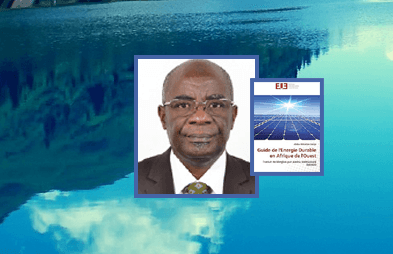 March 3,
2021. One of
our graduates,
Abdou
Mahaman
Dango, has
published
a book titled, “Guide de
l'Energie Durable en Afrique
de l'Ouest” with Editions
Universitaires Europeennes
in January 2021, which is the
French version of the book
he published earlier in 2019
titled “A Guide to Sustainable
energy in West Africa” with
Cambridge Scholar Publishing.
Abstract in French: Celivre souligne l’abondance
des ressources en énergie
propre dont l’Afrique de
l’Ouest est dotée. Il montre le
rythme avec lequel le secteur
d’énergies renouvelables progresse
et comment il contribue
à l’atténuation du réchauffement
climatique.
L’ouvrage identifie
en détail le stock des
diverses ressources,
l’environnement des
affaires propice et
l’état de développement
des technologies
solaires et
hydroélectriques.
Abstract in English: This
book highlights the abundance
of clean energy resources
West Africa is endowed. It
shows the pace with which
the renewable energy sector is
growing and how it is contributing
to global warming
mitigation.
March 3,
2021. One of
our graduates,
Abdou
Mahaman
Dango, has
published
a book titled, “Guide de
l'Energie Durable en Afrique
de l'Ouest” with Editions
Universitaires Europeennes
in January 2021, which is the
French version of the book
he published earlier in 2019
titled “A Guide to Sustainable
energy in West Africa” with
Cambridge Scholar Publishing.
Abstract in French: Celivre souligne l’abondance
des ressources en énergie
propre dont l’Afrique de
l’Ouest est dotée. Il montre le
rythme avec lequel le secteur
d’énergies renouvelables progresse
et comment il contribue
à l’atténuation du réchauffement
climatique.
L’ouvrage identifie
en détail le stock des
diverses ressources,
l’environnement des
affaires propice et
l’état de développement
des technologies
solaires et
hydroélectriques.
Abstract in English: This
book highlights the abundance
of clean energy resources
West Africa is endowed. It
shows the pace with which
the renewable energy sector is
growing and how it is contributing
to global warming
mitigation.
 March 12,
2021. One of
our graduates,
Gabriel Wimmerth,
has
published his
Doctorate Dissertation
titled, “The Porosity
of a Reservoir Determines
the Quantity of Oil and Gas.
The More Pores a Reservoir
Contains the More Quantity,
Volume of Oil and Gas is Present
in a Reservoir,” at AIU.
Abstract: The oil and gas
industry, petroleum engineering,
exploration, drilling,
reservoir and production
engineering have taken an
enormous toll since the early
forties and sixties and it has
predominantly reached he
peak in the early eighties and
nineties. The number of oil
and gas companies have been
using the vertical drilling
approach and successfully
managed to pinch the reservoir
with productive oil or gas.
Many others have also failed
in the same process.
Namibia on the other hand
also tried its luck, onshore
and offshore, since the early
1908 but never has been successful
in hitting an oil or gas
reservoir. They only managed
to hit a WILDCAT. What has
been the problem in Namibia
as its counterpart with the
same rock formations Brazil
has been successful on several
oil and gas reservoirs along
their two dominant oil and gas
Basins, Santos and Campos?
March 12,
2021. One of
our graduates,
Gabriel Wimmerth,
has
published his
Doctorate Dissertation
titled, “The Porosity
of a Reservoir Determines
the Quantity of Oil and Gas.
The More Pores a Reservoir
Contains the More Quantity,
Volume of Oil and Gas is Present
in a Reservoir,” at AIU.
Abstract: The oil and gas
industry, petroleum engineering,
exploration, drilling,
reservoir and production
engineering have taken an
enormous toll since the early
forties and sixties and it has
predominantly reached he
peak in the early eighties and
nineties. The number of oil
and gas companies have been
using the vertical drilling
approach and successfully
managed to pinch the reservoir
with productive oil or gas.
Many others have also failed
in the same process.
Namibia on the other hand
also tried its luck, onshore
and offshore, since the early
1908 but never has been successful
in hitting an oil or gas
reservoir. They only managed
to hit a WILDCAT. What has
been the problem in Namibia
as its counterpart with the
same rock formations Brazil
has been successful on several
oil and gas reservoirs along
their two dominant oil and gas
Basins, Santos and Campos?
 Call for Papers
This Conference will be held
27–28 May 2021
at University of Dubrovnik,
Dubrovnik, Croatia.
We invite proposals for paper
presentations, workshops/
interactive sessions, posters/
exhibits, colloquia, focused
discussions, innovation
showcases, virtual posters, or
virtual lightning talks.
2021 Special Focus:
“The shape of recovery:
futures of responsible
travel and leisure”
Theme 1: Methods, models,
and practices Theme 2: Participation, access,
impacts.
Theme 3: Communicating
experience.
Theme 4: Future practices.
Become a Presenter:
1. Submit a proposal
2. Review timeline
3. Register
Late proposal deadline
27 April 2021
Late registration deadline
27 May 2021
Visit the website:
Call for Papers
This Conference will be held
27–28 May 2021
at University of Dubrovnik,
Dubrovnik, Croatia.
We invite proposals for paper
presentations, workshops/
interactive sessions, posters/
exhibits, colloquia, focused
discussions, innovation
showcases, virtual posters, or
virtual lightning talks.
2021 Special Focus:
“The shape of recovery:
futures of responsible
travel and leisure”
Theme 1: Methods, models,
and practices Theme 2: Participation, access,
impacts.
Theme 3: Communicating
experience.
Theme 4: Future practices.
Become a Presenter:
1. Submit a proposal
2. Review timeline
3. Register
Late proposal deadline
27 April 2021
Late registration deadline
27 May 2021
Visit the website:
 AIU is proud to share
with you some videos
about members of our
family. May you enjoy
and be inspired by them.
This video is about Dr.
Marcela Engermann. She is
a linguistics specialist, a lecturer,
researcher and speaks
many languages. She is truly a
disruptive force in the world.
AIU is proud to share
with you some videos
about members of our
family. May you enjoy
and be inspired by them.
This video is about Dr.
Marcela Engermann. She is
a linguistics specialist, a lecturer,
researcher and speaks
many languages. She is truly a
disruptive force in the world.
 SUMMA CUM LAUDE
 CUM LAUDE
 CUM LAUDE
 CUM LAUDE

| Genoveva de Fátima Kamukete Bachelor of Business Management Business Management Angola |
Marilia dos Santos de Figueiredo Master of Business Administration Human Resources Angola |
Danilo Ransay Joaquim Mabiala Master of Business Management Business Management Angola |
Wanda Silvia Condarco Palto Doctor of Public Health Quality Management and Health Management Bolivia |
Oscar Angel Nogales Escalera Doctor of Philosophy Sanitary and Environmental Engineering Bolivia |
Nestor Ndavyirakora Post-Doctor of Science Evaluation and Measurement Burundi |
| Desmond Itiose Bachelor of Science Mechanical Engineering Canada |
Guillermo Andrés Cortés Roco Doctor of Physical Education Health and Physical Activity Chile |
Donaldo Barrios Gelez Doctor of Business Management Project Management Colombia |
Robinson Arturo Carrillo Ortiz Bachelor of Business Administration Public Administration Colombia |
Johny Jose Garcia Tirado Post-Doctorate of Business Administration Finance Colombia |
Nyengo Olonge Paulin Doctor of Legal Studies International Legal Studies Congo (DR C) |
| Manuel Antonio Molina Hidalgo Bachelor of Business Administration Business Management and Marketing Costa Rica |
María Del Carmen Hernández Valerio Doctor of History History Dominican Rep ublic |
Guinivere Yunissa Mirambeaux Vasquez Master of Architec ture Bioclimatic Architecture Dominican Rep ublic |
Jose Antonio Torreblanca Garcia Bachelor of International Business International Business Ecuador |
Iris Elizabeth Villalobos Argueta Bachelor of International Business International Business El Salvador |
Raquel Andong Eko Okomo Bachelor of Science Public Health Equatorial Guinea |
| Alexa Cecilia Valdez Mata Bachelor of Science Psychology Guam |
Julio Israel Santeliz Castañeda Doctor of Education Education Guatemala |
Simone Denise Bennett Master of Social Development Social Developm ent Guyana |
Armolyn Beckie Nmah Bachelor of Business Administration Human Resources Management Libe ria |
Frank Gleh Karnley Bachelor of Science Comp uter Science Libe ria |
Gilbert Roland Post-Doctor of Business Administration Leadership and Management Mauritius |
| Antonio de Jesús Garibaldi Corona Doctor of Business Administration Management Mexico |
Guillermo Vergara Martínez Doctor of Economics Economics Mexico |
Alma Anelina Vidales Cavazos Doctor of Philosophy Philosophy and Humanities Mexico |
Roberto João Macovo Bachelor of Science Mechanical Engineering Mozambique |
Paulo Fernando Nhaducue Doctor of Public Health Public Health Mozambique |
Melisa Eugenia Mayorga Sequeira Master of International Business International Business Nicaragua |
| Oyama Osam Ntun Master of Science Electrical Engineering Nigeria |
Inegbenekalo Ibhade Tuesday Doctor of Science Management Nigeria |
Bertha Milagros Palomino Buleje Bachelor of Education Education Peru |
Francisco Jesus Legua Diaz Bachelor of Science Industrial Engineering Peru |
Noel Nsanzineza Doctor of Philosophy Procurement and Project Management Rwanda |
Hlamphane Emmanuel Maepa Doctor of Philosophy Renewable Energy South Africa |
| Mosiuoa Mc Donald Malebo Master of Business Administration Business Management and Strategy South Africa |
Javier Fernández Sánchez Bachelor of Science Psychology Spain |
Mabel Olivia Awuor Bachelor of Business Administration Business Administration Tanzania |
Suwikran Sangkaew Doctor of Business Administration Business Administration Thailand |
Elvis Emmanuel O'Connor Doctor of Business Administration Business Administration Trinidad and Tobago |
Manuela Paone Di Simone Doctor of Psychology Clinical Psychology United Kingdom |
| Nkechinyere I. Olushola Newton-Denila Doctor of Legal Studies Information and Comm unications Technology United Kingdom |
Maria Estela Almada Bachelor of Public Health Health Research Uruguay |
Glenn Roberts Fry Doctor of Science Nutrition USA |
Iván Ortiz Doctor of Philosophy Marketing USA |
Jerome Colton Sills Jr - Wha Dee Doctor of Science Energy Eff iciency and Renewable Resources USA |
Philippe Jean Bachelor of Business Administration Business Administration USA |
| Lilian Cerna Cartes Master of Psychology Child Psychology USA |
Maryud Milena Cortes Restrepo Doctor of Science Psychology USA |
Ricardo Pinzon Bachelor of Science Telecomm unications Engineering USA |
Alfredo Jose Guzman Azurdia Bachelor of Business Administration Sales and Business USA |
Carlos Estevez Bachelor of Nutrition Diet and Nutrition USA |
Marisabel Amparan Uzcategui Bachelor of Psychology Child Psychology and Developm ent USA |
| Petronella Nambule Bachelor of Marketing Marketing Zambia |
|||||


INTRODUCTION
Within a strict definition,
education is the action or process
of educating or of being
educated and, a: stage of such
a process; b: the knowledge
and development resulting
from the process of being
educated a person of little
education. Education also
means: the field of study that
deals mainly with methods of
teaching and learning in.
Education is the process of
bringing desirable change into
the behavior of human beings.
It brings knowledge, skills and
understanding in one’s life.
Education can be described in
different shapes.
The right to education is
a human right and indispensable
for the exercise of
other human rights. Quality
education aims to ensure
the development of a fullyrounded
human being. For
this human right to work there
must be equality of opportunity,
universal access, and enforceable and monitored
quality standards
How does Human rights
relate to education? Everyone
has the right to education.
Education shall be free, at
least in the elementary and
fundamental stages. Elementary
education shall be
compulsory. Education shall
be directed to the full development
of the human personality
and to the strengthening of
respect for human rights and
fundamental.
Education is a gradual
process which brings positive
changes in human life
and behavior. We can also
define education as “a process
of acquiring knowledge
through study or imparting the
knowledge by way of instructions
or some other practical
procedure”.
Education brings a natural
and lasting change in an individual’s
reasoning and ability
to achieve the targeted goal.
It facilitates us to investigate
our own considerations and
thoughts and makes it ready to
express it in various shapes.
Education is the main thing
that encourages us to distinguish
between right and
wrong because in the absence
of education, we can’t
do what we need or we can’t
achieve our goal.
Straightforwardly, we can
say, “education is the passage
to progress”. It is additionally
the way to our fate as achievements
can only be accomplished
when individuals have
information, aptitudes, and
frame of mind. In this way, education
resembles a medium
through which we can associate
with various individuals
and offer our thoughts.
To tackle issues and do
inventiveness we first need
to gain proficiency with some
essential abilities. We require
learning and abilities to wind
up increasingly imaginative.
So education is fundamentally
learning of abilities
and ideas that can make us
increasingly innovative and
issue solver. Education is to pick up
the capacity to develop and
take care of issues in order to
achieve their lawful motives.
Education also means helping
people to learn how to do
things and encouraging them
to think about what they learn.
It is also important for
educators to teach ways to find
and use information. Through
education, the knowledge
of society, country, and of
the world is passed on from
generation to generation. In
democracies, through education,
children and adults are
supposed to learn how to be
active and effective citizens.
More specific, education helps
and guides individuals to
transform from one class to
another. Empowered individuals,
societies, countries by
education are taking an edge
over individuals stand on the
bottom pyramid of growth.
TYPES OF EDUCATION
Education goes beyond what
takes place within the four
walls of the classroom. A child
gets the education from his
experiences outside the school
as well as from those within
on the basis of these factors.
There are three main types of
education, namely, Formal, Informal
and Non-formal. Each
of these types is discussed
below.
1. Formal education
Formal education or formal
learning usually takes place
in the premises of the school,
where a person may learn
basic, academic, or trade skills.
Small children often attend a
nursery or kindergarten but
often formal education begins
in elementary school and continues
with secondary school.
Post-secondary education
(or higher education) is usually
at a college or university
which may grant an academic
degree. It is associated with a
specific stage and is provided
under a certain set of rules
and regulations.
The formal education is
given by specially qualified
teachers they are supposed
to be efficient in the art of instruction.
It also observes strict
discipline. The student and the
teacher both are aware of the
facts and engage themselves in
the process of education.
Examples of formal education
• Learning in a classroom.
• School grading/certification,
college, and university
degrees.
• Planned education of different
subjects having a proper
syllabus acquired by attending
the institution.
Characteristics of formal
education
• It is structured
hierarchically.
• It is planned and deliberate.
• Scheduled fees are paid
regularly.
• It has a chronological
grading system.
• It has a syllabus and subject-
oriented. The syllabus
has to be covered within a
specific time period.
• The student is taught by the
teachers
Advantages of formal
education
• An organized educational
model and up to date course
contents.
• Students acquire knowledge
from trained and professional
teachers.
• Structured and systematic
learning process.
• Intermediate and final assessments
are ensured to
advance students to the
next learning phase.
• Institutions are managerially
and physically organized.
• Leads to a formally recognized
certificate.
• Easy access to jobs.
Disadvantages of formal
education
• Sometimes, brilliant students
are bored due to the
long wait for the expiry of
the academic session to
promote to the next stage.
• Chance of bad habits adoption
may be alarming due to
the presence of both good
and bad students in the
classroom.
• Wastage of time as some
lazy students may fail to learn properly in spite of
motivation by the professional
trainers.
• Some unprofessional and
non-standard education
system may cause the wastage
of time and money of
the students which leads to
the disappointment from
formal education and argue
them to go for non-formal
education.
• Costly and rigid education
as compare to other forms of
learning
2. Informal education
Informal education may be
a parent teaching a child how
to prepare a meal or ride a
bicycle. People can also get an
informal education by reading
many books from a library or
educational websites.
Informal education is when
you are not studying in a
school and do not use any
particular learning method.
In this type of education,
conscious efforts are not
involved. It is neither preplanned
nor deliberate. It may
be learned at some marketplace,
hotel or at home.
Unlike formal education,
informal education is not imparted
by an institution such
as school or college. Informal
education is not given according
to any fixed timetable.
There is no set curriculum
required. Informal education
consists of experiences and
actually living in the family or
community.
Examples of informal education
• Teaching the child some
basics such as numeric
characters.
• Someone learning their
mother tongue.
• A spontaneous type of
learning, “if a person standing
in a bank learns about
opening and maintaining
the account at the bank
from someone.”
Characteristics of
informal education
• It is independent of boundary
walls.
• It has no definite syllabus.
• It is not pre-planned and
has no timetable.
• No fees are required as
we get informal education
through daily experience
and by learning new things.
• It is a lifelong process in a
natural way.
• The certificates/degrees are
not involved and one has
no stress for learning the
new things.
• You can get from any source
such as media, life experiences,
friends, family etc.
education
• More naturally learning
process as you can learn at
anywhere and at any time
from your daily experience.
• It involves activities like
individual and personal research
on a topic of interest
for themselves by utilizing
books, libraries, social media,
internet or getting assistance
from informal trainers.
• Utilizes a variety of
techniques.
• No specific time span.
• Less costly and time-efficient
learning process.
• No need to hire experts as
most of the professionals
may be willing to share their
precious knowledge with
students/public through social
media and the internet.
• Learners can be picked up
the requisite information
from books, TV, radio or
conversations with their
friends/family members.
Disadvantages of informal
education
• Information acquired from
the internet, social media,
TV, radio or conversations
with friends/family
members may lead to
disinformation.
• Utilized techniques may not
be appropriate.
• No proper schedule/time
span.
• Unpredictable results which
lead to wastage of time.
• Lack of confidence in the
learner.
• Absence of discipline, attitude
and good habits.
3. Non-formal education
Non-formal education
includes adult basic education,
adult literacy education
or school equivalency
preparation.
In nonformal education,
someone (who is not in school)
can learn literacy, other basic skills or job skills. Home
education, individualized
instruction (such as programmed
learning), distance
learning and computerassisted
instruction are other
possibilities.
Non-formal education is
imparted consciously and deliberately
and systematically
implemented. It should be
organized for a homogeneous
group. Non-formal, education
should be programmed to
serve the needs of the identified
group. This will necessitate
flexibility in the design
of the curriculum and the
scheme of evaluation.
Examples of
non-formal education
• Boy Scouts and Girls Guides
develop some sports program
such as swimming .
• Fitness programs.
• Community-based adult
education courses.
• Free courses for adult education
developed by some
organization.
Characteristics of
non-formal education
• It is planned and takes
place apart from the school
system.
• The timetable and syllabus
can be adjustable.
• Unlike theoretical formal
education, it is practical and
vocational education.
• It has no age limit.
• Fees or certificates may or
may not be necessary.
• It may be full time or parttime
learning and one can
earn and learn together.
• It involves learning of professional
skills.
Advantages of
non-formal education
• Practiced and vocational
training.
• Naturally growing minds
that do not wait for the system
to amend.
• Literacy with skillfulness
growth in which self-learning
is appreciated.
• Flexibility in age, curriculum
and time.
• Open-ended educational
system in which both the
public and private sector are
involved in the process.
• No need to conduct regular
exams.
• Diploma, certificates, and
awards are not essential.
Disadvantages of
non-formal education
• Attendance of participants
is unsteady.
• Sometimes, it’s just wastage
of time as there is no need
to conduct the exam on
regular basis and no degree/
diploma is awarded at the
end of the training session.
• Basic reading and writing
skills are crucial to learn.
• No professional and trained
teachers.
• Students may not enjoy full
confidence as the regular
students enjoy.
• Some institutes provide fake
certification through online
courses just for the sake of
earning.
CONCLUSION
The right to education has
been recognized as a human
right in a number of international
conventions, including
the International Covenant on
Economic, Social and Cultural
Rights which recognizes a
right to free, compulsory primary
education for all, an obligation
to develop secondary
education accessible to all, on
particular by the progressive
introduction of free secondary
education, as well as an
obligation to develop equitable
access to higher education,
ideally by the progressive
introduction of free higher
education. Today, almost 75
million children across the
world are prevented from going
to school each day. As of
2015, 164 states were parties to
the Covenant.
The right to education also
includes a responsibility to
provide basic education for individuals
who have not completed
primary education from
the school and college levels.
In addition to these access to
education provisions, the right
to education encompasses the
obligations of the students to
avoid discrimination at all levels
of the educational system,
to set minimum standards of
education and to improve the
quality of education.
ACKNOWLEDGEMENTS:
United Nations (UN) • Wikipedia.

The Perseverence is an
electric rover, electric
vehicle, powered by nuclear
power created by the Aeronautics
and Space Administration
(NASA) of the United
States, USA. The Engineers
who designed this rover were
the same ones who designed
Curiosity.
NASA has its programs; we
are witnessing the NASA program:
the Mars 2020 Mission.
This Mission is a program that
includes trips to the Moon.
On July 30, 2020; the aforementioned
mission begins
with the departure to Mars of
the Perseverance rover robot.
The mission of this rover is to
find if there was microbial life
on Mars. The Jezero crater was
chosen because it is known
that there was a lake there,
with its river delta, 3.5 billion
years ago. Perseverance arrived on
Mars on February 18, 2021.
The trip was 470 million km.
The events that happen on
Mars and transmitted by Perseveance
take place 11 minutes
22 seconds before we perceive
them on Earth. The Perseverance
carries 23 cameras and
two microphones.
It will take the team on this
spacecraft more than a month
to load software to activate a
drill to collect samples from
the soil of Mars. This robot
also carries a method to see if
oxygen is produced on Mars.
With Perseverance traveled
the Ingenuity Mars helicopter.
The rover will be exploring
Mars for 687 days; two years.
It’s planned to make, again,
for 2024, trips to the Moon.
By 2028 they have as a project
to have a human presence on
Earth’s satellite, the Moon. If life is found on Mars,
science will demonstrate what
has long been a hypothesis:
life is part of the Universe.
How are these triumphs
achieved? The example that
these triumphs demonstrate
is the work of science people
where it doesn’t matter where
you were born; it matters what
you know about science.
In this NASA Mission there
are Engineers, men and women,
from different countries.
An example is the Colombian
Diana Trujillo, Aerospace Engineer.
Engineer Trujillo also
had the task of broadcasting
the landing of Perseverance
to Mars. This disclosure was
made for the Spanish-speaking
world.
There are, in this Mission,
researchers from Spain, Japan,
Argentina and countries that
we never imagined. The Engineer who designed
the Curiosity space rover was
the same one who designed
Perseverance. This work was
done by Engineer Luis Enrique
Velasco. He is Mexican.
How does Perseverance
set us an example?
The Mission carried out by
this rover was developed by
people from all over. We have a
year with a Pandemic that the
only sure thing is that the virus
has already mutated and that
we are going for another wave.
The obvious is that politicians
took over, joined the
pharmaceutical companies,
and the world seems to spend
two years with the economy in
decline, unemployment reigning,
more and more deaths
and infections alike.
Each country threw the
towel for its side and world
society doesn’t know when the
problem will end.
They didn’t let the scientists
work; the product of Engineers
from many countries
at NASA, who will also be
joined by the European Space
Agency, shows us that there’s
a union because what matters
is what needs to be done.
Reach the goal because we
have a common goal.
With the Coronavirus
pandemic, it seems that every
place on Earth is a different
world. The common, the
generalized is the pandemic;
the solution is of each group
according to the interests of
the one who governs. The
politicians and all their visions
generated a divided world
where the only thing that is
the same is the advance of the
coronavirus pandemic. Vaccines
do not reach all countries;
the infected multiply as
well as the dead.
The question is: is that the
world that later the politicians
will take to the whole
universe? If there had been a
union between the countries
and they had let those who
know science work, the situation
would not be the way
we are living it. How long will
this event last? Who knows?
There are the organizations
created after World War II for
the most serious problems, but
they seem to be infected with
interests.
Perseverance has given
us an example that when
there is union for the
facts of which we have
knowledge; these events
can be achieved.
A small planet, inside a
galaxy of the immensity
that is the universe, and
we are not able to find a
solution that makes life
possible for all of us.
We aren’t capable of living
all well, in our pale
blue point, as Carl Sagan
called our planet.
BIBLIOGRAPHY. NASA- HOMEPAGE. https://mars.nasa.gov/mars2020/
Recuperado el 15 de Febrero 2021. | Sagan, Carl. (2003). El Punto azul
Pálido; una visión del futuro humano en el espacio. México: Planeta.
 Helping their children learn remotely
during the pandemic has
driven many parents to distraction.
A few have found it easier and more
rewarding to take complete control of
their children’s lessons. Research published
in November by the Association
of Directors of Children’s Services ...
found the number of home-educated
children in England had increased
by 40% to about 75,000 in the year to
October 2020. That represents a little
under 1% of school-aged children but it
is double the number who were home
educated four years before. In America
... the numbers are higher. A survey
published in October by the Pew
Research Centre found that around
7% of American parents were formally
home-schooling their children, up
from around 3% in the spring.
Supervising remote learning during
the pandemic has helped some parents
recognise that their children are
trailing a long way behind their classmates,
says Juliet English of Headhub
... in Britain. Others have discovered
that the work schools are setting is
much easier than they think their
children can handle, reckons Paula
Lago, an Argentine who runs a website
offering advice to home educators in
Latin America. Parents of the youngest
schoolchildren have not enjoyed seeing
them forced to learn from screens.
...
Read full text:
Helping their children learn remotely
during the pandemic has
driven many parents to distraction.
A few have found it easier and more
rewarding to take complete control of
their children’s lessons. Research published
in November by the Association
of Directors of Children’s Services ...
found the number of home-educated
children in England had increased
by 40% to about 75,000 in the year to
October 2020. That represents a little
under 1% of school-aged children but it
is double the number who were home
educated four years before. In America
... the numbers are higher. A survey
published in October by the Pew
Research Centre found that around
7% of American parents were formally
home-schooling their children, up
from around 3% in the spring.
Supervising remote learning during
the pandemic has helped some parents
recognise that their children are
trailing a long way behind their classmates,
says Juliet English of Headhub
... in Britain. Others have discovered
that the work schools are setting is
much easier than they think their
children can handle, reckons Paula
Lago, an Argentine who runs a website
offering advice to home educators in
Latin America. Parents of the youngest
schoolchildren have not enjoyed seeing
them forced to learn from screens.
...
Read full text:
 Chen has win virtually every sci-fi
literary award in China, and establish
himself as a leading voice among
the country’s growing roster of acclaimed
writers in the genre. But unlike
Liu Cixin, the lionized author of The
Three Body Problem, who grapples with
the faraway grandeur of outer space,
Chen is drawn more to the interior
lives of characters struggling to anchor
themselves in a moment of accelerated
change —much the way nearly anyone
in China struggles to anchor themselves
today. His work is often described as
“science fiction realism.”
At the beginning of his writing
process, Chen says, he often tries to
act like “an anthropologist conducting
fieldwork.” Before writing his debut
novel, The Waste Tide, a 2013 ecothriller
about a workers’ uprising in
a futuristic dump called Silicon Isle,
Chen spent time in the southeastern
city of Guiyu, one of the world’s largest
dumping grounds for electronic
waste, observing migrant workers toil
in the toxin-laden trash. Once he has
a feel for a given landscape in the real
world, he transports the scene into
what he calls the imagined “hyperreal”
—a zone where the fantastical and factual
are so blurred it is unclear where
one begins and one ends. ... He wants
his writing to provoke a sense of both
wonder ...
Read full text:
Chen has win virtually every sci-fi
literary award in China, and establish
himself as a leading voice among
the country’s growing roster of acclaimed
writers in the genre. But unlike
Liu Cixin, the lionized author of The
Three Body Problem, who grapples with
the faraway grandeur of outer space,
Chen is drawn more to the interior
lives of characters struggling to anchor
themselves in a moment of accelerated
change —much the way nearly anyone
in China struggles to anchor themselves
today. His work is often described as
“science fiction realism.”
At the beginning of his writing
process, Chen says, he often tries to
act like “an anthropologist conducting
fieldwork.” Before writing his debut
novel, The Waste Tide, a 2013 ecothriller
about a workers’ uprising in
a futuristic dump called Silicon Isle,
Chen spent time in the southeastern
city of Guiyu, one of the world’s largest
dumping grounds for electronic
waste, observing migrant workers toil
in the toxin-laden trash. Once he has
a feel for a given landscape in the real
world, he transports the scene into
what he calls the imagined “hyperreal”
—a zone where the fantastical and factual
are so blurred it is unclear where
one begins and one ends. ... He wants
his writing to provoke a sense of both
wonder ...
Read full text:
 Mathematicians were disturbed,
centuries ago, to find that calculating
the properties of certain curves
demanded the seemingly impossible:
numbers that, when multiplied by
themselves, turn negative.
Imaginary numbers, labeled with
units of i (where, for instance, (2i)2 =
-4), gradually became fixtures in the abstract
realm of mathematics. For physicists,
however, real numbers sufficed to
quantify reality. Sometimes, so-called
complex numbers, with both real and
imaginary parts, such as 2 + 3i, have
streamlined calculations, but in apparently
optional ways. No instrument has
ever returned a reading with an i.
Yet physicists may have just shown
for the first time that imaginary
numbers are, in a sense, real.
A group of quantum theorists
designed an experiment whose
outcome depends on whether nature
has an imaginary side. Provided
that quantum mechanics is correct
—an assumption few would quibble
with— the team’s argument essentially
guarantees that complex numbers are
an unavoidable part of our description
of the physical universe.
“These complex numbers, usually
they’re just a convenient tool, but here
it turns out that they really have some
physical meaning,” said Tamás Vértesi,
a physicist ... who, years ago, argued
the opposite. ...
Mathematicians were disturbed,
centuries ago, to find that calculating
the properties of certain curves
demanded the seemingly impossible:
numbers that, when multiplied by
themselves, turn negative.
Imaginary numbers, labeled with
units of i (where, for instance, (2i)2 =
-4), gradually became fixtures in the abstract
realm of mathematics. For physicists,
however, real numbers sufficed to
quantify reality. Sometimes, so-called
complex numbers, with both real and
imaginary parts, such as 2 + 3i, have
streamlined calculations, but in apparently
optional ways. No instrument has
ever returned a reading with an i.
Yet physicists may have just shown
for the first time that imaginary
numbers are, in a sense, real.
A group of quantum theorists
designed an experiment whose
outcome depends on whether nature
has an imaginary side. Provided
that quantum mechanics is correct
—an assumption few would quibble
with— the team’s argument essentially
guarantees that complex numbers are
an unavoidable part of our description
of the physical universe.
“These complex numbers, usually
they’re just a convenient tool, but here
it turns out that they really have some
physical meaning,” said Tamás Vértesi,
a physicist ... who, years ago, argued
the opposite. ...
 Being wrong is a normal and inevitable
part of the scientific process.
We scientists do our best with the
tools we have, until new tools extend
our senses and let us probe more
deeply, broadly, or precisely. Over
time, new discoveries lead us to major
course corrections in our understanding
of how the world works, such as
natural selection and quantum physics.
Failure, therefore, is an opportunity
to discover and learn. ...
Myth #1. Specific parts of the
human brain have specific psychological
jobs. According to this myth,
the brain is like a collection of puzzle
pieces, each with a dedicated mental
function. ... Today, we know ... the
human brain is a massive network of
neurons. Most neurons have multiple
jobs, not a single psychological
purpose.
Myth #2. Your brain reacts to events
in the world. ... Brains, however, don’t
work by stimulus and response. All
your neurons are firing at various rates
all the time. What are they doing? Busily
making predictions. ...
Myth #3. There’s a clear dividing
line between diseases of the body,
such as cardiovascular disease, and
diseases of the mind, such as depression.
... Neuroscientists have found,
however, that the same brain networks
responsible for controlling your
body also are involved in creating your
mind. ...
Read full text
Being wrong is a normal and inevitable
part of the scientific process.
We scientists do our best with the
tools we have, until new tools extend
our senses and let us probe more
deeply, broadly, or precisely. Over
time, new discoveries lead us to major
course corrections in our understanding
of how the world works, such as
natural selection and quantum physics.
Failure, therefore, is an opportunity
to discover and learn. ...
Myth #1. Specific parts of the
human brain have specific psychological
jobs. According to this myth,
the brain is like a collection of puzzle
pieces, each with a dedicated mental
function. ... Today, we know ... the
human brain is a massive network of
neurons. Most neurons have multiple
jobs, not a single psychological
purpose.
Myth #2. Your brain reacts to events
in the world. ... Brains, however, don’t
work by stimulus and response. All
your neurons are firing at various rates
all the time. What are they doing? Busily
making predictions. ...
Myth #3. There’s a clear dividing
line between diseases of the body,
such as cardiovascular disease, and
diseases of the mind, such as depression.
... Neuroscientists have found,
however, that the same brain networks
responsible for controlling your
body also are involved in creating your
mind. ...
Read full text
 In a new study, published this week in
the International Journal of Audiology,
researchers ... in the UK carried
out a systematic review of dozens of
studies investigating the link between
COVID-19 and auditory symptoms.
Among people who were infected
with COVID-19, around 7.6% suffered
from hearing loss and 14% experienced
tinnitus, a persistent ringing or
whooshing sound in the ears. A further
14.8% of people also reported vertigo,
a dizzy sensation that everything is
spinning around you. This sensation is
usually caused by a problem with your
inner ear, as this is the HQ of the vestibular
system responsible for balance.
Odd case studies of such symptoms
have been reported before, but few
studies have taken a broad look at the
scale of the problem.
“There is an urgent need for a carefully
conducted clinical and diagnostic
study to understand the long-term
effects of COVID-19 on the auditory
system,” Kevin Munro, Professor of
Audiology at The University of Manchester
... said in a statement. ...
It may be that SARS-CoV-2, the virus
that causes the disease, is directly
damaging the tissues involved in the
auditory system. After all, it’s known
that COVID-19 is much more than a
simple respiratory disease and can
lead to damage to many major organ
systems ...
In a new study, published this week in
the International Journal of Audiology,
researchers ... in the UK carried
out a systematic review of dozens of
studies investigating the link between
COVID-19 and auditory symptoms.
Among people who were infected
with COVID-19, around 7.6% suffered
from hearing loss and 14% experienced
tinnitus, a persistent ringing or
whooshing sound in the ears. A further
14.8% of people also reported vertigo,
a dizzy sensation that everything is
spinning around you. This sensation is
usually caused by a problem with your
inner ear, as this is the HQ of the vestibular
system responsible for balance.
Odd case studies of such symptoms
have been reported before, but few
studies have taken a broad look at the
scale of the problem.
“There is an urgent need for a carefully
conducted clinical and diagnostic
study to understand the long-term
effects of COVID-19 on the auditory
system,” Kevin Munro, Professor of
Audiology at The University of Manchester
... said in a statement. ...
It may be that SARS-CoV-2, the virus
that causes the disease, is directly
damaging the tissues involved in the
auditory system. After all, it’s known
that COVID-19 is much more than a
simple respiratory disease and can
lead to damage to many major organ
systems ...
 Vaccine trials are often done in
wealthier countries. Scientists say
the South Africa experience proves the
value of trials in the global south.
In a year that has seesawed between
astonishing gains and brutal setbacks
on Covid-19, few moments were as sobering
as the revelation last month that
a coronavirus variant in South Africa
was dampening the effect of one of
the world’s most potent vaccines. That
finding —from a South African trial of
the Oxford-AstraZeneca shot— exposed
how quickly the virus had managed to
dodge human antibodies, ending what
some researchers have described as the
world’s honeymoon period with Covid-
19 vaccines and setting back hopes
for containing the pandemic.
As countries adjust to that jarring
turn of fortune, the story of how
scientists uncovered the dangers of
the variant in South Africa has put a
spotlight on the global vaccine trials
that were indispensable in warning
the world. “Historically, people might
have thought a problem in a country
like South Africa would stay in South
Africa,” said Mark Feinberg, the chief
executive of IAVI, a nonprofit scientific
research group. “But we’ve seen
how quickly variants are cropping up
all around the world. Even wealthy
countries have to pay a lot of attention
to the evolving landscape all around
the world.” ... Read full text:
Vaccine trials are often done in
wealthier countries. Scientists say
the South Africa experience proves the
value of trials in the global south.
In a year that has seesawed between
astonishing gains and brutal setbacks
on Covid-19, few moments were as sobering
as the revelation last month that
a coronavirus variant in South Africa
was dampening the effect of one of
the world’s most potent vaccines. That
finding —from a South African trial of
the Oxford-AstraZeneca shot— exposed
how quickly the virus had managed to
dodge human antibodies, ending what
some researchers have described as the
world’s honeymoon period with Covid-
19 vaccines and setting back hopes
for containing the pandemic.
As countries adjust to that jarring
turn of fortune, the story of how
scientists uncovered the dangers of
the variant in South Africa has put a
spotlight on the global vaccine trials
that were indispensable in warning
the world. “Historically, people might
have thought a problem in a country
like South Africa would stay in South
Africa,” said Mark Feinberg, the chief
executive of IAVI, a nonprofit scientific
research group. “But we’ve seen
how quickly variants are cropping up
all around the world. Even wealthy
countries have to pay a lot of attention
to the evolving landscape all around
the world.” ... Read full text:
 One brave woman from the Netherlands,
actress Stijn Fransen, remained
at ease as a robot arm worked
a needle into her inner forearm to
create what would be the “world’s first”
remotely-done tattoo. Her real tattoo
artist, Wes Thomas, was controlling
the machinery all the way in London.
The session was organized by
T-Mobile Netherlands and Londonbased
technologist Noel Drew to push
the boundaries of remote communication
and showcase how far 5G cellular
technology can go.
According to a report by PCMag,
the robot deliberately designed for
this session went through six weeks
of rigorous testing with Drew’s design
studio, The Mill, to ensure it was safe
and able to deliver clean strokes on
human skin. ...
One brave woman from the Netherlands,
actress Stijn Fransen, remained
at ease as a robot arm worked
a needle into her inner forearm to
create what would be the “world’s first”
remotely-done tattoo. Her real tattoo
artist, Wes Thomas, was controlling
the machinery all the way in London.
The session was organized by
T-Mobile Netherlands and Londonbased
technologist Noel Drew to push
the boundaries of remote communication
and showcase how far 5G cellular
technology can go.
According to a report by PCMag,
the robot deliberately designed for
this session went through six weeks
of rigorous testing with Drew’s design
studio, The Mill, to ensure it was safe
and able to deliver clean strokes on
human skin. ...
 Inclusive design is often confused
with simply designing for people
with disabilities. However, true
inclusive design is much more than
this —it is about designing for as
diverse a range of people possible. It
is a philosophy that encourages us to
consider how size, shape, age, gender,
sexuality, ethnicity, education levels,
income, spoken languages, culture
& customs, and even diets shape the
way we interact with the world. More
importantly, it is about designing
products and services in light of this
understanding.
Not so long ago, the term ‘inclusive
design’ did not exist. There was also a
view among many that one-size may
fit all, and designing for an ‘average
man’ was good enough.
Today, we are still surrounded by
products that only work well for a
limited range of people. ... It is not
always completely clear why products
are designed to exclude people. Often,
it’s a perceived efficiency-thoroughness
trade off. ... Much of the time it
is simply that the designers haven’t
thought enough about the diversity of
the people who wish to interact with
the product that they are designing,
often because it’s not in the culture of
the company.
It is also the case that the number of
excluded people is dramatically underestimated.
Capabilities are frequently
thought of in binary terms —you can
either see or you can’t, or you can hear
or you can’t. In reality, our sensory, cognitive
and physical capabilities all tend
to sit on a long spectrum.
Our cognitive abilities also lie on a
spectrum, and it’s not quite as simple
as a link to IQ. Some people may have
exceptional memories, problemsolving
skills, communication abilities,
recognition or attention. However, our
capability in one aspect is rarely an accurate
predictor for another. ...
The old adage ‘it’s downhill from
forty’ is not strictly true, in terms of
our capabilities, it is actually more like
mid-thirties! ... However, we are increasingly
remaining in work for much
longer. As such, the role of inclusive
design is becoming more important if we wish to remain an efficient and
effective part of the workforce. ...
When thinking about capabilities it’s
useful to think of them on three levels:
1. Permanent (e.g. having one arm)
2. Temporary (e.g. an arm injury)
3. Situational (e.g. holding a small child)
The market for people with one arm is
relatively small, however, a product that
can be used by people carrying a small
child (or using one of their arms for
another task) is much larger. As such,
designing for the smaller market of
permanent exclusions is often a very effective
way of developing products that
make the lives of a much wider group
more flexibility, efficient and enjoyable.
The first step on the path to designing
more inclusive products is to
understand where the current challenges
are. ... The second step is to make
informed decisions about the product
specification. ... The task does not end
here however, the remaining step is to
continually test and evaluate the design
throughout the design process. ...
Read full text:
Inclusive design is often confused
with simply designing for people
with disabilities. However, true
inclusive design is much more than
this —it is about designing for as
diverse a range of people possible. It
is a philosophy that encourages us to
consider how size, shape, age, gender,
sexuality, ethnicity, education levels,
income, spoken languages, culture
& customs, and even diets shape the
way we interact with the world. More
importantly, it is about designing
products and services in light of this
understanding.
Not so long ago, the term ‘inclusive
design’ did not exist. There was also a
view among many that one-size may
fit all, and designing for an ‘average
man’ was good enough.
Today, we are still surrounded by
products that only work well for a
limited range of people. ... It is not
always completely clear why products
are designed to exclude people. Often,
it’s a perceived efficiency-thoroughness
trade off. ... Much of the time it
is simply that the designers haven’t
thought enough about the diversity of
the people who wish to interact with
the product that they are designing,
often because it’s not in the culture of
the company.
It is also the case that the number of
excluded people is dramatically underestimated.
Capabilities are frequently
thought of in binary terms —you can
either see or you can’t, or you can hear
or you can’t. In reality, our sensory, cognitive
and physical capabilities all tend
to sit on a long spectrum.
Our cognitive abilities also lie on a
spectrum, and it’s not quite as simple
as a link to IQ. Some people may have
exceptional memories, problemsolving
skills, communication abilities,
recognition or attention. However, our
capability in one aspect is rarely an accurate
predictor for another. ...
The old adage ‘it’s downhill from
forty’ is not strictly true, in terms of
our capabilities, it is actually more like
mid-thirties! ... However, we are increasingly
remaining in work for much
longer. As such, the role of inclusive
design is becoming more important if we wish to remain an efficient and
effective part of the workforce. ...
When thinking about capabilities it’s
useful to think of them on three levels:
1. Permanent (e.g. having one arm)
2. Temporary (e.g. an arm injury)
3. Situational (e.g. holding a small child)
The market for people with one arm is
relatively small, however, a product that
can be used by people carrying a small
child (or using one of their arms for
another task) is much larger. As such,
designing for the smaller market of
permanent exclusions is often a very effective
way of developing products that
make the lives of a much wider group
more flexibility, efficient and enjoyable.
The first step on the path to designing
more inclusive products is to
understand where the current challenges
are. ... The second step is to make
informed decisions about the product
specification. ... The task does not end
here however, the remaining step is to
continually test and evaluate the design
throughout the design process. ...
Read full text:
 We can stop crediting endorphins,
the natural opioid painkillers
produced by our bodies, for the floaty
euphoria we often feel during aerobic
exercise, according to a nifty new study
of men, women and treadmills. In the
study, runners developed a gentle intoxication,
known as a runner’s high, even
if researchers had blocked their bodies’
ability to respond to endorphins, suggesting
that those substances could not
be behind the buzz. Instead, the study
suggests, a different set of biochemicals
resembling internally homegrown
versions of cannabis, better known as
marijuana, are likely to be responsible.
The findings expand our understanding
of how running affects our
bodies and minds, and also raise interesting
questions about why we might
need to be slightly stoned in order to
want to keep running.
In surveys and studies of experienced
distance runners, most report developing
a mellow runner’s high at least
sometimes. The experience typically is
characterized by loose-limbed blissfulness
and a shedding of anxiety and unease
after half an hour or so of striding.
In the 1980s, exercise scientists started
attributing this buzz to endorphins, after
noticing that blood levels of the natural
painkillers rise in people’s bloodstreams
when they run. ...
We can stop crediting endorphins,
the natural opioid painkillers
produced by our bodies, for the floaty
euphoria we often feel during aerobic
exercise, according to a nifty new study
of men, women and treadmills. In the
study, runners developed a gentle intoxication,
known as a runner’s high, even
if researchers had blocked their bodies’
ability to respond to endorphins, suggesting
that those substances could not
be behind the buzz. Instead, the study
suggests, a different set of biochemicals
resembling internally homegrown
versions of cannabis, better known as
marijuana, are likely to be responsible.
The findings expand our understanding
of how running affects our
bodies and minds, and also raise interesting
questions about why we might
need to be slightly stoned in order to
want to keep running.
In surveys and studies of experienced
distance runners, most report developing
a mellow runner’s high at least
sometimes. The experience typically is
characterized by loose-limbed blissfulness
and a shedding of anxiety and unease
after half an hour or so of striding.
In the 1980s, exercise scientists started
attributing this buzz to endorphins, after
noticing that blood levels of the natural
painkillers rise in people’s bloodstreams
when they run. ...
 We’ve all been there. Stuck in
our own heads, fixated on a
two-minute conversation from three
days ago. We replay it over and over. I
shouldn’t have snapped at Dad. He was
always so patient when I was growing
up. We get stuck. The voice in our heads
goes from an ally to a vicious nag, just
looping uselessly over the same things,
again and again and again.
Ethan Kross, an experimental psychologist
and neuroscientist, wants to
teach us how to control the voices in
our heads. Not the voices of mental illness,
mind you, just the little voice we
all have, cheerily (or naggingly) narrating
our lives as we go about our days.
According to Kross, our inner voices
can be one of our greatest strengths —when we can control them. Those
inner voices can take us to whole other
worlds, allow us to imagine different
pasts or exciting futures, but they can
also trap us in a hell of our own making.
In his new book, Kross walks readers
through a number of different strategies
to control mental chatter. A key
strategy is “distanced self-talk,” using
language to create mental distance
from yourself. The best medicine for
being stuck on a problem is to gain
perspective on it. And a way to gain
that perspective is to talk to yourself
as if you were another person. You can
never be certain what he was thinking,
Liz. He might have appreciated
your retort. ...
We’ve all been there. Stuck in
our own heads, fixated on a
two-minute conversation from three
days ago. We replay it over and over. I
shouldn’t have snapped at Dad. He was
always so patient when I was growing
up. We get stuck. The voice in our heads
goes from an ally to a vicious nag, just
looping uselessly over the same things,
again and again and again.
Ethan Kross, an experimental psychologist
and neuroscientist, wants to
teach us how to control the voices in
our heads. Not the voices of mental illness,
mind you, just the little voice we
all have, cheerily (or naggingly) narrating
our lives as we go about our days.
According to Kross, our inner voices
can be one of our greatest strengths —when we can control them. Those
inner voices can take us to whole other
worlds, allow us to imagine different
pasts or exciting futures, but they can
also trap us in a hell of our own making.
In his new book, Kross walks readers
through a number of different strategies
to control mental chatter. A key
strategy is “distanced self-talk,” using
language to create mental distance
from yourself. The best medicine for
being stuck on a problem is to gain
perspective on it. And a way to gain
that perspective is to talk to yourself
as if you were another person. You can
never be certain what he was thinking,
Liz. He might have appreciated
your retort. ...
 With a million species at risk of extinction,
dozens of countries are
pushing to protect at least 30 percent
of the planet’s land and water by 2030.
Their goal is to hammer out a global
agreement at negotiations to be held in
China later this year, designed to keep
intact natural areas like old growth
forests and wetlands that nurture biodiversity,
store carbon and filter water.
But many people who have been protecting
nature successfully for generations
won’t be deciding on the deal: Indigenous
communities and others who
have kept room for animals, plants and
their habitats, not by fencing off nature,
but by making a small living from
it. The key to their success, research
shows, is not extracting too much.
In the Brazilian Amazon, Indigenous
people put their bodies on the line to
protect native lands threatened by loggers
and ranchers. In Canada, a First
Nations group created a huge park to
block mining. In Papua New Guinea,
fishing communities have set up
no-fishing zones. And in Guatemala,
people living in a sprawling nature reserve
are harvesting high-value timber
in small amounts. ...
“If you’re going to save only the
insects and the animals and not
the Indigenous people, there’s a big
contradiction,” said José Gregorio
Díaz Mirabal, who leads an umbrella
group, the Coordinator of Indigenous
Organizations of the Amazon River
Basin. “We’re one ecosystem.” ...
Read full text:
With a million species at risk of extinction,
dozens of countries are
pushing to protect at least 30 percent
of the planet’s land and water by 2030.
Their goal is to hammer out a global
agreement at negotiations to be held in
China later this year, designed to keep
intact natural areas like old growth
forests and wetlands that nurture biodiversity,
store carbon and filter water.
But many people who have been protecting
nature successfully for generations
won’t be deciding on the deal: Indigenous
communities and others who
have kept room for animals, plants and
their habitats, not by fencing off nature,
but by making a small living from
it. The key to their success, research
shows, is not extracting too much.
In the Brazilian Amazon, Indigenous
people put their bodies on the line to
protect native lands threatened by loggers
and ranchers. In Canada, a First
Nations group created a huge park to
block mining. In Papua New Guinea,
fishing communities have set up
no-fishing zones. And in Guatemala,
people living in a sprawling nature reserve
are harvesting high-value timber
in small amounts. ...
“If you’re going to save only the
insects and the animals and not
the Indigenous people, there’s a big
contradiction,” said José Gregorio
Díaz Mirabal, who leads an umbrella
group, the Coordinator of Indigenous
Organizations of the Amazon River
Basin. “We’re one ecosystem.” ...
Read full text:
 There are daily news stories about
the recent large wildfires in 2020.
In nearly all of these media accounts,
almost always attributed to a lack of active
forest management. In other words,
proponents of logging/thinning forests
assert fuel reductions would diminish
fire severity. The prevailing assumption
is that fuels are the major cause of large
blazes. This chainsaw prescription is
all a scam to promote logging. I have to
wonder how many large high-severity
fires these proponents have visited.
I’ve visited dozens from Alaska to New
Mexico, Montana to California to understand
how they burned and what may or
may not have influence fire spread.
There is a common denominator in
all the large blazes —wind. Chainsaw
medicine does nothing about wind.
The wind blows embers miles ahead
of the fire front, starting new spot fires
and crossing any barriers erected to
thwart fire spread. I have observed
what some research has documented:
under extreme fire weather conditions
of drought, low humidity, high
temperatures, and wind, nothing stops
a fire. I have seen where wind-driven
fires have burned through clearcuts,
thinned forests, prescribed burns, and
even closely cropped grasslands. ...
Read full text
There are daily news stories about
the recent large wildfires in 2020.
In nearly all of these media accounts,
almost always attributed to a lack of active
forest management. In other words,
proponents of logging/thinning forests
assert fuel reductions would diminish
fire severity. The prevailing assumption
is that fuels are the major cause of large
blazes. This chainsaw prescription is
all a scam to promote logging. I have to
wonder how many large high-severity
fires these proponents have visited.
I’ve visited dozens from Alaska to New
Mexico, Montana to California to understand
how they burned and what may or
may not have influence fire spread.
There is a common denominator in
all the large blazes —wind. Chainsaw
medicine does nothing about wind.
The wind blows embers miles ahead
of the fire front, starting new spot fires
and crossing any barriers erected to
thwart fire spread. I have observed
what some research has documented:
under extreme fire weather conditions
of drought, low humidity, high
temperatures, and wind, nothing stops
a fire. I have seen where wind-driven
fires have burned through clearcuts,
thinned forests, prescribed burns, and
even closely cropped grasslands. ...
Read full text
 Under the post-war dictatorship,
South Korea’s growth model
relied on a clear division of labour:
men did military service and went out
to work, women raised the children
and did the housework. What paid
work women did tended to be subordinate
to men’s, serving, for instance,
to pay for their brothers’ education. ...
Jung Se-young and Baeck Hana, two
twenty-something women who live on
their own in Seoul ... last year set up a
YouTube channel about single living
after meeting at a feminist discussion
group. They regale their 40,000
subscribers and ... more casual viewers
with tales of blissful holidays free of
the obligation to cook for a roomful of
male family members. They also offer...
investment advice and budgeting tips
for solo living ... .
They are part of a wave of feminist
activism that has swept South Korea. In
early 2018 a state prosecutor, inspired
by the global #MeToo movement, spoke
out on national television about being
sexually assaulted by one of her bosses.
Others followed her lead, resulting
in cases against several high-profile
men, including a theatre director and
a provincial governor. Since then tens
of thousands of women have taken to
the streets and to the internet to protest
against sexual harassment, illegal spycam
videos and the country’s restrictive
abortion laws. ...
Under the post-war dictatorship,
South Korea’s growth model
relied on a clear division of labour:
men did military service and went out
to work, women raised the children
and did the housework. What paid
work women did tended to be subordinate
to men’s, serving, for instance,
to pay for their brothers’ education. ...
Jung Se-young and Baeck Hana, two
twenty-something women who live on
their own in Seoul ... last year set up a
YouTube channel about single living
after meeting at a feminist discussion
group. They regale their 40,000
subscribers and ... more casual viewers
with tales of blissful holidays free of
the obligation to cook for a roomful of
male family members. They also offer...
investment advice and budgeting tips
for solo living ... .
They are part of a wave of feminist
activism that has swept South Korea. In
early 2018 a state prosecutor, inspired
by the global #MeToo movement, spoke
out on national television about being
sexually assaulted by one of her bosses.
Others followed her lead, resulting
in cases against several high-profile
men, including a theatre director and
a provincial governor. Since then tens
of thousands of women have taken to
the streets and to the internet to protest
against sexual harassment, illegal spycam
videos and the country’s restrictive
abortion laws. ...
 Taiji in Wakayama Prefecture is one
of Japan’s dolphin hunting towns,
made notorious by the documentary
The Cove. The film provoked an
international outcry over the cruelty of
the dolphin trade. Environmentalists
say that some dolphins take up to 30
minutes to drown. In extreme distress,
dolphins are capable of killing themselves,
said Richard O’Barry ...
Before the coronavirus pandemic
overwhelmed the world, international
activists flew to this small seaside town
of about 3,400 people to protest the
dolphin trade. But as Japan closed its
borders to foreigners, the only activist
left standing is Ren Yabuki, director of
Life Investigation Agency, an advocacy group against animal abuses. ...
Dolphin hunters have turned to the
trade of live dolphins. Taiji’s fishermen
are allowed to catch 1,749 dolphins or
small whales during one hunting season.
Hunters can make $48,000 per live
dolphin, as opposed to the mere $480
when slaughtered. Some of these captured
dolphins are sent to China, where
90 dolphins were purchased in 2018.
Yabuki, who witnessed baby dolphins
being killed, described how the
killings are hard to take. ...
Watch video Inside Japan's Global
Dolphin Trade (graphic content):
https://youtu.be/6MAT9mbj6z8
Taiji in Wakayama Prefecture is one
of Japan’s dolphin hunting towns,
made notorious by the documentary
The Cove. The film provoked an
international outcry over the cruelty of
the dolphin trade. Environmentalists
say that some dolphins take up to 30
minutes to drown. In extreme distress,
dolphins are capable of killing themselves,
said Richard O’Barry ...
Before the coronavirus pandemic
overwhelmed the world, international
activists flew to this small seaside town
of about 3,400 people to protest the
dolphin trade. But as Japan closed its
borders to foreigners, the only activist
left standing is Ren Yabuki, director of
Life Investigation Agency, an advocacy group against animal abuses. ...
Dolphin hunters have turned to the
trade of live dolphins. Taiji’s fishermen
are allowed to catch 1,749 dolphins or
small whales during one hunting season.
Hunters can make $48,000 per live
dolphin, as opposed to the mere $480
when slaughtered. Some of these captured
dolphins are sent to China, where
90 dolphins were purchased in 2018.
Yabuki, who witnessed baby dolphins
being killed, described how the
killings are hard to take. ...
Watch video Inside Japan's Global
Dolphin Trade (graphic content):
https://youtu.be/6MAT9mbj6z8

 The first helmet of its
kind which can charge
itself from any light,
indoors and outdoors.
With sensors to monitor
light conditions which
will activate automatically
when worn. It is
lightweight, safe, well
ventilated and comfortable.
No on/off switches,
no charging ports,
no fiddly cables, no
lights to forget at home.
www.pocsports.com
The first helmet of its
kind which can charge
itself from any light,
indoors and outdoors.
With sensors to monitor
light conditions which
will activate automatically
when worn. It is
lightweight, safe, well
ventilated and comfortable.
No on/off switches,
no charging ports,
no fiddly cables, no
lights to forget at home.
www.pocsports.com
 The Ergonomic Garden
Weed Removal Tool quickly clears weeds by
pushing or pulling. The no-rust tempered steel
head is sharpened inside and out for efficient
weed removal. Features a handle with strong
silicone rubber grips for added comfort and efficiency.
By Skidger. www.thegrommet.com
The Ergonomic Garden
Weed Removal Tool quickly clears weeds by
pushing or pulling. The no-rust tempered steel
head is sharpened inside and out for efficient
weed removal. Features a handle with strong
silicone rubber grips for added comfort and efficiency.
By Skidger. www.thegrommet.com
 Your new observation station,
the perfect combination of a telescope and
a camera —a revolution in the world
of Astronomy. vaonis.com
Your new observation station,
the perfect combination of a telescope and
a camera —a revolution in the world
of Astronomy. vaonis.com

 The Bachelor of New Media (BSc)
program objective is to provide
professionals a wide range of media
skills giving them opportunity to
develop professional capabilities in
their chosen area of work, while building
an understanding of the way all
parts of the communication process
interact together. The Bachelor of New
Media (BSc) program is offered online
via distance learning. After evaluating
both academic record and life experience,
AIU staff working in conjunction
with Faculty and Academic Advisors
will assist students in setting up a
custom-made program, designed on
an individual basis. This flexibility to
meet student needs is seldom found
in other distance learning programs.
Our online program does not require
all students to take the same subjects/
courses, use the same books, or
learning materials. Instead, the online
Bachelor of New Media (BSc) curriculum
is designed individually by the
student and academic advisor.
It specifically addresses strengths
and weaknesses with respect to
market opportunities in the student’s
major and intended field of work.
Understanding that industry and
geographic factors should influence
the content of the curriculum instead
of a standardized one-fits-all design is
the hallmark of AIU’s unique approach
to adult education. This philosophy
addresses the dynamic and constantly
changing environment of working
professionals by helping adult students
in reaching their professional and
personal goals within the scope of the
degree program.
The Bachelor of New Media (BSc)
program objective is to provide
professionals a wide range of media
skills giving them opportunity to
develop professional capabilities in
their chosen area of work, while building
an understanding of the way all
parts of the communication process
interact together. The Bachelor of New
Media (BSc) program is offered online
via distance learning. After evaluating
both academic record and life experience,
AIU staff working in conjunction
with Faculty and Academic Advisors
will assist students in setting up a
custom-made program, designed on
an individual basis. This flexibility to
meet student needs is seldom found
in other distance learning programs.
Our online program does not require
all students to take the same subjects/
courses, use the same books, or
learning materials. Instead, the online
Bachelor of New Media (BSc) curriculum
is designed individually by the
student and academic advisor.
It specifically addresses strengths
and weaknesses with respect to
market opportunities in the student’s
major and intended field of work.
Understanding that industry and
geographic factors should influence
the content of the curriculum instead
of a standardized one-fits-all design is
the hallmark of AIU’s unique approach
to adult education. This philosophy
addresses the dynamic and constantly
changing environment of working
professionals by helping adult students
in reaching their professional and
personal goals within the scope of the
degree program.
 Atlantic International University is accredited by the Accreditation Service for International
Schools, Colleges and Universities (ASIC). ASIC Accreditation is an internationally
renowned quality standard for colleges and universities. Visit ASIC’s Directory of Accredited
Colleges and Universities. ASIC is a member of CHEA International Quality Group
(CIQG) in the USA, an approved accreditation body by the Ministerial Department of the Home Office
in the UK, and is listed in the International Directory of the Council for Higher Education Accreditation
(CHEA). The University is based in the United States and was established by corporate charter in 1998.
Atlantic International University is accredited by the Accreditation Service for International
Schools, Colleges and Universities (ASIC). ASIC Accreditation is an internationally
renowned quality standard for colleges and universities. Visit ASIC’s Directory of Accredited
Colleges and Universities. ASIC is a member of CHEA International Quality Group
(CIQG) in the USA, an approved accreditation body by the Ministerial Department of the Home Office
in the UK, and is listed in the International Directory of the Council for Higher Education Accreditation
(CHEA). The University is based in the United States and was established by corporate charter in 1998.
 In some cases, accredited colleges
may not accept for transfer courses and degrees
completed at unaccredited colleges, and some
employers may require an accredited degree as
a basis for eligibility for employment. Potential
students should consider how the above may affect
their interests, AIU respects the unique rules and
regulations of each country and does not seek to
influence the respective authorities. In the event
that a prospective student wishes to carry out any
government review or process in regards to his
university degree, we recommend that the requirements
of such are explored in detail with the relevant
authorities by the prospective student as the
university does not intervene in such processes.
AIU students can be found in over 180 countries,
they actively participate and volunteer
in their communities as part of their academic
program and have allocated thousands of service
hours to diverse causes and initiatives. AIU
programs follow the standards commonly used by
colleges and universities in the United States with
regards to the following: academic program
structure, degree issued, transcript, and
other graduation documents.
AIU graduation documents can include
an apostille and authentication from the
US Department of State to facilitate their
use internationally.
In some cases, accredited colleges
may not accept for transfer courses and degrees
completed at unaccredited colleges, and some
employers may require an accredited degree as
a basis for eligibility for employment. Potential
students should consider how the above may affect
their interests, AIU respects the unique rules and
regulations of each country and does not seek to
influence the respective authorities. In the event
that a prospective student wishes to carry out any
government review or process in regards to his
university degree, we recommend that the requirements
of such are explored in detail with the relevant
authorities by the prospective student as the
university does not intervene in such processes.
AIU students can be found in over 180 countries,
they actively participate and volunteer
in their communities as part of their academic
program and have allocated thousands of service
hours to diverse causes and initiatives. AIU
programs follow the standards commonly used by
colleges and universities in the United States with
regards to the following: academic program
structure, degree issued, transcript, and
other graduation documents.
AIU graduation documents can include
an apostille and authentication from the
US Department of State to facilitate their
use internationally.
| Dr. Franklin Valcin President/Academic Dean |
Dr. José Mercado Chief Executive Officer Chairman of the Board of Trustees |
Ricardo González, PhD Provost |
| Dr. Ricardo Gonzalez Chief Operation Officer and MKT Director |
Linda Collazo Logistics Coordinator |
Dr. Silvia Restorff Academic Advisor |
| Dr. Miriam Garibaldi Viceprovost for Research |
Irina Ivashuk Alumni Association Coordinator |
Dr. Prakash Menon Academic Advisor |
| Dr. Ofelia Miller Director of AIU |
Clara Margalef Director of Special Projects of AIU |
Carlos Aponte Telecommunications Coordinator |
| Juan Pablo Moreno Director of Operations |
David Jung Corporate/Legal Counsel |
Dr. Nilani Ljunggren De Silva Academic Advisor |
| Paula Viera Director of Intelligence Systems |
Bruce Kim Advisor/Consultant |
Dr. Scott Wilson Academic Advisor |
| Felipe Gomez Design Director / IT Supervisor |
Thomas Kim Corporate/ Accounting Counsel |
Dr. Mohammad Shaidul Islam Academic Advisor |
| Daritza Ysla IT Coordinator |
Camila Correa Quality Assurance Coordinator |
Dr. Edgar Colon Academic Advisor |
| Nadeem Awan Chief Programming Officer |
Maricela Esparza Administrative Coordinator |
Deborah Rodriguez Academic Tutor Coordinator |
| Dr. Jack Rosenzweig Dean of Academic Affairs |
Chris Benjamin IT and Hosting Support |
Cyndy Dominguez Academic Tutor Coordinator |
| Dr. Edward Lambert Academic Director |
Mayra Bolivar Accounting Coordinator |
Kinmberly Diaz Admissions Support Tutor |
| Dr. Ariadna Romero Advisor Coordinator |
Roberto Aldrett Communications Coordinator |
Amalia Aldrett Admissions Coordinator |
| Nadia Gabaldon Academic Coordinator |
Giovanni Castillo IT Support |
Sandra Garcia Admissions Coordinator |
| Jhanzaib Awan Senior Programmer |
Jaime Rotlewicz Dean of Admissions |
Jose Neuhaus Admissions Support |
| Leonardo Salas Human Resource Manager |
Dr. Mario Rios Academic Advisor |
Junko Shimizu Admissions Coordinator |
| Benjamin Joseph IT and Technology Support |
Michael Phillips Registrar’s Office |
Veronica Amuz Admissions Coordinator |
| Rosie Perez Finance Coordinator |
Rene Cordon Admissions Support |
Alba Ochoa Admissions Coordinator |
| Chris Soto Admissions Counselor |
Jenis Garcia Admissions Counselor |
|
 The School of Business and Economics
allows aspiring and practicing
professionals, managers, and entrepreneurs
in the private and public sectors
to complete a self paced distance
learning degree program of the highest
academic standard.
The ultimate goal is to empower
learners and help them take advantage
of the enormous array of resources
from the world environment in order
to eliminate the current continuum of
poverty and limitations.
Degree programs are designed for
those students whose professional experience has been in business,
marketing, administration, economics,
finance and management.
The School of Business and Economics
allows aspiring and practicing
professionals, managers, and entrepreneurs
in the private and public sectors
to complete a self paced distance
learning degree program of the highest
academic standard.
The ultimate goal is to empower
learners and help them take advantage
of the enormous array of resources
from the world environment in order
to eliminate the current continuum of
poverty and limitations.
Degree programs are designed for
those students whose professional experience has been in business,
marketing, administration, economics,
finance and management.
 The School of Social and Human Studies
is focused on to the development of
studies which instill a core commitment
to building a society based on social and
economic justice and enhancing opportunities
for human well being.
The founding principles lie on the
basic right of education as outlined
in the Declaration of Human Rights.
We instill in our students a sense of
confidence and self reliance in their
ability to access the vast opportunities
available through information channels,
the world wide web, private, public,
nonprofit, and nongovernmental organizations in an ever expanding
global community.
Degree programs are aimed towards
those whose professional life has been
related to social and human behavior,
with the arts, or with cultural studies.
The School of Social and Human Studies
is focused on to the development of
studies which instill a core commitment
to building a society based on social and
economic justice and enhancing opportunities
for human well being.
The founding principles lie on the
basic right of education as outlined
in the Declaration of Human Rights.
We instill in our students a sense of
confidence and self reliance in their
ability to access the vast opportunities
available through information channels,
the world wide web, private, public,
nonprofit, and nongovernmental organizations in an ever expanding
global community.
Degree programs are aimed towards
those whose professional life has been
related to social and human behavior,
with the arts, or with cultural studies.
 The School of Science and Engineering
seeks to provide dynamic, integrated,
and challenging degree programs
designed for those whose experience
is in industrial research, scientific production,
engineering and the general
sciences. Our system for research and
education will keep us apace with the
twenty-first century reach scientific
advance in an environmentally and
ecologically responsible manner to allow
for the sustainability of the human
population. We will foster among our
students a demand for ethical behavior,
an appreciation for diversity, an understanding
of scientific investigation, knowledge of design innovation, a
critical appreciation for the importance
of technology and technological change
for the advancement of humanity.
The School of Science and Engineering
seeks to provide dynamic, integrated,
and challenging degree programs
designed for those whose experience
is in industrial research, scientific production,
engineering and the general
sciences. Our system for research and
education will keep us apace with the
twenty-first century reach scientific
advance in an environmentally and
ecologically responsible manner to allow
for the sustainability of the human
population. We will foster among our
students a demand for ethical behavior,
an appreciation for diversity, an understanding
of scientific investigation, knowledge of design innovation, a
critical appreciation for the importance
of technology and technological change
for the advancement of humanity.
 With access to a global catalog created and maintained collectively by more than
9,000 participating institutions, AIU students have secured excellent research
tools for their study programs.
With access to a global catalog created and maintained collectively by more than
9,000 participating institutions, AIU students have secured excellent research
tools for their study programs.


