Distance Learning at AIU is enhanced by vast academic resources and innovative technologies build into the Virtual Campus: Hundreds of self-paced courses with video lectures and step by step lessons, thousands of optional assignments, 140,000 e-books, the Social Media & Networking platform allowing collaboration/chat/communications between students, and MYAIU develop students holistically in 11 areas beyond just academics.
The world is YOUR campus!”, that is the message of AIU’s month magazine Campus Mundi. Hear the voices and see the faces that make up AIU. Campus Mundi brings the world of AIU to you every months with inspirational stories, news and achievements by AIU members from around the world (students and staff are located in over 200 countries).
The Bachelor of Robotics and Intelligent Systems provide the learner with a multidisciplinary knowledge base in various aspects like robotics engineering, artificial intelligence, machine learning, computer vision, embedded systems, robot programming, and automation technology as part of the program goals. The combination of robotics and intelligent systems degree includes theoretical and practical skills that will allow students to become successful in their future robotics careers.
This education program is based on a flexible learning process, which will give you the opportunity to learn at your own pace along with other personal responsibilities and interests. With the growing trend of industries in autonomous systems, intelligent automation, and data technologies, the number of professionals needed in such fields as artificial intelligence and robotics degree, industrial robotics degree, and automation engineering degree becomes higher.
Graduates of this intelligent robotics program gain skills in robotic systems engineering, autonomous systems engineering, and machine learning and robotics, opening opportunities in robotics engineer jobs and diverse intelligent systems careers across modern technology-driven industries.
Important: Begin a captivating journey to discover potential study areas and subjects as you navigate through your academic adventure. It’s crucial to highlight that this list is not exhaustive or obligatory, highlighting AIU’s commitment to personalized learning experiences rather than rigid course work or degree requirements. Consider this sample as an illustration of the wide range of options at your disposal. If AIU’s unique, flexible curriculum and comprehensive exam structure piques your interest, does it inspire you to delve further for a thorough understanding?
The bachelor of robotics and intelligent systems degree program at Atlantic International University (AIU) is among the degrees with a bright future, with continuous advancements being seen within the fields of robotics and artificial intelligence. By the 2030s, the global market for artificial intelligence is expected to cross the mark of $1 trillion, and the adoption of robotics will continue at a fast pace in manufacturing, health care, logistics, agriculture, and autonomous mobility.
A degree in robotics and intelligent systems enables the individual with knowledge about machine learning, computer vision, embedded systems, robot programming, and autonomous systems engineering under the guidance of mentors and academic advisors, thus providing him with high-growth careers such as robotics engineers.
A bachelor of robotics and intelligent systems, AI and robotics, and robotics engineering degrees can provide one with many job opportunities in the areas of robotic systems engineering, smart systems engineering, automation technology, and industrial automation. With companies investing heavily in intelligent automation, people with an industrial robotics degree, robotics and AI degree, or automation engineering degree are experiencing salary hikes and opportunities globally.
Programs for Bachelor’s degree in Robotics & Intelligent Systems develop skills in multidisciplinary areas of mechanical engineering, computer science, artificial intelligence, control system theory, and sensors technology. Graduates of such programs learn how to create adaptive robots that can link the real world with the digital one. Under current conditions of rapid technological convergence, such type of education highlights practical skills in simulating, machine learning, and human-robot communication.
The industry is moving away from rule-based, repetitive automation towards context-aware learning-driven systems using artificial intelligence. Major trends are humanoids and universal robots, increased autonomy through reinforcement learning and multimodal architectures, and complete convergence of IT/OT systems. Other emerging trends are energy-efficient robot design, cobots for the unstructured environment, and cloud/edge robotics. In the later 2020s to 2030s, there will be fast deployment in the home, warehouse, healthcare, and outdoor applications.
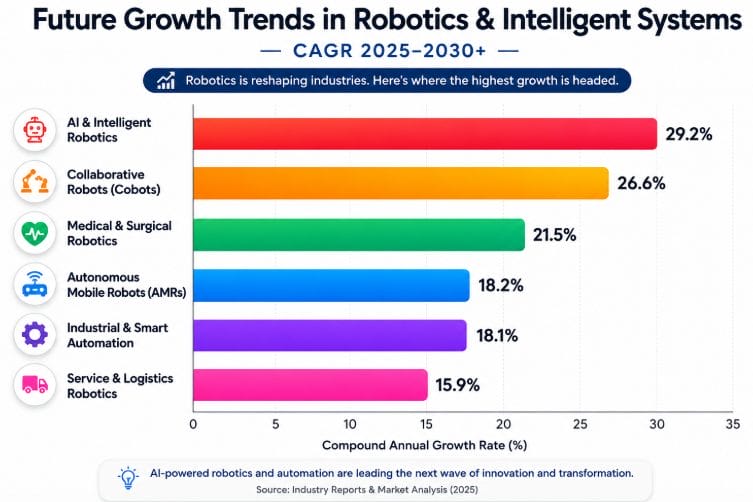
Industrial robots are highly effective for programmed tasks, but new generations use AI to provide greater flexibility in different situations. While cobots emphasize safety when working alongside humans, humanoids strive for versatility in various environments in contrast to robotic arms that can work only in certain environments. The speed of development for service and mobile robots exceeds that of traditional industrial robots because of physical AI.
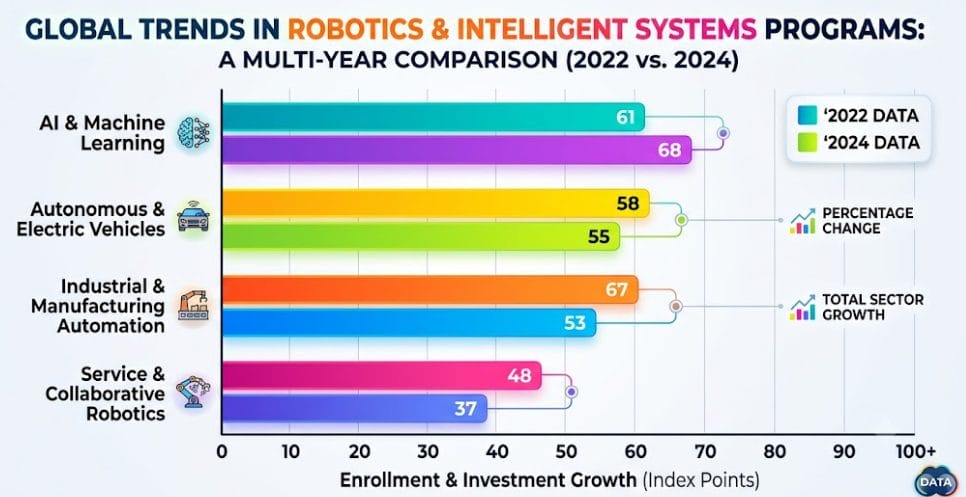
Predictive AI in robotics, particularly for maintenance and behavioral forecasting, is expanding rapidly. The market is projected to grow significantly (e.g., from around USD 4.87 billion in 2024 to USD 19.9 billion by 2034 at ~15% CAGR in one forecast), driven by reduced downtime, optimized performance, and data-driven decision-making in industrial and service applications.
There is considerable growth in the industry of robotics and intelligent systems, with the global market for intelligent robotics growing from about USD 14 billion in 2025 to approximately USD 50 billion in 2030 at a CAGR of 29%.
The humanoid robots are among the segments with the highest growth rates, as the cumulative sales are predicted to surpass 100,000 units by 2028, with potential market values measured in trillions of dollars by mid-century due to reduced cost and improved performance.
Robot installations will continue to increase as the number of service robots and mobile robots will outperform the conventional industrial robots in terms of quantity, while the general-purpose robotics segment may have the potential to achieve a market value of hundreds of billions by 2040. Meanwhile, China will continue to dominate the segment of installed industrial robots, providing more than half of the total global installations, while the number of physical AI devices, including robots, cars, and drones, will be counted in tens of millions until 2035.
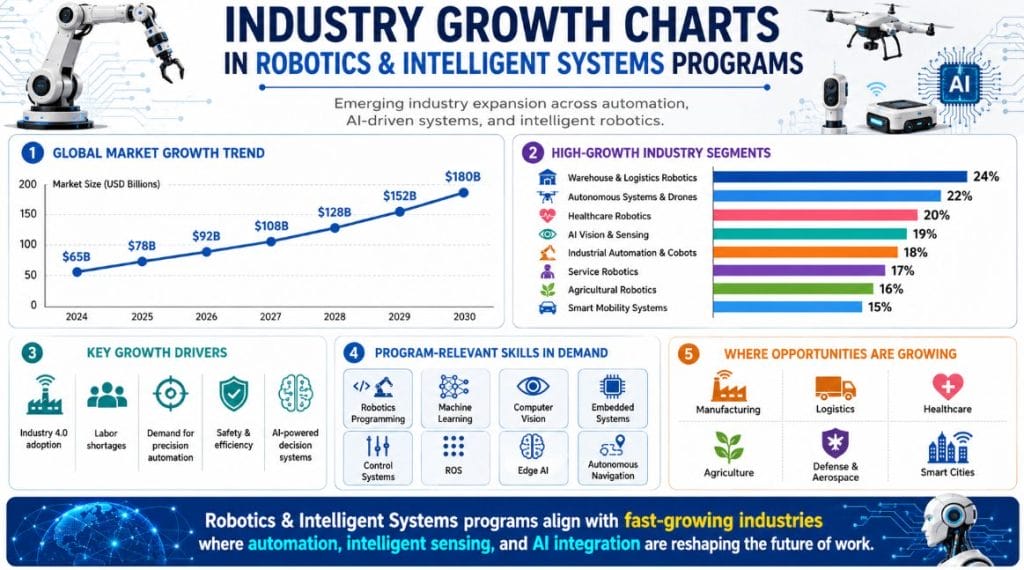
The future technologies include physical AI, embodied intelligence, digital twin technologies, behavior of robots through generative AI, advanced actuators/sensors, and swarms enabled by 5G and 6G technologies. The smart industries such as manufacturing, logistics, healthcare, and agriculture will embrace autonomy and collaboration in robot systems, predictive maintenance, and sustainability in robotics.
AI allows robots to move from programmed machines to self-adapting, learning machines that can perceive their environment, make decisions, and generalize. AI reduces the gap between simulation and reality, allows context intelligence, increases efficiency (reports suggest up to 40 percent improvement), and allows predictions to be made. While there are challenges like safety and ethics involved, AI advances innovation and flexibility.
Automation is rapidly increasing its scope from repetitive factory work to more sophisticated and unstructured surroundings through the use of cobots, mobile robots, and humanoids. It helps overcome labor scarcity issues, increase accuracy in healthcare/logistics, and is sustainable. The RaaS model makes the adoption of robotics easy, and artificial intelligence (AI) increases the accessibility in SMEs and other unconventional industries.
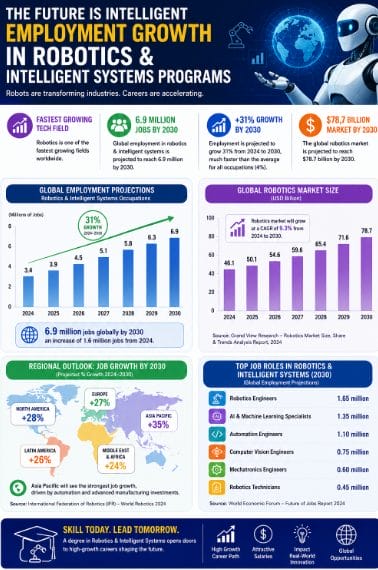
The demand for professionals specializing in robotics and intelligent systems is still high because of the shortage of talent in the field. They enjoy competitive salary levels (sometimes beginning at $80K+ US, with even better opportunities for mid-career), and also there is continuous expansion in the number of jobs that combine AI skills. Growth in the number of engineering jobs incorporating AI technologies is predicted.
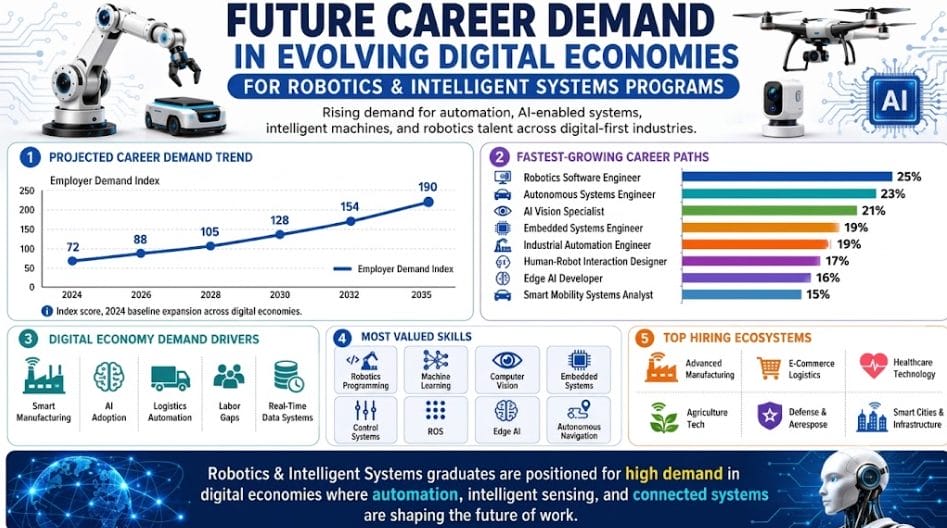
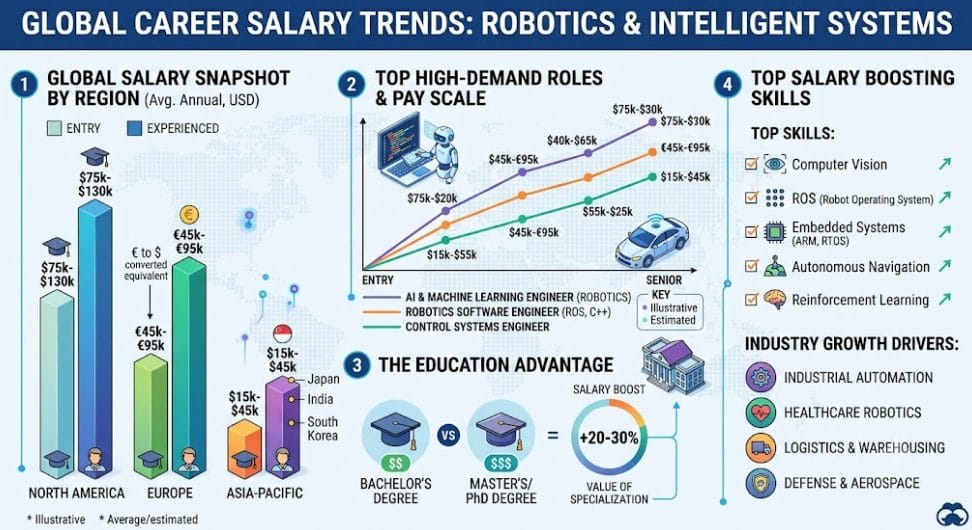
An intelligent systems and robotics degree prepares students with the technical knowledge necessary to secure dynamic robotics careers. Careers with a degree in intelligent robotics include robotics engineer, autonomous systems engineer, robotics programmer, computer vision engineer, embedded systems engineer, automation technologies engineer, and machine learning and robotics engineer.
Companies in the manufacturing industry, health care sector, automobile industry, aerospace, logistics, defense, agriculture, and smart infrastructure are always looking for candidates with a robotics engineering degree, industrial robotics degree, or automation engineering degree.
With artificial intelligence, intelligent systems, autonomous systems, and smart systems engineering revolutionizing many industries, having an education with a bachelor’s degree in intelligent systems and robotics or intelligent robotics or for that matter any artificial intelligence degree will empower the workforce to get futuristic jobs. Hence, each student is encouraged to create impressive portfolios through projects, internships, and research experience at AIU.


Begin Your Journey!
AIU’s Summer of Innovation and Growth gives you the ability to earn up to $5000 in tuition credit by completing free lessons and courses.
Whether you’re looking to acquire new skills, advance your career, or simply explore new interests, AIU is your gateway to a world of opportunities. With free access to 3400 lessons and hundreds of courses the ability to earn credits and earn certificates there’s no better time to start learning.
Join us today as a Guest Student and take the first step towards a brighter, more empowered future.
Explore. Learn. Achieve.
The freedom of academic research and open curriculum in AIU facilitate a bachelor of robotics and intelligent systems degree by giving students the flexibility to study in accordance with their career objectives, through a personalized curriculum. The bachelor of robotics and intelligent systems degree includes artificial intelligence, machine learning, robotics engineering, and intelligent systems along with the skills of robot programming, computer vision, embedded systems, and automation technologies.
For any bachelor in robotics and intelligent systems, bachelor in AI and robotics, and robotics engineering bachelor’s degrees, there is an option for specialization in autonomous systems engineering, robotic systems engineering, smart systems engineering, or industrial robotics bachelor’s degree.
An intelligent robotics program also strengthens expertise in artificial intelligence and robotics, preparing graduates for diverse robotics engineer jobs, robotics careers, intelligent systems careers, and advanced research. This flexible robotics degree, robotics and AI degree, automation engineering degree, and intelligent systems degree equips learners to innovate in autonomous systems and emerging technologies while building future-ready technical expertise.
The Bachelors in Robotics and Intelligent Systems at AIU is an ideal choice for those looking for a future-oriented robotics and intelligent systems degree which is both flexible and innovative. The bachelor of robotics and intelligent systems program features self-paced learning, customized curriculum through curriculum builder tool, and AI-driven education giving learners the option to study topics of interest including artificial intelligence and robotics, machine learning and robotics, computer vision, embedded systems, robot programming, and automation technologies.
The interdisciplinary approach taken by AIU includes robotics engineering, autonomous systems engineering, smart systems engineering, and industrial robotics degree programs that will prepare students for careers in the field of robotics, robotics engineering positions, and intelligent systems. Learners acquire knowledge in robotic systems engineering, automation engineering degree subjects, intelligent systems, autonomous systems, and artificial intelligence thanks to the globally oriented learning experience provided by AIU.
Core courses in a bachelors in robotics and intelligent systems combine theory and hands-on learning for future innovators. A robotics and intelligent systems degree or bachelor of robotics and intelligent systems covers robotics engineering, artificial intelligence, machine learning, computer vision, embedded systems, robot programming, and autonomous systems. Students also explore automation technology, smart systems engineering, robotic systems engineering, and autonomous systems engineering while building practical projects.
An AI and robotics degree, robotics and AI degree, automation engineering degree, industrial robotics degree, intelligent systems degree, or intelligent robotics program prepares graduates for diverse robotics careers and intelligent systems careers across manufacturing, healthcare, logistics, and autonomous mobility. Whether pursuing a robotics degree, robotics engineering degree, or bachelor’s in robotics, learners develop advanced technical expertise in artificial intelligence and robotics, machine learning and robotics, and intelligent automation through academic resources and AIU tools, creating strong foundations for rewarding robotics engineer jobs in rapidly evolving industries worldwide.
Master industry-relevant tools and technologies while pursuing a Bachelor’s in Robotics & Intelligent Systems, including ROS (Robot Operating System), Python, C++, MATLAB, TensorFlow, OpenCV, Arduino, Raspberry Pi, PLC programming, embedded systems, IoT platforms, computer vision frameworks, machine learning libraries, CAD software, simulation tools, and automation technologies for intelligent robotic applications.
Career-Focused Learning in Robotics & Intelligent Systems Programs equips students with practical technical skills, industry experience, and problem-solving expertise through hands-on projects, preparing them for careers in robotics, artificial intelligence, automation, consulting, entrepreneurship, and emerging AI-driven industries.
Gain hands-on experience in robotics engineering, automation, AI, and intelligent systems through practical projects, industry tools, and real-world applications that prepare you for high-demand technical roles.
Develop the technical, problem-solving, and innovation skills needed to create robotics products, AI-powered solutions, and technology startups.
Build expertise in programming, machine learning, computer vision, and cloud-based development tools that enable successful remote careers in global technology teams.
Learn to analyze business challenges, design intelligent automation solutions, and recommend robotics strategies for organizations across diverse industries.
Master emerging technologies such as artificial intelligence, autonomous systems, and intelligent robotics to thrive in the rapidly evolving digital workforce of the future.
AIU’s Bachelor of Robotics and Intelligent Systems deliver hands-on learning through portfolio projects, analytics case studies, AI model development, and industry-focused capstone experiences. The robotics and intelligent systems degree equip students with practical expertise in artificial intelligence and robotics, machine learning and robotics, computer vision, embedded systems, robot programming, and automation technology that enhances the student experience.
Throughout the intelligent robotics program, learners design autonomous solutions, apply research methods, and build real-world applications in autonomous systems engineering, robotic systems engineering, and smart systems engineering.
This AI and robotics degree strengthens technical and problem-solving skills that prepares the students for robotics engineer jobs, robotics careers, and diverse intelligent systems careers. Whether pursuing a robotics engineering degree, industrial robotics degree, automation engineering degree, or a robotics and AI degree, students graduate with a professional portfolio that demonstrates practical innovation and career readiness.
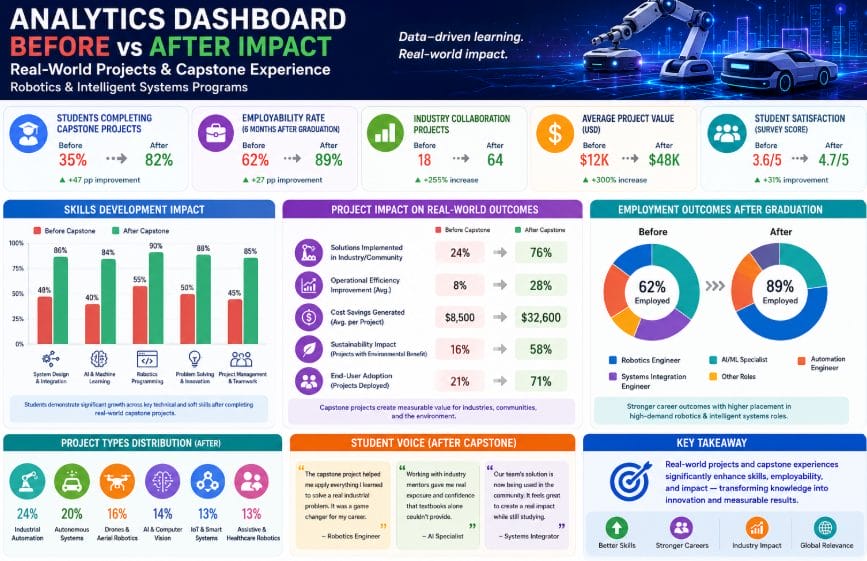
Research projects and innovation are at the heart of a bachelors in robotics and intelligent systems, giving students hands-on experience with emerging technologies. A robotics and intelligent systems degree combine artificial intelligence, machine learning, computer vision, embedded systems, and robot programming to develop advanced autonomous systems for real-world applications in a unique and unrepeatable way. Through a program of intelligent robotics, students gain insight into robotic systems engineering, automation technology, and smart systems engineering, thus paving the way for conducting advanced research on the frontiers of medicine, industry, agriculture, and mobility.
A bachelor of robotics and intelligent systems, also known as a robotics engineering degree, AI and robotics degree, robotics and AI degree, or automation engineering degree, equips graduates with the technical expertise needed for robotics engineer jobs and diverse robotics careers. Whether pursuing an industrial robotics degree, intelligent systems degree, or specializing in autonomous systems engineering, students gain the innovation skills required for exciting intelligent systems careers in the rapidly evolving world of artificial intelligence and robotics.

In the final stage of the Robotics & Intelligent Systems Programs course at AIU, students are presented with a unique chance to demonstrate their proficiency and creativity through an extensive thesis proposal. This critical stage marks the culmination of their journey, providing a venue to delve into complex topics within the curriculum.
The thesis defense, a fundamental element of the program, enables students to exhibit their research abilities, analytical thinking, and literary knowledge, highlighting their preparedness to make significant contributions to the field after graduating from AIU.
An education in robotics and intelligent systems presents an amazing opportunity for innovation, cooperation, and hands-on learning experience. Robotics and intelligent systems degree cover artificial intelligence, machine learning, computer vision, embedded systems, robotics programming, and autonomous systems engineering that will help students get prepared for practice. With the help of the innovative virtual campus, students enrolled in bachelor of robotics and intelligent systems degree can interact with professional faculty, use virtual laboratories, work on global projects, and get practical experience in automation technology and robotics engineering.
In addition, the curriculum for the AI and robotics degree includes machine learning and robotics, intelligent systems engineering, and intelligent systems applications. Regardless of the choice of the specific major – robotics engineering degree, robotics degree, or automation engineering degree – students get equipped with all necessary skills to enter robotics engineer jobs, various robotics careers, and future intelligent systems careers with continuous support from career center.
AIU transforms virtual learning through an interactive academic ecosystem featuring twice-daily live classes, an extensive archive of 700+ recorded sessions, 3,400+ complimentary mini-courses, and over 2,000 assignments and projects. Led by experienced faculty and industry professionals, these sessions encourage real-time discussions, collaborative problem-solving, and personalized feedback, enabling students to tailor their educational journey. Beyond academics, AIU fosters global networking by connecting learners, researchers, and professionals from diverse countries, creating opportunities for cross-cultural collaboration, knowledge exchange, and lifelong professional relationships.
AIU’s international symposiums further strengthen this global community by showcasing innovative research, promoting interdisciplinary dialogue, and encouraging collaborative projects. Students selected to present gain international recognition, expand their professional networks, and engage with experts worldwide. As Guest Students, learners can earn certificates, develop in-demand skills, and receive up to $5,000 in tuition credit by completing five eligible mini-courses and/or live classes, opening pathways to academic and career advancement.
Feel free to glance through some of our recorded live sessions on related subjects.
At AIU, the Virtual Campus, on campus serves as an innovative center equipped with more than 25 specialized tools, all geared towards supporting and empowering students throughout their educational endeavors in real and digital world. Our newest feature, the Virtual Reality 3D immersive online learning and teaching experience here, elevates community engagement and interaction, nurturing growth, motivation, and inspiration among our diverse student population.
Also, AIU includes the leading Artificial intelligence (AI) teaching tools such as ChatGPT, Dall-E and Midjoruney, PDF Executive Assistance, Slide Generator Slide Generator plus others and is adding new AI tools to ensure students are fluent in this emerging trend in computer science and benefit from the major boost in productivity they bring.
Within our extensive online library, comprising 260,000 books and 30 million articles, journals, and peer-reviewed articles, alongside 109,000 resources co-curated by the AIU community, we establish an unmatched academic setting dedicated to fostering the growth, development, and success of our students.
The admission requirements for a Bachelor’s in Robotics and Intelligent Systems are high school graduation with good grades in Mathematics, Physics, and Computer Science. In addition to these basic requirements, many institutions require English proficiency, standardized test results, and a personal statement.
The major in Robotics and Intelligent Systems gives knowledge in artificial intelligence, machine learning, computer vision, embedded systems, robot programming, and automation technologies. At AIU, a student can either enroll in Bachelor of Robotics and Intelligent Systems or in AI and robotics or robotics engineering degrees because the curriculum usually involves such courses as robotic systems engineering, autonomous systems engineering, and smart systems engineering so that artificial intelligence can become an integral part of the higher education.
An intelligent robotics major or an industrial robotics degree will help you get the necessary skills to work in the field of robotics and intelligent systems. With knowledge in robotics engineering, autonomous systems, and machine learning and robotics, you will be eligible to apply for different jobs of robotics engineers.
To apply for the online Bachelors in Robotics & Intelligent Systems Programs at AIU, visit the official AIU website and navigate to the admissions section.
This flexible, self-paced program is ideal for professionals aiming to advance in Robotics & Intelligent Systems Programs.
AIU offers affordable online graduate programs and a wide range of scholarships to support your academic journey. Complete your information to explore scholarship opportunities and flexible monthly payment plans designed to fit your budget. With cost-effective tuition and quality education, AIU makes earning Bachelors in Robotics & Intelligent Systems Programs accessible, empowering you to achieve your academic, professional, and lifelong learning goals.
A Bachelor’s in Robotics and Intelligent Systems is an undergraduate program combining robotics, artificial intelligence, automation, machine learning, and embedded systems to develop intelligent technologies for real-world engineering and industrial applications.
A robotics and intelligent systems degree prepare graduates for careers in robotics engineering, automation, AI development, autonomous systems, manufacturing, healthcare, aerospace, research, and advanced technology innovation across industries.
Yes, robotics engineering is a rewarding career with strong demand, competitive salaries, and opportunities in automation, artificial intelligence, manufacturing, healthcare, defense, and autonomous systems across global industries.
A robotics degree opens careers as robotics engineer, automation engineer, AI developer, embedded systems engineer, robotics programmer, computer vision engineer, autonomous systems engineer, and machine learning specialist.
"*" indicates required fields