The Secret to How Human Memory Is Encoded
In 1953, Henry Molaison was operated in Hartford, Connecticut since he was plagued by debilitating epileptic seizures. It was in fact an experimental brain surgery that promised relief. The surgeons carefully removed parts of his medial temporal lobes, including the hippocampus. Although the procedure helped his seizures — but it took away his long-term memories.
For decades, Henry lived in a perpetual present. He could carry on a conversation which he used to forget immediately. He remembered his childhood vividly, yet he forgot the face of his doctor, whom he met daily for years.
Henry’s condition shocked the world of neuroscience and revealed something important – memory is not a simple, static recording of experience. It is an active process, dependent on specific brain systems, delicate chemical signals, and proper synchronization of neurons. His story was the first major clue in uncovering the secret of how human memory is encoded.
The Puzzle of Memory
Memory is so natural that we rarely think about it. Yet behind every memory is a miracle with biology’s most complex feats – the transformation of fleeting sensations into enduring knowledge. Encoding is the first and perhaps most mysterious stage of memory. It’s the process by which raw experience — light hitting your eyes, sounds vibrating in your ears, emotions surging in your chest — becomes information that your brain can store and retrieve. Without encoding, there is no memory. Without memory, there is no continuity of self.
From Forgotten Curves to Working Memory: A Brief History of Memory Research
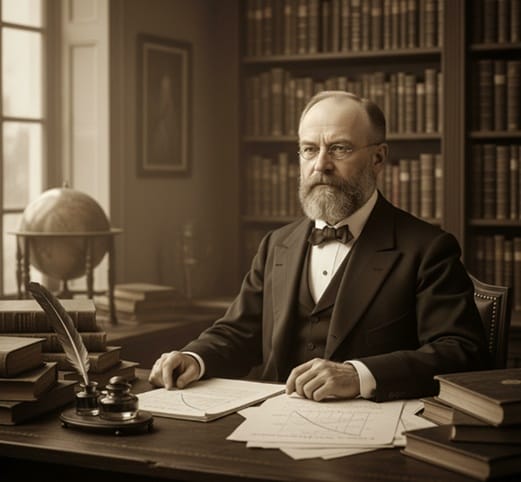
According to secondary research, the scientific study of memory did not begin with brain scans or modern psychology — it began with self-experiments. Hermann Ebbinghaus (1850–1909) is often called the father of memory research. Long before controlled lab studies became the norm, he used himself as a subject – laboriously memorizing lists of nonsense syllables to strip away the influence of meaning. Through the experiments, he discovered two of the most important principles of memory – the learning curve which defines how a person acquires new information and the forgetting curve, which reveals how quickly unreinforced memories fade. His experiments also showed that connecting new information to prior knowledge can help memorize things better. It is this finding that shapes the educational strategies today.
In the early 1900s – other pioneers expanded on Ebbinghaus’s foundation. Ivan Pavlov’s research on classical conditioning revealed that associations could be formed between unrelated stimuli that shapes memory. Again, Frederic Bartlett introduced the idea of schemas — mental frameworks that influence how we encode and recall information. He further added that people often reshape memories to fit prior knowledge, proving that memory is not a passive record but an active reconstruction.
Around the same time – the Gestalt psychologists proposed that perception and memory are influenced by context – the whole is more than the sum of its parts, and memories are shaped by how stimuli are organized – not just by the stimuli themselves.
By mid-century, the focus turned to the brain itself. In the year 1949 – Donald Hebb crystallized a principle that became a cornerstone of neuroscience – “neurons that fire together wire together.” His insight into how repeated activity strengthens neural connections provided a biological explanation for how memories are encoded at the cellular level.
In the cognitive revolution of the 1950s and 60s – researchers began to model memory like information processing in computers. For example – George Miller discovered that short-term memory is constrained to about seven items, plus or minus two. This discovery further inspired psychologists Alan Baddeley and Graham Hitch to introduce the working memory model in 1974 – a central part that directs attention, a phonological loop for verbal and auditory information, and a visuospatial part for images and spatial data. This model was again expanded by Baddeley in 2000 by adding the episodic buffer – a temporary store that integrates information across systems into coherent episodes. Together, these pioneers transformed memory from a philosophical curiosity into a rigorous science – setting the stage for today’s neuroscience.
How the Brain Encodes Experience
The Gatekeepers: Attention and Perception
Encoding begins with attention. The brain is bombarded with millions of sensory inputs every second. Yet only a fraction makes it past the filter of attention. The prefrontal cortex acts as the gatekeeper – deciding what matters. When an individual focuses intently on a lecture or a conversation, the brain becomes aware that it is important, encoding is required.
The Archivist: The Hippocampus
Once information is flagged as important, the hippocampus steps in. It acts like a temporary holding system, binding together the sights, sounds, and emotions of an event into a unified memory trace. Without the hippocampus, as in Henry Molaison’s case – new experiences cannot be transformed into long-term memory.
The Amplifier: The Amygdala
But not all memories are created equal. Emotion acts as an amplifier. The amygdal -, an almond-shaped structure near the hippocampus, tags emotionally charged experiences for priority encoding. That’s how a person remembers what they want to remember.
The Engram: A Neural Footprint
The result of this process is what scientists call an engram — the physical trace of a memory embedded across neural networks. An engram is not a single “memory cell” but a distributed pattern of activity across thousands of neurons. Each memory is like a symphony, arising from the coordinated firing of an orchestra of brain cells.
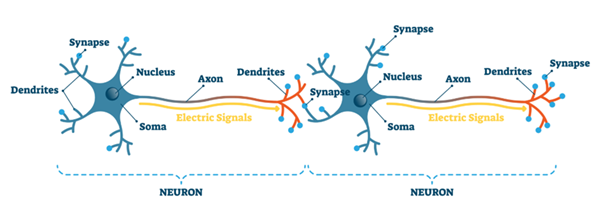
The neurotransmitters cross the synaptic cleft and bind to receptors on the receiving neuron.
Source: SimplyPsychology
The Language of Memory: Synaptic Plasticity
At the microscopic level – memory encoding boils down to communication between neurons. Neurons don’t touch; they communicate across tiny gaps called synapses using bursts of chemicals called neurotransmitters. When one neuron activates another repeatedly – the synapse strengthens. This is synaptic plasticity. It is the brain’s remarkable ability to rewire itself.
According to secondary research, long-term potentiation (LTP) ensures that each time the same information is identified – the path is activated. Over time, repeated activation can lead to structural changes such as – new dendritic spines sprout on neurons, networks get reorganized, and the entire circuit shifts. Hence, it can be said that learning physically reshapes a person’s brain.
Why We Remember Some Things and Forget Others
Despite its brilliance, memory encoding is far from perfect. Forgetting is not a flaw – it is a feature that allows the brain to prioritize meaningful information.
- Encoding failure occurs when information never makes it past attention filters.
- Decay happens when unused memory traces weaken over time.
- Interference arises when new memories overwrite or compete with old ones.
- Retrieval failure explains why the memory exists but remains temporarily inaccessible — the classic “it’s on the tip of my tongue” moment.
Interestingly, some memories are too strong. In conditions like PTSD, traumatic experiences are encoded so powerfully that they intrude repeatedly, refusing to fade.
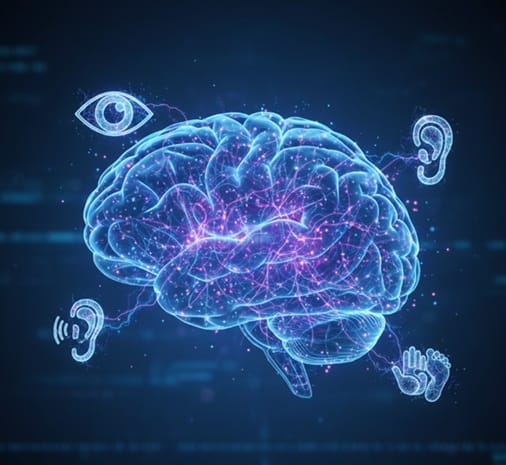
A symbolic human brain with glowing neural connections
How to Hack Memory Encoding
If encoding is the key to memory, can it be improved? Research suggests yes.
- The brain retains concepts better than raw data. Connecting new information to what already exists creates stronger engrams – making it meaningful.
- Combining visual, auditory, and even motor cues strengthens encoding.
- Narratives and feelings give information a powerful encoding boost.
- Again, during deep sleep, the brain “replays” the day’s experiences, consolidating them into long-term storage.
- The spacing effect — revisiting information over intervals helps.
These techniques don’t just help students; they’re tools for anyone wanting to remember names, master skills, or preserve meaningful experiences.
The Future: Can We Control Memory Encoding?
Modern neuroscience is beginning to move beyond observation into intervention. In lab experiments, scientists have implanted false memories in mice by activating specific engrams. Others have erased or suppressed traumatic memories by targeting the molecular processes of encoding.
This raises profound ethical questions. Could we one day selectively delete painful memories? Enhance learning by boosting synaptic plasticity? Store knowledge directly in the brain through brain-computer interfaces? The frontier of memory research is both exciting and unsettling — a reminder that memory is not just a personal experience but a deeply biological process that science may one day reshape.
The true secret of memory encoding is that it is not just about storing the past. It is about shaping the future. What you attend to today, what you feel deeply, and what you practice repeatedly will become the scaffolding of tomorrow’s self.
If this article triggers curiosity about how the brain stores, retrieves, and even reshapes our memories, then AIU offers a list of Mini courses, Blogs, News articles and many more on related topics that one can access such as:
AIU also offers a comprehensive array of recorded live classes spanning various subjects. If any topic piques your interest, you can explore related live classes. Furthermore, our expansive online library houses a wealth of knowledge, comprising thousands of e-books, thereby serving as a valuable supplementary resource.
Reference
Reminder to our Dear Students,
Please ensure you are logged in as a student on the AIU platform and logged into the AIU Online
Library before accessing course links. This step is crucial for uninterrupted access to your learning
resources.