
- RESEARCHDistance Learning at AIU is enhanced by vast academic resources and innovative technologies build into the Virtual Campus: Hundreds of self-paced courses with video lectures and step by step lessons, thousands of optional assignments, 140,000 e-books, the Social Media & Networking platform allowing collaboration/chat/communications between students, and MYAIU develop students holistically in 11 areas beyond just academics.
- PROGRAMS OFFERED
- Areas of Study
- Courses and Curriculum
- Open Courses
- Register for a Program
- Associate Program
- Associate in Addiction Counseling
- Associate in Agriculture Food And Resources
- Associate in Anti Terrorism Security
- Associate in Behavior Analysis In Special Education
- Associate in Bioethics
- Associate in Climatology
- Associate in Cultural Theological Communication
- Associate in Culinary Arts
- Associate in Ecotechnology
- View all Associates Programs
- Bachelor Program
- Bachelors in Community Development
- Bachelors in Environmental Science
- Bachelor in Education (B.Ed, BS)
- Bachelors in Economics
- Bachelors in Entrepreneurship
- Bachelors in Financial Administration
- Bachelors in Human Resource Management
- Bachelors in Linguistics
- Bachelors in Nutritional Science
- Bachelors in Occupational Health and Safety
- Bachelors in Psychology
- View all Bachelor Programs
- Doctorate Program
- Doctor | of Biology (PhD)
- Doctorate in Business Administration (DBA, PhD)
- Doctor of Economics (PhD)
- Doctor of Electrical Engineering (D.Sc, PhD)
- Doctor of Finance (PhD)
- Doctorate in International Relations
- Doctorate in Information Technology (D.Sc)
- Doctor of Legal Studies (PhD)
- Doctor of Project Management (PhD)
- Doctor of Sociology (PhD, D.Sc)
- Doctorate in Sustainable Natural Resources Management
- View all Doctorate Programs
- Master Program
- Postdoctoral Program
- Postdoctoral in Animal Science
- Postdoctoral in Anti Terrorism Security
- Postdoctoral in Behavior Analysis In Special Education
- Postdoctoral in Bioethics
- Postdoctoral in Blockchain Technology and Digital Currency
- Postdoctoral in Business Management
- Postdoctoral in Cloud Computing
- Postdoctoral in Computer Engineering
- View all Postdoctoral Programs
AIU offers a wide range of majors in areas including the Arts, Business, Science, Technology, Social, and Human studies. More than 120 degrees and programs are available for adult learners at the associate’s, bachelor’s, master’s, doctoral and postdoctoral level. - VIRTUAL CAMPUS
Distance Learning at AIU is enhanced by vast academic resources and innovative technologies build into the Virtual Campus: Hundreds of self-paced courses with video lectures and step by step lessons, thousands of optional assignments, 140,000 e-books, the Social Media & Networking platform allowing collaboration/chat/communications between students, and MYAIU develop students holistically in 11 areas beyond just academics.
- ALUMNI
The world is YOUR campus!”, that is the message of AIU’s month magazine Campus Mundi. Hear the voices and see the faces that make up AIU. Campus Mundi brings the world of AIU to you every months with inspirational stories, news and achievements by AIU members from around the world (students and staff are located in over 200 countries).

A Guide to AI Agents: Capturing Relationships, Processes, and Roles
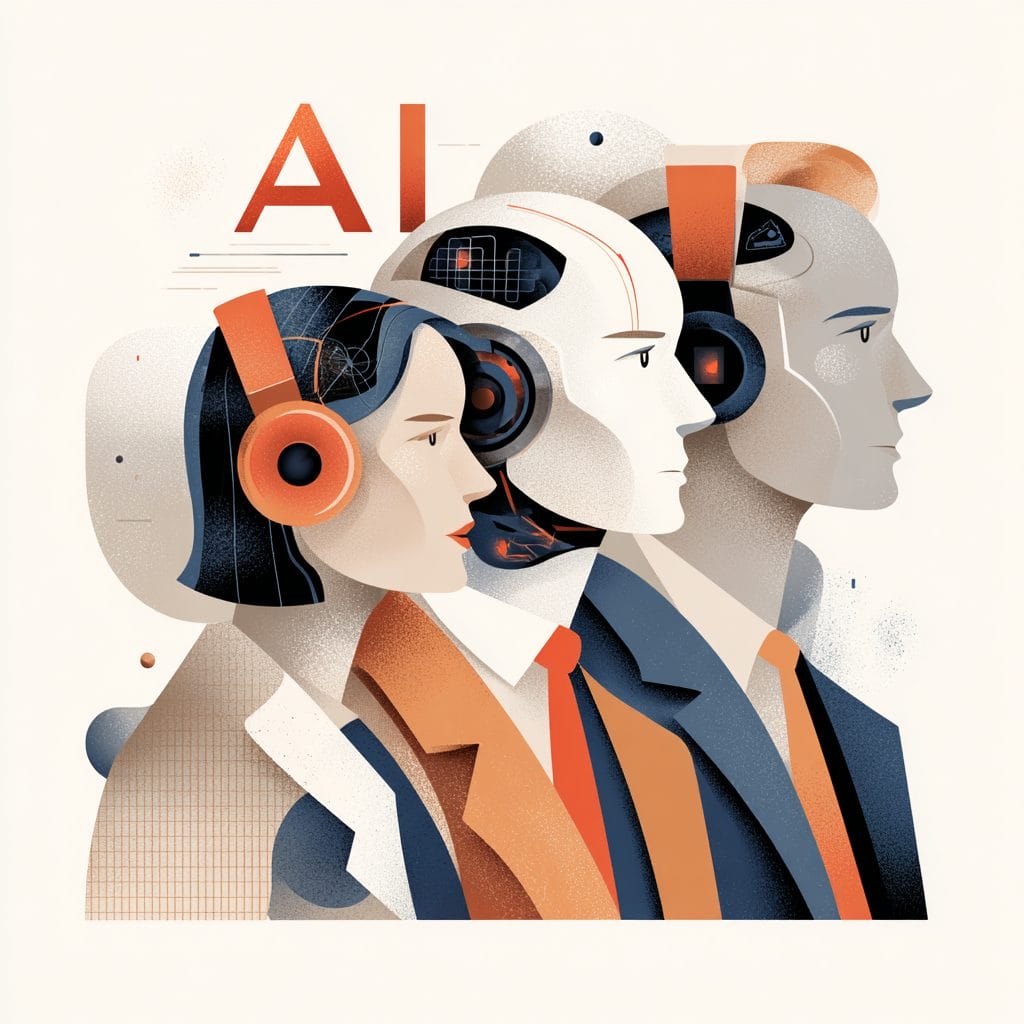
How can adopting multi-agent systems potentially impact organizational workflows, or what barriers may exist to facilitate wide-spread implementation across different sections/departments of an organization?
How might human roles change while engaged in human- AI agent collaboration, and what would be the positive implications of that in relation to decision-making and productivity?
How can organizations manage to maintain AI agents that are flexible, adaptable to change, resilient, and perform ethically to standard organizational work or operational model?
We invite you to write an essay in which you analyze the ideas expressed in the article, by closely examining the design, implementation and implications of AI agents to the organization today. As such, in preparation for your essay, please consider the implications of capturing processes, roles and relationships on the effectiveness of those multi-agent systems, not limited to the described examples in the article, and balancing between humans as decision-makers versus agent/machine autonomy, in either real organizational examples or theoretical examples of your own. The expectation is the essay addresses more than simply an explanation of the technology, evaluation & the writing relates back to the implications for the future of work.
(Login to your student section to access the AIU Additional Resources Library.)
A Guide to AI Agents: Capturing Relationships, Processes, and Roles
Artificial intelligence, or AI, has transcended its status as research lab or experimental demo fodder. It constitutes the heart of how businesses and societies function. AI drives chatbots that provide instant responses in customer support, orders automation to improve supply chains, generates cubits of software code in seconds, and alerts us to patterns in the data so organizations make strategic decisions. These usages, however, only scratch the surface. The disruption arises from AI Agents—intelligent systems that perform reasoning, take action, and work with human beings and agents alike. Unlike tools that provide one-off actions, agents can dynamically act within workflows, naturally adapting and coordinating like teams of humans do.
“Getting Started with AI Agents” series looks at one of the most significant (and often overlooked) first steps in the process of designing multi-agent systems: capturing processes, roles, and connections among members of organizations. As each stage is critical, to ignore process capture would be tantamount to creating individual islands of intelligence within organizations— they may be helpful, but not integrated. Conversely, if you plan for this type of capture, your agents become the digital glue that binds workflows together while connecting people, data, and decisions.

From Generative AI to Agents
The Generative AI Paradigm
Generative AI, exemplified by models like GPT, Stable Diffusion, or Claude, is built around one central capability: pattern-based prediction. When you ask a generative model to produce code, text, or images, it looks at its training data and predicts what comes next.
- Strengths: Fluency, creativity, wide knowledge coverage.
- Limitations: Lack of persistence, inability to act beyond output, and no self-corrective loop.
For instance, if you ask a generative AI model to create a database schema, it will generate SQL code. But if that schema fails when executed, the model itself has no memory or reasoning process to iterate without further prompting.
Introducing the AI Agent
The AI agent has one important distinction: it closes the loop. As opposed to simply latching a decision when it generates output, it performs an operation in a tool, API, or digital environment and observes the result of the action. And it will reason if the outcome was a success or failure and will change its behavior.
Expanding on the notion of a coding agent. The agent will not only produce code, but will execute that code in a container system, check the output, and then update its work until the requirements are correct. This is similar to how a human developer would work – trial, error, checking, and refining. You begin to have not just intelligence, but a responsive form of problem-solving, in which the system builds on its work, learning at each episode.
The Importance of the Change
Generative AI is comparable to a simple calculator: it can provide answers to questions, but it has no idea what to do with the answer. Agents are not really like a calculator—they are more akin to interns or coworkers: they take action, iterate and collaborate. This difference makes agents much more effective in organizational environments where there are many steps of action amongst different workers and/or stakeholders and when things need to adapt.
Why Agents Need to Communicate
The Challenge of Silos
Most organizations use a disaggregated digital infrastructure: HR, Finance, IT, Marketing and Operations use different tools. Each has its own database, interface, and search engine. This creates obstacles to efficiency:
Within many organizations today, employees routinely find themselves re-entering the same query across multiple systems. They may start by entering a term on an intranet search engine, and then proceed to the HR portal, where they flip through pages and try to find a guest on a finance dashboard, then flip back down again, then create an IT ticket, repeating the same calling effort for each system. In this fragmented world, data is siloed, decision-making is sluggish, and workflows are brittle, depending too much on people handing information back and forth in manual processes between separate systems.
The answer is multi-agent communication. Instead of treating each system as its own silo, consider where each department’s system platform is represented by its own intelligent agent. An HR agent has the power to overview an employee’s records, a finance agent can do reimbursement requests, an IT agent manages the ticket for support, and a marketing agent can collect campaign analytics. Rather than the user needing to interact with the system individually, we have a top-level orchestrator agent that manages the communication with all of its underlying agents. The coordinated information each specialized agent will pass back to the top agent for its consolidated return response to the user.
For example, if an employee says, “Show me my pending reimbursements and my IT tickets,” in traditional systems, the employee would need to log in to two different portals, within multiple systems, to obtain the same information. But within this multi-agent model, if that employee asked, the orchestrator (agent) would automatically ask the finance agent to do active retrieval for reimbursement data and also an IT agent to active retrieval for the open tickets, and then present them both into the one output. For the employee, it feels like they just interacted with a single intelligent assistant concerning their needs, but it was ultimately multiple systems under the orchestration and communication of the user agent acting.
The benefits of this multiple agent modeling are vast. The user can ask a question without repeating it multiple times in multiple systems, thus representing seamlessness of interaction. Accordingly, now staff are not miscommunicating or getting less credibility from the resulting data, that each agent system can reference each other’s information request in the real time of being asked. Additionally, this form of agent system is much easier to scale. For example, if someone needs to add a department to the systems, such as a new department or a new system-based tool, but all they do is add a new agent to the network that addresses each specific function or agent, and the reality of this system is also very resilient; therefore, there is redundancy on the response. If one agent is unable to get to a specific answer, the other systems will keep operating in the same process, and there will always be a result, or value, provided to the user.
What is so powerful is that this is also the exact way humans collaborate at work. We know that each person does not know everything in the work-place, we rely on someone with specific expertise to answer a question, or provide some input on specific portions of a task. Likewise, agents increase their utility as they provide responses working with one another. Individual agents act together in collaboration, by one another’s unique abilities, to represent the sumtotal of the agent’s representative intelligence, which adds valuable to the user experience that is far better than participating in an individual system.

Advantages of Multi-Agent Systems
1. Increased Productivity
Instead of relying on humans to create traffic jams by taking too long to access information manually or repetitively asking the same questions, agents can take the burden of batching and organizing the work. Thus, there is a method for humans to do the more complicated and “value-added” work of “thinking” – things like strategy, creativity, and decision-making.
2. Operational Resilience
In a traditional pipeline system, if one single workflow breaks, then the work has stopped, or you have to work around or redesign. In theory in a multi-agent system when the work of an agent breaks, the work of all other agents continues and just one agent updates or restarts.
3. Faster Upgrading and Modularity
Multi-agent systems are like a micro-services architecture in software. Each agent is modular, and agents can be replaced, or agents can be improved without breaking the entire system. This allows for the evolutionary testing and iteration of any agent while keeping the rest of the agent network intact.
4. Better Human-AI Collaboration
Multi-agent systems do not replace humans; they change the role of humans in the system. No longer are humans the only authorizers; they become the supervisors or validators or “up-chain” authorities who authorize the work being completed especially for important tasks compliance checks, security, or ethical impacts.
5. Organizational Intelligence
Over time a network of agents will build up an institutional memory and make an organization smarter and adaptable to its environment.
Obtaining the Organization and Its Roles
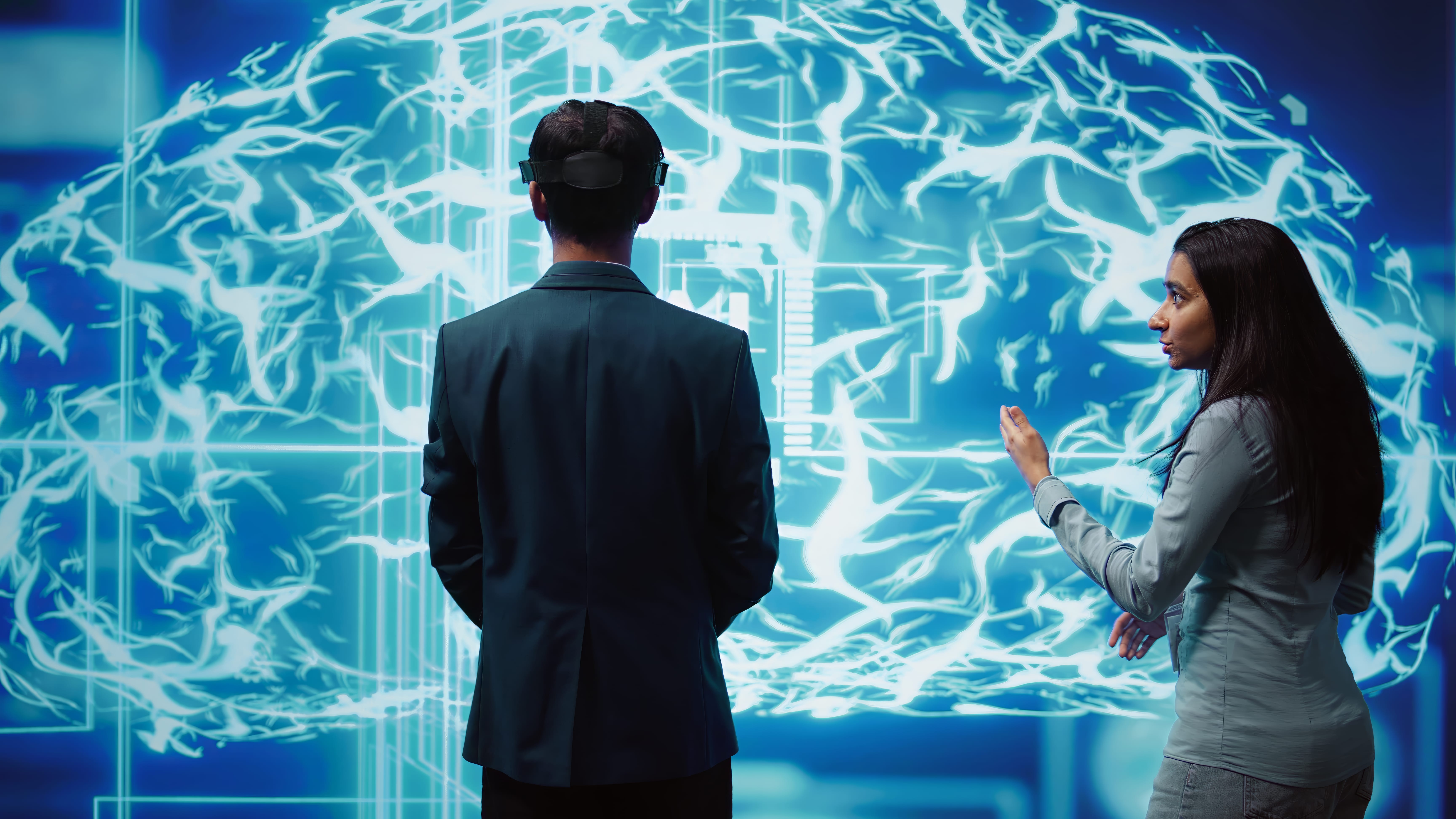
Developing multi-agent systems leads naturally to designing org charts first, but org charts are static, hierarchical depictions of work, while work itself is much more dynamic. In the long run, an employee may work as a project manager in one workflow, a reviewer in the next, and play a supportive role in yet another workflow. The same can be said for software tools that can serve multiple purposes depending on the workflow context. The organization captures how work gets done by depicting workflows rather than reporting lines. Using this perspective provides a much closer representation of how the work that leads to productivity, in terms of tasks, responsibilities, and collaborations is actually being captured.
Capturing this activity requires some way documenting the processes that define what work looks like from day to day. Examples of daily processes can include onboarding a new employee, processing a reimbursement, or resolving a ticket. These processes help in defining and recording not just the process but the roles that the human, software, or agent will be implementing. More directly, the organization needs to define the links that convey who completed which tasks, and if any, are handing work off to someone else in the workflow. This fluid map of organizational activity will create the foundation for multi-agent systems as the agents are now encapsulating workflows, and doing so in meaningful ways.
Today, technology offers the ability to map workflows like never before. And we have previously discussed the virtues of process mining software and conducting interviews to record undertones and nuances. However, generative AI offers the prospect of effectively discovering workflows with tremendous speed. By providing the AI with one sufficient description of a company or industry, the generative AI can parse out the language and define roles, processes, and connections and output in hours a structured and augmentable definition of an agent network. This ultimately means it may take days instead of months to prototype agent ecosystems versus traditional analysis. Again, however, in all of the speed and capabilities presented by new tooling options, one design principle should never be overlooked as we design the agent network as a Directed Acyclic Graph, otherwise organizations run the risk of creating infinitely looping agents delegating tasks back to each other, and back again. In one case, if an HR agent delegated a query to a Finance agent, it is entirely possible for that Finance agent to pass the original query back to HR and now our HR agent is stuck processing requests that are linking back to itself. Enforcing a DAG structure keeps things stable and predictable; it is the same reason we don’t have a system called the “Infinite Loop.”
Agent Autonomy Calibration
Within the organizational setting, not all tasks should be automated to the same degree. The development of effective agents requires calibration of autonomy. In some domains—such as law, medicine, and finance—the risks of making errors are too great to permit agents to act autonomously. In these domains, agents can best support human professionals as advisors, with human professions responsible for the final decision-making. For example, an agent responsible for drafting contracts may propose clauses with final approval by a person legally trained to draft contracts.
Some settings look more like partial autonomy for agents. Agents may function autonomously with the understanding that they will escalate exceptions to human professionals. For example, an agent responsible for expense approvals may process approval for small items and then escalate medium refuge approvals to a manager for review. Fully autonomous agents are best, when in situations where speed:
Outweighs caution and an agent’s judgement is acceptable or required. An example of an agent performing full autonomy is an agent that monitors cloud services that spin up new servers automatically during a spike in cloud traffic. Finding the appropriate balance between zero autonomy, partial autonomy, and full autonomy is the best way to create a trustworthy multi-agent system and sustain adoption.
Co-building Specialized and Third-Party Agents
The AI application market is already crowded with specialized agents. For example, a coding agent, GitHub Copilot, provides support when coding specific programming languages. The example of legal AI refers to agents specifically designed to assist in reviewing legal contracts. Customer support bots are other examples of specialized agents. There are advantages to integrating third-party agents from an AI marketplace (e.g., Google Cloud AI), rather than recreating capabilities within the agent network you are building. Agents provide a wrapper to interact with third-party agents through APIs, admin support (i.e., file a form), and request a user-standardize input output format to analyze the modular node of specialized agents in the multi-agent agent application framework. This plug-and-play functionality will allow for improvement, reduce your time-to-market, and allow any integration of capabilities to be “future-proofed,” since you are not replacing the third-party agent, but simply integrating any new agent agency that a third party will provide.
Tools and Roles Inside Agents
Agents are not simply people solving problems—they need actual tools and capabilities. For example, a product manager agent might have a Kanban board act upon to promote a task being tracked, or an alerts agent sends real-time alerts to stakeholders. An intent agent will likely query a structured database—structuring the data and presentation itself would be a key capability for a database agent. Frequently, down-chain agents will also become the tool themselves allowing for modular and malleable opportunities for agents to work together. This propels the mindset of an agent ecosystem to a toolbox of generalized specialties and remarkable capabilities, and is now only dynamically orchestrated.
The Current State of Multi-Agent Systems
Current multi-agent systems, such as Microsoft AutoGen, serve as illustrations of the potential of what can be done. However, existing solutions are typically owned by the market (off the shelf) for reasons of scalability but present challenges because they are deployed as rigid, hard coded agents. As such, the more scalable approach is to build a model whereby down-chain agents are treated as tools, to extend the argumentation frameworks, and allow for outcomes through run-time semantic interpretation instead of being baked into the code. This last design builds an evolving (adaptable) agent as the organization evolves in its growth in response to how organizational roles, responsibilities, and workflows are evolving over time.
Furthermore, by anchoring agents in organizational processes, tuning for autonomy, purpose to tools, and design flexibility through distributed architectures, organizations can start to deploy multi-agent systems which can be considered more than automation. They can evolve to become ‘living,’ responsive networks which operate in much the same way a team of people would work, engaging, collaborating, and communicating. based on past building blocks of input-output formats.
Selecting a Suitable Agent Architecture
The architecture of a multi-agent system significantly influences its versatility and durability. A blackboard architecture consists of a centralized place where agents register their part, and a controller manages activities. While this is a simple, managed architecture; simple architecture means connections might be fragile because they depend on a single point of control and cannot adapt easily to dynamic environments.
The Asynchronous Agent-Oriented System Architecture (AAOSA), on the other hand, utilizes a distributed model, where agents decide for themselves if they are able to respond to a request, where they gather requirements, find down-chain agents to delegate a request, and elevate unmet requirements back up the chain. The architecture is robust and scalable and fits very well in today’s organizations, fitting the need of functionality under adaptability and survivability. Distributed is much more aligned with how organizations function, i.e., the responsibility is shared across networks, rather than being a singular point of responsibility positioned at the top.
Training Agents to Operate as AAOSA Participants
For agents to effectively operate in AAOSA, they need to undergo training, and construct prompts to think in the same manner as any other participant in a digital ecosystem. If an agent receives a request, he/she should first consider their tools and capabilities. If there is an inability to completely respond at that level directly, agents should query down-chain agents for their requirements, synthesize results and delegate. They should also continually be prepared to act in the capacity of being a down-chain participant when called upon by another agent. By being an automatic participant in a cooperative action, the agents transcend just the production of outputs; they are now collaborating, negotiating, and responding with flexibility as equals joined in a community.
TLDR: Establishing the Foundation for Organizations to be AI-Driven
Multi-agent systems are not simply stitching together technologies; they are the next evolution in organizations intelligence. At their core, multi-agent systems replicate the work dynamic in the way people collaborate, work together, and develop structure in ways of work processes in complex networks of roles, responsibilities, and work processes. By defining, understanding, and representing their collaborative dynamic, procedural processes, systems and connectives, leads to transformative value beyond automation.
Mirror Human Work: Multi-agent systems mirror work dynamics that would otherwise only be found in human teams and enhance one work type to provide, enhance, and optimize those processes digitally, thus retaining and providing human value. Taken together, agents are able to modify and command workflow tasks, communicate with each other in a similar fashion of how teams engage (collaborate), and together, support a human-based decision making process.
Increase Productivity: Organizations can seamlessly offload most productive work (dependent, distributed, and high knowledge transfer) to agents and elevate professionals to a more productive (higher and more strategic value) and improve quality of output across the organization.
Improve Resilience: Organizations are realizing new levels of operational resiliency as agent solutions will be more modularised and distributed. Consequently, if something fails (or has to be taken offline as part of a process update) the remainder of the operation will run unless this action is dependent on the micro-agent.
Adapt to Change: The adaptive nature of multi-agent frameworks are fluid. As a result the organisation can inject new tools and evolve to third-party systems to remain relevant with the financial and social change.
In short, multi-agent systems provide the precursor to AI-based organizations of the future—an uninterrupted organization that works seamlessly, spills, and scalable-two systems that are capable of constant learning, adapting, and growth. Organizations that begin to experiment with the multi-agent systems will be the applicable to thrive on the other token of the diversifying, digital/AI enabled world.
Shape the Future of AI with AIU
At Atlantic International University (AIU), we believe that innovation in technology and organizational design starts with education. We demonstrate this belief through our philosophy of andragogy, omniology, and purposeful learning. Our education model engages students in growing areas imaginable, such as AI agents, multi-agent systems, and digital transformation, while allowing them to set the path for their own education towards personal and professional goals.
When enrolling at AIU, you will receive:
- A flexible online learning environment for integrated professionals.
- Over 8244 learning components of AI tools, live classes, virtual labs, and 3824 mini-course options to explore topical and contemporary worlds.
- The ability to develop your own courses and research projects, aligned with ideas about shaping your own future.
- A global community of learners and professionals around innovation, sustainability, and human development.
If you wish to be part of building AI powered organizations and shaping the future for multi-agent systems, then AIU is the right place for you to further your learning goals. We hope you join us in establishing the intentions for the future ahead.
Take the next step today, becoming an AIU student and transforming your ideas to impact.
- AIU Reshaping AI
- Bachelors in Engineering
- Global Business Strategy
- New Digital Technology – AIU News
- Bachelors in Human Resources
- AIU Seminar on Digital Technology
- Robotics and Automation
- Support Your Online Study
- AIU Virtual Campus
- AIU Form
References
- Getting started with AI agents (part 1): Capturing processes, roles and connections
- Getting started with AI Agents and Multi-Agent Systems
- AI Agents
Reminder to our Dear Students,
Please ensure you are logged in as a student on the AIU platform and logged into the AIU Online
Library before accessing course links. This step is crucial for uninterrupted access to your learning
resources.
AIU Success Stories


Contact Us Today!
Begin Your Journey!
AIU’s Summer of Innovation and Growth gives you the ability to earn up to $5000 in tuition credit by completing free lessons and courses.
Whether you’re looking to acquire new skills, advance your career, or simply explore new interests, AIU is your gateway to a world of opportunities. With free access to 3400 lessons and hundreds of courses the ability to earn credits and earn certificates there’s no better time to start learning.
Join us today as a Guest Student and take the first step towards a brighter, more empowered future.
Explore. Learn. Achieve.