Sound Has Mass: A New Perspective on a Familiar Phenomenon
For most of us, sound is something ephemeral. Sound is something we hear – not something we touch. A voice across the room, the song of a bird, the thump of a bass drum – these are vibrations that travel through the air and fade into silence. But what if sound isn’t just a ghostly ripple in the atmosphere? What if sound actually weighs something?
It may sound like science fiction – but recent research dives deeper into physics suggesting a remarkable truth – sound has mass! That revelation is not just mind-bending – it could reshape our understanding of the physical world.
The Mystery of Mass and Waves
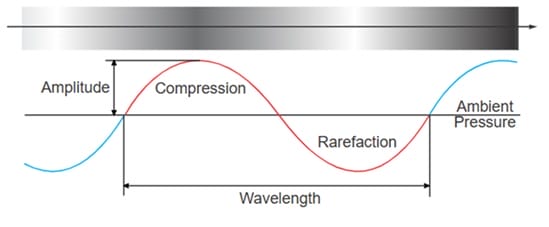
Let’s try to understand the basics first! Sound is a mechanical wave. It is a vibration that travels through a medium (like air, water, or solid materials) by displacing particles. Unlike electromagnetic waves such as – light or radio, sound needs something to travel through. That “something” moves slightly as the wave passes. However, it returns to its original position with time.
Traditionally, we’ve thought of sound as massless—it carries energy, sure, but not weight. After all, if you shout into a balloon and then weigh it, it doesn’t get heavier… right?
Not quite.
Physicists have started to explore the idea that waves moving through a material can carry more than just energy. They can carry momentum and, under certain conditions, exhibit characteristics associated with mass. According to secondary research, in 2018, Nicolis and Riccardo Penco from the University of Pennsylvania in Philadelphia proposed that sound waves do indeed carry a small amount of mass—albeit incredibly small.
Invisible sound waves creating visible ripples or weight on the environment
The Science Behind the Sound
Here’s where things get technical—but stick with me.
According to the research, when a sound wave moves through a medium, it actually drags particles slightly in its direction of travel. However, this subtle movement is not perfectly symmetrical – it creates a small net shift in mass. The team of scientists used quantum field theory – a powerful mathematical framework, to show that sound waves in solids (especially superfluids like helium-4) carry a tiny, but real, amount of mass.
How much? Well, a sound wave traveling through a cubic meter of superfluid helium can carry the mass equivalent of a few protons. That’s an incredibly small amount—far beyond what we could detect with current instruments. But the fact that it’s not zero is what makes it revolutionary.
According to secondary research, one of the key figures behind this research, Angelo Esposito (then a graduate student at Columbia), explained that “sound, in quantum field theory, is not just a wiggle in the medium—it’s a particle-like excitation that can interact with gravity.” That means sound isn’t just energy—it also interacts with spacetime, just like mass does.
Traveling wave
Source: Method behind the music
Sound and Gravity: A Thought Experiment
Let’s consider an imaginary scenario. You’re floating in space, holding a perfectly insulated box. Inside the box, you generate a powerful sound wave using a speaker. According to classical physics, nothing should happen—the box’s mass and momentum remain unchanged.
But quantum field theory says otherwise. That sound wave slightly increases the box’s effective mass. So, in theory – the box would be heavier than before and would even have a slightly altered gravitational pull. Hence, it can be said that sound is not just a vibration – it is a physical phenomenon that affects the mass-energy balance of a system.
Why Does This Matter?
It is natural to wonder how sound having mass can impact. Although the phone will not weigh more if one listens to music on it, but the implications are profound. First of all, this discovery challenges long-standing assumptions about the nature of waves and particles. It strengthens the connection between classical physics and quantum mechanics – offering clues about the fabric of reality. Secondly, during the formation of universe – sound waves (called baryon acoustic oscillations) rippled through hot plasma. Understanding the mass of sound can refine the perception of how galaxies are formed and how the universe expanded. Again, it can be used to detect properties of materials such as – superfluids or Bose-Einstein condensates – by measuring the tiny mass shift induced by sound waves. This showcases the fact that in the near future – we might develop ultra-sensitive mass detectors based on sound waves. Who knows? One day we might use sound to measure mass at the atomic level.
Sound Is More Than We Thought
Sound has always been a medium of expression – a carrier of emotion, and a thread that weaves through every human experience. But now, science shows us that it’s something even more meaningful – a bearer of mass, a shaper of physical reality. This discovery doesn’t just tweak our understanding of acoustics – it reshapes the boundary between energy and matter, between the intangible and the tangible.
In a universe governed by subtle balances – mass, energy, gravity, motion are realization that sound carries mass hints at a deeper unity. It suggests that even the smallest ripples in a medium echo through cosmos with physical weight. With technological advances and innovation – one can even relate sound to the realm of sensation. This can help to understand how to move through space and time and the true nature of reality.
If this article triggers curiosity about the nature of sound and its deeper connection to physics, then AIU offers a list of Mini courses, Blogs, News articles and many more on related topics that one can access such as:
AIU also offers a comprehensive array of recorded live classes spanning various subjects. If any topic piques your interest, you can explore related live classes. Furthermore, our expansive online library houses a wealth of knowledge, comprising thousands of e-books, thereby serving as a valuable supplementary resource.
Reference
Reminder to our Dear Students,
Please ensure you are logged in as a student on the AIU platform and logged into the AIU Online
Library before accessing course links. This step is crucial for uninterrupted access to your learning
resources.