Printing the Future: How 3D-Printed Meat from Stem Cells Is Revolutionizing What We Eat
In a world that is continuously alarmed with climate change, food insecurity, and the ethics of animal farming – a futuristic solution was long required. Thus, 3D-printed meat made from stem cells can revolutionize the way we think and plan our survival. Although it sounds like science fiction – but this cutting-edge innovation could redefine what it means to produce and consume meat.
Imagine a steak that didn’t come from a slaughtered cow but was printed, layer by layer, using real muscle cells, no animals harmed and with reduced greenhouse gas emissions. This isn’t just possible — it’s happening. And it may soon be the new normal.
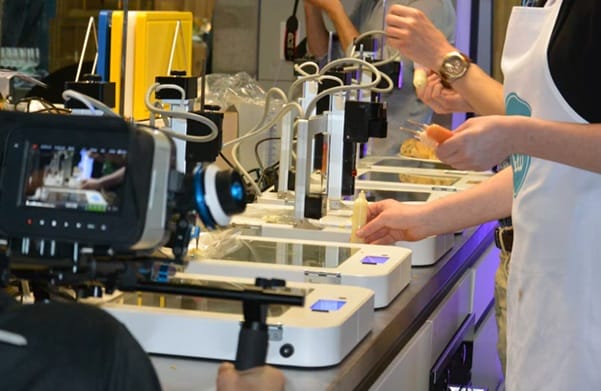
Printer creating food layer by layer
Source: MLA
The Science Behind It: From Stem Cells to Steak
Just as exciting the concept is – 3D-printed meat is a fascinating biological process. It begins with stem cells — the body’s raw materials capable of developing into various cell types. According to secondary research, in this case, scientists use muscle stem cells, often extracted painlessly from a live animal via biopsy.
These cells are placed in a bioreactor – a machine that simulates the environment inside an animal’s body. Fed with a nutrient-rich “culture medium” — typically made from amino acids, sugars, salts, vitamins, and growth factors — the cells proliferate and begin to differentiate into muscle and fat tissue.
Here’s where 3D printing enters the picture.
Using bioprinting technology, the cultivated cells are layered with edible bio-inks that mimic the texture and structure of animal muscle. These bio-inks can include scaffolds made from plant-based materials like alginate (from seaweed) or collagen (sometimes lab-synthesized). The printer constructs the meat in three dimensions — replicating not just a patty, but potentially even marbled steaks with intricate fat patterns.
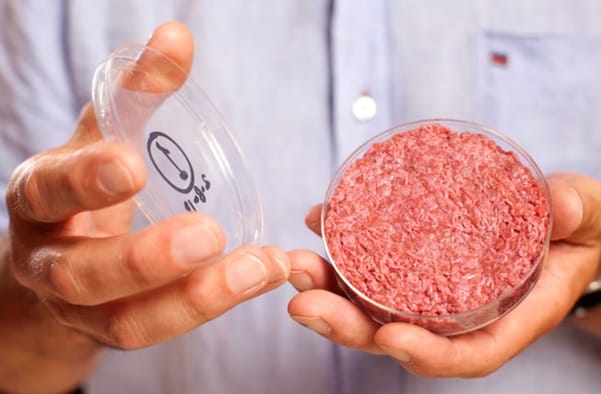
Meat without killing animas
Source: Mark Post
Why 3D-Printed Meat Matters
3D-printed meat technology comes with a promise to solve multiple global crises:
Climate Impact: Traditional meat production leads to – deforestation, methane emissions, and excessive water usage. According to the secondary research, livestock contributes to 14.5% of all anthropogenic greenhouse gas emissions. Now, this is where lab-grown, printed meat can reduce resource usage up to 90%. Further, it can also emit less gases – making it an ideal sustainable model.
Animal Welfare: Over 70 billion animals are killed for food each year – often in conditions that are inhumane. With 3D-printed meat, animal sacrifice can be controlled to only a handful for cell supply. This could lead to a paradigm shift in how we view food ethics.
Global Food Security: With climate change threatening agricultural stability, and populations rising – since we are heading towards 10 billion people by 2050, conventional meat production won’t be a sustainable option in the future. Lab-grown and printed meat offers a scalable alternative that can even be customized to meet regional nutritional needs.
Customization: Want a leaner cut? More omega-3s? Extra protein? – With 3D-printing, you can design your meat to suit your health or taste buds, much like ordering a custom coffee.
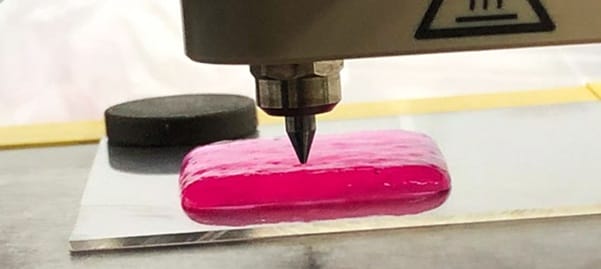
MeaTech 3D bioprinting a slab of real meat
Source: MeaTech
Who’s Leading the Charge?
Several pioneering companies are at the forefront of this technology. Here are few of them:
- Aleph Farms (Israel) – Known for producing the world’s first 3D-printed ribeye steak using real cow cells and bioprinting technology.
- MeaTech 3D (also from Israel) – Specializes in bioprinting large-scale and structured beef pieces.
- Steakholder Foods – Focusing on customizable meat textures and composition using advanced 3D-printing processes.
Considering the potential of this technology; global food giants like Nestlé and Tyson Foods are investing in cellular agriculture startups for the future.
The Challenges Ahead
Although the technology is exciting which enhanced the resilience of the world, but the challenges cannot be overlooked:
– Cost
According to Forbes, early lab-grown meat prototypes used to cost thousands of dollars per kilogram. That cost has plummeted now — from $330,000 for a lab-grown burger in 2013 to under $10 per patty today. It is true that 3D printing adds complexity, but with time the technology will evolve further, and the prices are expected to drop more.
– Regulation
Only a few countries such as – Singapore and the U.S., have started selling lab-grown meat. Governments of all countries need to establish a clear safety and labeling regulation that can create a market for lab-grown meat. Only then it can enter mainstream markets.
– Public Perception
Would you eat meat from a printer? For some, it’s a clear yes. Others are hesitant due to several factors such as health concerns, hygiene, taste factors and so on. Here it is important to share more information on the technology and the end product while maintaining transparency to gain consumer trust.
– Nutrition & Taste
Matching the exact flavor and nutritional value of traditional meat is complex but needed to replace the traditional meat consumption. Hence, – fat content, connective tissues, and even the temperature in which the meat cooks must be replicated to ensure that consumers make a conscious choice.
Looking Ahead: What’s on the Plate?
The path from petri dish to dinner plate is no longer a fantasy. In the next decade, you might see 3D-printed meat available at gourmet restaurants, then high-end supermarkets, and eventually in your own kitchen — via a countertop meat printer akin to today’s espresso machines.
Now, imagine a situation with a home appliance where one can insert a capsule of stem cells and nutrients, select the meat type and texture – and within hours, print a fresh, customized steak – without harming any animal or environment. The concept in itself is revolutionizing!
While there’s still a lot of effort to add, one thing is clear – 3D-printed meat from stem cells represents a bold step toward a more – ethical, sustainable, and innovative food future. It’s not just about eating differently — it’s about reimagining our entire relationship with food!
If this article triggers curiosity, dive deeper into the science of cellular agriculture, explore emerging food tech innovations, and imagine how your future meals might be crafted — not farmed. AIU offers a list of Mini courses, Blogs, News articles and many more on related topics that one can access such as:
Nutrition for Sustainable Health and Wellness
The Rise of Plant-Based Diets and Sustainable Agriculture: A Pathway to a Healthier Planet and Self
Urban Farming and Sustainable Food Systems
AIU also offers a comprehensive array of recorded live classes spanning various subjects. If any topic piques your interest, you can explore related live classes. Furthermore, our expansive online library houses a wealth of knowledge, comprising thousands of e-books, thereby serving as a valuable supplementary resource.
Understanding the Basics of Nutrition and Healthy Foods by Dr Omer Farooq K
Perennial Agriculture Solutions by Tobias R
Agriculture Company and Sustainability Practices Assessment by Niavo Landihajaina R
Project Management for Rural and Sustainable Development by Niavo Landihajaina R
How to manage sustainability standards in Agriculture group of farmers, cooperative by Niavo Landiha
Sustainable Food Production: An Earth Institute Sustainability Primer
Sustainable Food Systems
Public Food Procurement for Sustainable Food Systems and Healthy Diets: Volume 2
Dollars and Sense: Fiction Becomes Reality
Reference
Muscle stem cells at a glance – PMC
Livestock solutions for climate change | FAO
Making Meat Affordable: Progress Since The $330,000 Lab-Grown Burger
Dutch Factory Is 3D-Printing Meat from Stem Cells? | Snopes.com
An overview of cultured meat and stem cell bioprinting: How to make it, challenges and prospects, environmental effects, society’s culture and the influence of religions – ScienceDirect
Printing meat from stem cells could be the future of food, but consumers will need convincing – ABC News
3D‐Printed Prolamin Scaffolds for Cell‐Based Meat Culture – Su – 2023 – Advanced Materials – Wiley Online Library
MeaTech breaks new ground by 3D bioprinting a 3.67oz steak, its largest yet – 3D Printing Industry
3D Bioprinting of Cultivated Meat Followed by the Development of a Fine-Tuned YOLO Model for the Detection and Counting of Lipoblasts, Fibroblasts, and Myogenic Cells – PubMed
What Is 3D-Printed Meat? | Built In
New 3D-printing ink could make cultured meat more cost-effective | Times Higher Education
New 3D-printing ink could make lab-grown meat much cheaper to produce
Reminder to our Dear Students,
Please ensure you are logged in as a student on the AIU platform and logged into the AIU Online
Library before accessing course links. This step is crucial for uninterrupted access to your learning
resources.