
- RESEARCHDistance Learning at AIU is enhanced by vast academic resources and innovative technologies build into the Virtual Campus: Hundreds of self-paced courses with video lectures and step by step lessons, thousands of optional assignments, 140,000 e-books, the Social Media & Networking platform allowing collaboration/chat/communications between students, and MYAIU develop students holistically in 11 areas beyond just academics.
- PROGRAMS OFFERED
- Areas of Study
- Courses and Curriculum
- Open Courses
- Register for a Program
- Associate Program
- Associate in Addiction Counseling
- Associate in Agriculture Food And Resources
- Associate in Anti Terrorism Security
- Associate in Behavior Analysis In Special Education
- Associate in Bioethics
- Associate in Climatology
- Associate in Cultural Theological Communication
- Associate in Culinary Arts
- Associate in Ecotechnology
- View all Associates Programs
- Bachelor Program
- Bachelors in Community Development
- Bachelors in Environmental Science
- Bachelor in Education (B.Ed, BS)
- Bachelors in Economics
- Bachelors in Entrepreneurship
- Bachelors in Financial Administration
- Bachelors in Human Resource Management
- Bachelors in Linguistics
- Bachelors in Nutritional Science
- Bachelors in Occupational Health and Safety
- Bachelors in Psychology
- View all Bachelor Programs
- Doctorate Program
- Doctor | of Biology (PhD)
- Doctorate in Business Administration (DBA, PhD)
- Doctor of Economics (PhD)
- Doctor of Electrical Engineering (D.Sc, PhD)
- Doctor of Finance (PhD)
- Doctorate in International Relations
- Doctorate in Information Technology (D.Sc)
- Doctor of Legal Studies (PhD)
- Doctor of Project Management (PhD)
- Doctor of Sociology (PhD, D.Sc)
- Doctorate in Sustainable Natural Resources Management
- View all Doctorate Programs
- Master Program
- Postdoctoral Program
- Postdoctoral in Animal Science
- Postdoctoral in Anti Terrorism Security
- Postdoctoral in Behavior Analysis In Special Education
- Postdoctoral in Bioethics
- Postdoctoral in Blockchain Technology and Digital Currency
- Postdoctoral in Business Management
- Postdoctoral in Cloud Computing
- Postdoctoral in Computer Engineering
- View all Postdoctoral Programs
AIU offers a wide range of majors in areas including the Arts, Business, Science, Technology, Social, and Human studies. More than 120 degrees and programs are available for adult learners at the associate’s, bachelor’s, master’s, doctoral and postdoctoral level. - VIRTUAL CAMPUS
Distance Learning at AIU is enhanced by vast academic resources and innovative technologies build into the Virtual Campus: Hundreds of self-paced courses with video lectures and step by step lessons, thousands of optional assignments, 140,000 e-books, the Social Media & Networking platform allowing collaboration/chat/communications between students, and MYAIU develop students holistically in 11 areas beyond just academics.
- ALUMNI
The world is YOUR campus!”, that is the message of AIU’s month magazine Campus Mundi. Hear the voices and see the faces that make up AIU. Campus Mundi brings the world of AIU to you every months with inspirational stories, news and achievements by AIU members from around the world (students and staff are located in over 200 countries).

Generative Biology and Evo 2: Re-Writing the Code of Life in 2040
In what ways might AI companions provide meaningful emotional support, and where are their boundaries in comparison to human relationships?
Do you believe that there is potential for growing reliance on AI companions to change the way people experience friendship or loneliness in the future? Why or why not?
Can a relationship with an AI ever be considered “real,” the same way that a relationship with another human can be? What makes a relationship considered “real”?
As you write your essay, be sure to include a clear introduction, body paragraphs with reasoned responses to each question, and a conclusion that synthesizes all that you have expressed coherently. as you write, remember to provide examples, think critically, and reflect on your learning to support your claims.
(Login to your student section to access the AIU Additional Resources Library.)
Generative Biology and Evo 2: Re-Writing the Code of Life in 2040
By the year 2040, the rise of artificial intelligence and genetic science will have converged to create a revolution called generative biology. AI will contribute to solutions rather than just evaluating DNA levels; AI will aid in the redesign of biological solutions. Scientists will use advanced machine learning models to unlock complicated biological patterns and produce tailor-made therapies at a higher velocity than ever before.
What used to take years of iterative experimentation is now completed in days. AI systems evaluate genetic risks and create exact molecular solutions to repair those risks on the spot directly correlated to the individual’s genome sequence! Welcome to the world of regenerative biology and personalized medicine at an unprecedented level in health care: precision medicine!This transformation is not just a technical achievement—it is a definitive redefinition of medicine. Generative biology creates a realm for the programming of life itself; an era where we can program what used to be the SPAN of outcomes; prevention, correction, and enhancement.
Observation to Engineering: How It Began
At the most basic level biology began with observation; our early ancestors assessed food as edible, or poisonous based on trial and error. As centuries have passed, we have created tools that have improved our understanding of life at a molecular level (microscopes, illuminators, gene sequencers, and bioinformatics systems).
The biggest breakthrough was discovering, now referred to as DNA—in short—the molecular script of all living organisms. 1896 – Friedrich Miescher isolated what we now know as DNA. 1953 James Watson and Frances Crick described DNA as a double helix. The decades that followed, all the ”toys” scientists created utilizing DNA, formally solidified the understanding of DNA as the instruction manual of life itself. Yet as researchers unravelled the mysteries plastered along the fabric of human life from molecular to systemic; they were readers of the code—not authors of it.
That is likely changing now with 21st century biology. Considering the past, biology is transitioning from a passive observational science seeking those unknown rules of life; into an actively designed discipline. Synthetic biology and gene editing tools such as CRISPR have set the stage. However, the biggest change is now integrating AI powers, specifically generative AI, into biological science.
The Genesis of Generative Biology: Creating DNA with AI
Generative biology is a monumental leap because it allows us to create novel biological parts; genes, proteins, whole genomes, etc. Unlike the traditional biology of studying biological entities and manipulating their genetic information, generative biology is the capability to write new genetic instructions.
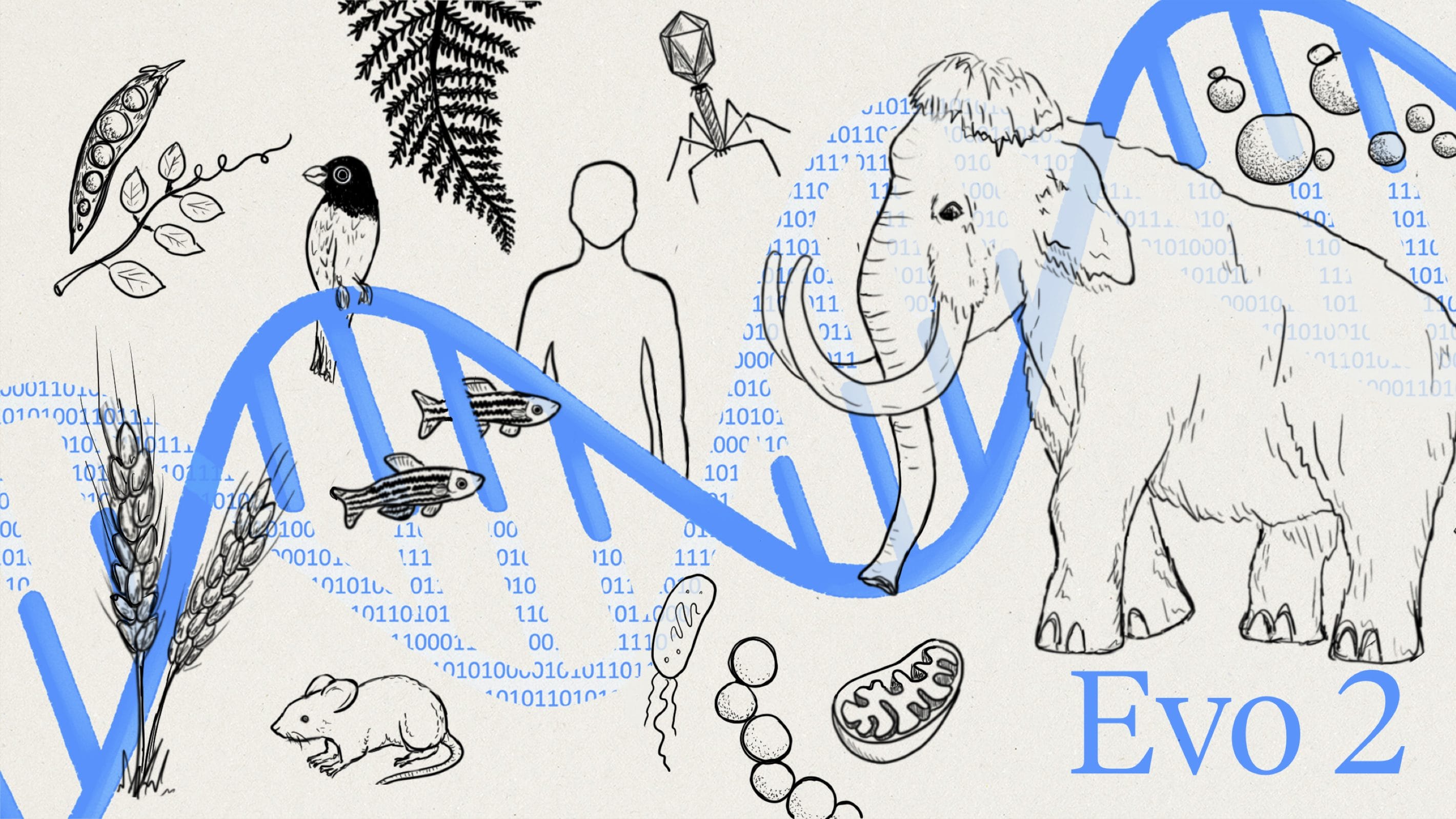
In 2025 we first saw the idea come to reality when the Arc Institute announced Evo 2 – a generative AI model that was trained on the DNA of over 100,000 species and specifically designed to identify patterns across the genomes, predicting gene variants and their functions, they could even produce new DNA sequences with over a million base pairs long. By 2040, this model and successors will have changed fields of biotechnology and healthcare fundamentally, but what if anything, what will future generations know about being alive?
The Historical Journey: Building Toward a New Age
If you are to understand what Evo 2 can do, we first need to understand the journey of how we got here:
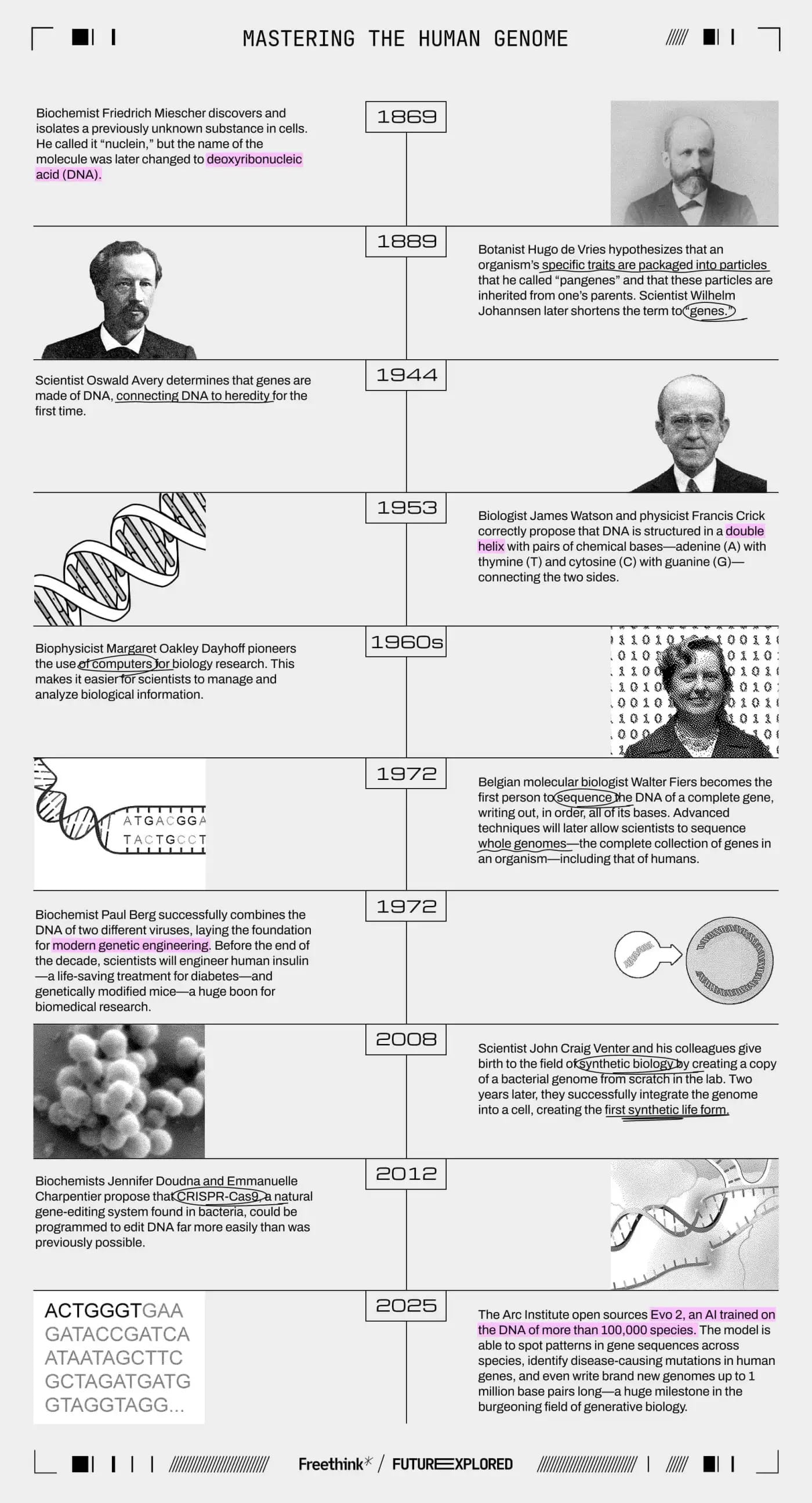
1869: Friedrich Miescher discovered nuclein (DNA)—our capacity for curiosity about the molecular basis of life began.
1889: Hugo de Vries declared the concept of pangenesis, and Wilhelm Johannsen coined the phrase genes.
1944: Oswald Avery linked DNA and heredity. He discovered the very thing that behaved like inheritance when we reproduce.
1953: Watson and Crick defined the double helix structure of DNA—a foundation for molecular biology.
1960s-1980s: Pioneer researchers, like Margaret Oakley Dayhoff brought computers to biology, which led to genetic engineering achievements like synthesizing insulin.
2008-2012: Synthetic biology using CRISPR radically changed gene editing and the capacity to design DNA for specific functionalities.
2025: Evo 2 was released, which signals the age of generative biology—the focus of the scientific research community will shift to how we can engineer life, as opposed to modifying life.
The voyage above demonstrates a consistent trajectory from observation, to understanding, and ultimately, to creation.
Evo 2: The DNA Transformer
Evo 2 is not just any old AI. It’s based on transformer architecture, just like the backend of the large language models such as Chat GPT. However, instead of reading and writing human languages, Evo 2 is designed to read and write DNA—the language of life.
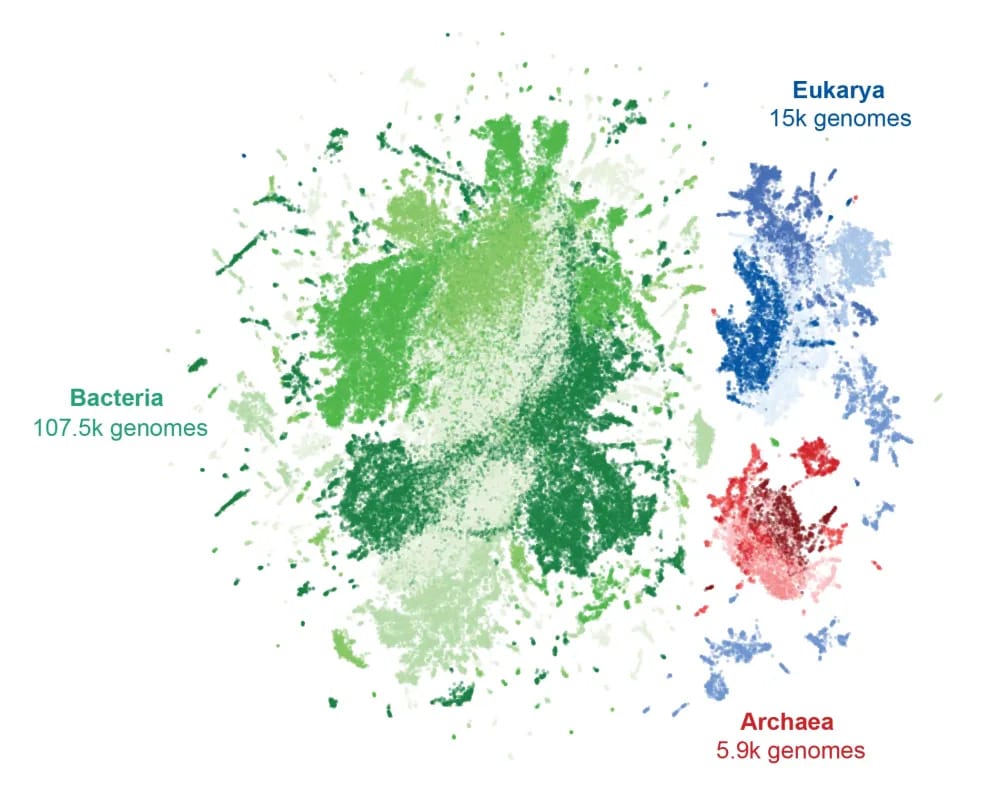
The evolution from AI that was first applied to genomic data was not a trivial undertaking. Early AI could not digest the particularity of a long piece of DNA or recognize that minor single-base changes can produce massive differences biologically. To overcome these complications, research and development from teams of researchers followed a novel architecture called Striped Hyena 2. Evo 2 is now capable of processing 1 million DNA bases simultaneously, making it capable of analyzing genomes as large as a microbe.With 9.3 trillion DNA letters from more than 128,000 species, Evo 2 is the most comprehensive AI modeled systems in the world. It can analyze coding and non-coding regions of DNA, identify pathogenic variants associated with disease, and it can even create entirely new CRISPR systems—many of which have been synthesized, tested and shown to work in real labs.
Genetic Mysteries and the Predictive Power of Evo 2
There are many mysteries in genetics, even with mapping the human genome. In fact, approximately 0.1% of your genome is different from the “reference human genome.” That difference could change your life.
Some differences are benign—think of the difference of eye color. Some differences can be deadly e.g., sickle cell anemia, breast cancer; however, many differences fall into a variant of unknown significance (VUS)—a genetic change with indeterminate effects.
Here is where Evo 2 sheds light on mysteries. Traditional biology cannot tell us what the difference is when the variation falls in what is 98% of the genome, which is considered to be junk DNA. Evo 2 can analyze non coding regions of the genome with a high degree of accuracy. In a case about the BRCA1 gene, linked to breast cancer, Evo 2 predicted the pathogenic potential of unknown variants with 90% accuracy, making it outperform all other AI modeled systems.
Importantly, this is not just theoretical, but it can have real, tangible utilities.Patients who had previously received ambiguous genetic test results now have actionable information, and clinicians are able to make informed decisions regarding preventative and therapeutic pathways.
Polygenic Disorders Present a Unique Challenge for AIs.
Unlike single-gene diseases (such as cystic fibrosis, fragile x syndrome, etc.), many disorders that are classified as “diseases” actually result from the interaction of thousands of variants (such as diabetic, heart disease, and schizophrenia). Such complex interactions are tough for humans to spot, but for an AI with trillions of information points to cross-reference, it is manageable.
Evo 2 can analyze genetic data from millions of individuals, and through its identification of underlying correlations, point to the combination of variants that are most likely to result in a condition. This places the clinician in a position to make an accurate diagnosis (or to at least see where the potential problems may lie) much earlier than would have been previously possible and makes personalized medicine available at scale.
From Lab to Clinic: Taking Advantage of Concept Generation with Evo 2
What Evo 2 can also do, besides analyzing, is produce things. If you needed therapy for a rare genetic disease, rather than waiting a substantial amount of time for pharmaceutical development, Evo 2 would be able to create a therapeutic protocol for your condition within days, be it editing faulty genes, designing synthetic proteins, or producing a novel biological system.
To be clear, by 2040, generative biology has empowered AIs to produce custom CRISPR therapies, individualized vaccines, and genetically customized regenerative therapies. AI designed proteins can be printed using bioprinters to aid rebuilding damaged tissues or even organs.
This revolution in the healthtech space will go well beyond humans.Evo 2 has been used to develop crops capable of surviving droughts, bacteria for bioremediation projects that confront polluted environments, and even synthetic life capable of producing clean sustainable fuel.
Democratizing Biology: An App Store for Life
One of the biggest impacts made by Evo 2 comes from its open-source philosophy. The Arc Institute made the model and the data open access for any scientist, startup or university in the world to build applications on top of its platform.
Patrick Hsu said that with Evo 2, he is creating an “app store for biology”, where users can access pre-trained applications to edit genes, etc., model protein folding, or create other biological elements. This democratization of science leads to the possible unlikeliest outcomes. Potentially, the next life-saving therapy doesn’t come from a billion-dollar pharma company, but from students in a small lab on the other side of the world.
Concluding Thoughts: The Rewriting of Our Biological Destiny
The interaction of AI and biology has brought us to a tipping point of a new era. With Evo 2 and other revolutionary tools, we are not merely understanding life, we are producing life. Conditions previously considered untreatable are now being treated with precise, personalized therapies. Genetic discrepancies can be corrected before they manifest. The pace of drug development is accelerating. Sustainability in bioengineering isn’t a theory anymore, it is upon us.
With innovation comes responsibility. The future of generative biology falls upon ethical caretaking, an equitable approach to access, and caring experts aimed at making informed decisions that impact humanity. We are at the dawn of a new type of evolution, guided by machines and minds who are influencing the blueprint of life. This transition towards a future of curiosity, courage and vision.
If you are ready to change the world, to engage with cutting-edge integration of science and the world to come, Atlantic International University (AIU) can help you begin that journey. AIU can show you an innovative way to access education, technologically-mediated individualized pathway learning, and access education to guide sustainable human progress in the futures of those to be the future leaders in biotechnology, AI, and sustainable health.
Join AIU – help write the next chapter of the evolution of humans.
Biotechnology and Genetic Engineering
Doctorate in Genetic Engineering
Pioneering Healthcare’s Frontier with New AI
References
Reminder to our Dear Students,
Please ensure you are logged in as a student on the AIU platform and logged into the AIU Online
Library before accessing course links. This step is crucial for uninterrupted access to your learning
resources.
AIU Success Stories


Contact Us Today!
Begin Your Journey!
AIU’s Summer of Innovation and Growth gives you the ability to earn up to $5000 in tuition credit by completing free lessons and courses.
Whether you’re looking to acquire new skills, advance your career, or simply explore new interests, AIU is your gateway to a world of opportunities. With free access to 3400 lessons and hundreds of courses the ability to earn credits and earn certificates there’s no better time to start learning.
Join us today as a Guest Student and take the first step towards a brighter, more empowered future.
Explore. Learn. Achieve.